
Quick Take
- One surprising trait explains why Joro spiders are almost certainly coming to your state, and there is nothing you can do about it. How Joros keep spreading →
- Scientists cracked open 200+ Joro spiders to see what they actually eat, and the answer changes everything. See the diet study →
- The biggest fear about Joro spiders spreading across the East Coast turned out to be wrong. Check competition findings →
- Killing Joro spiders in your yard could backfire in a way most homeowners never expect. Why killing backfires →
Giant Joro spiders are large arachnids native to East Asia. Sometime after the year 2000, they found their way to North America. First spotted in northern Georgia in 2013, they have since spread across the state. Sightings in the Athens area and Greenville, South Carolina, followed. In less than a decade, their range expanded from one location to over 46,000 square miles. Now experts believe these spiders will colonize much of the Mid-Atlantic Coast.
People rightfully treated these large, spindly spiders as an invasive species. Authorities worried that these spiders would end up eating the same bugs as native spiders, and possibly even the spiders themselves. But there is hope for the invasive giant Joro spider. The results of a new study from the University of Georgia suggest that Joro spiders eat different insects than native spiders. Let’s learn more about this invasive but timid spider, the fears surrounding its spread through North America, and how new information eases some of those concerns.
Continue reading
About the Giant Joro Spider
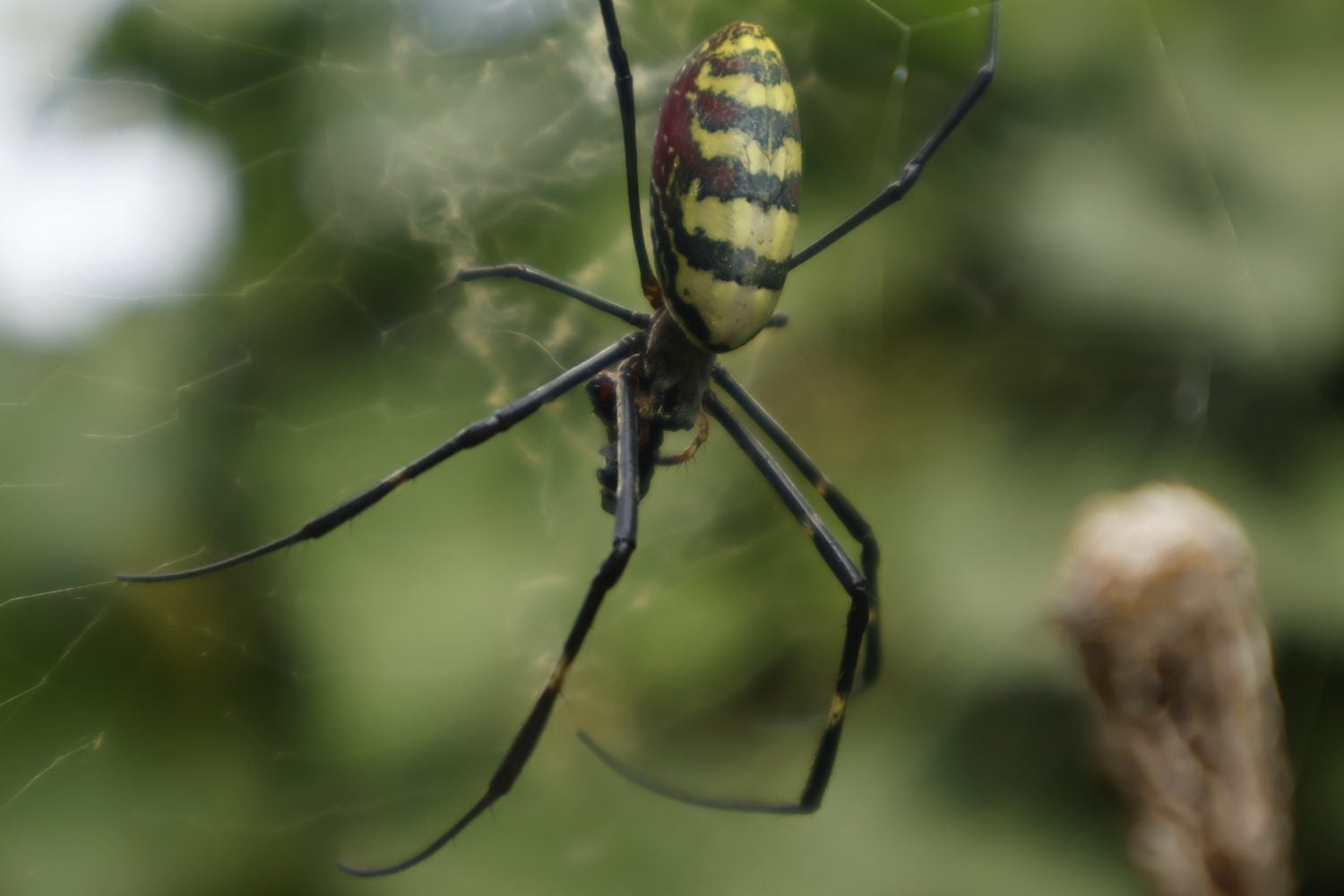
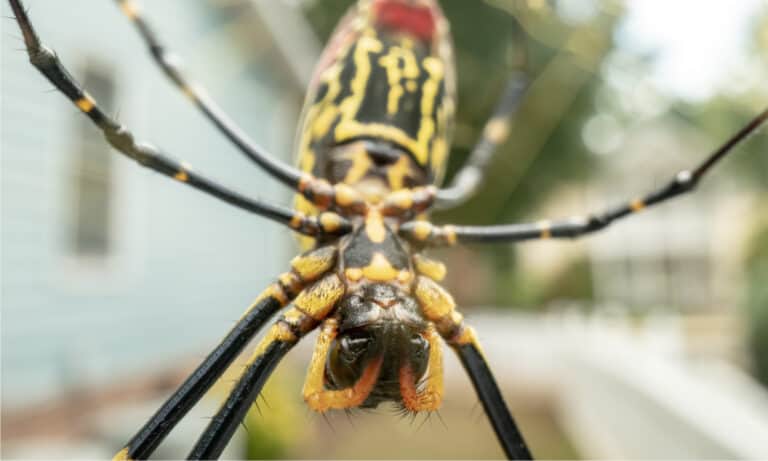
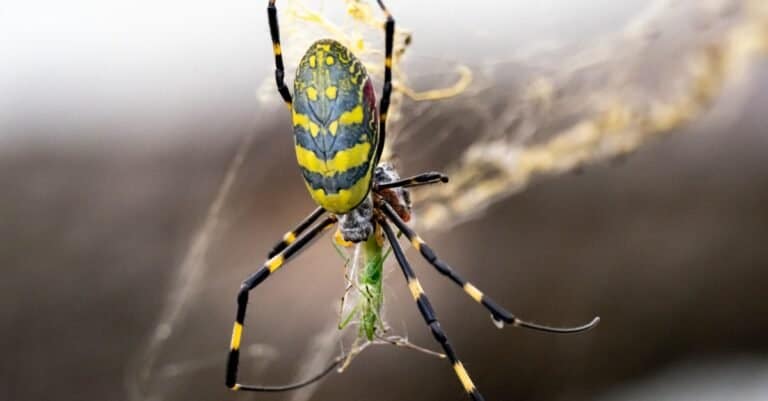
Joro Spiders are large but timid spiders native to East Asia.
©Srawankhanal/Shutterstock.com
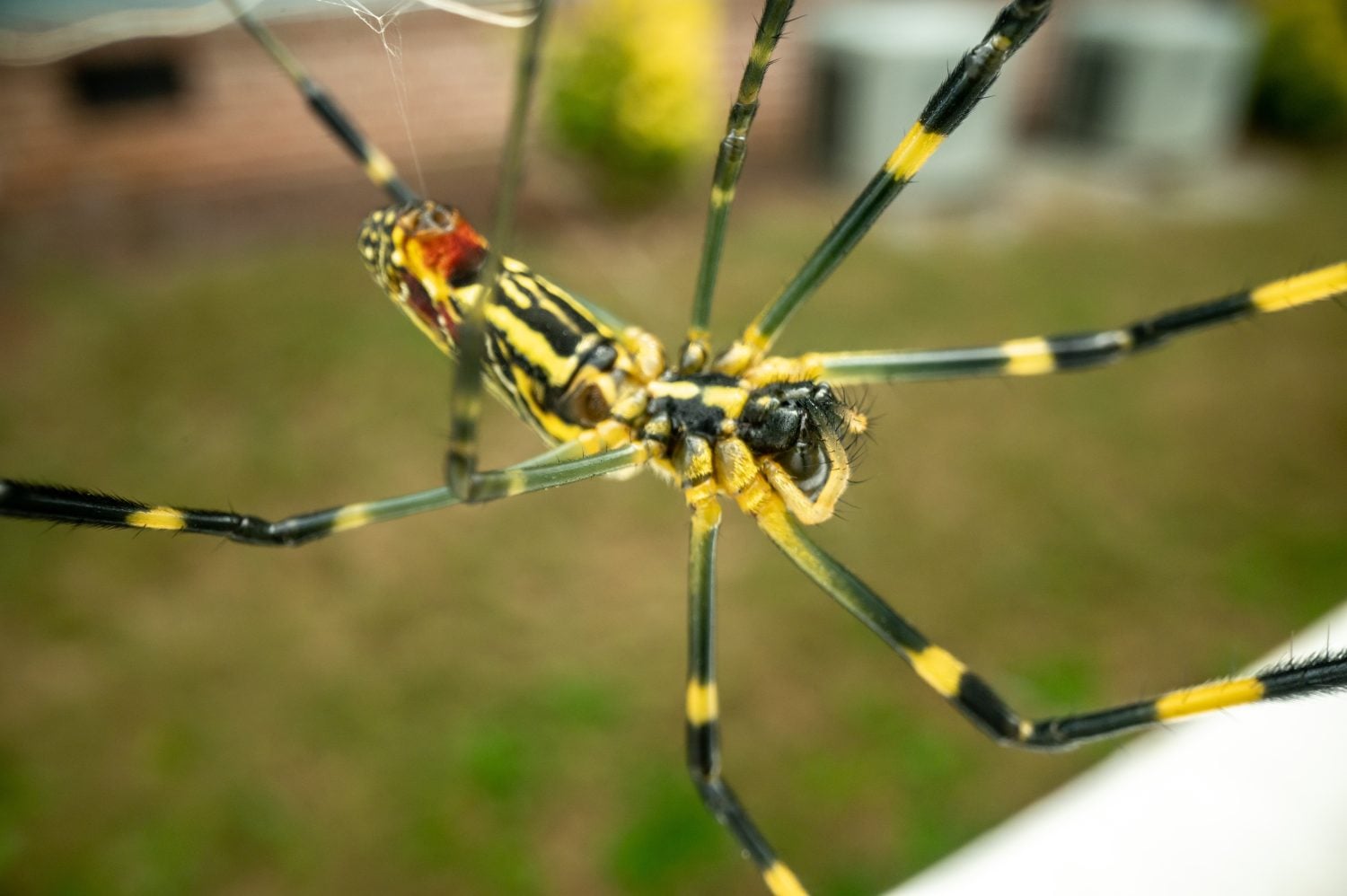
Joro spiders (Trichonephila clavata) are large, thin-legged spiders native to East Asian countries like China, Korea, Taiwan, and Japan. Females range from 0.67 to 0.98 inches, while males are considerably smaller, ranging between 0.28 and 0.39 inches. Both males and females have large abdomens and long legs. Females are more noticeable than males due to the bright yellow and grey-blue bands on their abdomens, with red markings on the underside.
The life cycle of the Joro spider is as follows: females and males copulate in the autumn, and females spin an egg sac on a tree containing between 400 and 1,000 eggs. Once the adults’ life cycle ends in late autumn or early winter, the juvenile spiders emerge from their eggs in spring. Despite their somewhat intimidating appearance, Joro spiders are quite docile. They are technically venomous, but their venom is too weak to have an effect on humans or pets. Extremely timid, Joro spiders tend to freeze when threatened. If a bite does occur, it results in temporary pain akin to a bee sting.
Once confined to East Asian countries, the Joro spider was first observed in northern Georgia in 2013. In the ensuing decade, this species spread extensively across the eastern part of the United States. As of October 2022, the Joro spider’s range spans at least 46,000 square miles. It appears in Georgia, North Carolina, South Carolina, Tennessee, Alabama, West Virginia, and as far north as Ohio and Maryland. Despite being from a different environment, Joro spiders have taken to North America well. However, this adaptability has raised concerns among the public and experts about the spider’s potential to outcompete native species.
New Findings
Considering the growing potential threat of an invasive species like Joro spiders, researchers from the University of Georgia set out to find just how much of a threat they pose. To do so, they analyzed the stomach contents of over 200 Joro spiders found at 33 sites across Georgia and South Carolina. Then, researchers compared the DNA fragments from their digestive tracts to more than 140 native orb weavers. The results were surprising.
The researchers found that Joros eat some of the same insects as orb weavers, but their diet is much broader. Joros consumed 26 species that orb weavers did not, including leafhoppers and aphids. Furthermore, native orb weavers ate the same diet regardless of whether or not Joros occupied the same area. Concerns that Joros might eat monarch butterflies were also dispelled; researchers instead found a large number of small flies in their stomachs.
Combating invasive species inherently aims to ensure native species aren’t outperformed or displaced. According to the latest research, invasive Joro spiders do neither. As Jason Schmidt, the study’s co-author and a professor of entomology at UGA’s College of Agriculture and Environmental Sciences, told Eureka Alert, Joros do not encroach on native spiders’ food sources. He said, “In terms of direct competition for food, our study suggests Joro spiders eat different insects and a wider variety as compared to native orb weavers.”
Future Implications
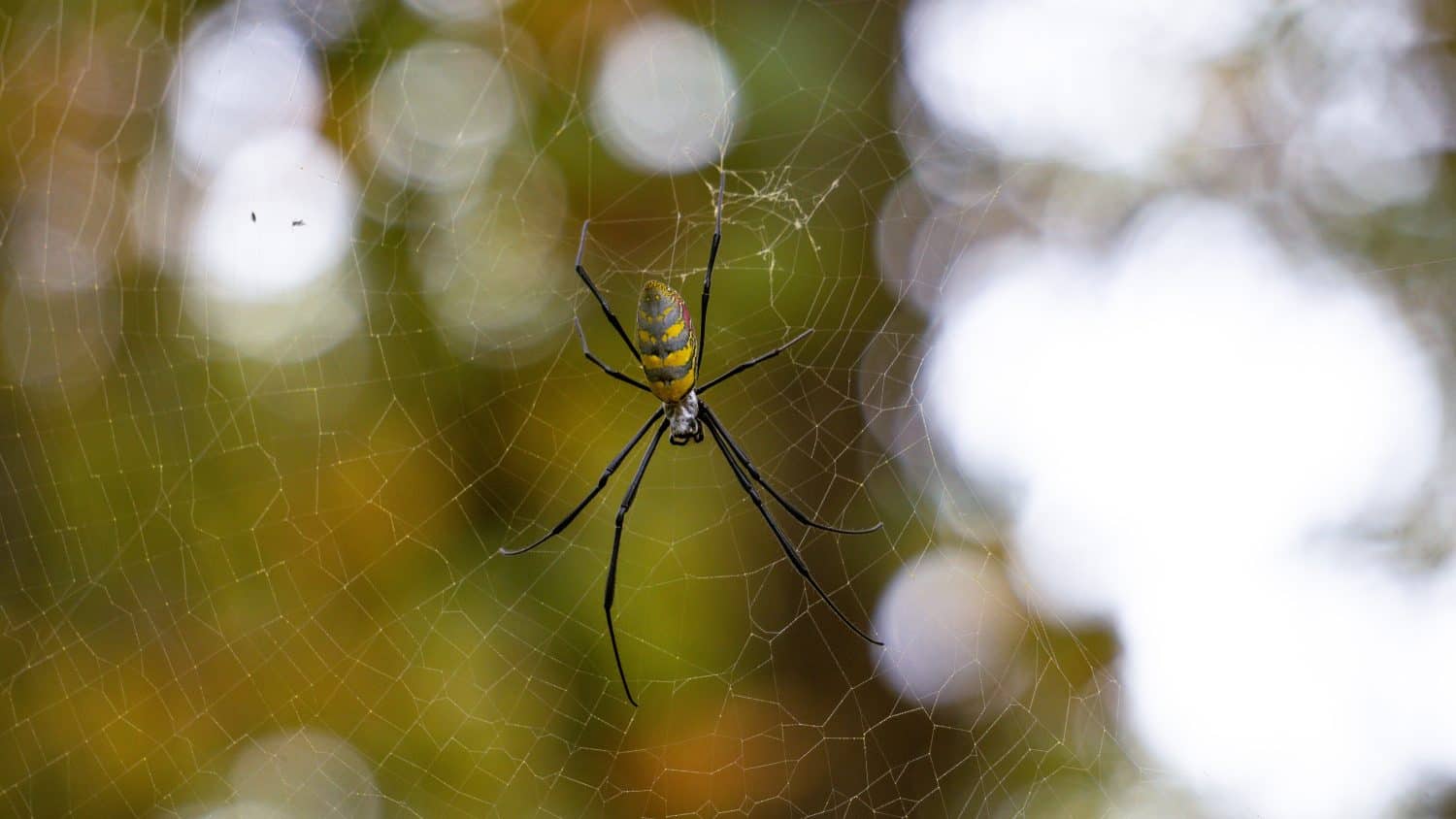
The latest findings suggest that Joros don’t outcompete or eat native spiders like orb weavers.
©Iamsheergenius/Shutterstock.com
While Joros don’t appear to outcompete native spiders, they do occupy much more space. They build large yellow webs that often get tangled with orb weaver webs. However, there doesn’t seem to be significant harm in either direction.
It is difficult to assess changes in the native orb weaver population since the arrival of Joros, as researchers lack detailed records of previous population distributions. Overall, competition appears to be low. As Schmidt explained to Eureka Alert, “I don’t think they’re necessarily competing for space,” Schmidt said, “though others may have different opinions on that.”
What to Do
One thing researchers do agree on is the Joro spider’s endurance. Joros have only continued to spread since their first appearance in North America. This is likely because the eastern seaboard shares a similar climate with Japan. Furthermore, both regions fall on the same latitude. Joro spiders’ ability to survive and thrive is helped by their ability to withstand freezing temperatures that would kill other arachnids. Plus, they are adaptable, building large webs alongside bustling roads, between power lines, and atop gas pumps. Their ability to spread across the country is aided by juvenile Joros’ tendency to use silk to travel with the wind in a process called ballooning.
According to the latest findings, Joros appear to be far less of a threat to native ecosystems than previously thought. No one knows whether Joros pose a threat to other native species, but for now, they are here to stay. As such, researchers like Schmidt suggest refraining from killing them. Killing Joro spiders may actually allow pest insect populations to increase. He told Eureka Alert, “In trying to kill the spiders, other beneficial insects feeding on pests in our yards will be impacted, and you’ll increase the likelihood of having a bunch of really difficult pests show up because you killed off some of the good guys out there.”