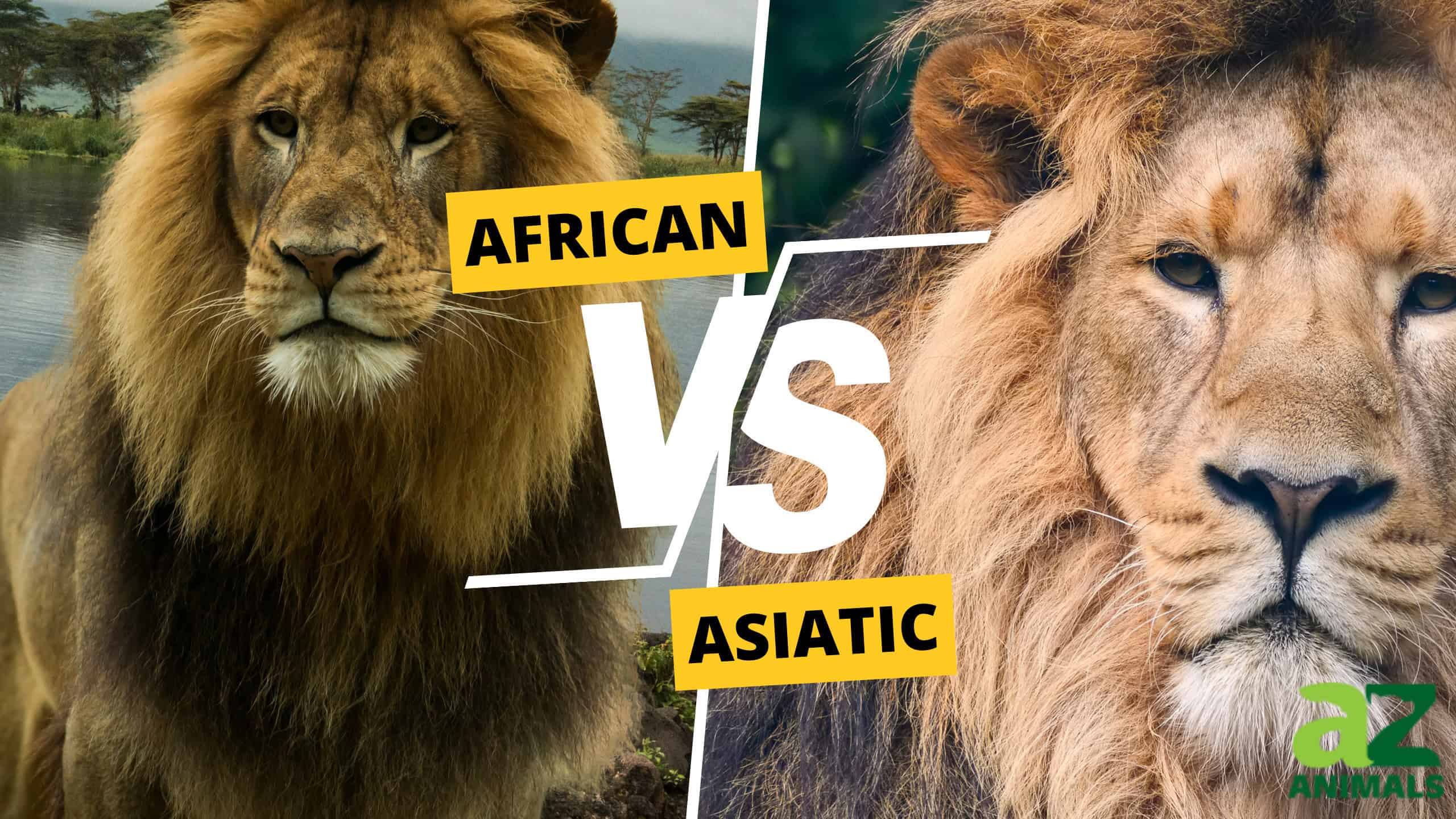

Lions are a global symbol of power and strength. Their signature manes, earth-shattering roars, and powerful frames earn them the deserved title of “king of the jungle,” despite primarily living in savannas. Within the lion species Panthera leo, there are two subspecies. The Northern lions (Panthera leo leo) are found in West Africa, Central Africa, and India. The Southern lions (Panthera leo melanochaita) are found in East Africa and South Africa. While Asiatic lions used to be a separate subspecies, in 2017, it was determined that Asiatic lions belonged to the subspecies Panthera leo leo. So, in this article, we will focus on the differences between African lions vs. the Asiatic lions that inhabit India.
African vs. Asiatic Lions: Quick Comparison
While both types of lions closely resemble each other, there are distinct differences in terms of size, habitat, behavior, and appearance. A few of the key distinctions between African and Asiatic lions are:
| African Lion | Asiatic Lion | |
|---|---|---|
| Size | 10 feet long; 330-550 pounds (Males) | 8-9 feet long, 300-500 pounds (Males) |
| Habitat | Open savannas in sub-Saharan Africa | Dry scrublands in India’s Gir Forest |
| Behavior | More social than Asiatic lions; prides up to 30 lions total | More solitary than African lions; smaller pride size |
| Appearance | Wider faces, fuller manes around head and neck | Shorter, sparser manes, narrower faces, belly skin |
African vs. Asiatic Lion Habitat and Behavior
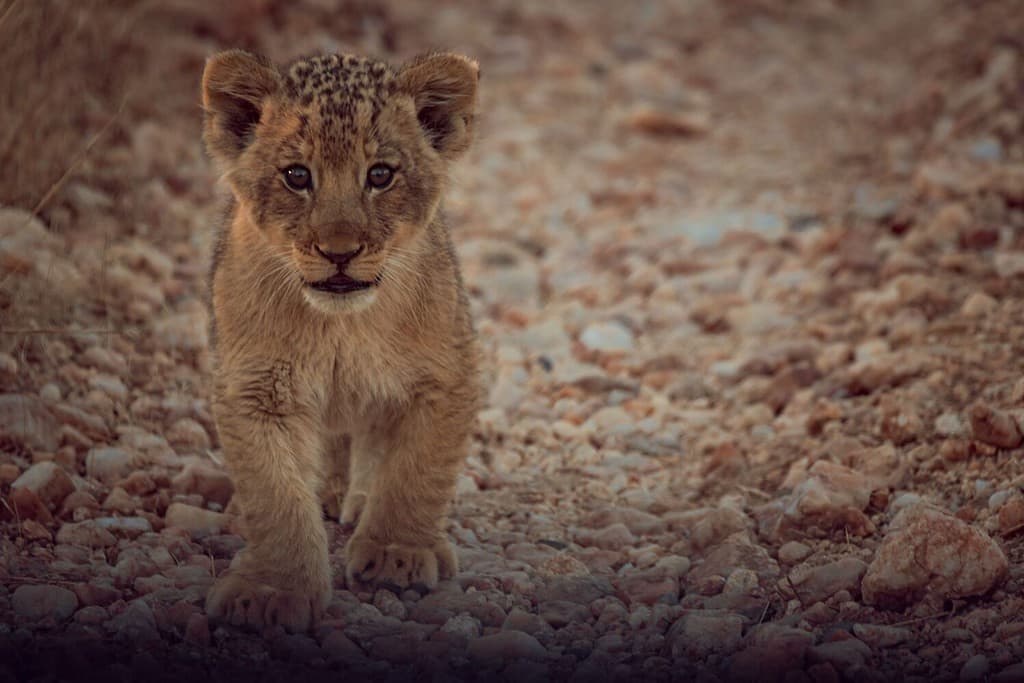
Asiatic lions tend to live in smaller groups than African lions.
©Wirestock Creators/Shutterstock.com
Asiatic and African lions have distinct differences in habitat, choice of prey, and social structure. Let’s examine the similarities and differences between them.
Habitat
African lions are native to the savannas and grasslands of sub-Saharan Africa. Northern lions inhabit West and Central Africa, while Southern lions inhabit East and South Africa. These magnificent big cats thrive in open habitats with access to water, plenty of grasses, and bushes to hide in.
Asiatic lions have an extremely restricted habitat, primarily in the Gir Forest National Park and surrounding areas in the Indian state of Gujarat. The park’s terrain is a mixture of dry deciduous forest and savanna grasslands, providing an ideal habitat for these big cats. In recent years, their range has expanded beyond Gir Forest, with some lions now found in other parts of Gujarat, including coastal regions and Diu Island.
Prey
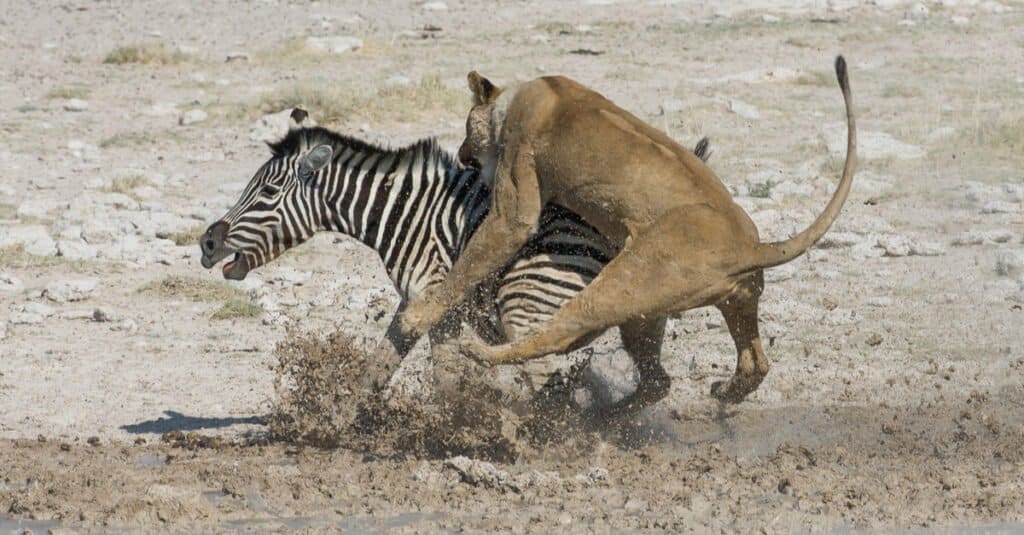
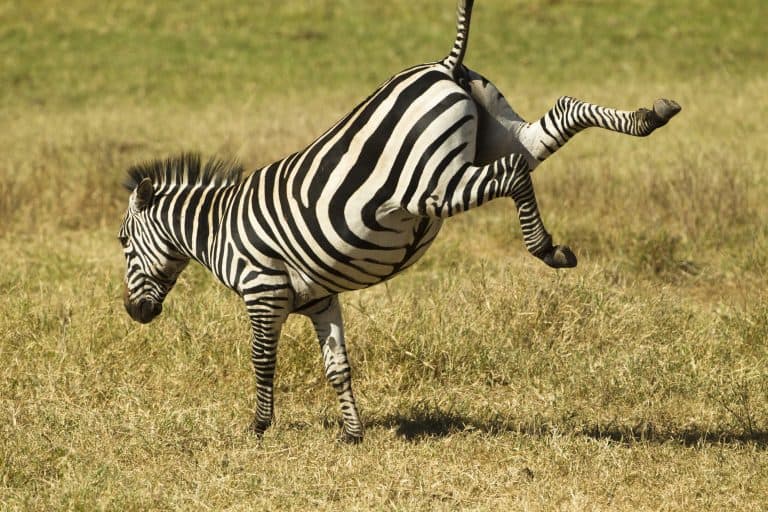
African lions can take down large game like zebras.
©Rostislav Stach/Shutterstock.com
African lions are known for their impressive hunting abilities and their tendency to go after larger prey. In their native habitats of sub-Saharan Africa, these big cats hunt and scavenge for wildebeests, zebras, and buffalo. The African lion’s prey ranges in weight from 600 to 2,000 pounds, with buffalo being one of their favorite meals. Successfully catching these animals requires a highly coordinated hunt, with lionesses taking the lead.
Asiatic lions have specific hunting styles due to their location. Since they can only be found in one national park, they have a smaller range of prey to choose from. The most common prey for Asiatic lions is chital deer, which weigh only about 110 pounds. Asiatic lions have also been known to eat wild boar and antelope. Female Asiatic lions are also the primary hunters.
Social Structure
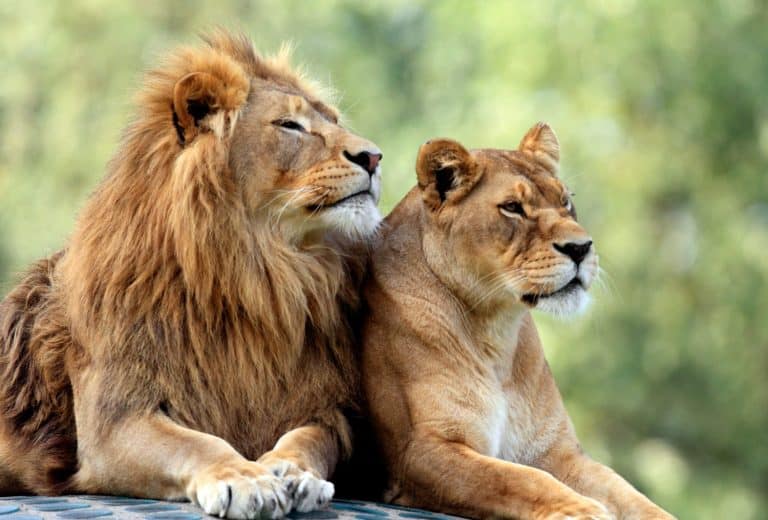
On the other hand, African lions have a unique social structure centered around the pride. A “pride” refers to a group of lions that live and hunt together, and it is typically composed of females. Prides are guarded by at least one male, who is responsible for safeguarding the females and fending off any potential dangers. This male plays a vital role in maintaining the pride’s stability and ensuring the survival of the cubs.
Asiatic lions have a distinct approach to socializing. As opposed to the pride structure of African lions, male Asiatic lions tend to move about in smaller, solitary pairs. They only join forces with females during mating or when working together to hunt larger prey. This independence allows them to claim larger territories and hunt without any limitations.
Physical Appearance
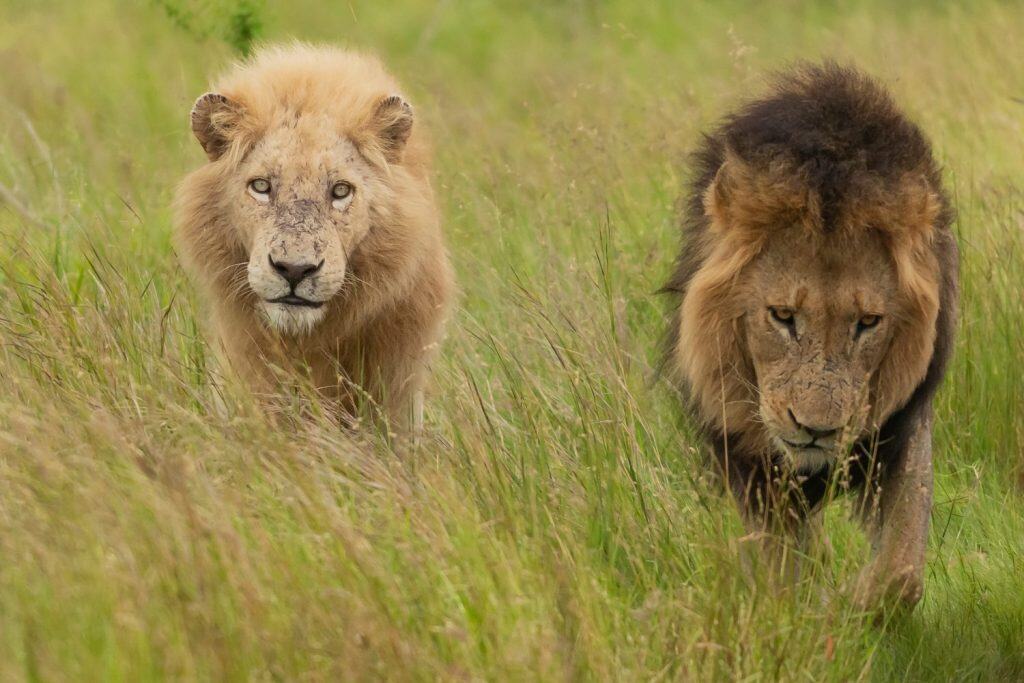
A male lion’s most distinguishing feature is his mane.
©Piotr Poznan/Shutterstock.com
Asiatic and African lions have a number of differences in their physical appearances. Not only are they different sizes, they also have distinct manes, stomach shapes, tail tufts, and head shapes. Let’s take a closer look at each of these differences in more detail.
Size
While both lion types are imposing, African lions are the larger of the two subspecies. Males can weigh anywhere from 330-550 pounds. Females weigh an average of 345 pounds. Males stand nearly 4 feet tall, while females are 3-3.5 feet at the shoulder. The largest African lion ever recorded weighed a massive 826 pounds, measured 3.6 feet tall, and was said to reach 11 feet in length.
Despite their smaller size, Asiatic lions are still impressive. Males weigh a sturdy 350-450 pounds, while females weigh between 240-360 pounds. They stand at a shoulder height of 3.5-4 feet for males and 2.6-3.5 feet for females. The average length of these lions is 5.57 to 8.2 feet for males and 4.6 to 5.74 feet for females. The largest recorded Asiatic lion measured an impressive 9.7 feet from nose to tail.
Mane
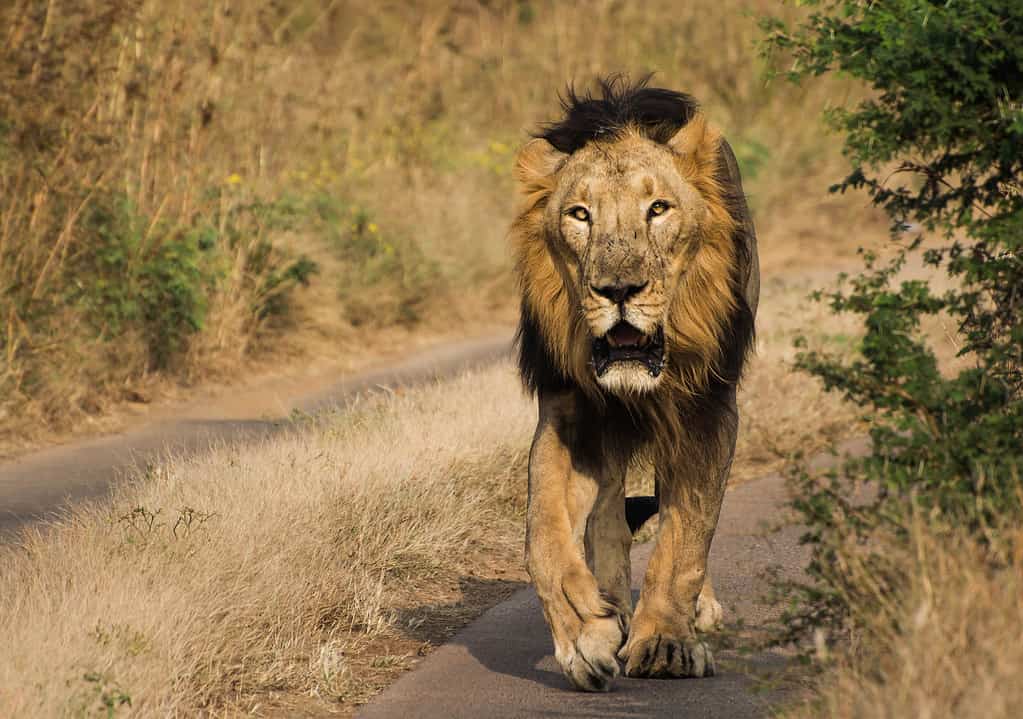
Asiatic lion manes are much sparser, darker, and less developed compared to the manes of African lions.
©ibrandcare/iStock via Getty Images
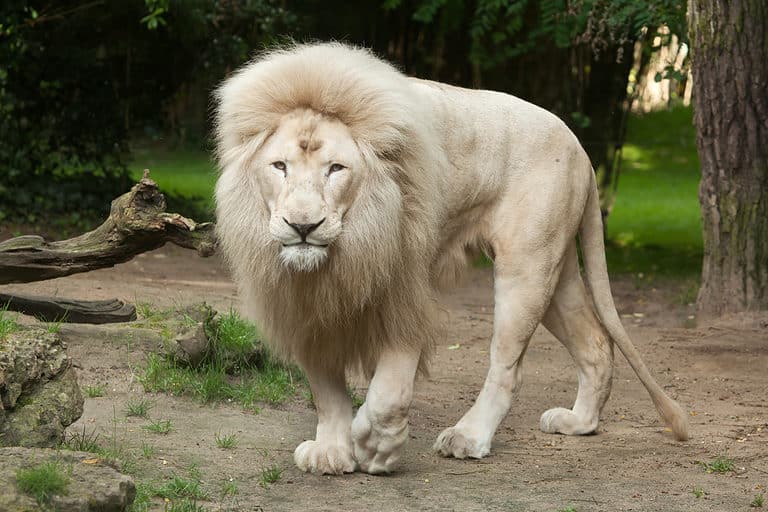
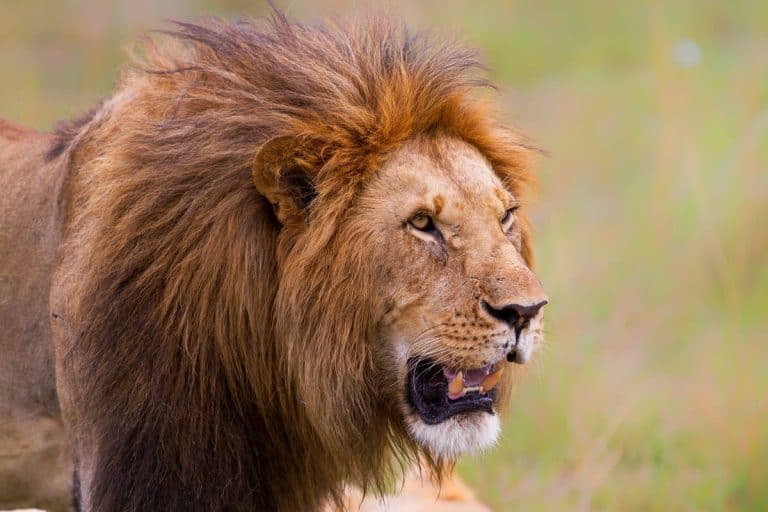
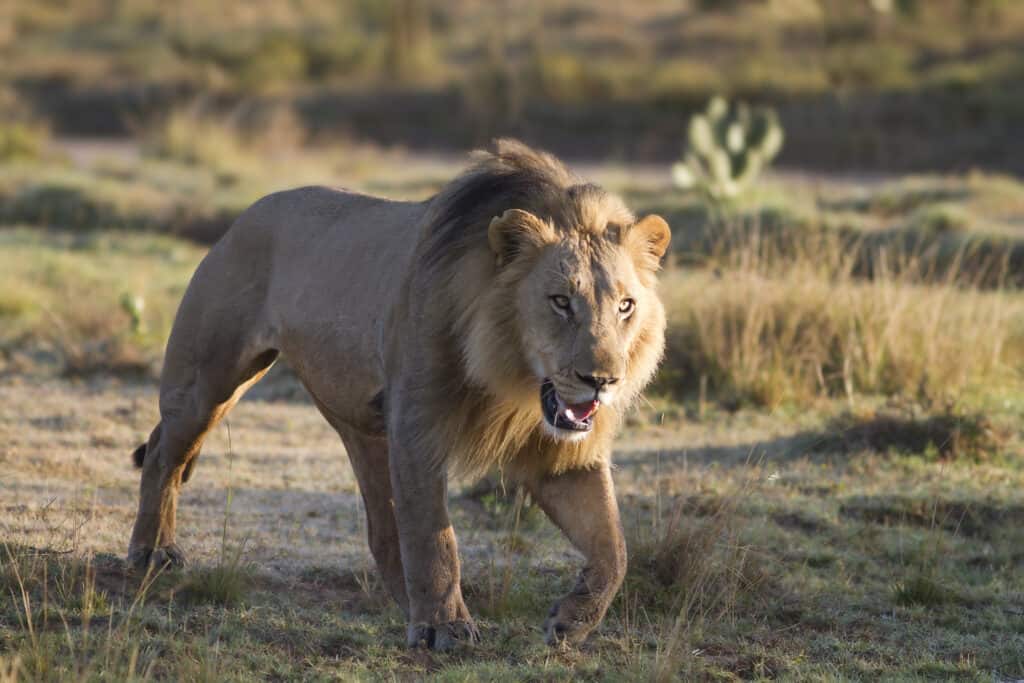
A lion’s mane is its most recognizable feature, and the African and Asiatic lions have distinctively different manes. African lions have a fuller, longer, more prominent mane that covers their entire heads and cascades down their shoulders. The color of an African lion’s mane can range from light tawny to black. Interestingly, the mane’s thickness and color can indicate the health and strength of the male.
Asiatic lion manes are much sparser, darker, and less developed compared to the mane of African lions. It’s also usually shorter, leaving the Asiatic lion’s ears more visible. Despite these differences, both subspecies of lions use their manes for similar purposes: to attract potential mates and intimidate rivals.
Stomach Shape
African lions do not have primordial pouches like Asiatic lions.
©Jason Prince/Shutterstock.com
African lions do not have skin flaps of fatty tissue on their abdomens, referred to as a primordial pouch. Many domestic house cats have a primordial pouch. However, African lions have a smooth belly, contributing to their regal and powerful look.
Asiatic lions do have this striking longitudinal fold of skin under their bellies that runs the length of their bodies. These skin folds are believed to offer an additional layer of underbelly protection for this subspecies.
Tail and Elbow Tufts
African lions have minimal tufts of hair on their elbows and tails. This gives them a more streamlined appearance and places greater emphasis on their manes.
Asiatic lions have more pronounced and flamboyant tufts of hair on their tails and elbows. These tufts of hair can extend a few inches from the joint. The tail tuft of an Asiatic lion is particularly striking, covering a large area and adding to the lion’s silhouette. The exact function of this tuft is still unknown.
Head Shape
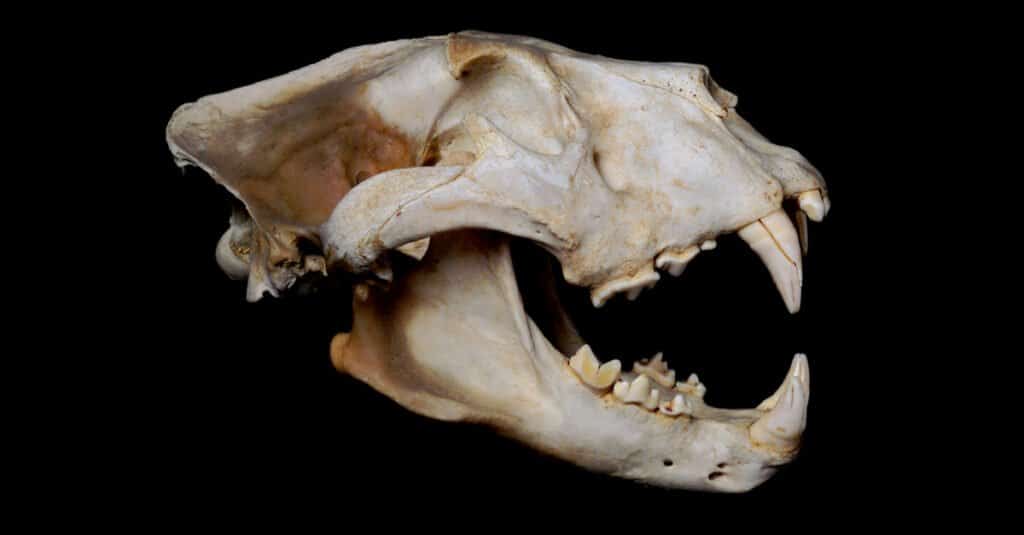
An African lion’s skull can measure an average of 15 inches long.
©Audrey Snider-Bell/Shutterstock.com
African lions have only a single infraorbital foramen, unlike their Asiatic counterparts. Their skulls are wider than Asiatic lions and measure an average of 10-11 inches in width and 14.5-15 inches in length. Male lions of both species have wider and longer skulls than females. Differences in skull size within a population set can vary by more than between subspecies.
Asiatic lions possess remarkable characteristics in their skull structure: bifurcated infraorbital foramina. These tiny openings in the skull ensure the smooth flow of blood and protect the nerves of the eyes. Their heads are traditionally narrower than African lions, measuring 9-10 inches in width and 13-13.5 inches in length.
Conclusion
Asiatic and African lions have more similarities than differences. However, the more closely you observe these two subspecies, the more distinctions you see. Appearance and habitat are the most readily obvious differences. While the African lion is larger and better known, and has a larger population than the Asiatic lion, its population is similarly threatened. Even the apex predator of Africa is no match for habitat loss and poaching.
The Asiatic lion population remains vulnerable, with recent estimates indicating there are less than 1,000 individuals. However, there has been a steady increase over the past decade. Unfortunately, their narrow habitat in one region of India makes it very challenging to protect this incredible species. Please do everything you can to support both of these animals by visiting the IUCN to educate yourself about these and other animals, and consider getting involved to help preserve Earth’s incredible wildlife.