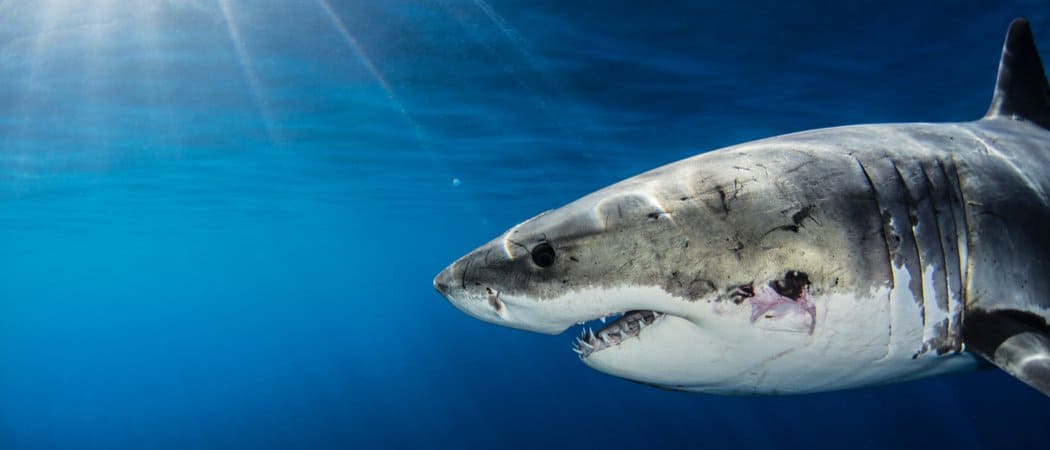

Of all the creatures lurking within the immense depths of the ocean, the great white shark (Carcharodon carcharias) inspires the most terror and awe. This fearsome animal, which makes for quite a spectacle in the water, is the largest predatory fish in the world (though not the largest predatory marine animal; the killer whale takes that crown). Continue reading to discover the largest great white shark ever recorded.
Great White Shark: Overview
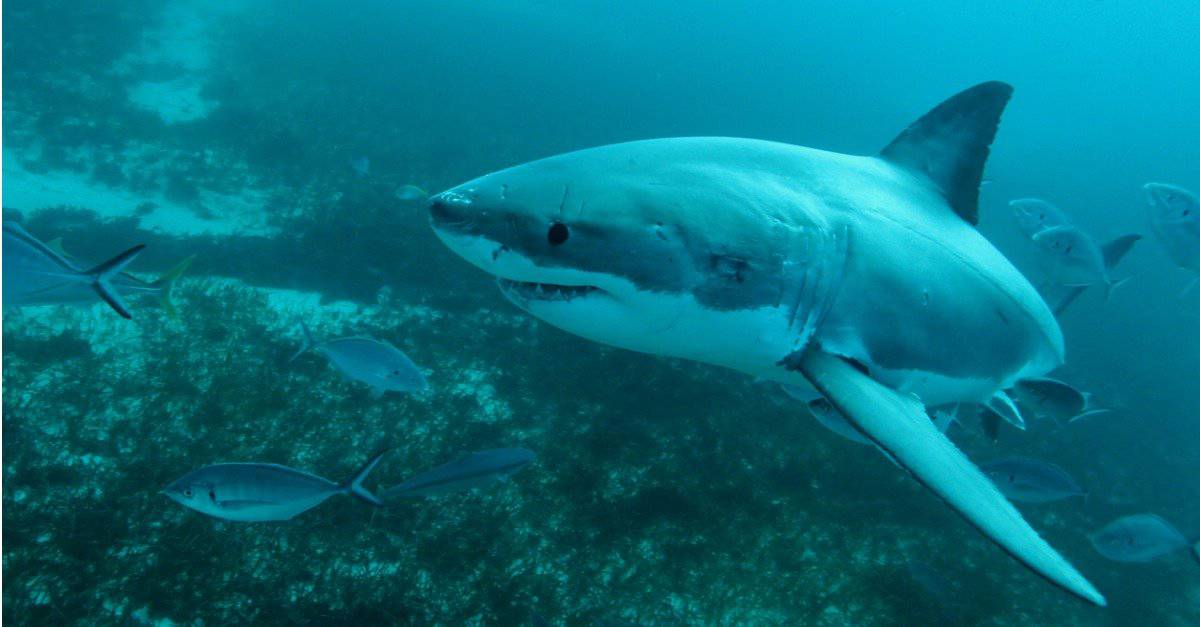
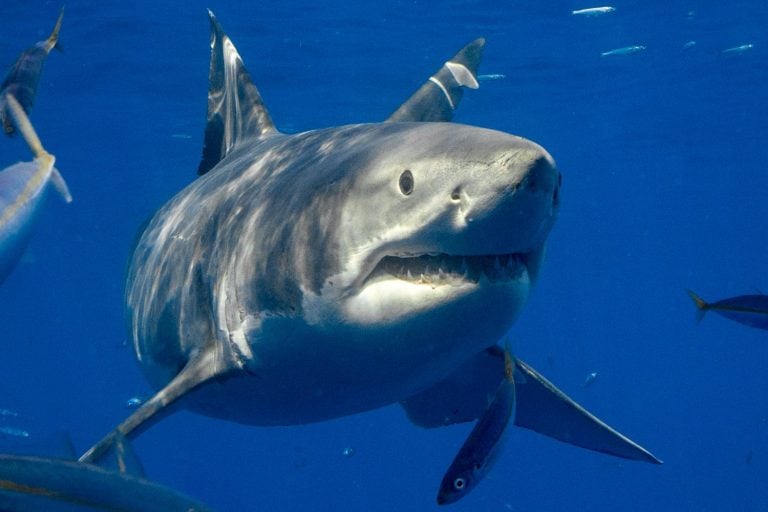
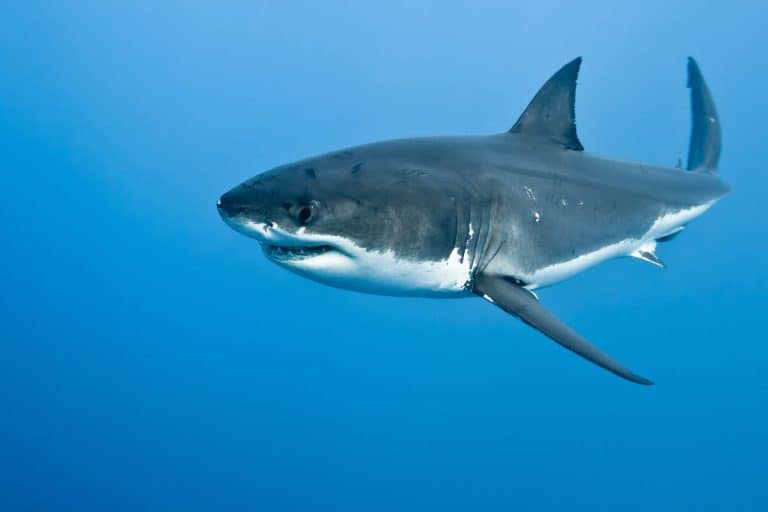
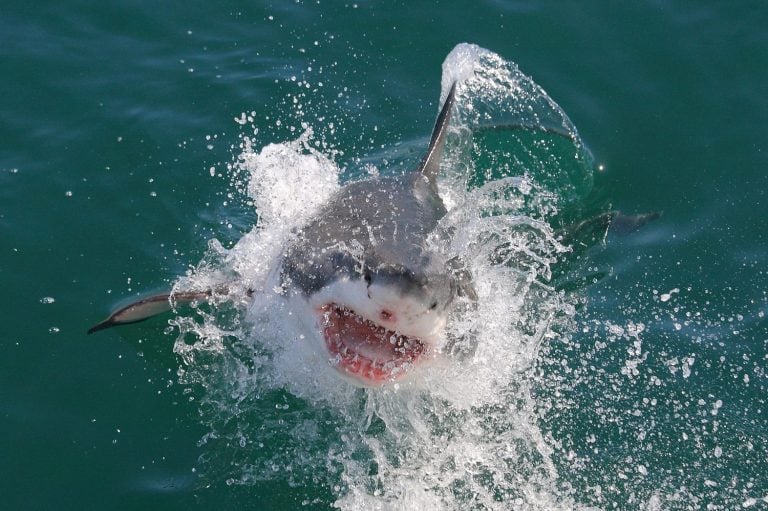
Great white sharks are the largest predatory fish in the world.
©iStock.com/Alessandro De Maddalena
The typical great white shark measures between 11 and 16 feet in length and weighs a few thousand pounds, and females are larger than males. Great white sharks are 4 feet long at birth and grow about 10 inches per year until they reach their full adult length, which takes about 10 years for males and 15 years for females. Scientists can determine a great white shark’s age by counting the rings that form on its vertebrae.
Great white sharks are found in temperate coastal and offshore waters worldwide, including the North Atlantic, North Pacific, Southern Africa, Australia, and New Zealand. While they are widely distributed, they are most concentrated in waters with temperatures between 50-72°F.
Great white sharks have a diverse and opportunistic diet, which changes significantly with their size and age. Juvenile white sharks typically feed on smaller prey such as fish, squid, rays, and other smaller sharks. As they grow into adults, their diet shifts to larger prey, focusing primarily on marine mammals like seals and sea lions, though they also scavenge on whale carcasses and consume fish or seabirds.
More Than Meets the Eye
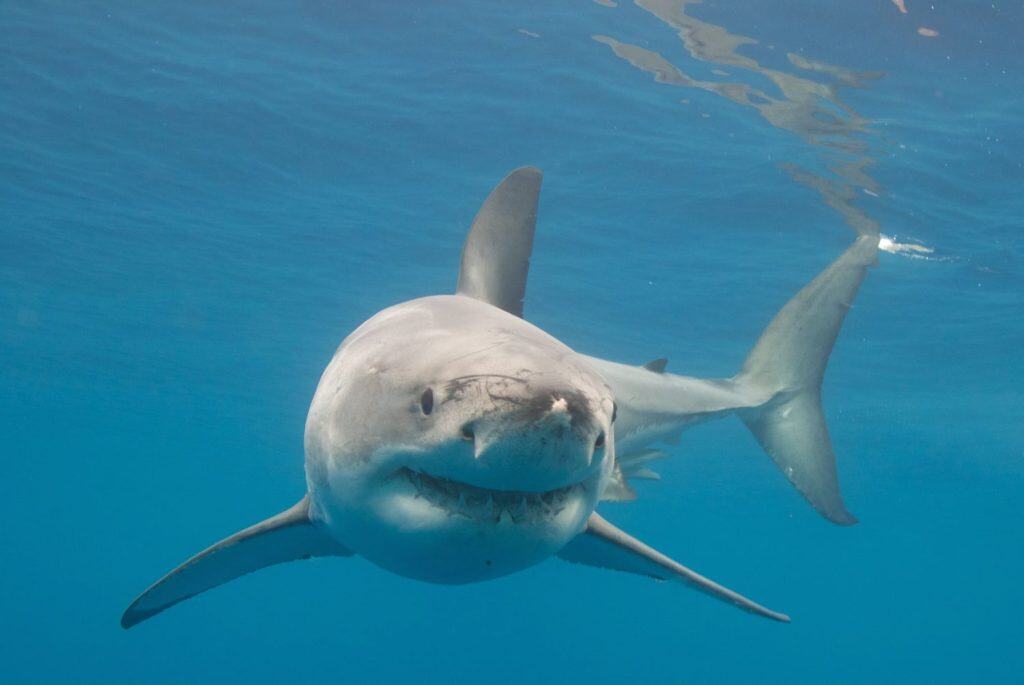
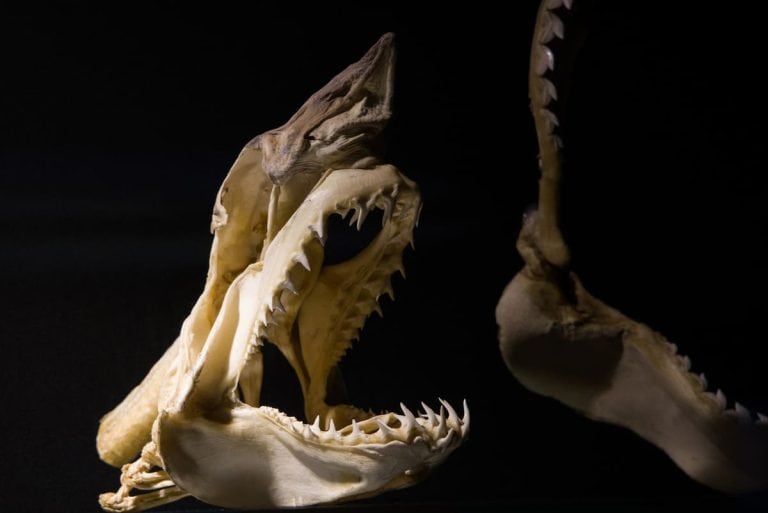
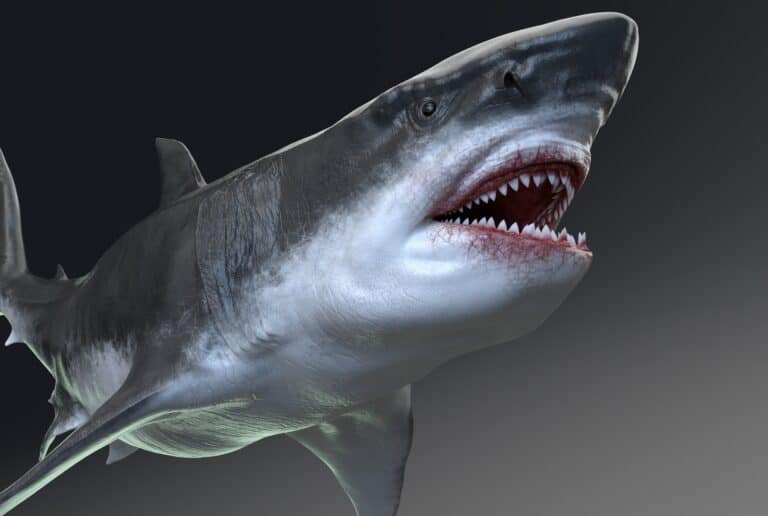
Great white sharks have over 300 serrated teeth.
©Wirestock Creators/Shutterstock.com
Great white sharks are surprisingly intelligent and curious animals. While mostly solitary, they are thought to establish some kind of dominance hierarchy when congregating together in groups. They also migrate long distances between feeding and mating grounds.
Nevertheless, their size and ferocity are important aspects of their predatory lifestyle. They have an extraordinarily powerful bite force, estimated to be around 18,000 Newtons, which is high in absolute terms, though not as high relative to body size as that of the Tasmanian devil or Nile crocodile. The bite is delivered by over 300 razor-sharp teeth.
Meet Deep Blue, The Largest Great White Shark On Record
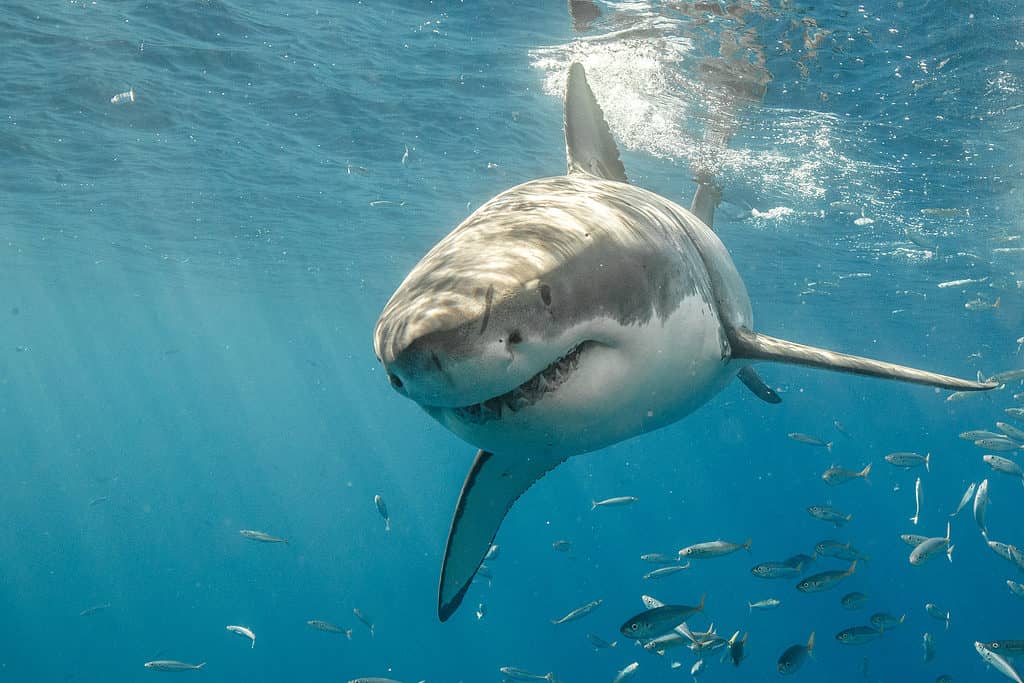
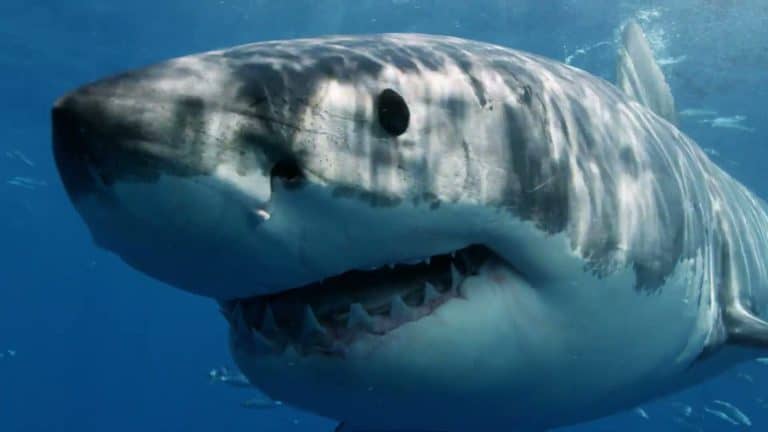
An attack on a human is usually due to mistaken identity. For example, a great white may believe someone on a surfboard is a seal.
©iStock.com/ShaneMyersPhoto
Given its status as one of the largest predatory animals in the world, it’s no surprise that there’s a lot of interest surrounding the largest great white shark on record. This honor goes to a female with the very appropriate name of Deep Blue.
The first recorded sighting of the great white shark known as Deep Blue was in 1999. She became famous when detailed footage of her was captured in 2013 by researcher Mauricio Hoyos Padilla, who found her near the island of Guadalupe, just off the west coast of Baja California in Mexico.
Deep Blue reportedly returns to Guadalupe every two years to reproduce during the mating season. However, several years passed with no sightings of Deep Blue until 2019, when she was spotted thousands of miles away near the Hawaiian island of Oahu, feeding on the remnants of a sperm whale carcass.
Deep Blue and Ocean Ramsey
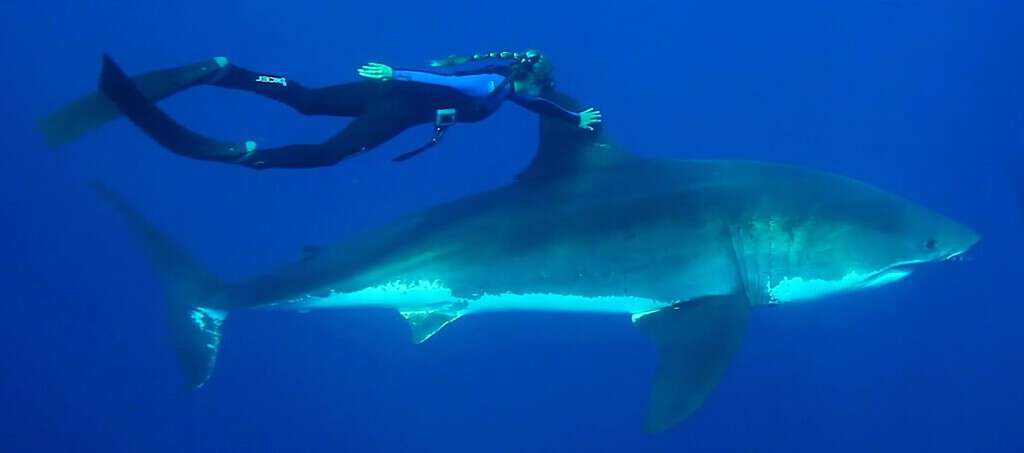
Ocean Ramsey with Deep Blue.
©ON THE WAVE – She Is The Ocean teaser trailer 2018 on Vimeo / CC BY 3.0 – Original / License
Perhaps because she was already full from the meal, Deep Blue was quite docile while marine biologist Ocean Ramsey swam next to her and held her fin, a move that some biologists criticized as unprofessional and possibly even annoying to the shark, though that remains speculation.
Deep Blue is identified by a laceration along the right side of her body. It is currently impossible to track her precise movements. Although Deep Blue was tagged with a short-term tracking device in 2014 by the Woods Hole Oceanographic Institution, the tracker became dislodged. Scientists can only speculate about where and when she will turn up next. As of 2024, Deep Blue was still alive, but there have been no confirmed sightings in 2025.