
Quick Take
- Big cats are truly fascinating predators, living in a variety of habitats throughout the world.
- The largest big cat is the Siberian tiger, which on average weighs between 396 and 675 pounds.
- While leopards are big in general, the Arabian leopard can weigh as little as 44 pounds.
- Big cats can grow up to11 feet long, towering over humans when on their hind legs.
Big cats have fascinated humans for centuries, inspiring myths, fear, and admiration due to their sheer power and size. These apex predators come in a surprising range of shapes and sizes, from the massive tiger to the agile leopard. They are each adapted to thrive in different environments around the world. But what actually makes a “big cat” big and how do these animals compare to one another in terms of height, length, and weight?
In this article, we break down the sizes of some of the world’s most well-known big cats. We put their dimensions into perspective using familiar, everyday comparisons. By looking at them side by side, you’ll get a clearer sense of just how enormous these kitties really are, and how they stack up against each other, and even against humans.
Tiger
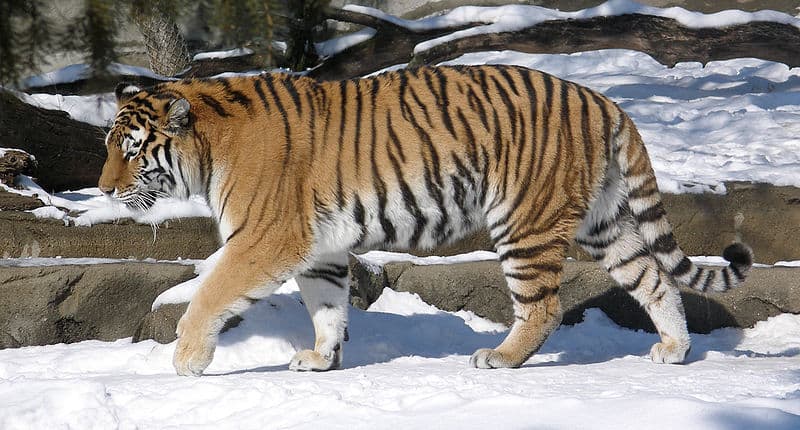
©Anaxibia / Creative Commons - Original
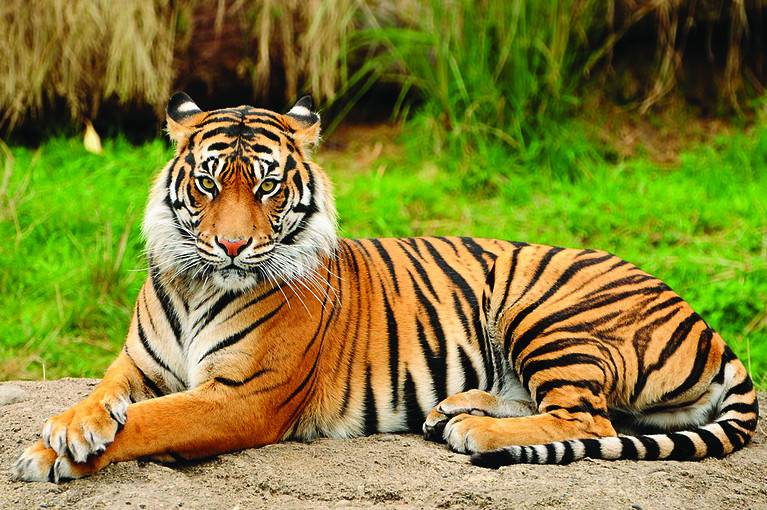
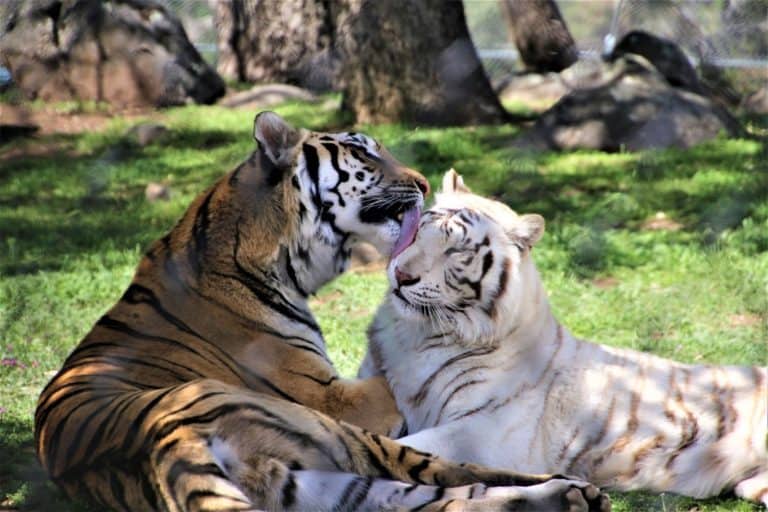
Tigers (Panthera tigris) are the largest living cats and among the largest land carnivores. In 2017, the IUCN’s Cat Classification Task Force confirmed a long-recognized taxonomy of Felidae family: two species and eight subspecies. “Few species have received so much scientific attention regarding subspecific taxonomy as the tiger,” the report notes. What has long been known to be true is that the largest tiger subspecies is the Siberian tiger (P. t. altaica), also known as the Amur tiger.
Legends abound about the great size (read: weight) of Siberian tigers. Some captive Siberian tigers have reportedly weighed more than 800 pounds, though such figures are not representative of wild tigers and are often disputed. The reality of their weight is that, on average, adult male Siberian tigers weigh between 396 and 675 pounds and are between 8.8 and 10.8 feet in length (“between pegs”) in length including the tail. (“Between pegs” measures a specimen via a straight line from nose to tip of tail compared with “over curves,” which measures from nose to rear by following the curves of a specimen’s body; over curves measurements are longer.) Female Siberians are significantly smaller, weighing between 220 and 398 pounds and growing to be between 7.8 and 9 feet in length (between pegs).
Don’t let these more modest weights convince you that these large felids are cuddly and sweet, rather than fierce apex predators. The males on the larger end of the range weigh as much as a large vending machine. The Guinness World Records recognizes Jaipur, a captive Siberian tiger, as the “largest feline carnivore.” He was owned by Joan Byron Marasek, an American animal trainer. When he was 9 years old in 1986, Jaipur measured 10 feet, 11 inches in length and weighed 932 pounds.
While Siberian tigers are considered the largest, they are also the rarest, with an estimated 500 in the wild. The most common tiger subspecies is the Bengal, or Indian, tiger, which accounts for nearly half of all wild tigers. Bengal tigers (P. tigris tigris) are no slouch in the weight and length departments compared to Siberians. Widely recognized as the second largest of the Big Cats, adult male Bengals grow to be between 8.8 and 10.1 feet (between pegs) and weigh between 396 and 568 pounds, on average.
Additionally, adult male Bengals are more than a foot taller than the tallest dog, the Irish Wolfhound: 43 inches to the shoulder vs. 32 inches.
The smallest tiger subspecies, Sumatran tigers (P. tigris balica) tip the scales at 198-220 and 143-176 for adult males and females, respectively. In other words, these tigers weigh about as much as the average adult man and woman. That would make for a pretty big house cat!
Lion
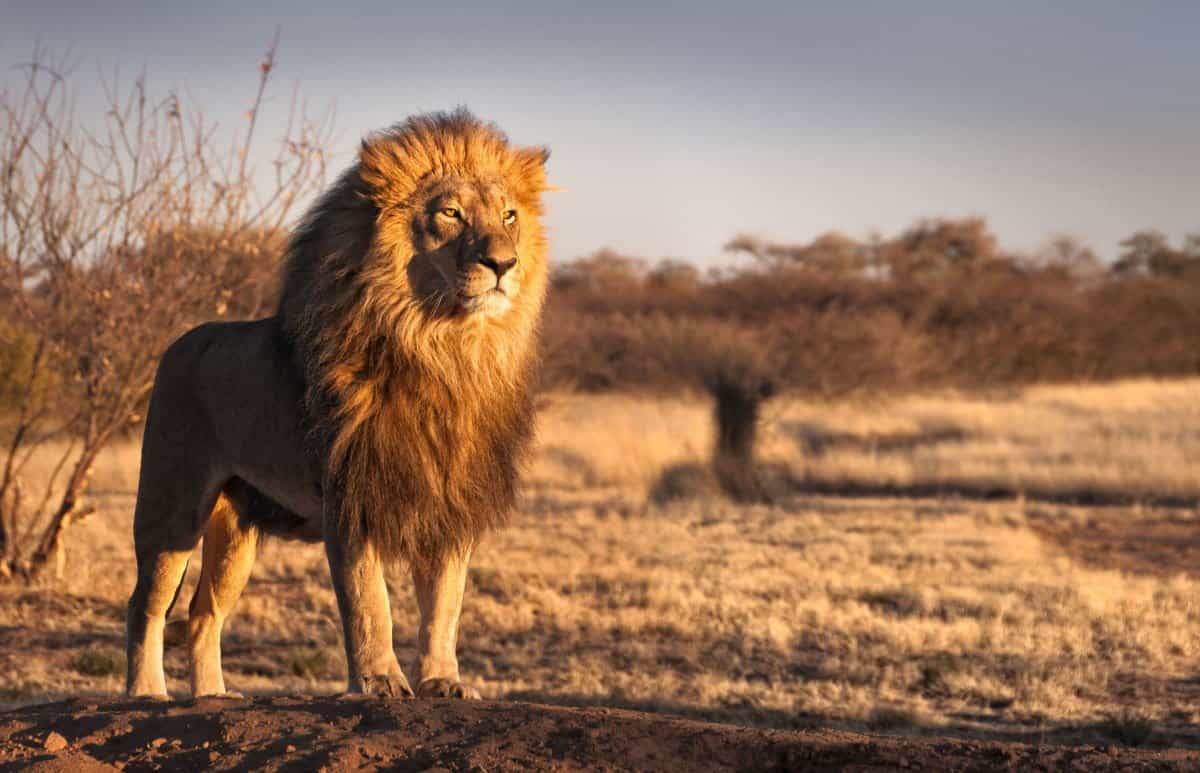
©2021 Photography/Shutterstock.com
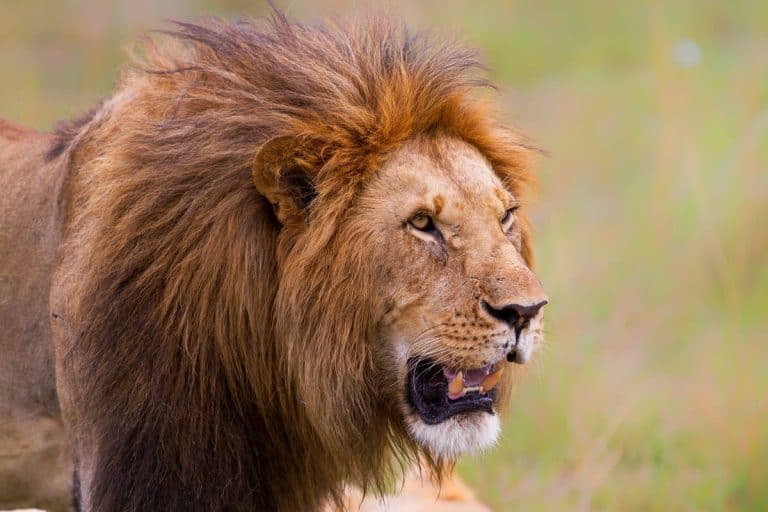
Like tigers, lions (Panthera leo) are among the largest land predators. While many believe lions to be the largest in both length and weight of the Big Cats, lions are in fact, on average, slightly smaller than their tiger cousins.
Lion taxonomy got a bit of a shake-up in 2017, with the IUCN’s Cat Classification Task Force concluding, “[W]e recognize two subspecies, although morphological diagnoses are currently unknown.” Previously, 11 subspecies were described or recognized by W. Chris Wozencraft in his chapter for the 2005 book Mammal Species of the World: A Taxonomic and Geographic Reference.
The two subspecies are P. l. leo, sometimes called the northern lion, and P. l. melanochaita. Their ranges overlap in Ethiopia, but the northern lion is found in Central and West Africa and India; its cousin lives in southern and eastern Africa. As “morphological diagnoses are currently unknown,” per the Cat Classification Task Force, these lions—regardless of their geographic location—are just plain large.
According to research published by the American Society of Mammalogists, on average, adult male lions weigh between 330 and 496 pounds and measure 4 feet at the shoulder. The average adult would likely see eye to eye with these kings of the jungle. The distance from their head to their rump ranges between 5.5 and 8.2 feet in length. With tails measuring 2.9-3.4 feet long, lions grow to be between 8.4 and 11.6 feet long (assuming the largest lion (measured from head to rump) also has the longest tail).
According to Guinness World Records, the “largest lion in captivity ever” was a black-maned male named Simba. In July 1970, his shoulder height measured 44 inches or 3.6 feet, and he weighed 826 pounds.
Leopard
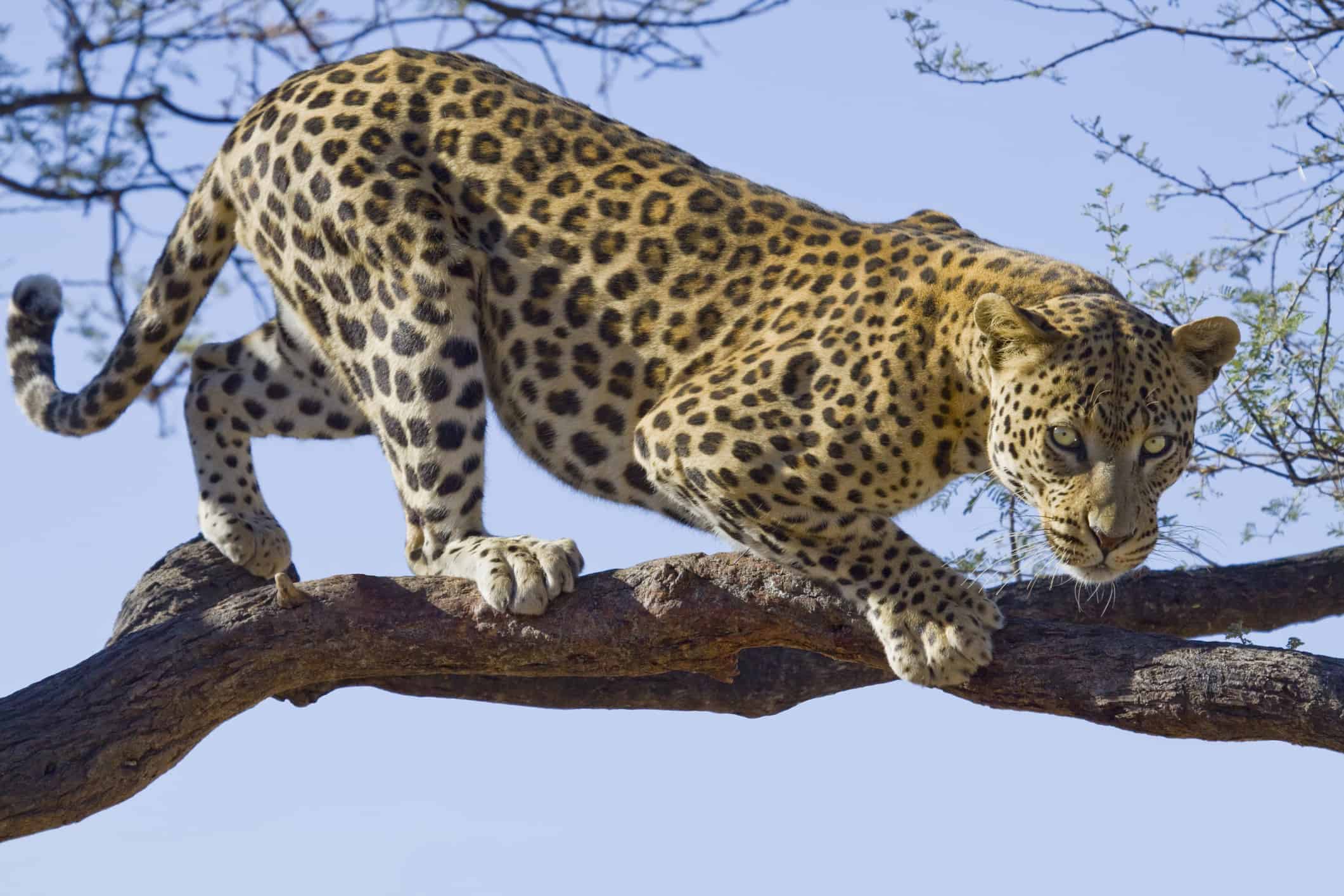
©iStock.com/lightstock
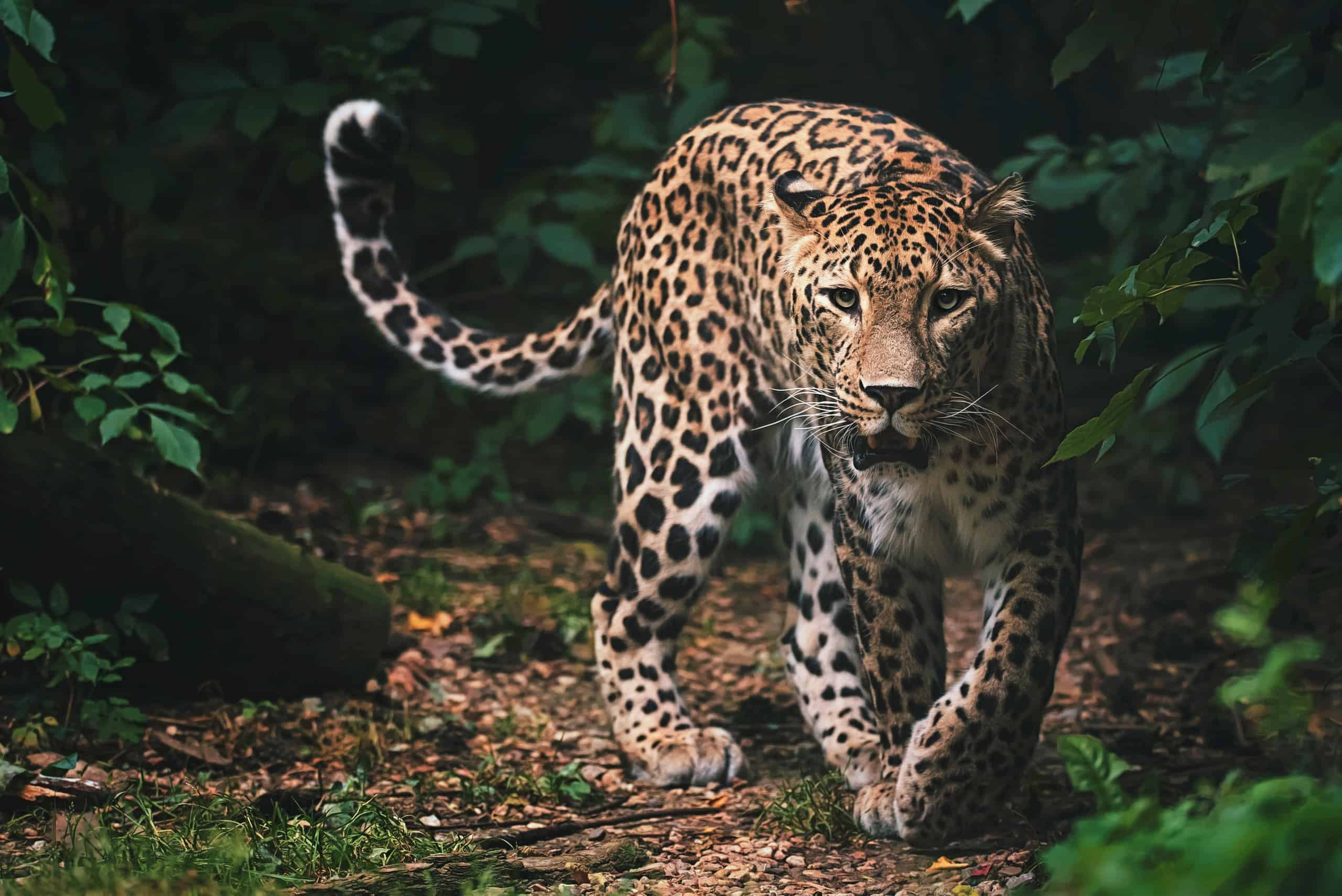
When it comes to big cats, modern leopards aren’t record-setting, especially compared to other wild cats. While leopards may have once rivaled even the largest lions, leopards of today have a maximum weight of 200 pounds.
The largest subspecies of leopard is the Persian leopard. These fierce felines can grow to be nearly nine feet long from nose to tail and weigh as much as 200 pounds — or around 15 times the size of your pet cat! Arabian leopards are the smallest subspecies, weighing as little as 44 pounds and measuring significantly shorter than other leopards.
Snow Leopard
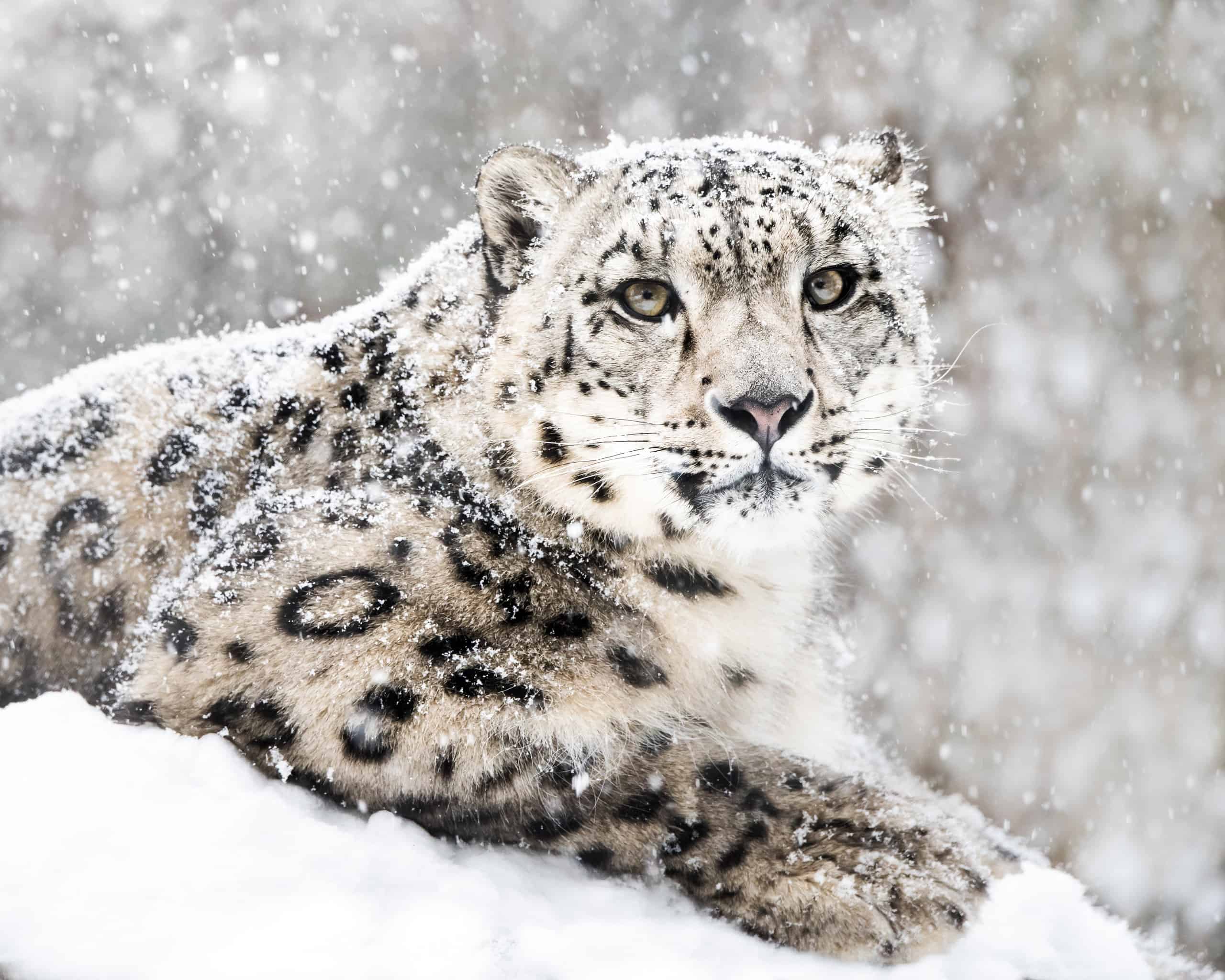
©Abeselom Zerit/Shutterstock.com
The snow leopard is an endangered species found in Asia’s high mountains.
While still smaller than the Persian leopard, the snow leopard is heavier than the Arabian leopard. Born for the cold climate of the mountaintops, snow leopards reach an average weight of around 70 pounds, though they can weigh as much as 90 pounds.
At their shoulders, snow leopards are around 2 feet tall, which is common for the leopard family. As for their body length, snow leopards are usually around 7 feet long.
Human vs. Big Cats Size Comparison
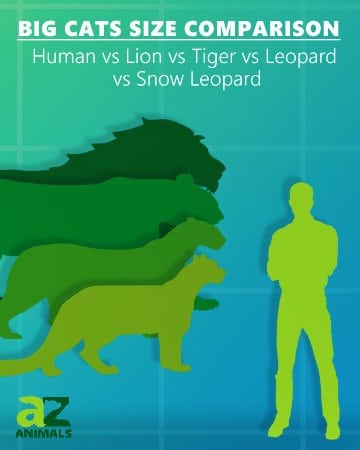
After learning about how big some of the biggest big cats are, you may be wondering just how big they are compared to you.
When it comes to shoulder height, you’ll find you’re taller than most of these big cats. The tallest here is the lion, which still only stands four feet tall at the shoulders. That’s around the height of your average 8-year-old! Leopards, however, including snow leopards, won’t be much taller than your typical canine companion. In fact, they tend to be the same height as furry pups like Golden Retrievers.
However, even the smallest of these felines can tower over you on their hind legs. Big cats can grow up to 11 feet long, like the tiger, a length that is nearly double the height of the typical adult human.
Humans can outweigh the largest leopards and even some of the smallest subspecies of others included in this big cat size comparison. When it comes to the average weight of these big cats, though, humans barely come close. For example, it can take nearly two to three average adult males to match the weight of a large lion or tiger.