
Quick Take
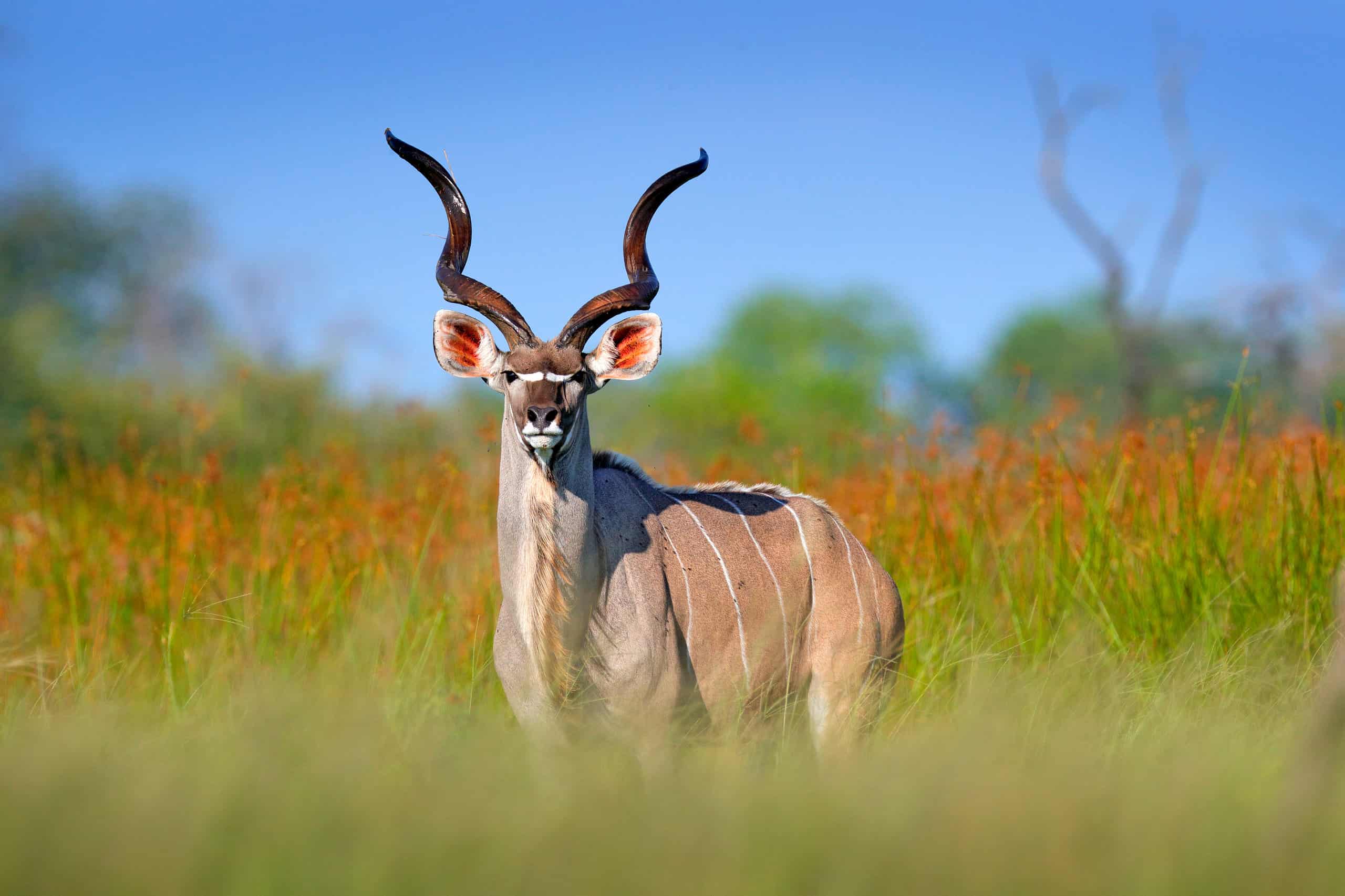
- The animal is most likely a greater kudu, one of Africa’s largest antelope species.
- Greater kudus are herbivores, feeding mainly on leaves and other plant material.
- The unsupported 60 mph claim should be removed. A more accurate phrasing is that kudus rely on speed, agility, and quick turns to escape predators such as lions.
There’s never a dull moment on safari in southern Africa. One minute, you might spot a herd of antelope moving through the brush, and the next, a predator bursts from the grass in pursuit. In the video above, that sudden drama plays out when a lion gives chase to a kudu racing across the landscape.
Kudu Sighting in South Africa
The clip shared by the MFC Sarai Channel appears to show a safari sighting from South Africa, where lions and greater kudus both occur in the wild. Greater kudus (Tragelaphus strepsiceros) are among the largest antelope species in Africa and are especially known for their long, spiral horns and their ability to vanish into brush despite their size.
Lion Hunting Kudu
In the footage, a kudu sprints across open ground as a lion chases close behind. Like many antelope, kudus rely on speed, sharp turns, and agility to escape predators. Their powerful legs help them bound away quickly, and they are also excellent jumpers, which makes them especially difficult to catch in rough or brushy habitat. While a lion may use stealth and surprise to begin an attack, a kudu’s fast reaction time can make the difference between life and death.
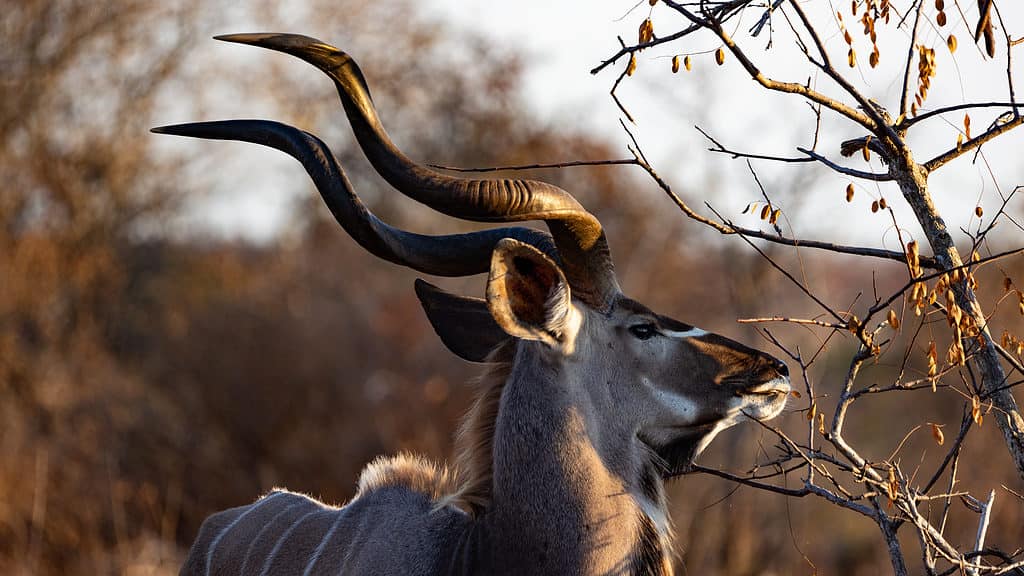
Kudus are herbivores.
©Jurgens Potgieter/Shutterstock.com
How Fast and Large Are Kudus?
The animal shown is most likely a greater kudu, a large African antelope species. Greater kudus are herbivores, meaning they feed mainly on leaves, shoots, fruits, vines, herbs, and other plant material rather than grazing heavily on grass. Adult males are much larger than females, and males can reach roughly 47-71 inches of horn length along the curve. Those horns occur in males only. Because body size varies by sex, it is more accurate to describe kudu weight with that context: females are lighter, while adult males can weigh several hundred pounds. Greater kudus are fast, agile antelopes that rely on quick turns, powerful bursts of speed, and impressive jumping abilities to escape predators such as lions.