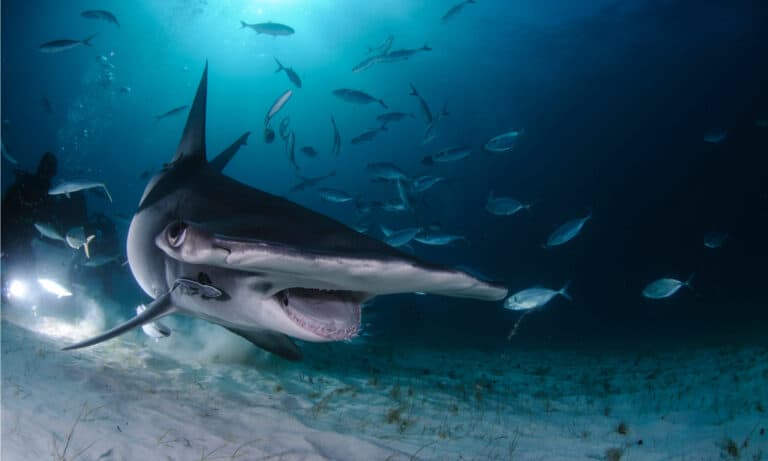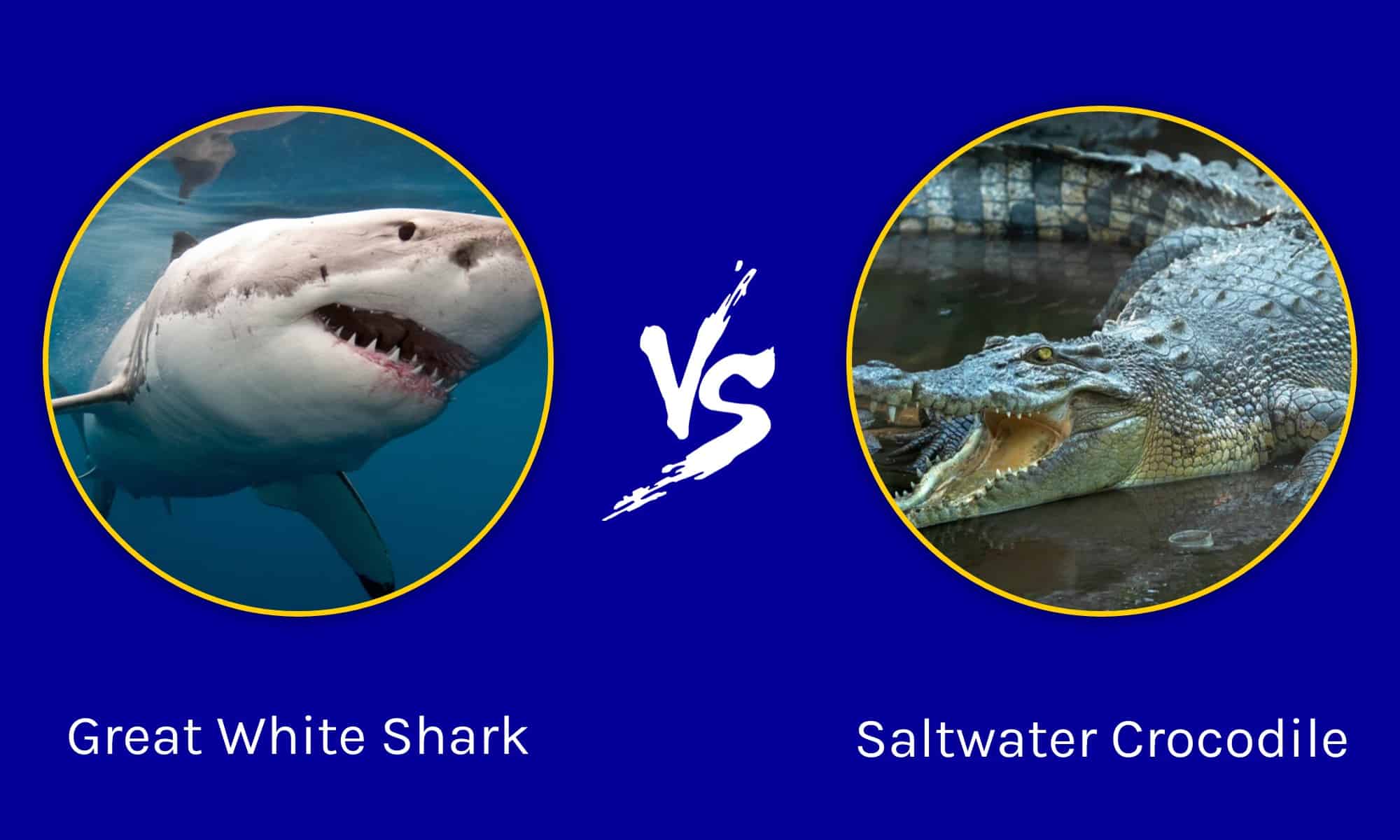

Below the ocean waves, many deadly reptiles and fish hunt their prey in astonishing fashions. Among the most frightening creatures to hunt below the water are sharks and crocodiles. A battle between a great white shark (Carcharodon carcharias) and a saltwater crocodile (Crocodylus porosus) would pit two of the world’s most powerful predators against each other. Size, speed/movement, method of attack, defense mechanisms, and predatory behavior will determine which of these apex predators would be the victor in a showdown between a great white shark and a saltwater crocodile.
Key Differences Between a Great White Shark and a Saltwater Crocodile
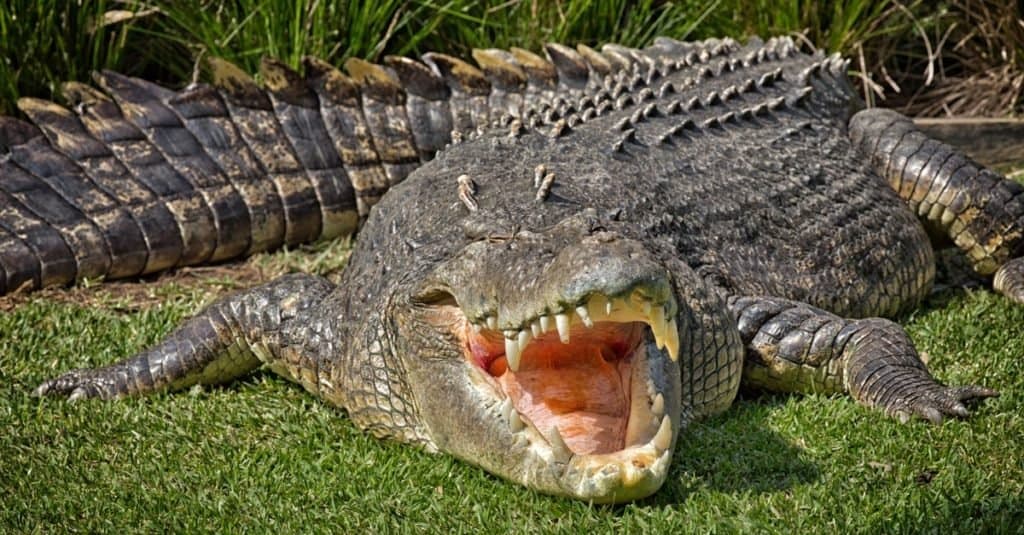
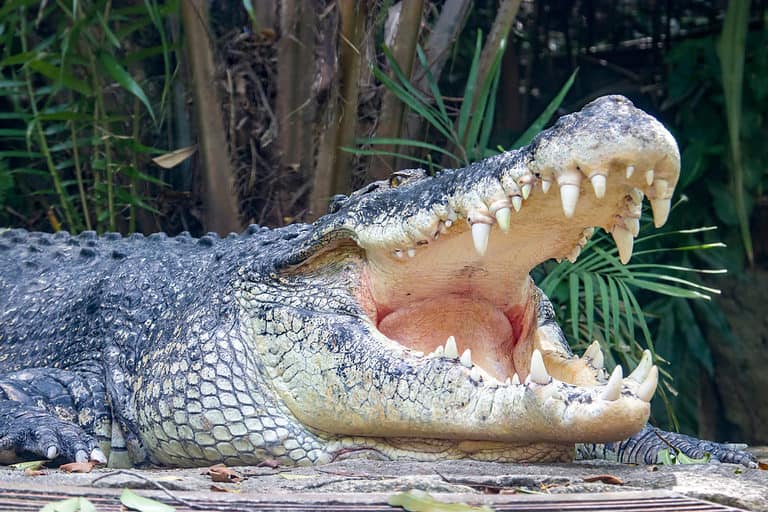
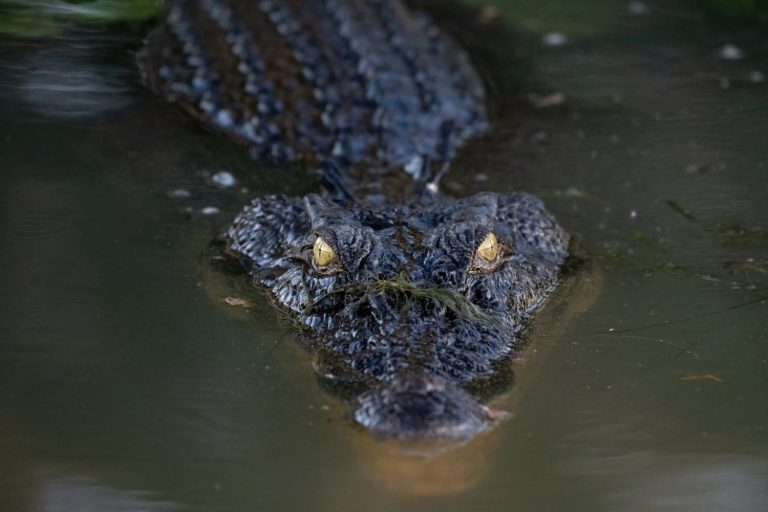
Saltwater crocodiles are large semiaquatic reptiles.
©PomInOz/Shutterstock.com
The primary differences between a great white shark and a saltwater crocodile are their morphology and habitats. Great white sharks are large cartilaginous fish that live in temperate ocean environments. Saltwater crocodiles are large semiaquatic reptiles that live in coastal areas from India to the Northern Coast of Australia.
Both animals are among the largest of their species and are recognized as apex predators in their environments. Nevertheless, the differences between these animals are significant.
Key Factors in a Fight Between a Great White Shark and a Saltwater Crocodile
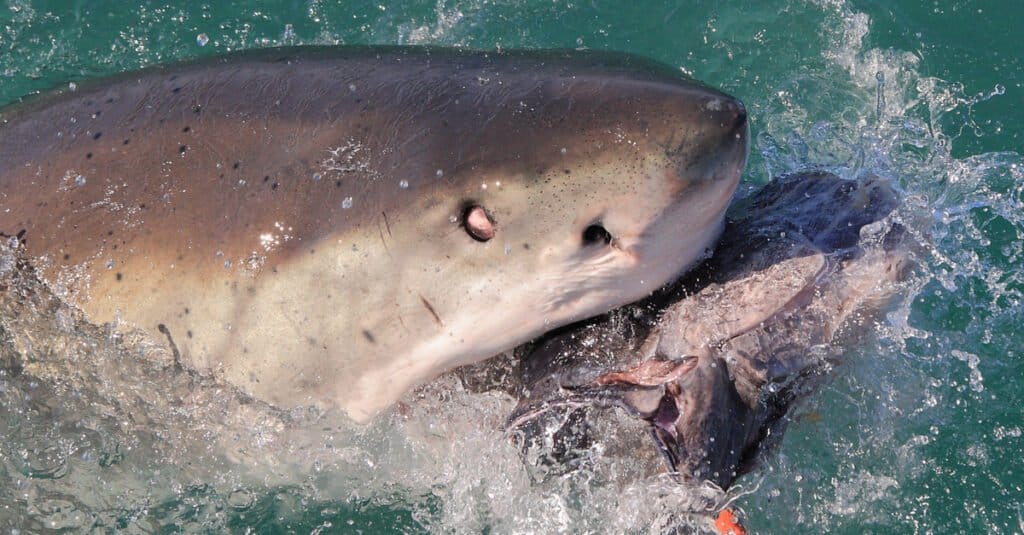
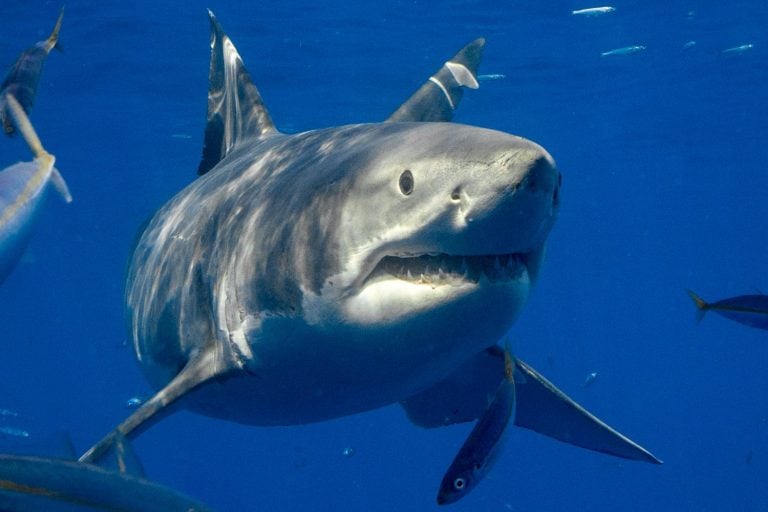
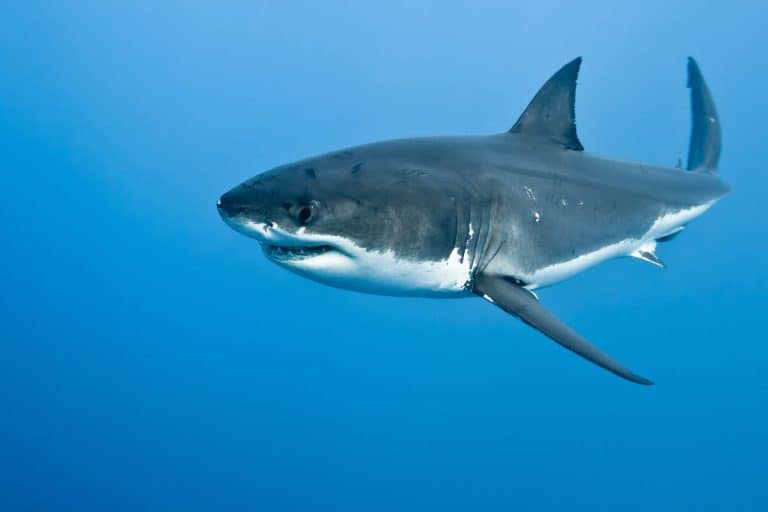
Great white sharks have a tremendous combination of speed and power.
©Alessandro De Maddalena/Shutterstock.com
Five broad metrics would affect the outcome of a fight between a great white shark and a saltwater crocodile: size, speed, method of attack, defense mechanisms, and predatory behavior. These factors will determine the winner in this hypothetical matchup.
Size
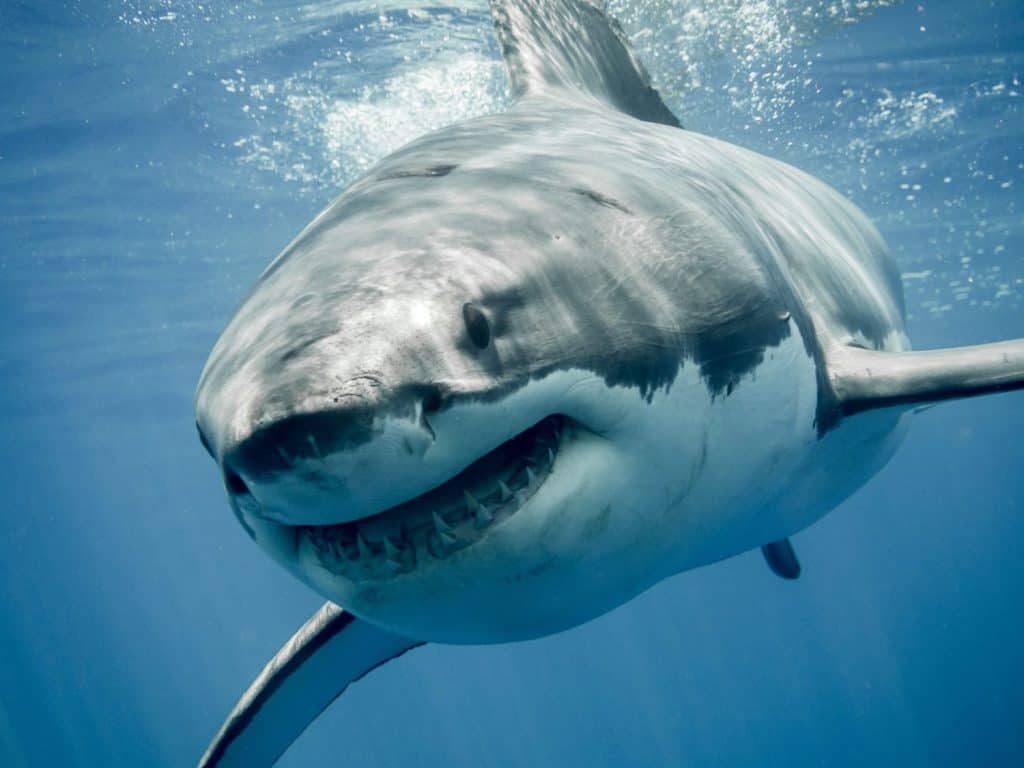
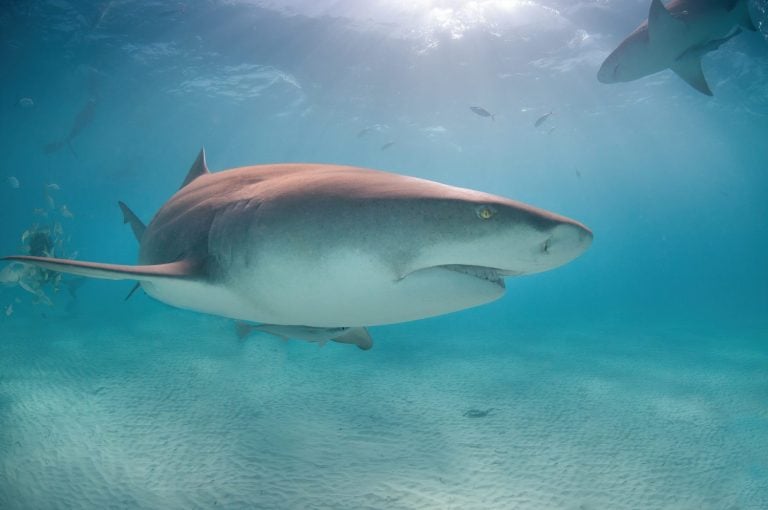
Size is an advantage for the great white shark in a contest with a saltwater crocodile.
©Ramon Carretero/Shutterstock.com
A great white shark is larger than a saltwater crocodile. A great white shark can reach 21 feet long and weigh 2,400 pounds. The saltwater crocodile can grow up to 20 feet long and weigh as much as 2,370 pounds, with rare individuals possibly exceeding this size.
The great white shark has the size advantage over the crocodile.
Speed and Movement
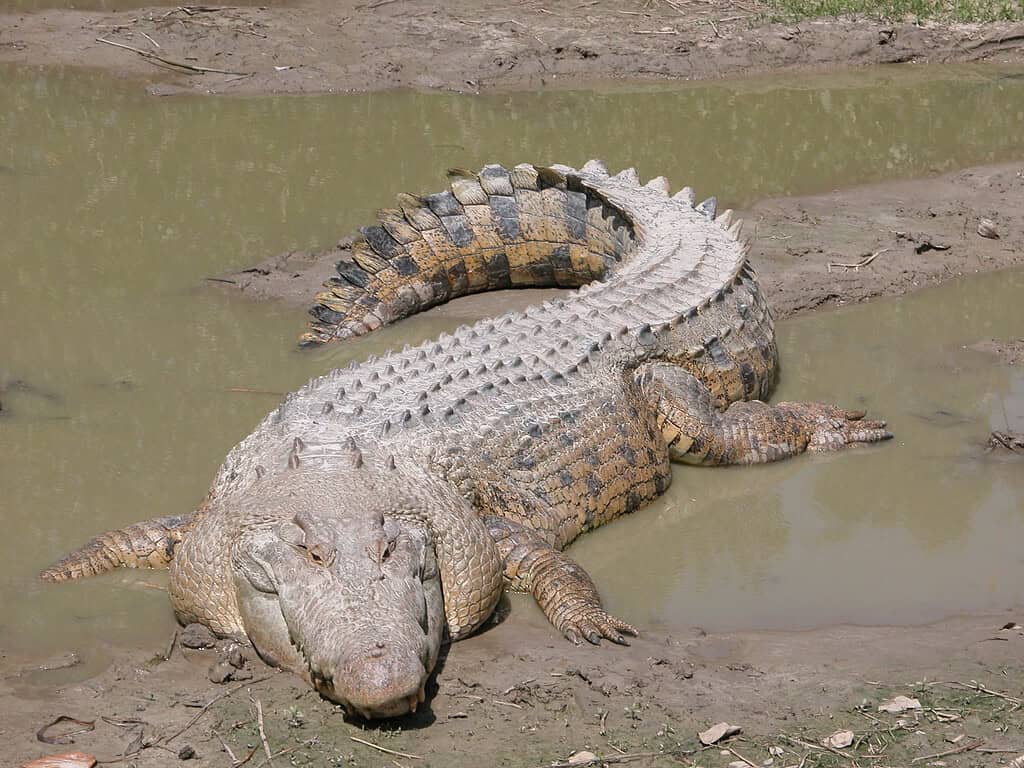
Although saltwater crocodiles aren’t slow, they are no match for much faster great white sharks.
©Molly Ebersold of the St. Augustine Alligator Farm / Public Domain – Original / License
Great white sharks are amazing hunters. Their success stems from their speed and movement. These sharks can reach speeds of up to 25 miles per hour (mph) in short bursts. Saltwater crocodiles are fast as well. However, they are not as fast as great white sharks. Saltwater crocodiles can reach speeds of 15 to 18 mph in the water.
Sharks have a speed advantage over saltwater crocodiles.
Methods of Attack
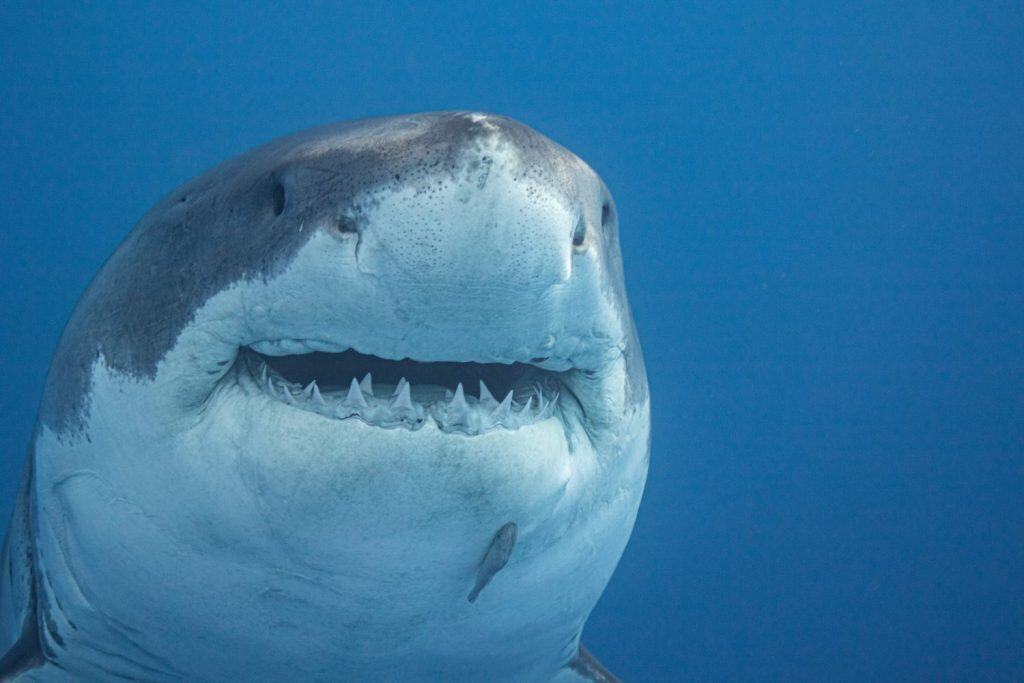
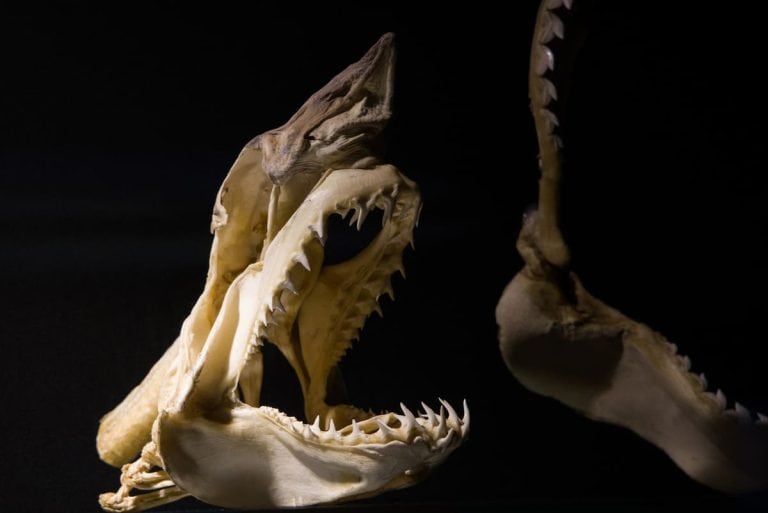
Great white sharks have over 300 teeth.
©screamingtrees_22/Shutterstock.com
Saltwater crocodiles attack their prey with their teeth and powerful jaws. These animals can generate up to 3,700 pounds per square inch (PSI), driving their large, conical teeth, which are between 3 and 4 inches long, into their enemy’s flesh. These teeth are designed to keep their prey in place while puncturing deep into their body.
Crocodiles will often use a death roll to disorient their prey and rip off chunks of flesh. Exsanguination, broken bones, and punctured organs are common in these brutal attacks.
Great white sharks are equally terrifying. They will deliver a sudden, powerful, surprise attack, often from below, to inflict a large, incapacitating, sometimes fatal bite. Their bites can reach 4,000 PSI, with hundreds of serrated teeth, each up to about 2.5–3 inches long, tearing into the prey
After the initial bite, a great white will usually retreat and wait for the prey to bleed out and weaken before returning to feed. This strategy prevents the shark from being injured by the thrashing and fighting of its prey.
Both creatures are incredibly deadly, so they are tied in terms of their attacking methods.
Physical Defenses
The largest crocodile species and also the largest living reptile in the world, the saltwater crocodile is an apex predator.
©PomInOz/Shutterstock.com
Saltwater crocodiles have very powerful physical defenses, including tough skin, the ability to move quickly, and the fact that they can move well on land and in water. Moreover, their size ensures that few animals attack them.
Great white sharks have their large size and bursts of swim speed to keep them safe. Combined with their finely tuned senses, few creatures can get the drop on a great white shark.
Saltwater crocodiles have more substantial defenses than great white sharks.
Predatory Behaviors
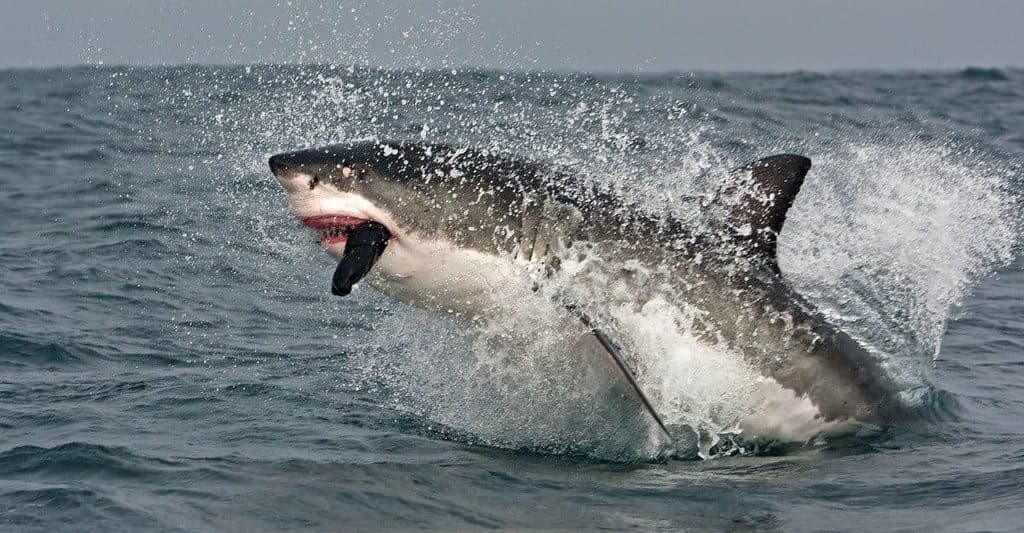
Great white sharks are listed on the International Union for Conservation of Nature (IUCN) Red List as Vulnerable.
©Martin Prochazkacz/Shutterstock.com
A great white shark is an incredible apex predator that uses ambush predation. The shark finds prey with its extraordinary senses, rapidly swims at them, and uses its powerful bite to land a devastating strike. They are far too fast and powerful for most prey to escape.
The saltwater crocodile is an ambush predator that waits for prey to come by while keeping all but its eyes underwater. When prey gets close, they attack. They’ll drag the animal into the water after they bite and then inflict more bites or engage in a death roll.
Both animals are amazing predators, but the shark’s predatory skills are enhanced by its senses.
The Winner of a Fight Between a Great White Shark and a Saltwater Crocodile
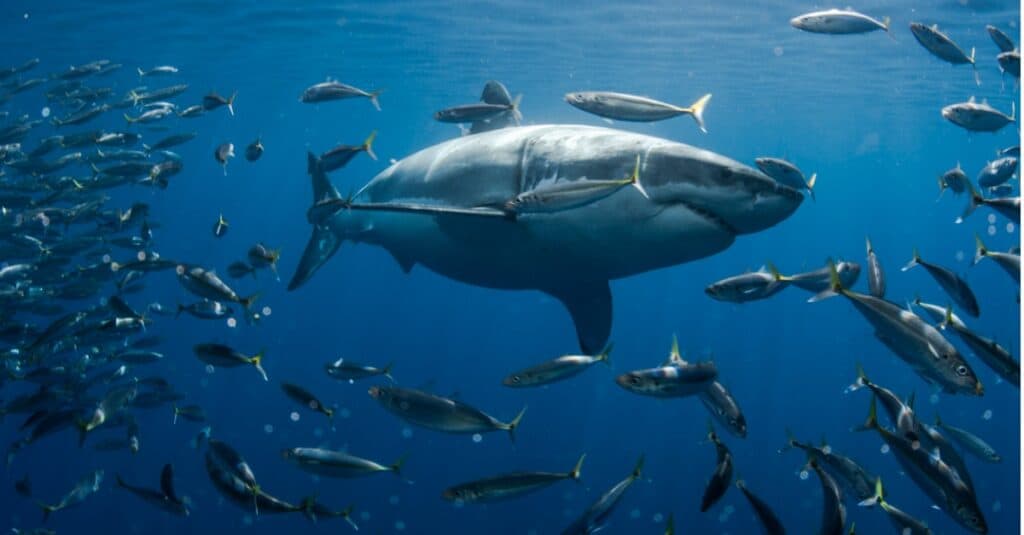
The great white shark is a carnivorous apex predator poised to win this fight.
©iStock.com/atese
A great white shark would win a fight against a saltwater crocodile. These deadly creatures are incredibly powerful, but the great white shark has an amazing advantage in the water. Not only would this animal probably notice the crocodile first, but it also has the speed to land a devastating attack.
Saltwater crocodiles are capable of long-distance travel, sometimes migrating hundreds or even thousands of miles by utilizing ocean currents. The shark would attack from the bottom in deeper water, crashing into the reptile and taking a massive bite out of it. This fight would end quickly in most cases.
If both animals were placed in the same tank, the fight would be a little more interesting. Still, the size difference means the contest would boil down to a biting match that puts victory out of the crocodile’s reach.