
Quick Take
- Great white sharks can reach 22 feet long and slice through the water’s surface with an unmistakable fin, yet somehow a population has been quietly living in European waters, largely undetected. See their global range →
- A fishing boat accidentally hauled in a juvenile great white in 2023, and that single catch unlocked a hidden historical record stretching back over 160 years. Read about the 2023 catch →
- The Mediterranean great white population faces a threat that has nothing to do with direct shark hunting, and this threat has already caused them to vanish from parts of their range. Explore the population threats →
- There may be a secret breeding ground hiding somewhere in Spanish waters, though researchers aren't certain it even exists yet. Discover the possible breeding ground →
Great white sharks are not often considered to be ‘mysterious’ sharks. They have been the stars of movies, have terrified divers, and have driven humans from popular beaches. However, there is now evidence that they can also be very elusive when they choose to be. Surprisingly, the Mediterranean Sea is where they are choosing to remain mysterious. A new analysis of shark recordings has revealed that these magnificent creatures may be living in Spanish waters. We investigated the story behind the science.
Where Are Great White Sharks Usually Found?
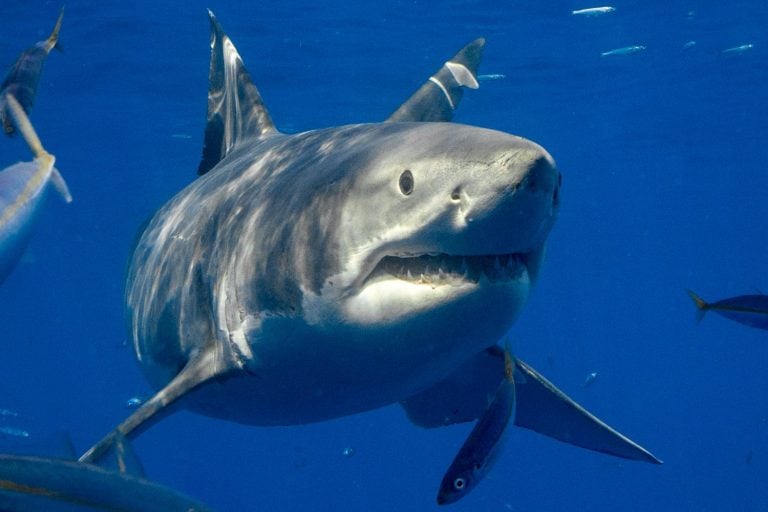
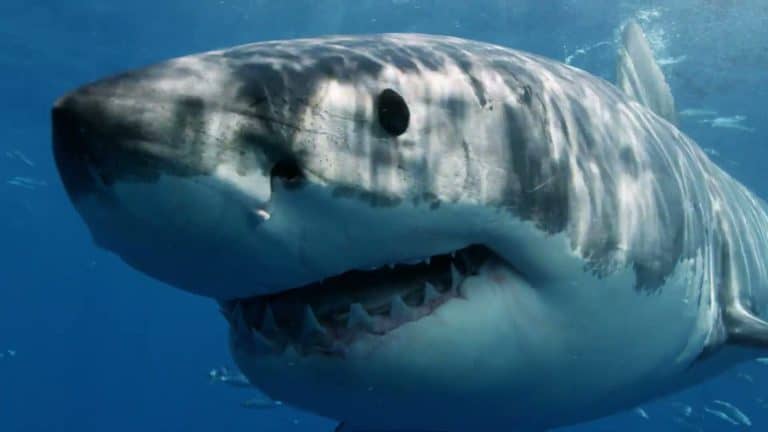
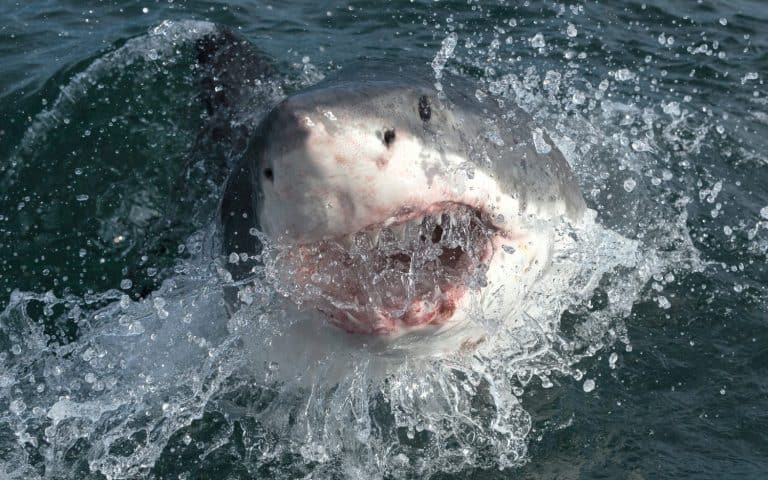
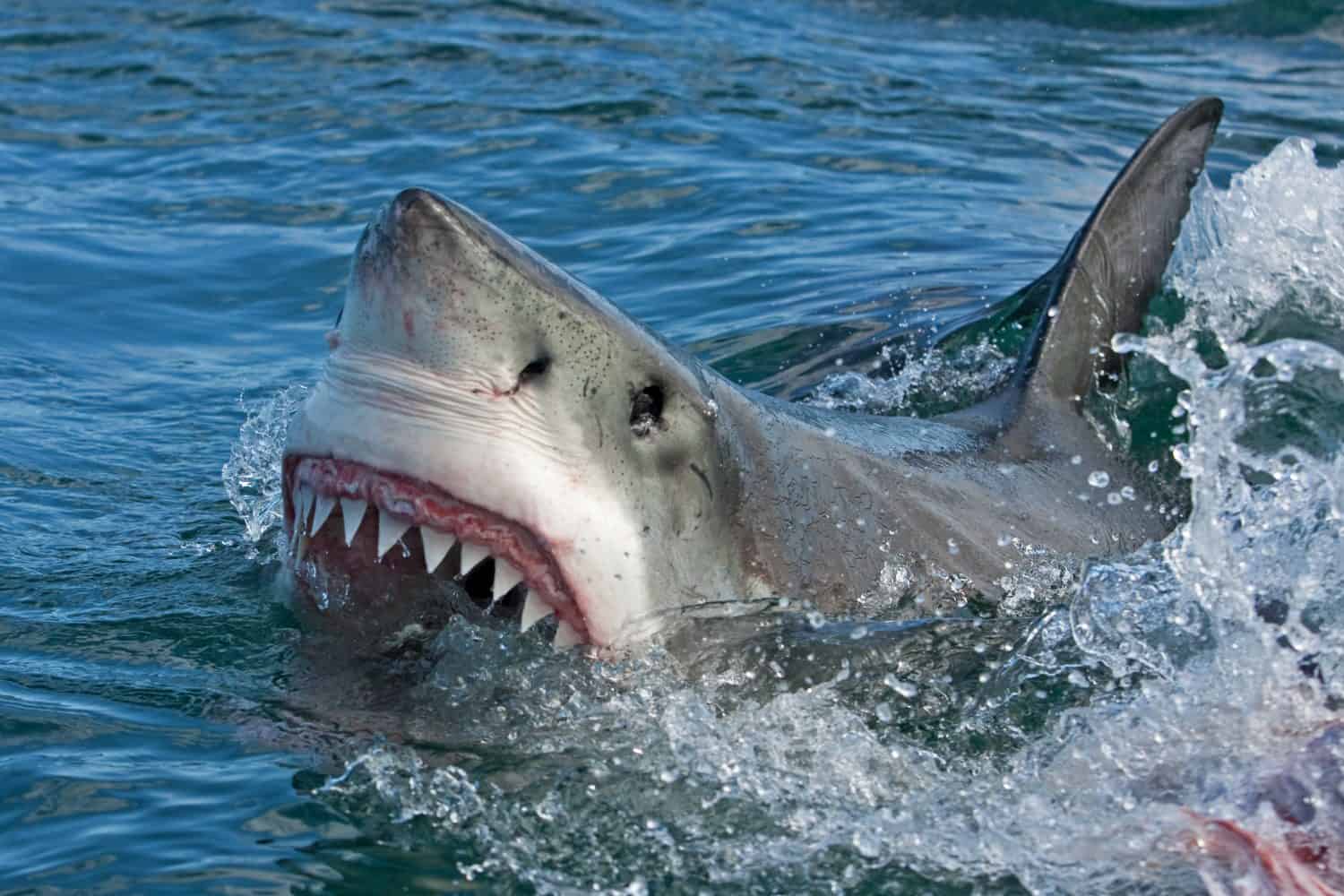
Great white sharks (Carcharodon carcharias) are not exactly easy to miss. The largest specimens can reach 22 feet in length and weigh up to 6,000 pounds. The females are larger than the males. If an animal of that size swims towards you in the ocean, you are going to spot it! Their habitats are primarily coastal and offshore areas along insular and continental shelves. That brings them into contact with the very areas where humans tend to enter the ocean for work and recreation. Additionally, their highly distinctive dorsal fin is often visible slicing through the water as they swiftly pursue prey.
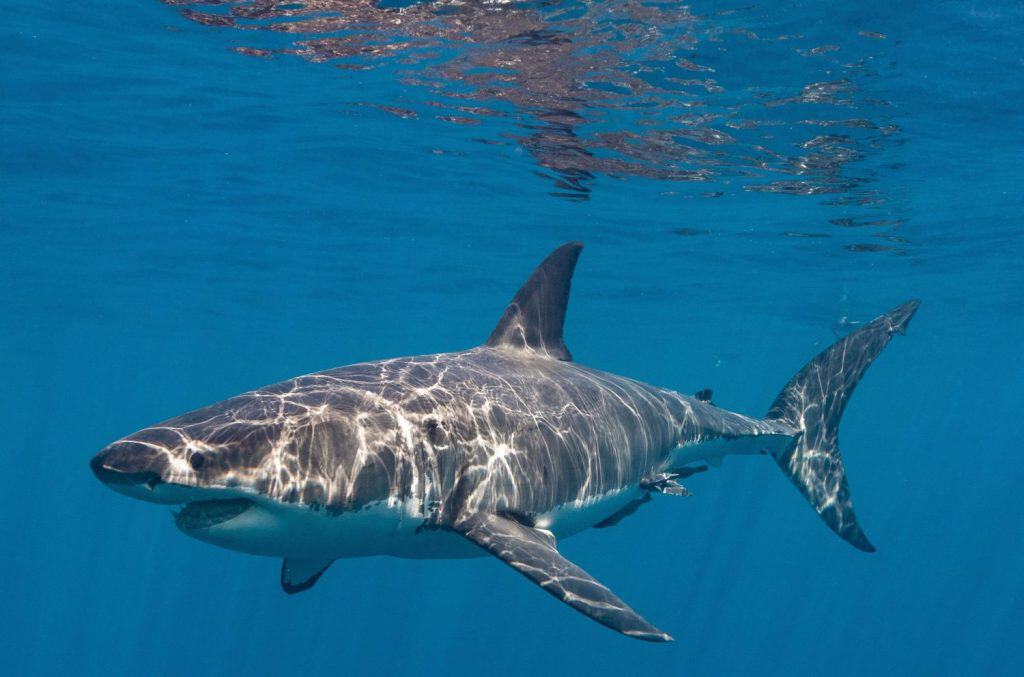
Great white sharks are found in many oceans.
©Wirestock Creators/Shutterstock.com
However, they can also hang out in deeper water and have even been spotted at depths of 6,000 feet. We know that their geographic range is extremely wide. They are found along coastlines from California to Alaska, as well as in South America, Australia, and other regions. Yet, despite this wide range, little is known about their exact numbers, and they remain highly elusive.
Are There Great White Sharks in the Mediterranean?
These magnificent apex predators are classified as Vulnerable globally by the IUCN, and their population trend is unknown. Currently, there are nine recognized spatial unit populations in our oceans, one of which is in the Mediterranean Sea. However, the size of this population has not been determined.
The Mediterranean Sea is an intercontinental sea situated between Europe, Asia, and Africa. It covers around 970,000 square miles and has a maximum recorded depth of 16,762 feet. Because of the short residence time of its waters, the Mediterranean Sea is considered a hotspot for climate change. It also suffers from pollution, and fish stock levels are alarmingly low.
Juvenile Great White Caught in 2023
A research paper published early in 2026 recounts how a young shark was caught accidentally by a fishing vessel in April 2023. The shark was 6.8 feet long and weighed around 180 pounds. It was such an unusual find that researchers searched back through all the reports of previous sightings of these sharks in the area, dating back to 1862.
In total, they found 62 documented sightings in Spanish waters. Interestingly, there seemed to be a concentration of sightings around the Balearic Islands. One particularly gruesome record from the 1800s recounts how a shark severed a bather’s leg at San Andrés beach, west of Málaga city.
How Is the Mediterranean Great White Shark Population Doing?
Mediterranean great whites deserve the ‘mysterious’ designation because they are so elusive. Despite the lack of sightings, experts believe they likely live throughout the Mediterranean Sea. However, they are only present in very low numbers, which makes them vulnerable. This population is genetically distinct from the Atlantic population, making it genetically isolated.

The Mediterranean Sea is under pressure from overfishing.
©Sabina Berezina/Shutterstock.com
The Mediterranean white shark population is assessed regionally as Critically Endangered by the IUCN. These sharks take a long time to reproduce. Females do not reach sexual maturity until they are between 12 and 18 years old. It takes populations a long time to recover from losses.
These sharks are under pressure from fishing. However, their negative reputation means that they are also targeted. There are still no effective, enforceable management measures specifically protecting Mediterranean great white sharks. Experts suggest that the Mediterranean Sea subpopulation has declined by at least 50–80 percent over the past three generations (approximately 70 years), though precise figures remain uncertain.
Conserving Mediterranean Sharks
The capture of a juvenile shark, together with the analysis of previous records, provides tentative reasons for hope. There may even be a breeding ground in Spanish waters, although this is far from confirmed. The captured juvenile may have been born in breeding grounds elsewhere in the Mediterranean and migrated to Spain. Experts also suspect that there is a breeding ground in the northeast Aegean Sea, and juveniles have been spotted in the Sicilian Channel.
The fortunes of the Mediterranean great white sharks are connected to the stocks of Atlantic bluefin tuna in the Mediterranean Sea. We know that as stocks of these tuna declined in the Sea of Marmara and Bosphorus waters, in the northernmost extension of the Mediterranean ecosystem, shark numbers also declined. Eventually, they disappeared from this location altogether. If regional conservation can protect tuna populations, this will likely also benefit the elusive Mediterranean sharks.