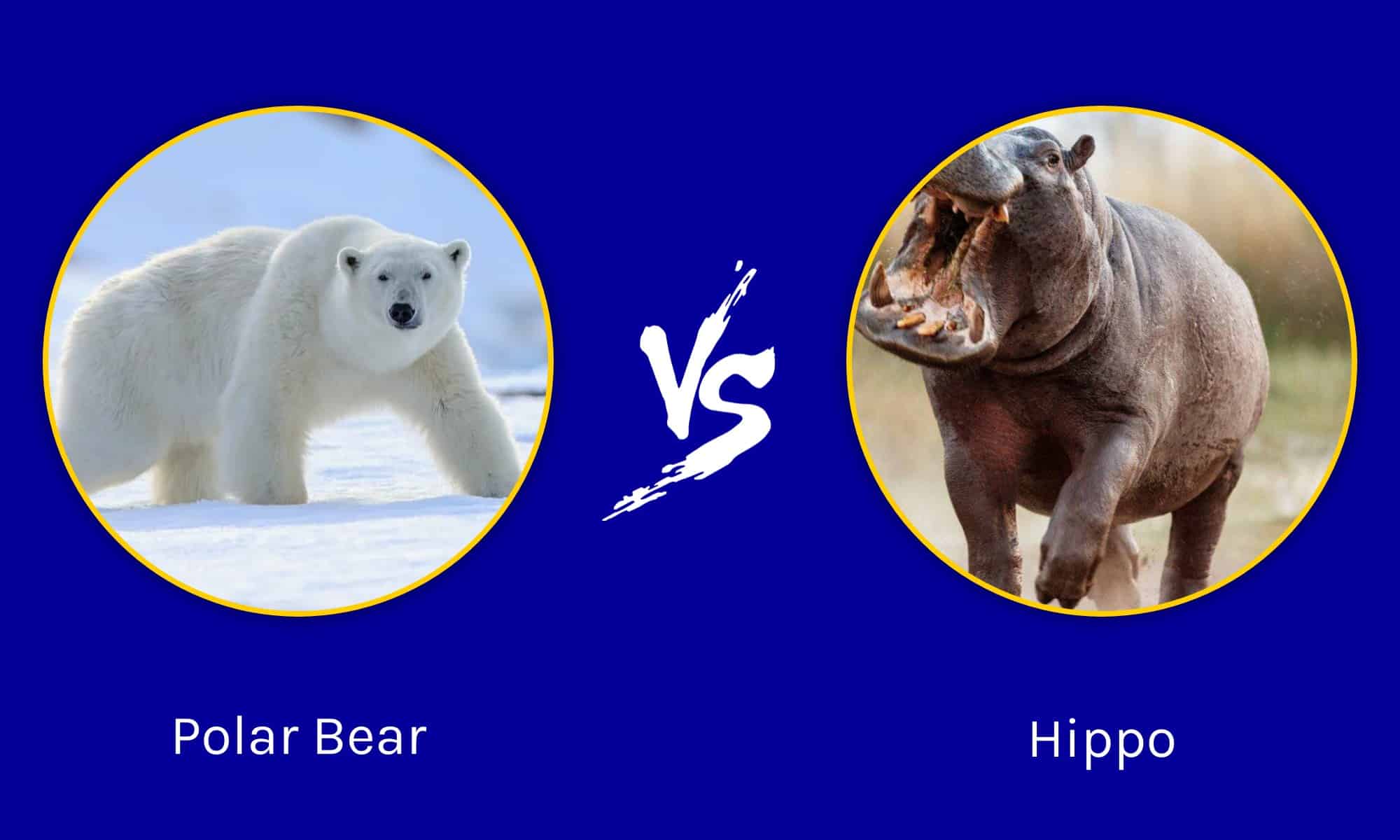

Few semi-aquatic mammals strike as much fear into the minds of humans as the hippopotamus (Hippopotamus amphibius). Hippos are estimated to be responsible for between 500 and 3,000 deaths per year throughout Africa. These massive, aggressive animals can kill humans with ease. Polar bears (Ursus maritimus) are also powerful semi-aquatic creatures that live in Alaska, Canada, Russia, Greenland, and islands, like Norway’s Svalbard. These bears are not the cute and cuddly creatures they’re portrayed as; they’re skilled killers. So, how would a polar bear vs. a hippo fight end? Continue reading to discover which of these magnificent beasts will reign victorious.
Key Factors in a Fight Between a Polar Bear and a Hippo
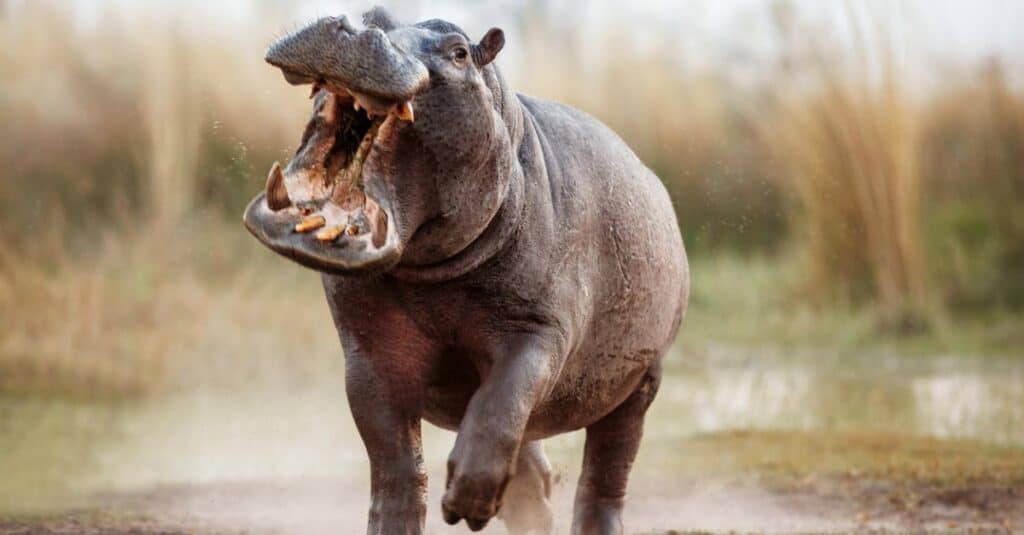
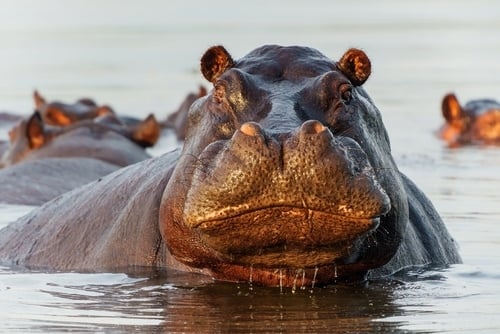
A hippo’s jaw has a powerful bite force and teeth over 1ft long.
©PhotocechCZ/Shutterstock.com
In a battle between the heavyweight polar bear and hippo, factors such as size, speed and movement, offensive power, defensive capabilities, and predatory behaviors will determine which animal has the advantage in a direct confrontation.
Size
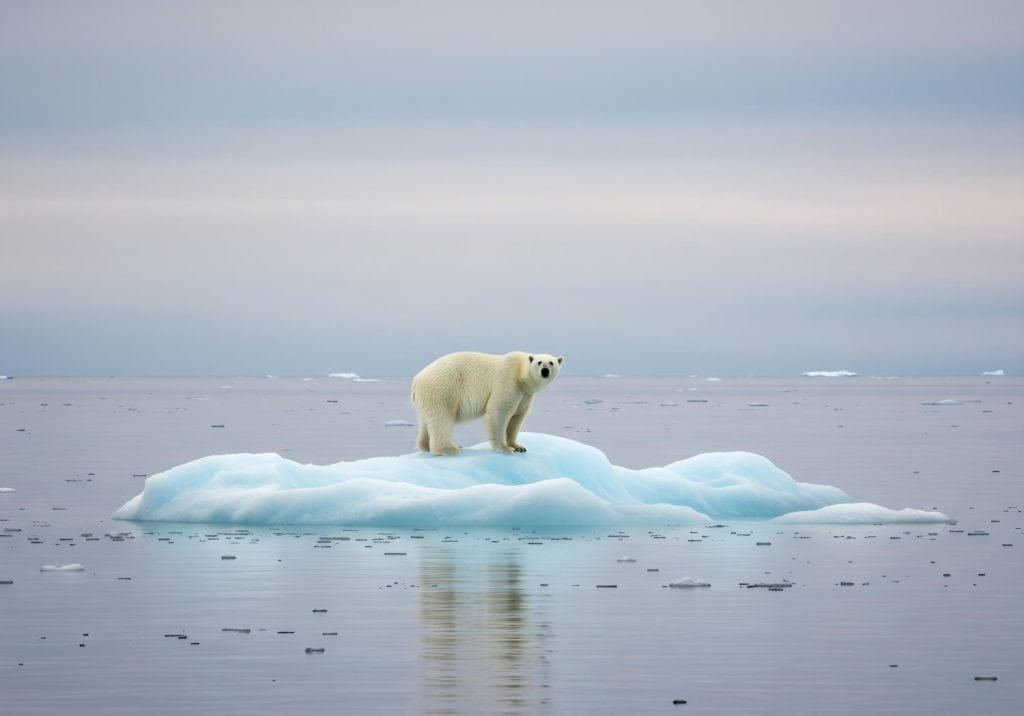
Although polar bears are massive, hippos are larger.
©Andrewfel/Shutterstock.com
The primary differences between a polar bear and a hippo are their morphology and size. Male polar bears weigh 1,300 pounds on average, stand up to five feet at the shoulder, and are over eight feet tall when standing on their hind legs. Females weigh significantly less, topping out at approximately 700 pounds. They have thick fur coats that insulate their bodies from the extreme cold, trapping a layer of air close to their skin for warmth. The fur also provides camouflage in their snowy Arctic environment.
Hippos are massive, mostly hairless mammals with barrel-shaped bodies, short legs, and enormous jaws with large teeth. These enormous animals measure 10.8 to 17 feet long, with a shoulder height of five feet. Adult hippos weigh between 3,000 and 9,900 pounds.
Hippos have the size advantage in this fight.
Speed and Movement
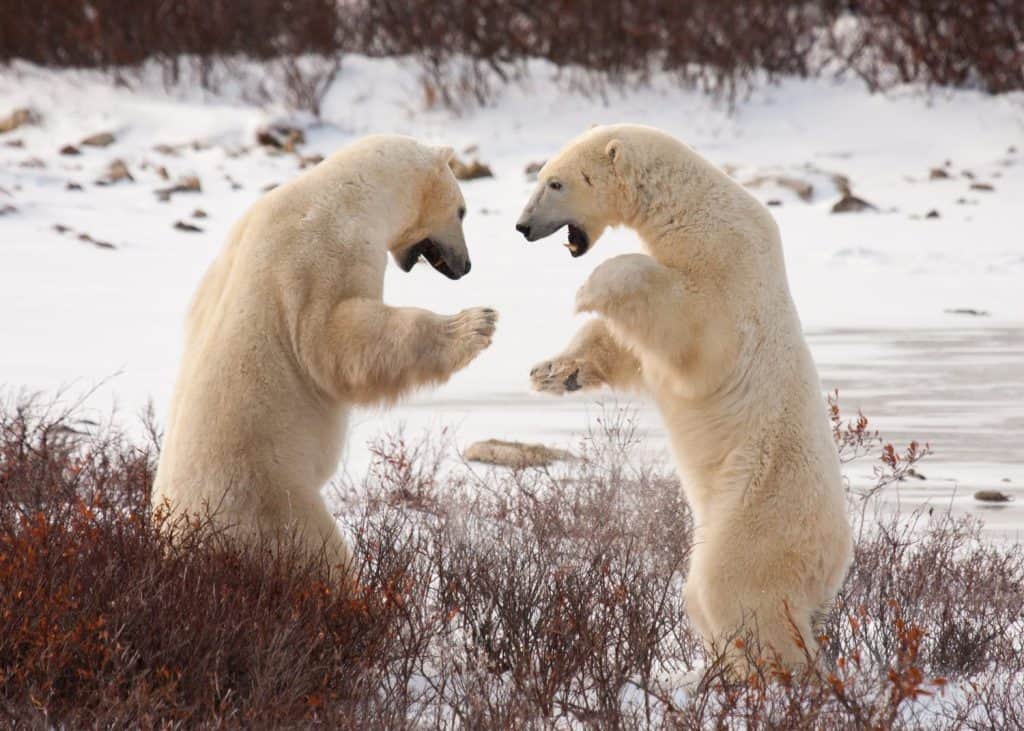
Polar bears are the world’s largest land carnivores.
©Green Mountain Exposure/Shutterstock.com
Polar bears can reach short-burst speeds of about 25 miles per hour (mph) on land, although they typically move more slowly in the water. They are strong, consistent swimmers, capable of speeds of about 6 mph, and can swim for days at a time over long distances, hunting seals.
Despite their bulk, hippos can run up to 19 mph on land, and some estimates suggest they can reach speeds of 28 to 30 mph in short bursts. Hippos do not actually swim. Because their dense bodies prevent them from floating, hippos move through water by walking, running, or bouncing along the riverbed. By pushing off the bottom, they can travel at an average speed of about 5 mph, with short bursts up to 12 mph.
Hippos have the speed advantage.
Defenses

A hippo’s large, continuously growing canines are its most prominent and dangerous teeth, but its flat molars are equally vital for its herbivorous diet.
©Capture The Wild / YouTube – Original
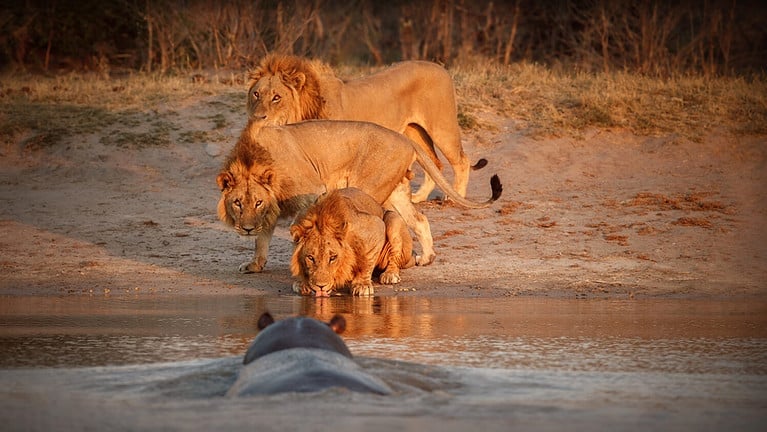
Hippos have defenses that are similar to, but superior to, those of polar bears. They have skin that is about 2 inches thick, which provides significant protection from attacks. These animals are regularly attacked by lions, but they often simply shrug off these big cats and keep moving.
Hippos are also highly aggressive animals. Moreover, it’s difficult to bring them to the ground because of their massive size. Polar bears have insulated fur and thick skin. Their fur, skin, and fat layers together can be up to 4 inches thick.
Polar bears are also large and have a frightening threat display. They are considered highly dangerous apex predators. Polar bears have aggressive tendencies, especially toward humans, whom they may view as a food source. Their aggression is often driven by hunger.
The hippo’s build and massive weight give it a defensive advantage.
Offensive Capabilities
©Henk Bogaard/Shutterstock.com
Hippos are more powerful than polar bears. Polar bears have sharp, curved 4-inch claws that they use to grab their prey and hold it in place while delivering a 1,200 pounds per square inch (PSI) bite. This incredibly powerful bite can help them break bones and remove flesh from other animals.
Hippos have an even more powerful bite, estimated to be between 1,800 and 2,000 PSI. However, their teeth are not designed to rip flesh. They puncture and smash their food with teeth that measure up to 1.5 feet long. They are also not afraid to bowl over their enemies and trample them with their weight.
Hippos have the offensive advantage in this case.
Predatory Behaviors
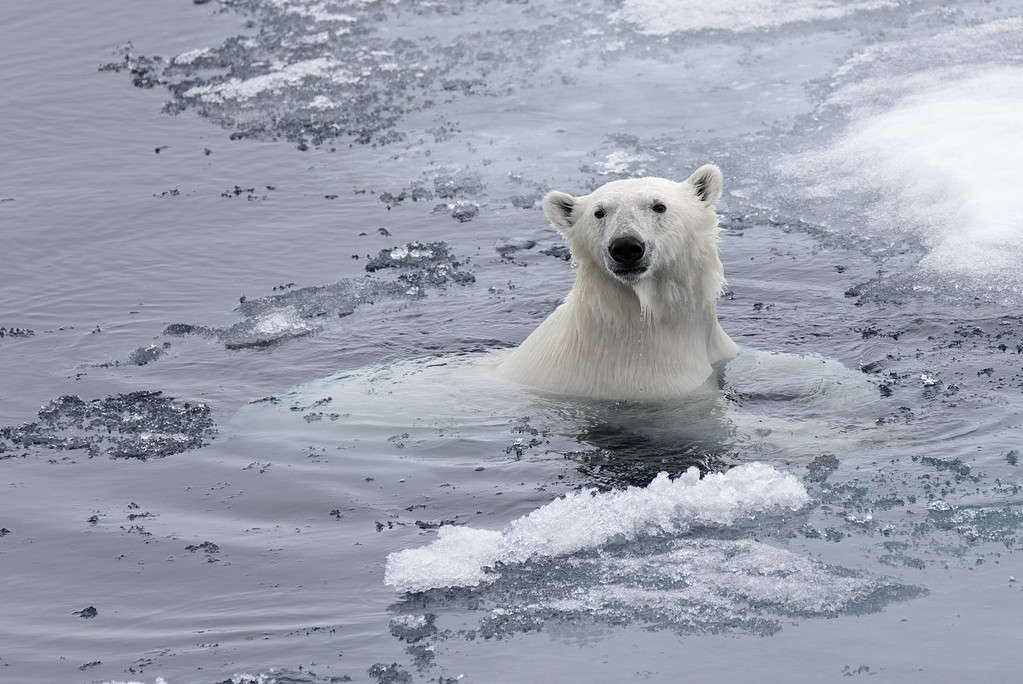
Polar bear (Ursus maritimus) swimming in Arctic sea close up
©Alexey_Seafarer/iStock via Getty Images
Polar bears are ambush predators. Polar bears wait for seals above holes in the ice. Once the seal appears, the polar bear grabs it with its claws and bites it to death. It is a messy, brutal event.
Hippos are mega-herbivores, feeding mainly on short grasses found on land near rivers and lakes. Although very rare instances of carnivorous behavior have been documented, especially during droughts, their powerful jaws are primarily used for territorial displays and fighting, not for hunting prey.
Polar bears are effective, intelligent predators, and they have the advantage in this category.
Who Would Win in a Fight Between a Polar Bear and a Hippo?
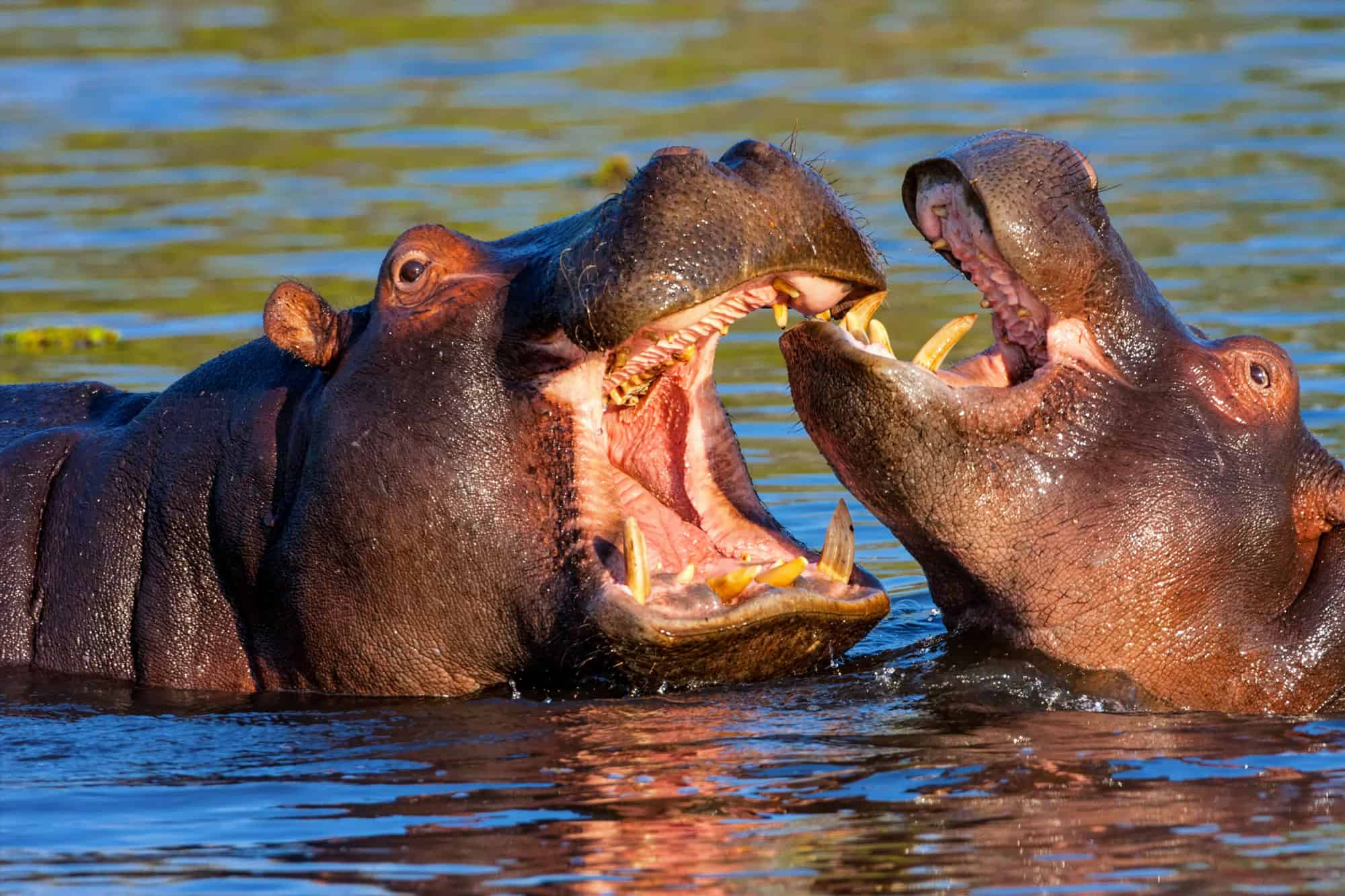
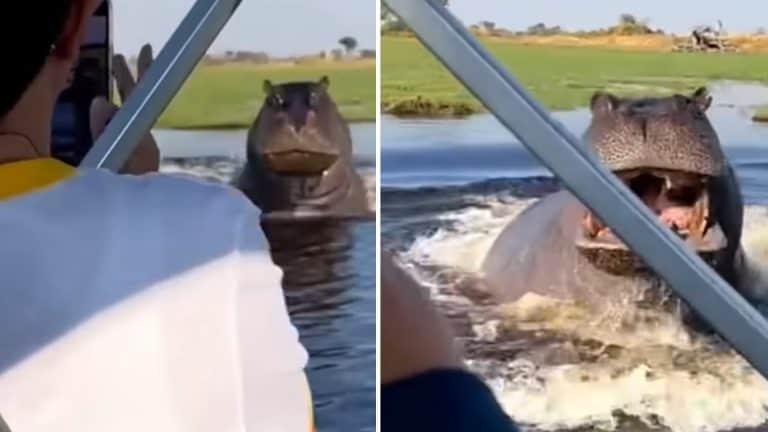
Hippos are highly aggressive, unpredictable and often charge other animals or even humans.
©iStock.com/mesut zengin
A hippo would win a fight against a polar bear. The hippo is larger, stronger, has better offensive capabilities, and a defense that would allow it to last longer in a battle.
The polar bear could potentially use its claws to injure the hippo, but it would take significant time and effort to cut through all the hippo’s flesh and fat. The hippo, one of the most powerful and aggressive animals in the world, would destroy the polar bear before it could inflict any major damage.
ts massive teeth would penetrate the bear’s fur and skin, breaking bones and tearing into organs. In this rare case, speed on land would only matter at the beginning of the fight. Even if the animals charged at each other to start the battle, a distinct possibility, the hippo could slam into the polar bear and end the fight very quickly.