
Quick Take
- Achieving survival after a Redback bite once required 1 specific intervention to prevent a fatal outcome.
- The 0.5-inch threshold creates a classification crisis when identifying the larger Black Widow species.
- Redback populations in Japan follow a unique hibernation cycle.
- Initial scouting of cluttered areas is mandatory to prevent defensive strikes during property maintenance.
While these two spiders are technically cousins, there are many differences between a redback spider vs black widow spider. If you live in an area where both of these spiders exist, can you tell them apart? This may be important for you to know, especially if you have a fear of arachnids! In this article, we will address everything you need to know about redback spiders and black widow spiders, including what they look like and where they prefer to live. We will also cover how venomous they are, their behavior, and how likely they are to bite humans.
Comparing Redback Spider vs Black Widow Spider
| Redback Spider | Black Widow Spider | |
|---|---|---|
| Size | 0.4 in–0.6-inch body length | 0.5 in–0.6-inch body length |
| Appearance | Glossy black body with red dorsal stripe on upper abdomen; males are brown in appearance | Generally shy and non-aggressive, females often eat males; redbacks in Japan hibernate, but others don’t |
| Location and Habitat | Australia and Southeast Asia; often found in populated areas and builds webs in any undisturbed area, including wood piles and clutter | North and South America, southern Europe, Africa, Asia, and Australia. Found in warmer climates and in well-lit areas. Prefer dryness and hiding beneath clutter |
| Behavior | Generally shy and non-aggressive; females often eat males; redbacks in Japan hibernate, but others don’t | Reclusive and defensive if guarding eggs or surprised; will bite more readily than brown widows |
| Venom Level | Extremely venomous | Extremely venomous |
Key Differences Between Redback Spider vs Black Widow Spider
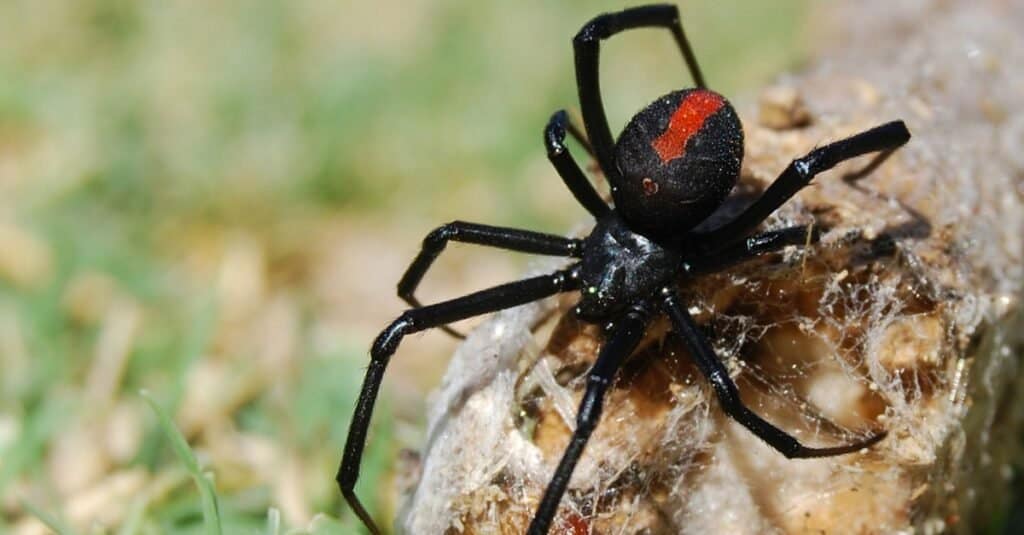
While both of these spiders have glossy black bodies, the redback spider features brown males, while all black widow spiders are black.
©iStock.com/maria72
There are many key differences between redback spiders in black widow spiders. The redback spider is smaller on average than the black widow spider. While both of these spiders have glossy black bodies, the redback spider features brown males, while all black widow spiders are black. Finally, the black widow spider is found in many areas of the world, while the redback spider is only found in a few locations worldwide.
Size
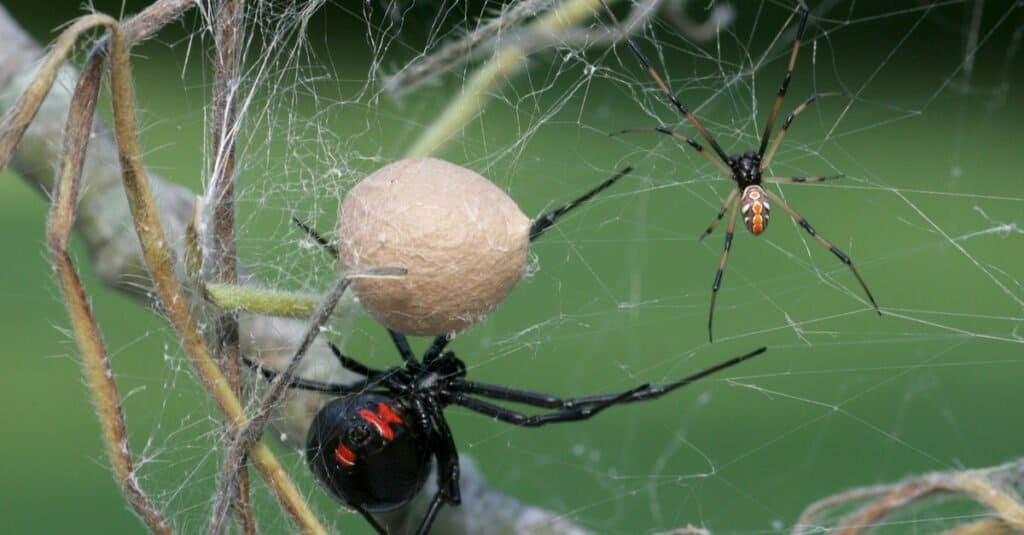
The black widow spider is found around the world, while the redback spider is only found in a few locations worldwide.
©Mark_Kostich/Shutterstock.com
The average black widow spider is a tad larger than the average redback spider. While redback spiders usually grow to between 0.4-0.6 inches in length, black widow spiders grow slightly larger, from 0.5-0.6 inches in length.
Location and Habitat
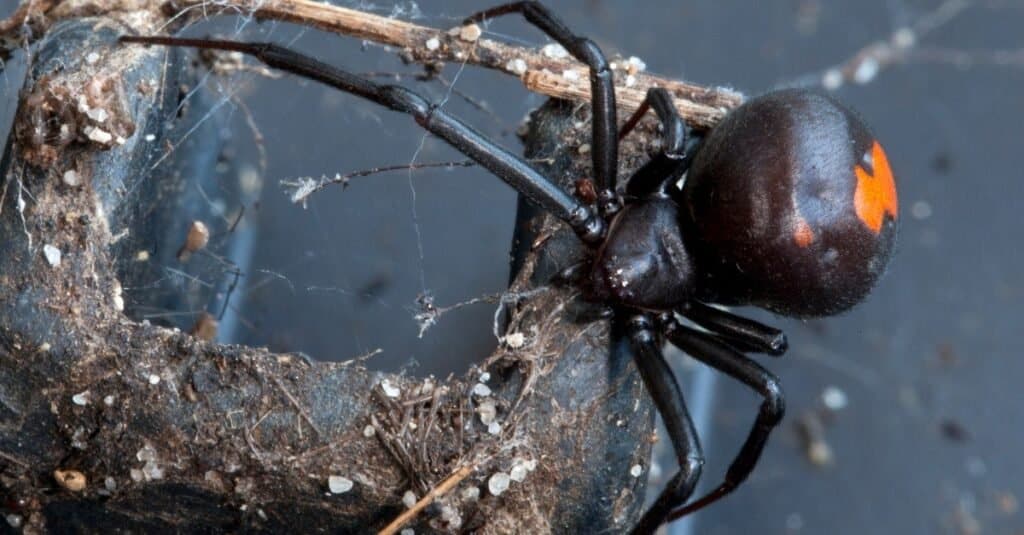
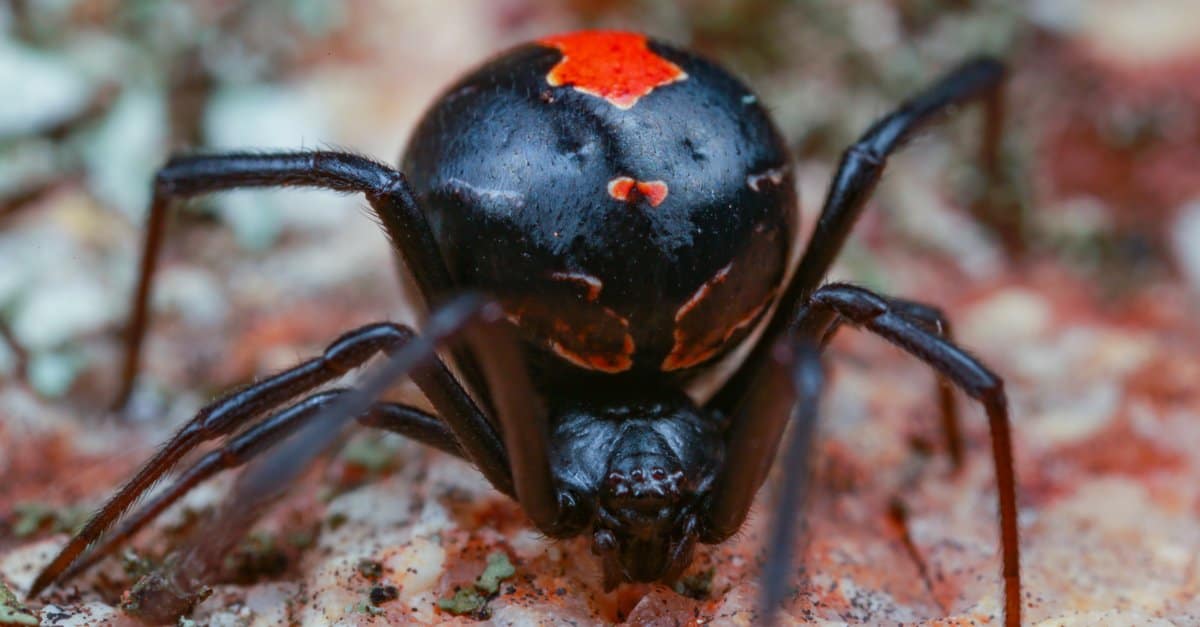
Both of these spiders have glossy black bodies.
©iStock.com/KathrynWillmott
The location and habitats of the redback spider and black widow spider vary greatly. The black widow spider is found mostly in North and South America, southern Europe, Africa, Asia, and Australia. The redback spider is native only to Australia, but they’ve been introduced to Japan, New Zealand, and some parts of Southeast Asia. There are not stable, established populations in Europe (only occasional interceptions). This also leads to the spiders having different habitat preferences overall.
Both black widow spiders and redback spiders build their nests in undisturbed areas that often involve a decent amount of clutter, such as wood piles or attics. Both spiders are also commonly found near human habitation, such as in sheds, garages, and other sheltered locations. The average black widow prefers a drier climate compared to a moister environment, where you may find a redback spider.
Appearance
©Peter Yeeles/Shutterstock.com
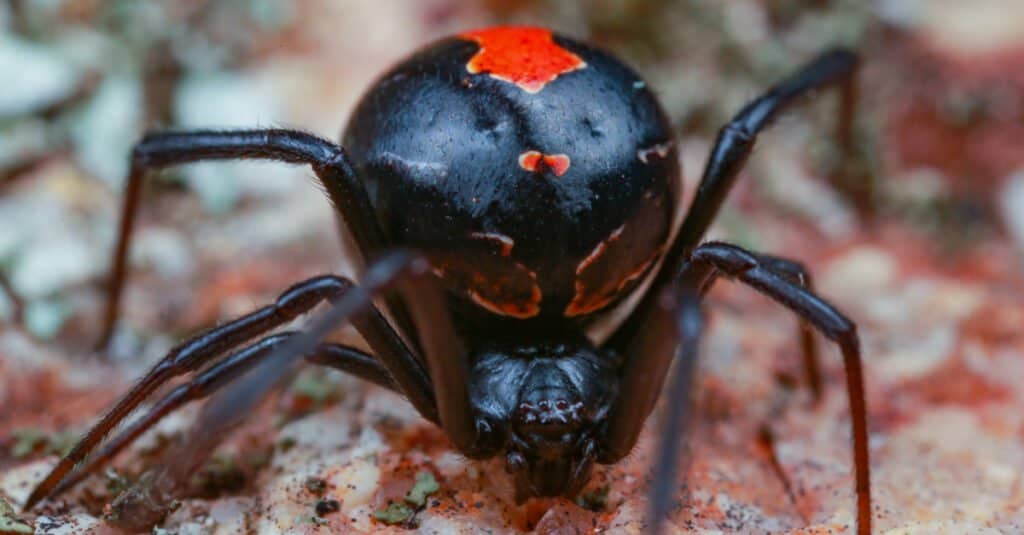
Many people confuse black widow spiders and redback spiders, given that they are cousins with similar appearances. Both of these spiders have glossy black bodies and red markings on them, but male redback spiders are brown, while male black widow spiders are black or gray.
Black widow spiders have a signature hourglass underneath their abdomens, while redbacks can sometimes have a similar hourglass shape (though this marking is not reliable). Redbacks do have a red dorsal stripe on the upper abdomen. However, no one would blame you for not being able to tell these two spiders apart, especially because you should avoid getting too close if you stumble upon one!
Behavior
Both species are generally shy and non-aggressive, biting mainly in defense when disturbed. Both species avoid conflict, and differences in aggression aren’t that pronounced.
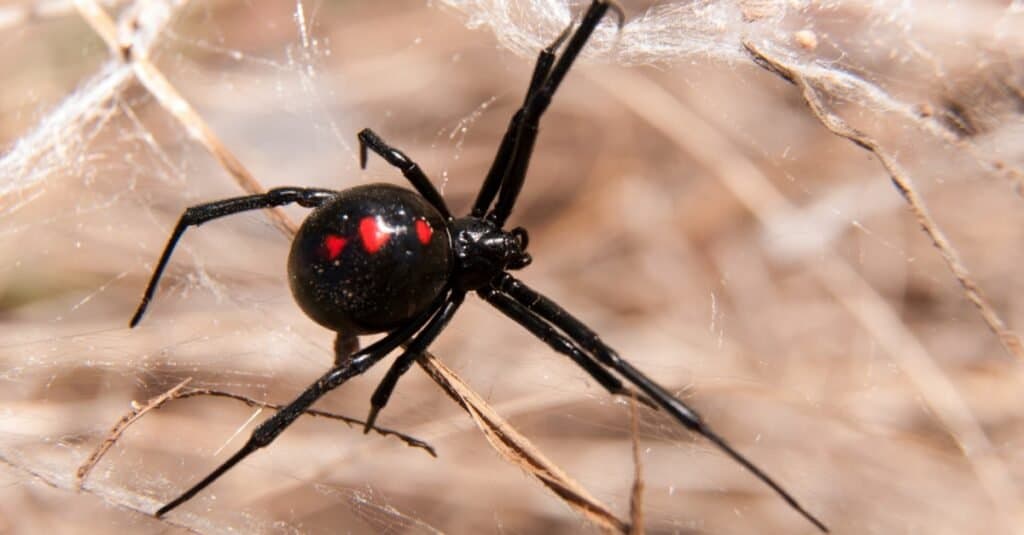
For the most part, black widow spiders are generally shy and non-aggressive.
©Sari ONeal/Shutterstock.com
One unique fact about the redback spider is that the redback spiders found in Japan hibernate every winter, which is not the case for any other type of redback spider or black widow. Most spiders seek shelter during the winter months, but this is something completely unique to the redback spiders living in Japan!
Venom Level
A final difference between the redback spider and the black widow spider is their venom level. Both of these spiders are extremely venomous and should be avoided at all costs. Redback venom is considered more medically significant in Australia; before antivenom, fatalities did occur. Meanwhile, black widow bites can cause severe pain and illness (latrodectism), but fatalities are very rare in modern times.

This post was updated on September 12, 2025 to clarify black widow body size, redback markings, range, and spider behavior in regard to aggression.