
Quick Take
- The team that discovered this new spider species wasn't even looking for spiders, but their accidental finding represents a huge discovery. See the accidental find →
- The Himalayan and Hawaiian happy-face spiders share a striking pattern, yet their DNA tells a completely different story about how it got there. Explore the DNA evidence →
- Male and female Himalayan happy-face spiders actually look different, and here's why. See the sex differences →
- Despite living on opposite sides of the world, both happy-face spider species share one unexplained behavior that has researchers stumped. Discover the shared behavior →
Sometimes it can be easy to forget how huge our world is. There are many areas that are hard to access, largely because of their climate or geography. For example, dense rainforests can be hard to navigate. Remote areas of the Himalayas have steep terrain, while Siberia’s extremely cold temperatures make travel nearly impossible for some parts of the year. To me, the most fascinating part of contemplating untouched nature is wondering about the species and creatures we have yet to discover. In fact, a 2021 study published in Nature Ecology & Evolution suggests we’ve only discovered 13-18% of living species. But what else is out there? As researchers have just learned, there is the Himalayan happy-face spider (Theridion himalayana).
The Himalayan happy-face spider is only the second known species of happy-face spider, joining the Hawaiian happy-face spider (Theridion grallator). T. grallator is found on the four Hawaiian islands of Oahu, Hawaii, Maui, and Molokai. So, as you can imagine, researchers were surprised to find happy-face spiders in the mountainous state of Uttarakhand in India. Funnily enough, the mission to the mountains was not originally designed to find spiders. Yet the research team discovered an entirely new species and completely changed what we know about happy-face spiders.
All About Happy-Face Spiders
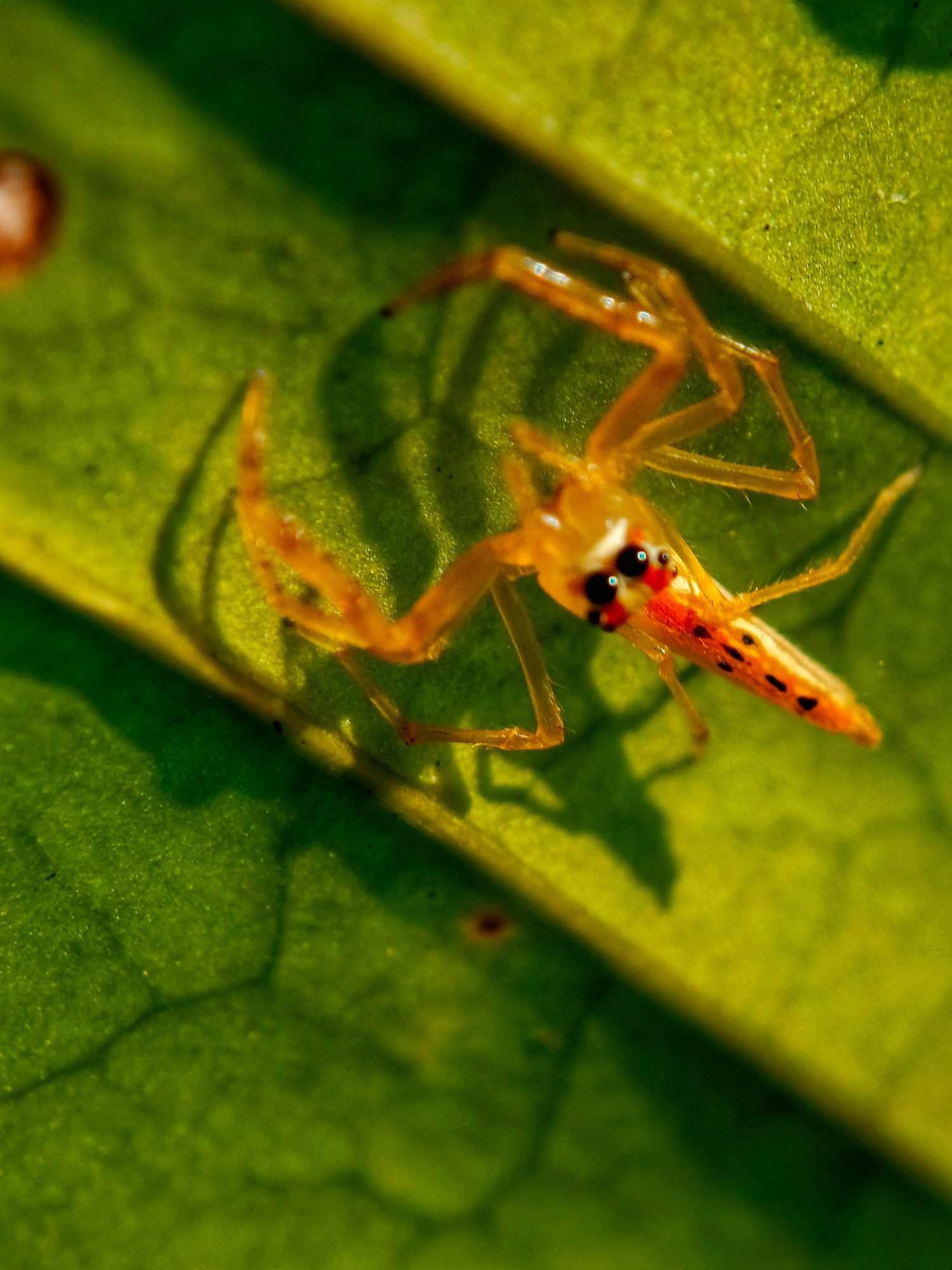
If you’re curious about how these spiders got their cutesy name, it all has to do with a design on the back of their abdomens. These colorful patterns and dots resemble smiley faces. However, not every spider has the same coloring. Color morphs, or variations, found in Hawaiian happy-face spiders usually include some variety of yellow, white, and black. Himalayan happy-face spiders may share the same coloring as Hawaiian happy-face spiders and also display shades of green and orange. Altogether, researchers noted that they found 32 distinct color morphs in the newly discovered species.
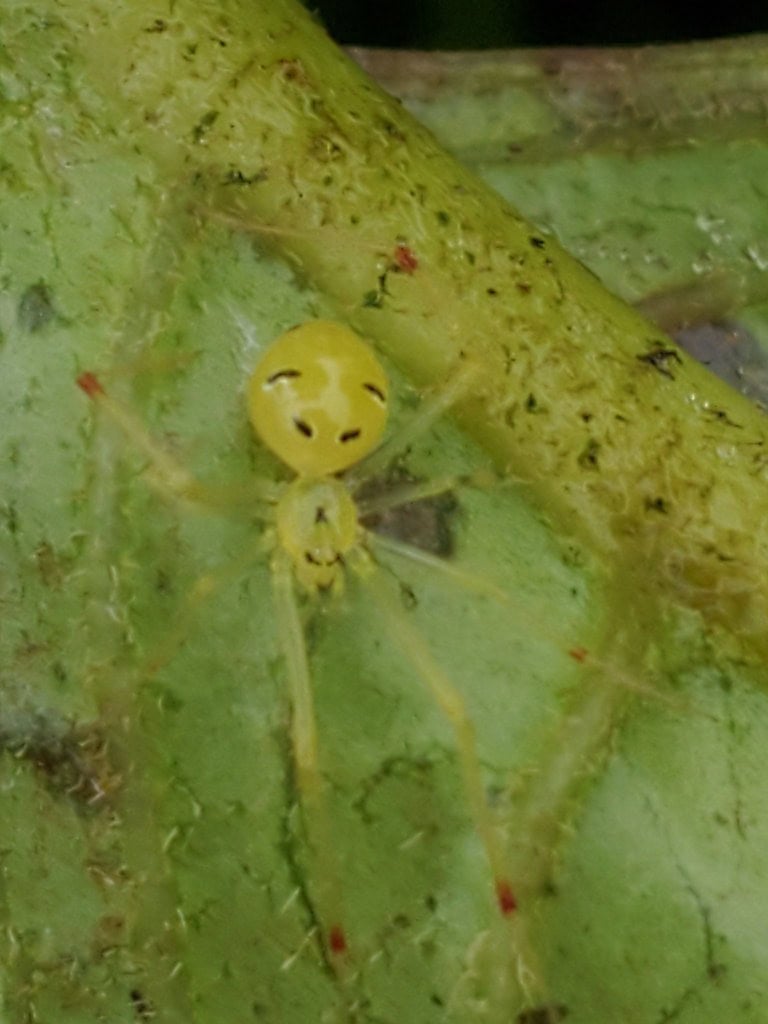
Happy-face spiders have translucent bodies, so they may actually appear a different color based on what they eat.
©"Hawaiian Happy Face Spider at Mt. Ka'ala" by nrcs-pia-enews is licensed under PDM 1.0. – Original / License
It’s likely that the different color variations help protect the spiders against predators, like birds. First, the different color morphs and patterns make it more difficult for birds to pattern-match or identify exactly what these spiders look like.
In terms of food, happy-face spiders tend to hunt and ambush smaller insects. As far as scientists know, neither species of happy-face spider is venomous or dangerous to humans.
The New Discovery
Between 2023 and 2024, a research team from the Regional Museum of Natural History and the Forest Research Institute was in high-altitude areas of Uttarakhand. Their original project centered on studying ants. But, says zoologist and self-proclaimed arachnophile Dr. Devi Priyadarshini, the project changed when study co-author Ashirwad Tripathy began sending Priyadarshini photos of spiders for identification.
Priyadarshini was struck by a photo of a spider under a Daphniphyllum leaf. The spider was similar to the Hawaiian happy-face spider Priyadarshini had learned about while pursuing her Master’s degree.
Between 2023, when the original survey began, and 2024, Priyadarshini and Tripathy collected 61 spider specimens. They then recorded the variety of color morphs and patterns, including red blotches, white rings, and more traditional smiley-face patterns.
Are There Sex Differences in Coloring?
There are several species that display something called sexual dimorphism, which means males and females have different characteristics. For example, I have a female Northern cardinal that lives outside my bedroom window. She’s muted in color, a rusty-brown, where male cardinals are bright red. Anglerfish also display sexual dimorphism, with female anglerfish being much larger and more predatory than male anglerfish. And now, as this study showed, Himalayan happy-face spiders also appear to be sexually dimorphic.
The male spiders were significantly plainer and had fewer patterns than their female counterparts. Some of the data in the study, published in Evolutionary Systematics, is striking in showing the differences: 75.7% of the female happy-face spiders collected had a “Red Blob White Ring” pattern, compared to exactly 0% of the male happy-face spiders.
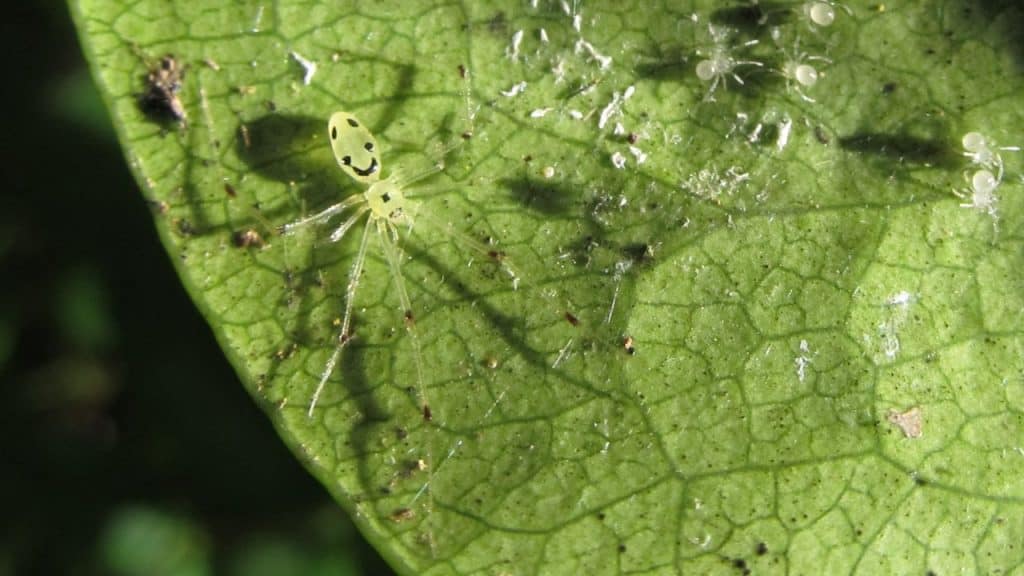
While the smiley-face pattern may protect against predators, these spiders’ coloring helps them blend into plants.
Priyadarshini and Tripathy believe the color difference could be genetic. However, they’re also quick to point out that this is a hypothesis, not a proven fact. To determine whether the sexual dimorphism is genetically caused, they would need more time to observe how the spiders breed and how color morphs are passed down over the years.
DNA Differences
In addition to exploring the different morphs, the researchers ran cytochrome c oxidase I (COI) sequencing. COI is known for being a DNA marker for animal identification. This helped them determine where the Himalayan happy-face spider fits in its evolutionary tree and its genetic distance from other Theridion spiders, such as the short-spined long-legged cobweaver (T. saanichum) and the protrudent long-legged cobweaver (T. neomexicanum).
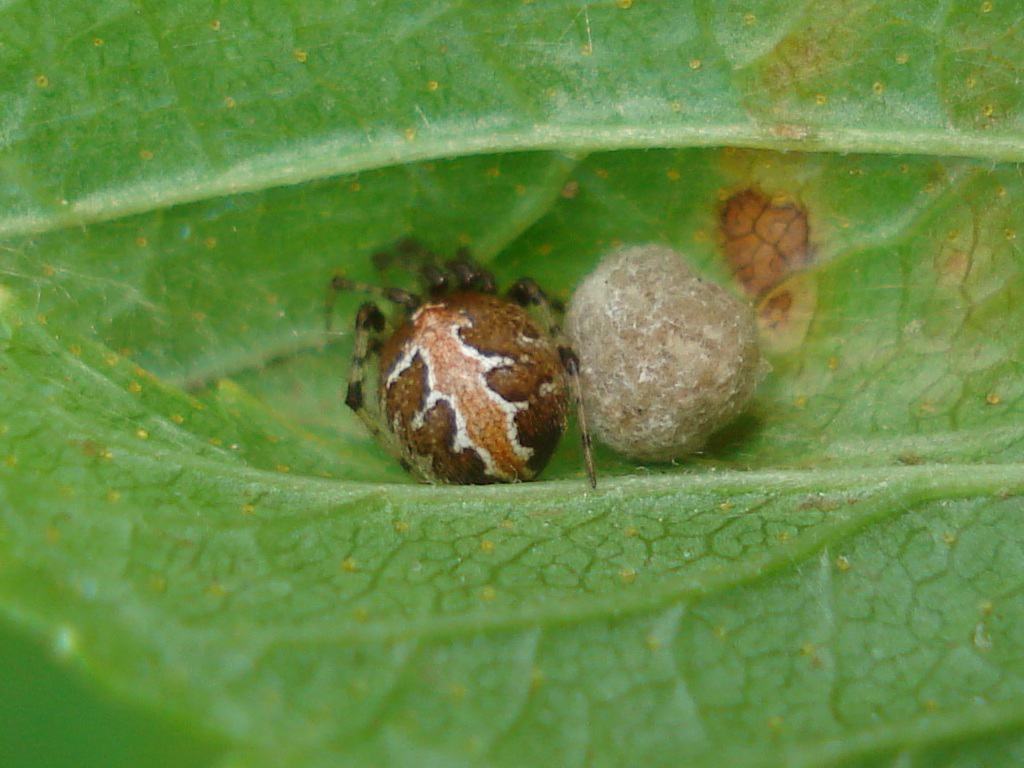
Altogether, there are almost 600 spider species in the Theridion genus.
Surprisingly, the tests showed the Himalayan happy-face spider is actually most closely genetically related to the short-spined long-legged cobweaver. Compared to the Hawaiian happy-face spider, the new species shows about an 8.5% genetic sequence divergence.
Essentially, their common ancestor was from a very long time ago. The two happy-face spiders, therefore, each evolved the happy-face pattern on their abdomens independently. Additionally, the genetic analysis shows that Himalayan happy-face spiders are not simply mainland offshoots of the Hawaiian happy-face spider.
Despite their differences, though, the two spider species have one striking thing in common (besides, of course, their happy-face design). In both Hawaii and Uttarakhand, the spiders show an attraction to ginger plants. Although it doesn’t seem like they’re eating the ginger, the spiders do appear to hunt around or live near the ginger plants. Researchers aren’t sure why this happens. Hopefully, future research will provide some answers.