
Quick Take
- 'Daddy longlegs' isn't one animal, and that single naming mistake is the very reason the myth has survived for decades. See the naming confusion →
- One version of 'daddy longlegs' can't be the world's most venomous spider for a reason that has nothing to do with venom. Why harvestmen can't qualify →
- A cellar spider once bit a human on camera to settle this debate, and the result surprised everyone who had believed the fang myth. See the bite test results →
- The real reason cellar spiders kill black widows has nothing to do with superior venom, which is actually what accidentally started this whole myth. Trace the myth's real origin →
You’ve likely heard the classic story before: daddy longlegs are the most venomous creatures on earth, but their fangs are too short to bite humans. It’s one of those “facts” that gets passed around on playgrounds, repeated at family gatherings, and occasionally even makes its way into documentaries and classrooms. There’s just one problem: every part of it is wrong.
The truth is that the name “daddy longlegs” refers to a handful of completely different animals. One isn’t even a spider, another isn’t even an arachnid, and the only true spider among them has venom that is harmless to humans.
Scientists have been debunking this myth for decades, yet it still refuses to die.
“Daddy Longlegs” Refers to More Than One Animal
Much of the confusion in the daddy longlegs myth comes from the fact that “daddy longlegs” isn’t the name of a single species. Depending on where you live, it can refer to three entirely different animals: harvestmen, cellar spiders, and crane flies.
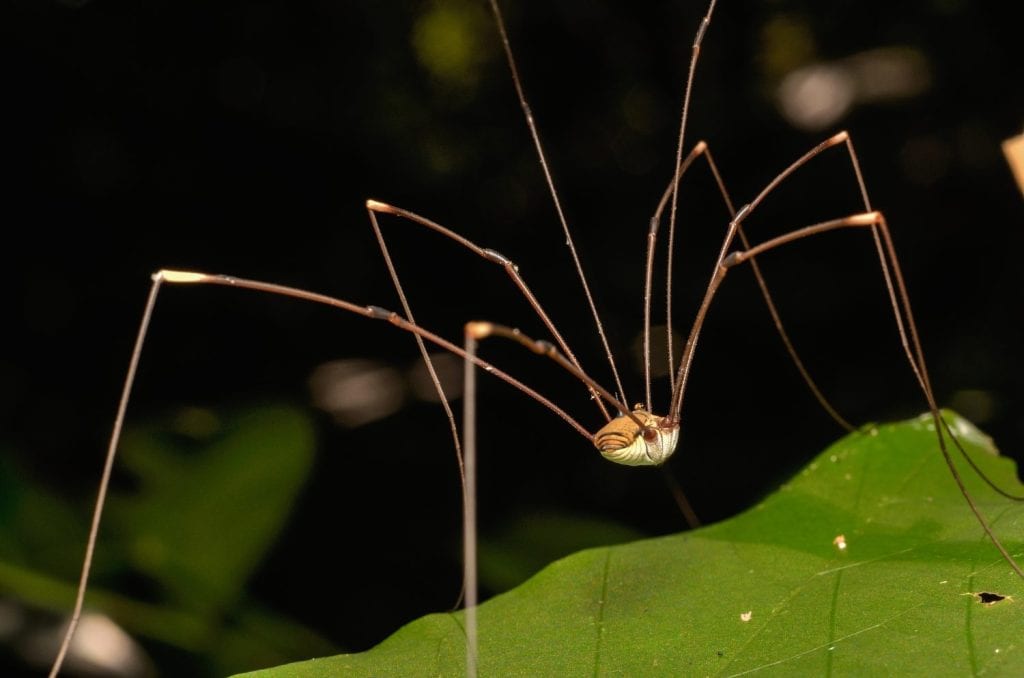
Harvestmen are not actually spiders at all.
©by pap/Shutterstock.com
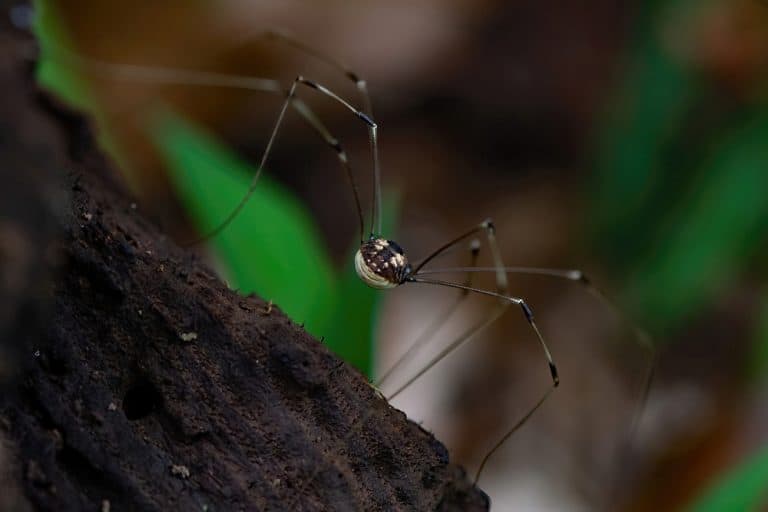
Harvestmen (Opiliones) are arachnids, but they are not spiders. Unlike true spiders, they have a single fused body segment, and they do not spin webs. Most importantly, they do not even have venom glands or fangs. They typically hide beneath logs and rocks, feeding on decaying plant and animal matter.
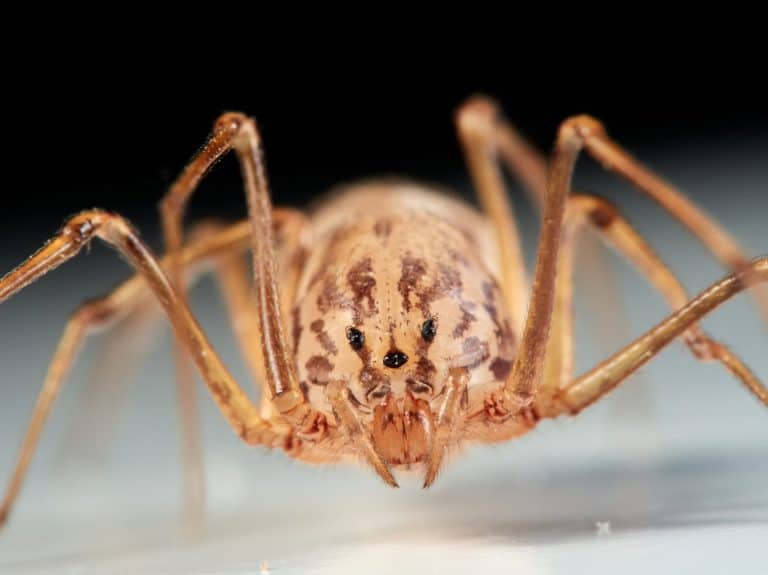
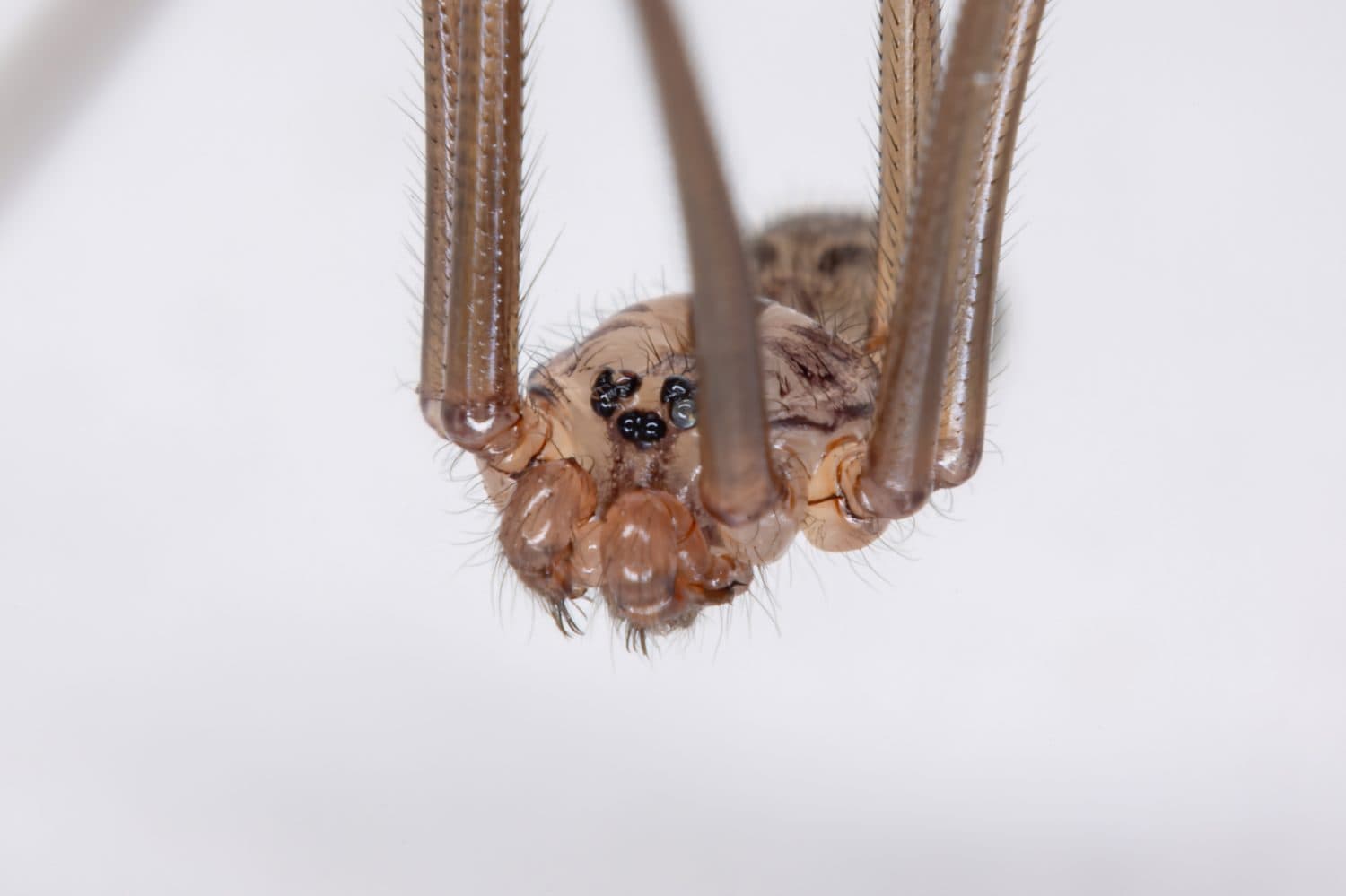
Cellar spiders (Pholcidae) are true spiders. They’re the long-legged spiders you may see hanging in messy webs in basements, garages, and ceiling corners. Cellar spiders do have venom, but it is not harmful to humans.
Finally, some people use the name for crane flies (Tipuloidea), which are harmless insects that resemble oversized mosquitoes. These, however, are not arachnids at all. They are also completely harmless and cannot bite.
Once people began using the same nickname for three completely different animals, it became easy for myths about one to spread to all three.
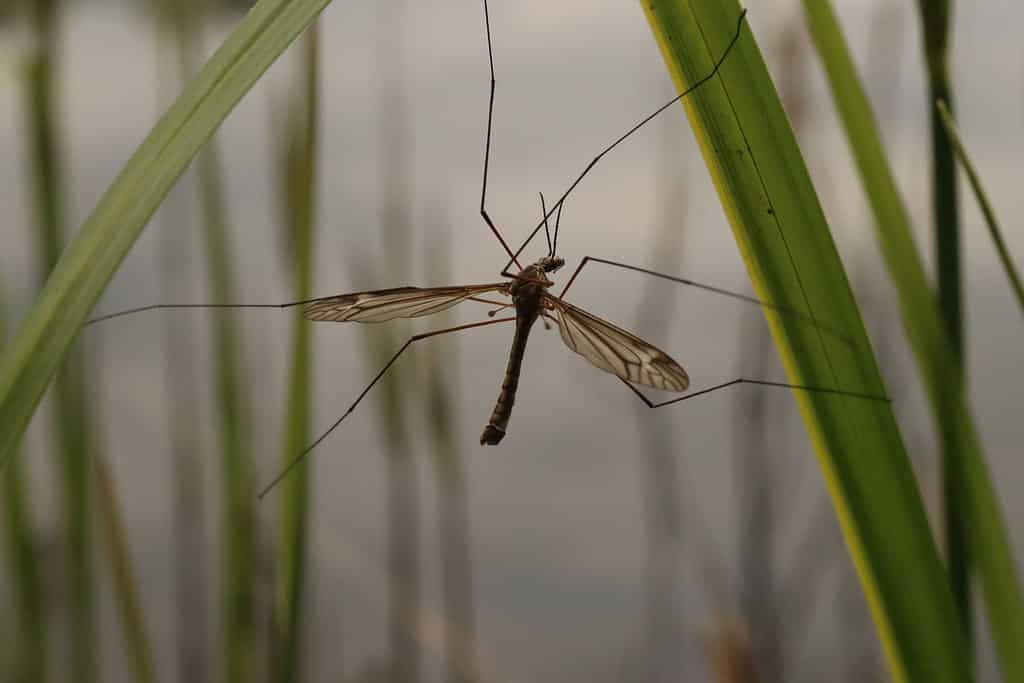
Crane flies have many nicknames, including daddy longlegs, mosquito hawks, and mosquito eaters.
©Wirestock/iStock via Getty Images
Do Daddy Longlegs Actually Have Venom?
The answer, of course, depends entirely on which “daddy longlegs” creature you are talking about.
Harvestmen Have No Venom at All
Harvestmen are not true spiders and thus completely lack both venom glands and fangs. Instead of injecting venom into their prey, they rely on tiny mouthparts to feed. When threatened, some harvestman species release a foul-smelling chemical to ward off predators. This is poison — not venom. Venom is actively injected through structures like fangs or stingers, while poison works through contact or ingestion.
While the harvestmen’s defensive secretions are highly effective at deterring small predators, they are entirely harmless to humans.
Cellar Spiders Have Venom, But It’s Weak
Cellar spiders are true spiders and do produce venom, but the claim that they are “the most venomous spiders in the world” is a total myth and has no scientific support. In fact, research shows that cellar spider venom is actually unusually weak. A well-known MythBusters experiment, later described in Frontiers in Ecology and Evolution, tested the claim. Arachnologist Charles Kristensen compared cellar spider venom with black widow venom. The results weren’t even close — the black widow’s venom was vastly more potent, completely debunking the popular myth.
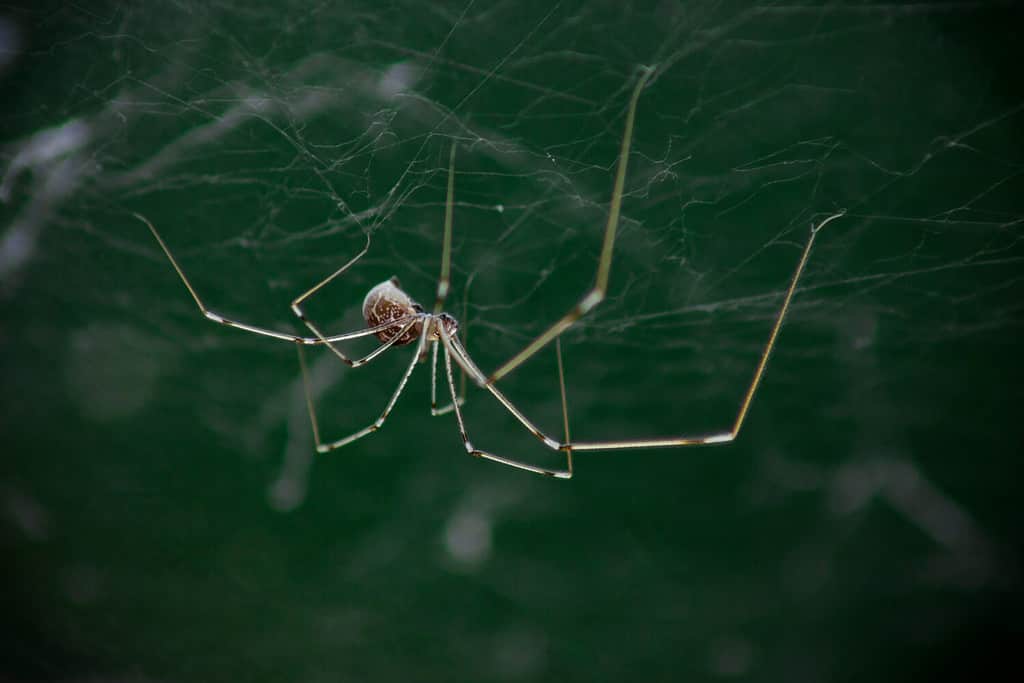
Cellar spiders come from subtropical habitats but can now be found around the world.
©CsaboPhoto/Shutterstock.com
Cellar spiders can technically bite humans, but the effects are mild and uneventful. Most people report only a brief sting or irritation, and any red mark disappears within a few days.
While cellar spiders use venom to hunt small prey, there is no scientific evidence that they pose any danger to humans.
Are Daddy Longlegs’ Fangs Too Small to Bite Humans?
The second half of the myth — that their fangs are “too short” or “too small” to bite humans — is just as inaccurate as the first.
First, harvestmen do not have fangs at all. Cellar spiders, on the other hand, do have fangs, but they certainly are not too small to bite humans — they are fully capable of piercing human skin. In fact, during the same MythBusters experiment, the host successfully allowed a cellar spider to bite his arm to prove it was possible.
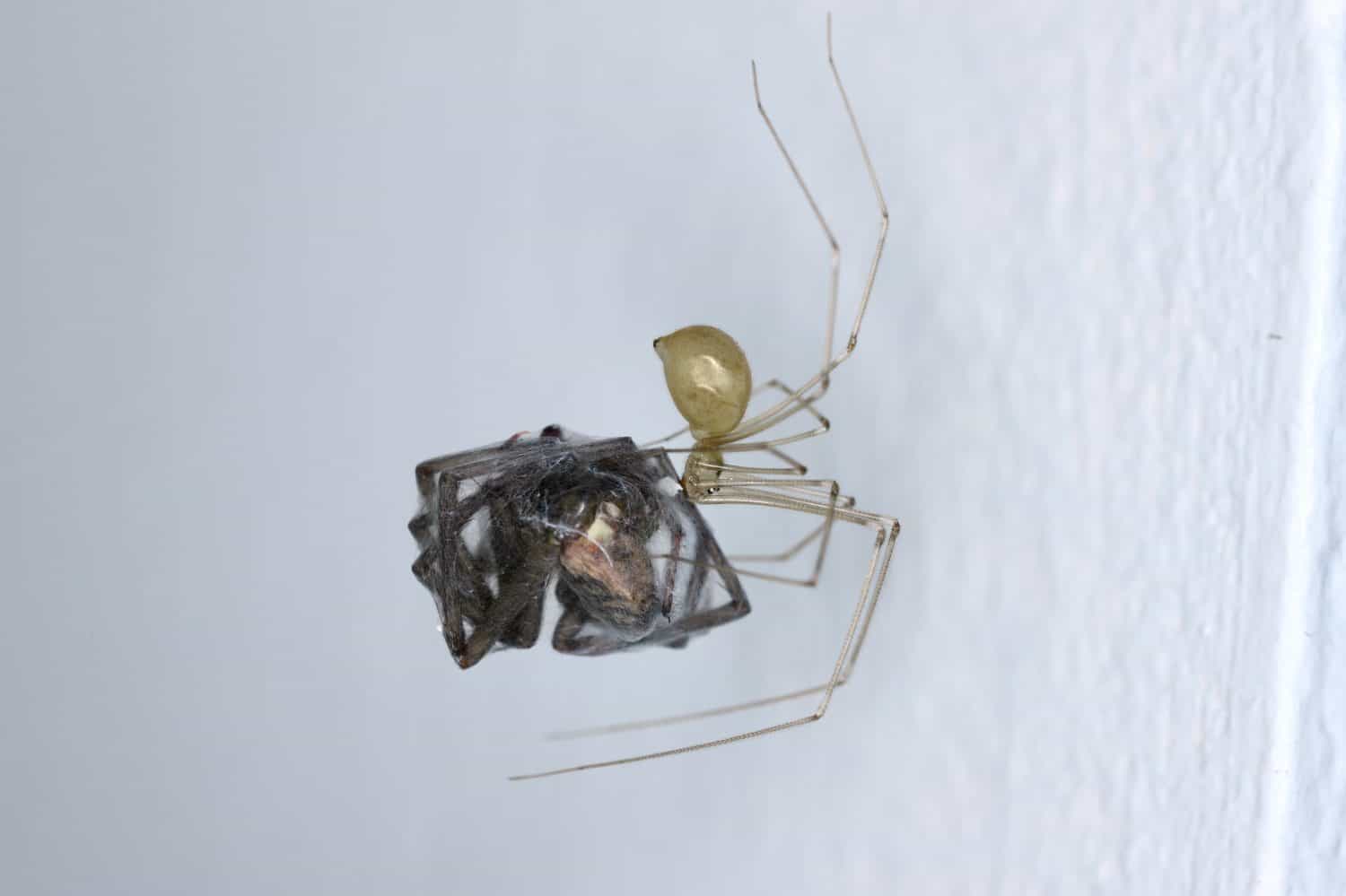
Cellar spiders often hunt prey much larger than themselves.
©Tomasz Klejdysz/Shutterstock.com
But if cellar spiders can bite, why are they still considered harmless? The answer lies in their hunting strategy, not the length of their fangs. Unlike active hunting spiders, cellar spiders capture their prey by wrapping it in silk before biting. Their webs do most of the work, so they do not need powerful venom or strong biting muscles.
Ultimately, experts agree: while cellar spiders can bite, they pose no danger to humans.
How Did This Myth Start?
While researchers can’t pinpoint exactly when the legend began, they have a good idea why it spread.
One likely explanation comes from watching cellar spiders hunt. These spiders have been observed catching and eating other spiders — including black widows in North America and redback spiders in Australia. People simply assumed that to kill a black widow, the tiny cellar spider must possess an even deadlier venom to kill such dangerous prey.
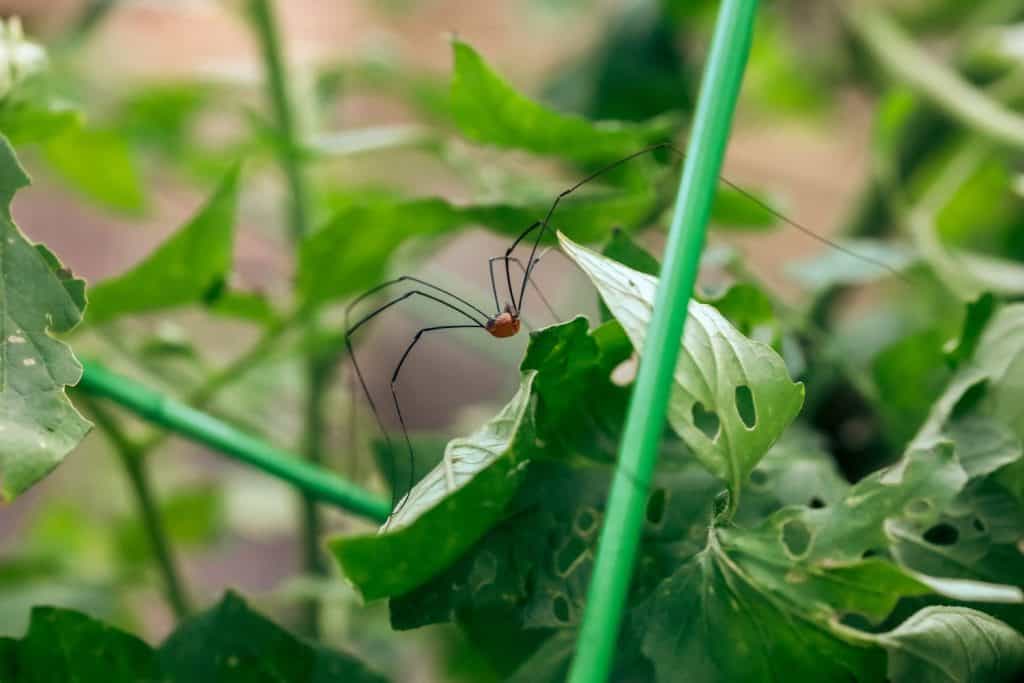
There are over 6,500 species of harvestmen across the world.
©Jenny Lee Woodward/Shutterstock.com
In reality, however, cellar spiders rely on strategy rather than super venom. They use their exceptionally long legs to throw silk over their prey, wrapping dangerous spiders from a safe distance before moving in for a bite.
The rest of the myth likely evolved through playground storytelling. If daddy longlegs were supposedly so deadly, why wasn’t anyone getting bitten? The convenient explanation became that their fangs were “too short” to pierce human skin — a claim that sounds believable but isn’t supported by biology.
When you combine impressive hunting behavior, playground logic, and three entirely different animals sharing the exact same nickname, you get the perfect recipe for one of the world’s most persistent wildlife myths.
The Verdict
No matter which creature you are looking at, the famous daddy longlegs myth completely falls apart.
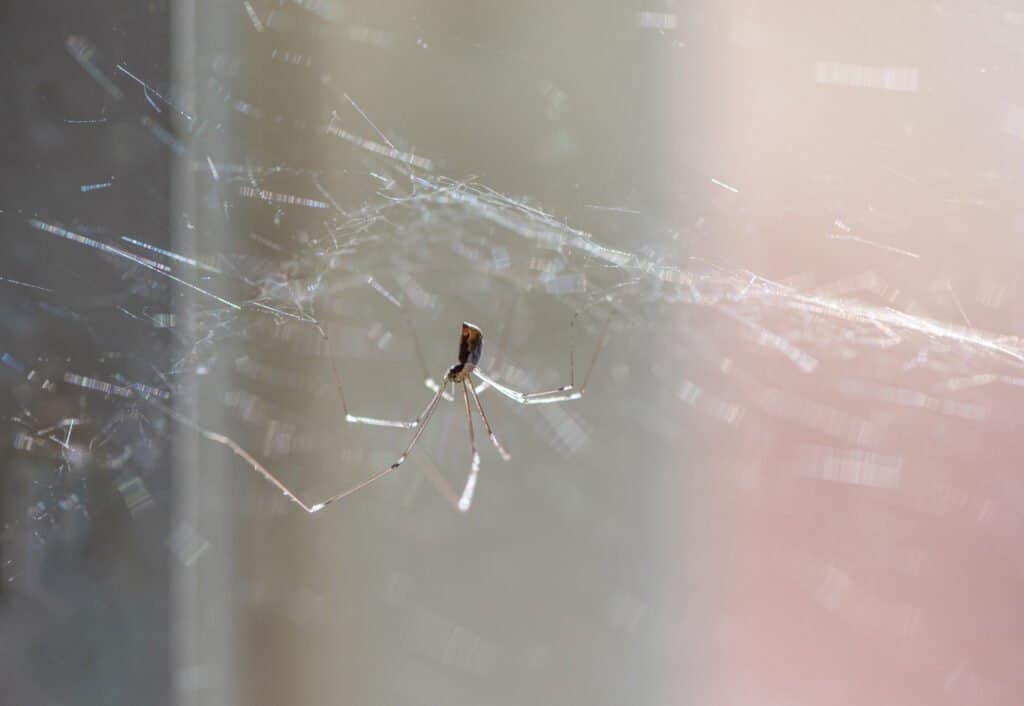
Cellar spiders prefer indoor environments.
©iStock.com/Lena Gadanski
If it’s a harvestman, it isn’t even a spider and has neither venom nor fangs. If it’s a crane fly, it’s simply a harmless insect. And if it’s a cellar spider, it does have venom — but not the dangerously potent toxin the myth claims.
The idea that daddy longlegs are “the most venomous spiders in the world, but their fangs are too short to bite” is not just inaccurate — it is entirely false.
The next time someone repeats this old schoolyard tale, you can confidently set the record straight: the most famous “fact” about daddy longlegs isn’t a fact at all.