
Voles and mice may appear strikingly similar at first, especially if you are trying to determine which pest is occupying your home or backyard. However, there are differences that can help you identify which is which. For starters, the families for both of these creatures are different: voles belong to the Cricetidae family, whereas mice are members of the Muridae family. The difference here seems to be a matter of teeth. However, you don’t need an x-ray machine to identify their differences, as there are plenty of easily observable ones.
In this article, we will endeavor to describe the differences between voles and mice, including helpful tips that can assist you in telling these rodents apart. Whether you are worried you have mice in your home or simply want to learn how to identify a vole at first glance, we’ve got you covered. Let’s compare voles and mice now.
Comparison: Vole vs. Mouse
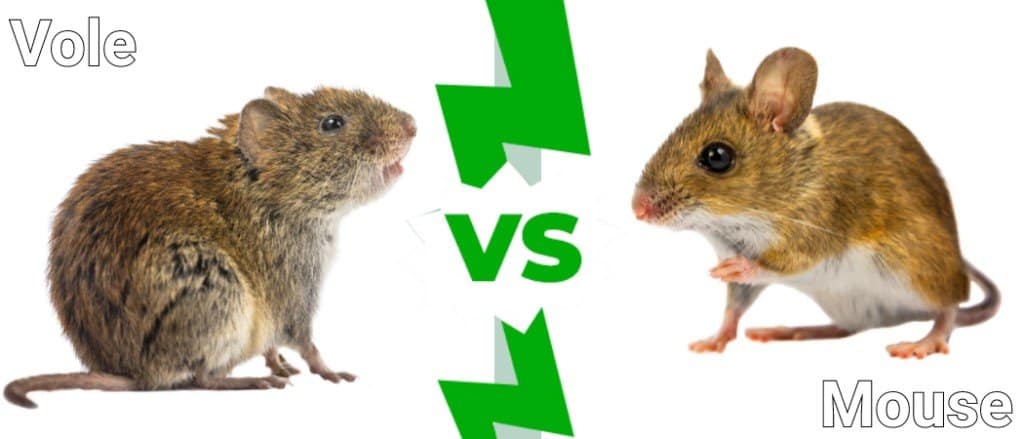
| Vole | Mouse | |
| Appearance | Small ears and stocky body | Lean body, large eyes and ears |
| Habitat | Prefers open outdoor areas | Prefers indoor surfaces/areas |
| Lifespan | 1-2 years | 1-3 years |
| Reproduction | 5-12 litters per year; 3-6 babies | 5-10 litters per year; 4-10 babies |
| Diet | Herbivores; plant matter and seeds | Omnivores; plant matter and insects |
| Tail | Shorter than their body | Same length as their body |
Main Differences: Vole vs. Mouse

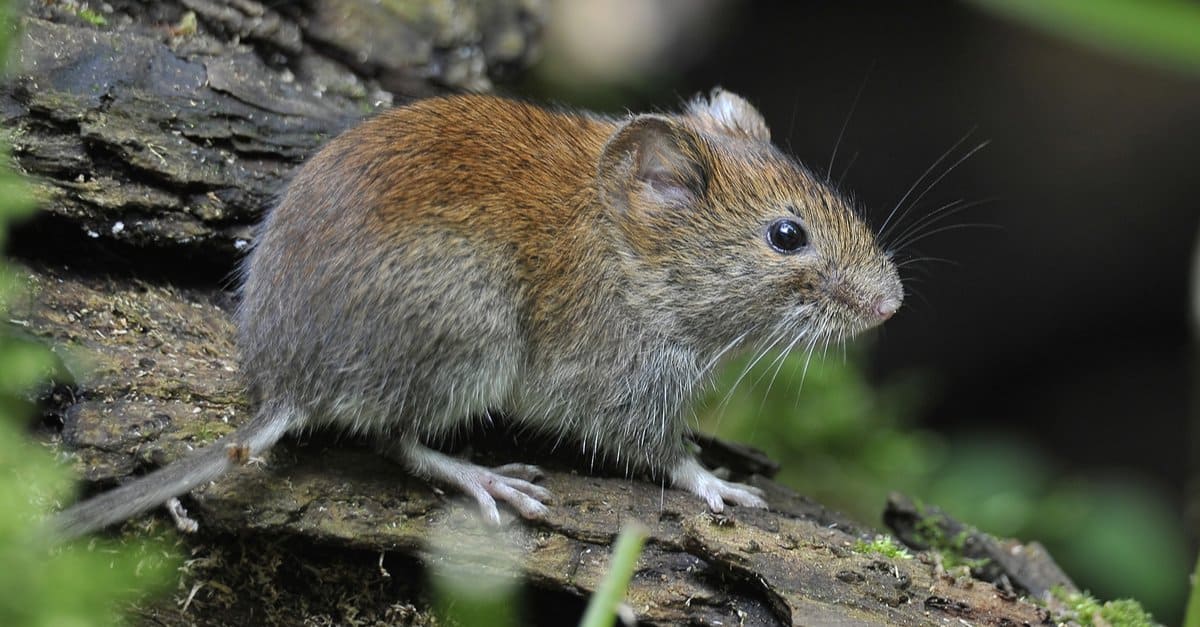
Mice have a leaner body when compared to voles, while voles are stockier in appearance.
©Rudmer Zwerver/Shutterstock.com
There are key differences between voles and mice. Mice have a leaner body when compared to voles, while voles are stockier in appearance. Voles also have smaller ears and a shorter tail than mice, as a mouse’s tail is usually as long as its body. The habitat preferences can also be considered a key difference between these two species. Voles prefer open outdoor areas, which is why you will often find them outside, while mice prefer enclosed and indoor spaces.
Their differences don’t end here. Let’s dive in and discuss these commonly confused rodents’ similarities and differences.
Vole vs. Mouse: Face and Body Appearance
One of the key differences between voles and mice is their overall appearance, including their face and body shape. Voles have a thicker and stockier body when compared to mice, a notoriously skinny and lean rodent. Mice also have larger ears and eyes when compared to voles. The ears and eyes of a vole are significantly smaller in appearance, though it may take some time to tell these two rodents apart. Additionally, their noses are different. Voles tend to have shorter snouts that appear round or circular. For their part, mice have angular or pointed snouts or noses.
Both rodents have brown or black fur, but the overall body shape should give you some insight into which rodent is which. A mouse’s body is designed to be narrow and skinny, adept at shimmying through tight areas and spaces, while voles prefer to be in outdoors in open areas. Therefore, their bodies are not as slender.
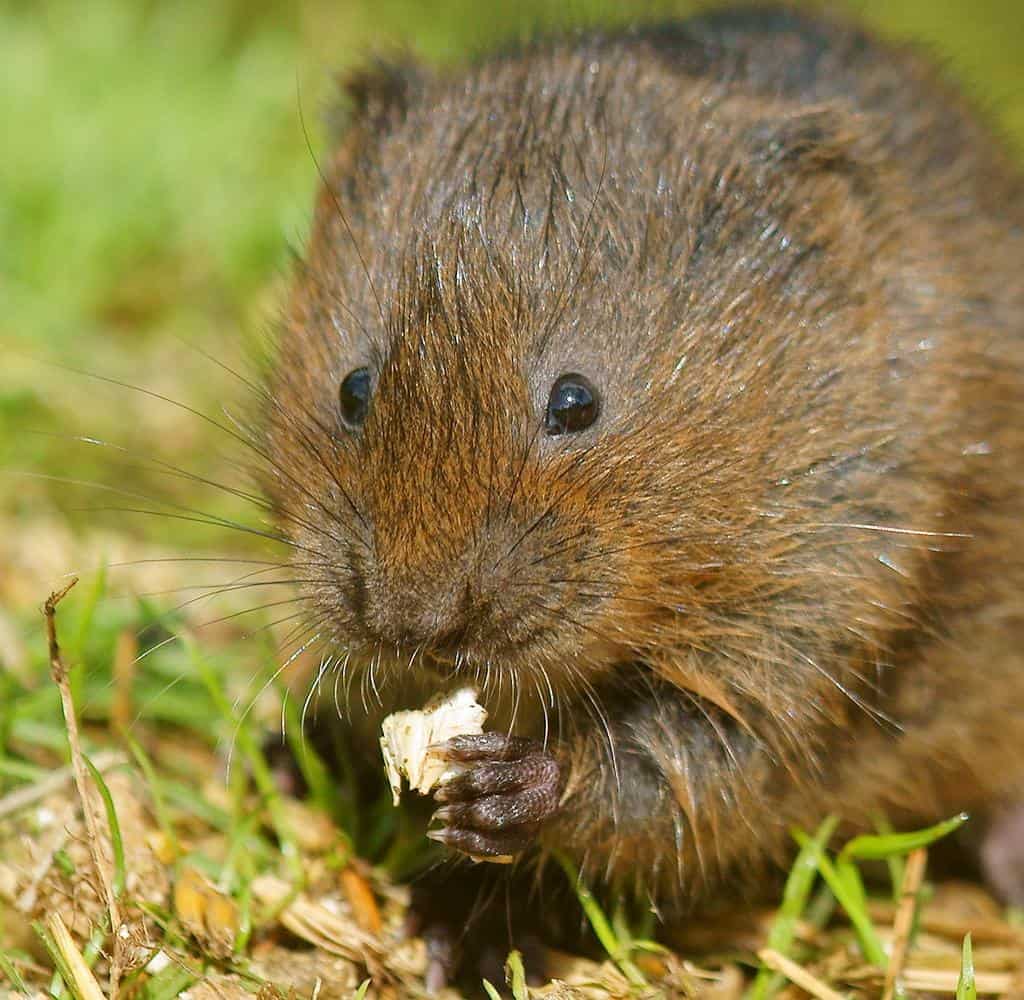
Voles are found in gardens, lawns, and backyard landscaping, while mice are found mostly inside homes.
©Peter Trimming / Flickr – Original
Vole vs. Mouse: Habitat
Voles and mice prefer different habitats. Voles are regularly found outside the home, in gardens, lawns, and backyard landscaping, while mice are more often found inside homes. This is because mice are accustomed to enclosed spaces and prefer their bodies to be touching walls and objects in order to feel safe.
Mice also tend to be more opportunistic foragers than voles are, which may bring mice inside your home while a shyer vole is more likely to stay outside. Mice are more likely to seek shelter indoors for their nests, while voles are comfortable digging underground burrows or outdoor nests.
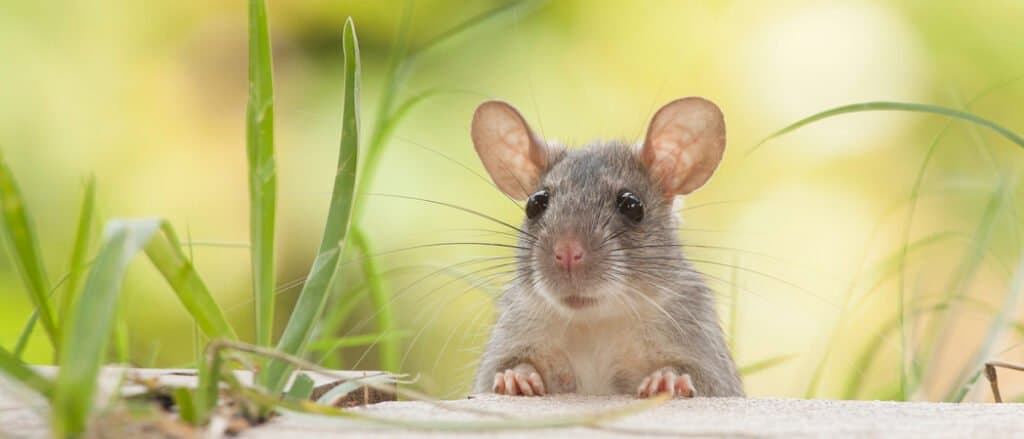
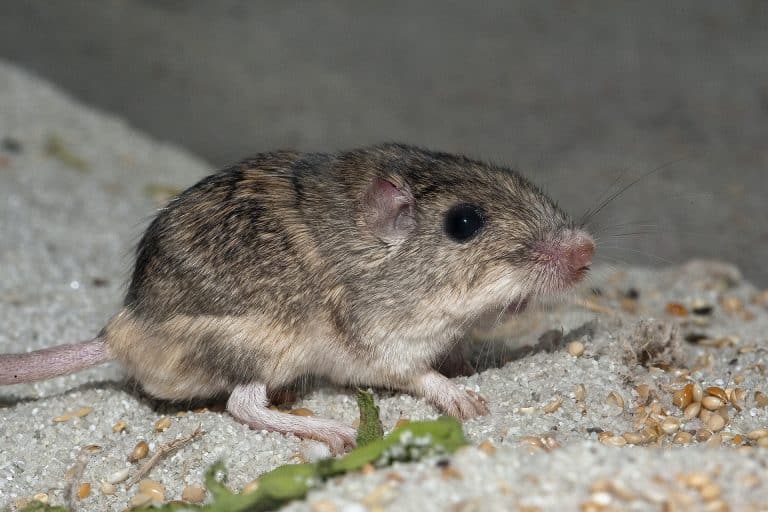
Mice have larger ears and eyes when compared to voles.
©Raul Baena/Shutterstock.com
Vole vs. Mouse: Diet
The two animals are similar in size and overall diet preferences. However, there are some key differences between the average vole and the average mouse diet. For example, mice are considered omnivores, eating more insects and even food taken from human pantries. Voles, classified as herbivores, are far more content eating plant matter.
However, this isn’t to say that a vole won’t take advantage of a bug or a human meat snack from time to time. Given their shy nature, voles are less likely to seek out food beyond the comforts of the great outdoors, while mice are extremely opportunistic. This is why it is important to check your pantry if you think a mouse has invaded your home.
Vole vs. Mouse: Tail Length
Looking at a mouse beside a vole will show the difference in their tail lengths clearly, as mice have much longer tails than voles do. While a vole still has a significant tail, mice have a tail that is at least as long as their bodies, if not longer.
Vole tails average around half of their body in length, which makes their tail much shorter than mice. When combined with a vole’s smaller ears and eyes, it should be a bit more obvious which type of rodent you are dealing with.

Mice typically have longer tails than voles.
©colin robert varndell/Shutterstock.com
Vole vs. Mouse: Reproductive Habits
While voles and mice both have similar lifespans of roughly a year in the wild, their reproductive habits differ somewhat. Voles breed throughout the year, though spring is their preferred time of year, while mice breed anytime of the year without preference.
Mice also have a shorter gestation period when compared to voles, averaging 10-20 days when compared to voles, which gestate for 20-30 days. Both rodents have litters of at least 3-7 babies, but mice typically birth more young than voles do. Mice average anywhere from 5-15 babies, while voles have an average of 3-10 babies.
Vole vs. Mouse: Problems to Humans
These two rodents pose problems for humans, but those problems differ based on the differences we’ve already discussed of these two animals as far as habitats, behavior, and diet are concerned. Voles can be destructive to one’s yard, as they burrow and create runways on lawns—pathways of dead grass. They also eat garden plants as well as tree bark.
Mice, on the other hand, like to get into pantries in homes in search of food, or eat other materials in attics and wherever else they are brave enough to venture. They can also contaminate surfaces in a home with feces and other germs.
Controlling voles in one’s garden would require mowing it regularly and removing protective foliage. Ridding one’s house of mice is done by bait and trap methods, traps that kill them, or poisons.
Do Voles Come in the House?
Voles are often mistaken for the common house mouse due to their similar size and general appearance. They are primarily outdoor-dwelling rodents and seldom venture indoors, however. The likelihood of a vole pest issue increases in yards abundant with vegetation and debris, providing hiding spots and nest-building opportunities for these rodents. To reduce the risk of vole problems, maintain a well-weeded garden, refrain from planting dense ground covers like creeping junipers, and regularly mow your lawn.