
Quick Take
- A legless reptile in your yard might not be the snake you think it is, but two quick visual checks reveal the truth instantly. See the two quick checks →
- The glass lizard's name sounds fragile, but the reason behind it is a predator-fooling survival trick most people have never seen. Discover the tail-breaking trick →
- Glass lizards move like snakes but can't keep up, and the anatomical reason why exposes a key difference that has been hiding in plain sight. See the movement difference →
- Spotting one of these in the wild is actually a sign that something is going right rather than wrong. Explore the ecosystem benefits →
If you have a fear of snakes, you’re not alone. Studies show ophidiophobia is one of the most common of all animal phobias, coming in just behind arachnophobia – the fear of spiders. So, when you’re outside and see something that looks like a snake and moves like a snake, your first instinct might be to scream or run away.
But before you do, it pays to make sure what you’re reacting to is actually a snake. Sometimes, looks can be deceiving. That’s the case with the glass lizard.
What Is a Glass Lizard?
Glass lizards in North America belong to the genus Ophisaurus within the Anguidae family. Depending on your location, there are six different species: slender glass lizard, Cerón’s glass lizard, island glass lizard, plainneck glass lizard, mimic glass lizard, and eastern glass lizard.
The eastern glass lizard is the largest, growing to around 43 inches long. They have no legs. The head and body of the eastern glass lizard make up just over a third of its total length; the remainder is its tail.
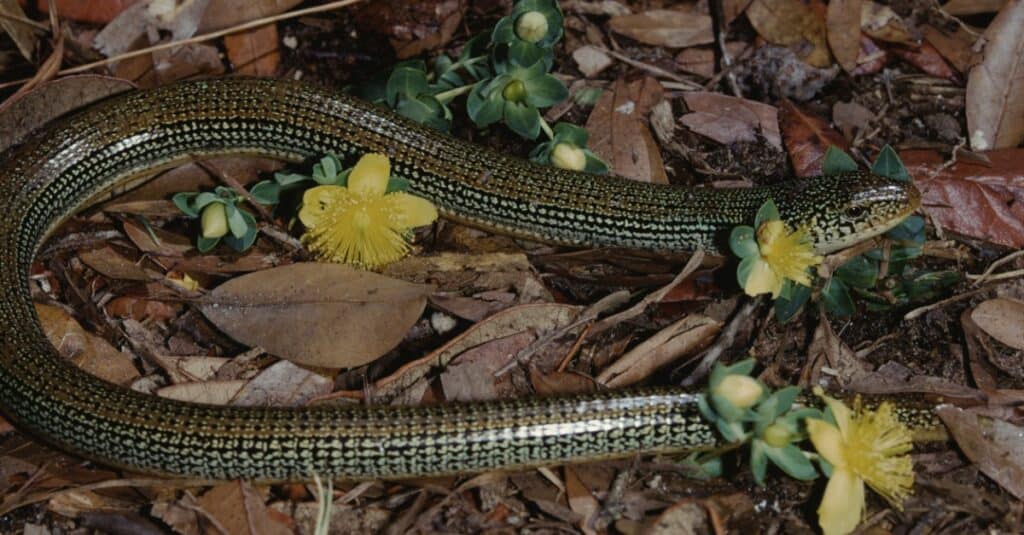
The eastern glass lizard is the largest species in North America.
©iStock.com/Weber
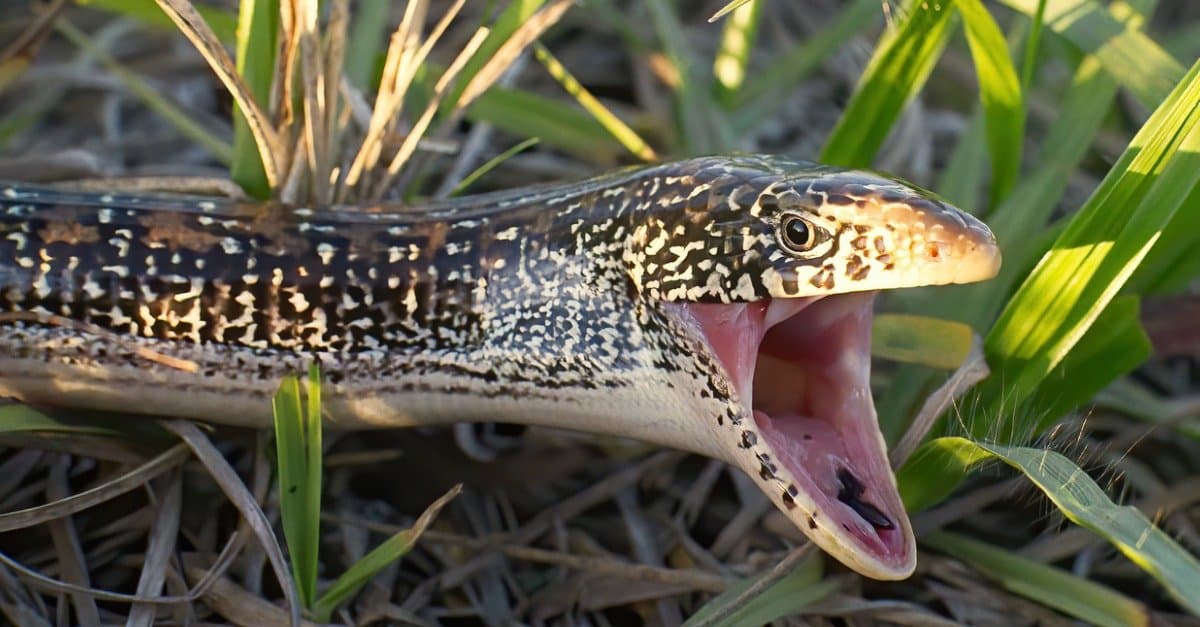
All glass lizard species are named for their easily broken tails, which snap off when grabbed by a predator—a survival adaptation. When a predator grabs the lizard’s tail, it detaches, allowing the lizard to escape. The detached tail continues to wiggle and may even break into several small pieces, resembling shattered glass. This distraction gives the lizard time to get away.
After losing its tail, a glass lizard will grow a replacement. However, the new tail is typically shorter and lacks the distinctive color variations and patterns of the original.
Glass lizards also have two grooves running along each side of their bodies. These grooves function like an accordion, allowing the lizard’s body to expand during digestion and making it easier to breathe.
Glass lizards are generally nonvenomous and don’t pose a danger to humans. When threatened, they will try to flee. If they cannot, they’ll resort to the tail loss trick. They rarely bite.
Where Do You Find Glass Lizards?
Glass lizards are usually found in open woodlands, prairies, abandoned fields, and grasslands, usually near a water source. They live in burrows, usually those created and abandoned by other animals. Occasionally, a glass lizard will dig its own burrow if the soil is sandy and loose.
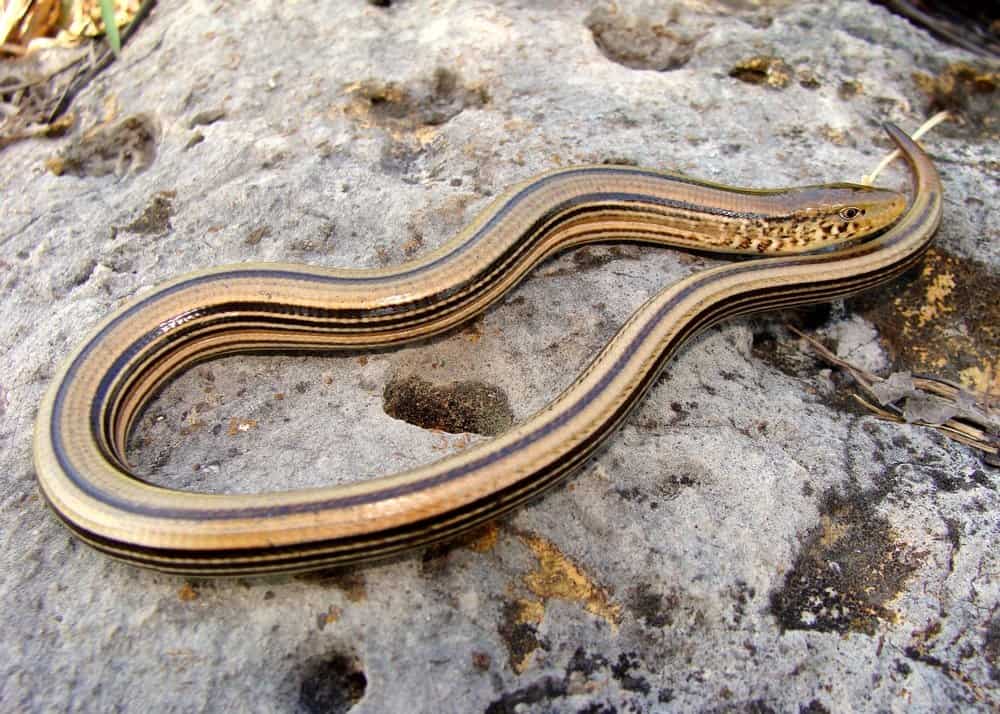
North America is home to six species of glass lizard.
©Matt Jeppson/Shutterstock.com
Glass lizards are most commonly seen in the warmer spring, summer, and early fall months. They hibernate in their burrows during the fall and winter months, usually from October through April or May. When they’re not hibernating, their daytime activities are dictated by weather temperatures. They are active during the day when temperatures are cool, but as it gets hotter, glass lizards become primarily crepuscular—active mostly at dawn and dusk.
How to Tell a Glass Lizard Apart from a Snake
Their long tails and lack of legs make glass lizards look very much like snakes at first glance. However, there are a few telltale signs that clear up that misconception.
Glass lizards have ears. Snakes do not. Glass lizards also have movable eyelids, which snakes lack. Those are the two most obvious features that make it easy to tell the two species apart. There are a few less obvious ways, too.
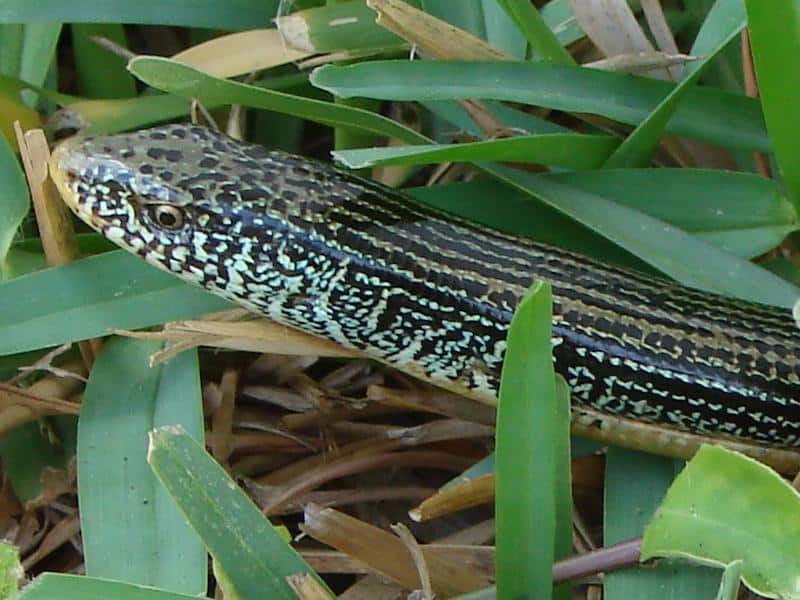
Unlike snakes, glass lizards have ears and movable eyelids.
©Fl295, Public domain, via Wikimedia Commons – Original / License
Glass lizards lack the expandable jaw that all snakes have. Additionally, if you look closely at a glass lizard’s scales, you’ll notice they are the same size on both the upper and lower sides of its body, whereas snakes have scales of varying sizes.
Finally, glass lizards are not as fast or flexible as snakes. They lack the belly muscles that allow snakes to slither quickly, making glass lizards relatively stiff and fragile by comparison.
What Do Glass Lizards Eat?
They mostly eat insects, like crickets, beetles, and grasshoppers. Their diet also consists of spiders, snails, small mice, and even the eggs of other reptiles and ground-nesting birds. However, since they don’t have an expandable jaw, the size of their prey is limited.
The Benefits of Glass Lizards
Having glass lizards around is helpful in many ways.
They provide natural, free pest control by keeping insect and rodent populations in check. Glass lizards are also a food source for birds, larger mammals, and snakes, helping to maintain a robust food chain.
Most importantly, though, the presence of glass lizards is a strong indicator of good ecosystem health. The presence of glass lizards indicates that ground cover habitats are healthy and provide the necessary food sources for these reptiles.