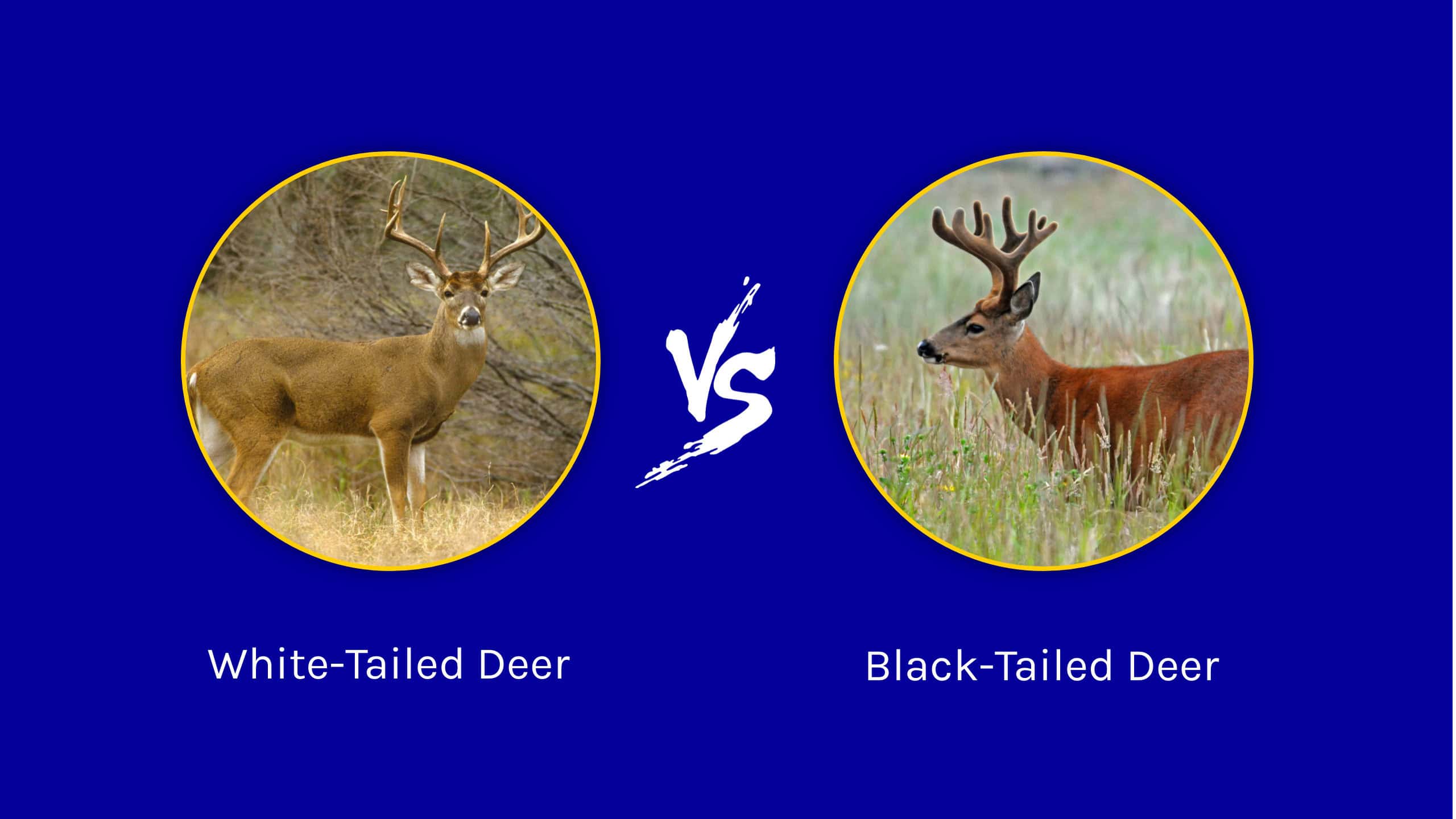

Deer come in many shapes and sizes despite seeming like monolithic creatures. In fact, several species and subspecies of deer are found throughout the world today. White-tailed deer are one of the most common in the Americas, but there are some lesser-known creatures, such as black-tailed deer. Today, we’re going to explore the many differences between the white-tailed deer and black-tailed deer and show you what sets these creatures apart from each other.
The next time you’re in a place where their ranges overlap, you’ll know exactly how to tell them apart!
Comparing a White-Tailed Deer and a Black-Tailed Deer
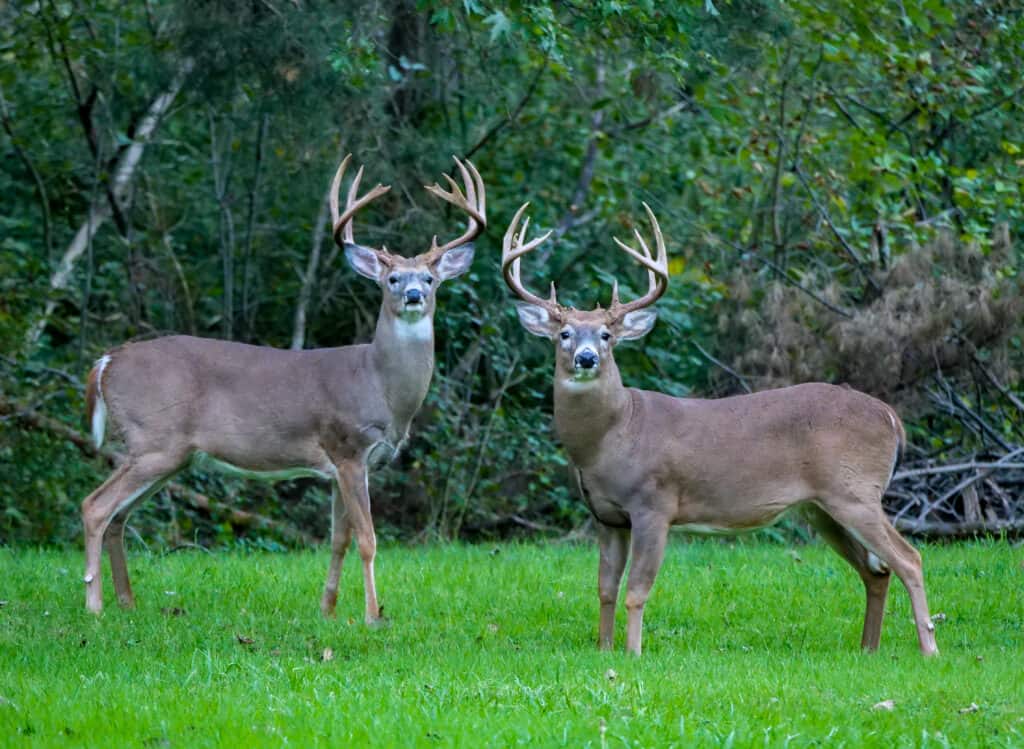
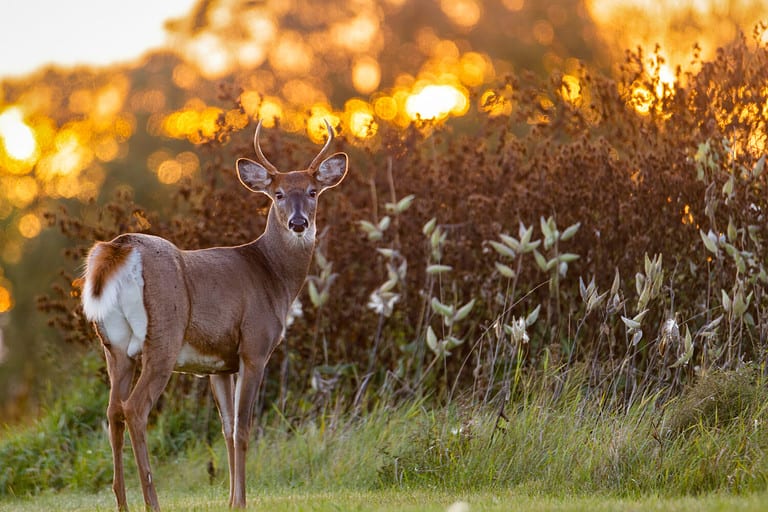
The average white-tailed deer stands up to 3.9 feet tall and grows 7.2 feet long.
©iStock.com/Ralph Navarro
| White-Tailed Deer | Black-Tailed Deer | |
|---|---|---|
| Size | Weight: 120-300 pounds Height: 2.9-3.5 feet tall at the shoulder Length: 4-6.75 feet long | Weight: 75-200 pounds Height: 2-3.7 feet tall at the shoulder Length: 4-5.5 feet long |
| Species | Odocoileus virginianus – Has many subspecies over their wide range | Two subspecies of the mule deer: – Odocoileus hemionus columbianus (Columbian black-tailed deer) – O. h. sitkensis (Sitka black-tailed deer) |
| Morphology | – Possesses a reddish-brown coat that fades to gray in the fall and winter – Has a brown tail with a white underside – Named for the white underside of its tail that is frequently seen as part of its alarm display – Antlers grow off a single main beam | – Longer ears than a white-tailed deer – Have a black tail with a white underside – Their tail is not as bushy as a white-tailed deer – Antlers grow off of the main beam and then split into two points – Reddish-brown coat in the summer fades into a dark brown and gray color in the fall and winter |
| Range | – Across almost the entire southern portion of Canada, except coastal areas on the west – Almost the entire United States, except for some areas around the Rocky Mountains in the west and Southwest – Throughout all of Central America – Northern parts of South America, including Peru and Ecuador in the west – Live in forests, croplands, meadows, brush-filled fields, and more – Can live in suburban and rural areas, including those that bring them close to humans | Columbian black-tailed deer – Pacific Coast of North America: California, Oregon, Washington, and British Columbia, Canada Sitka black-tailed deer -Alaska and British Columbia, Canada |
| Diet | – Grass, nuts, forbs, mushrooms, and fruits – Acorns, grapes, apples, mushrooms, oats, lichens, dogwood, and more – Their wide range allows them to consume a lot of different foods | – Forbs, lichens, grasses, fruit – Ferns, huckleberry, blackberries, apples, cranberry, elderberry, and more |
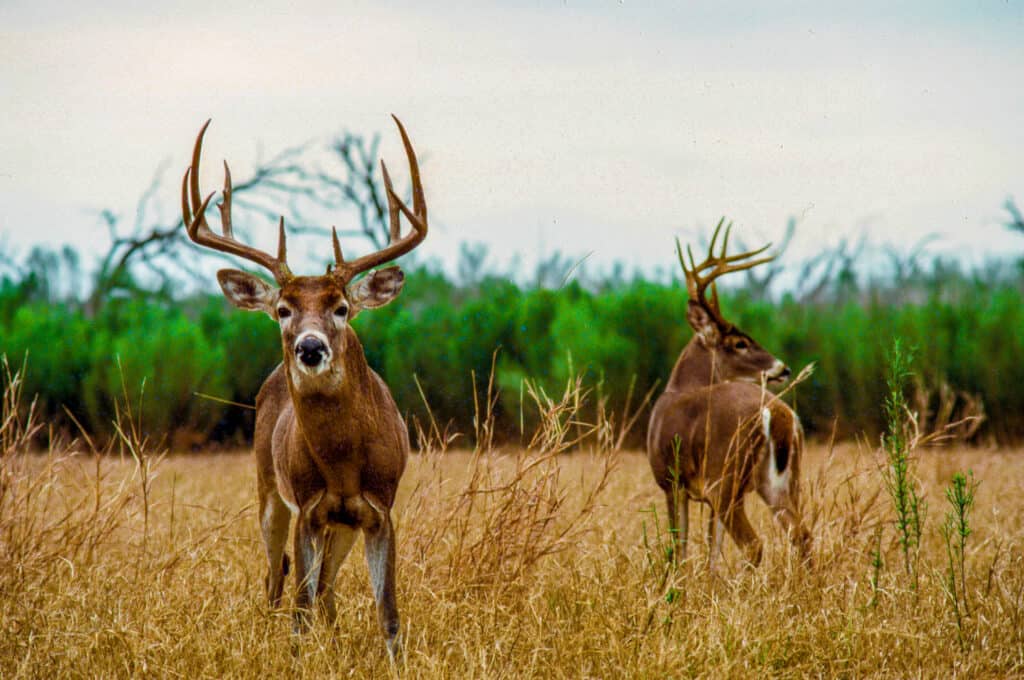
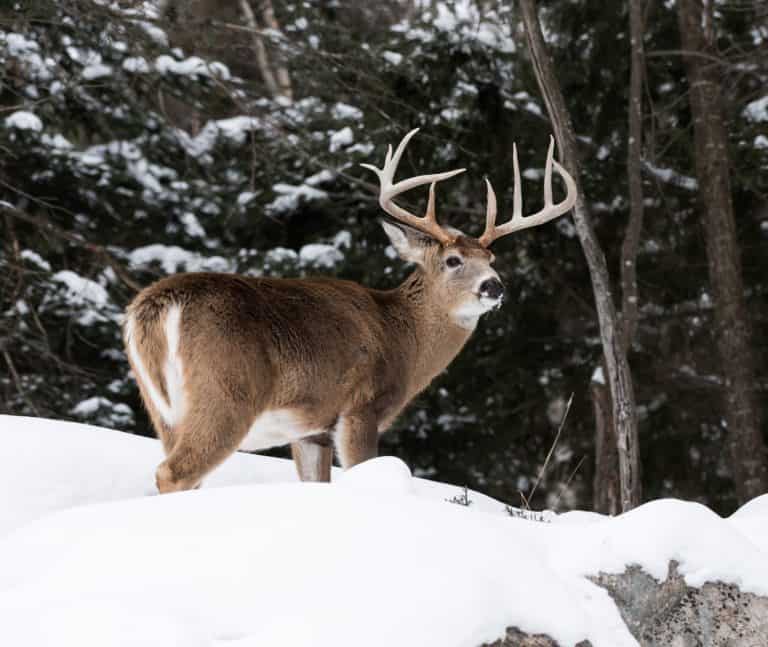
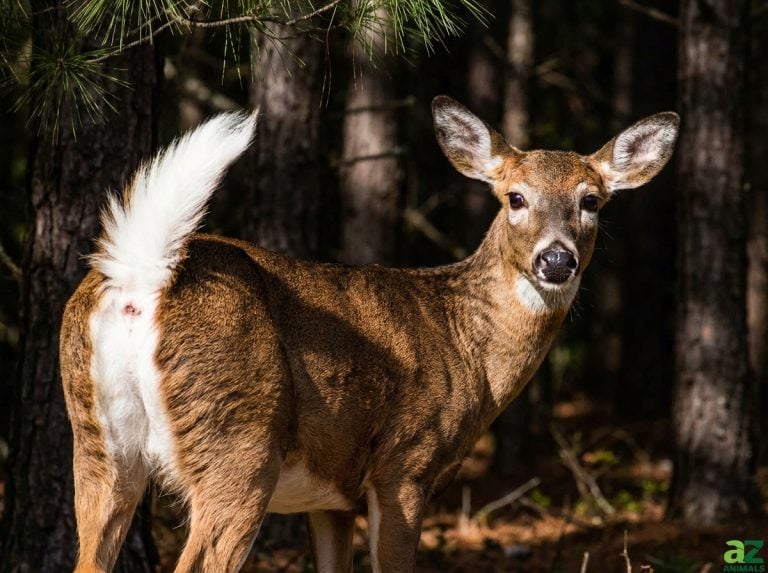
As the white-tailed deer’s name suggests, this creature has a bushy, brown tail with a white underside.
©iStock.com/Dan Richards
The Key Differences Between a White-Tailed Deer and a Black-Tailed Deer
White- and black-tailed deer belong to the same family, Cervidae, and genus, Odocoileus, but they are two distinct species. Odocoileus virginianus, commonly known as white-tailed deer, is larger than its black-tailed cousins. And as their names suggest, their tails are different.
Black-tailed deer is the term used to refer to the Columbian black-tailed deer (Odocoileus hemionus columbianus) and the Sitka black-tailed deer (O. h. sitkensis), two subspecies of O. hemionus (mule deer). Mule deer are not considered black-tailed deer. There are two main species groups for O. hemionus: mule deer and black-tailed deer. Mule deer have 10 recognized subspecies.
The primary differences between a white-tailed deer and a black-tailed deer of either subspecies can be found in their size, morphology, and range.
White-Tailed Deer vs. Black-Tailed Deer: Size

Adult male Columbian black-tailed deer typically weigh 150-200 pounds.
©Columbia Black-tailed Deer, Peter Davis/USFWS, Public Domain, https://www.fws.gov/media/columbia-black-tailed-deer – Original / License
White-tailed deer are medium-sized members of the Cervidae family, and they are significantly larger in every measure—weight, height, and length—than both species of black-tailed deer, but their size is highly variable among the species. On average, adult males can weigh 120-300 pounds, measure 2.9-3.5 feet tall at the shoulder, and measure 4-6.75 feet long. Of course, there are plenty of confirmed reports of bucks that exceed these ranges, as they can vary quite a lot depending on subspecies, geographic location/habitat, diet, and other factors.
The second-largest deer of the three discussed in this article is the Columbian black-tailed deer. These deer typically weigh 150-200 pounds. Meanwhile, adult male Sitka black-tailed deer on average weigh about 120 pounds, although they can grow to weigh up to 200 pounds. There isn’t a ton of data on the height and length of both subspecies of black-tailed deer, but these are the accepted ranges: 2-3.7 feet tall at the shoulder and 4-5.5 feet long.
White-Tailed Deer vs Black-Tailed Deer: Morphology
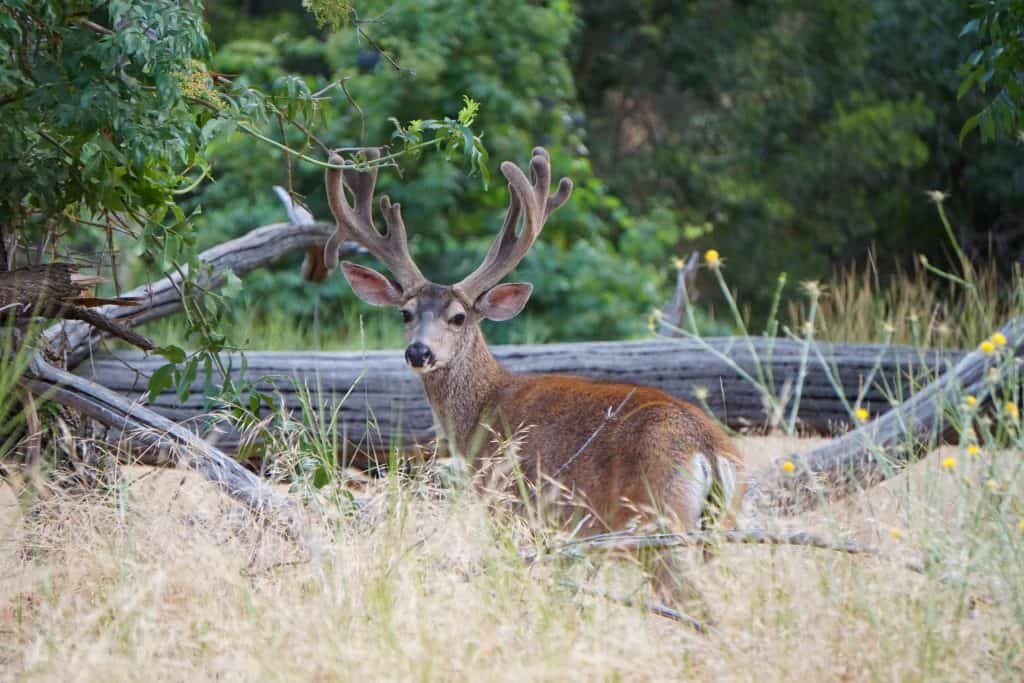
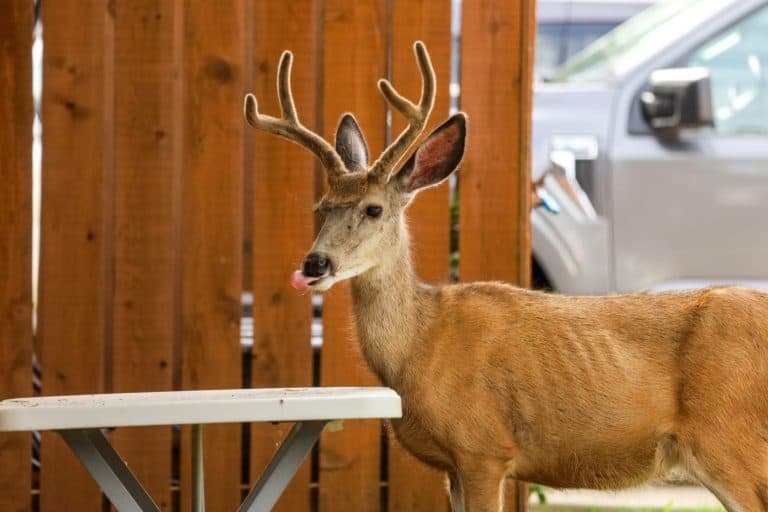
The black-tailed deer have antlers that fork off the main beam.
©Izabella Pir/Shutterstock.com
White-tailed deer and black-tailed deer differ in many ways. The most apparent differences between these two deer lie in their tails. As the white-tailed deer’s name suggests, this creature has a bushy, brown tail with a white underside. They raise their tails in alarm when they detect threats.
However, the black-tailed deer has a black non-bushy tail. Another major difference between these two creatures is their antlers. White-tailed deer grow antlers off a single beam, but the black-tailed deer have antlers that fork off the main beam. Also, black-tailed deer have longer ears than white-tailed deer due to their closeness to the mule deer ancestry.
Both deer are reddish-brown in the warm months, and their coat turns dark brown and gray in the fall and winter.
White-Tailed Deer vs Black-Tailed Deer: Range
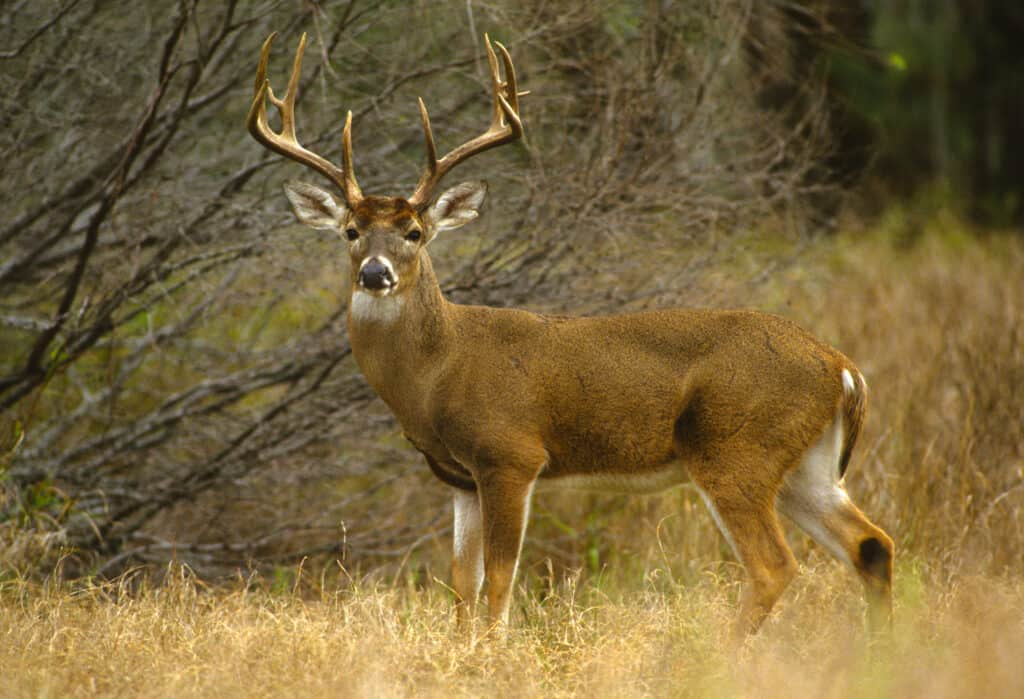
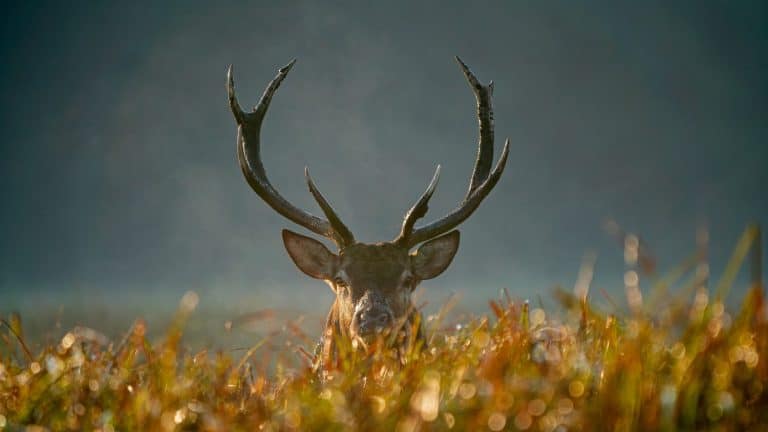
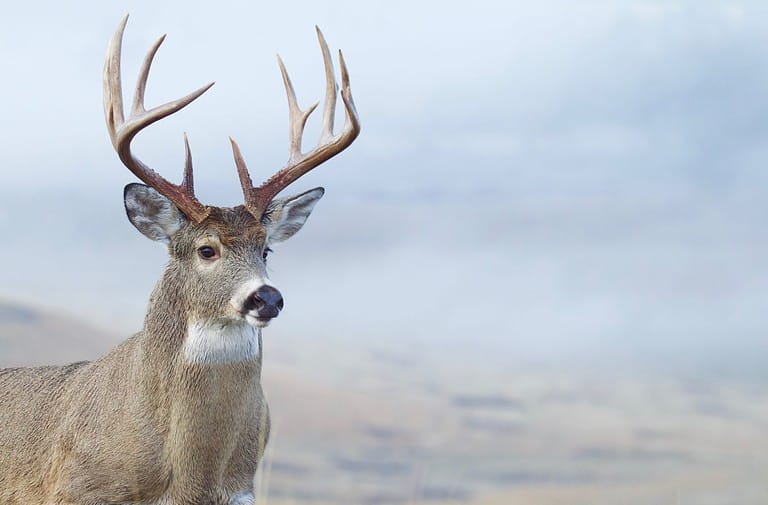
The range and distribution of white-tailed deer is one of the greatest of any mammal in the Americas.
©iStock.com/twildlife
White-tailed deer are widespread across and common in many parts of North, Central, and South America, as this is their native range. They can be found in nearly every U.S. state. Their native range doesn’t include Alaska, California, Nevada, much of Utah, the Baja California peninsula, and western and northern Canada. These deer are quite adaptable to various habitats. While often thought of as forest creatures, white-tailed deer can be found in meadows, forest edges, prairies, woodlands, and fields as well as in towns and cities and at high and low altitudes. Their widespread distribution makes this one of the most common deer species that people see regularly.
Where there are few, if any, white-tailed deer, the gap is filled by both subspecies of black-tailed deer. Sitka black-tailed deer are only found in the wet coastal rainforests of southeast Alaska and north-coastal British Columbia, the westernmost province of Canada. Deer swim well, so there are plenty of Sitka black-tailed deer living on Alaska’s many islands. Coastal British Columbia, as well as some interior parts, is also prime habitat for Columbian white-tailed deer, the range of which stretches from central British Columbia down through the U.S. states of Washington, Oregon, and California.
While there isn’t significant range overlap between white- and black-tailed deer, there is some, notably in Washington and Oregon.
White-Tailed Deer vs. Black-Tailed Deer: Diet
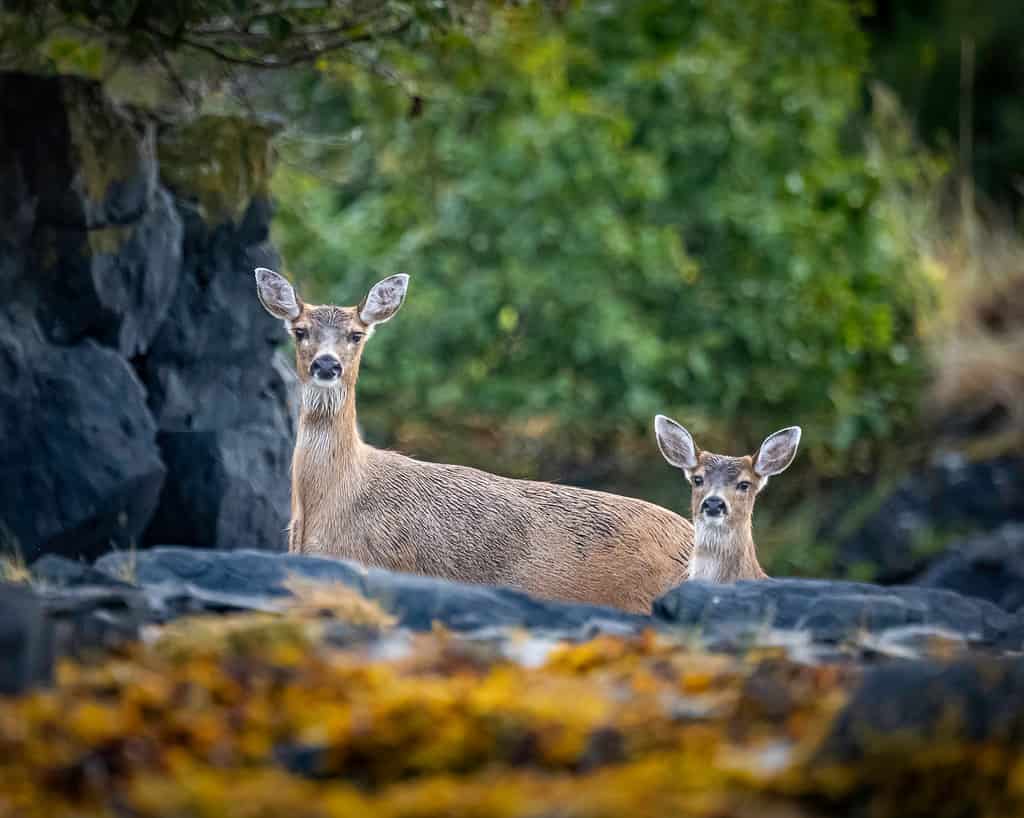
Black-tailed deer eat forbs, lichens, and a variety of berries, in addition to the foods that makes up the typical deer diet: legumes and plants, including shoots, leaves, cacti (in deserts), prairie forbs, and grasses.
©Laura Hedien/Shutterstock.com
White-tailed deer live in many places and therefore eat a greater variety of foods because they can access more foods. They forage for legumes and plants, including shoots, leaves, cacti (in deserts), prairie forbs, and grasses. Deer can and do eat mushrooms, some of which are toxic to humans, and fruits. Despite their significantly reduced range, both black-tailed deer subspecies eat many of the same foods as their cousins. Additionally, they eat forbs and lichens as well as several berries, including cranberries, elderberries, and huckleberries.