
Quick Take
- Deer infected with CWD can spread the disease long before showing a single symptom, and the window of silent transmission is longer than most hunters realize. See the incubation period →
- CWD proteins don't die when a deer dies, and what happens to them afterward is what wildlife experts find most alarming. How prions persist in the environment →
- There are no confirmed human cases of CWD, though laboratory research has produced a result that keeps public health researchers up at night. See the human risk evidence →
- Once CWD reaches a wild deer population, wildlife managers essentially have one option, and that option is not a cure. Why eradication isn't possible →
The eeriness of a deer with chronic wasting disease is unforgettable, which is precisely why this disease has earned its nickname. Deer affected by this illness drool, stumble, stare, and waste away, with no real awareness of their surroundings, and their typical caution is nonexistent. To anyone who has seen a healthy deer, this contrast is just one reason why “zombie deer” are taken so seriously.
Also known as CWD, chronic wasting disease is a fatal neurological illness spreading through North America’s deer populations, and wildlife agencies and public health researchers are increasingly concerned about what comes next. What’s CWD, and how does it harm deer? Does this disease have the potential to harm humans, especially humans who regularly eat deer that may be infected?
Here’s what you should know about CWD, including how it spreads and how prevalent it currently is in North America. We also include research and quotes from wildlife experts—those who regularly deal with infected deer—to discuss how dangerous CWD is, especially to humans.
What Is Chronic Wasting Disease?
CWD is a transmissible disease in the same class as mad cow disease in cattle and Creutzfeldt-Jakob disease in humans. It is caused by prions, or proteins that occur naturally in the body but can become misaligned.
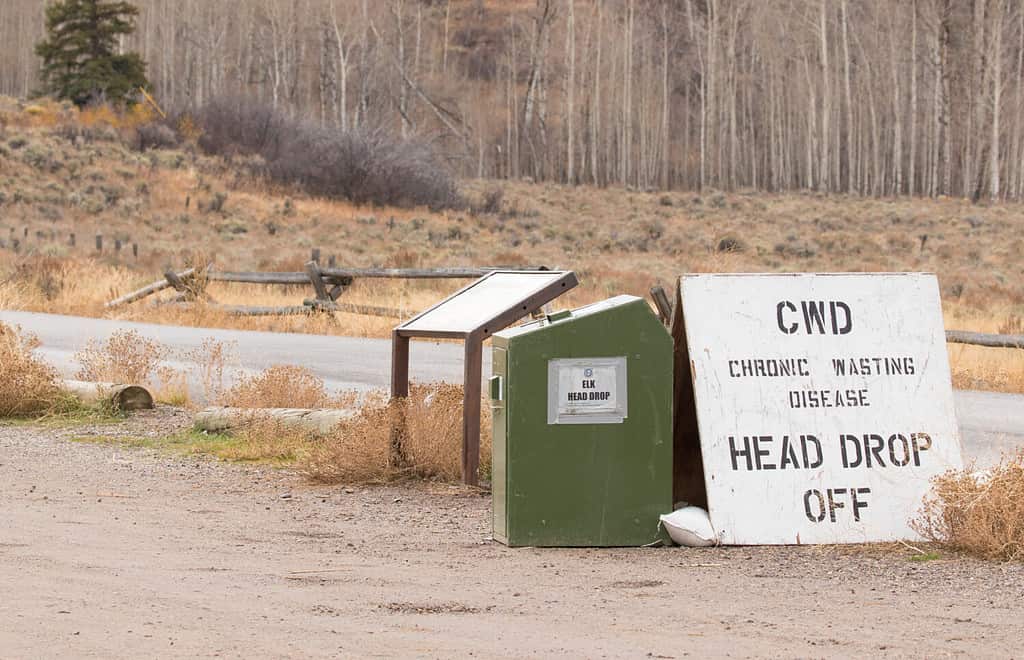
The infectious capabilities of CWD cannot be overstated.
©moosehenderson/Shutterstock.com
Once introduced into an animal, these altered proteins trigger a chain reaction, causing normal brain proteins to misfold as well. The brain eventually develops microscopic holes, and because of this, CWD is always fatal. There is also no vaccine or treatment currently available for the disease, which is troubling considering how easily transmission can happen.
“CWD is caused by infectious proteins causing fatal neurodegenerative diseases,” said Luis Escobar, a wildlife health expert and professor at Virginia Tech. “Infected deer can transmit the pathogen by direct contact or by contaminating the environment. Transmission can occur before symptoms appear, as early as six months after the infection.”
The Origins of Zombie Deer
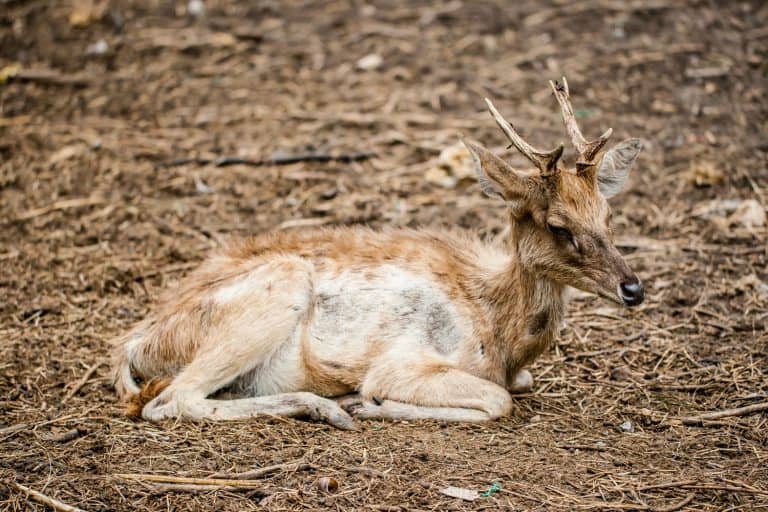
This nickname comes directly from the late-stage symptoms associated with CWD. As the U.S. Geological Survey reported, CWD causes drastic weight loss, stumbling, excessive salivation, increased thirst, loss of awareness, and a dramatic loss of fear of humans. Infected deer may also stand motionless in the open or approach people they would ordinarily avoid; essentially, these many changes in behavior tend to align with zombie lore.

All types of deer species can be infected with CWD, including elk and moose.
©Amy Lutz/Shutterstock.com
The disease’s incubation period averages 18 to 24 months, which means a deer can appear completely healthy while spreading the disease. Plus, it can take several years to kill the infected animal, allowing for many more potential infections. Animals infected with CWD do not chase or attack people. They may look and act like zombies, but they aren’t interested in harming humans.
Infected deer can transmit the pathogen by direct contact or by contaminating the environment. Transmission can occur before symptoms appear, as early as six months after the infection.
Luis Escobar, a wildlife health expert and professor at Virginia Tech
The Spread of Chronic Wasting Disease
CWD spreads easily: through body fluids and either direct animal-to-animal contact or through environmental contamination. According to research from the CDC, prions deposited in soil or water can remain infectious for years. Infected carcasses and grass growing in contaminated soil can also transmit the disease.

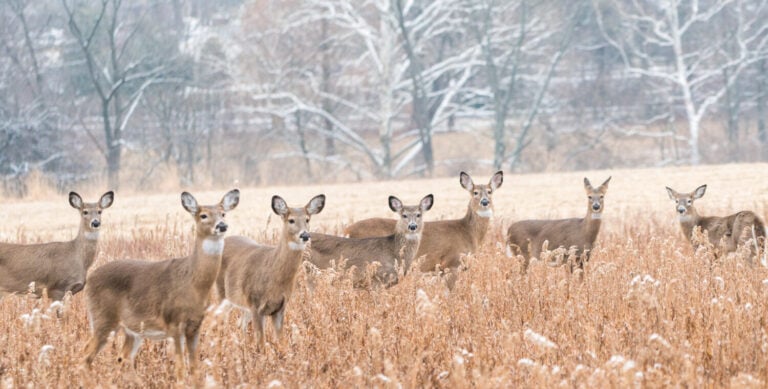
Infected deer can spread CWD before they ever show symptoms of the disease.
©WendyCotie/Shutterstock.com
“CWD-infected animals can excrete infectious prions before clinical signs appear,” said Brandon Munk, the California Department of Fish and Wildlife veterinarian overseeing the state’s CWD prevention efforts. “These prions can persist in the environment for years, making it very difficult to prevent or control the spread once it has been introduced.”
Moving both live and harvested deer across state and national lines has also accelerated CWD’s presence in North America. So, which regions are most affected by CWD around the world?
The Widespread Presence of CWD
As of August 2025, the CDC confirmed that CWD has been reported in at least 36 U.S. states and five Canadian provinces, as well as in Norway, Sweden, Finland, and South Korea. While first identified in captive deer in Colorado back in 1967 and found in wild deer in 1981, its range has expanded steadily ever since.

Reports of CWD vary depending on the state, as testing rates are inconsistent.
©Song_about_summer/Shutterstock.com
Estimating annual infection numbers is difficult, as the disease’s detection depends on testing rates that vary widely by state. The Alliance for Public Wildlife estimates 7,000 to 15,000 CWD-infected animals are consumed by humans each year, but this figure may grow by 20% annually as prevalence increases. In heavily affected regions, local infection rates can be far above national averages; it all depends on where you live and the health of your deer populations.
Which Deer Species Are Affected By CWD?
CWD only affects members of the deer family and cannot infect cattle, livestock, or other pets; your cats and dogs are safe. In North America, confirmed susceptible species include white-tailed deer, mule deer, black-tailed deer, elk, moose, caribou, red deer, and sika deer.

Caribou can also be infected with chronic wasting disease.
©Sergey Krasnoshchokov/Shutterstock.com
White-tailed deer and mule deer are the most commonly and widely affected deer species, particularly in wild populations. CWD tends to show up most often in adult deer, particularly males, which range more widely and come into closer contact with other animals. However, CWD can infect deer of any age or sex, and it spreads quickly in close-knit groups.
But is it possible for CWD to infect humans?
CWD and How it Affects Humans
Rest assured, even with a name like “zombie deer”—there are no confirmed or reported human cases of CWD.
However, according to the aforementioned study, “the potential exists for transmission to humans and subsequent human disease.” CWD has also been transmitted to squirrel monkeys and humanized mice in laboratory settings, suggesting a remote possibility of transmission to humans.
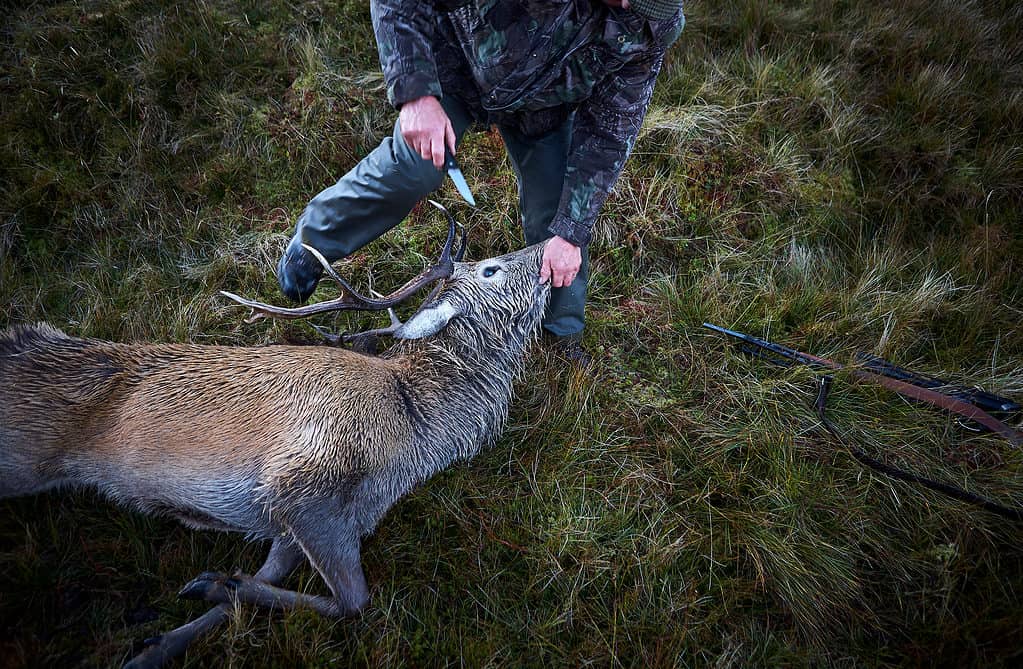
If you’re a hunter in an area with reports of CWD, it’s important to get the meat tested before consumption.
©NordKraft/Shutterstock.com
The CDC still recommends that hunters avoid consuming meat from deer known to be infected with CWD, and animals harvested in CWD-affected areas should always be tested before their meat is eaten. Finally, high-risk body parts, such as the brain, spinal cord, eyes, spleen, tonsils, and lymph nodes, should be avoided entirely, regardless of test results. These aren’t commonly eaten to begin with, but it’s worth mentioning.
Protecting Deer from Chronic Wasting Disease
The reality is that, once CWD enters a free-ranging deer population, it is virtually impossible to stop. Because CWD prions can survive for long periods in both hosts and the environment, it is extremely difficult to control or eliminate the disease from affected areas.
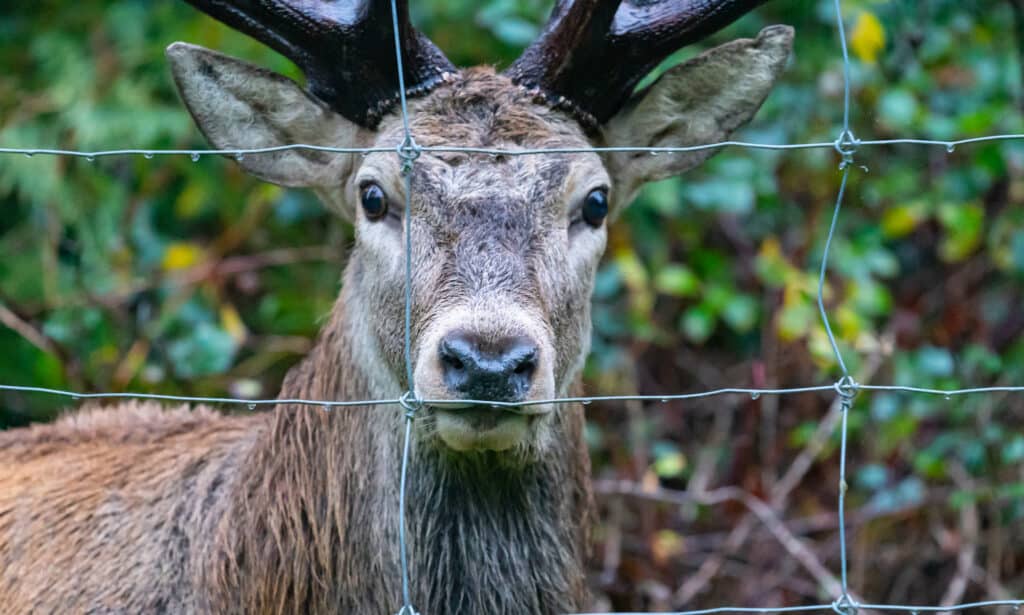
CWD is more widespread than many people realize, though it doesn’t appear to harm humans.
©iStock.com/BrianScantlebury
Worse still, in jurisdictions where the disease has been present for decades, significant and potentially irreversible population declines are already being observed. The potential public health implications of CWD make it one of the most serious wildlife disease crises in North American history. If you notice a deer with chronic wasting disease in your area, don’t hesitate to reach out to your local wildlife department. Just know that they can’t hurt you, despite their fearsome nickname.