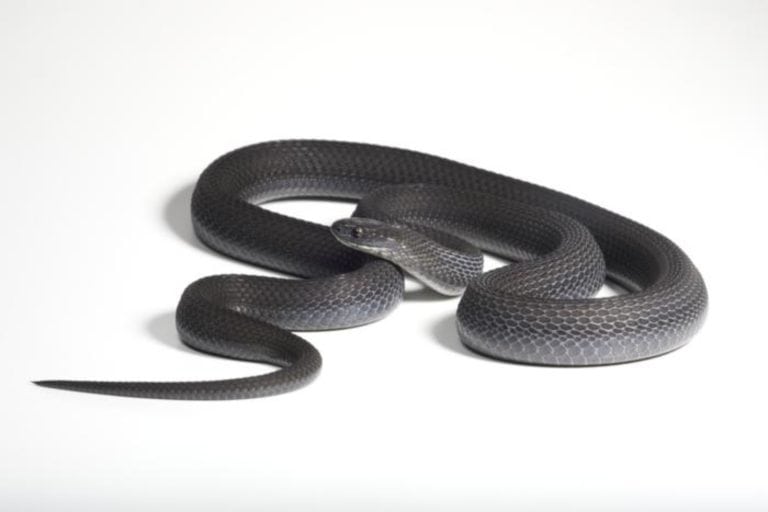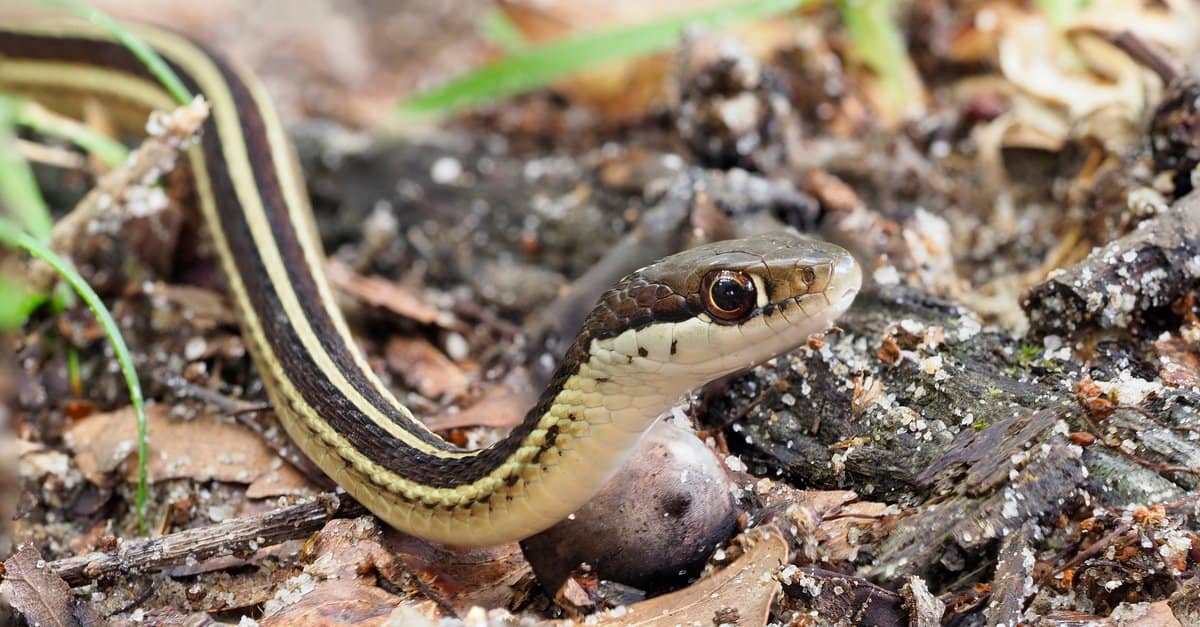

All ribbon snakes are garter snakes, but not all garter snakes are ribbon snakes. The term “garter snake” describes any of the 35-plus species and 50-odd subspecies in the genus Thamnophis. These small to medium-size snakes typically meet the following criteria: slender, keeled scales, longitudinal stripes (occasionally with spots), and large eyes with rounded pupils.
Here, in this article, we’re highlighting the differences between two different garter snake species: the ribbon snake and the common garter snake. First thing to clarify are their scientific names. Sauritus, the species name for ribbon snakes, is Greek for “lizard,” which refers to this species’ lizard-like tail. The common garter snake’s scientific name is Thamnophis sirtalis, and its species name comes from the Greek for “garter strap,” so named for the longitudinal stripes on its body that resemble garters, the band or belt used to hold up stockings or socks.
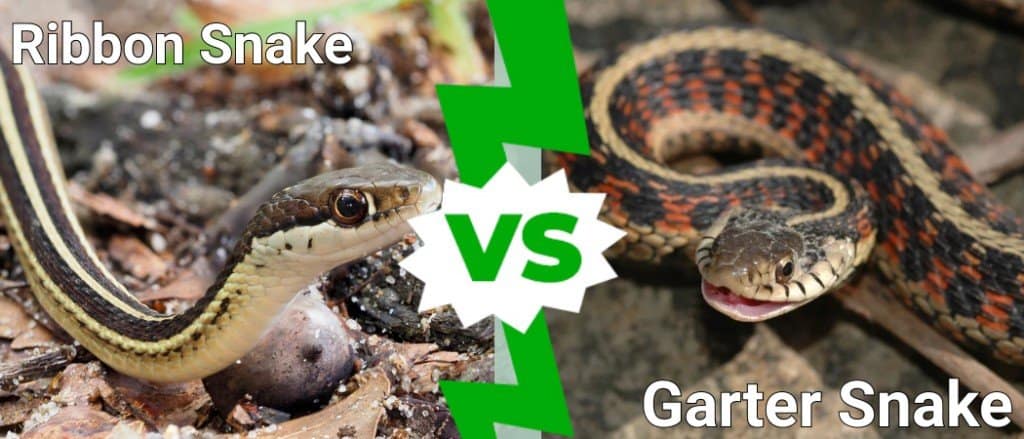
The differences between ribbon snakes and common garter snakes are their overall appearance (markings, colors, and body shape), habitat, and preferred diet. Let’s learn more about these snakes’ differences and discuss some frequently asked questions regarding them.
Comparing Ribbon Snakes and Garter Snakes
| Ribbon Snake | Common Garter Snake | |
| Venomous | No | Yes |
| Size and Body | 15-30 inches; slender | 15-30 inches; round, thicker body |
| Color | Brown, black, tan | Brown, black, yellow, red, blue, green |
| Markings | Longitudinal stripes on back and sides | Longitudinal stripes and spots |
| Habitat | Eastern U.S.; ponds and wetlands | Southeastern U.S.; fields and marshes |
| Diet | Fish, frogs, tadpoles, small rodents, insects, other snakes | Fish, worms, small rodents, insects, frogs, toads, salamanders |
Key Differences Between Ribbon Snakes and Garter Snakes
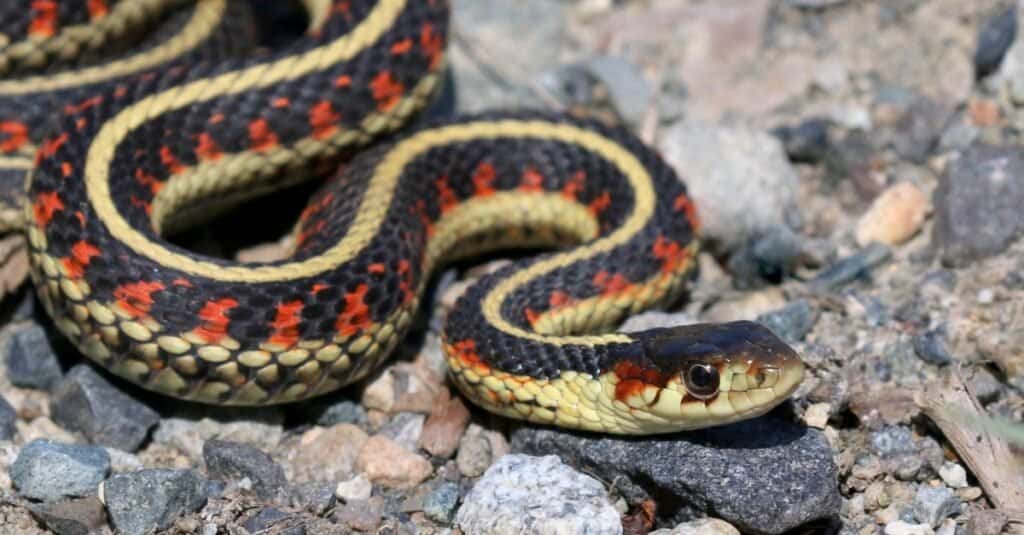
The primary difference between ribbon snakes and garter snakes has to be their markings, colors, and body shape.
©iStock.com/randimal
There are key differences that separate both ribbon snakes and garter snakes. For example, ribbon snakes are often less distinctly marked and colored than garter snakes. Ribbon snakes also prefer aquatic habitats almost exclusively, while garter snakes are more flexible in their home habitat. There are differences in a ribbon snake vs garter snake diet and body shape as well.
Let’s take a look at some of the key differences between these two closely related snakes now.
Ribbon Snake vs. Common Garter Snake: Markings
A ribbon snake has fewer distinct markings when compared to a garter snake. While garter snakes can be found in a variety of colors and patterns, ribbon snakes tend to have fewer designs and colors present on their body.
For example, the Eastern ribbon snake has three tan or yellow stripes on its brown or black body; a garter snake can be striped or spotted in a variety of colors. Some garter snakes have more blue or black present in their scales, as well as checkered patterns or stripes. Ribbon snakes will not have as many distinct markings.
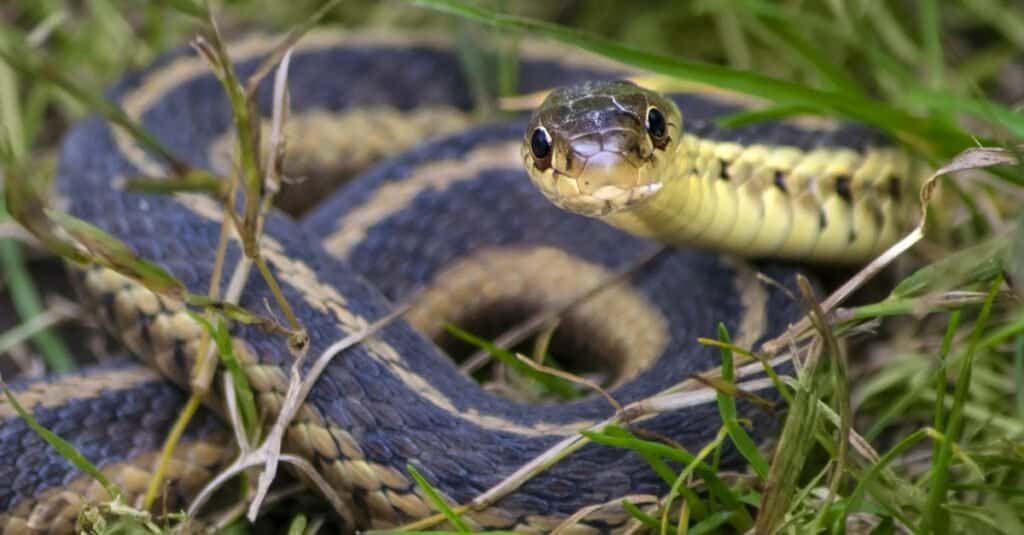
While both of these snakes are relatively slender and long, the ribbon snake is thinner than a garter snake.
©K Quinn Ferris/Shutterstock.com
Ribbon Snake vs. Common Garter Snake: Body Shape
Another distinction between ribbon snakes and garter snakes is their body shapes. While both of these snakes are relatively slender and long, the ribbon snake is thinner than a garter snake. This is how the ribbon snake earned its name, after all!
Ribbon snakes also tend to have less bulbous heads when compared to garter snakes. The body to tail ratio for ribbon snakes will also be greater than for garter snakes, though it can be difficult to tell where a snake’s body ends and its tail begins. Ribbon snakes have a much longer tail than garter snakes do.
Ribbon Snake vs. Common Garter Snake: Habitat
Another difference between ribbon snakes and garter snakes has to do with their preferred habitat. Both garter snakes and ribbon snakes can be found near bodies of water and humid climates, but garter snakes often live in woodland or grassland habitats as well. Ribbon snakes differ from garter snakes in this way, in that they almost exclusively live near and around water.
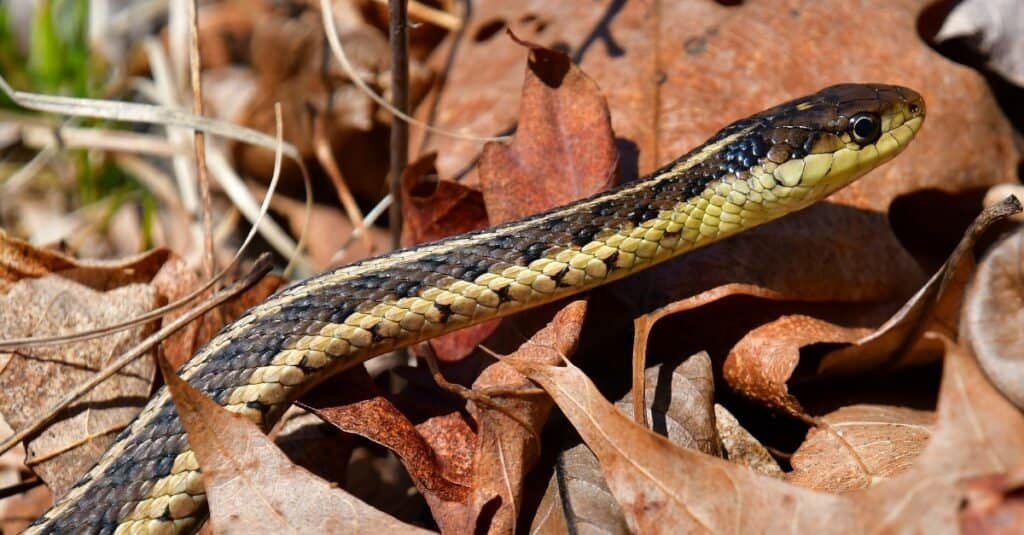
Both garter snakes and ribbon snakes can be found near bodies of water and humid climates, but garter snakes also inhabit woodland or grassland habitats.
©iStock.com/Robert Winkler
Ribbon Snake vs Garter Snake: Diet
A final difference when it comes to ribbon snakes vs garter snakes is their diet. Ribbon snakes tend to eat aquatic wildlife, such as frogs, fish, and water bugs, while garter snakes consume small rodents more often. This is likely due to their preferred habitats, as ribbon snakes spend more time near the water than garter snakes.
Where Do Ribbon Snakes and Common Garters Live?
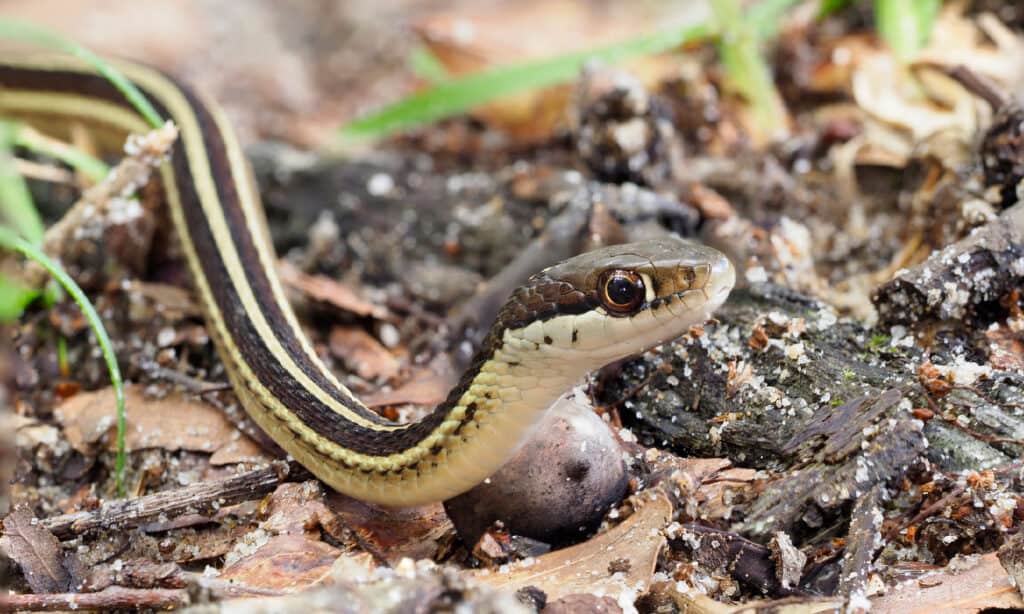
Ribbon snakes are actually a type of garter snake.
©iStock.com/sdbower
Garter snakes and ribbon snakes inhabit various parts of North America, with garter snakes also distributed in parts of South America. Garter snakes, specifically, range from west-central Canada to Ontario and Quebec in the east; in all states of the U.S. except Alaska and Hawaii; and in some areas of Mexico, Costa Rica, and Guatemala.
Ribbon snakes also have a wide distribution. Depending on the species, they inhabit most of the United States, Canada, and southward down to Costa Rica.
There are 35 total species of garter snakes. Ribbon snakes are actually a type of garter snake–there are 4 subspecies of ribbon snakes.