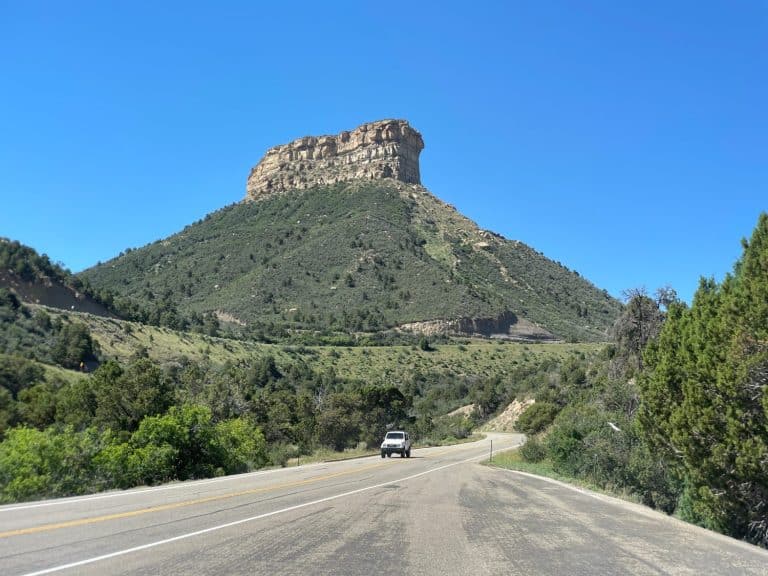

As its name suggests, volcanoes are the main feature of Lassen Volcanic National Park in California. Lassen Peak, for which the park is named, is considered the largest plug dome volcano in the world, standing 10,457 feet high. Approximately 450,000 people visit the park every year to explore the stunning location, with hiking, camping, and fishing being popular recreational activities. The volcanoes provide the perfect place for plants and animals to thrive. Here are a few of the animals in Lassen Volcanic National Park that you might see!
Bats
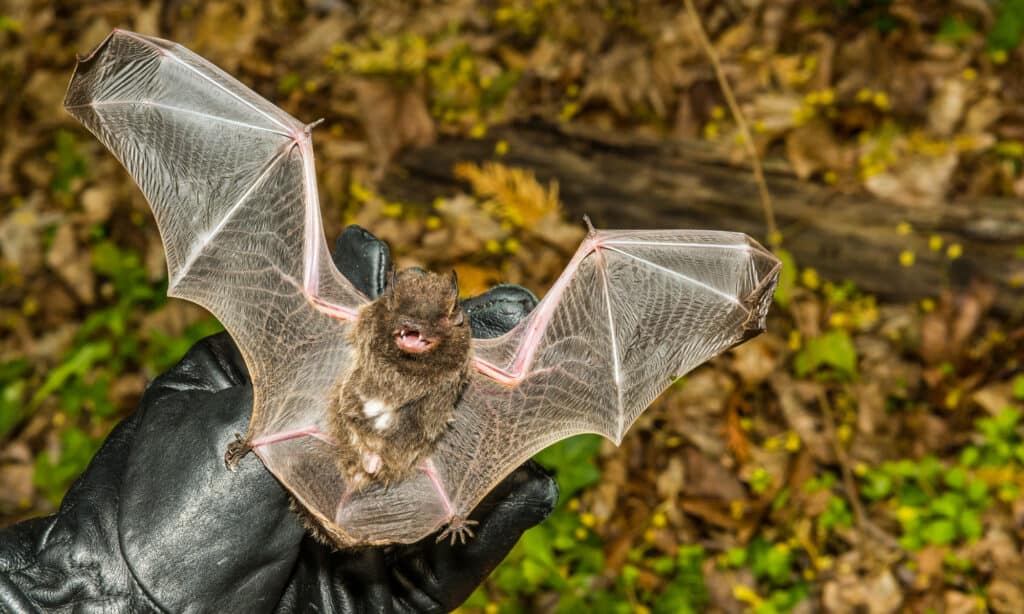
The silver-haired bat is one of eight species in the park.
©Jay Ondreicka/Shutterstock.com
There are eight species of bats living in the national park — including the hoary bat, fringed myotis, and the silver-haired bat. The fringed myotis (Myotis thysanodes) is one of the smallest species in the area, with an average length of around three inches. Bats prefer to roost in trees and caves, and they can be found in any suitable habitat in the park. Bats are nocturnal, so they are most active at night, although you can also see them hunting for insects in the early evening around dusk.
Black Bear
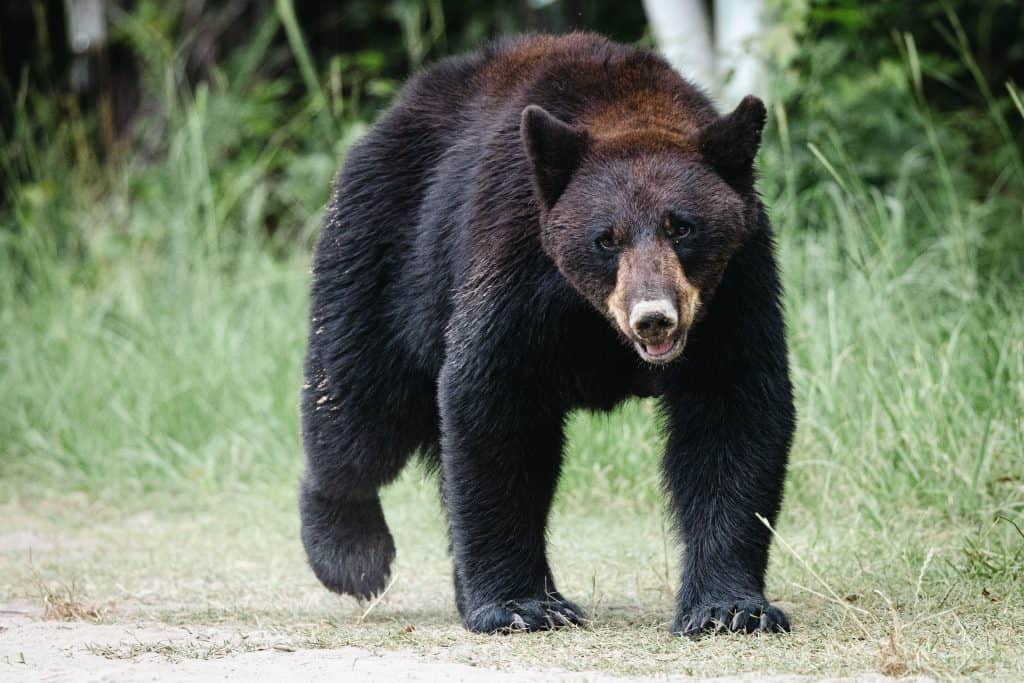
Approximately 50 black bears live in Lassen Volcanic.
©Wirestock Creators/Shutterstock.com
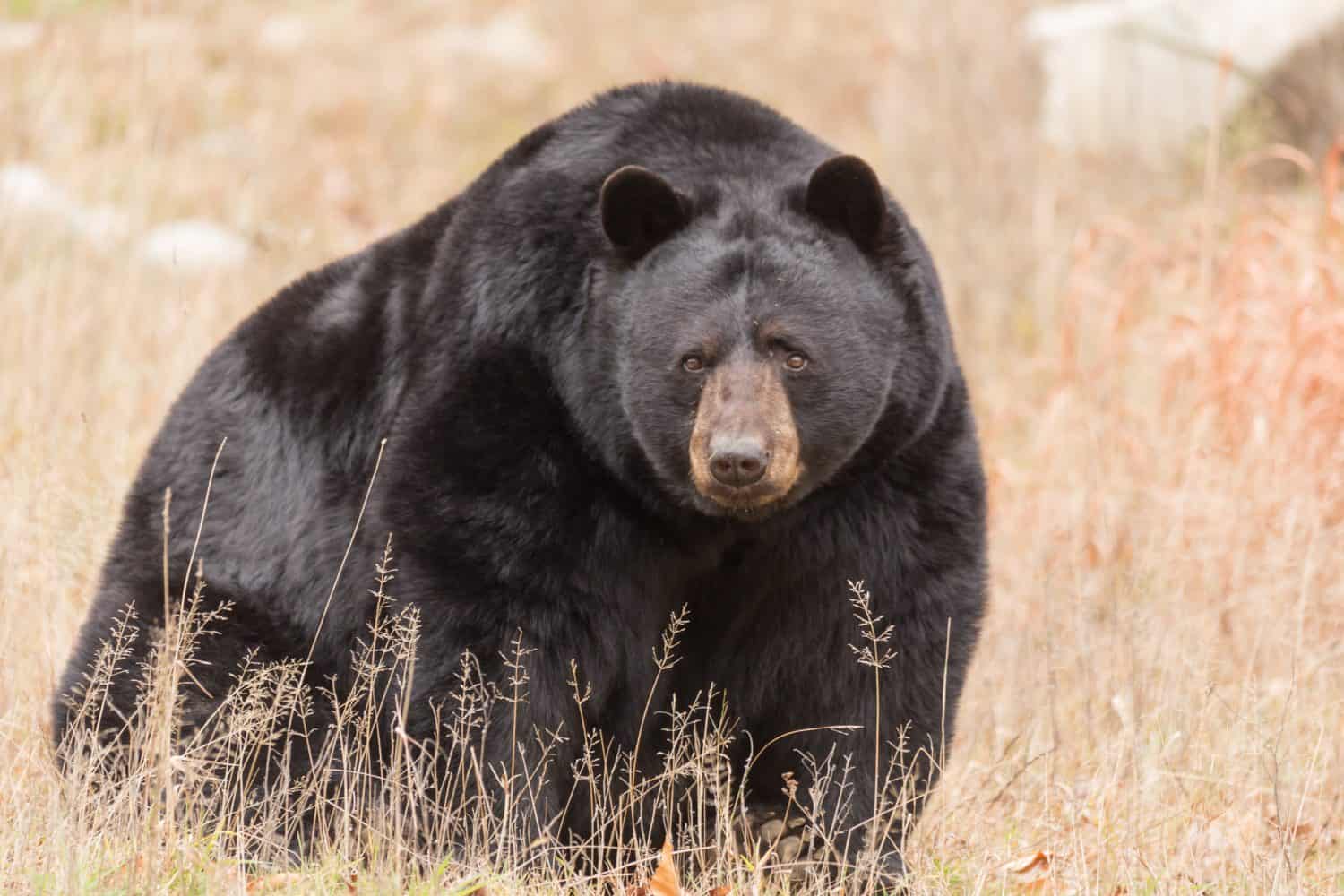
The black bear (Ursus americanus) is the only species of bear in the park nowadays, as grizzlies were extirpated from the area in the 1920s. Lassen Volcanic has an estimated population of 50 black bears today. They are most often found in the southwestern region, with sightings around Emerald Lake, Warner Valley, and Kings Creek. Black bears eat a variety of vegetation, but they are omnivores and are capable of taking down animals such as mule deer.
Flycatchers
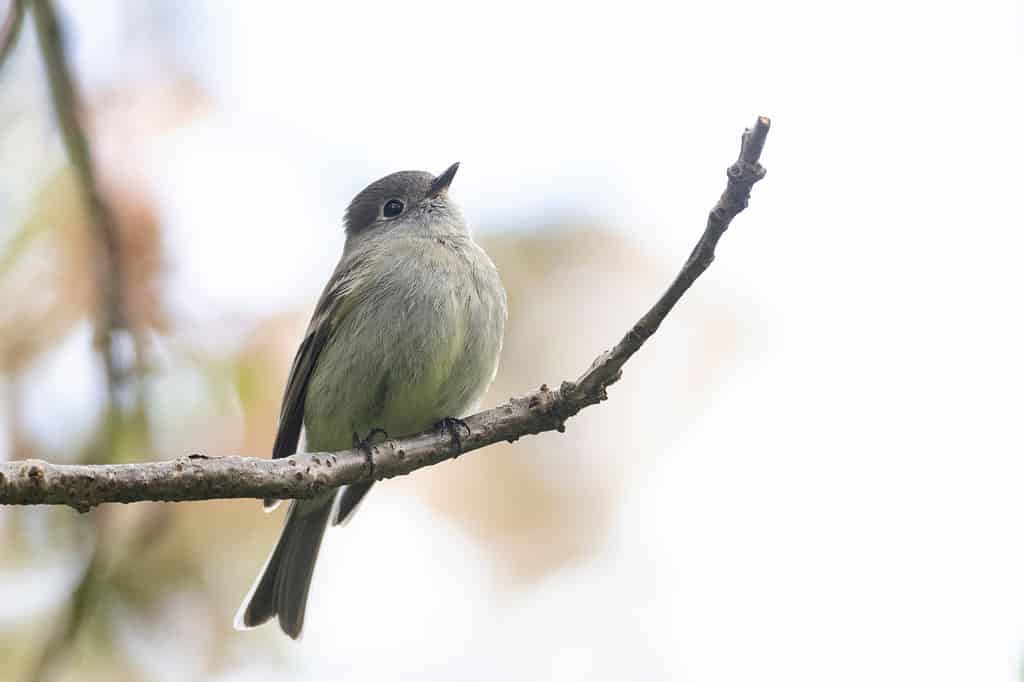
Hammond’s flycatcher is a small species of flycatcher native to the western hemisphere.
©Feng Yu/Shutterstock.com
There are many species of birds in Lassen Volcanic, and several of these are flycatchers. Hammond’s and dusky flycatchers are some of the most common, while the Pacific-slope flycatcher is less so. Flycatchers typically prefer forests and woodlands. They are migratory birds, so most species travel south in the winter before returning north for the spring breeding season.
Hummingbirds
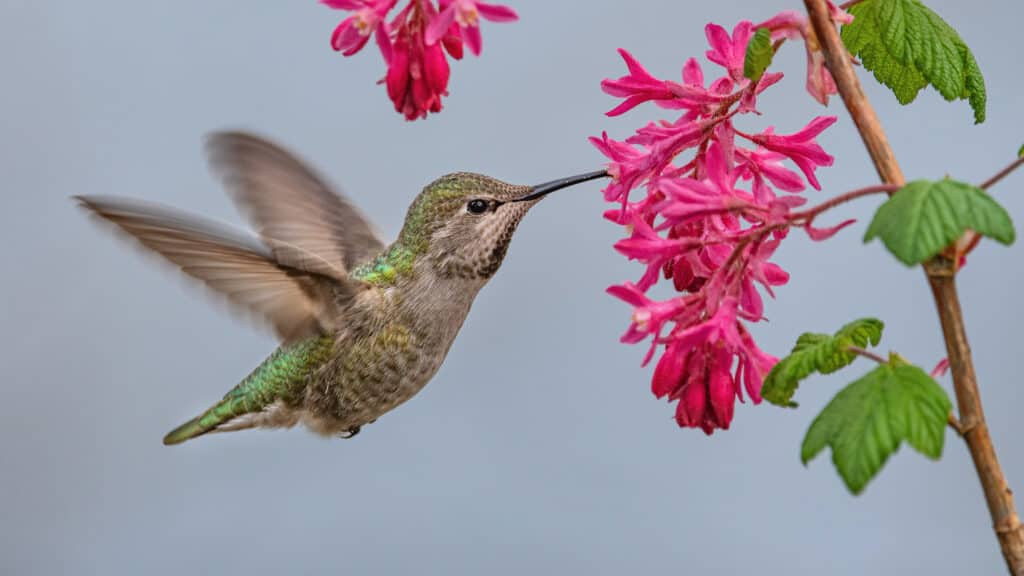
Anna’s and rufous hummingbirds are common across the park.
©Mason Maron /Shutterstock.com
Hummingbirds are also present in the park, with Anna’s and rufous hummingbirds being some of the most common. Hummingbirds live in a variety of habitats, but they prefer areas with plenty of flowers from which to obtain nectar. However, they will also prey on various small insects.
Lizards
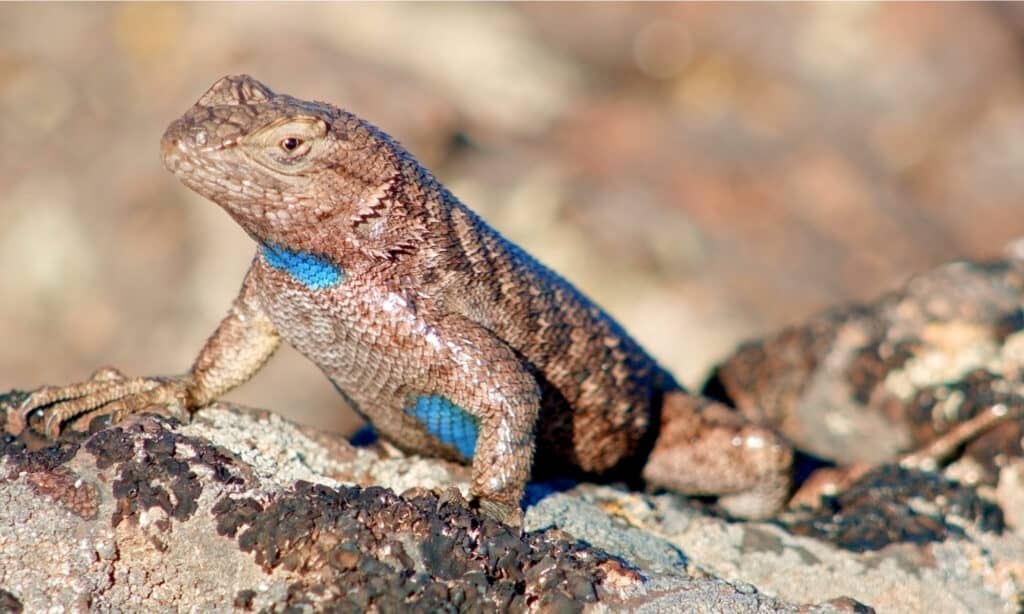
Sagebrush lizards are usually seen basking on logs and rocks.
©Tyler Hulett/Shutterstock.com
There are several species of lizards present in Lassen Volcanic National Park, including sagebrush lizards, northern alligator lizards, and southern alligator lizards. These lizards can be found in areas such as shrublands, forests, and grasslands. Sagebrush lizards (Sceloporus graciosus), in particular, can be observed basking on logs and rocks, although they are quick to head for shelter if they are disturbed.
Long-Toed Salamander

Long-toed salamanders are around six inches long.
©HWall/Shutterstock.com
The first of three amphibians in the national park is the long-toed salamander (Ambystoma macrodactylum), which lives in a variety of freshwater habitats. Long-toed salamanders are named for the fourth toes on their hind feet, which are longer than their other toes. Long-toed salamanders reach a maximum length of approximately six inches and are dark brown to black with a lighter-colored stripe down their back. They mainly eat worms, slugs, and insects.
Mountain Lion
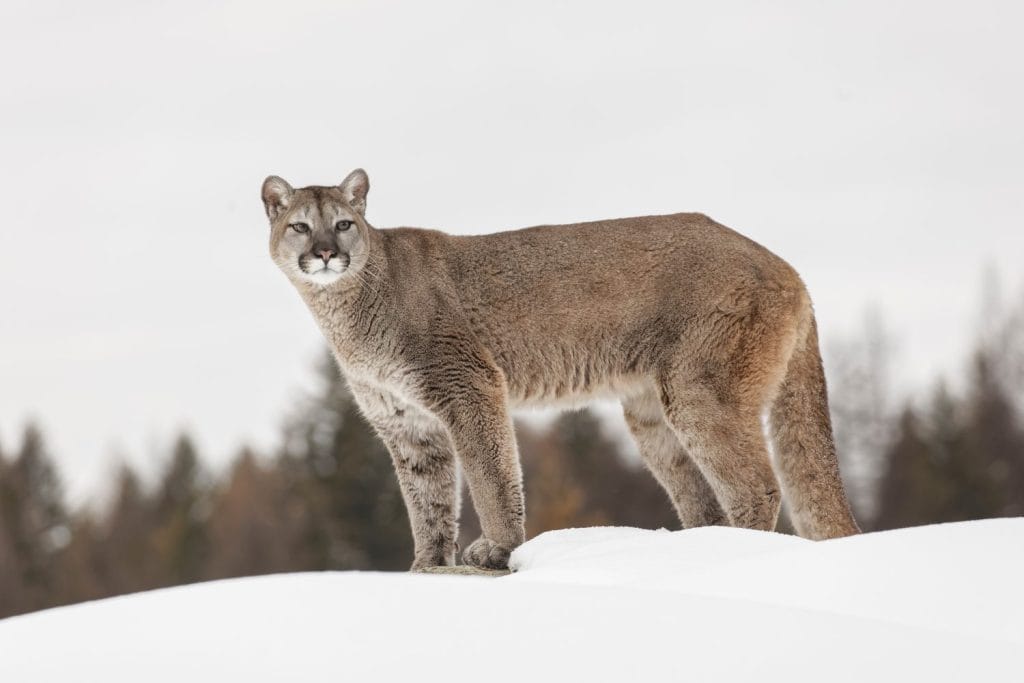
Mountain lions are one of the largest predators in Lassen Volcanic National Park.
©Danita Delimont/Shutterstock.com
Another large predator in the park is the mountain lion (Puma concolor). Mountain lions are elusive, so sightings are rare, but they are present in valleys and mountainous regions. Mountain lions are around six to nine feet long, including their tail, and can weigh as much as 220 pounds. They are solitary animals, so they live and hunt alone for most of the year, with the exception of the mating season and females with cubs. They typically hunt larger animals, such as deer, but they will also prey on animals such as rabbits, hares, and rodents.
Mule Deer
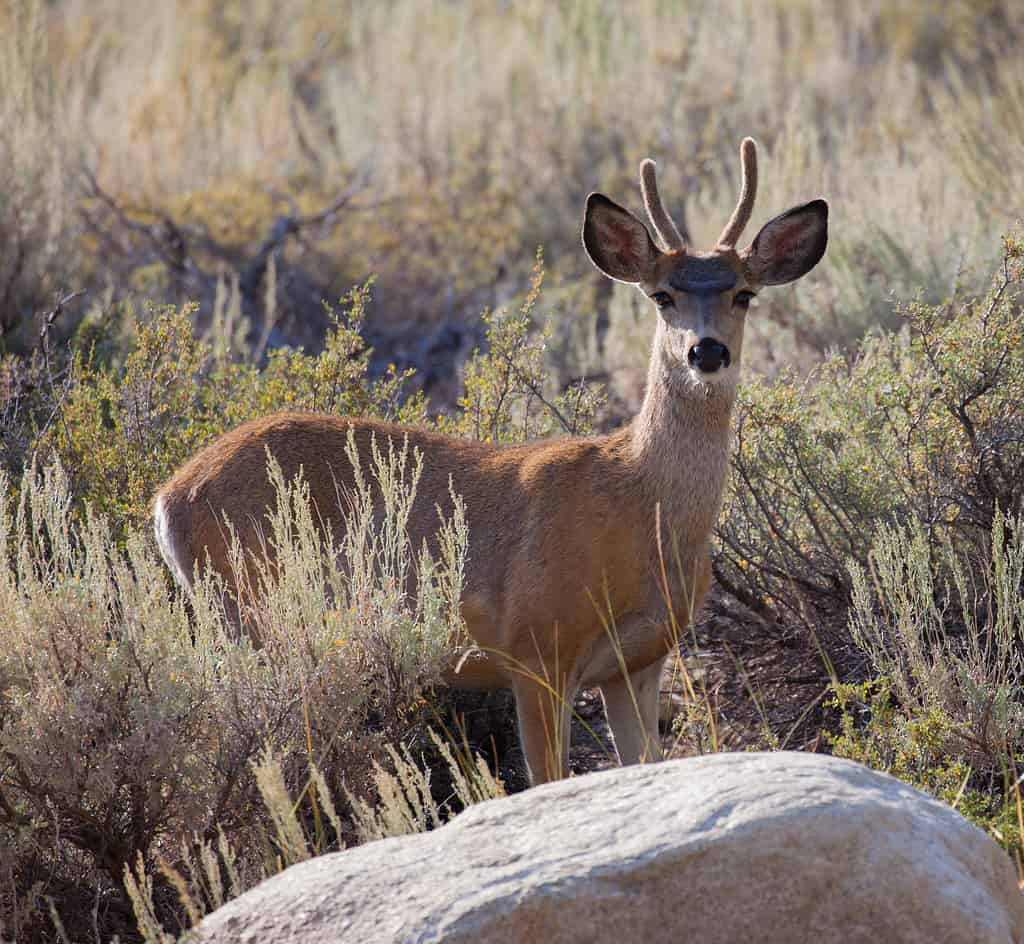
The only deer in the park are mule deer.
©epantha/iStock via Getty Images
Mule deer (Odocoileus hemionus) are the only species of deer in the national park. They are easily recognizable due to their large ears, which resemble those of a mule. They also have a black tip on the end of their tail. Mule deer are fairly large and can reach 3.5 feet at the shoulder. Mule deer are widespread across the park but tend to favor forest edges and open areas. Their rutting period begins in the fall, when males compete for breeding rights with females. Fawns are born in the spring.
Nuthatches
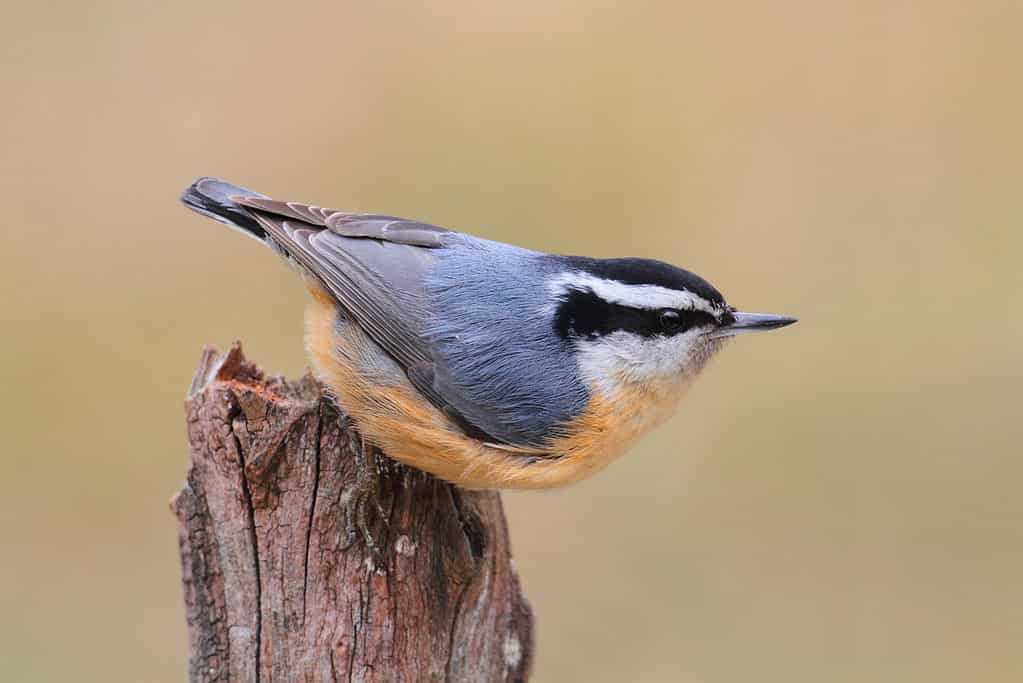
Nuthatches favor mature woodland regions.
©iStock.com/SteveByland
You might also spot some nuthatches, with their small, plump bodies. Red-breasted, white-breasted, and pygmy nuthatches can all be found in Lassen Volcanic, where they tend to favor mature woodlands. Pygmy nuthatches (Sitta pygmaea) are one of the smallest species, reaching a maximum of 4.5 inches long, and nest in small tree cavities.
Pacific Tree Frog
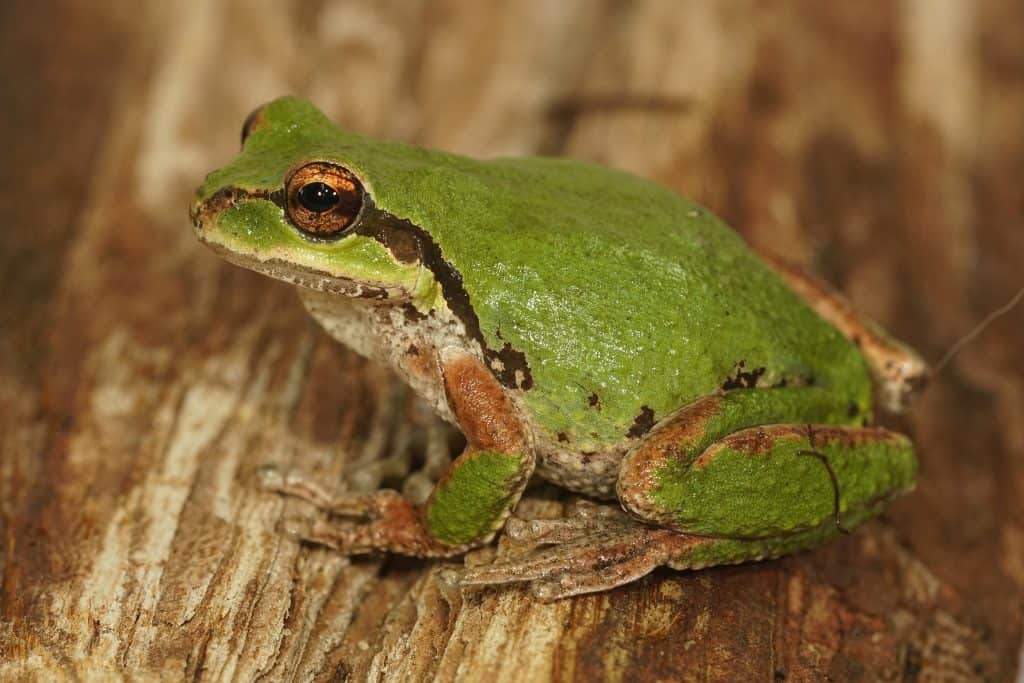
Pacific tree frogs are found in forests and woodlands.
©HWall/Shutterstock.com
The Pacific tree frog (Pseudacris regilla) is the only species of frog in Lassen Volcanic National Park. They are found in ponds and streams, particularly those in forests and woodlands. Pacific tree frogs are approximately two inches long and are usually green or brown with a lighter-colored belly.
River Otter
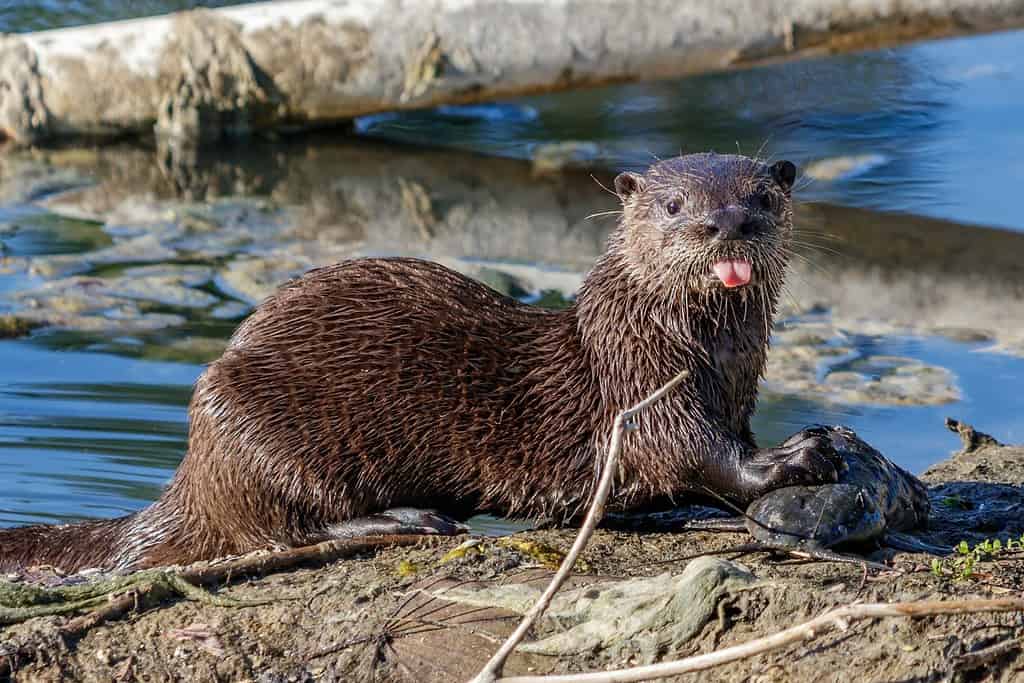
River otters are known for their playful behavior.
©Microfile.org/Shutterstock.com
If you’re lucky, then you might spot a river otter (Lontra canadensis) while you’re in Lassen Volcanic. They aren’t common in the region, but they have been spotted near Butte Lake and Manzanita Lake. River otters make their dens in burrows, often ones that have been abandoned by other animals. The dens are typically located on or close to the riverbank and sometimes have an underwater entrance. River otters typically live in small groups and are known for their social nature, often engaging in play with other group members.
Sierra Nevada Red Fox
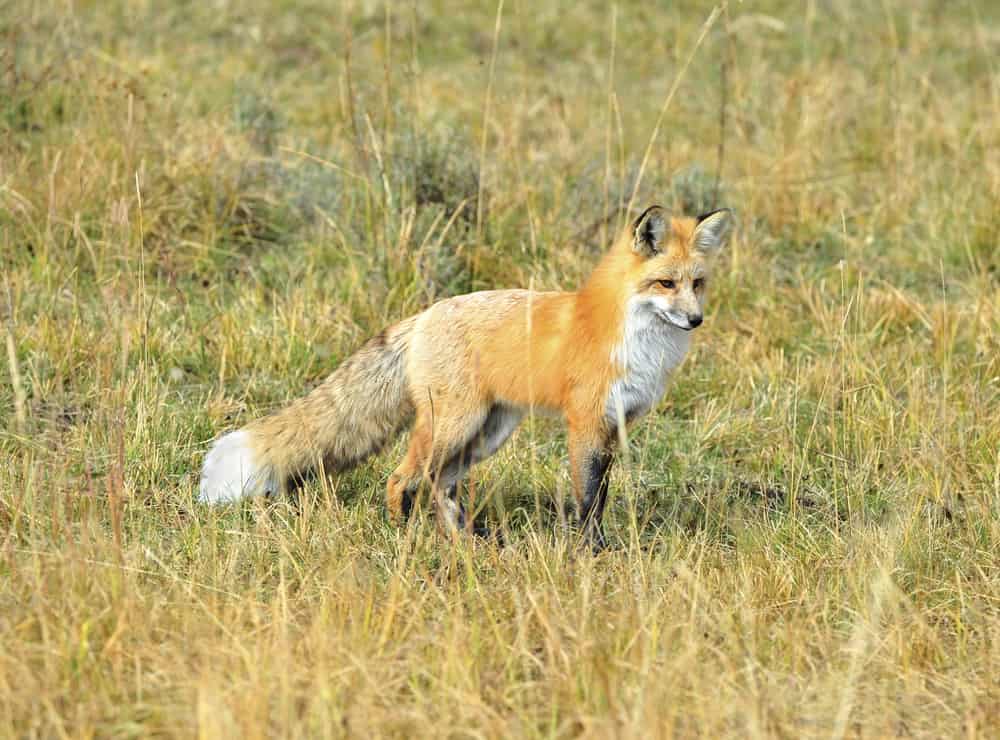
Sierra Nevada red foxes are one of the rarest animals in California.
©worldswildlifewonders/Shutterstock.com
Although you can also find gray foxes in the park, one of the most notable species is the Sierra Nevada red fox (Vulpes vulpes necator), which is a subspecies of the red fox. They are one of the rarest animals in the entire state, and Lassen Volcanic is one of the few places that they live. They live in the mountains and have a preference for habitats above 9,000 feet. Sierra Nevada red foxes often have the typical reddish appearance of a red fox. However, they can also sometimes be yellowish, black, or even silver-colored.
Snakes
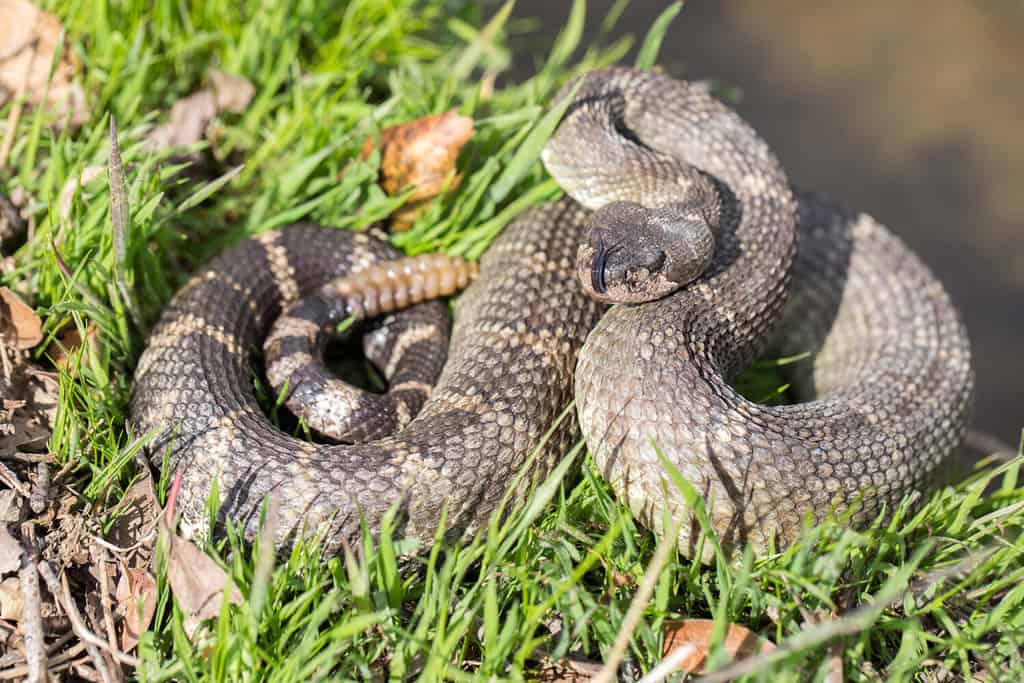
The northern Pacific rattlesnake is thought to be the only venomous snake in the park.
©yhelfman/Shutterstock.com
There are three species of non-venomous snakes present in the park — the western terrestrial garter snake, common garter snake, and the rubber boa. The two species of garter snakes are both found in a range of habitats but are also often found near water. They are excellent swimmers, and their diet includes fish and amphibians. Rubber boas are brown with loose skin, which gives them a rubber-like appearance. They prefer areas with plenty of shelter, so they are often found in forests so they can hide underneath logs and in the leaf litter.
There is also one further species of snake which is thought to inhabit the park — the northern Pacific rattlesnake — although its presence is not confirmed. Northern Pacific rattlesnakes (Crotalus oreganus) are venomous and utilize this when hunting prey. They are typically gray or brown with dark blotches and can be found in habitats such as forests and grasslands.
Snowshoe Hare
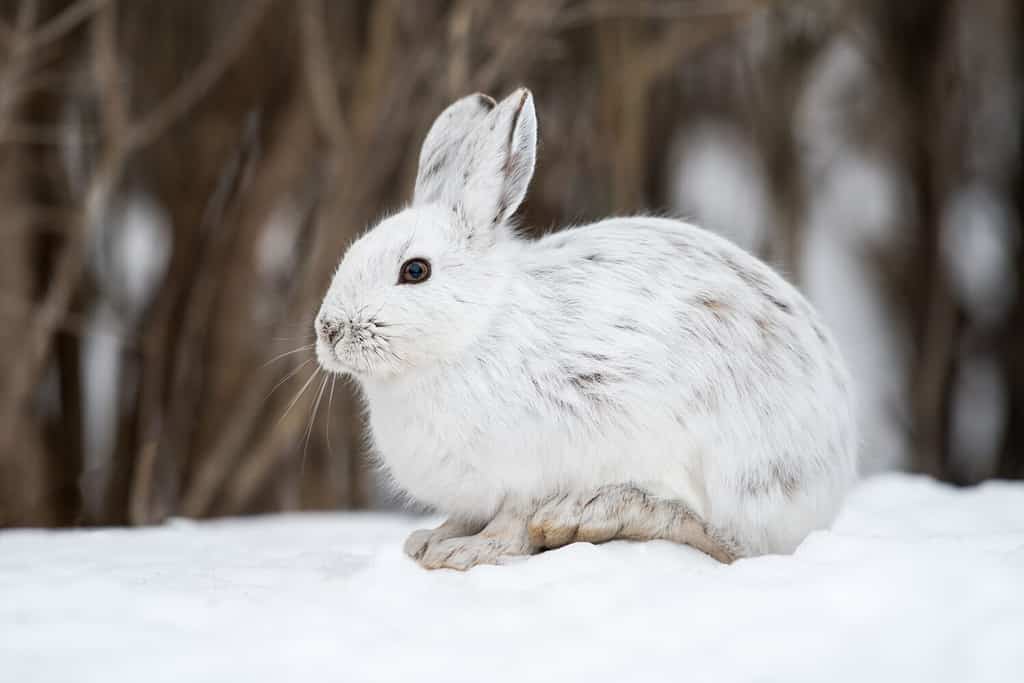
Snowshoe hares turn white in the winter.
©FotoRequest/Shutterstock.com
Another unique animal that you might spot is the snowshoe hare (Lepus americanus), which is brown during the summer but turns white in the winter. This is a unique adaptation that helps the hares to blend in with their surroundings in the snowy winter months. Snowshoe hares also have particularly large hind feet, which help them to walk through thick snow. They are active all year round in the park and can typically be found in forests.
Warblers
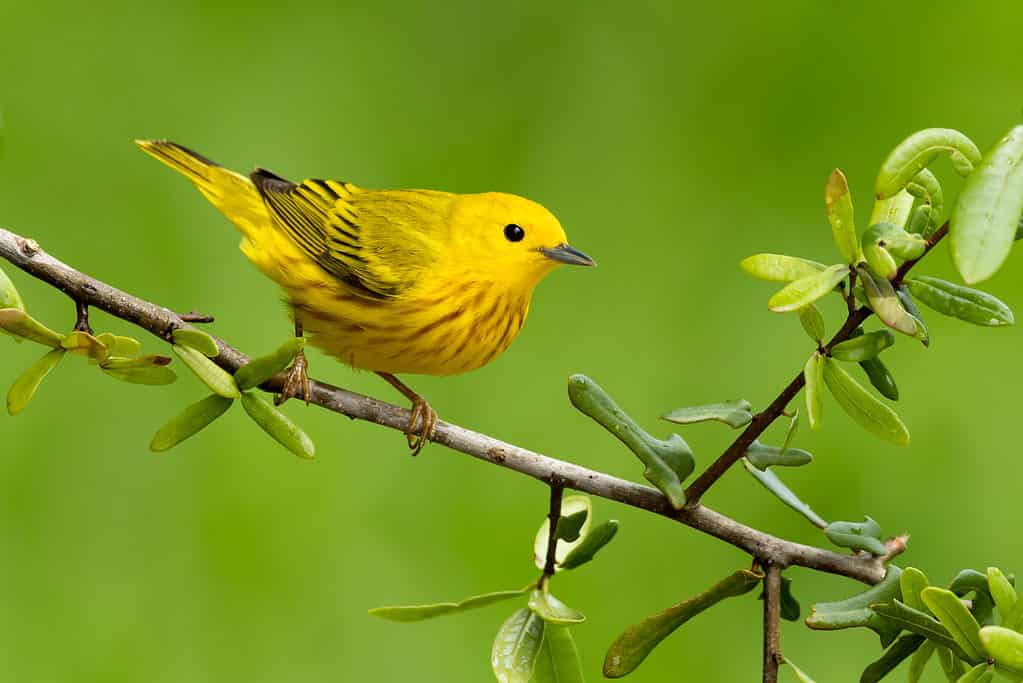
The yellow warbler can be distinguished by its bright appearance.
©Agami Photo Agency/Shutterstock.com
Songbirds are abundant in the park, and a few of these cheerful birds that you might hear during your visit are warblers. Species that are present include the orange-crowned, yellow-rumped, yellow, and hermit warblers. Yellow warblers (Setophaga petechia) are particularly easy to distinguish by their appearance due to their stunning yellow plumage. They live in moist areas and build small, cup-shaped nests in trees.
Western Toad
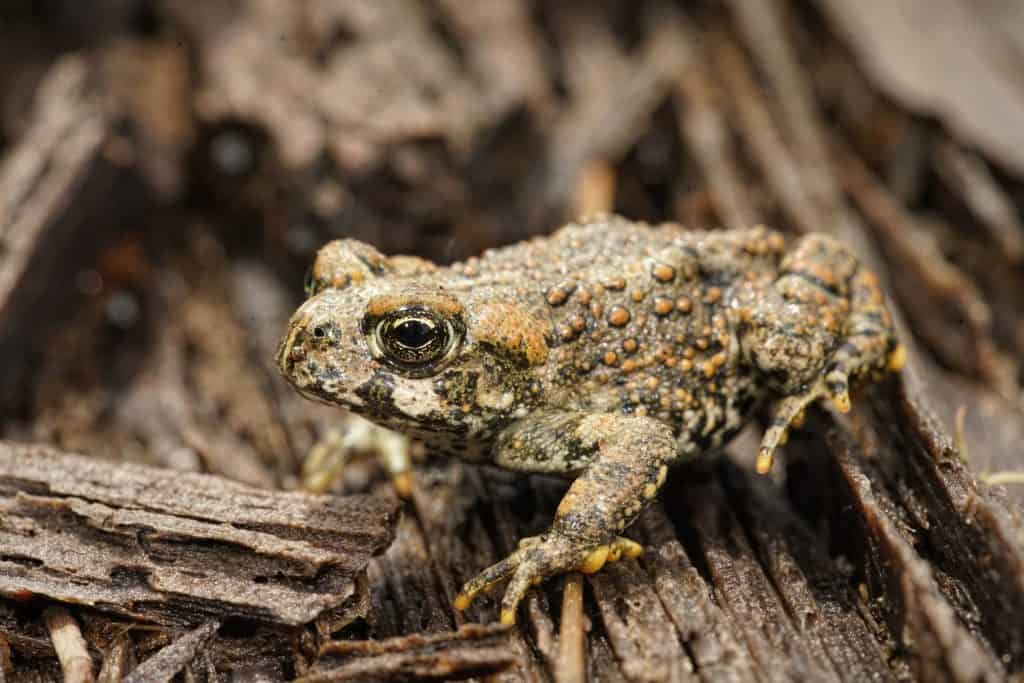
Western toads usually have a light-colored stripe down their back.
©HWall/Shutterstock.com
You might also spot western toads (Anaxyrus boreas), which inhabit ponds, streams, and lakes in forests and grasslands. Western toads are two to five inches long and have distinctly warty skin. They can be brown, green, gray, or yellowish-colored and have a white stripe down the center of their back. Western toads eat a wide range of invertebrates.
Woodpeckers
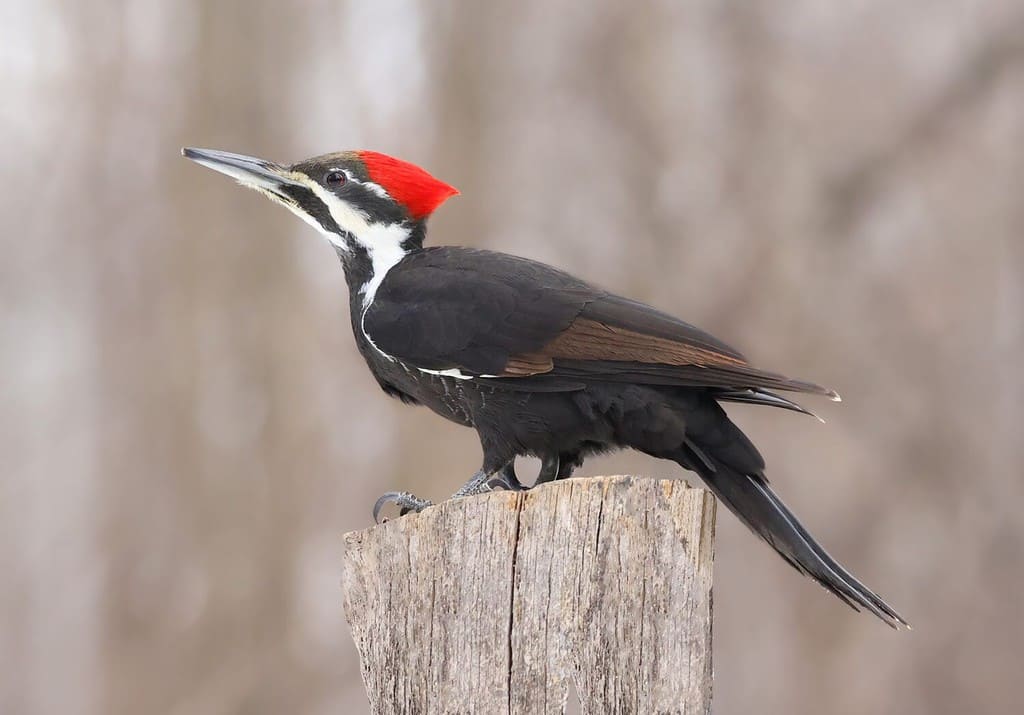
Pileated woodpeckers are the largest woodpeckers in the United States.
©Vlad G/Shutterstock.com
Eight species of woodpeckers inhabit Lassen Volcanic, including the pileated, hairy, and white-headed woodpeckers. Woodpeckers can be found in forests and woodlands across the park, where you’ll likely hear the tell-tale sound of them drumming into the trees. The pileated woodpecker (Dryocopus pileatus) is the largest woodpecker in the United States and can reach up to 20 inches long. They also make some of the largest tree cavities of any woodpecker.