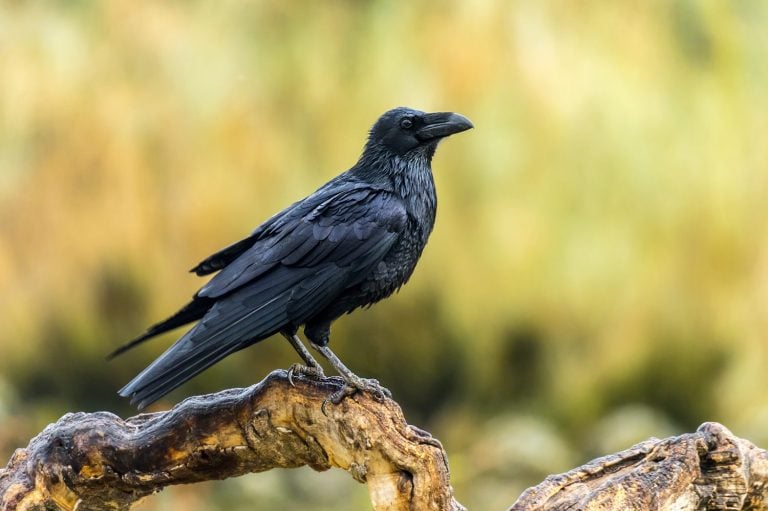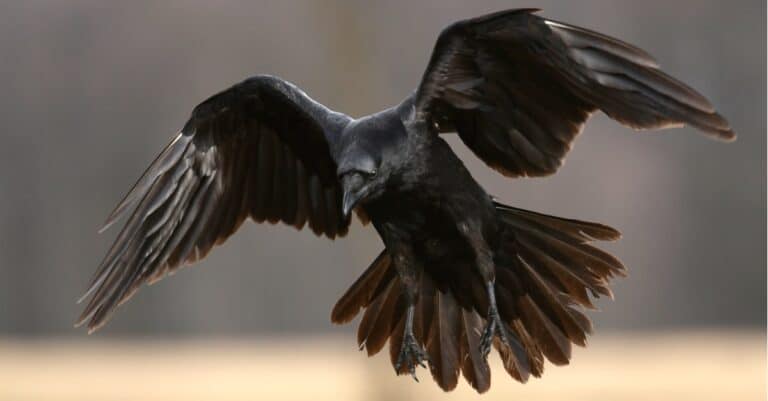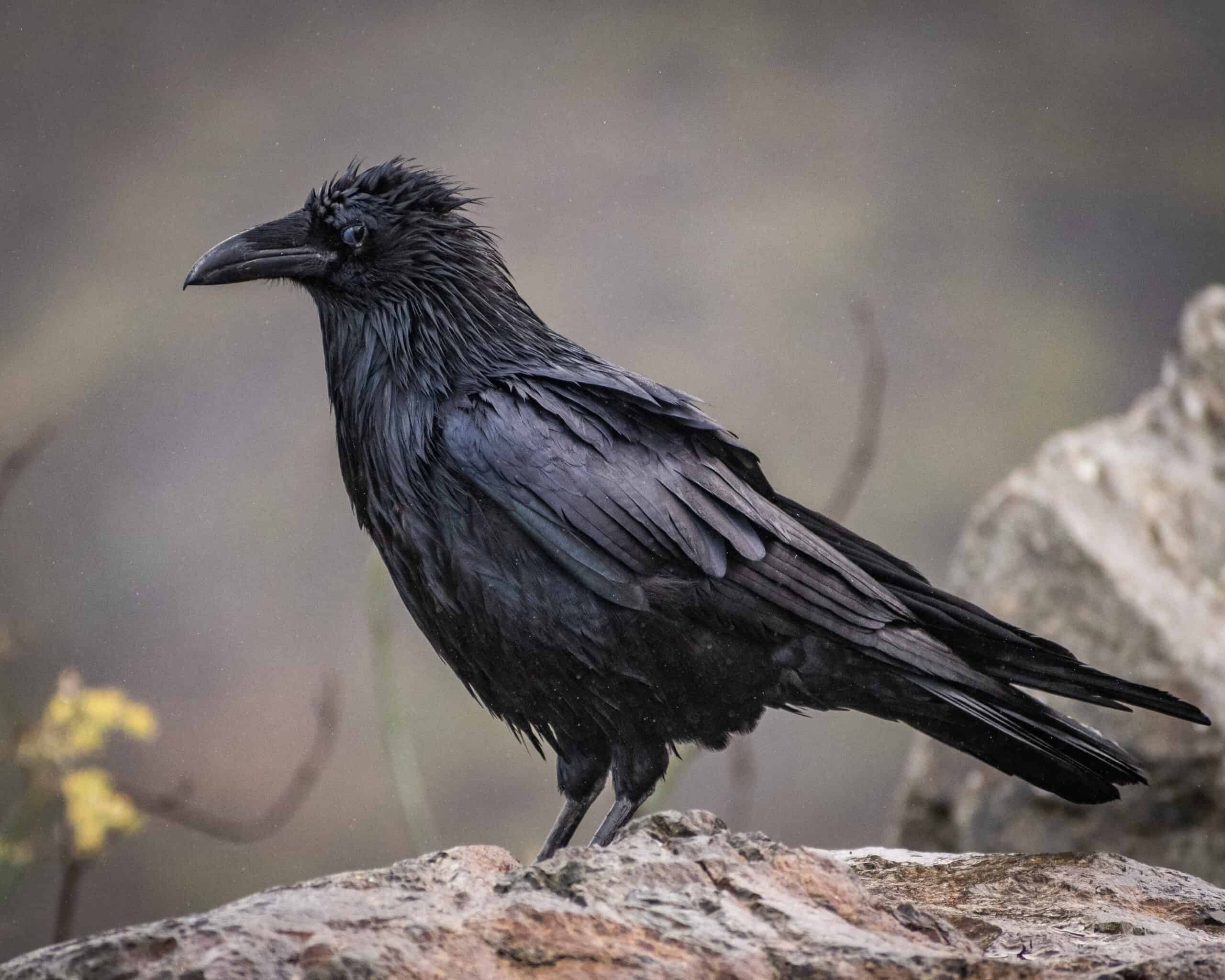

Crows and ravens are two of the coolest, most intelligent birds in North America. Though these two birds are different, they are commonly confused for one another, with some believing they are one bird with two names. Their sleek black feathers, boisterous personalities, and similar silhouettes can make them seem nearly identical, especially when perched in a distant tree. But upon closer look, these two birds reveal themselves to be somewhat distinct. Despite both being members of the same family, differences are apparent in appearance, behavior, and even the sounds they make. Understanding what separates them allows us to more deeply appreciate these unique species. Here’s a breakdown of the five main differences that separate crows from ravens.
Appearance
©Kavi fdo/Shutterstock.com
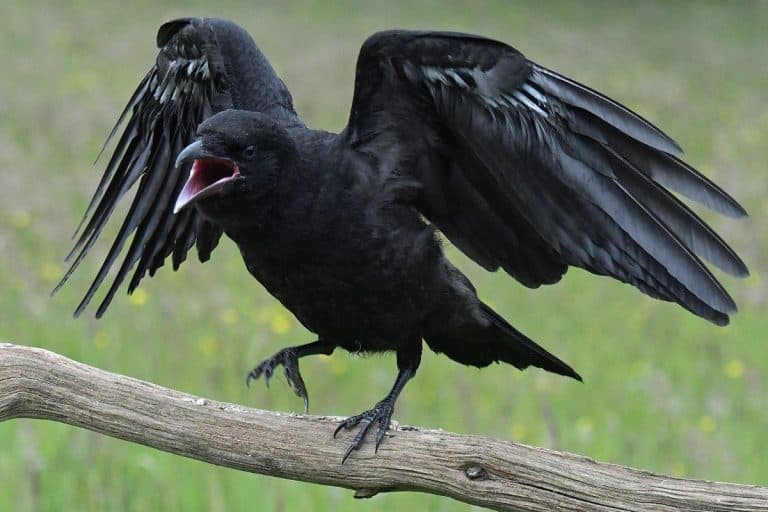
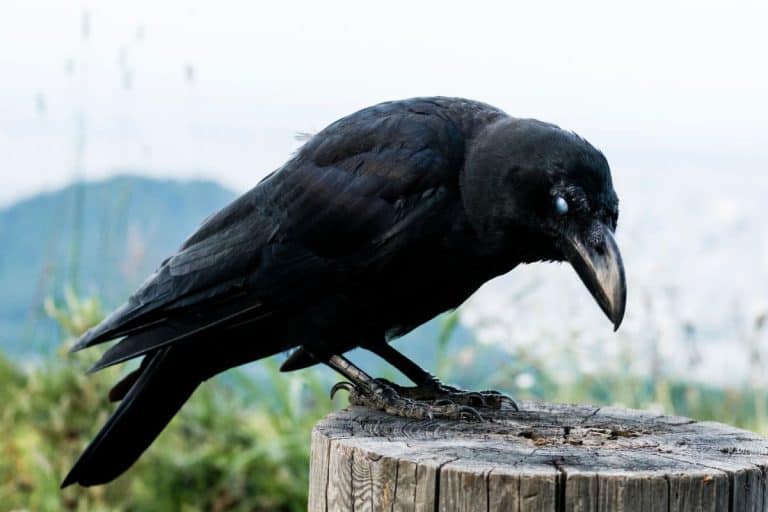
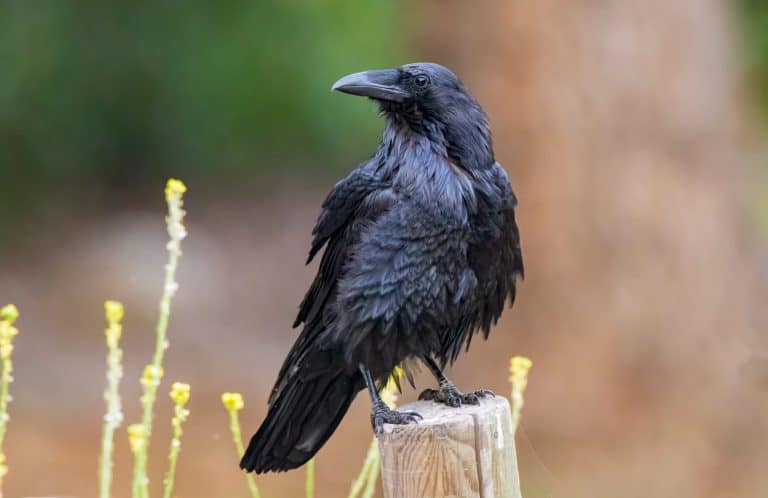
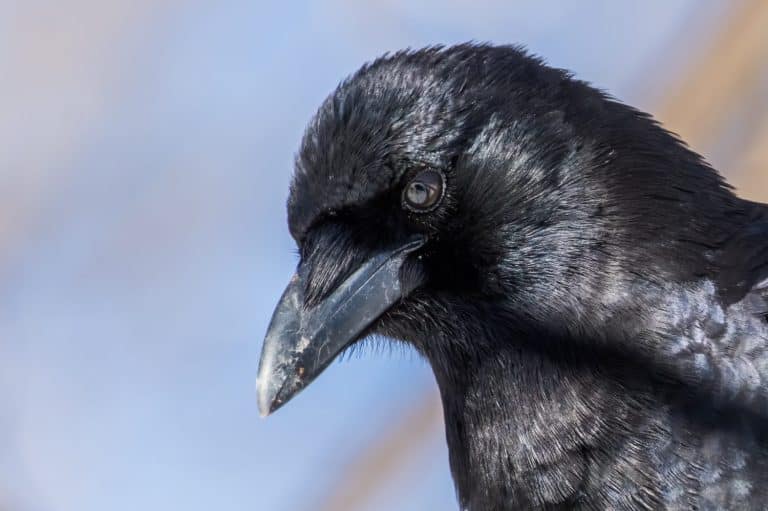
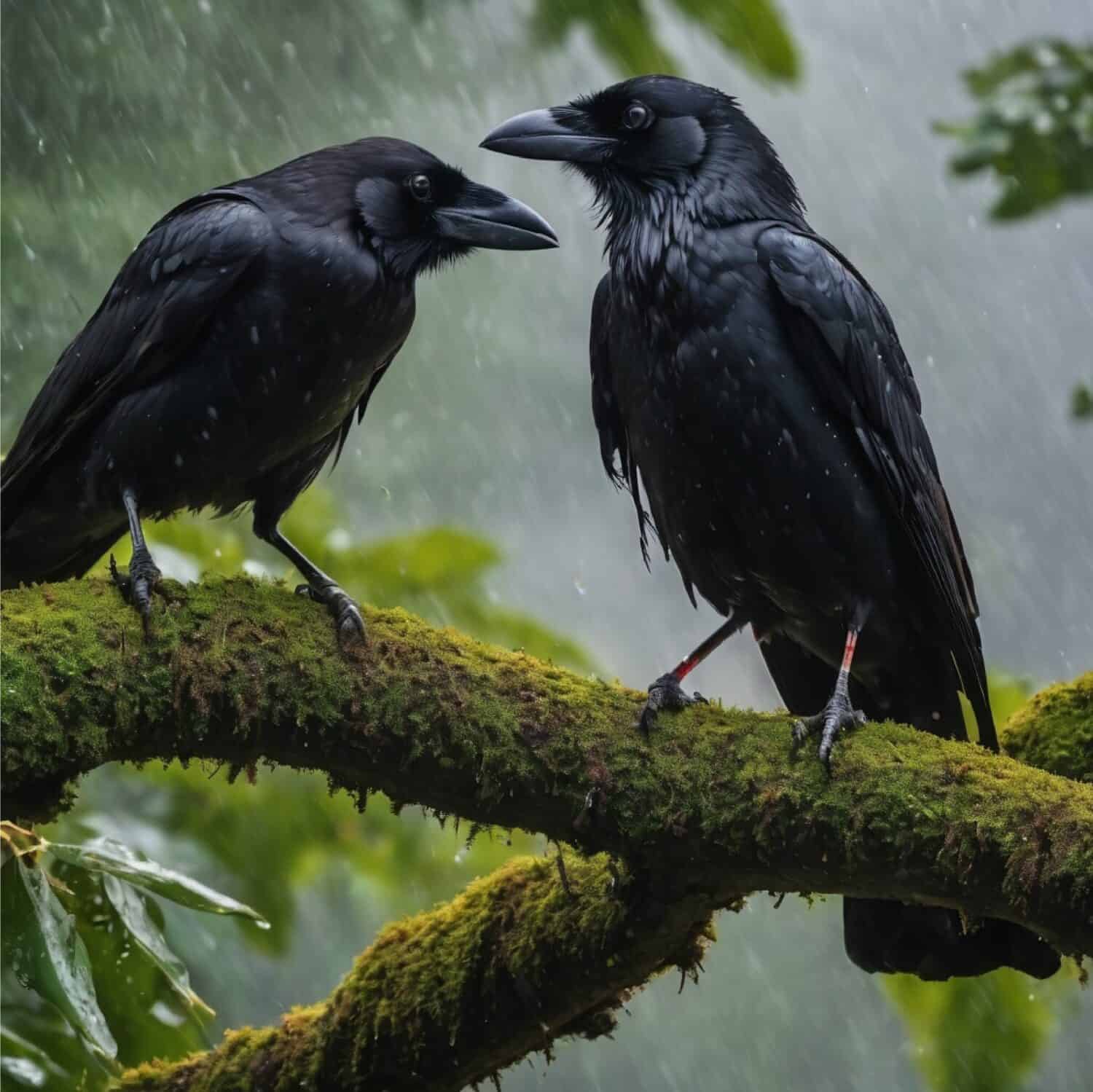
In a comparison of size, crows are generally smaller than ravens. However, there are some large crows and small ravens. Hence, the best way to distinguish a crow vs. a raven is by looking at the appearance of its beak, wings, and tail. Crows have a purple or green tint on blunt, splayed wings, while ravens have shiny feathers with blue or purple-tinted or grey and brown-tinted, pointed wings.
Crows have fan-shaped tails and smaller, straighter beaks, whereas ravens have wedge-shaped tails with larger, curved beaks with a tuft of hair on top. When the crow fluffs its feathers, they create a sort of ragged mane or ruff. The raven’s neck also looks longer in flight.
Habitat
©J.Copenheaver Photography/Shutterstock.com
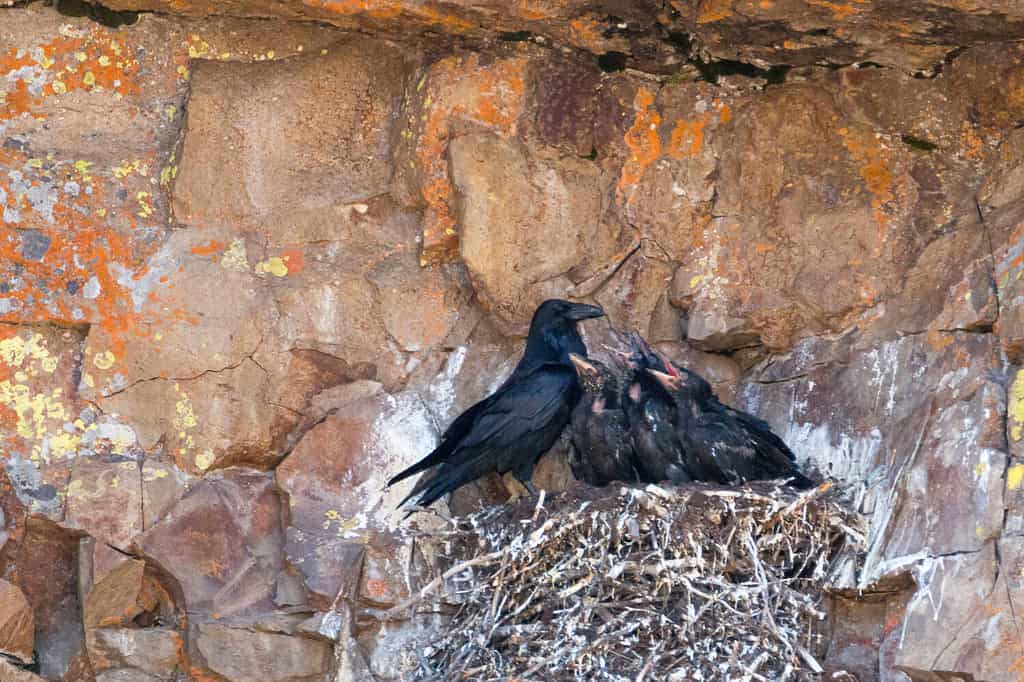
Crows are more social and inhabit human-populated areas such as cities. Ravens prefer wilder areas and the countryside, where there are fewer people and they are likely to find carrion and small animals to eat, being more scavengers than hunters.
Group Behavior
©Elliotte Rusty Harold/Shutterstock.com
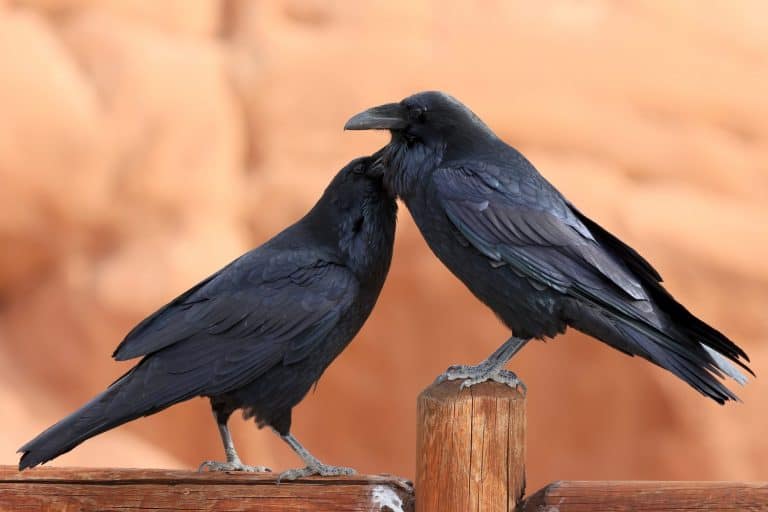
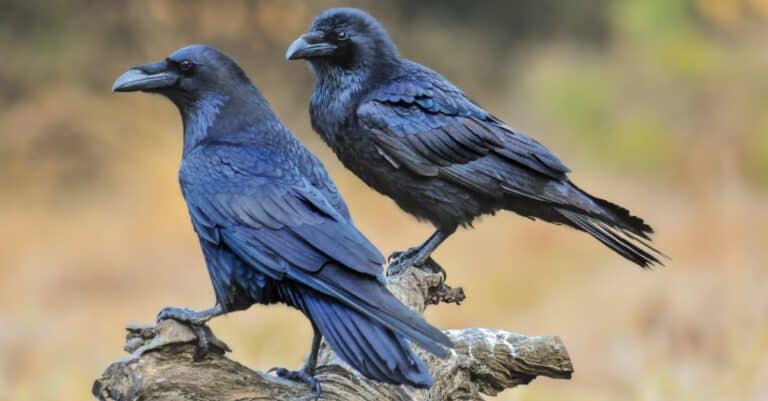
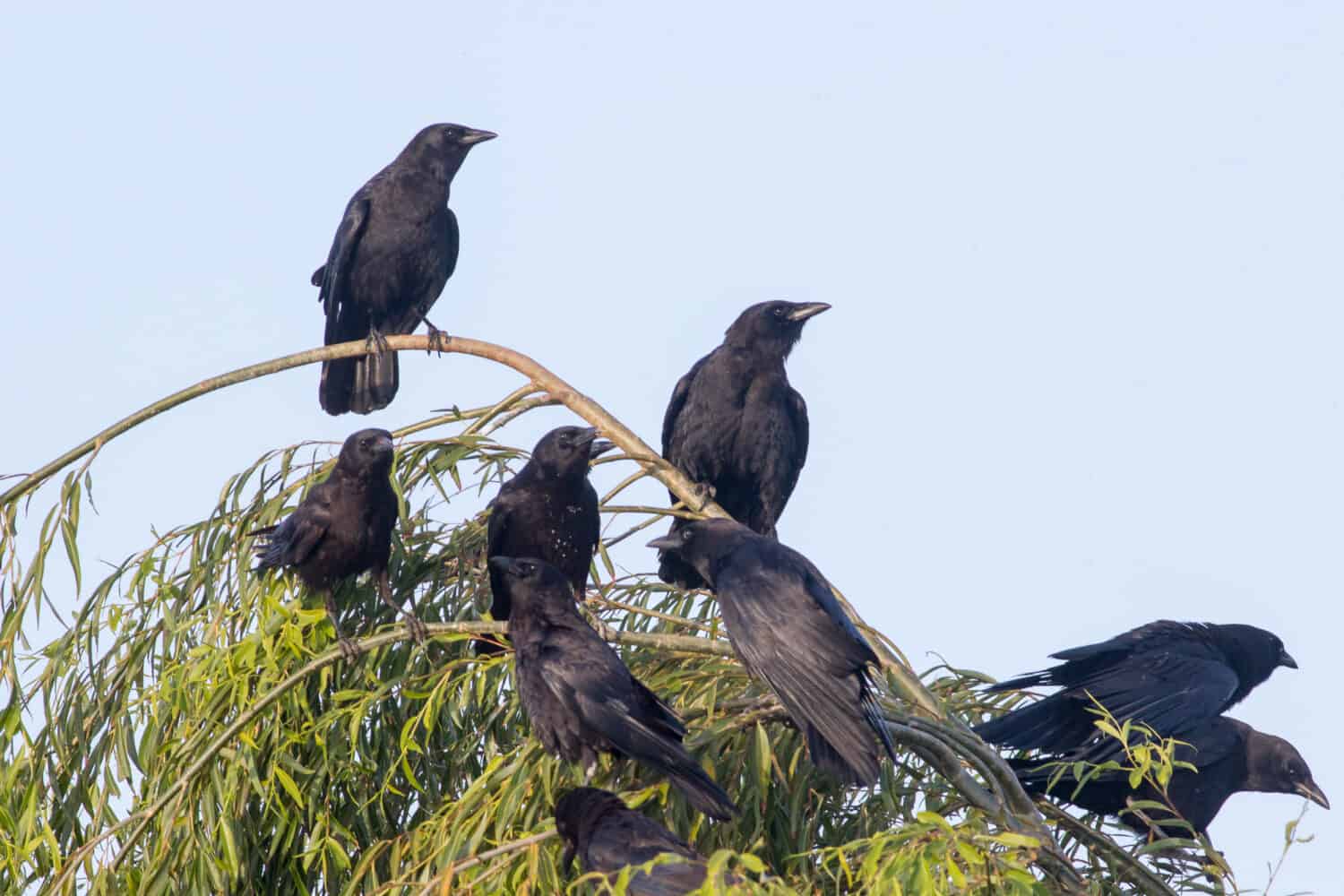
Crows tend to socialize in groups, and a group of crows is called a murder. Ravens prefer to be solitary or travel in pairs. Crows help each other raise babies, whereas ravens do not. They are also more likely to form bonds with humans and are a partly migratory species, unlike ravens. Crows can defeat ravens in flocks, although ravens are stronger.
Species
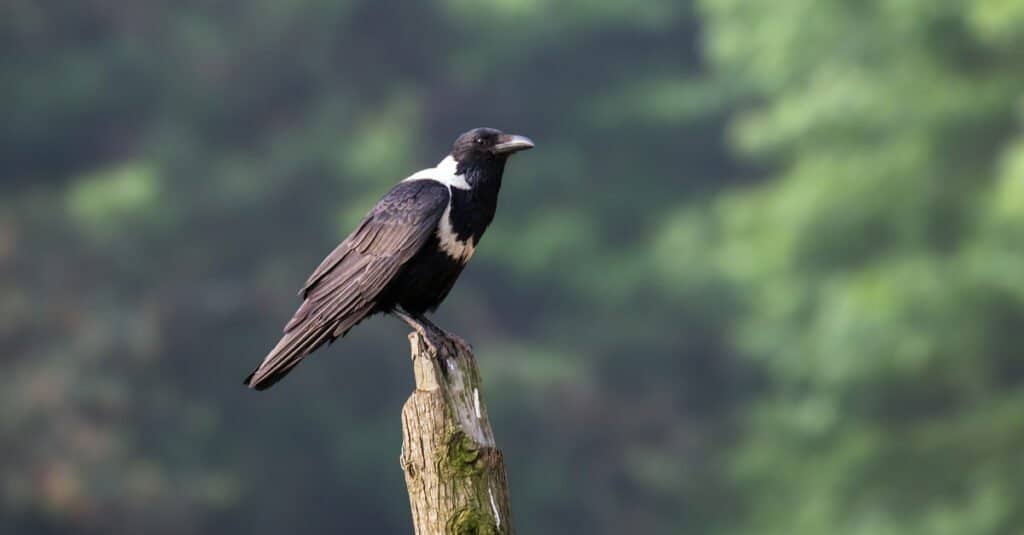
The collared crow is the largest crow species.
©Agami Photo Agency/Shutterstock.com
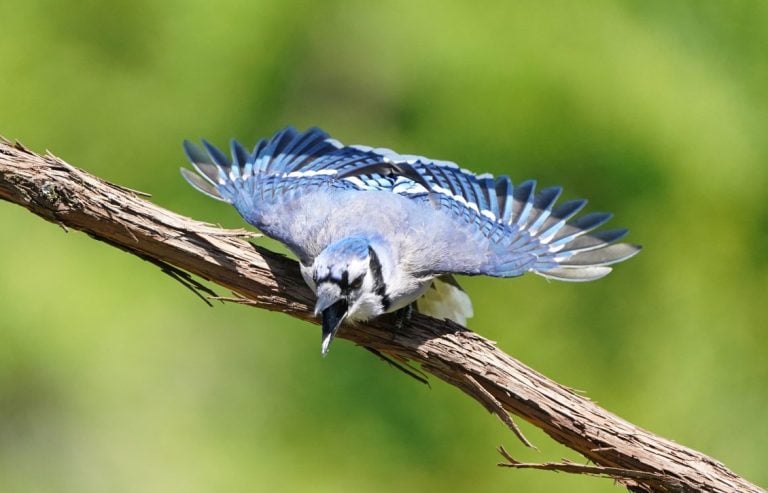
“Crow” refers to any bird of the genus Corvus which includes crows, ravens, jays, and magpies, but it is also a particular species in that genus. “Raven” is the type species of the genus Corvus, having a larger distribution over the Northern Hemisphere than any other corvid species.
Call
©redpip1984/Shutterstock.com
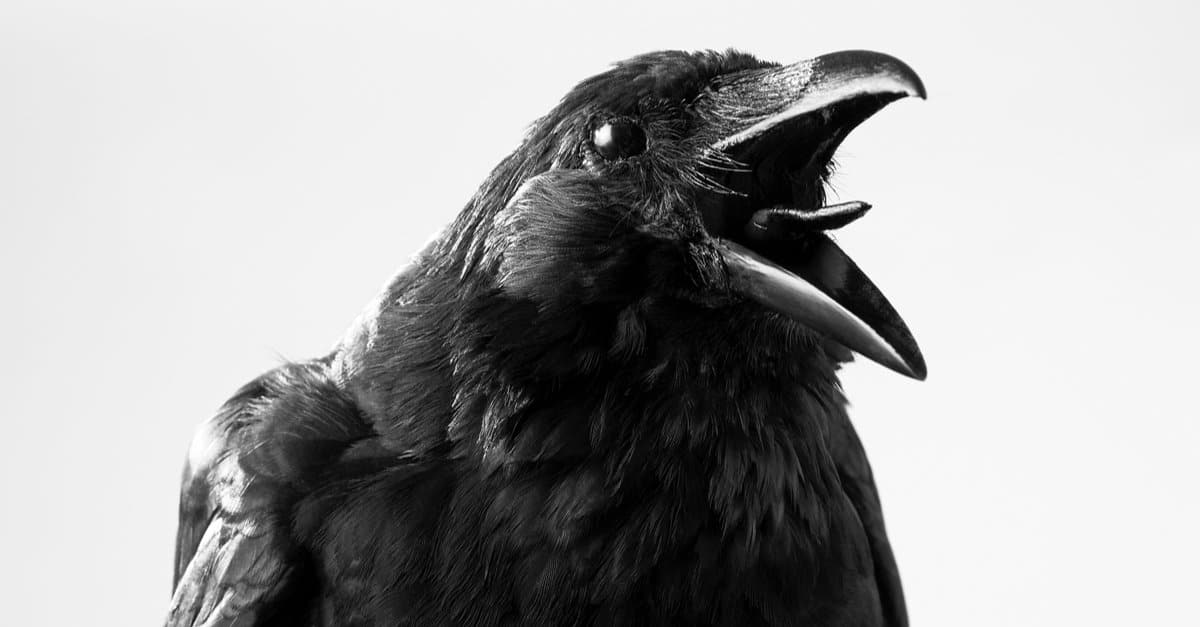
The crow’s call is a caw-caw sound that usually starts with one loud “caw” followed by several shorter caws. It’s very different than the long gronk or croaking sound of the raven. However, while the raven’s call is deep and guttural, the crow’s call is louder but higher-pitched and nasal.
Intelligence
©Marcin Perkowski/Shutterstock.com
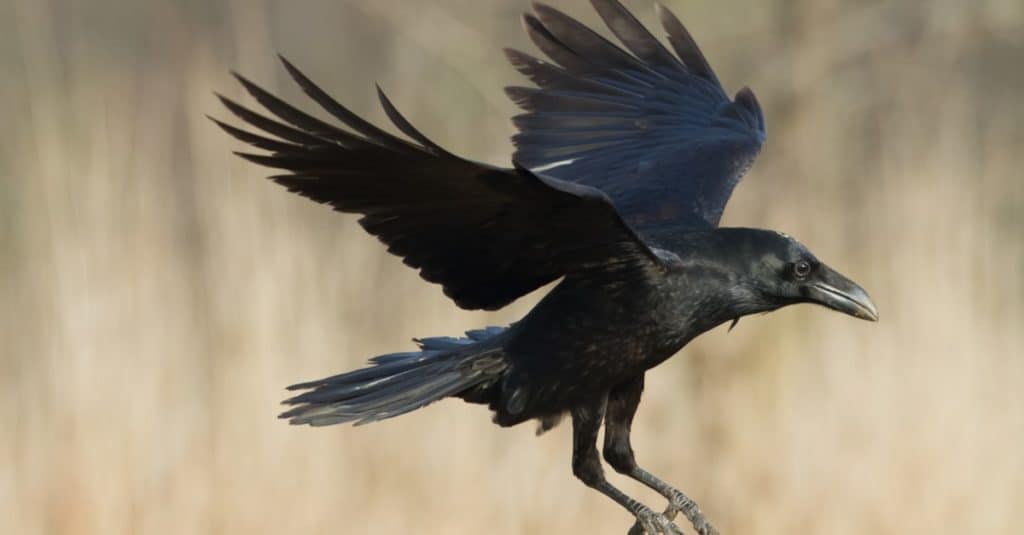
Crows are highly intelligent creatures and are known to devise ways of getting food and surviving in the city or urban environments. In fact, researchers found that for certain water displacement tasks, crows perform as well as 7 to 10-year-old humans. Crows can also form special relationships with humans who feed them regularly. For example. crows have been known to bring shiny gifts in exchange for food from people.
Ravens are brainy birds and can perform just as well as chimpanzees and orangutans across tasks designed to measure the depth of intelligence in a creature. It is safe to say that there is very strong evidence to say that the tasks used to measure raven’s intelligence prove ravens are just as smart as great apes. Additionally, ravens are fantastic mimickers and are known to mimic human voices and tones.
Cultural
©Marut Sayannikroth/Shutterstock.com
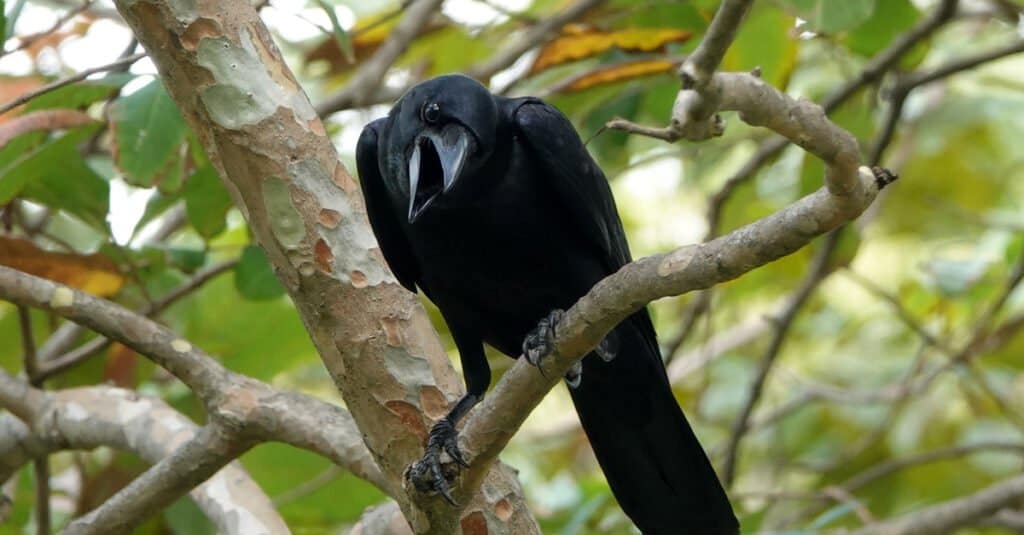
As mentioned before, ravens and crows are both symbolic and even sacred to many cultures. Crows are thought to represent change and transformation, specifically emotionally and spiritually. On the other hand, ravens can be perceived as bad omens but are also believed to be all-knowing, possibly relating to healing and longevity.
Symbolism
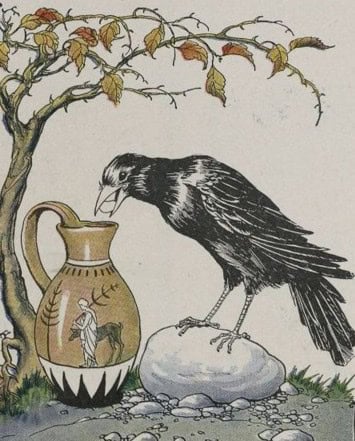
A crow is featured in “The Crow and the Pitcher,” one of Aesop’s Fables.
In the symbolism of crow vs. raven, the British/Irish culture often portrays the crow as a symbol of death or war. For example, in a classic folk song written by British songwriter Sydney Carter called The Crow on the Cradle, he utilizes the crow as a character to prophesize the impending doom of war, as demonstrated in the following two verses:
“The crow on the cradle, the black and the white, O somebody’s baby is born for a fight. The crow on the cradle, the white and the black, O somebody’s baby is not coming back, Sang the crow on the cradle.
Your mother and father, they’ll sweat and they’ll save; To build you a coffin and dig you a grave. Hushabye, little one, never you weep? For we’ve got a toy that will put you to sleep, Sang the crow on the cradle.”
Ravens are often set up as deities and also used as omens. The most famous example of the raven being used in more modern literature is in the poem by Edgar Allen Poe The Raven. The raven character is a talking bird that only says the word “nevermore” to the narrator, who quizzes the bird on whether or not he’ll be reunited with his lost love. He takes the raven’s responses as a dark foretelling that he will be eternally separated.
Lifespan
©Elizabeth Caron/Shutterstock.com
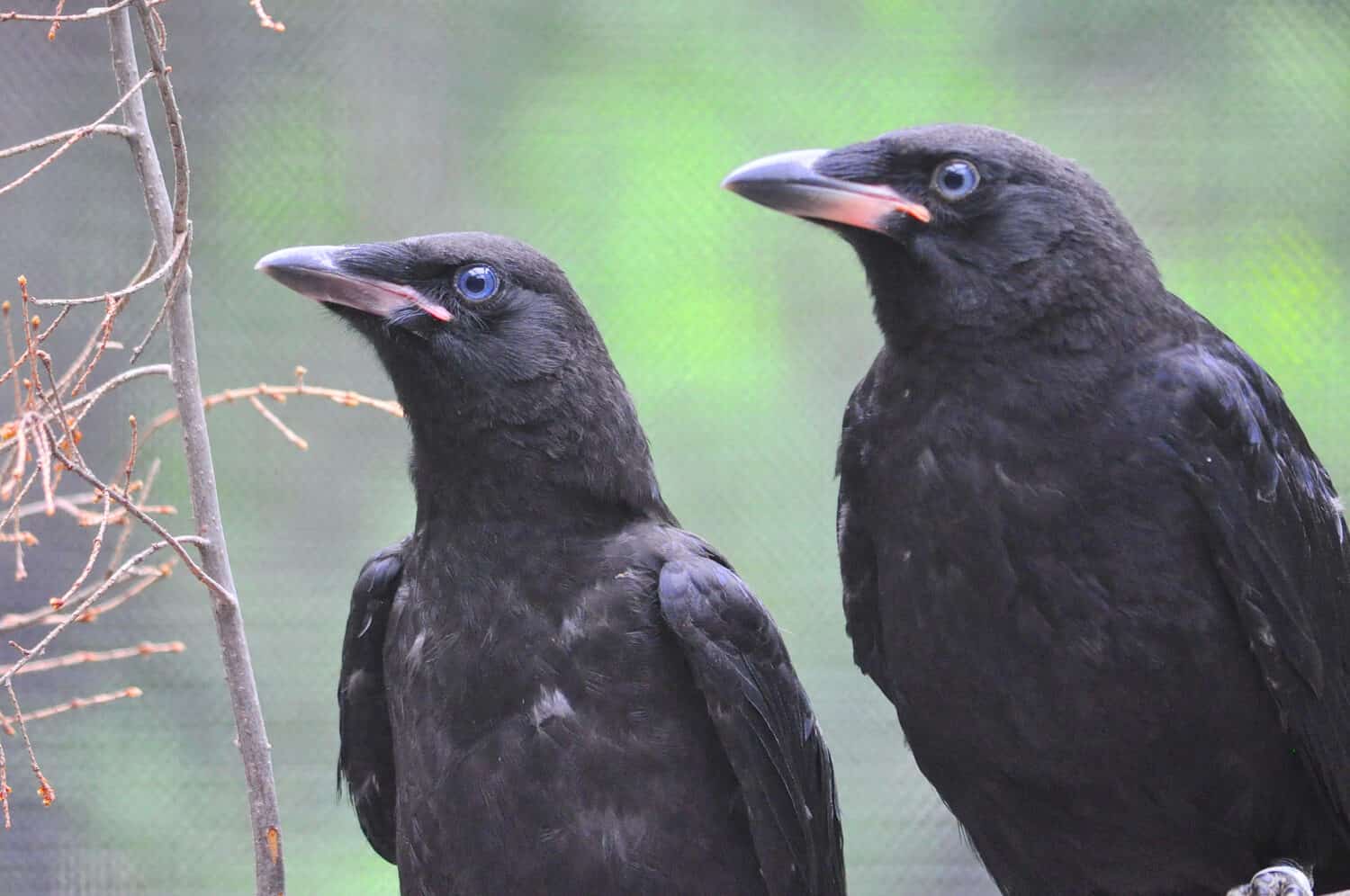
The average life expectancy for crows and ravens varies considerably from species to species. For the most part, crows live about 5-15 years in the wild depending on the type of crow. The oldest reported crow in captivity was the 59-year-old Tata who lived through 11 US Presidencies and passed away in 2006.
Ravens typically live about as long as crows with 10-20 years being their average lifespan. Reports of ravens who have lived to be 70 or 80 years old have been put forward, but scientists are skeptical as they have not been able to verify these claims.
Similar Birds: Western Jackdaw

©iStock.com/Alex Cooper
Also on our list is the western jackdaw. Western jackdaws are members of the crow family. They are also known as Eurasian jackdaws and European jackdaws. Western jackdaws and crows both have black plumage, but a closer look reveals that they aren’t all that similar! For instance, western jackdaws have shorter beaks and plumper bodies. They are about 13 to 15 inches long. They also have a grey nape, although the shade of grey varies a lot.
Similar Birds: Common Blackbird
©Edwin Godinho/Shutterstock.com
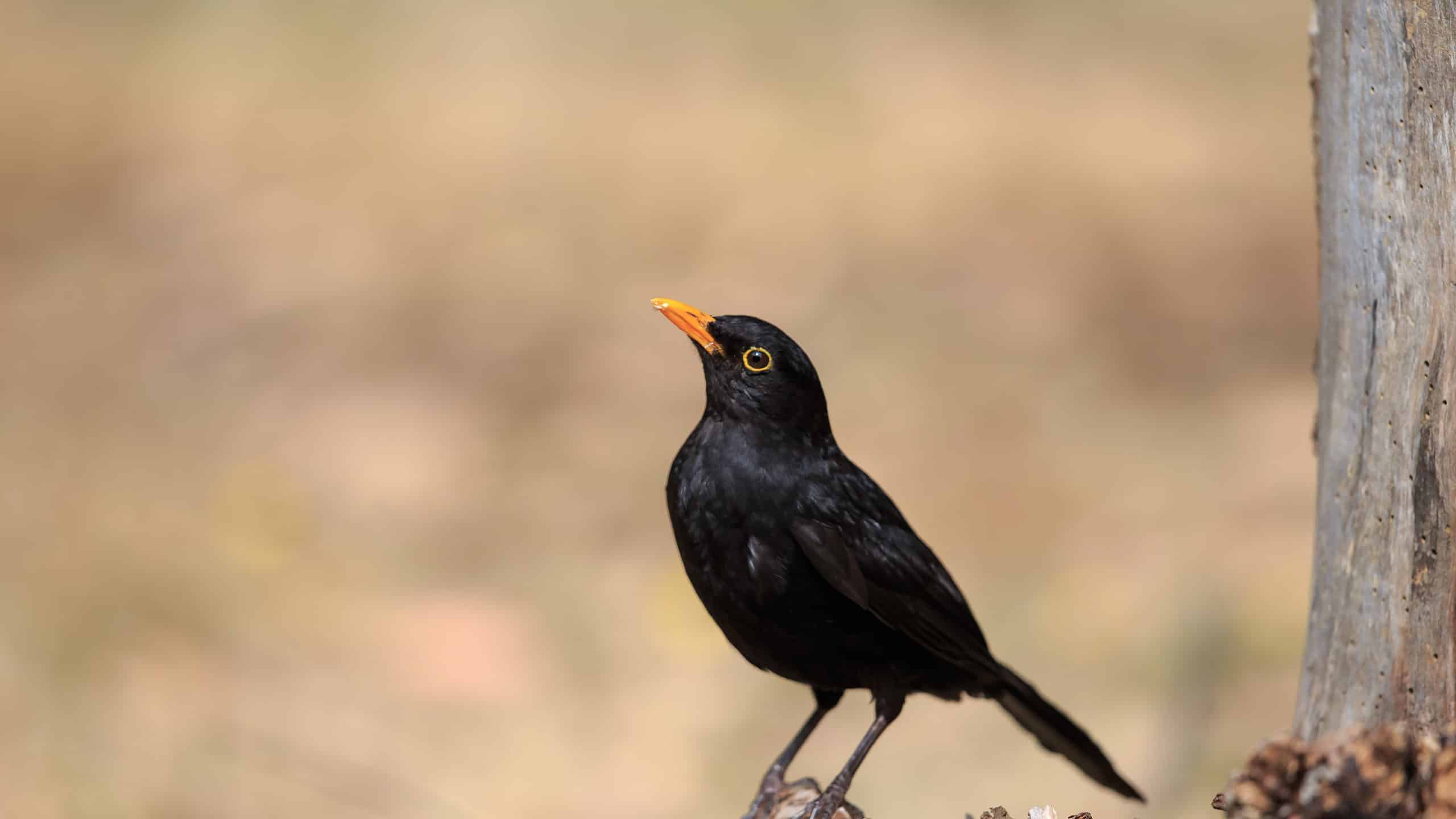
When mentioning blackbirds, most people think of crows or ravens. This is likely why so many birds with black feathers are confused for crows, like the common blackbird. Common blackbirds are common birds listed as Least Concern on the IUCN Red List. Although the appearance of a common blackbird slightly varies depending on the subspecies, most common blackbirds are 9 to 11.4 inches long, smaller than crows. Adult males have black, shiny plumage and an orange-yellow bill. Female common blackbirds are mainly brown and white with some weak mottling near their necks.