
Quick Take
- There are more than 7,000 crab species that vary dramatically in size.
- Crabs are found in all of the world’s oceans.
- Crab feces are as varied and unique as the animals themselves.
There are over 7,000 known species of crabs, which are globally distributed across all oceans, in freshwater, and on land. Crabs represent a highly diverse group of decapod crustaceans found in habitats ranging from deep-sea vents to tropical mangroves. They belong to the infraorder Brachyura, consisting of approximately 100 different families. Crabs are highly adaptable and range in size from tiny European pea crabs (Pinnotheres pisum), measuring less than one inch, to the Japanese Spider Crab (Macrocheira kaempferi), which can have a leg span of up to 12 feet. While most crab species are opportunistic omnivores, their specific diets vary significantly based on their habitat, size, and body structure. The same is true for the waste produced from their digested food. Continue reading to discover everything you’ve ever wanted to know about crab poop.
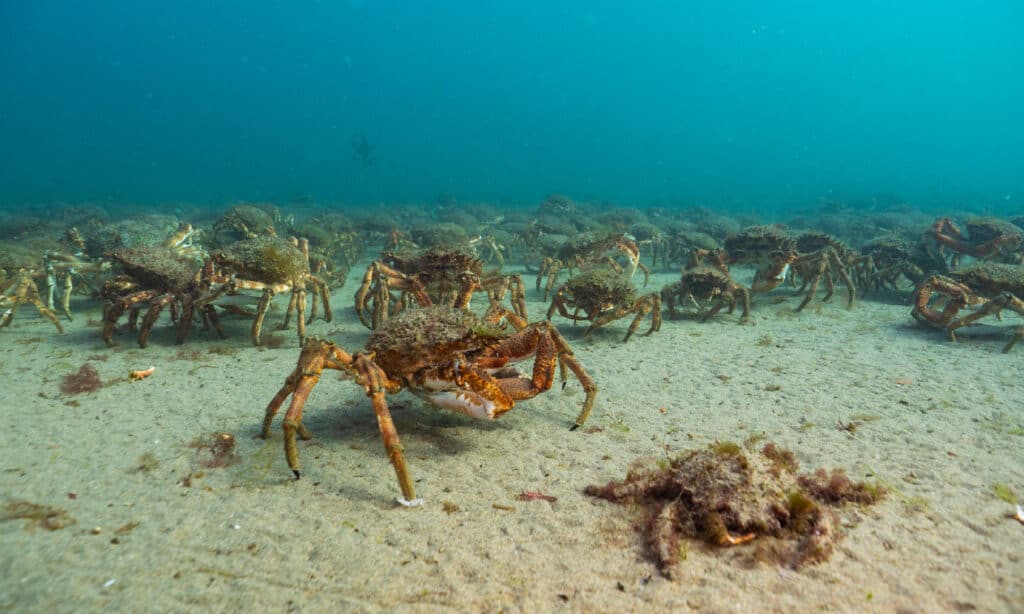
The most common habitat for crabs is the ocean, although some species inhabit freshwater, while others are terrestrial.
©iStock.com/Jake Davies
What Does Crab Poop Look Like?
Crab feces are highly individual and unique due to the vast diversity in crab species, size, diet, and habitat. There are thousands of crab species, living in environments from freshwater streams to deep-sea floors. These differences in habitat and species directly affect what crabs eat, how they digest food, and the composition of their feces. The composition of crab feces is heavily influenced by what they consume, which varies by species and location. Herbivorous crabs, such as mangrove tree crabs, produce feces with high plant matter content. Species that feed on animal tissue have different levels of nitrogen in their feces compared to species that eat seaweed.
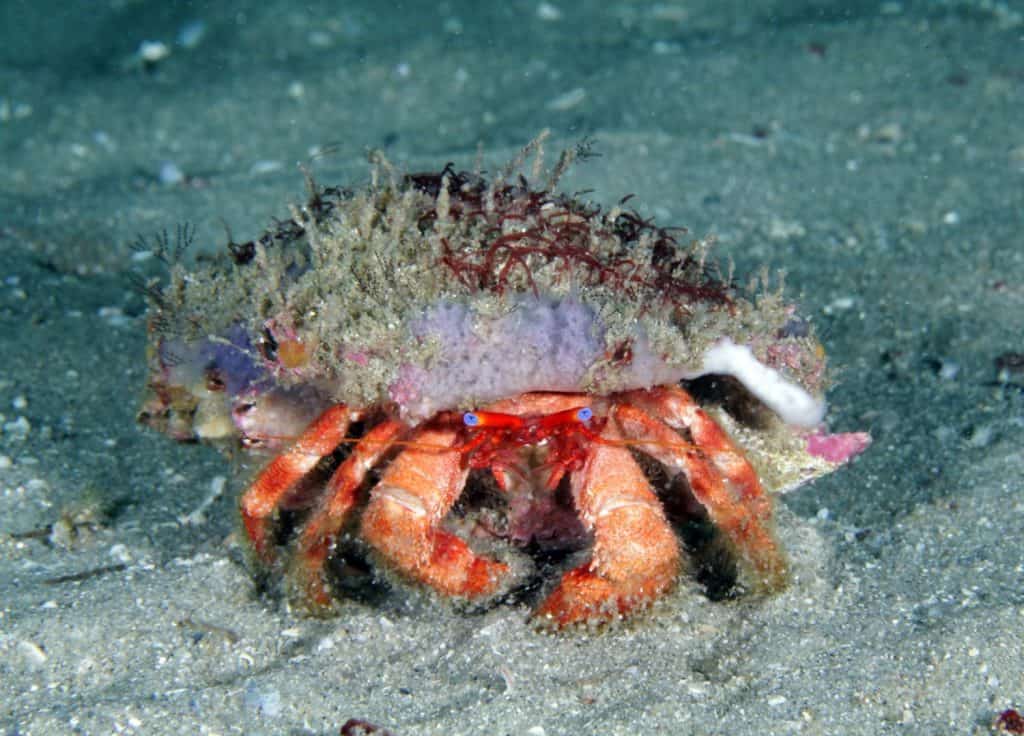
Crab feces are not uniform across species.
©lego 19861111/Shutterstock.com
Although the color and exact size of crab feces depend on the crab’s diet and species, there are several general characteristics shared across most species. Crab droppings are often described as looking like a thick thread or a tiny twig. They are frequently U-shaped and generally less than one inch long, although larger crab species may produce longer droppings.
Crab feces are generally mushy and typically range in color from brown to black, although the color can change depending on the crab’s diet.
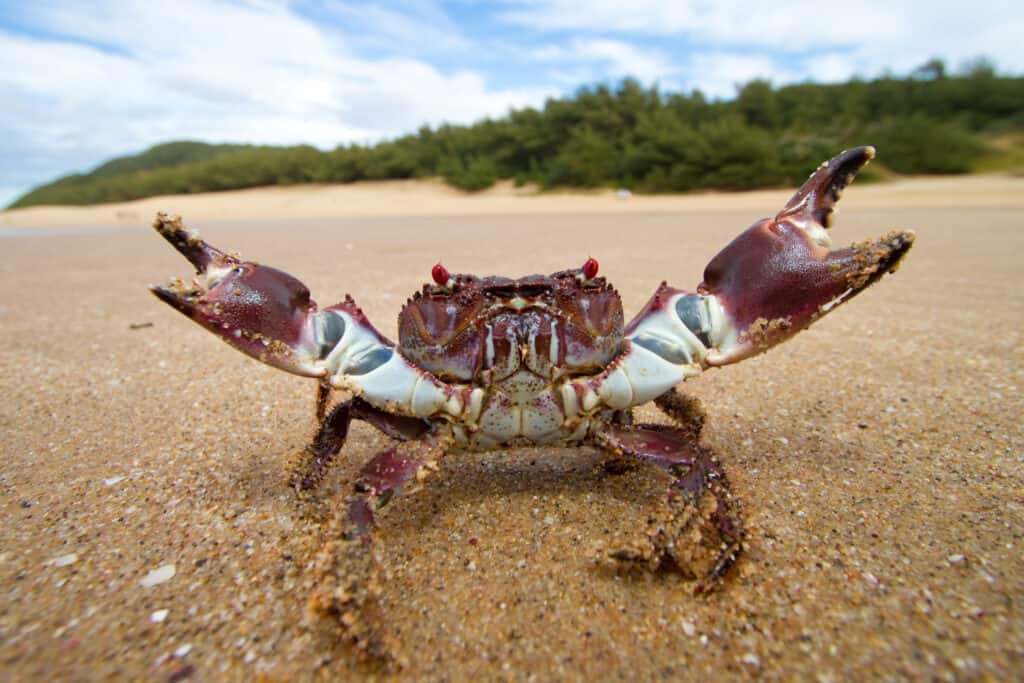
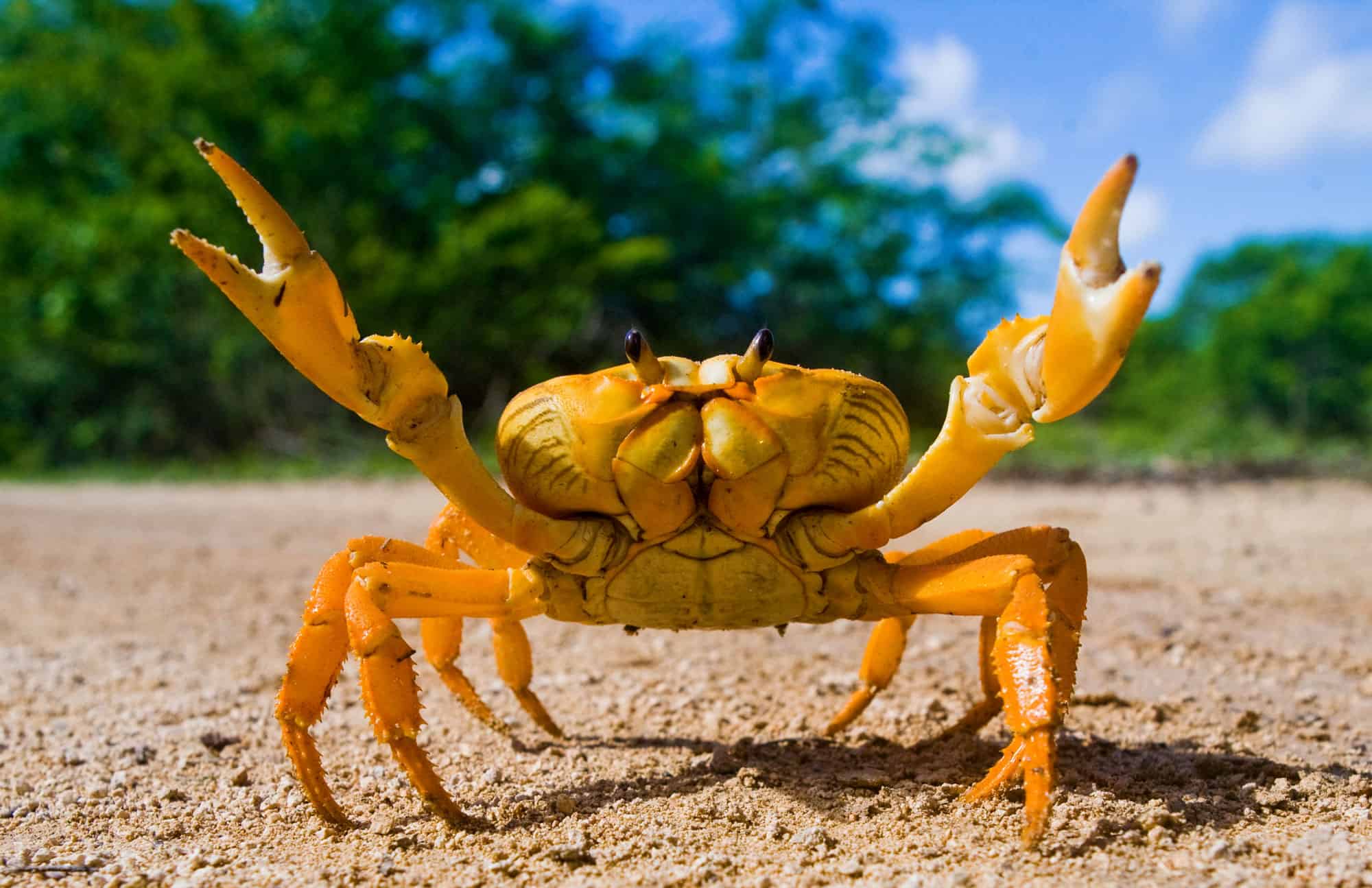
Crabs expel liquid waste from antennal glands located very close to their eyes.
©iStock.com/VilliersSteyn
How Do Crabs Poop?
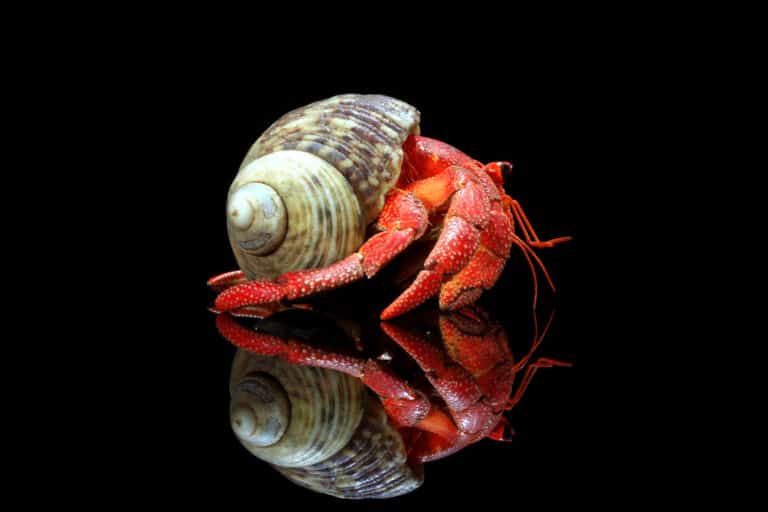
Crabs expel feces through an anus located on their abdomen, usually at the base of the tail flap. Crabs squeeze out fecal pellets through this opening by contracting the muscles of the anus to pinch them off. They then use their back legs to push the feces out from under the shell flap. For species like hermit crabs that live inside shells, the process is more complex. They defecate inside their shell and then use their fifth pair of pereiopods (legs) to remove the waste.
Is Crab Poop Harmful?
Crab feces are generally not harmful to humans in small amounts and are often consumed unknowingly without ill effects. Raw or undercooked crab can contain harmful bacteria such as Vibrio vulnificus or Vibrio cholerae, which can cause severe diarrhea, vomiting, and in rare cases, life-threatening infections. While crab fecal matter itself is not directly toxic, pathogens and environmental contaminants present in a crab’s digestive system may pose risks, especially if the crab is not handled, cleaned, or cooked properly.