
Quick Take
- Its diet is so bizarre it defies the entire cephalopod playbook, and this somehow makes it one of the ocean's most efficient survivors. See what it actually eats →
- The vampire squid's most fearsome features, including its glowing claws, blood-red body, and bioluminescent glow, are a complete illusion hiding a surprisingly harmless truth. Uncover the harmless truth →
- Its feeding tool can stretch to eight feet and works in a way no other known cephalopod replicates, and the strange mechanism behind it is worth examining. Explore the feeding filaments →
Any animal with the term “vampire” in its name immediately elicits intrigue. But the vampire squid (Vampyroteuthis infernalis) is actually inaccurately misnamed. While its scientific name literally translates to “vampire squid from hell,” this fearsome reputation is far from accurate for this creature. In reality, it’s not even a squid.
There are plenty of other fascinating things about this floating cephalopod, though. Although it doesn’t suck the blood of deep-sea fish, it does have a unique diet. While Bella Swan is safe from this vampire, the same can’t be said for the ocean’s natural waste.
The Illusion of the Vampire Squid
The vampire squid is the last surviving member of the ancient order Vampyromorphida. In this sense, it lives up to its name by being the last of its kind, almost as if it were immortal. The lineage that includes the vampire squid dates back over 300 million years, placing it among the most ancient groups of cephalopods. This also makes today’s species a living fossil. Although its DNA more closely resembles that of an octopus than a squid, it earned its name because of its unique appearance.
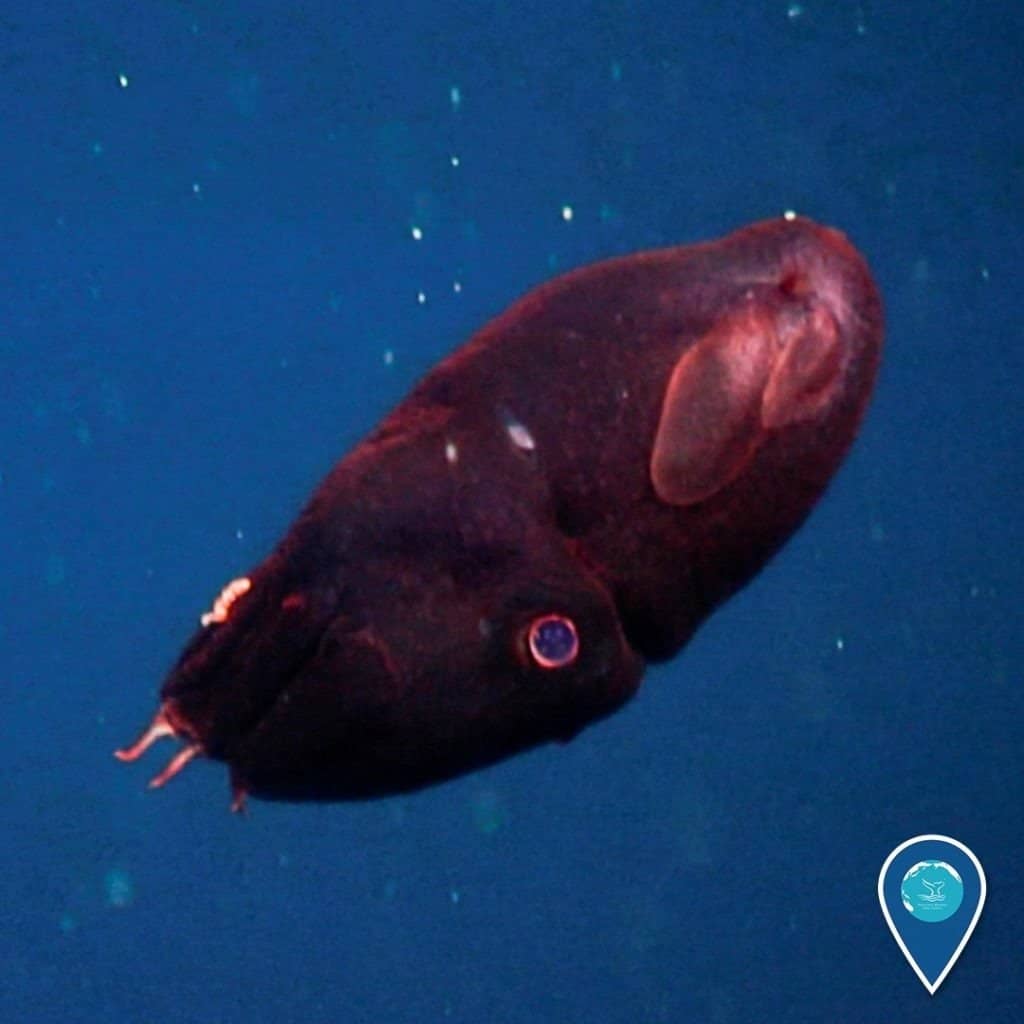
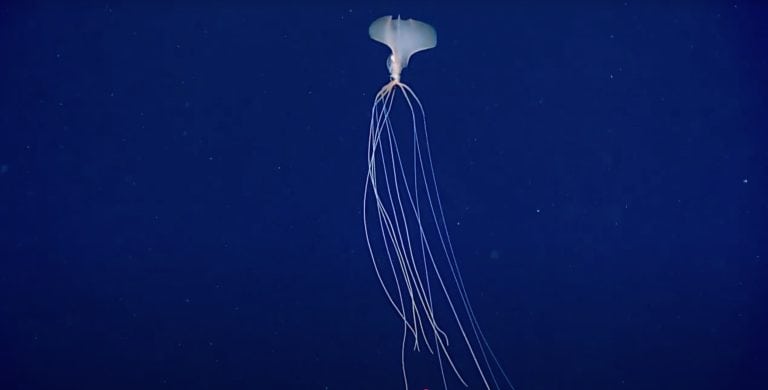
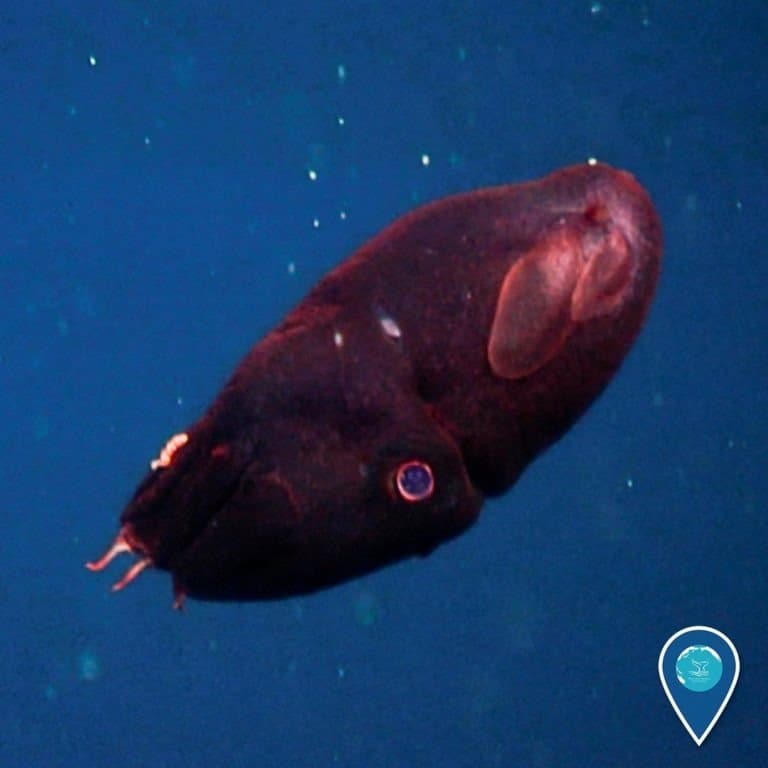
Instead of ink for defense, a sticky cloud of bioluminescent mucus is expelled from the arm tips of the vampire squid.
©National Marine Sanctuaries, Public domain, via Wikimedia Commons – Original / License
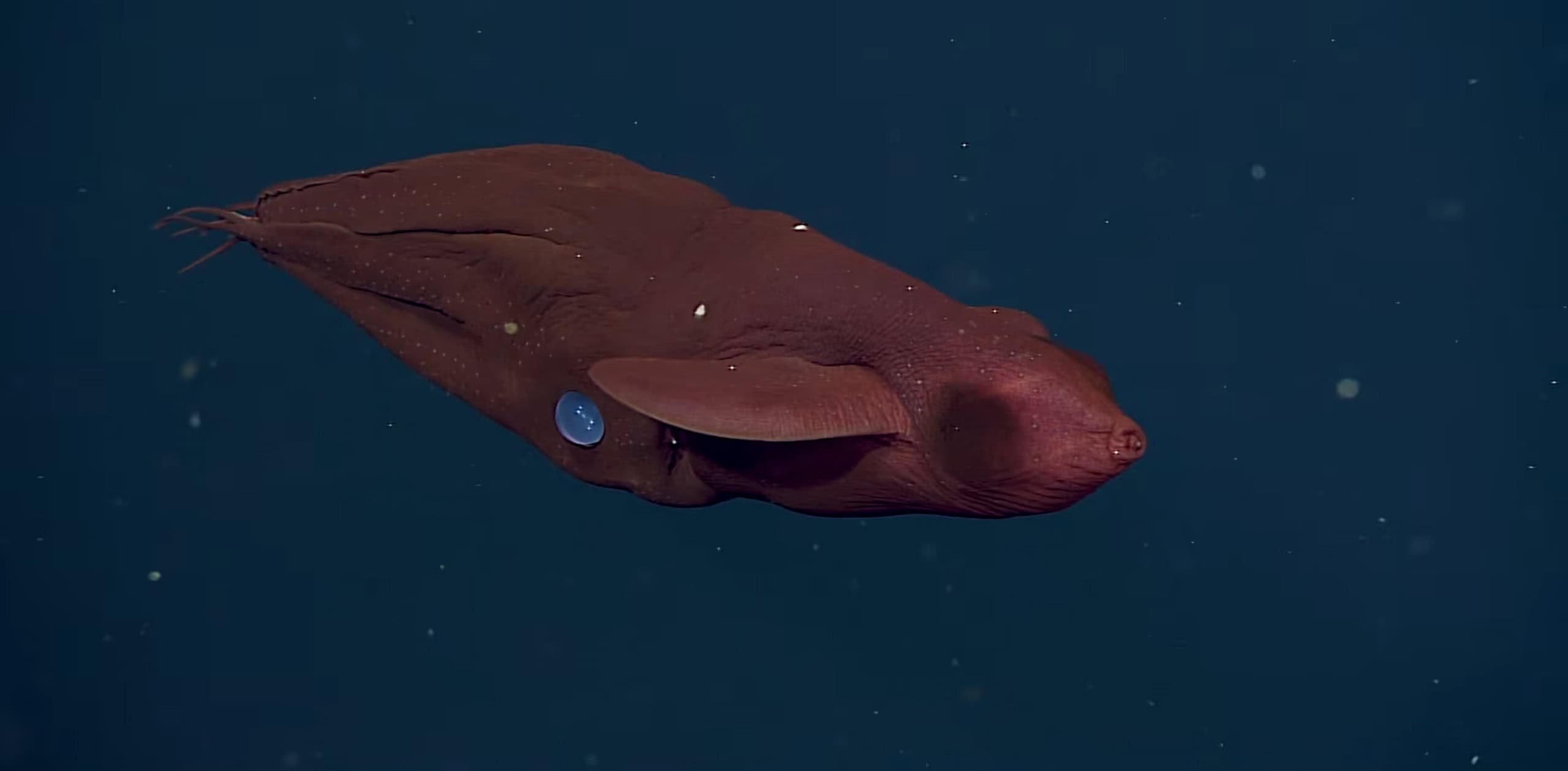
With its deep red body and large eyes that help it see in the ocean’s darkest depths, its appearance could spook even the most seasoned diver. In the dark, the vampire squid glows with a bright, blood-red outline, highlighted by neon blue tips at the ends of its tentacles. In reality, this is simply a trick of bioluminescence. The vampire squid has neither claws nor potent, glowing toxins. But what it does have is a voracious appetite—not for living organisms.
Eating What Other Marine Life Excrete
In a very non-vampire way, the vampire squid survives by eating dead organic matter. In the twilight zone, which is roughly 2,000 to 3,000 feet below the surface, little light breaches this dark depth. Therefore, the food chain operates in an unusual way, with predators and prey surviving on what makes sense for such a frigid, lightless environment. For the vampire squid, this means consuming the waste from all the marine life that thrive just above it.
Researchers are still learning about the vampire squid, and its deep-sea habitat makes observations challenging.
©Emőke Dénes / CC BY-SA 4.0, via Wikimedia Commons – Original / License
This white, drifting matter is known as “marine snow.” It consists of dead skin, feces, biological waste, dead plants, and mucus. As plankton and other small marine life die off, their bodies slowly float to the bottom of the ocean. When they do, the vampire squid is there to “clean up” this marine snow. Crustacean molts, marine slime, and fecal matter are often part of this marine snow package, but thankfully, the vampire squid is not picky.
This diet is also what differentiates it from other cephalopods. Most of these species are carnivores and prey on crustaceans, shrimp, and small fish. While these cephalopods prefer a living diet of protein, the vampire squid opts for the organic bits that slough off as a result of these meals. The saying “one man’s trash is another man’s treasure” is especially true in this case.
Turning Trash Into a Five-Course Dinner
Just when the vampire squid couldn’t get any more unusual, its eating habits make it truly unique. Instead of pulling food in through a specialized tube or using its tentacles, it uses two thin, string-like filaments to catch marine snow. These filaments are covered in small suckers, which secrete a slimy mucus that binds to organic matter.
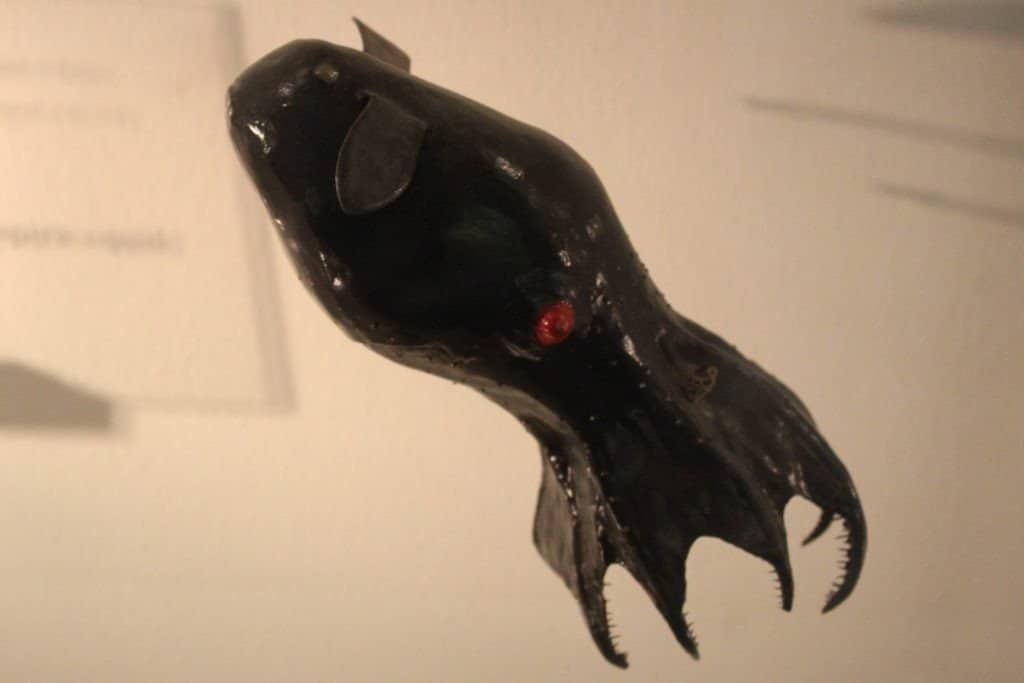
As marine snow is captured on the vampire squid’s filaments, it slowly draws them inward to its body. From here, it rolls all that marine snow up into a ball, which is held together by the mucus produced by its suckers. When it’s time to eat its marine-snow meatball, the cephalopod uses cirri—finger-like appendages—to move the food into its beak. These help move food into its beak, which hides its mouth and also earned it the name “squid.”
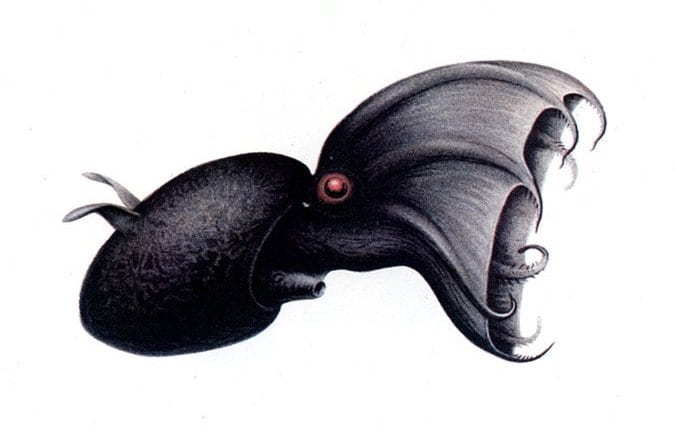
Despite its terrifying name, the vampire squid is harmless unless you’re a piece of drifting fecal matter.
©Carl Chun / Public domain / Wikimedia Commons – Original / License
This diet—and eating habit—is perfectly suited for the vampire squid. As it drifts through the deep sea, it can survive simply by consuming whatever floats into its environment. Its color-changing ability, bioluminescence, and ocean-blue eyes provide excellent camouflage, so most predators don’t even notice it’s there. Its thin filaments can grow up to eight feet, allowing it to consume food that’s not even within its immediate vicinity. All of these traits make it seem like the perfect deep-sea monster, even though it’s absolutely harmless despite its name.