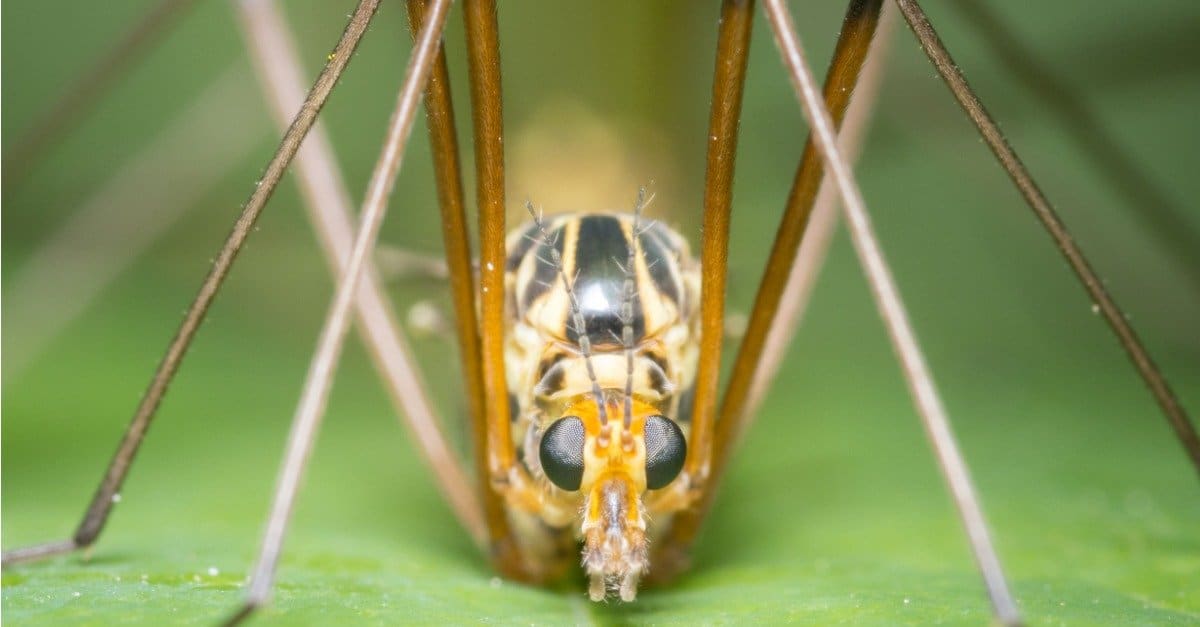

While mosquitoes are known to be dangerous to humans because they suck human blood and pass on dangerous diseases in doing so, crane flies, on the other hand, are safe for humans but can be harmful to vegetation. Despite having almost the same physical appearance, crane flies and mosquitoes are not actually alike. For starters, crane flies are around twice the length of mosquitoes, and they only have one pair of wings for flying.
When it comes to the food they eat, there is a much bigger difference between the two. As mosquitoes often feed on animal and human blood, crane flies do not. Crane flies are also called mosquito hawks, which reinforces the misconception that they are just another species of mosquito. And contrary to popular belief, crane flies do not eat mosquitoes. So, what do crane flies eat?
What Do Crane Flies Eat?
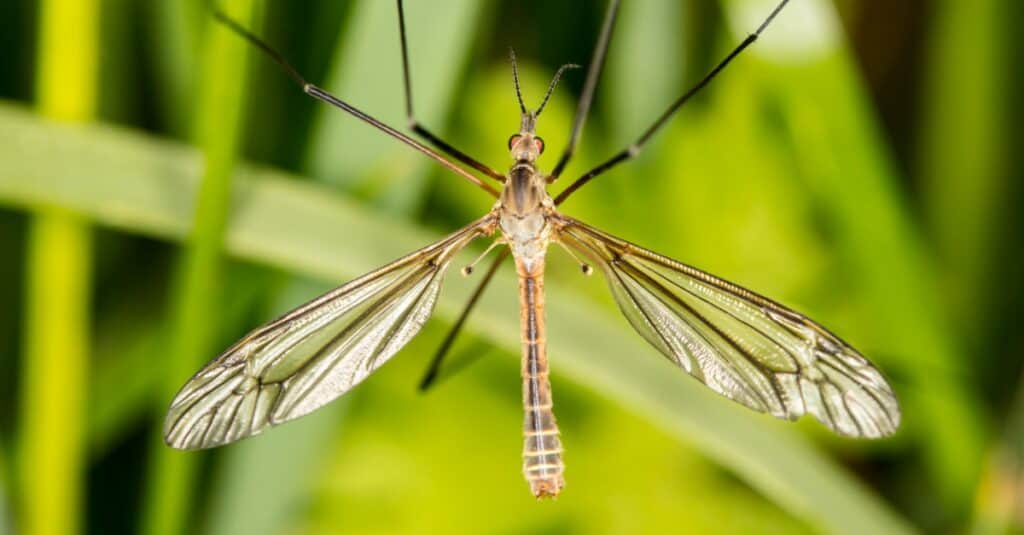
Adult crane flies rarely eat, but when they do, they often eat nectar and pollen.
©iStock.com/maselkoo99
During their adult stage, crane flies seldom eat as they are primarily focused on mating and laying eggs. But when the rare need arises, adult crane flies eat nectar and pollen from flowers and other outdoor plants. Crane fly larvae, on the other hand, eat roots of grass, decaying wood, seedlings, fungi, algae, and other vegetation.
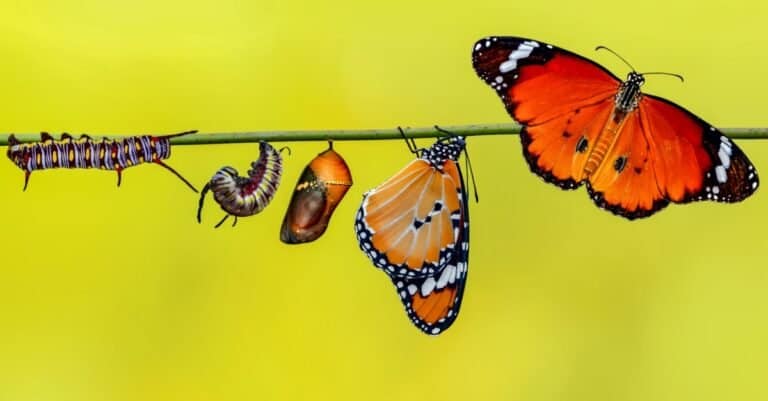
Adult crane flies live only for a very short period. They go through a few stages in their life cycle until they finally reach adulthood, which usually lasts for only 10 to 15 days. They eat during the larval stage, but as they reach adulthood, they spend most of their time searching for a mate and laying eggs before their short lifespan ends.
Adult crane flies are rarely seen feeding, but whenever they feed, they often eat nectar and pollen. However, crane flies do not actually need to feed on anything during their adult stage. In fact, they become completely harmless during this stage as they do not have mouth parts that can help them suck blood like mosquitoes or eat and destroy crops and vegetation like their larval counterparts.
What Do Crane Fly Larvae Eat?
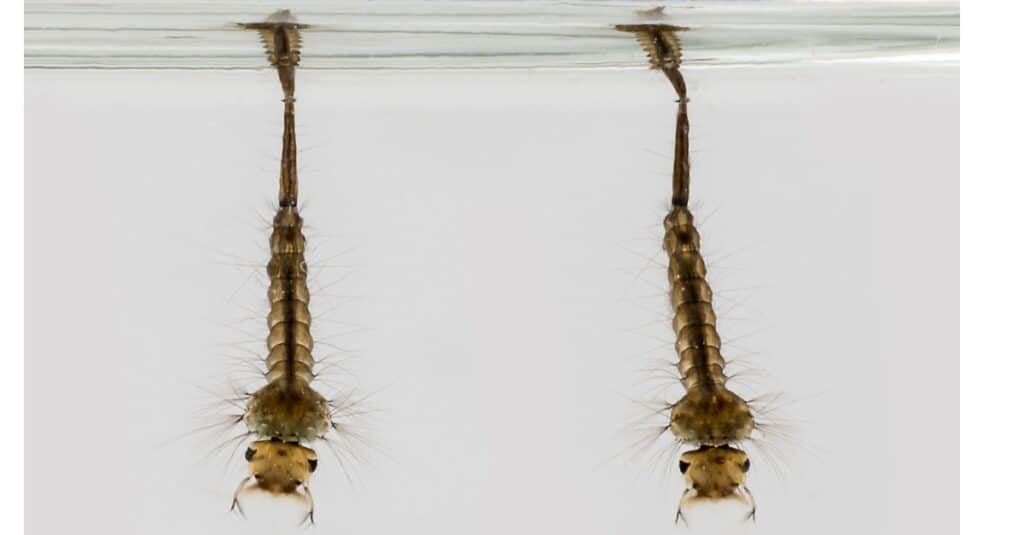
Crane fly larvae feed on decaying wood and plant life.
©iStock.com/Janny2
Unlike adults, crane fly larvae are voracious eaters. These larvae, also called leatherjackets, feed on decaying wood, roots of grass and flowers, decaying organic matter and plant life, fungi, and other vegetation.
Crane fly larvae are often a problem for many farmers around the world. In fact, of their four life stages, the larval stage poses the most threat to farmers and their plantations. They can be harmful to gardens, yards, and other plantations and vegetation areas, as they often eat roots and stems just below the ground’s surface, damaging many plants and flowers.
The crane fly larva eats the roots of vegetation and other plants until it reaches adulthood. The larva does not run out of food as adult crane flies deposit them in soil that is moist and surrounded by healthy vegetation.
Given this, the larval stage is the most important part of the crane fly life cycle as a larva’s main role is to feed on plant matter in order to help it grow.
Are Crane Flies Harmful to Humans?
Crane flies, in contrast to mosquitoes, are not dangerous to humans. They are, however, quite harmful to plants and vegetation. Their larval stage can cause significant damage to grass and other vegetation, potentially necessitating the removal of the affected plant.
Crane flies often don’t bite or sting people, but can be a big problem for grasses, pastures, golf courses, and crops. Their ravenous larvae are responsible for this, as they can cause grasses to turn yellow and thin, and even strip the soil bare.
As crane fly larvae eat the roots and lower stems of plants and other vegetation, the surface layer of the soil held together by the plant’s roots can turn yellow, signaling damage to the whole plant. Once pulled lightly or even accidentally, these grasses, plants, and vegetation that have been eaten upon can loosely detach from the soil, as there are no more roots left for them to stay attached to the ground.
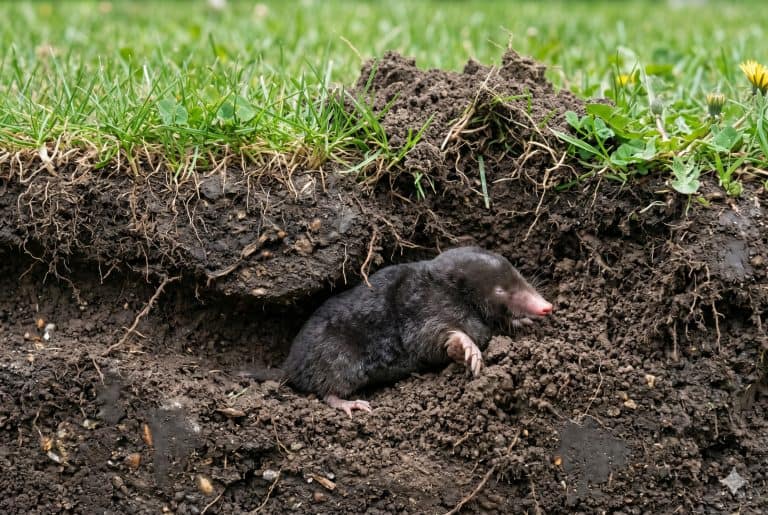
During the autumn and winter seasons, crane fly larvae often damage farmers’ plants and vegetation, and it gets worse in the spring, when the larvae are completely grown. Skunks and moles may excavate the ground to forage and eat crane fly larvae. This event, however, worsens the damage that the crane fly larvae have already caused to plantations and gardens.
Do Crane Flies Eat Mosquitoes?
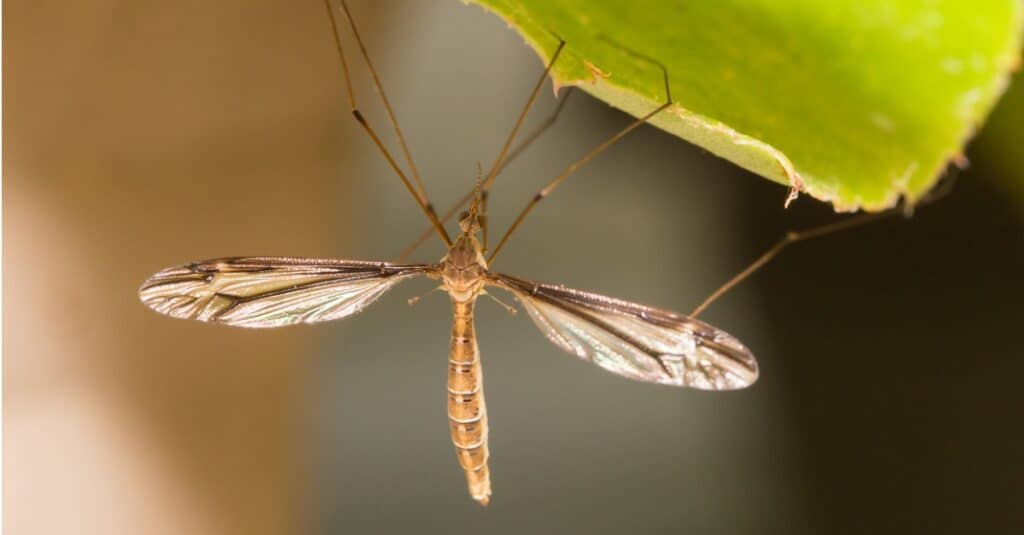
While crane flies are often called mosquito hawks, they do not generally eat mosquitoes.
©iStock.com/Aschen
Crane flies are not generally known to eat mosquitoes. However, there are some types of crane fly larvae that feed on mosquito larvae, although this instance only happens rarely.
Some crane fly larvae may eat mosquito larvae, which is where the nicknames “mosquito eater” and “mosquito hawk” may come from. Mature crane flies don’t sting humans or other animals, and because mosquitoes are not a regular part of their diet, it is crucial to stress that they are completely harmless to both.
Carnivorous crane fly larvae, on the other hand, may prey on mosquito larvae, tiny insects, aquatic insects, and other invertebrates, depending on the species.
How Do Crane Flies Eat?
Crane fly larvae have distinctive mouthparts that help shred their food into tiny pieces. Some crane fly larvae also gather food from decaying matter found in animal feces and other decomposing materials.
How Big Can Crane Flies Grow?
As crane flies are longer than mosquitoes, they can grow up to 1.5 inches in length, with a wide wingspan that can extend up to 2.5 inches. Crane fly larvae, on the other hand, range from half an inch to one inch before transforming into pupae.
Because of their thick skin during their larval stage, crane fly larvae are frequently called “leatherjackets.” The crane fly larvae also lack legs and resemble worms in appearance.