
Canada is home to two large native eagle species. In addition, a third, even larger vagrant species has been flying through Canada for the last five years. Read on to discover the top three largest eagles you may see in Canadian skies and find out how these majestic creatures rank in size.
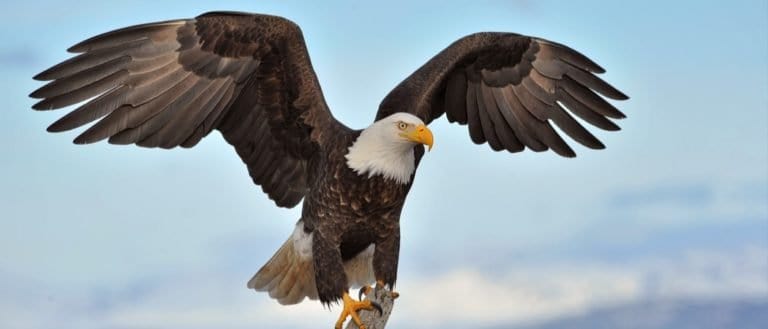
#3. Golden Eagle (Aquila chrysaetos)
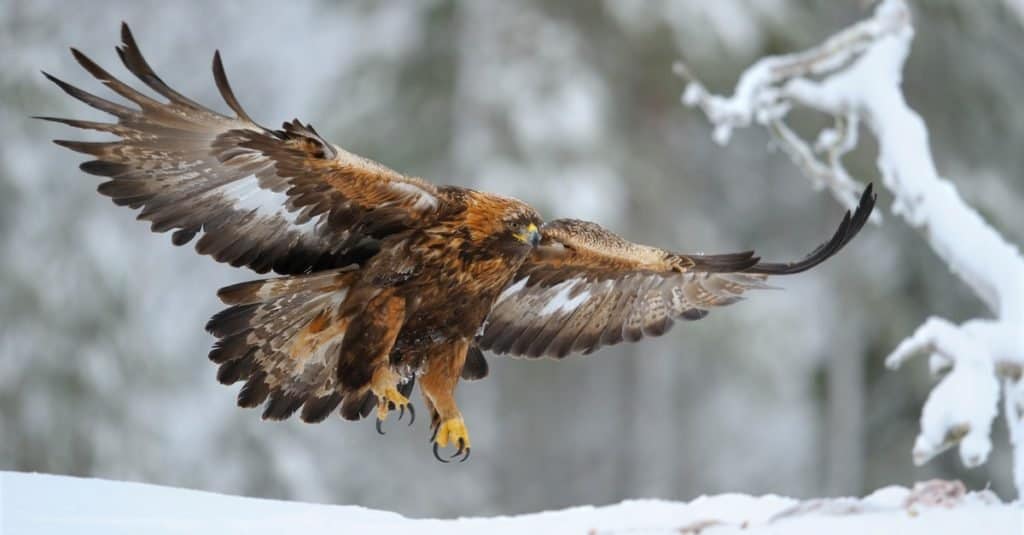
The golden eagle is the national bird of Mexico, but its range is well into northern Canada.
©Vladimir Kogan Michael/Shutterstock.com
Length: 27.6-33.1 inches
Weight: 6.6-13.5 pounds
Wingspan: 6.1-7.2 feet
The smaller of Canada’s two native eagle species is the golden eagle. The majority of Canada’s golden eagles breed across the western half of the country. Smaller breeding populations are also found around the Hudson Bay and the Gulf of Saint Lawrence further east. During spring and autumn migration, golden eagles can also be seen in the eastern half of the country. The southernmost areas of the western provinces support overwintering and year-round populations. Golden eagles prefer open country such as grasslands and deserts with cliffs and hills for nesting and hunting small mammals.
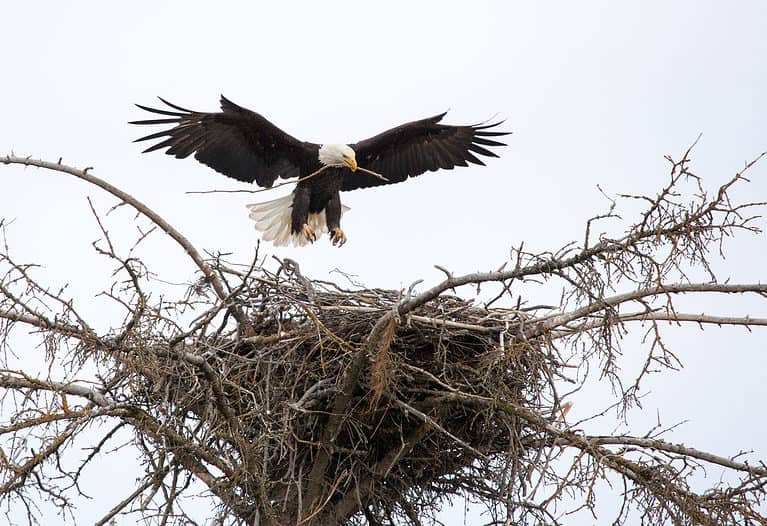
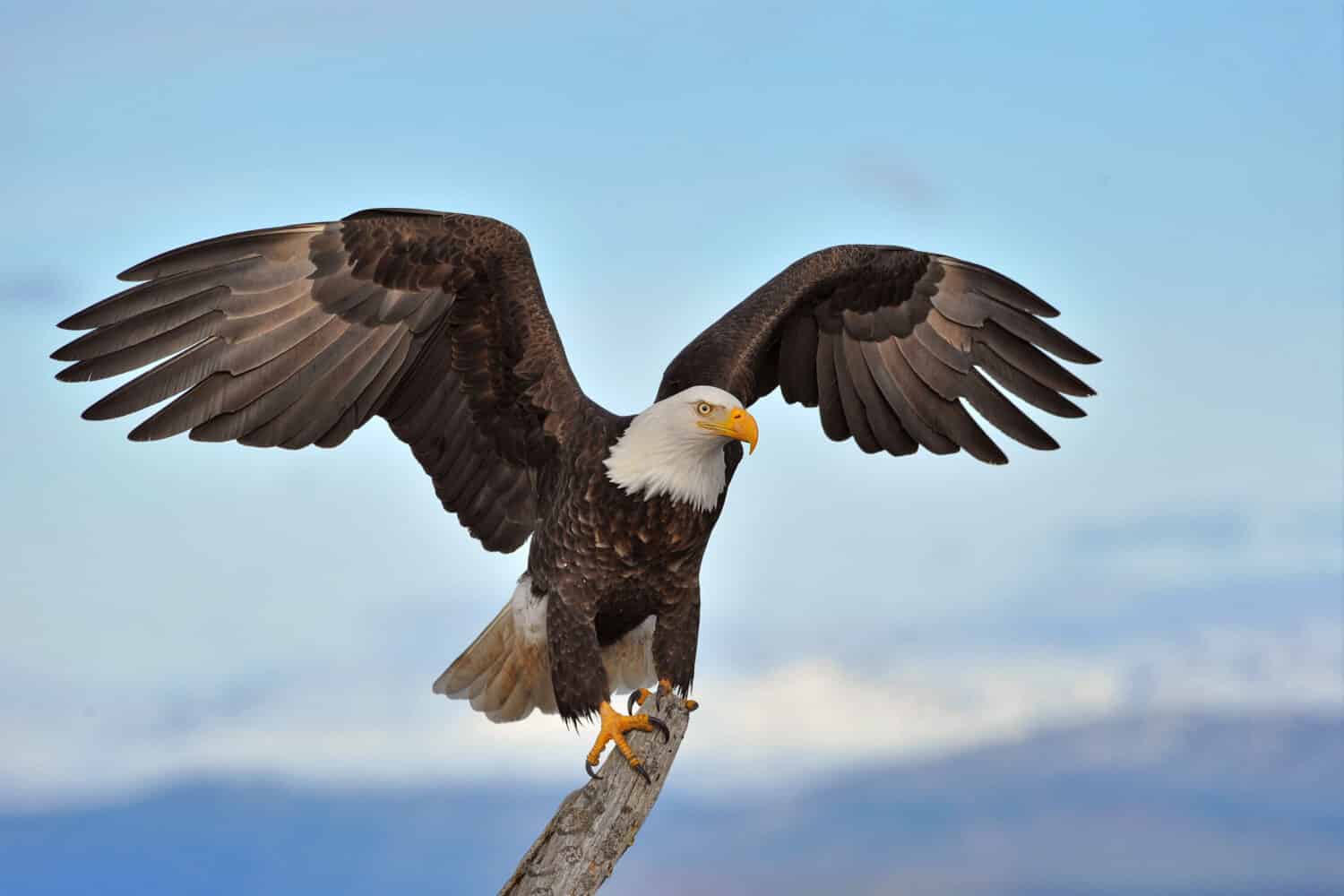
#2. Bald Eagle (Haliaeetus leucocephalus)
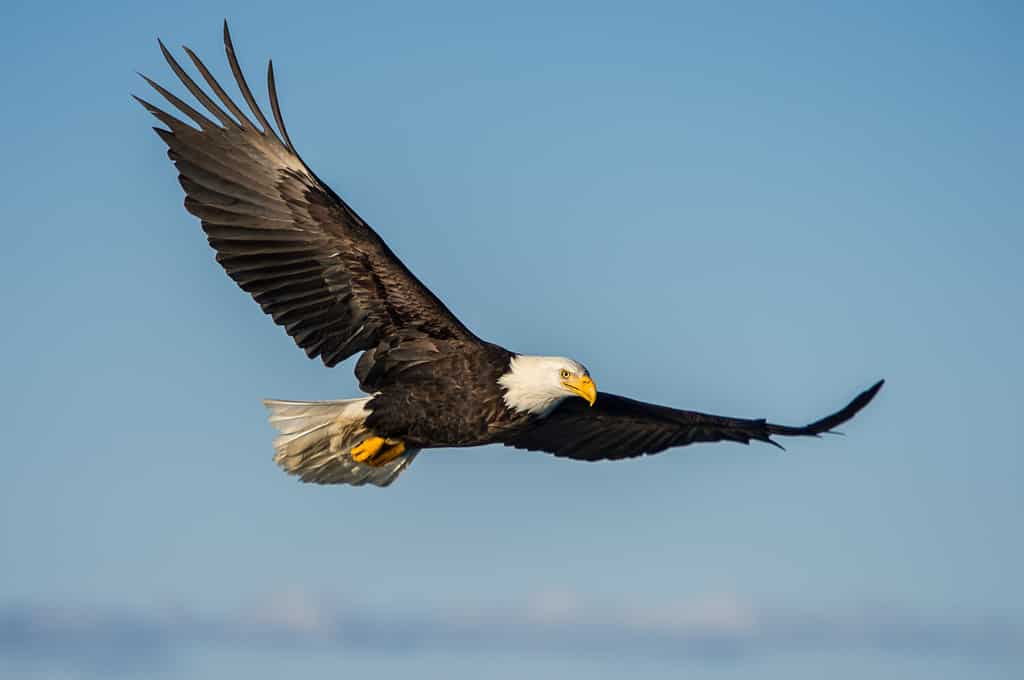
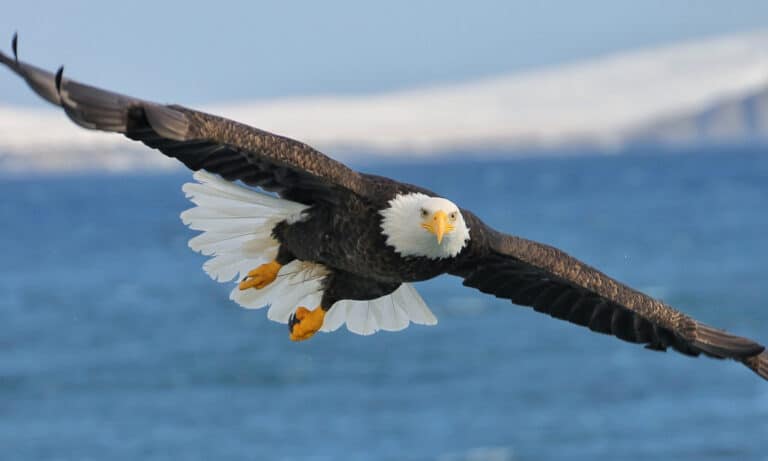
While most famous as the official national bird of the United States, bald eagles are also found throughout much of Canada.
©FloridaStock/Shutterstock.com
Length: 27.9-37.8 inches
Weight: 6.6-13.9 pounds
Wingspan: 5.5-8.0 feet
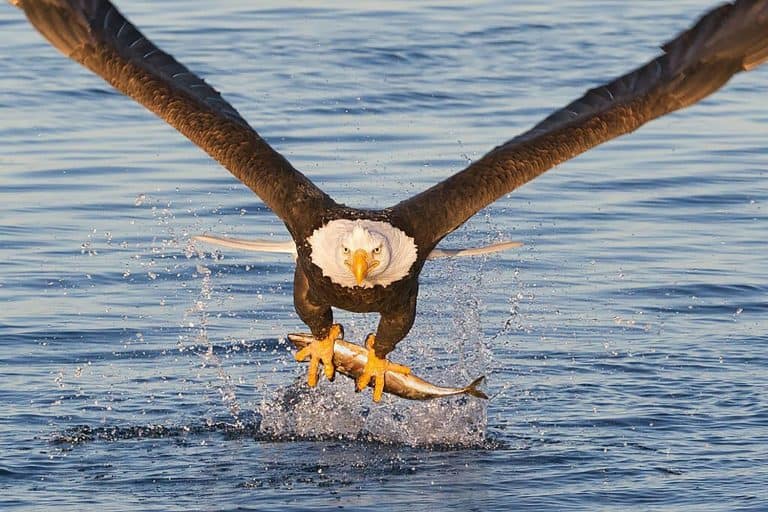
The larger of Canada’s two native eagle species is the bald eagle. Bald eagles breed across the lower two-thirds of Canada. Their range extends from northern Yukon and southern British Columbia in the west to Labrador, Newfoundland, and Nova Scotia in the east. The largest populations are found in coastal British Columbia and southern Quebec. During the winter, they can be found in southern Canada and up the Pacific Northwest coast. Bald eagles prefer forested areas near large, permanent bodies of water where they can build their nests and access fish, which make up most of their diet.
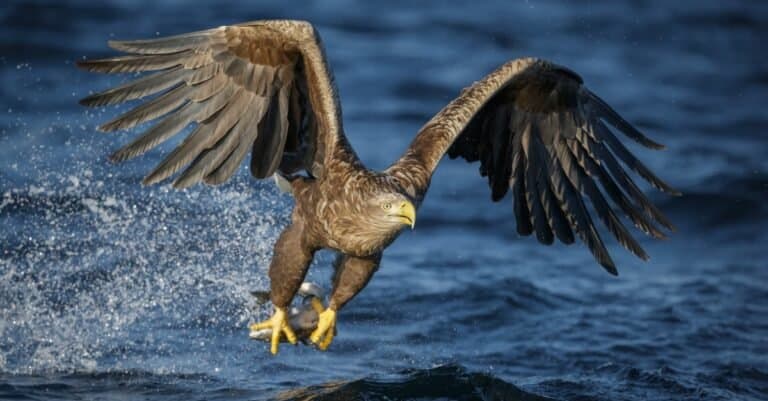
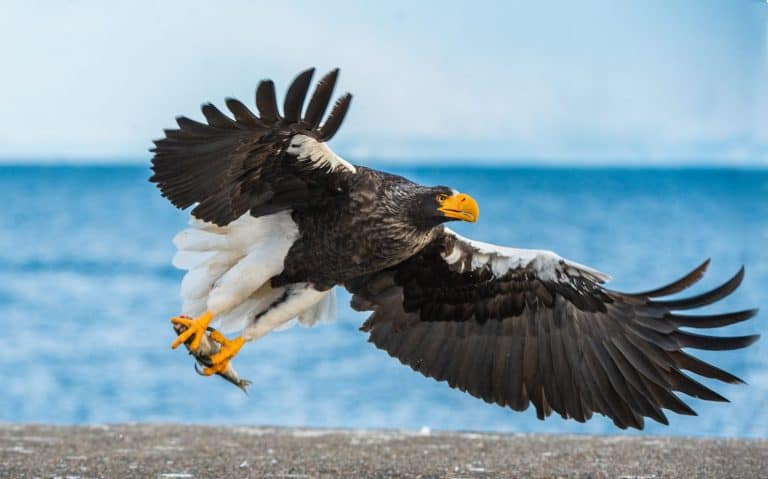
#1. Steller’s Sea-Eagle (Haliaeetus pelagicus)
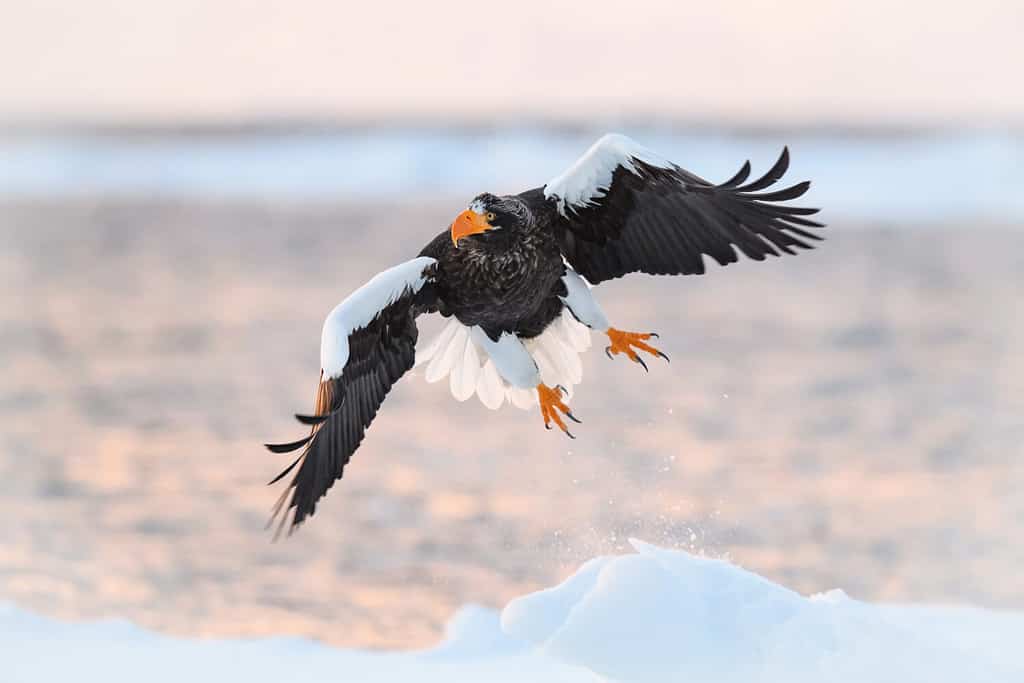
Steller’s sea-eagle is not a native North American species, but one intrepid traveler has been crisscrossing the continent since at least 2020.
©Petr Simon/Shutterstock.com
Length: 33.5-41.3 inches
Weight: 10.8-19.8 pounds
Wingspan: 6.4-8.0 feet
The Steller’s sea-eagle is a bigger cousin of the bald eagle. It is the largest member of the sea-eagle genus and is said to be the heaviest known eagle species. It not native to Canada but rather to the coasts of Northeast Asia. However, since first appearing in Alaska in 2020, a lone vagrant has been tracked across North America. Recent sightings have been concentrated in Newfoundland, Canada, where it has been observed regularly since 2023. Steller’s sea eagles primarily eat fish and other marine animals. So, they can often be found perched in trees or on sea cliffs scanning for food.
Steller’s sea-eagles typically migrate from their breeding grounds in northeastern Siberia, Russia, to their wintering grounds in the southern Kuril Islands and Hokkaido, Japan. Researchers believe a navigational error may have resulted in Stella crossing the Bering Strait by accident. Nicknamed Stella, this wayward bird has become an avian celebrity. She has a dedicated social media account where fans can share and track sightings.