
As the national bird of the United States, the bald eagle is one of the best-known birds. They are large birds of prey that are widespread and abundant across the U.S. Bald eagles are easily recognized by their distinctive appearance and massive wingspan. Bald eagles are also known for building the largest nests of any bird in the world. Yet just how big can their nests get? Join us as we explore the largest bald eagle nest ever discovered.
About Bald Eagles
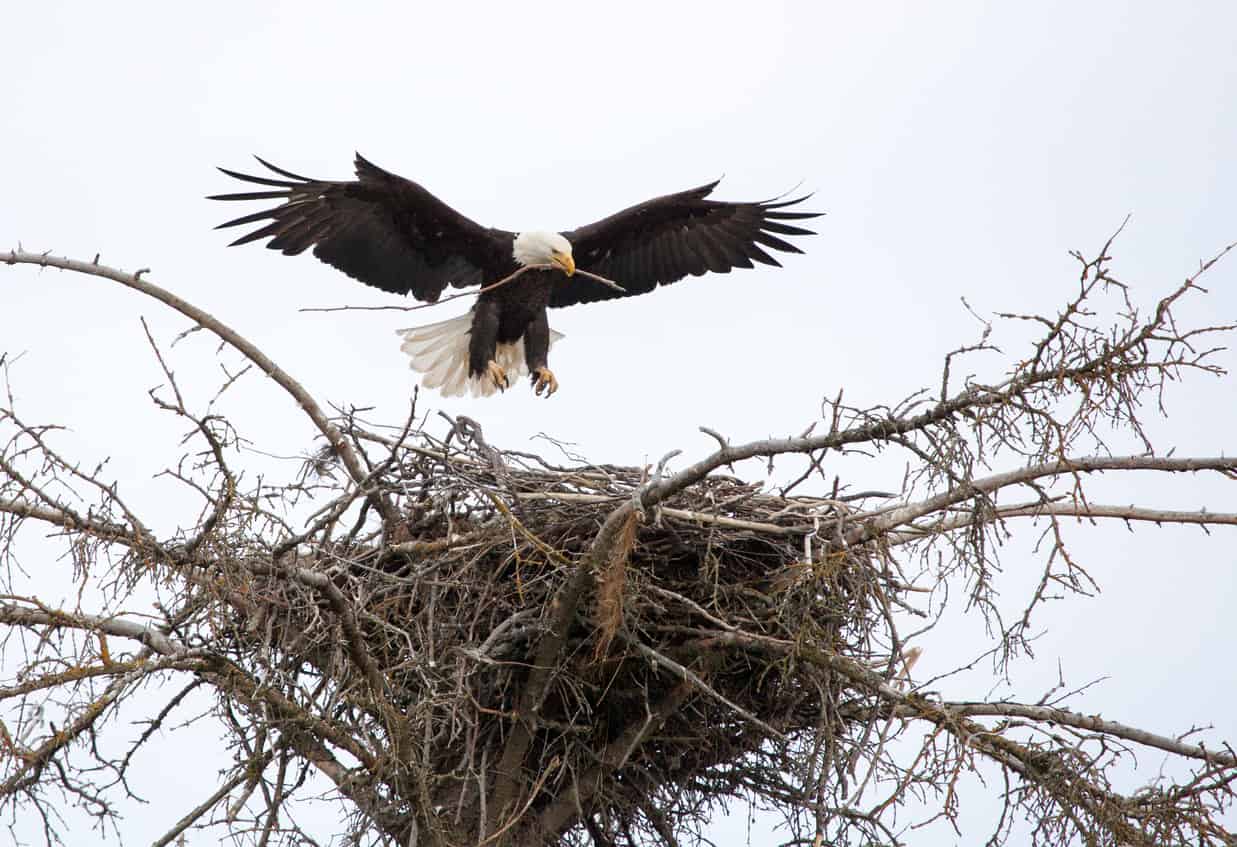
Bald eagles predominantly eat fish, so they typically build their nests near water.
©Todd Maertz/Shutterstock.com
Bald eagles (Haliaeetus leucocephalus) belong to the Accipitridae family group, which includes eagles, hawks, kites, harriers, and Old World vultures. Despite their name, bald eagles are not actually bald. They are large birds with dark brown bodies and white heads.
Their massive wingspan measures up to 6 feet for males and around 8 feet for females. They stand up to 3 feet tall and can weigh up to approximately 14 pounds. Females are usually 25% larger than males. Larger bald eagles are typically found farther north in their range. Alaska is home to some of the largest bald eagles in the U.S., which have been known to weigh up to 16 pounds.
Bald eagles are opportunistic feeders. Although they predominantly eat fish, they also eat other birds and mammals. They typically live near large bodies of water, where food is abundant and there are plenty of trees for nesting. Habitats include coastlines, rivers, and large lakes. Because bald eagles are so large, they need trees strong enough to support both their weight and their nests. Therefore, bald eagles prefer mature coniferous or hardwood trees located near water.
The Largest Bald Eagle Nest Ever Found
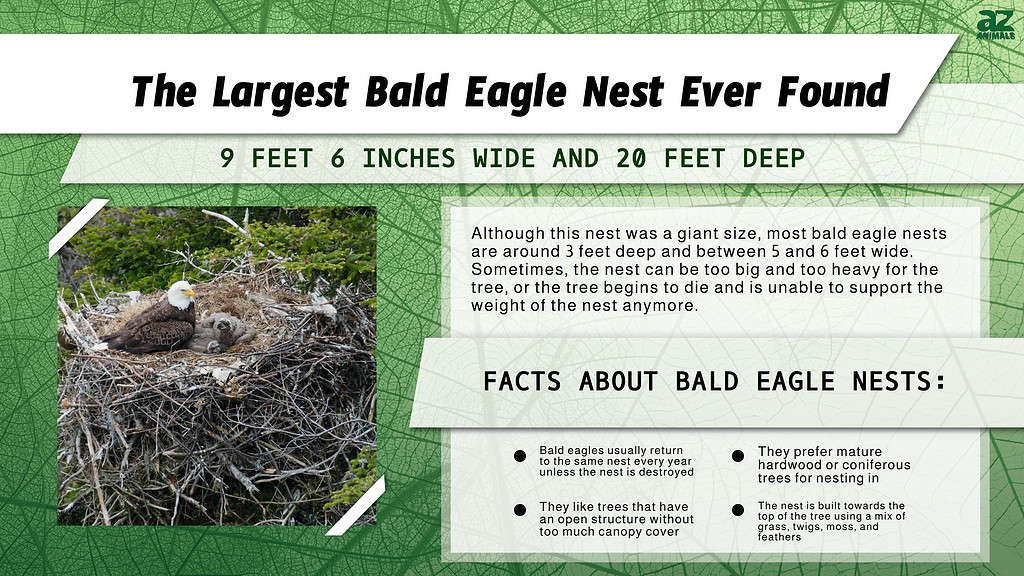
The largest bald eagle nest ever found was 9 feet 6 inches wide and 20 feet deep. Guinness World Records states that it was estimated to have weighed 4,409 pounds. This massive nest was found in St. Petersburg, Florida in 1963.
Is It Normal for Eagle’s Nests to Be So Big?
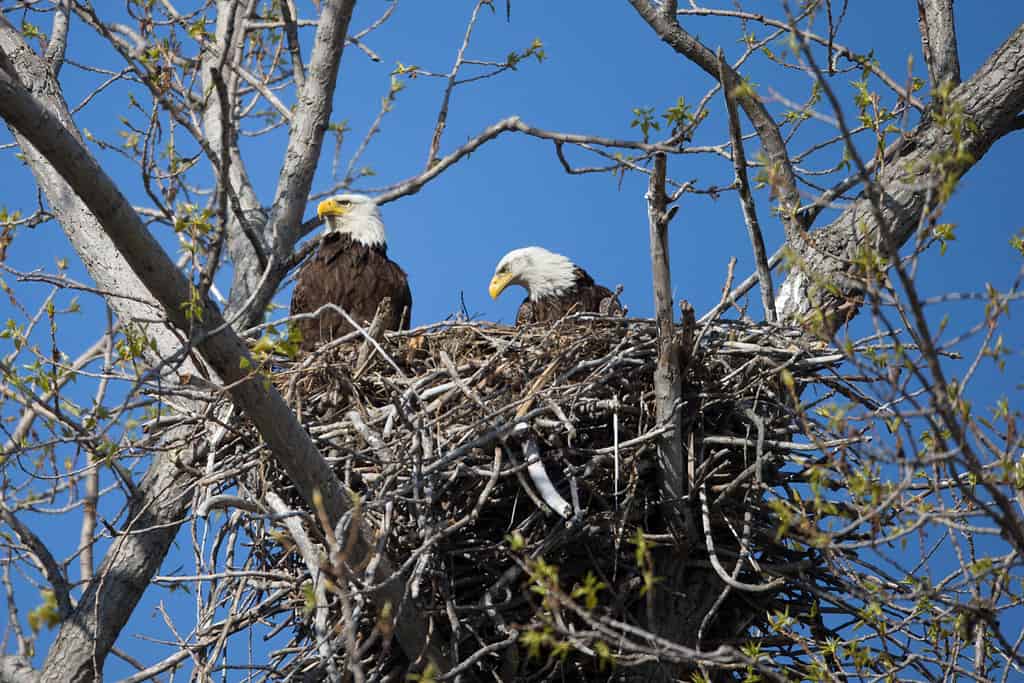
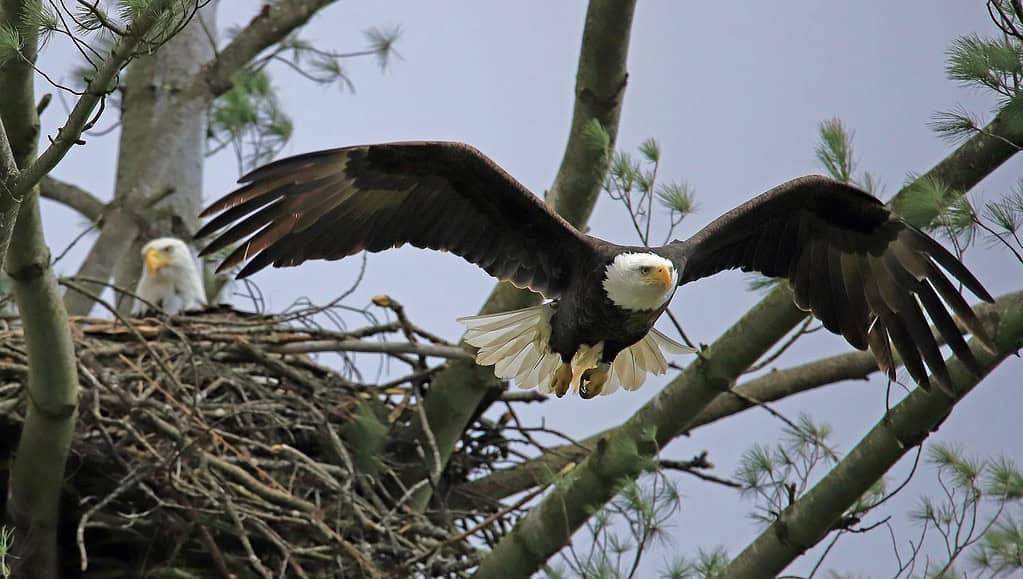
Bald eagles mate for life and return to the same nest every year.
©Dennis W Donohue/Shutterstock.com
Although the largest nest ever was gigantic, most bald eagle nests are around 3 feet deep and between 5 and 6 feet wide. They can weigh over 1,000 pounds. Sometimes, the nest can become too big and heavy for the tree, or the tree may begin to die and become unable to support the weight of the nest. If this happens, the tree can collapse under the weight. This can also occur if the nest becomes heavier due to rain or snow.
However, the incredible size of this nest raises the question of just how it managed to get to such a record-breaking size. The key is that it was likely used for many years. As bald eagles mate for life, they usually return to the same nest every year unless the nest is destroyed. Every year, when the eagles return to the nest, they add between several inches to up to a foot of new material to the nest. This means that the nest builds up gradually over time.
What Makes a Suitable Nest?
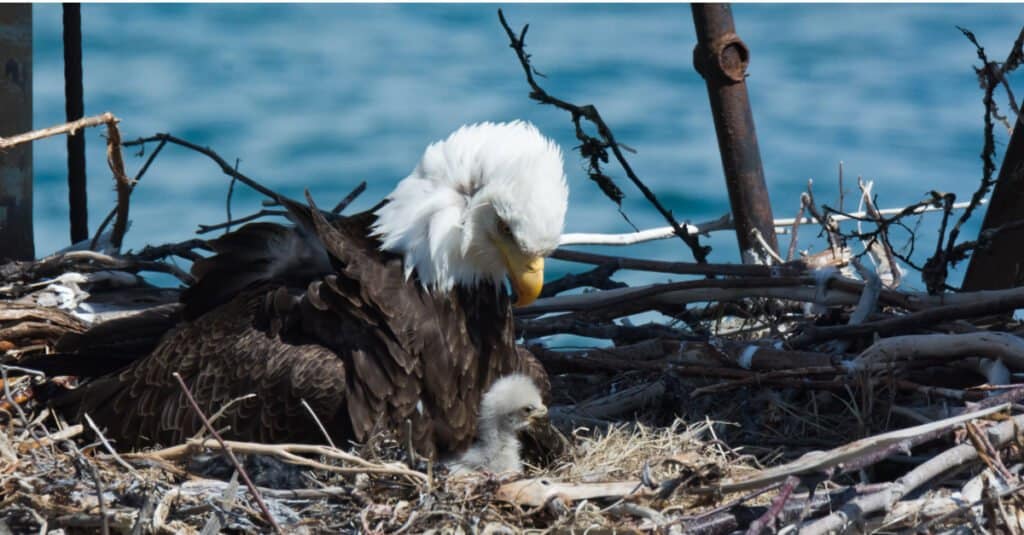
The most common trees that bald eagles nest in are cottonwood trees and white pines.
©Jon C. Beverly/Shutterstock.com
As mentioned previously, bald eagles prefer mature hardwood or coniferous trees for nesting. The most common trees that bald eagles nest in are cottonwood trees and white pines. Oaks, aspens, and fir trees are also used. However, it is not just the type of tree that’s important; there are a few other factors that make a tree suitable for nesting.
Bald eagles like to nest in trees that allow them to have good visibility and be close to where there is plenty of prey. They prefer to have at least one perch in their nest territory with a clear view of water. They also like trees that have an open structure without too much canopy cover. Nests are generally in trees that are between 50 feet and 125 feet in the air, but some nests may be even higher.
Nest-building begins up to three months before the eggs are laid. Once a suitable site for the nest has been found, both the male and female gather materials for the nest, but the female typically arranges them. The nest is built towards the top of the tree using a mix of grass, twigs, moss, and feathers. Bald eagles also tend to keep small pieces of fresh greenery in and around the nest. It’s not certain why they do this, but one theory is that it shows that the nest is occupied. Additionally, feathers or soft bits of moss and grass are used to line the nest in a bowl shape. This insulates the nest and prevents the eggs — and eventually the chicks — from falling out.
Nesting
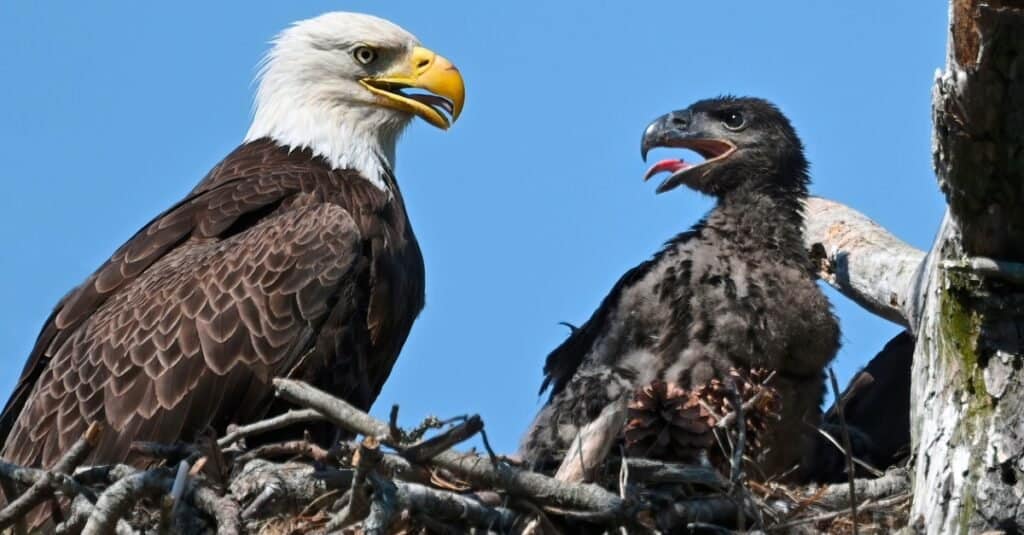
Bald eagles share parenting duties and bring chicks food until they are fully independent.
©iStock.com/BrianEKushner
Bald eagles lay between one and three eggs over a period of three to six days. Both parents share the duties of incubating the eggs. However, the female typically spends more time on the nest while the male goes hunting to provide food for his mate.
The eggs take 35 days to hatch, with one parent remaining in the nest at all times. After hatching, the chicks still remain in the safety of the nest for many weeks. Once the chicks have hatched, both the male and the female feed them. They bring food back to the nest and tear it up for the young to eat.
Bald eagle chicks begin to fly after several weeks in the nest, starting with short flights back and forth. However, they are not fully fledged until they are around 12 weeks old. The parents continue to feed them for up to 10 weeks after they have left the nest, until the young eagles become fully independent. Adults do not have any natural predators and the eggs and chicks are typically protected by the parents. However, predators of bald eagle eggs and chicks can include raccoons, bears, and bobcats.