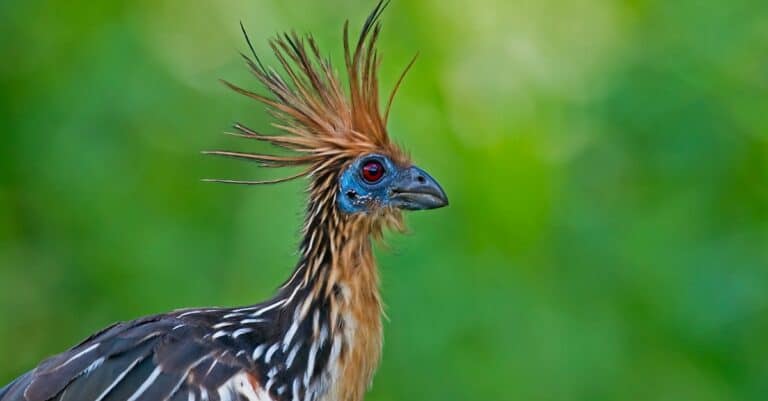

A bird of prey or a raptor is a bird that hunts and eats other animals. Because their prey is often large relative to their bodies, these birds are equipped with sharp, hooked bills to tear into their food and large, sharp talons to grab and hold on to it. Although many people know that eagles and hawks are birds of prey, some are surprised to learn that vultures and condors are also birds of prey. While vultures and condors are mostly scavengers, they will hunt for food, especially if the prey is sick or weak. Discover the 10 largest birds of prey from the smallest to the largest.
#10. White-Tailed Eagle
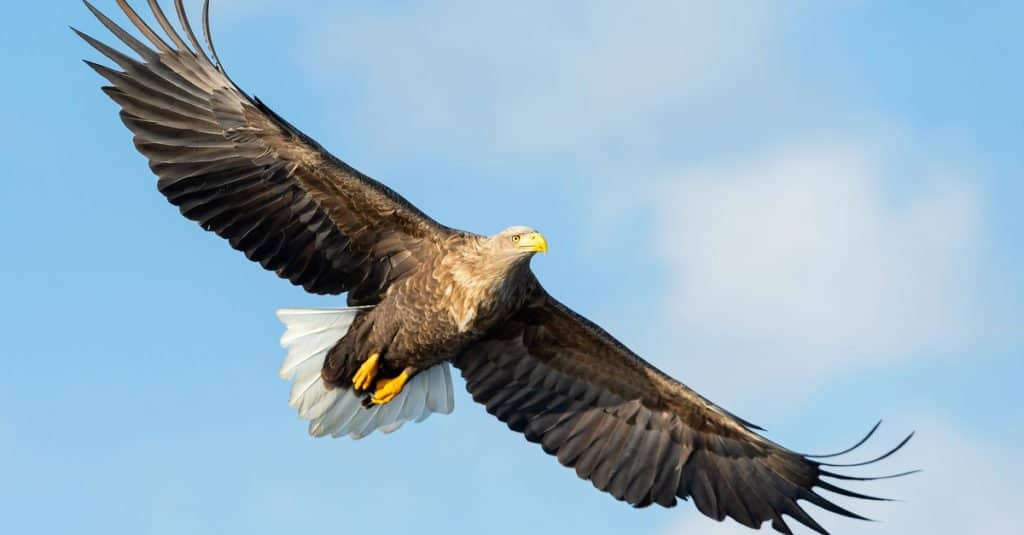
White-tailed eagles are found in coastal areas across Eurasia.
©Sergey Uryadnikov/Shutterstock.com
The white-tailed eagle (Haliaeetus albicilla) is found throughout Europe and Asia. This eagle has dark brown plumage, with a lighter brown head and body, plus a white tail. They can reach 2.95 feet in length, with a wingspan of up to 7.2 feet. These eagles generally weigh up to around 12 pounds.
White-tailed eagles are sometimes referred to as sea eagles, as they prefer coastal habitats and wetlands near large bodies of water. These eagles are opportunistic hunters, but primarily prey on fish, waterfowl, seabirds, and shorebirds. They may also prey on small mammals and have been known to consume carrion, especially in the winter when food is scarce.
#9. Bald Eagle
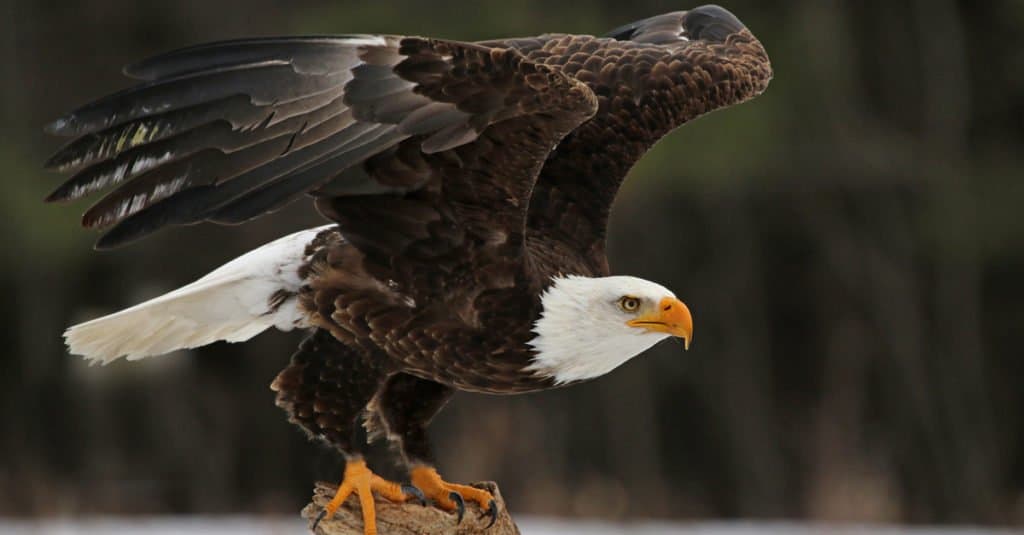
The bald eagle is America’s famous national bird.
©Chris Hill/Shutterstock.com
The bald eagle (Haliaeetus leucocephalus) is the national bird of the United States and can be found throughout much of North America. It is distinguished by its pure white head, neck, tail, and rump against its dark brown wings and body. It takes five years for a bald eagle to achieve its unique plumage. They can reach 3.1 feet in length and weigh up to 14 pounds. However, birds in the northern part of their range can weigh up to 16 pounds. The bald eagle has a wingspan of 7.5 feet or more.
Bald eagles prefer to roost in tall trees. They most often catch live prey, including seabirds such as ducks and seagulls, as well as fish. The bald eagle is also not above scavenging and even stealing food from other animals, especially the smaller osprey. The bald eagle is the sole eagle species that is native only to North America.
#8. Harpy Eagle
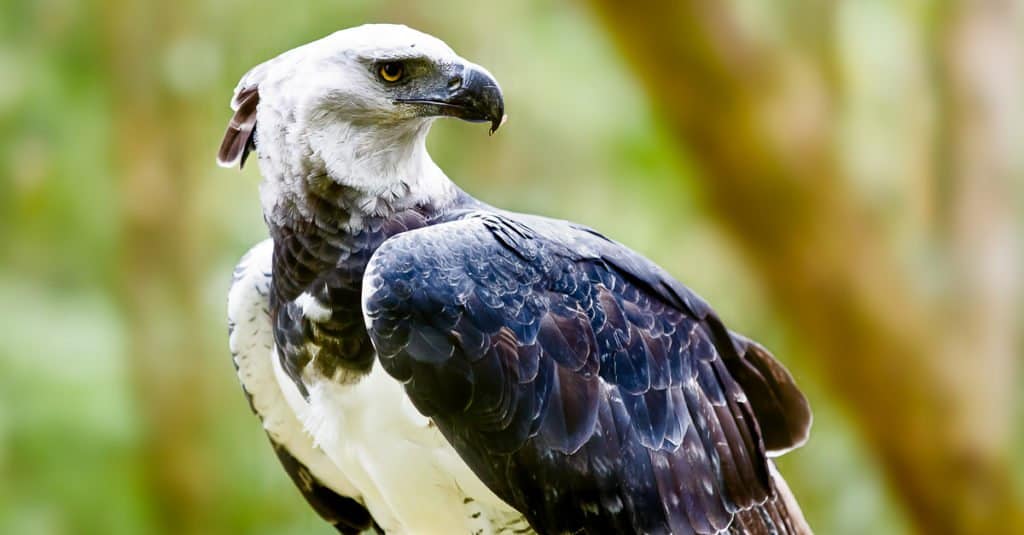
The majestic harpy eagle can weigh up to 20 pounds.
©MarcusVDT/Shutterstock.com
Harpy eagles (Harpia harpyja) are renowned throughout Central and South America for their impressive size. They were named after the harpies in Greek mythology, which are part bird and part human female. The harpy eagle is the largest raptor in the Americas with a wingspan of around 7 feet, a length of 3.3 feet, and a weight of up to 20 pounds.
It’s a striking bird with a slate-colored back and barred, black and gray tail feathers. It has a light gray head with a facial disc like an owl. It has light gray thighs and a light-colored breast and belly. The eagle has a crown of feathers that it raises because it feels threatened or to allow it to hear better. Harpy eagles can be seen effortlessly flying through the dense rainforests as they hunt mammals and reptiles such as possums, snakes, monkeys, and sloths.
#7. Philippine Eagle
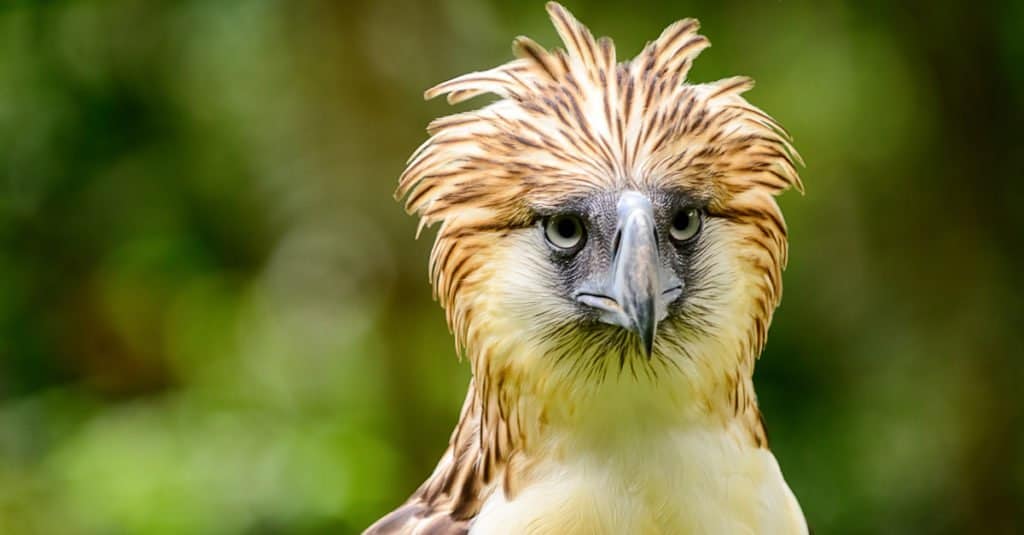
The Philippine eagle is distinguished by its pointed crown feathers and large, curved beak.
©Alaz/Shutterstock.com
As its name indicates, the Philippine eagle (Pithecophaga jefferyi) is found in the rainforests of the Philippines. It is the largest eagle species in the world by body length. Also known as the monkey-eating eagle, the Philippine eagle reaches up to 3.6 feet in length and has a wingspan of around 7 feet. It can also reach weights of up to 17.6 pounds.
The Philippine eagle is brown on top with a white belly and throat and yellow legs. Its wings are large and have round tips. This eagle is known for the brown and white crest on its head. Its powerful talons and large, curved beak allow it to capture large prey, including monkeys and even small deer. Although this eagle is revered and is the national bird of the Philippines, it’s still critically endangered due to habitat destruction.
#6. Steller’s Sea Eagle

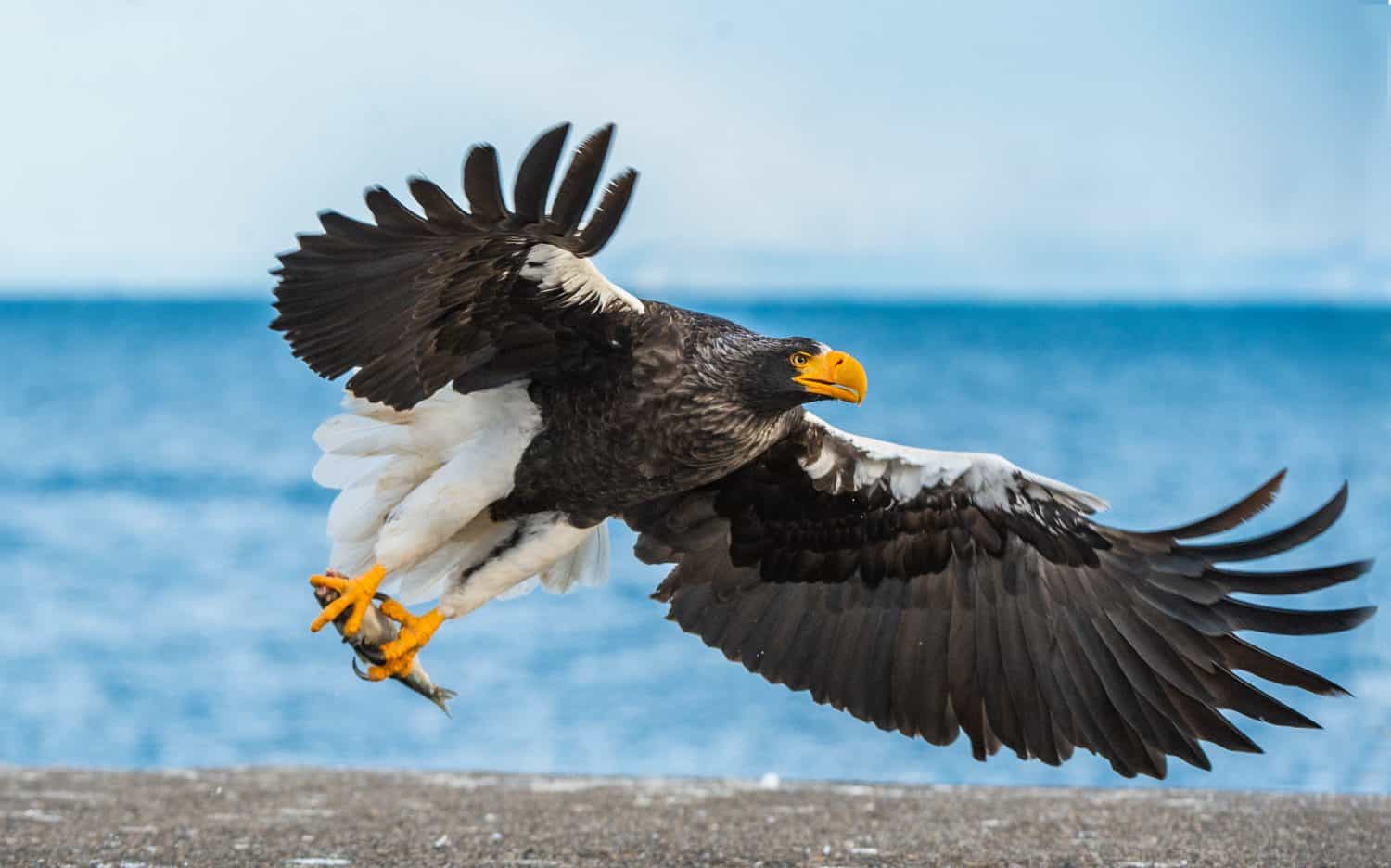
The Steller’s sea eagle is the heaviest eagle in the world, weighing up to 20 pounds.
©GUDKOV ANDREY/Shutterstock.com
Steller’s sea eagle (Haliaeetus pelagicus) is a huge eagle from the northeastern part of Asia, specifically the rivers and seacoasts of northeastern Siberia in Russia and northern Korea. However, some eagles may migrate south to Japan during the winter. It is considered the heaviest eagle in the world at weights of up to 20 pounds. They often rank above the harpy eagle due to having larger average weights. These eagles are about 3.4 feet long with a wingspan of up to 8 feet.
The Steller’s sea eagle has a bright yellow beak, yellow talons, and dark brown feathers with white bands on its wings. It has white feathers over the thighs and legs, and a white tail. Its talons are formidable, and the feet also possess spicules at the bottom which let the bird hold onto struggling fish. They primarily eat salmon, although they may also eat marine invertebrates and small mammals.
#5. Lappet-Faced Vulture
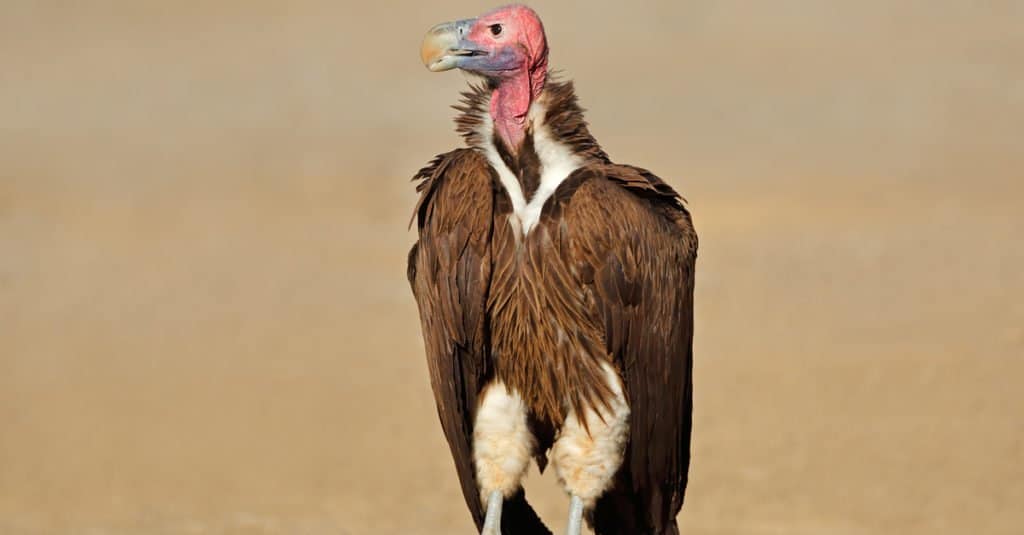
The lappet-faced vulture is known for its wrinkled, red skin.
©EcoPrint/Shutterstock.com
Lappet-faced vultures (Torgos tracheliotos), also called Nubian vultures, have two subspecies. One lives across much of Africa, while the other is found in the Middle East. It prefers dry, open areas, but can occasionally be seen near human dwellings in search of roadkill. It’s the largest vulture in Africa at lengths of up to 3.75 feet, 9.5-feet wingspans, and weights of around 20 pounds.
Like other vultures, it has a bald head, but its skin is wrinkled and folded, which gives the bird its name. The vulture is not only big but aggressive and will often take over a carcass from smaller vultures. However, this can benefit vultures of all sizes. The lappet-faced vulture is strong enough to tear open the tough hides of animals such as elephants or buffalos, allowing smaller animals to have a share of the meat.
#4. Lammergeier
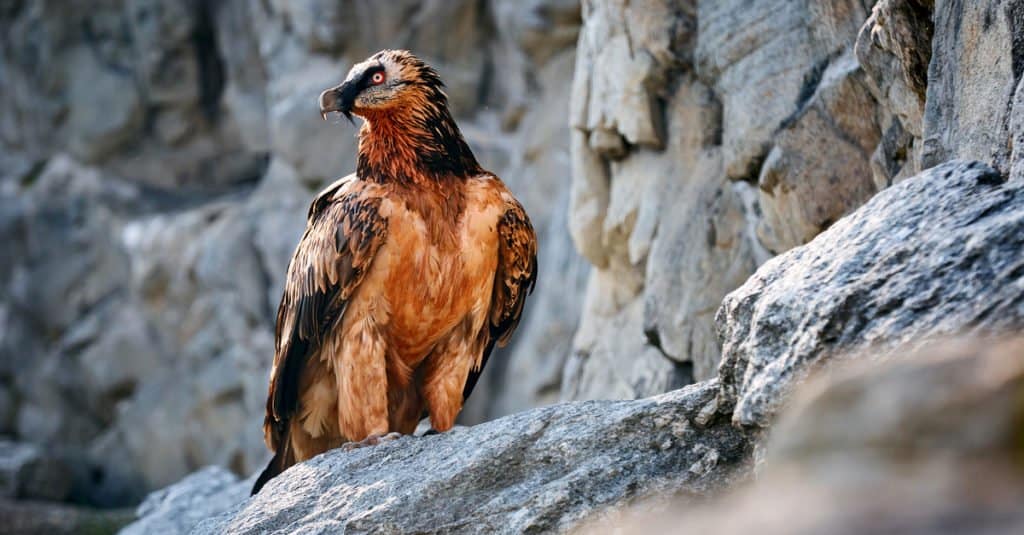
Lammergeiers live high in the mountains and eat a diet of mostly bones.
©Petr Salinger/Shutterstock.com
The lammergeier (Gypaetus barbatus) is also called the bearded vulture, but it is sometimes mistaken for an eagle. These huge birds can reach up to 4 feet long and have a wingspan of up to 9.3 feet. They weigh up to around 15 pounds. Lammergeiers have dark grey feathers on their upper parts, rusty orange feathers on their undersides, and darker underwings.
Unlike most vultures, its head, neck, and legs are fully feathered. This is because the lammergeier diet is up to 90% bones and bone marrow. They are found throughout Africa, Asia, and Europe. These birds reside in the high mountains, including the Pyrenees, the Alps, and the Himalayas, among others. Lammergeiers drop the bones onto the rocks from high elevations to break them and get the marrow.
#3. Cinereous Vulture
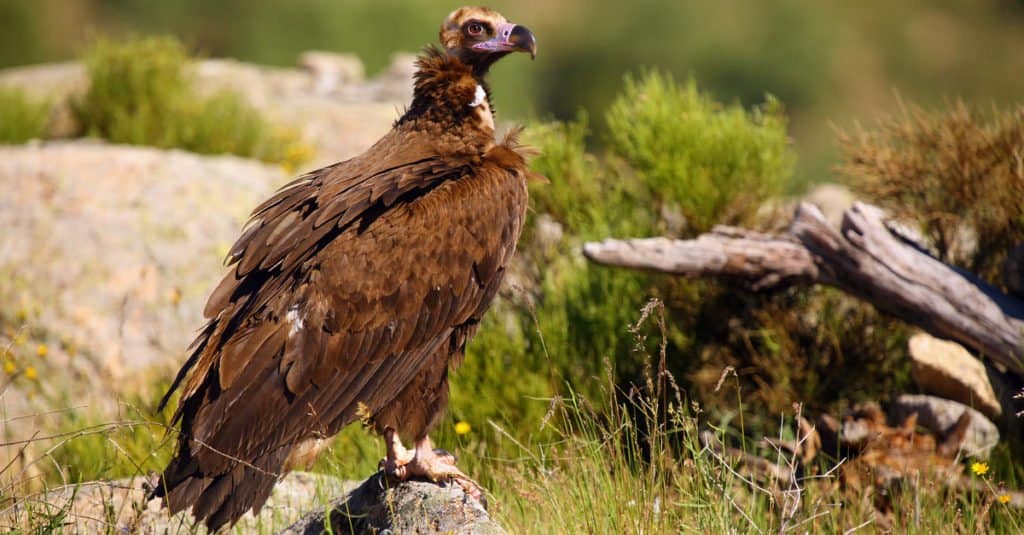
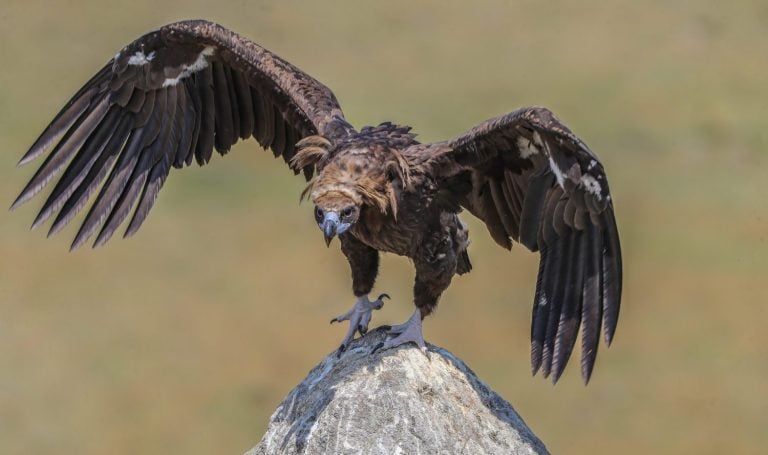
The cinereous vulture is believed to be the largest Old World vulture.
©Karel Bartik/Shutterstock.com
The cinereous vulture (Aegypius monachus) is arguably the largest Old World vulture. Also called the black vulture or monk vulture, it is not only one of the largest by wingspan, but it is also one of the heaviest. This bird can reach almost 4 feet long with a wingspan of over 9.5 feet and a weight of up to around 25 pounds. The cinereous vulture has a wide but patchy distribution in Europe, the Middle East, and Asia.
Its body is covered with dark brown feathers and lighter, fuzzier feathers around the neck. It has bluish-gray skin and tufts of dark brown feathers on its head. The cinereous vulture can appear completely black to a person on the ground, which is where it got one of its names. Like most vultures, these birds primarily consume carrion. They spend hours soaring over semi-arid, mountainous, and wooded areas foraging for food.
#2. California Condor
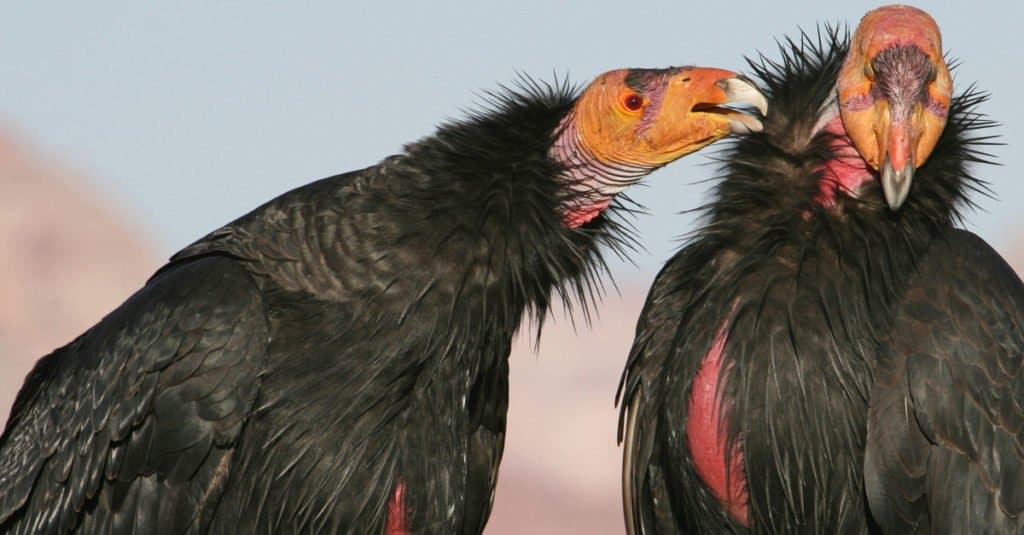
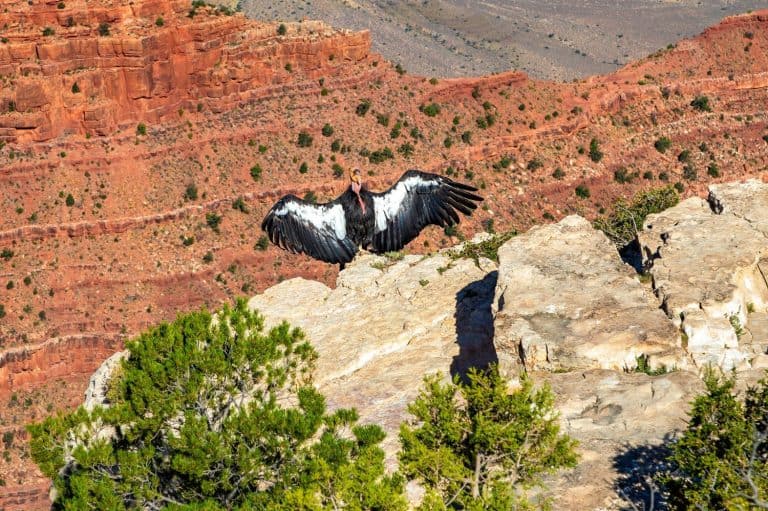
The California condor is a fastidious bird, spending many hours grooming.
©MTKhaled mahmud/Shutterstock.com
At between 4.5 feet long from its head to its tail, the California condor (Gymnogyps californianus) is the largest bird of prey in North America. It can weigh as much as 25 pounds with a wingspan of 9.5 feet. Its head and neck are naked, except for some black feathers on the forehead and the ring of black feathers around the neck. California condors, which mostly eat carrion, are fastidious about their cleanliness and spend a great deal of time bathing, grooming, and preening themselves.
This bird of prey was once found up and down the west coast of North America before becoming nearly extinct in the 1980s. These condors have been reintroduced in the southern California and Baja California mountains, the Big Sur region along the central California coast, and around the Grand Canyon in Arizona. They prefer rocky terrain for nesting and roosting and use thermal updrafts for soaring.
#1. Andean Condor
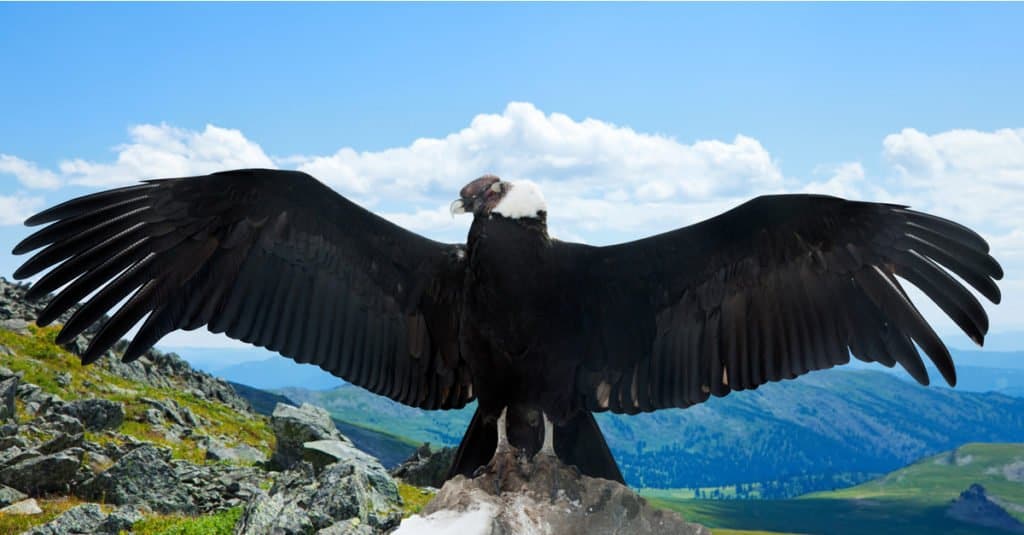
Andean condors can change the color of their skin according to their mood.
©BearFotos/Shutterstock.com
Although the Andean condor (Vultur gryphus) may be as much as 6 inches shorter than the California condor at 4 feet long, it is 40% heavier and has a longer wingspan. The Andean condor can weigh as much as 33 pounds and can reach a wingspan of up to 10.5 feet. The female is smaller than the male, which is unusual for raptors. Males have a comb and a wattle, whereas the female does not. The males also have brown eyes while the female has red eyes.
Like other vultures, they have naked heads and necks, which helps keep them cleaner when consuming carrion from animal carcasses. They can also change the color of the skin of their heads and necks according to their mood. These condors are found in the mountains and deserts of western South America. Due to their large size, they prefer windy habitats or desert regions with strong thermal air currents which allow them to glide with less effort.