
Quick Take
- One fish in the Great Lakes can live over a century and reach a weight that dwarfs every other species on this list by a staggering margin. Meet the century-old giant →
- Several of the largest fish in the Great Lakes were never supposed to be there, and the reason they were introduced might surprise you. See why they were introduced →
- The only freshwater member of the cod family lurks in these lakes, and most anglers have never heard of it. Discover the freshwater cod →
- One salmon species was accidentally released into the Great Lakes and has been thriving there ever since, though no one planned it that way. Read about the accidental release →
Fish (phylum Chordata) constitute more than half of all known vertebrate species on Earth. To date, scientists have described tens of thousands of species, with estimates ranging from 30,000 to more than 33,000, and new ones are being discovered every year. Of these, about half live in freshwater, despite freshwater representing only about 0.03% of Earth’s total water resources. The Great Lakes, located in North America, spanning the border between the United States and Canada, contain approximately 21% of the world’s surface freshwater. Anglers from around the world flock to these waters each year for exceptional freshwater fishing. More than 177 fish species inhabit the Great Lakes, spanning a variety of sizes, including some extra-large species. Continue reading to learn about 15 of the largest fish in the Great Lakes.
Pink Salmon: Up to 11 Pounds
The pink salmon (Oncorhynchus gorbuscha) is the smallest salmon species inhabiting the Great Lakes. Native to Pacific and Arctic waters, pink salmon were accidentally introduced to the Great Lakes in 1956 when a Canadian hatchery released members of the species into a Lake Superior tributary. They have since established self-sustaining populations, particularly in Lake Superior.
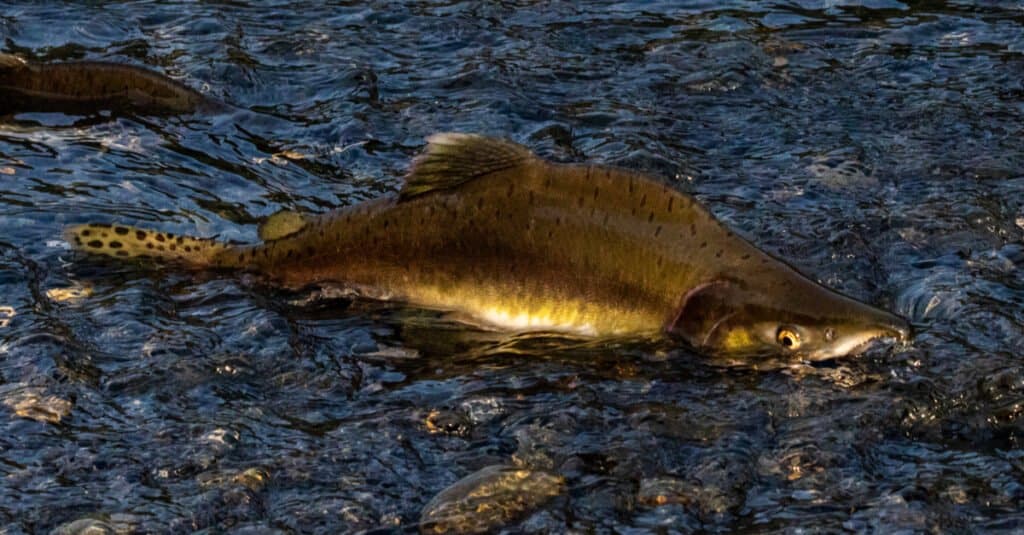
The smallest salmon species in the Great Lakes is the pink salmon.
©Mark A. McCaffrey/Shutterstock.com
Mature pink salmon typically weigh between 3.5 and 5 pounds and measure between 20 and 25 inches. Record catches from the Great Lakes fall between 8 pounds (U.S. record) and 11 pounds (Canadian record).
Pink salmon are sport fish that are considered easy to catch, making them an excellent target for beginners.
Atlantic Salmon: Up to 12 Pounds
Atlantic salmon (Salmo salar) are native to the North Atlantic but have been stocked in some Great Lakes, particularly Lake Ontario, where restoration efforts continue. They typically weigh 8-12 pounds, though larger specimens can occur.
The largest recorded landlocked Atlantic salmon in the Great Lakes region weighed 26 pounds, 12 ounces, and was caught in Michigan’s Torch Lake in October 2010. Although it is a standalone lake, Torch Lake connects to Lake Michigan through a series of waterways known as the Chain of Lakes system.
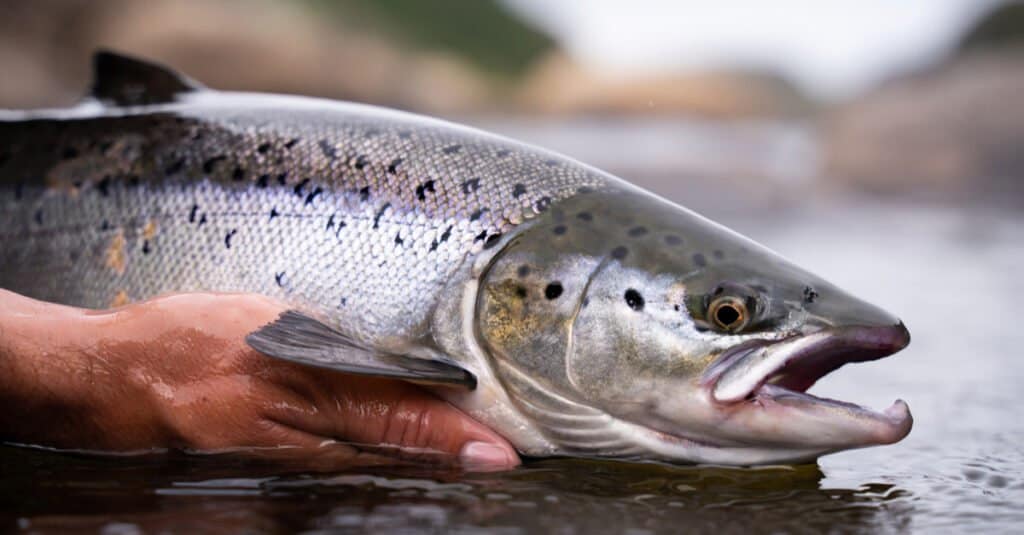
The third-largest Salmonidae species in the Great Lakes, Atlantic salmon can weigh up to 12 pounds.
©Ilya Marchenko/Shutterstock.com
Atlantic salmon are the only salmon species native to the Great Lakes basin. Human activity, including overfishing, pollution, and dam construction, extirpated them (made them locally extinct) by the late 19th century. Today, stocking efforts have successfully created localized sport fisheries. Depending on the jurisdiction, some Atlantic salmon may have size regulations, while others may be strictly catch-and-release.
Largemouth Bass: Up to 12 Pounds
Popular among sport anglers, largemouth bass (Micropterus salmoides) are abundant in warm, weedy shallows of the Great Lakes region. Although the majority of largemouth bass weigh between three and six pounds, trophy specimens can exceed 10 pounds.
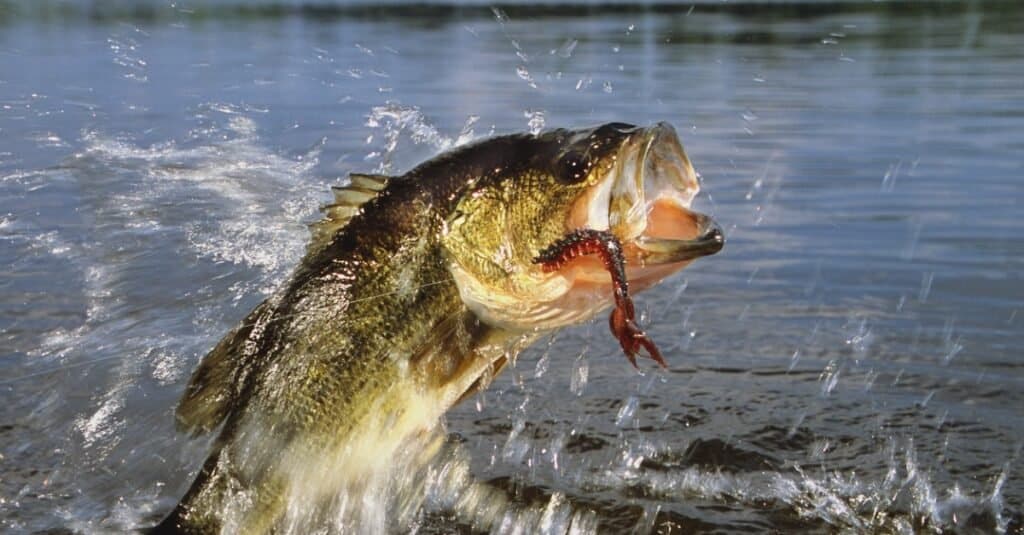
One of the most common species to catch in the United States is the largemouth bass.
©iStock.com/stammphoto
Brook Trout: Up to 15 Pounds
The brook trout (Salvelinus fontinalis) is native to cold, clean waters throughout the region. Most brook trout weigh one to six pounds, but exceptionally large individuals, particularly in Lake Superior, can weigh between 14 and 15 pounds. Their vibrant coloration and sporting challenge make them a favorite among anglers.
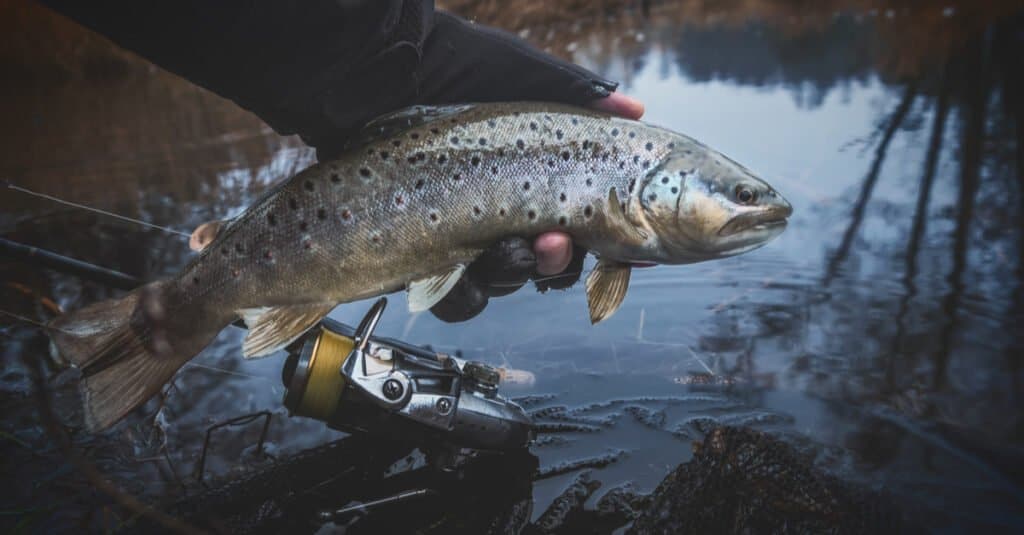
A brook trout typically weighs 6 pounds and can weigh as much as 15 pounds.
©wwwarjag/Shutterstock.com
Brook trout are the only stream trout species native to the Great Lakes region.
Burbot: Up to 18 Pounds
The burbot (Lota lota) is the only freshwater member of the cod family native to the Great Lakes basin. The average adult burbot caught in the Great Lakes measures 15 to 22 inches long, and weighs between one and three pounds, although individuals up to 8 pounds are not uncommon. The largest burbot recorded weighed 18 pounds, 2 ounces, and was caught in Lake Superior.
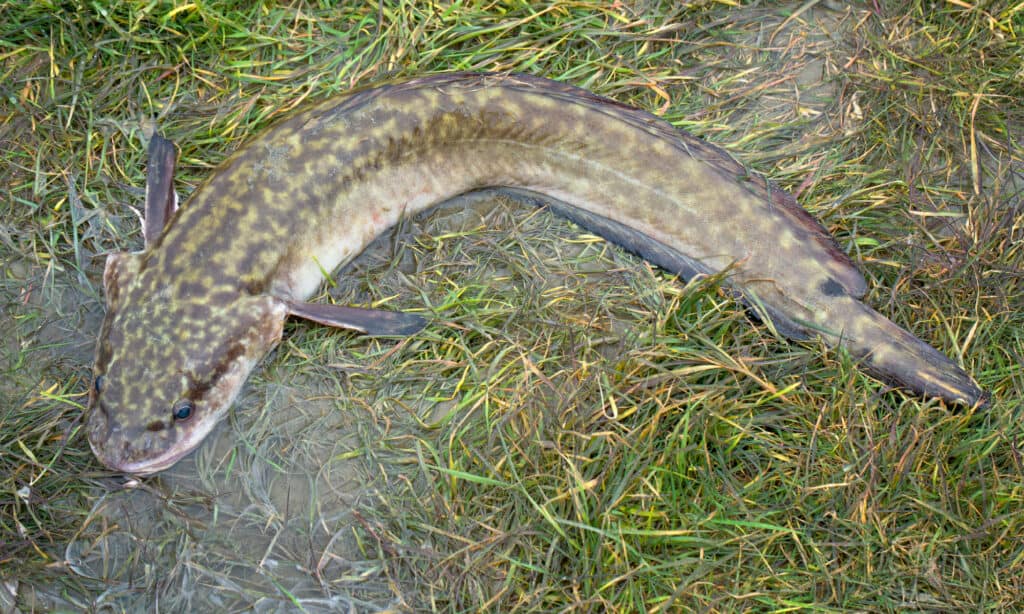
The burbot is a member of the cod family.
©iStock.com/Krugloff
Walleye: Up to 18 Pounds
The walleye (Sander vitreus) is a popular native game fish in the Great Lakes. In these cooler waters, an average adult walleye typically weighs between two and five pounds and measures 15 to 22 inches, though fish in the 8- to 10-pound range are fairly abundant. The Great Lakes record walleye, caught in 2018, weighed 18 pounds, 2 ounces.

The walleye is the largest member of the perch family.
©FedBul/Shutterstock.com
Steelhead Trout: Up to 26.5 Pounds
The steelhead trout (Oncorhynchus mykiss), a migratory, lake-run version of the rainbow trout, was originally introduced to the region from the Pacific Coast in 1876. Steelhead trout spend their summers feeding in the vast, open waters of the Great Lakes before migrating up tributary rivers to spawn.
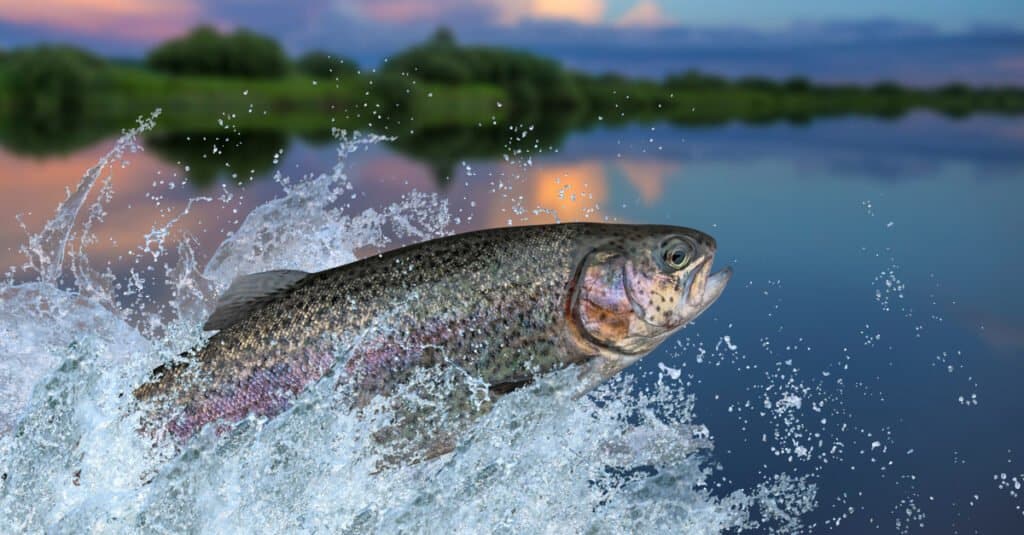
Rainbow trout weigh 26.45 lbs.
©FedBul/Shutterstock.com
A typical mature Great Lakes steelhead weighs between 6 and 10 pounds and measures 24 to 28 inches long. Steelhead trout grow continuously throughout their lives, and mature specimens can weigh up to 20 pounds. The largest recorded steelhead trout caught in the Great Lakes weighed 26.5 pounds and was caught in Lake Michigan in 1975.
Coho Salmon: Up to 33 Pounds
The coho salmon (Oncorhynchus kisutch) was introduced to the Great Lakes in the 1960s to control invasive alewives. Coho salmon have since become a prized game fish in the region. They are prized for their aggressive strikes and strong fights.
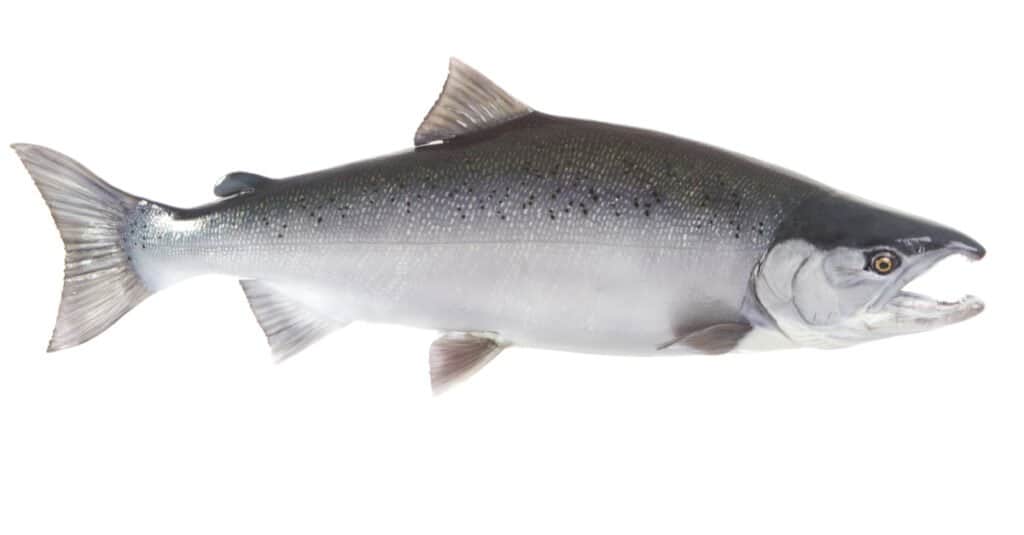
Coho salmon eat small fish, including anchovies, herring, and sardines.
©Keith Publicover/Shutterstock.com
An average adult coho salmon weighs between 5 and 10 pounds and measures 24 to 28 inches long. Lake Ontario holds the record for the largest coho salmon, which weighed 33 pounds, 7 ounces.
Brown Trout: Up to 41 Pounds
The brown trout (Salmo trutta) is native to Europe and was introduced to North America in the late 19th century. Aware that native trout species were rapidly disappearing due to changing water parameters, the U.S. Fish Commission imported brown trout eggs from Germany and Scotland in 1884. Brown trout have since become one of the premier nearshore sport fish in the Great Lakes.
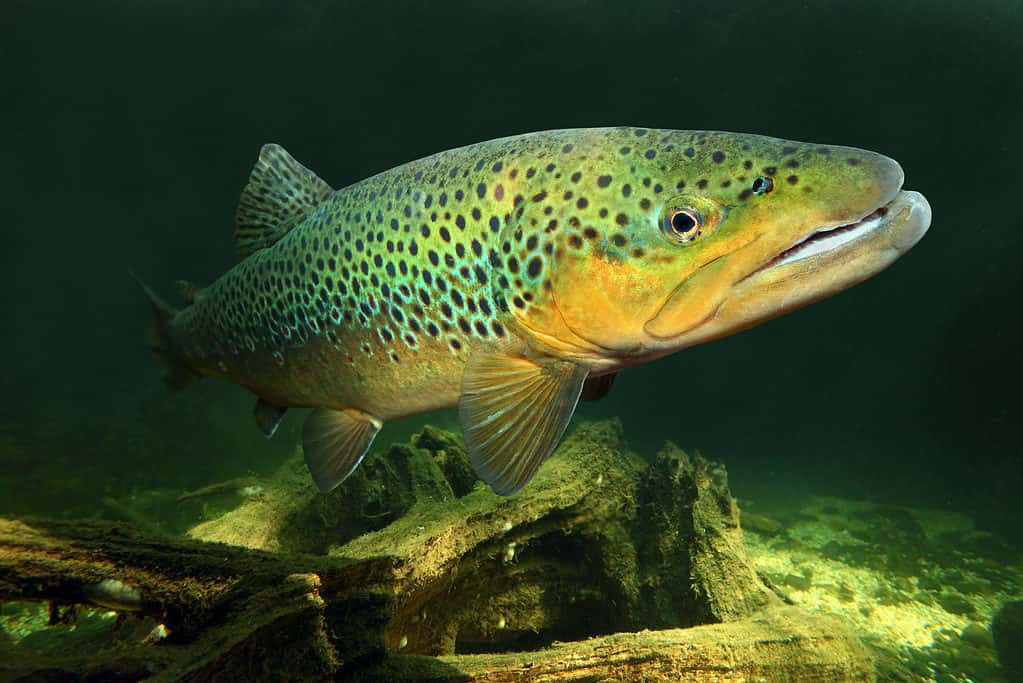
Although adults average 26.45 pounds, some brown trout can weigh 53 pounds.
©iStock.com/abadonian
While they can be found throughout the region, brown trout thrive in Lake Michigan and Lake Ontario, where an average adult weighs between 5 and 12 pounds, though specimens over 20 pounds are not uncommon. However, the official Great Lakes record is a massive 41-pound, 8-ounce brown trout caught in Lake Michigan in 2009.
Lake Whitefish: Up to 42 Pounds
Once a dietary staple for Indigenous people and early colonizers, lake whitefish (Coregonus clupeaformis) continues to be a culinary fish as well as a sport fish. Although most lake whitefish weigh between four and eight pounds, these fish can grow significantly larger.
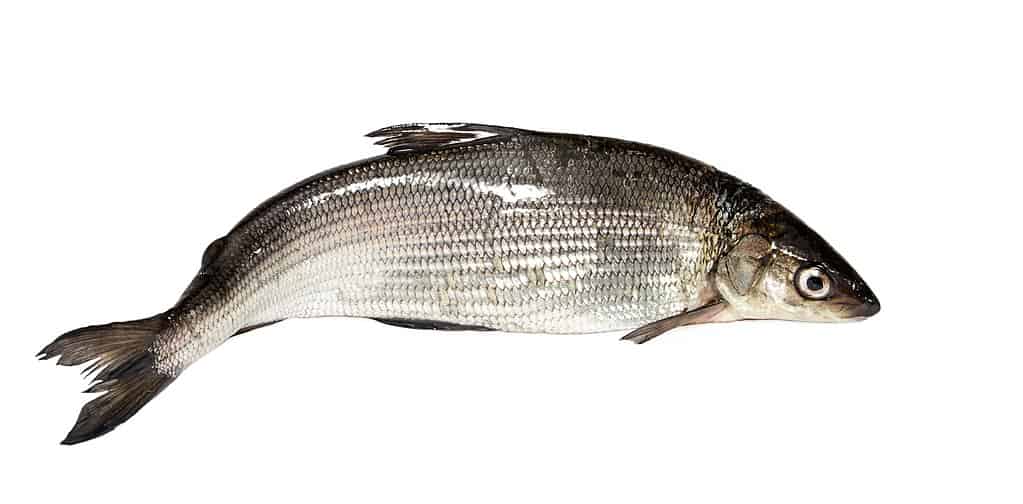
The lake whitefish is one of the larger fish in the Great Lakes.
©Natalya Osipova/Shutterstock.com
The largest lake whitefish ever recorded in the Great Lakes weighed 42 pounds, 10 ounces. The massive specimen was pulled from Lake Superior in 1918 using commercial fishing methods. However, the largest whitefish caught by an individual angler using standard fishing gear stands at 14 pounds, 6 ounces. It was caught by Dennis Laycock on May 21, 1984, in Georgian Bay on the northeastern side of Lake Huron.
Channel Catfish: Up to 44 Pounds
The Channel Catfish (Ictalurus punctatus) is widespread across the warmer, shallower bays and tributaries of the Great Lakes basin, except in Lake Superior.
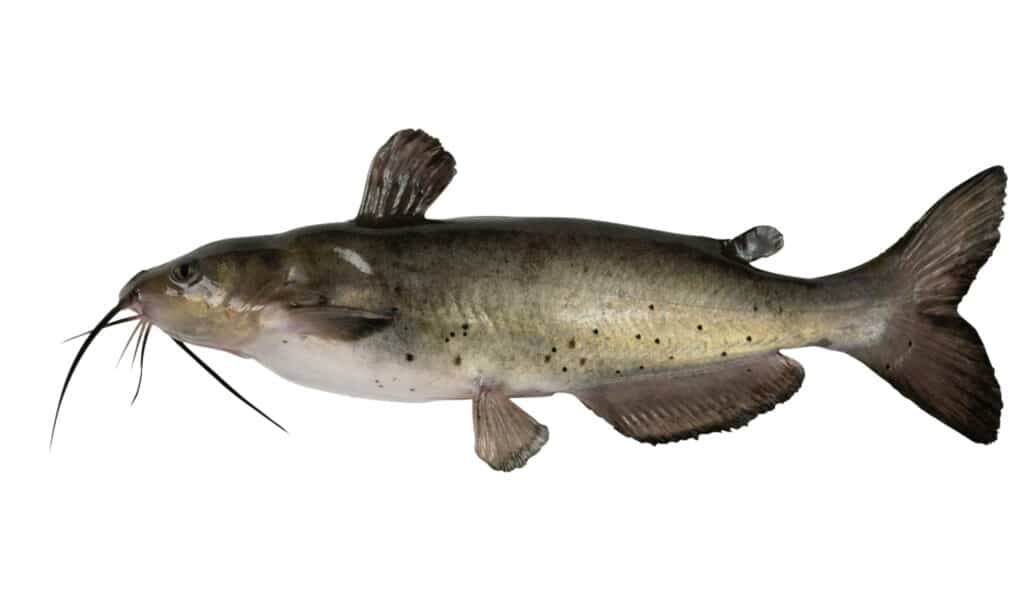
Channel catfish can be found in all of the Great Lakes except for Lake Superior.
©Sergey Goruppa/Shutterstock.com
An average adult channel catfish is 15 to 25 inches long and weighs between 2 and 7 pounds, though specimens in the Great Lakes frequently reach sizes exceeding 20 pounds. Wisconsin’s state record, a 44-pound channel catfish, was pulled from boundary waters in 1962.
Chinook Salmon: Up to 48 Pounds
The Chinook Salmon (Oncorhynchus tshawytscha), also known as the king salmon, is an introduced Pacific salmon species. The species was intentionally stocked throughout the Great Lakes watershed in the 1960s to control invasive alewife populations. Mature Chinook salmon average 20 to 35 inches in length and weigh between 5 and 35 pounds.
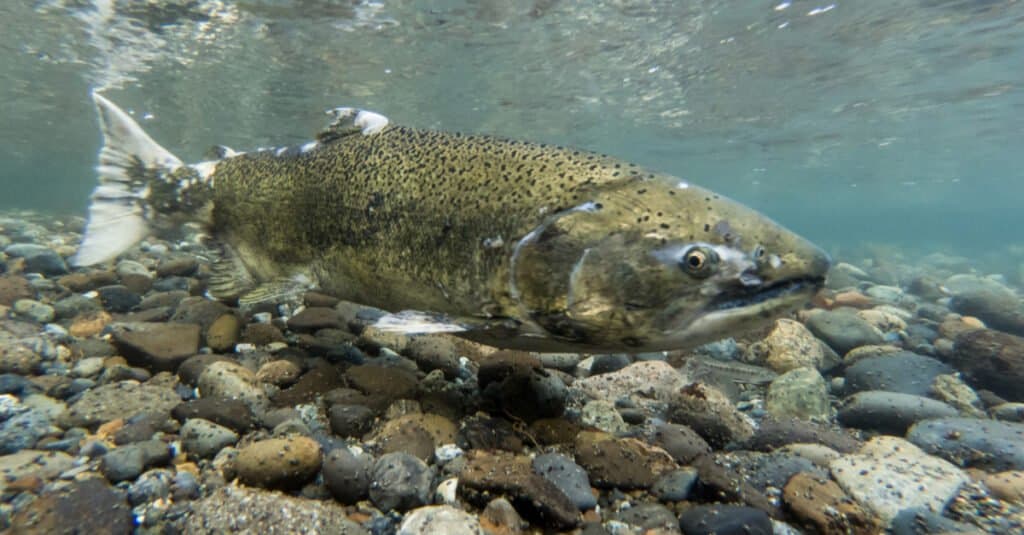
Chinook salmon were introduced to combat the invasive alewife.
©Kevin Cass/Shutterstock.com
The official all-time Great Lakes and Michigan state record for Chinook salmon is a massive 47.86-pounder caught in Lake Michigan in 2021, breaking the long-standing New York state record of 47 pounds, 13 ounces set in 1991 on the Salmon River, a tributary of Lake Ontario.
Muskellunge: Up to 58 Pounds
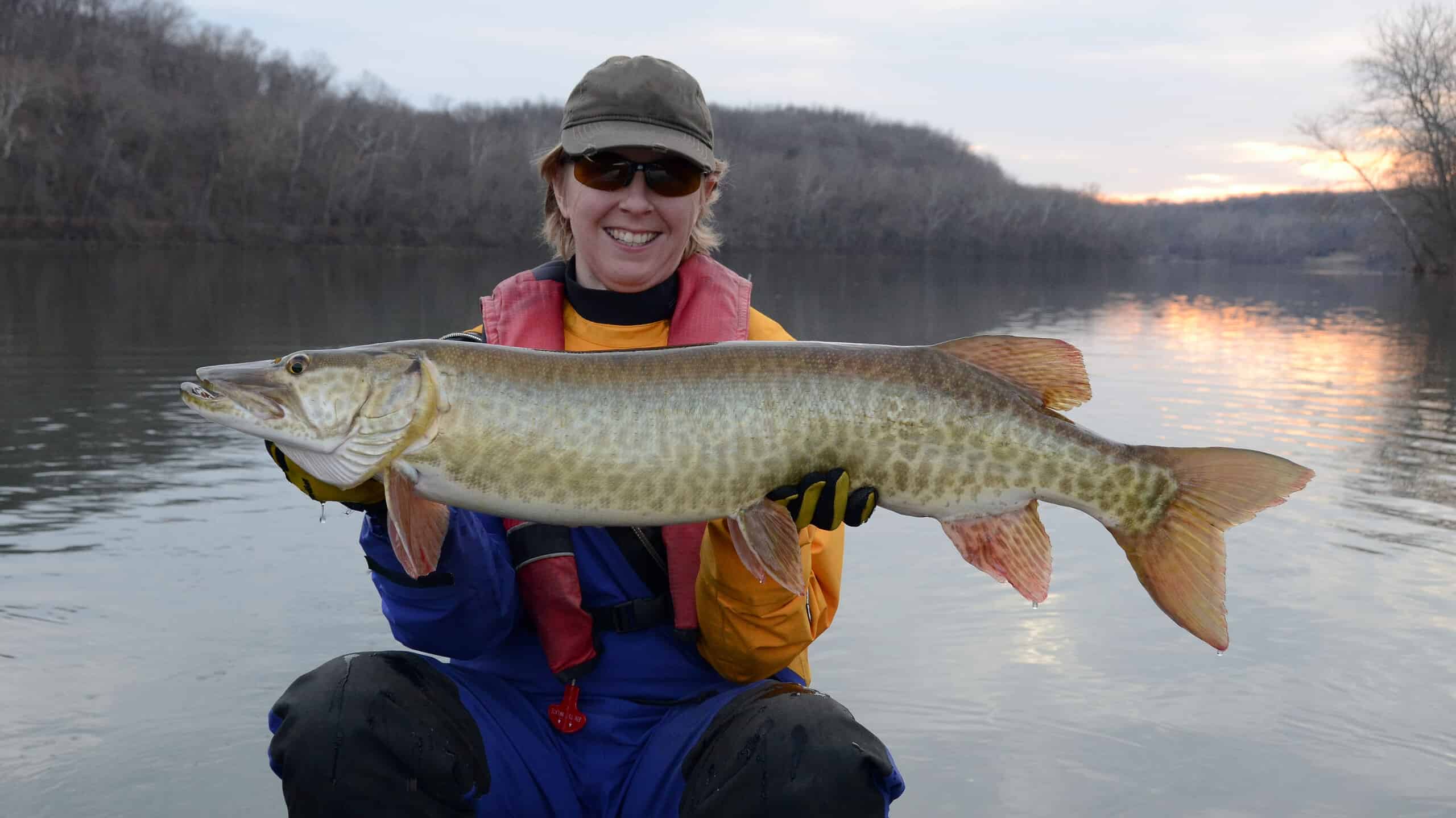
The Muskellunge (Esox masquinongy), or muskie, is native throughout the Great Lakes basin, especially the genetically distinct Great Lakes Muskellunge (E. m. masquinongy). Adult muskies average 30 to 45 inches in length and weigh between 8 and 25 pounds, though females grow substantially larger than males.
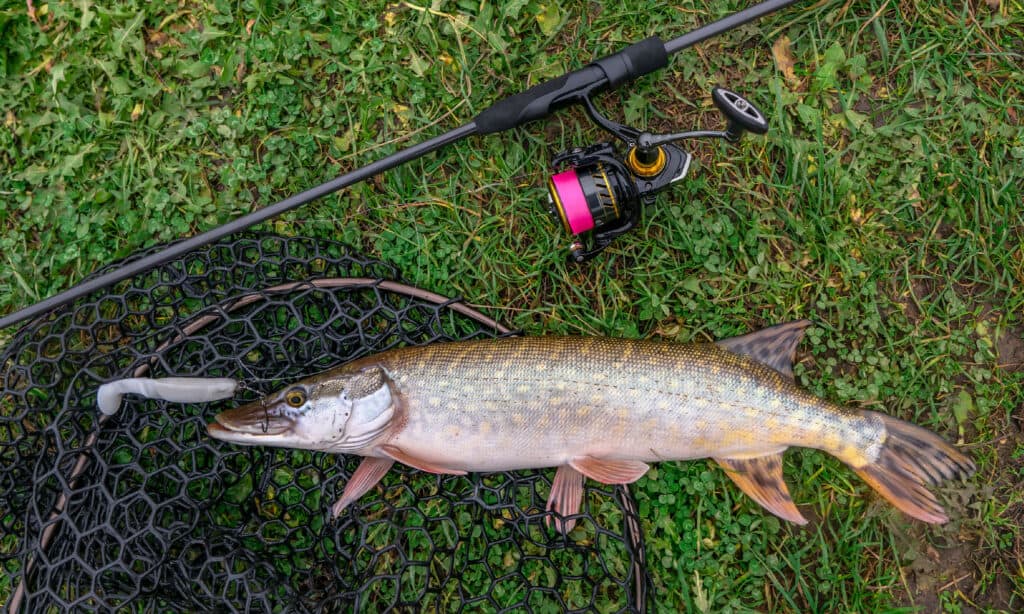
Muskies are among the largest fish in the Great Lakes.
©iStock.com/FedBul
Record-breaking specimens include Michigan’s state record, which is also recognized as a Modern Day Muskellunge World Record, standing at an incredible 58 pounds and 58 inches, caught in 2012 on Lake Bellaire within the Lake Michigan watershed.
Lake Trout: Up to 63 Pounds
The Lake Trout (Salvelinus namaycush) is a native apex predator and the largest freshwater trout in the Great Lakes basin. Adult lake trout average 24 to 36 inches in length and weigh between 15 and 40 pounds.
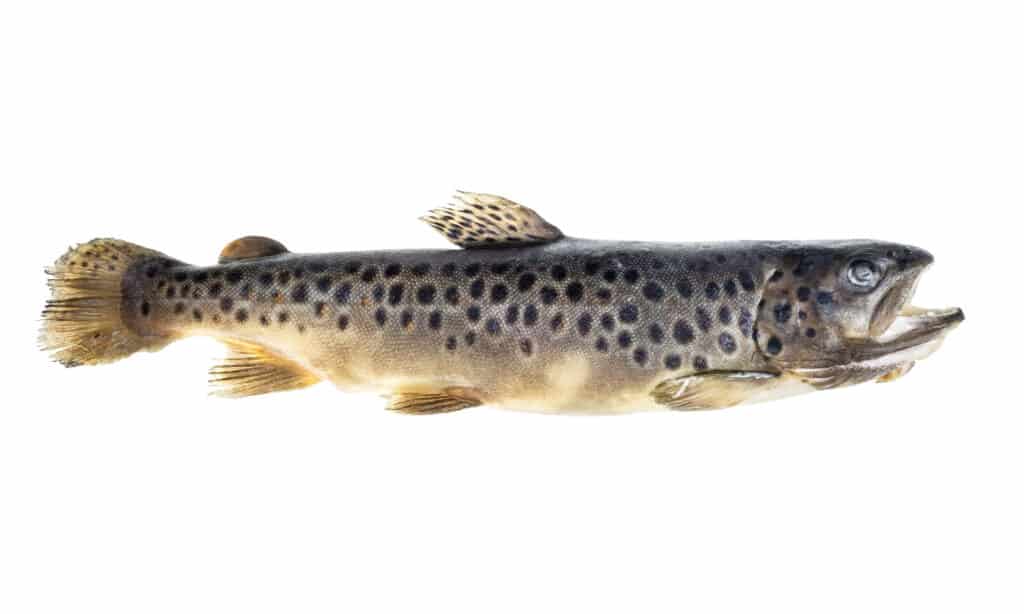
Lake trout have rebounded after being overfished in the mid-20th century.
©iStock.com/VvoeVale
Populations suffered steep declines in the mid-20th century due to overfishing and invasive sea lamprey predation, but recovery and restocking efforts have proven successful. Record catches from the region include a 61.5-pound lake trout caught in Lake Superior, U.S., while the Canadian record, also from Lake Superior, weighed 63.12 pounds.
Lake Sturgeon: Up to 310 Pounds
The lake sturgeon (Acipenser fulvescens) is the largest and longest-lived native freshwater fish in the Great Lakes basin. This prehistoric bottom-feeder averages 4 to 6 feet in length and weighs between 30 and 80 pounds, though slow-growing, long-lived females are often larger.

The lake sturgeon is the largest fish in the Great Lakes.
©Fabien Monteil/Shutterstock.com
Because lake sturgeon can grow for well over a century, their record catches are truly remarkable. The all-time commercial records for both Lake Superior (1922) and Lake Michigan (1943) are 310-pound specimens that measured just under 8 feet long. Scientific survey crews continually net and tag lake sturgeon, including a 240-pound female sturgeon measuring nearly 7 feet long in the Detroit River in April of 2021.