
Quick Take
- Kentucky's lakes have a hidden problem that most visitors never notice, and old Christmas trees turn out to be the unlikely fix. See how trees help →
- Fish abundance at these underwater tree sites reaches a level that shocks even seasoned anglers. The numbers are hard to believe. See the fish numbers →
- The program started decades before most people heard of it, and the reason it finally took off reveals how conservation actually changes communities. Trace the program's origins →
At the end of December, at lakes throughout Kentucky, locals line up with their Christmas trees strapped to their car roofs. But they’re not there to decorate the campgrounds or air out their holiday centerpiece. Christmas tree recycling is serious business, and according to the Department of Fish & Wildlife Resources, it’s saving lives—fish lives, that is.
Each year, Kentucky participates in an initiative called “Christmas for the Fishes.” Since 2010, people have been bringing old Christmas trees to designated drop-off sites, where the trees are then lowered into one of the state’s many lakes. Over time, this slowly rebuilds habitats lost to natural decay. This year, the department hopes for an equally merry holiday for its local fish populations.
How Christmas Trees Rebuild Kentucky’s Ecosystems
Watching park rangers drive boats full of evergreen trees to the center of reservoirs is as much a holiday tradition in Kentucky as driving around looking at Christmas lights. For many locals, dropping off their dried trees has become a normal part of the Christmas season. After decorating homes for the holiday, these evergreens gain a second chance at life by becoming an underwater habitat.
“Most of the lakes within Kentucky are technically reservoirs. In which a constructed dam holds back the flow of a river or stream to create a man-made lake,” Spencer Phillips, Fish Habitat Biologist with KDFWR, explains. “In most cases, the original impoundment had terrestrial fish habitat–mainly trees–that existed for some time after the reservoir was made.”
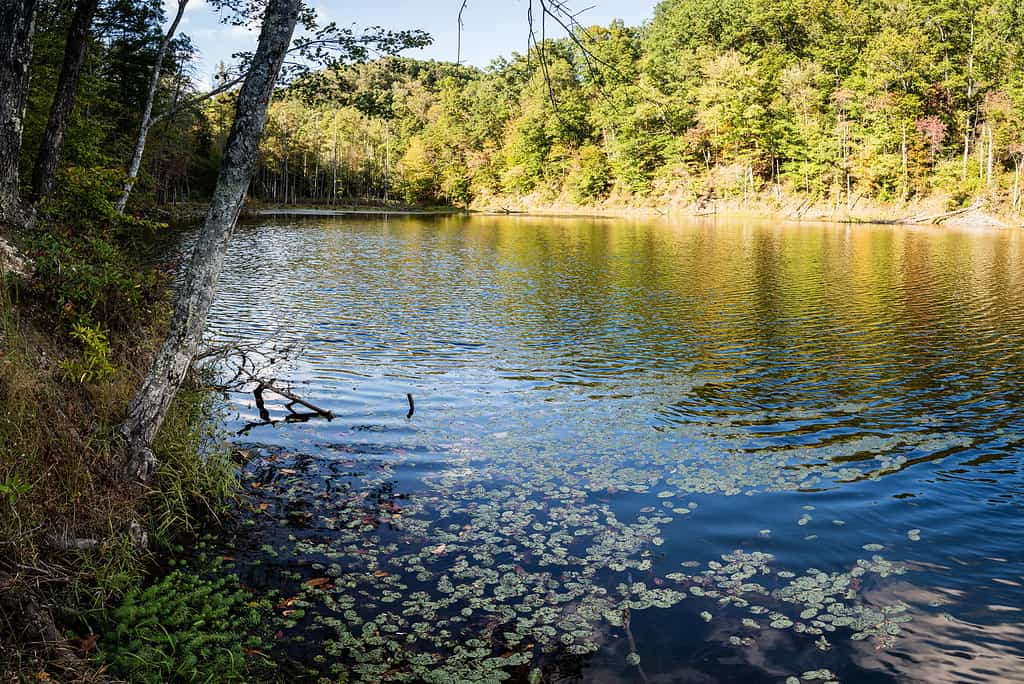
Most of Kentucky’s lakes are man-made reservoirs that depend on restoration.
©alexeys/iStock via Getty Images
Phillips adds that the average age of the state’s large reservoirs now exceeds 60 years. “Within that time period, much of the original fish habitat has naturally decayed over time. The KDFWR fisheries division has sought to add and supplement habitat within our reservoirs, and the Christmas Tree donation program has been one facet of that,” he says.
The evergreens are tied to environmentally friendly weights before being sunk. Each one is submerged at a different depth, creating a diverse foliage system for shelter, feeding, and spawning. As old trees decay, new Christmas trees take their place, creating new habitats.
Which Fish Benefit from Man-Made Habitat Restoration?
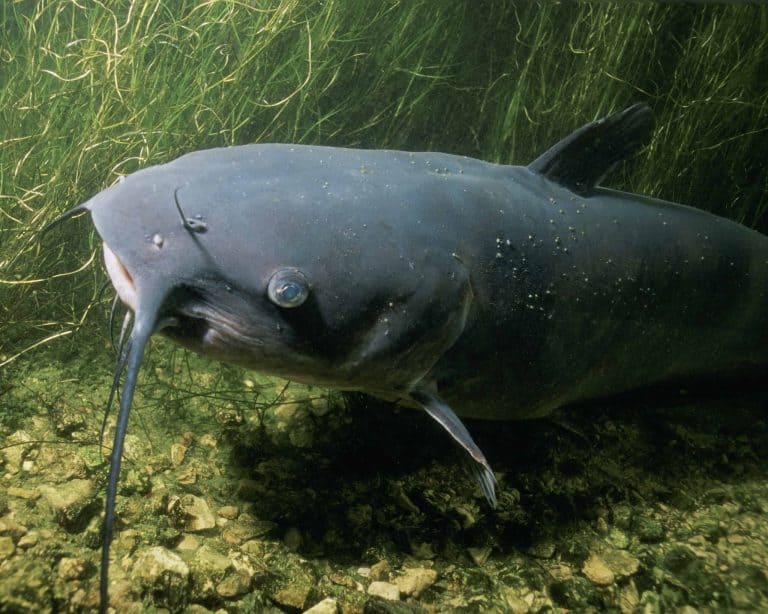
Many of Kentucky’s lakes support game fish. Replenishing these habitats also encourages local sport fishing, keeping the cycle going. “Largemouth bass, bluegill, and crappie are popular sportfish within our state that commonly associate with the Christmas Tree sites we create in the lakes,” Phillips shares. “Previous sampling with our electrofishing equipment has shown a 500% increase in fish abundance on Christmas Tree sites, versus areas with no structure.”
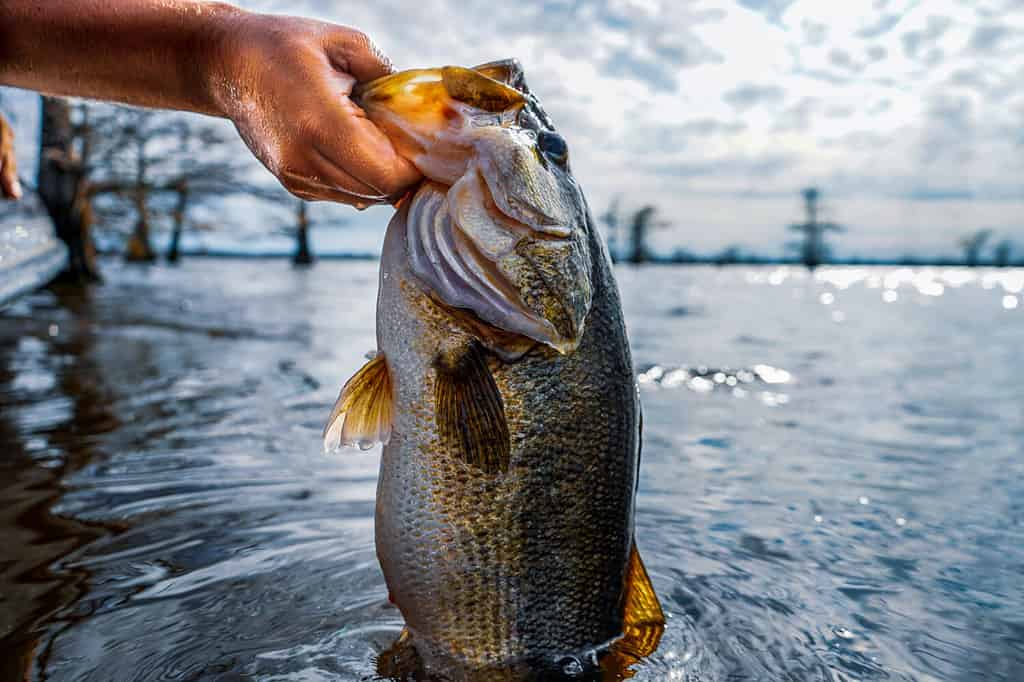
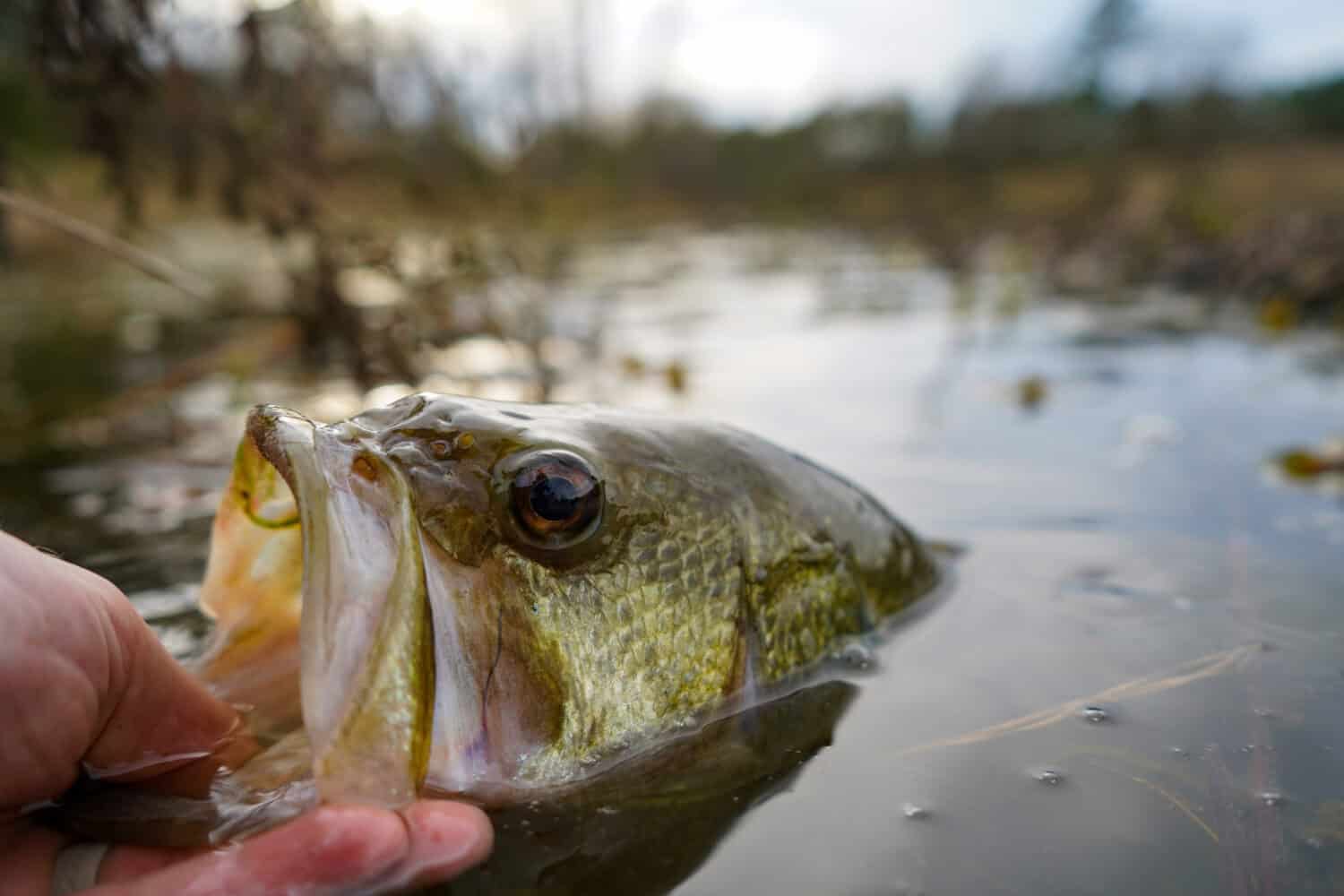
Largemouth bass benefit greatly from submerged trees, using them for shelter and hunting.
©Maclane Parker/Shutterstock.com
As ambush hunters, largemouth bass rely heavily on submerged trees and logs for cover. This cover also protects them from larger predators and lets them conserve energy while hiding. A lesser-known fact is that these fish lack eyelids, and shadows cast by submerged tree branches cut the sun’s glare.
These trees also serve as essential feeding grounds for bluegill and crappie. As trees decay, they collect periphyton, consisting of algae and other organic matter. Macroinvertebrates are drawn to this and become prey for larger fish. According to Phillips, the largest concentration of sportfish is drawn to the Christmas trees in fall and winter, when temperatures are in the low 60s.
“Christmas for the Fishes” Is Working
Year after year, more evergreens sink to the bottoms of nearly 50 Kentucky reservoirs. The state has more than 100 man-made lakes, but only three are natural. This means preserving the native fish populations is crucial to protecting these ecosystems. And, thankfully, “Christmas for the Fishes” is working, possibly better than anyone could have predicted.
“Historically, the Fisheries Division has been utilizing Christmas trees as a ‘tool in the toolbox’ to build brush piles since the 1980s. The effort expanded in 2010 to establish donation sites and increase public participation,” Phillips tells us.
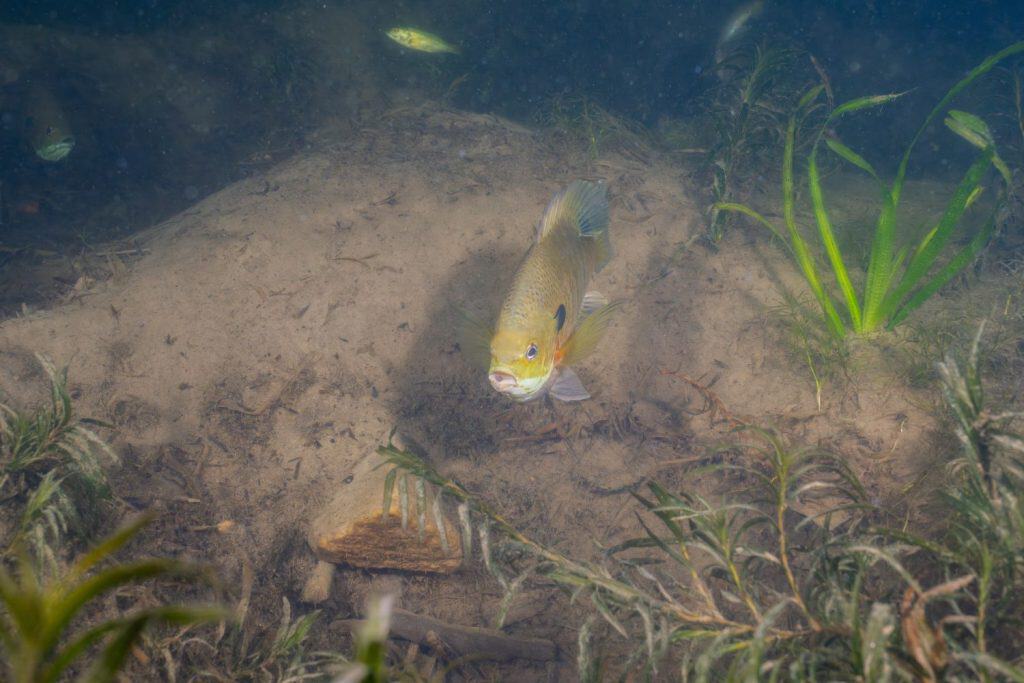
Anglers often choose “Christmas for the Fishes” lakes because sportfish populations are generally higher.
©Griffin Gillespie/Shutterstock.com
“This made the program more efficient in reducing staff hauling time and increasing overall tree donations. We commonly exceed 30 donation sites across the state and average over 5,000 trees a year. Electrofishing surveys, along with angler feedback, help us determine where to place future sites. We find that both the fish and the anglers benefit from the creation of these sites.”
Previous sampling with our electrofishing equipment has shown a 500% increase in fish abundance on Christmas Tree sites, versus areas with no structure.
Spencer Phillips, Fish Habitat Biologist with KDFWR
How to Donate Your Christmas Tree
If you live in Kentucky and want to help your state’s lakes thrive, it’s as easy as finding a drop-off site. The KDFWR created an interactive map so that locals can find their nearest location. You can also check the table below for each site’s address and contact information. “Christmas for the Fishes” gains support year after year, and local communities keep the initiative strong.

Thanks to the initiative, Kentucky’s local fish populations continue to thrive.
©Steve Oehlenschlager/Shutterstock.com
“Feedback from the public has been positive. Continued donations and feedback from anglers who fish the sites have helped bolster the program. People should know that we only want real, live Christmas Trees for the program. Additionally, one should remove any ornaments, tinsel, or lights from the tree before donating, as well,” Phillips says.
These maps also help anglers find designated drop-off locations. The more people who donate their trees, the more Kentucky’s lakes remain home to healthy fish ecosystems. And a good Christmas for locals means a good Christmas for its native fish.