
Quick Take
- The shark veered away at the last second, though whether Potgieter's instinctive reaction actually caused that is a harder question than it looks. See Potgieter's reaction →
- Spearfishing itself may have been the real invitation, and the gear divers use to stay safe could be working against them in ways most never consider. Explore spearfishing as a lure →
- Most people instinctively do the wrong thing the moment a shark closes in, and that mistake can make the situation significantly worse. Find out the right response →
- Great whites are responsible for more recorded unprovoked bites than any other shark, yet calling this encounter an 'attack' would actually be misleading, and the distinction matters more than most realize. Unpack the attack distinction →
Quick Take
- A South African spearfisher was roughly 60 feet underwater when a great white shark suddenly materialized from the murk directly in front of him. Watch the encounter →
- The diver yelled, raised his fishing spear and kept the shark in sight as it passed close enough for his GoPro to capture nearly every detail. See how he reacted →
- There is no way to know whether the shark was curious, investigating the spearfishing activity or responding to something else in the water. Explore what may have drawn it closer →
- Official shark-safety guidance emphasizes maintaining visual contact, avoiding frantic splashing and leaving the water as calmly as the situation allows. Learn what experts recommend →
The water ahead of Johan Potgieter looked empty. Then a great white shark emerged from the green haze and crossed directly in front of him.
Potgieter was spearfishing near the Skipskop reefs off South Africa, roughly 60 feet below the surface. His GoPro captured the instant he realized he was no longer alone—and the tense seconds that followed as the shark remained close.
Watch the Great White Appear Out of Nowhere
What Happens When the Shark Appears?
At roughly the 33-second mark, Potgieter is scanning the reef when the shark takes shape only a short distance away. He reacts immediately, yelling underwater and bringing his spear forward as the animal passes across his path.
The shark veers away, but the encounter is not over. Potgieter keeps turning to follow its position and begins making his way toward the surface. Once there, he urgently calls out “white” to warn the people above him.
It is tempting to say his shout frightened the shark away, but the footage cannot establish that. The shark could have responded to his movement, the spear, his awareness of its approach or nothing Potgieter did at all. Wild-animal videos rarely come with a reliable explanation of what the animal was thinking.
Why Did the Shark Come So Close?
No one can determine the shark’s motive from this clip. Great whites are highly capable predators, but they also investigate unfamiliar objects and activity in their surroundings. An approach does not automatically mean an attack is underway.
The spearfishing context matters. Struggling fish, bait, blood and the vibrations produced by fishing activity can attract sharks. Government guidance for spearfishers recommends keeping caught fish away from the body on a separate float and line. It also warns divers never to chase, grab, corner, touch or attempt to spear a shark unless they are responding to an immediate threat.
Visibility was another problem. The murky water gave Potgieter very little warning, while the shark’s senses allowed it to detect activity without relying on a clear human-style view. By the time he saw it, the animal was already close enough to fill much of the camera frame.
How Large Can a Great White Shark Grow?
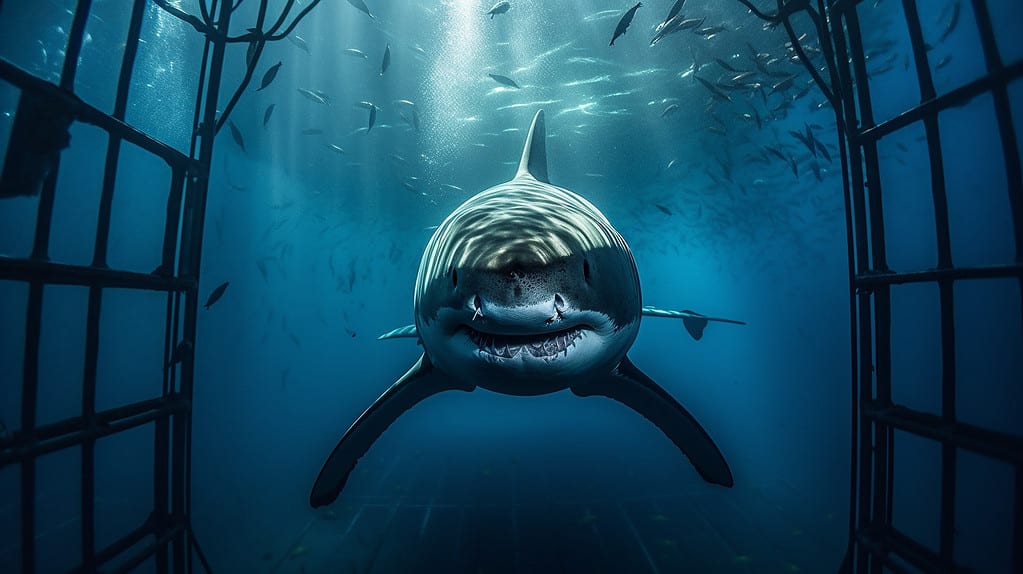
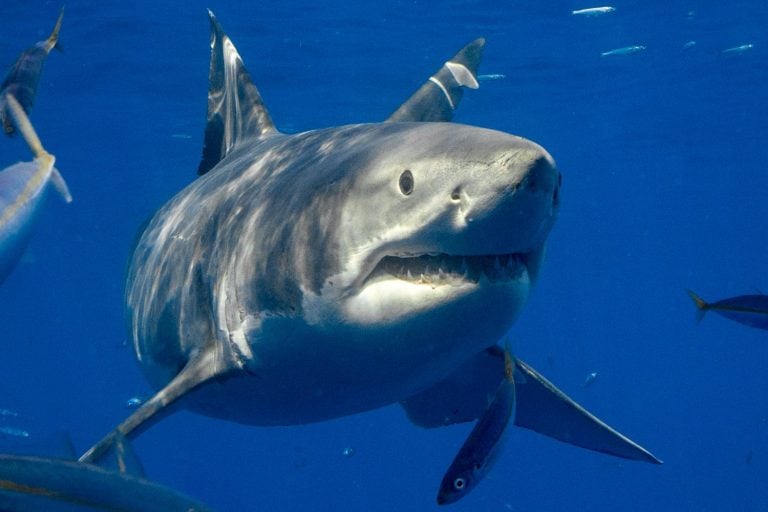
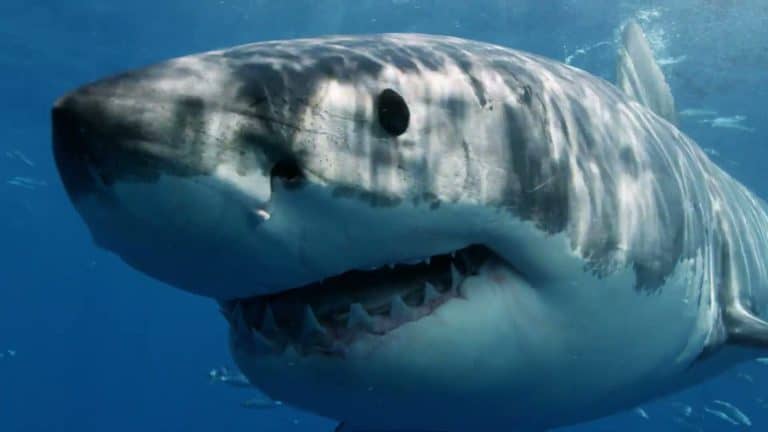
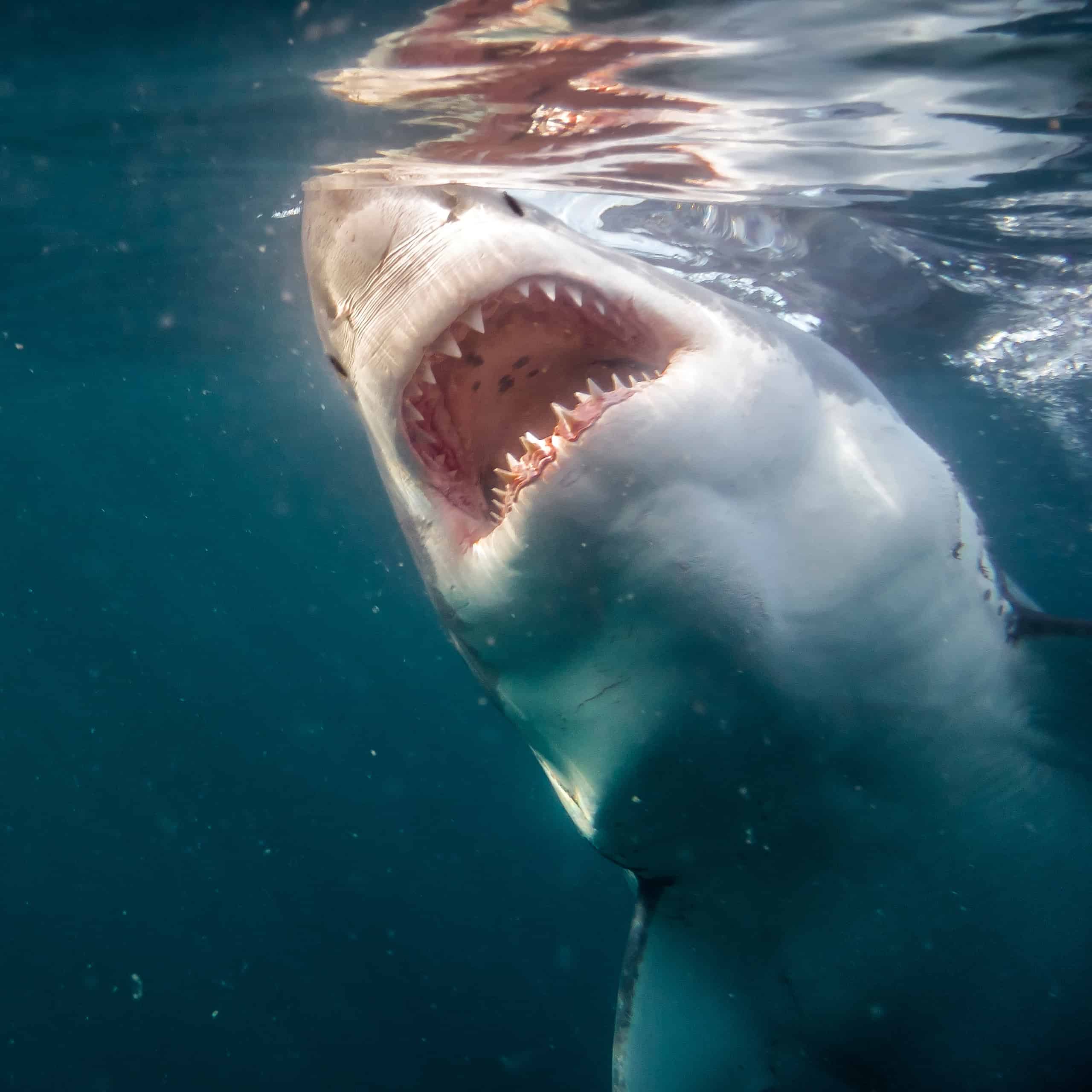
Great white sharks are built to make any close encounter feel overwhelming. According to NOAA Fisheries, an adult can reach about 21 feet long and weigh as much as 4,500 pounds. They are partially warm-blooded, allowing their bodies to remain warmer than the surrounding water and supporting powerful activity even in cool seas.
Young white sharks primarily eat fish, rays, smaller sharks and squid. Larger individuals add seals, sea lions and other marine mammals to the menu. Humans are not considered their normal prey, although an investigative or mistaken bite from an animal this large can still cause catastrophic injuries.
White sharks can be found in temperate and subtropical waters around the world. Their global range includes both coastal and offshore habitat, and their movements often shift with water temperature, age and access to prey.
Do Great White Sharks Hunt People?
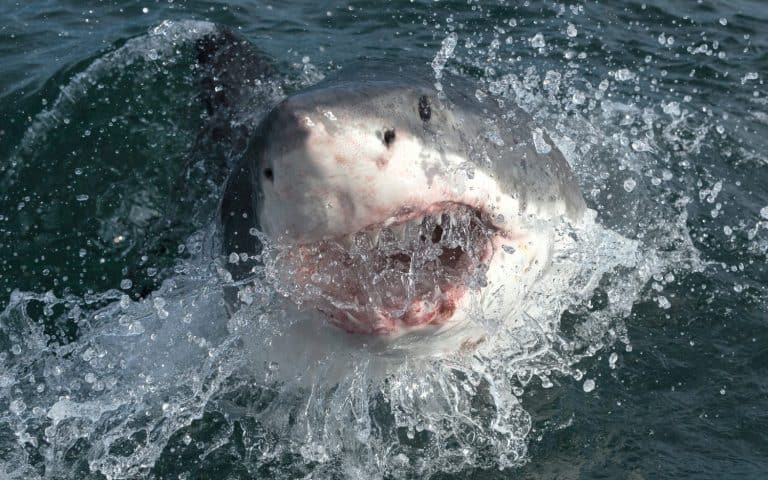
Great whites are responsible for more recorded unprovoked bites than any other shark species, but attacks remain rare compared with the enormous number of people who enter the ocean. The International Shark Attack File places white, tiger and bull sharks in its “Big Three” because their size and teeth make them capable of inflicting serious injuries. A shark approaching a swimmer or diver may be investigating rather than hunting. The trouble is that nobody in the water can safely assume curiosity will remain harmless.
The shark in this video never bites Potgieter. Calling the encounter a confirmed attack would go beyond what the footage shows. Calling it safe would be equally misleading. He was alone in low-visibility water, at depth, with a large apex predator passing within striking distance.
What Should You Do If a Shark Approaches?
The International Shark Attack File recommends maintaining eye contact, moving away slowly and exiting the water when possible. Frantic swimming and excessive splashing can attract additional attention, so the goal is controlled movement rather than a panicked sprint for the surface.
Divers should stay with a buddy, monitor the shark’s behavior and avoid turning their backs on it. If an animal becomes agitated or begins making quick, erratic movements, leave the water as quickly and calmly as conditions allow. Spearfishers should keep captured fish away from their bodies and never remain in the water merely to collect better footage.
If a shark actually attempts to bite, experts recommend fighting back rather than playing dead. Use an object if one is available, push the shark away and target sensitive areas such as the eyes and gills while trying to reach safety.
Potgieter had only seconds to react, and no single movement guarantees the same outcome in another encounter. What his footage captures better than any statistic is how completely a large shark can disappear in open water—and how quickly an ordinary dive can become something else.
Read more about the great white shark, one of the ocean’s most recognizable apex predators.