
Quick Take
- Contender breaks a rule scientists thought held true for every male great white, and this exception changes how researchers model shark aging entirely. See how aging models change →
- Within hours of release, Contender did something that left the tracking team scrambling to keep up. Track Contender's journey →
- Losing great whites from the Atlantic wouldn't just mean fewer sharks. Scientists warn the consequences reach far beyond what most people imagine. Explore the ecosystem stakes →
- The few minutes Contender spent on the research vessel could reshape conservation policy across multiple countries, and this article explains why that brief window matters so much. Discover the policy impact →
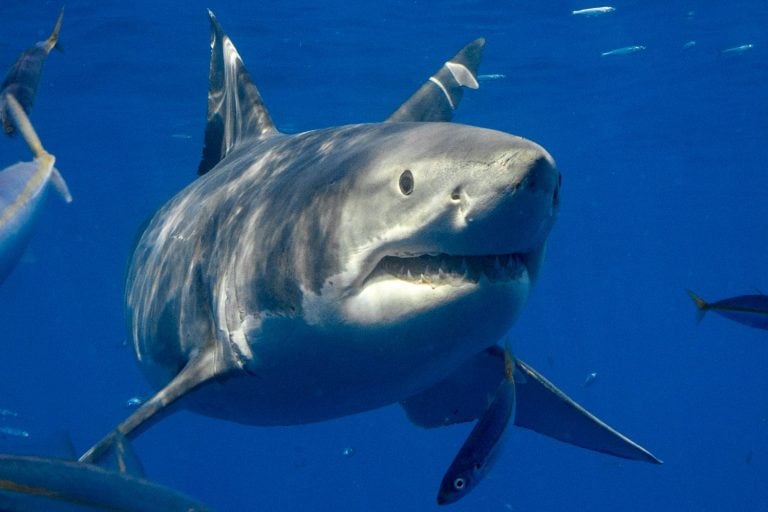
On January 17, 2025, the research group OCEARCH hauled a male white shark onto its lift platform about 45 miles off the coast where Georgia meets Florida. He measured 13.8 feet and weighed an estimated 1,653 pounds. The team named him Contender. According to OCEARCH, he is the largest male white shark it has ever tagged in the western North Atlantic.
Twenty months later, his tag is still reporting. This September it placed him somewhere no tagged shark like him had been seen before.
Why a Male This Size Stands Out
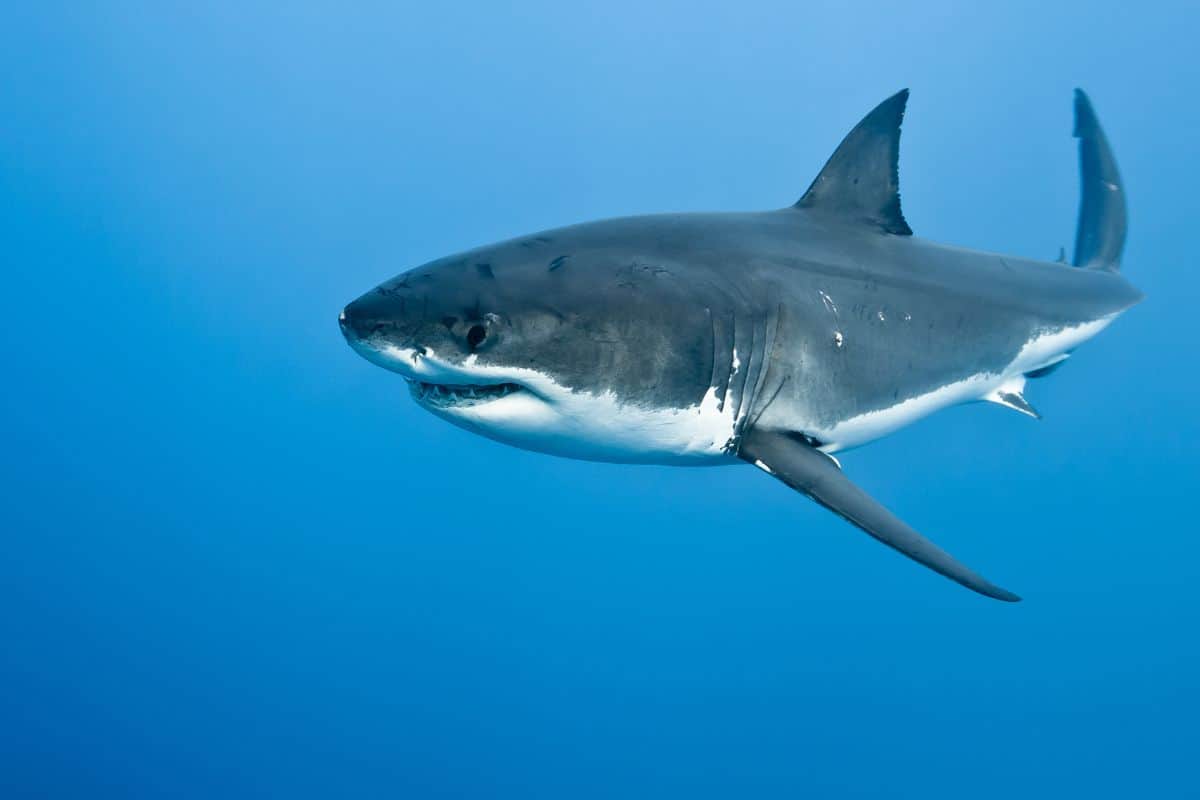
In white sharks, females are the giants. They can grow well past 15 feet, while most adult males stay around 11 to 13 feet. Males are also thought to mature late, in their mid-20s by some estimates. A male of nearly 14 feet is therefore very likely decades old and near the top of what the species’ males can reach.
That made the few minutes Contender spent on the platform valuable. The team took biological samples to study his reproduction, his health and his exposure to toxins. Mature males this large are rarely handled, so each sample adds to a very small dataset.
OCEARCH also fitted him with a SPOT satellite tag on his dorsal fin. It sends a position whenever the fin breaks the surface long enough to reach a satellite, and it is designed to keep working for about five years. Days or weeks can pass between pings.
Twenty Months on the Map
Contender’s track reads like a tour of the Atlantic coast:
- February 2025: about three weeks after tagging, he had swum roughly 168 miles and was off St. Augustine, Florida.
- Summer 2025: he pinged near Cape Hatteras, North Carolina, in June, and off Massachusetts in July.
- Fall 2025: he reached Quebec’s north shore at the end of September, then pinged several times off Cape Breton Island, Nova Scotia, in late October.
- November 2025: he was back south, off Atlantic City, New Jersey.
- Summer 2026: he pinged off North Carolina and then headed north again.
Then came the surprise. In September 2026, Newfoundland broadcaster VOCM reported that Contender had moved through Notre Dame Bay, rounded the Great Northern Peninsula and pinged off the Horse Islands in White Bay. OCEARCH said he was traveling through waters no similarly tagged shark had reached. Why a large male would push that far north is one of the questions the tag may help answer.
You can follow his next moves yourself. A-Z Animals explains how to track Contender online.
Why One Shark Matters to the Whole Population
White sharks in the western North Atlantic are recovering after decades of decline, and scientists are still working out where they feed, mate and give birth. Contender is one of more than 100 white sharks OCEARCH has tagged in the region, which the group describes as the largest dataset of its kind in the world.
His long stays off Canada fit a wider pattern. OCEARCH’s lead veterinarian, Harley Newton, has called Atlantic Canada a critical region for understanding the species’ summer and fall residency. Knowing where adults gather, and when, helps managers decide where protection matters most.
Large predators also shape the ecosystems they live in. White sharks feed on seals, large fish and carcasses, and their presence changes where prey animals spend their time. Losing them would ripple through the food web in ways that are hard to predict.
For now, Contender keeps adding data one ping at a time. Each time his fin breaks the surface, scientists learn a little more about how a mature male white shark spends his year.