
Quick Take
- Selling certain fish as "catfish" is actually illegal in the United States, and swai sits at the center of that battle. See the regulations →
- Channel catfish can taste their prey without ever touching it, and the mechanism behind this is stranger than it sounds. Explore their feeding methods →
- Despite both being sold as affordable white fish, swai and channel catfish differ in ways that could change how you feel about your next meal. Compare their diets →
- The size gap between these two fish is far wider than most people expect, and which species wins might surprise you. See the size comparison →
Catfish (order Siluriformes or Nematognathi) can live in fresh, saline, and brackish water. More than 3,000 different species of catfish are commonly found in lakes, ponds, reservoirs, and moving bodies of water. Catfish, along with carp, tilapia, and salmon, are among the most commercially farmed types of fish. Swai (Pangasianodon hypophthalmus), sometimes called the striped or sutchi catfish, is an important fish species in the aquaculture industry. It is one of the major species in the Mekong River fishery in Vietnam, which is one of the largest fisheries in the world. In the United States, catfish are also a major part of the aquaculture industry, 90% of farmed fish are channel catfish (Ictalurus punctatus). Read on to learn the differences that set these two fish apart.
Distribution and Habitat
Swai fish are members of the shark catfish family (Pangasiidae). These migratory, freshwater fish are native to the Mekong and Chao Phraya rivers, and possibly other rivers and tributaries in the Mekong river basin in Vietnam, Cambodia, Laos, and Thailand. Swai fish have been introduced to other river basins throughout Asia for aquaculture. While they are bottom feeders, they also spend time looking for food in the mid-water layers.
Channel catfish belong to the North American catfish family Ictaluridae. Although channel cats are native to North America, they have been introduced throughout South America, Europe, and Asia, where many countries consider the species invasive. Although they spend much of their time near the bottom of rivers and lakes, they also search the entire water column for food.
Size and Appearance
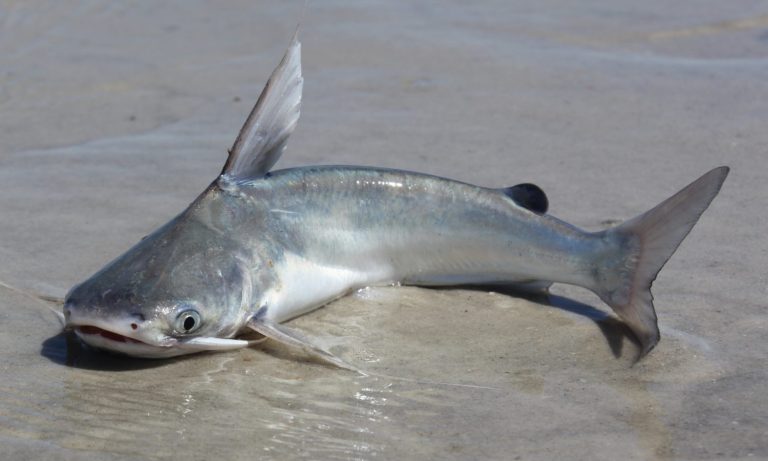
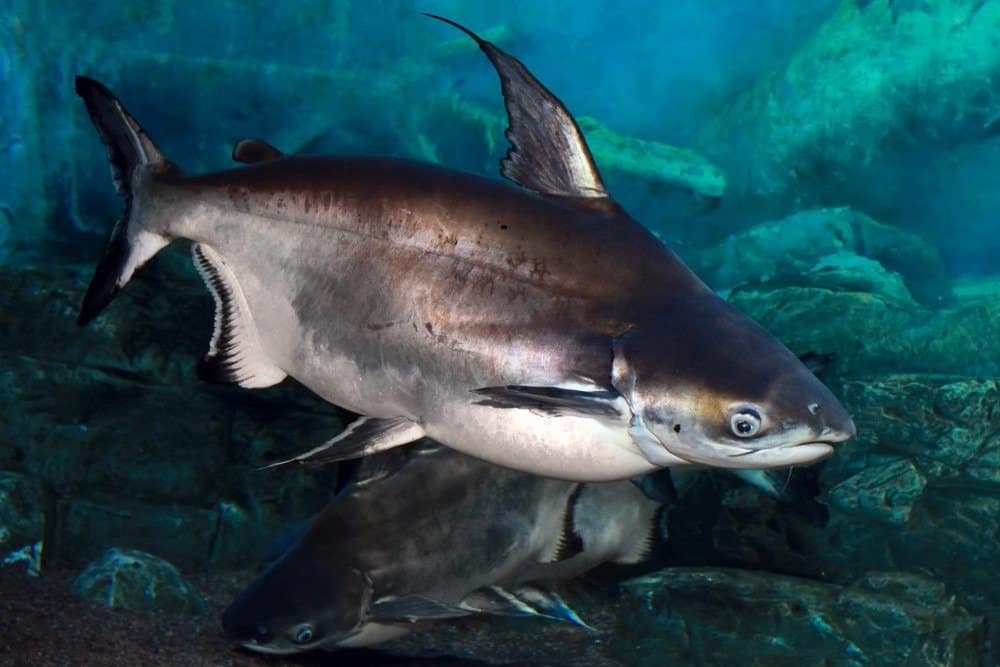
Swai fish can grow up to 4 feet in length and weigh up to 40 pounds, with a recorded maximum size of 4.3 feet long and up to 97 pounds. Swai fish have broad heads and heavy bodies with scaleless, iridescent silver skin. They have two pairs of barbels around their mouths, with the upper pair shorter than the lower.
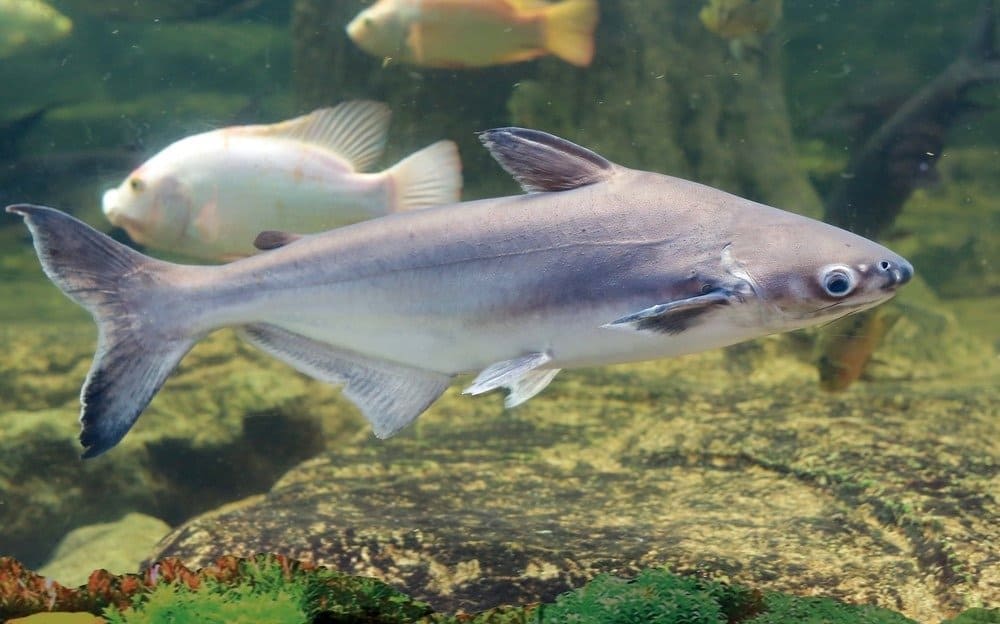
Swai fish are scaleless with iridescent silver skin.
©GOLFX/Shutterstock.com
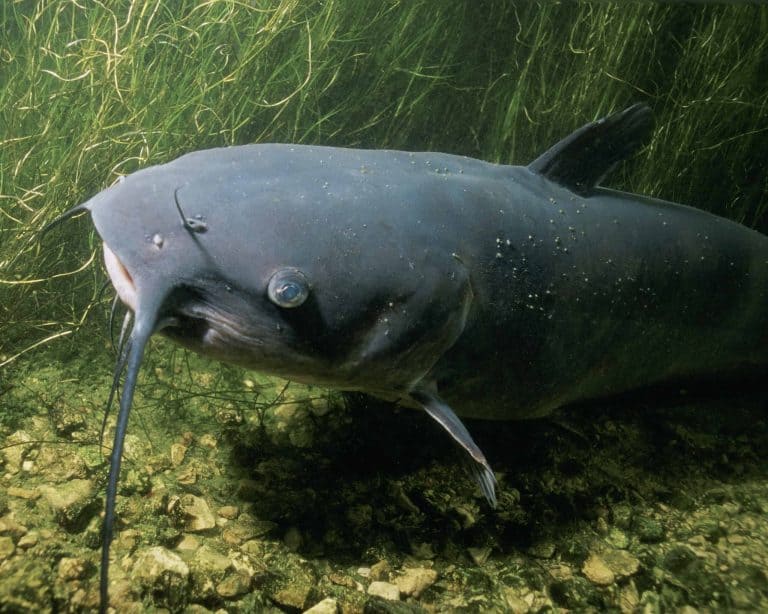
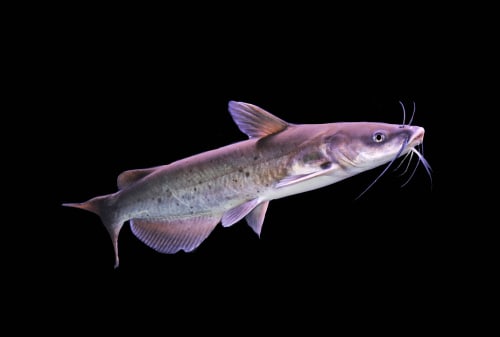
On average, channel catfish measure at least 12 inches up to 22 inches long and weigh 2 to 4 pounds. The largest caught channel catfish specimens have measured up to 4.3 feet long and weighed up to 58 pounds. They have slim, bluish-grey to silvery olive bodies, forked tails, and eight sensory barbels around their mouths.
Diet
Swai fish are omnivores. These fish eat small marine creatures and some plant matter. Their diet consists of small fish, insects, crustaceans, algae, and aquatic plants. They engulf the food into their mouths, using gill rakers to strain food from the water. In captivity, they are fed pellets made of soybeans, wheat, rice, and bran.

Channel catfish are omnivores, eating plant matter and actively hunting for food.
©Engbretson, Eric / U.S. Fish and Wildlife Service / Wikimedia Commons
Channel catfish are also omnivores. They have taste buds all over their bodies; therefore, they can taste their prey from a distance. These catfish feed by using their mouths to create a vacuum that sucks in prey, which they then swallow whole. They prey on fish, mollusks, crustaceans, reptiles, amphibians, insects, and snails. They will also eat algae and other aquatic vegetation. In captivity, they eat commercial pellets primarily made of soybean and cottonseed meal, as well as corn and wheat by-products.
Commerciality
Most swai farms are located in Vietnam, which is by far the world’s largest producer and exporter. Other countries with notable swai farming include Thailand and Cambodia. Farmed fish are harvested once they weigh 2.2 to 3.3 pounds. Individual commercial swai fillets usually weigh 0.5 to 0.75 pounds. In the early 2000s, Vietnam exported large quantities of swai to the United States. In response, the U.S. catfish industry lobbied for stricter regulations. This resulted in a 2003 law making it illegal to sell any species that does not belong to the Ictaluridae family under the name catfish.
Open-cage swai farming has led to disease spreading to wild populations.
©Tatiana Belova/Shutterstock.com
Mississippi, Alabama, Arkansas, and Texas account for 95% to 97% of farm-raised catfish production in the United States. In aquaculture, channel catfish are harvested once they weigh 2 to 3 pounds, and sometimes are harvested at 1.5 pounds. Channel catfish fillets can range from 3 ounces to 11 ounces. Channel catfish are also becoming increasingly popular for research. Scientists are using cloned channel catfish cells to study the species’ immune system to develop disease-resistant and fast-growing fish for aquaculture.