
Seafood consumption has been steadily rising over time. According to the UN’s 2020 publication The State of Food Insecurity and Nutrition in the World, more than three billion people get up to 20% of their daily animal protein intake from consuming fish. A 2021 study from Stanford’s Doerr School of Sustainability estimates that these numbers will continue to rise, suggesting an even higher rate of seafood consumption by 2050. However, the world and our fishing industry are also facing a problem. Along with rising consumption, climate change, unsustainable practices, and unsafe working conditions are threatening our oceans and our fishermen. World Fisheries Day, held annually on November 21st, both recognizes the importance of fisheries and advocates for more sustainable, responsible practices.
Several companies and organizations are now contributing to mind-blowing innovations in sustainable fishing that serve to improve fisheries’ sustainability, safety, and standards. New technologies are paving the way towards success. In the future, these technologies could contribute to significant changes to how we fish and harvest seafood. Let’s explore how these innovations, from blockchain tracking to biodegradable nets, are changing our fisheries for the better.
Can We Use Blockchain to Improve Seafood Supply Chains?
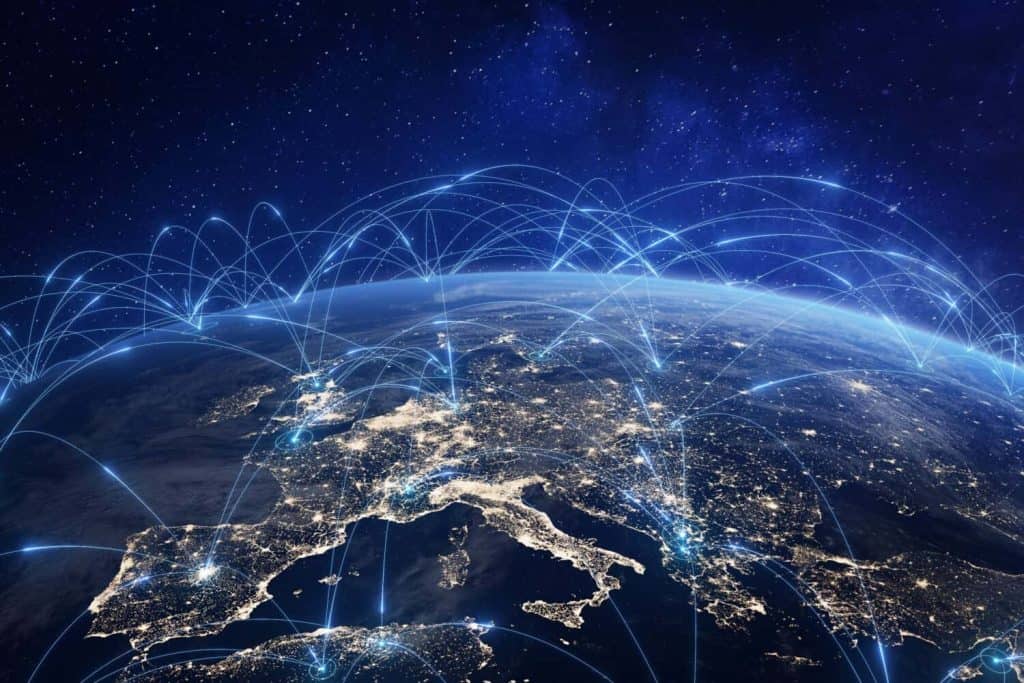
Blockchain can help manage data that gives a better understanding of where fish are being caught, packaged, processed, and sold.
©NicoElNino/Shutterstock.com
Blockchain was originally conceptualized in the 1990s, but became more popular in 2009 because of its use with Bitcoin. You might be wondering: how does a technology associated with Bitcoin have the potential to innovate our fishing industry?
Before I dive into that, let me first explain what blockchain is. Blockchain is a decentralized digital database. Actions and transactions are grouped into “blocks,” which then form a chain of information. Essentially, blockchain tracks how information is moving without requiring the use of any intermediaries, so the information you’re getting is clear, honest, and transparent. This makes blockchain a great option for tracking items moving through a supply chain, since you get a clear look at where your product has come from, how it’s been processed or manufactured, and everything it’s undergone until it gets to the market.
Historically, the fishing industry has lacked this sense of transparency. In fact, a study published in Nature found that 75% of fishing vessels globally are not tracked, and up to 30% of the global fish catch goes unreported. This is a huge problem for several reasons. First, it means we don’t know how much of our natural resources and fish are being destroyed. Beyond that, you have no idea if the fish that makes it to your market (or your table!) is caught safely or sustainably.
So, How Can Blockchain Help?
Blockchain technology could reform fisheries by creating a trackable, traceable platform. For example, when fishers catch fish, they could report their catch on the blockchain network. Blockchain allows for a solid amount of detail to also be recorded: type of fish, weight and length, where exactly it was caught, time of catch, and equipment used. Since this information can’t be altered, it gives a better look at the entire fishing process. As the seafood moved through the supply chain, each subsequent person or organization could continue adding to the blockchain. By the time it reaches the consumer, you could better verify that your fish was sourced ethically and sustainably.
The World Wildlife Fund-New Zealand (WWF-New Zealand) dove into the potential use of blockchain in seafood supply chains and seafood traceability in a 2018 report. On page 6 of the report, the WWF-New Zealand writes that, “Fully transparent and traceable seafood supply chains, facilitated by the blockchain technology, could potentially solve the problem of [Illegal, Unreported, and Unregulated] fishing in supply chains…by empowering seafood buyers and consumers to make well-informed commercial choices based on verifiable information. It would also provide an effective platform for regulatory authorities to identify and address potential risks.”
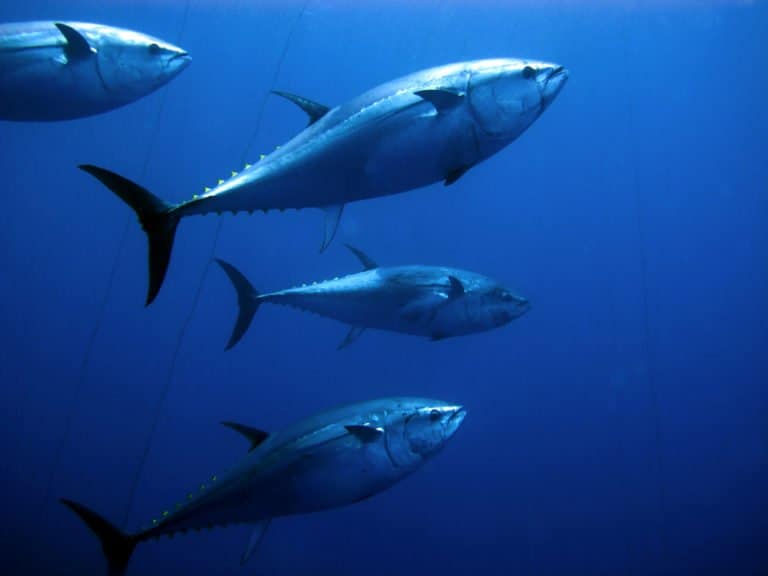
To evaluate blockchain’s use in fisheries, WWF-New Zealand ran a pilot project called the Fiji Tuna Supply Chain Solution. WWF-New Zealand partnered with Viant, TraSeable Solutions, and Sea Quest Fiji Ltd., the last of which is a longline fishing company in Fiji. They attached tags to the fish that were scanned at each point through the supply chain. WWF-New Zealand found the fish could be traced all the way to market, with info like where the fish was caught and even who the crew members were.
Some organizations, like Trace Register and Fishcoin, are already implementing this technology!
Bycatch Reduction Technologies

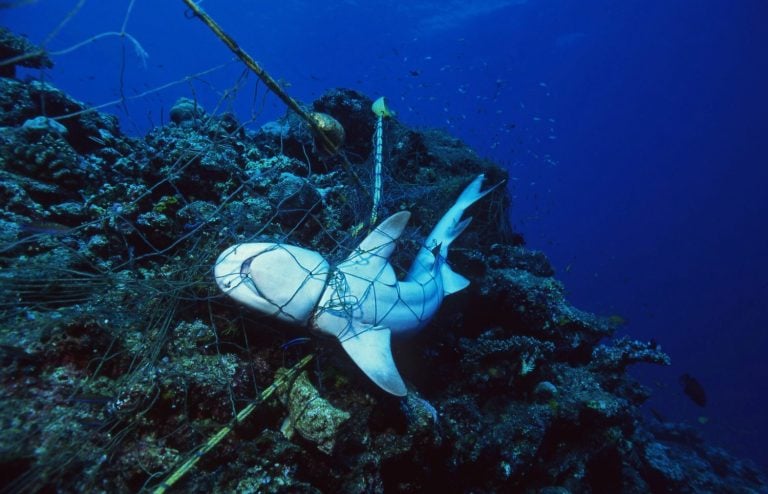
Bycatch can severely stress out sharks, birds, or other caught creatures, leading to worse outcomes and sometimes death.
©Andreas Altenburger/iStock via Getty Images
A stunning amount of biodiversity exists within our oceans. Yet a significant number of marine creatures are at risk of going extinct within the next 100 years. Paired with issues like climate change and overfishing, both of which are destroying habitats and upsetting the delicate balance of marine ecosystems, bycatch represents an enormous harm to vulnerable marine species.
According to NOAA Fisheries, bycatch refers to fish, sea turtles, sea birds, dolphins, sharks, whales, or other creatures unintentionally caught by fishermen. These are not the marine creatures the fishermen wanted to catch. However, bycatch may become tangled in nets or longlines, captured by trawlers, or hooked. Since these were unintended catches, they may either be discarded or kept, though the kept catches (like sharks kept for their fins or skin) are often unreported. Animals released back into the ocean are frequently injured and may die upon release. Not only does this harm protected species, but it can also disrupt the food availability within a specific ecosystem.
In addition to the animal mortality associated with bycatch, certain bycatch harm the environment. Bycatch of coral or sponges, especially while bottom trawling, can reduce or destroy marine habitats. But not all is lost, though this problem needs to be addressed soon. Many organizations, labs, researchers, and scientists are taking steps towards more sustainable efforts that reduce bycatch and preserve marine health.
Senko Lab: Solar-Powered Bycatch Reduction
Dr. Jesse Senko, the Primary Investigator (PI) for the Senko Lab and an Assistant Professor in the Schools of Ocean and Conservation Futures at Arizona State University, has always held a deep love for animals, nature, and fisheries. He remembers catching a turtle on a fishing trip with his father in childhood, then later catching and marking turtles’ shells with a small dab of nail polish to try to understand their population size.
But it was studying abroad in Mexico that really shifted Senko’s purpose. He recounts, “I witnessed endangered sea turtles being accidentally captured and killed as bycatch in fishing nets. I began talking with local fishers and realized that most of them didn’t want to catch sea turtles in their nets, as they were difficult to remove and sometimes damaged their nets, resulting in costly repairs and downtime.”
Through his work at the Senko Lab, Dr. Senko and his team now tackle bycatch and conservation issues. He explains, “We work with diverse stakeholders, such as fishers, managers, scientists, and practitioners, to ensure a future for threatened wildlife as well as coastal fisheries and the people who depend on them. A big part of our mission is training the next generation of global conservation leaders to think creatively (and differently) to solve, and not merely identify, conservation problems.”
Net-Illuminating gear
One project developed by the Senko Lab is a solar-powered bycatch reduction light. As Senko explains, “Solar-powered nets use buoys that emit flashing light to illuminate the net. In theory, the illumination provides a visual cue that either deters or alerts non-target species such as sea turtles and sharks to the presence of nets.”
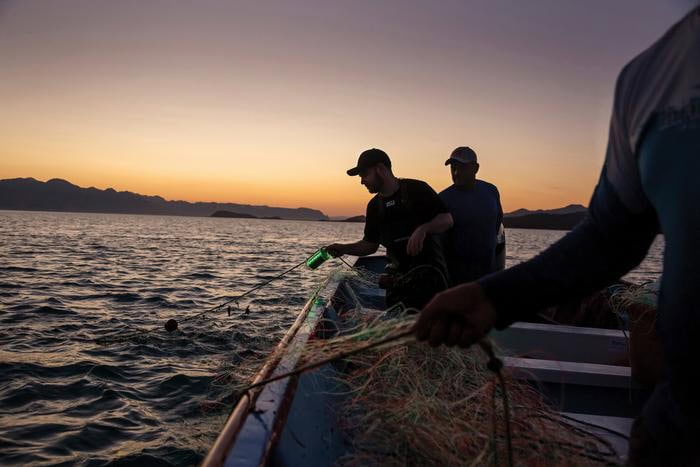
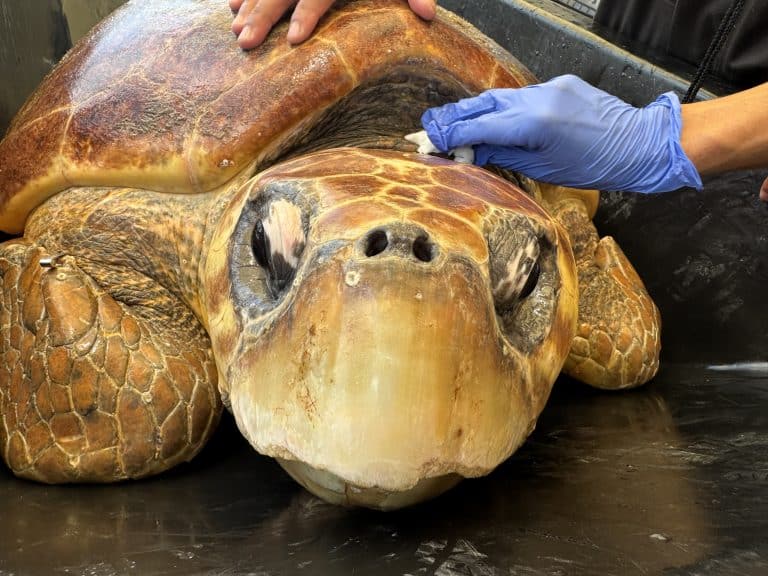
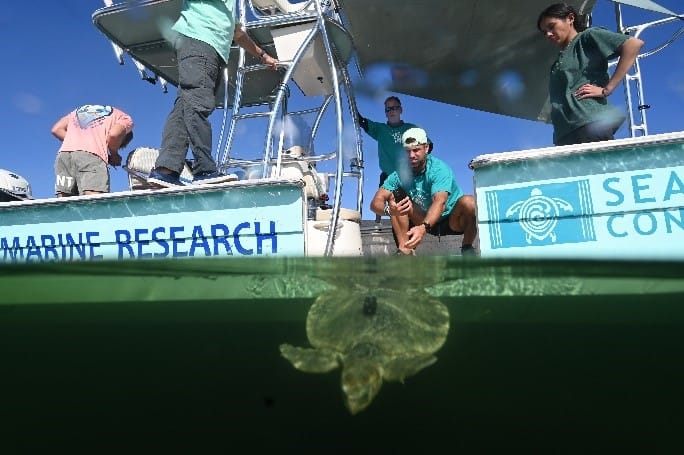
ASU researcher Jesse Senko has found that solar-powered nets reduced sea turtle bycatch by a significant amount.
©Lindsay Lauckner Gundlock/Arizona State University – Original
According to a press release covering an experiment that Senko and his team ran in the Gulf of California, the nets were incredibly effective. The energy-efficient LED-lit buoys reduced sea turtle bycatch by 63%, while fishers saw slightly higher rates of yellowfish tuna catches (which the fishers were targeting).
“The 63% reduction is important,” Senko tells me, “because it means that potentially thousands of sea turtles can be saved in high bycatch fisheries if fishers use solar-powered lights on their nets.”
At the same time, understanding why these solar-powered lights work so well has yet to be seen. Senko says, “Do they alert turtles to a hazard that could entangle and drown them? Or do they scare turtles or simply make the net less appealing to them, thereby reducing entanglement? Multiple Senko Lab PhD students are currently conducting research to answer this question.”
Fishtek Marine: SharkGuard
Another sensory solution to bycatch is Fishtek Marine’s SharkGuard project, which just produced its Mk5 prototype in 2025. According to Fishtek Marine, 20 million sharks are unintentionally caught by fisheries each year. Controversial fishing practices like longlining can contribute to the accidental capture and death of sharks such as the oceanic whitetip, mako, and hammerhead.
Sharks navigate the ocean using specialized organs called ampullae of Lorenzini, which can detect electric fields or currents in the water. SharkGuard uses these specialized organs to deter sharks from longlines. By placing the SharkGuard at the top of the longline, fishers can send electric pulses through the line, driving sharks away.
In 2021, Fishtek Marine conducted a trial to evaluate the efficacy of SharkGuard. According to the company’s website, this technology reduced shark bycatch by a stunning 91% while also reducing ray bycatch by 71%. The company is continuing to work to develop SharkGuard and protect shark populations from decline, all while protecting fishers’ wellbeing.
A big part of our mission is training the next generation of global conservation leaders to think creatively (and differently) to solve, and not merely identify, conservation problems.
Dr. Jesse Senko, Assistant Professor in the Schools of Ocean and Conservation Futures at Arizona State University
Turtle Excluder Devices (TEDs)
Although green sea turtles are no longer classified as endangered, most sea turtle species are considered vulnerable or critically endangered. Finding ways to protect sea turtles from accidental capture and death is incredibly important. Turtle excluder devices (TEDs) used by shrimping vessels are one way to reduce turtle bycatch.
Shrimp boats use trawling nets to catch shrimp. But turtles can get caught in these nets. TEDs use metal bars or mesh that allow shrimp to pass through. When turtles, sharks, or rays get trapped in the net, however, the bars direct the creatures out of an escape hatch. TEDs are also used in crabbing and crab traps.
Similarly, fisheries can use sea lion excluder devices (SLEDs) to save sea lions from similar fates.
Bird-Scaring Devices
Sea birds can be harmed by commercial fishing, particularly by longlines. Birds may dive if they see prey captured on the lines, or even just baited lines, but end up tangled up or hook themselves. The birds then drown.
Also known as “tori lines,” bird scaring lines are lines with streamers or buoys that (as the name suggests) scare birds. Since they’re used from a high point on the boat, it also prevents birds from diving towards baited lines. Tori lines, which are mandatory in several fisheries worldwide, not only protect birds but also protect the economic livelihood of fishers by preventing birds from eating their catch or bait.
A 2023 study published in the ICES Journal of Marine Science examined sea bird mortality and the impact of bird scaring lines. The authors found that bird-scaring lines significantly reduced bird deaths. Additional studies suggest bird mortality could be reduced by up to 90% when using bird scaring lines. Because bird scaring lines also prevent fishers’ bait from being wasted or eaten by birds, this solution is easily implementable and acceptable for many fishers.
Other Bycatch Reduction Technologies
The fishing industry is also becoming more sustainable through the use of additional bycatch reduction technologies. These include, but are not limited to:
- Acoustic deterrents like the Banana Pinger, which keep porpoises and dolphins from getting caught in nets
- The Hookpod, designed to prevent seabird bycatch in pelagic longlining
- LumoLead, a luminescent weight to reduce longline bycatch
- Smartrawl, which uses a camera and AI technology to keep target catch while releasing unwanted fish or animals
- Biodegradable nets and fishing lines, as opposed to nylon nets
Why is the Adoption of Bycatch Reduction Technologies So Difficult?
While pursuing his Master’s degree at the University of Florida, Senko had already begun developing a new tagging technology to track the movements of juvenile sea turtles. “Unfortunately,” he shares, “this technology was largely tracking turtles to their deaths in fishing nets.”
He remembers when, one day, a fisherman brought Senko a live turtle he had removed from his net. “In exchange, he simply wanted to learn about my research. I realized in that moment that the best way to save sea turtles was to work with the fishers whose very nets entangle and inadvertently kill them. This experience inspired me to develop solutions to reduce bycatch while maintaining their fishing livelihoods,” he shares.
However, there are barriers to implementation. The adoption of bycatch reduction technologies is low. To Senko, this is because of the potential for added operational costs or the reductions in target catch. He shares, “Fishers operate at extremely thin profit margins. Fishing is already difficult and dangerous, so any barrier to the ease with which they fish and make money, real or perceived, creates a challenge.”
Legal and regulatory frameworks, or financial incentives, could potentially help improve implementation. However, it’s important that we begin thinking of other ways to maintain fishers’ livelihoods while also stopping the devastation that bycatch can cause.
Advances in Aquaculture

The most commonly farmed fish in American aquaculture include trout, sea bass, salmon, and catfish.
©darksoul72/Shutterstock.com
Aquaculture refers to the breeding and harvesting of marine creatures and plants. Through these farming processes, aquaculturists can build stocks of fish, cultivate oysters or mussels, or grow kelp. In some cases, these yields are used for food. Other times, aquaculture could be used to replenish certain fish populations.
There are several subsets of aquaculture, including mariculture, which specifically refers to aquaculture efforts in marine environments. Outside of that, aquaculture can be done in freshwater or brackish water. Although there are several potential issues associated with aquaculture, such as farmed fish somehow being released and threatening or harming native fish populations, aquaculture also has the potential to vastly reshape our food supply sources. In this sense, aquaculture efforts could help meet future seafood demands without depleting our overfished oceans.
Urban Aquaculture
It’s no secret that our cities are growing larger and more packed. Urban aquaculture initiatives work with these spaces. With urban aquaculture, systems can be set up on apartment rooftops, in basements, in backyards, or in ponds. Urban aquaculture uses what’s called Recirculating Aquaculture Systems (RAS), which filter and recirculate water. This reduces waste while also conserving energy.
Of course, urban aquaculture requires the fish to be fed. Companies are now coming up with sustainable feed options. For example, Ittinsect creates aquaculture feed by using insects and agricultural byproducts. Some companies are exploring the use of macrocytes, which improve water health while also offering food to the fish. Farming both fish and vegetables, or farming fish in water with algae, also promotes growth and nutrient-rich fish.
Cultured Fish
Sono Biosciences, which unfortunately is now out of business, had started to explore the possibility of culturing fish cell lines and using those cell lines to mass-produce fish. While not everybody is comfortable with genetically modified or lab-grown food, cultured fish would provide an opportunity to raise fish at a faster rate and provide food to people in need.
Artificial Intelligence
AI has been making a splash in so many industries. But it does show potential in improving sustainable aquaculture practices. Up to 30% of farmed fish die from diseases. Integrating AI can help identify diseases so aquaculturists can treat their fish. AI can also monitor tank conditions to identify when there might be issues with oxygenation or salinity. By recognizing when tanks or systems might need adjustment, aquaculturists can reduce waste.
Protecting Our Fisheries, Protecting Our World
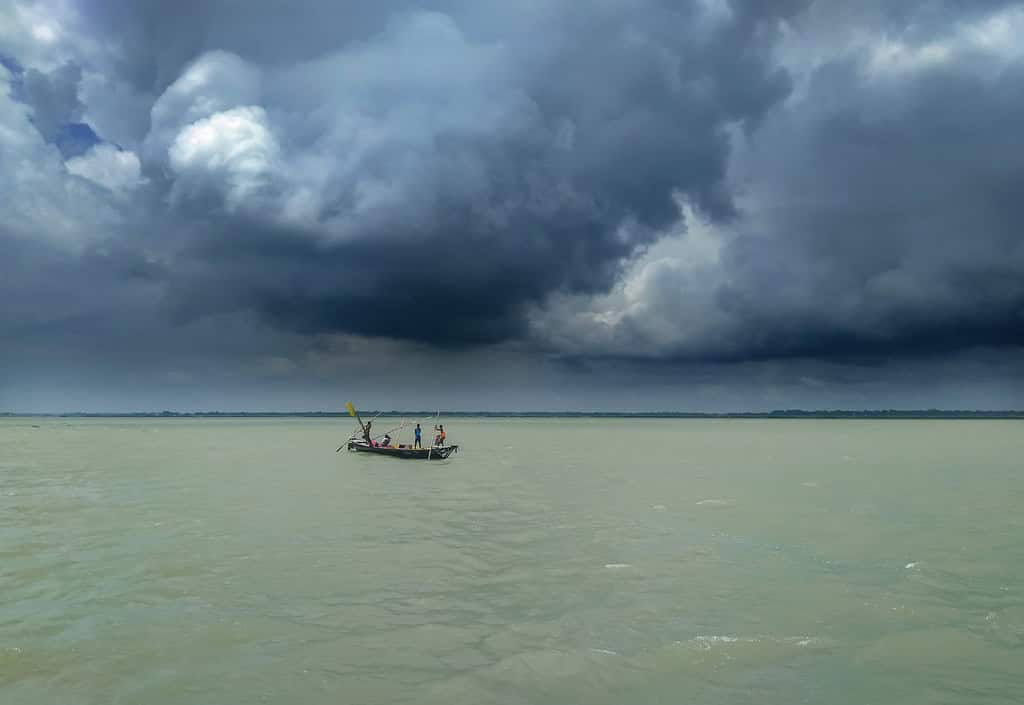
By making commercial fishing more sustainable, we can limit marine damage and destruction, and make fishers more safe, while also preserving our seafood production.
©Nadim Mahmud Himu/iStock via Getty Images
I recently finished William McKeever’s Emperors of the Deep, which discusses the role sharks play in ocean health. Near the end of the book, McKeever writes, “The current approach to fishing sometimes treats commercial fishing as if it were a nonrenewable resource, which endangers the fishing industry and jobs. When fish are viewed as renewable resources and managed as such, consumption of fish stocks can continue indefinitely.”
The line struck me. An estimated 600 million people worldwide depend on fishing for jobs, and more (as I discussed earlier) for sustenance. By innovating in the fishing industry and by finding ways to protect both fishers and marine animals, we create a healthier, more informed, and more stable world.
So, whenever you can, but especially on World Fisheries Day, advocate for more sustainable fisheries. Support organizations that promote conservation efforts. Sign petitions or share information on improving safety standards on commercial fishing vessels. Together, we can build the way towards a more sustainable future.