
Quick Take
- Carp and catfish look strikingly alike, but the reason why has nothing to do with being related. The real explanation reveals something fascinating about how evolution works. See their shared traits →
- One of these fish carries a hidden weapon that the other completely lacks, and that weapon can seriously hurt you. Discover the hidden weapon →
- Their breeding strategies couldn't be more different, with one parent's approach being shockingly ruthless toward its own offspring. Compare breeding strategies →
- Size comparisons between these two fish break almost every assumption most anglers make. Explore the size extremes →
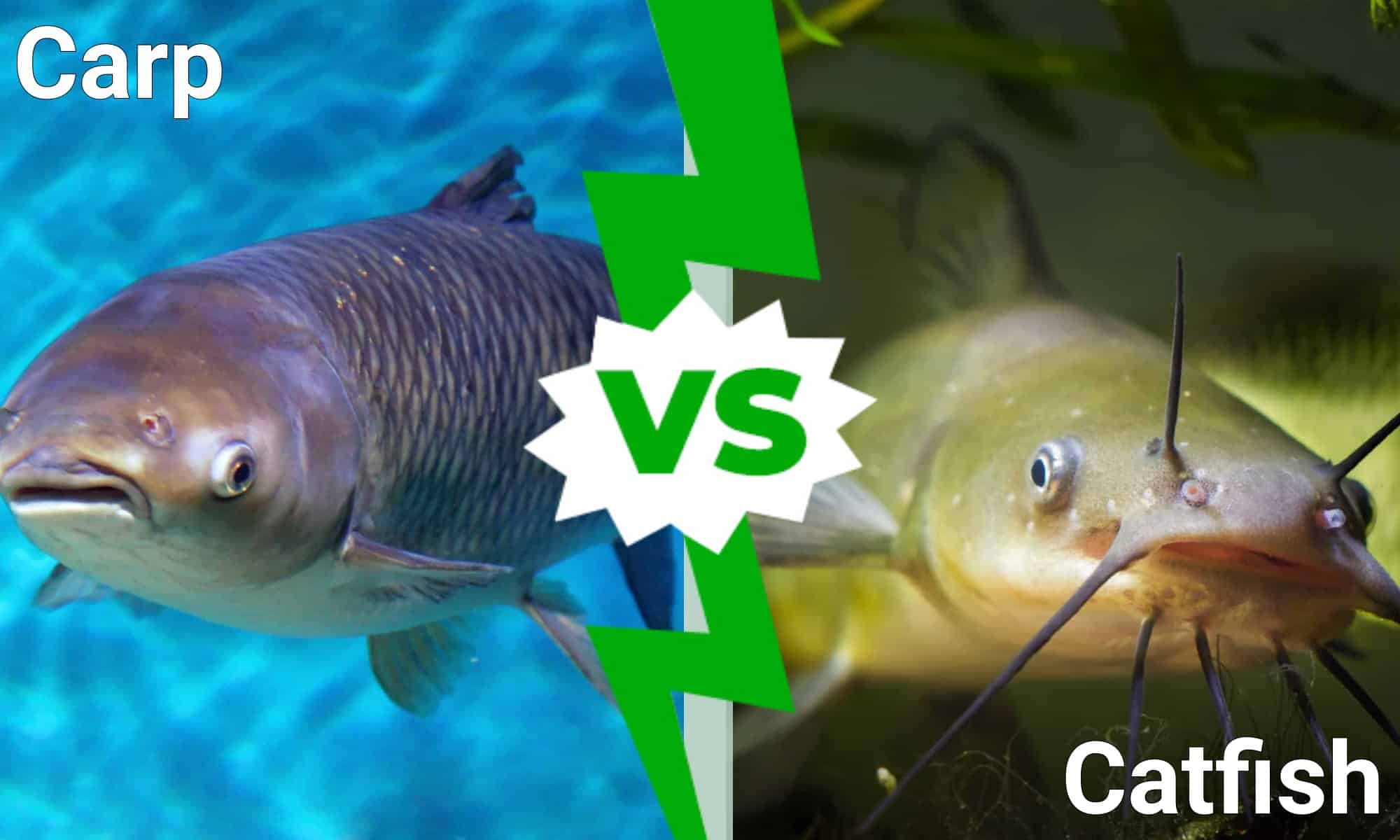
Despite looking similar, carp (family Cyprinidae) and catfish (order Siluriformes) are not closely related. Instead, they are classic examples of convergent evolution. Because they share similar muddy environments, both have developed similar traits and roles in their ecosystems. For instance, many carp and catfish are omnivores that use whisker-like barbels to hunt and navigate murky waters—though there are exceptions, like the strictly herbivorous grass carp or carp species without whiskers. Read on to discover what else connects these two distinct fish, and where they drift apart.
How are Carp and Catfish Alike?
Despite belonging to different taxonomic families, carp and catfish are alike in many ways. Both species prefer to live at the bottom of slow-moving rivers, murky lakes, and shallow ponds, where they search the mud for food.
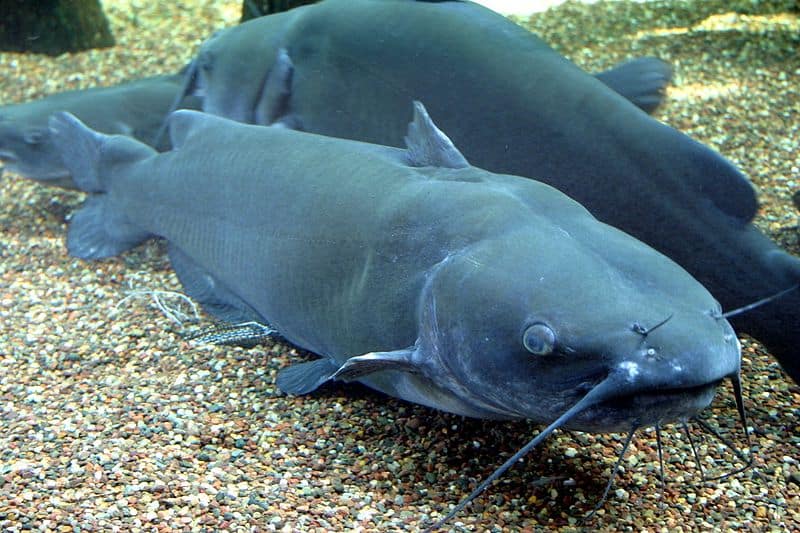
Channel Catfish use their sensitive barbels to find food by smell, touch, and taste.
©Ryan Somma, CC BY-SA 2.0, via Wikimedia Commons – Original / License
They both use sensitive barbels, often called whiskers, around their mouths to feel and taste the sediment for hidden meals. Carp and catfish are opportunistic omnivores that eat aquatic plants, insects, small organisms, and organic debris.
Both carp and catfish have a remarkable ability to survive in harsh, low-oxygen water conditions that would be fatal to many other fish. They are heavy-bodied, resilient swimmers known for putting up a strong fight on a fishing line.
During the spring, both types of fish move into shallow, weed-filled areas to broadcast their sticky eggs. Carp are notorious for becoming invasive pests when introduced to new freshwater ecosystems outside their native ranges, and some catfish species can also become invasive under similar circumstances
How are Carp and Catfish Different?
The critical differences between carp and catfish include the number of species, size, appearance, and spawning methods.
The term carp generally refers to several large freshwater fish species within the diverse Cyprinidae family, which contains over 2,000 distinct species.
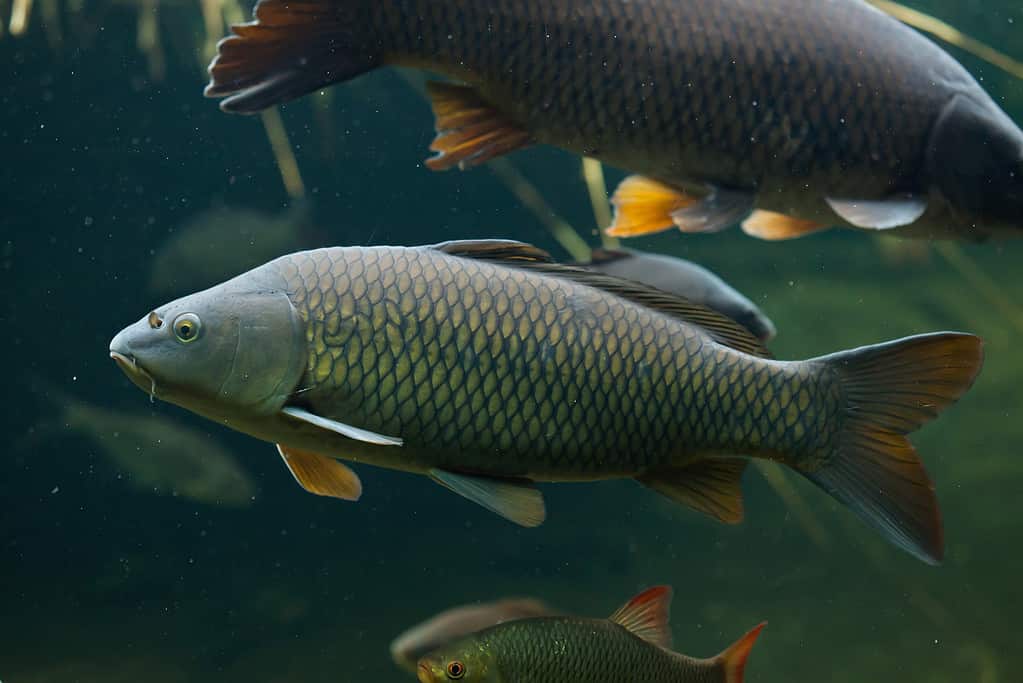
Wild common carp were introduced into North America in the late 19th century.
©Vladimir Wrangel/Shutterstock.com
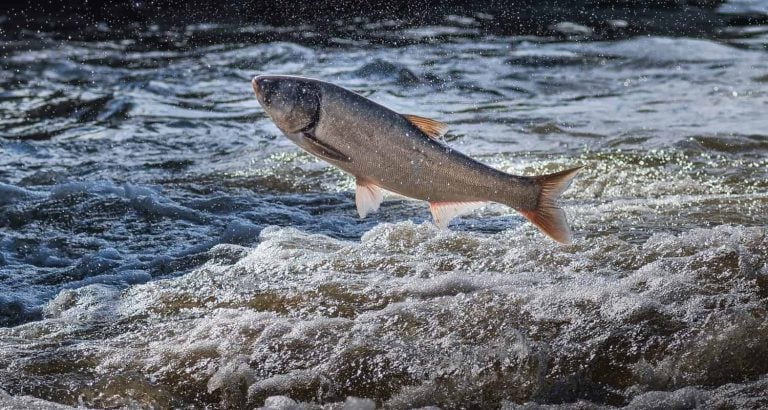
However, carp is typically used to identify around one dozen popular food and sport varieties, such as the common carp, grass carp, silver carp, and bighead carp. The native distribution of these species is primarily restricted to Eurasia.
Through human intervention, carp have spread beyond their native Eurasian borders and can now be found on every continent except Antarctica, often classified as invasive.
Catfish belong to the order Siluriformes, which contains over 4,000 distinct species divided among 36 to 40 families. Natively, catfish are considered a cosmopolitan species, naturally inhabiting inland or coastal waters on every continent except Antarctica.
The greatest density and diversity of catfish are found in the tropical freshwaters of South America, Asia, and Africa. Only one catfish family (Ictaluridae) is native to North America.
The vast majority of catfish live in inland freshwater, although several families have adapted to live entirely in coastal saltwater environments.
How Do Carp and Catfish differ in Size?
Most carp are medium-sized fish, weighing between 8 and 10 pounds and measuring 12 to 24 inches in length. While popular species like the common and Amur carp can grow to between 40 and 100 pounds, the vast majority of carp within the genus Cyprinus are much smaller.
Over 20 species in this group are highly localized dwarfs native to isolated lakes and river basins in East Asia, where they rarely exceed a foot in length.
Although the few carp species most familiar to humans can be quite large, they are the exception rather than the norm for the genus as a whole.
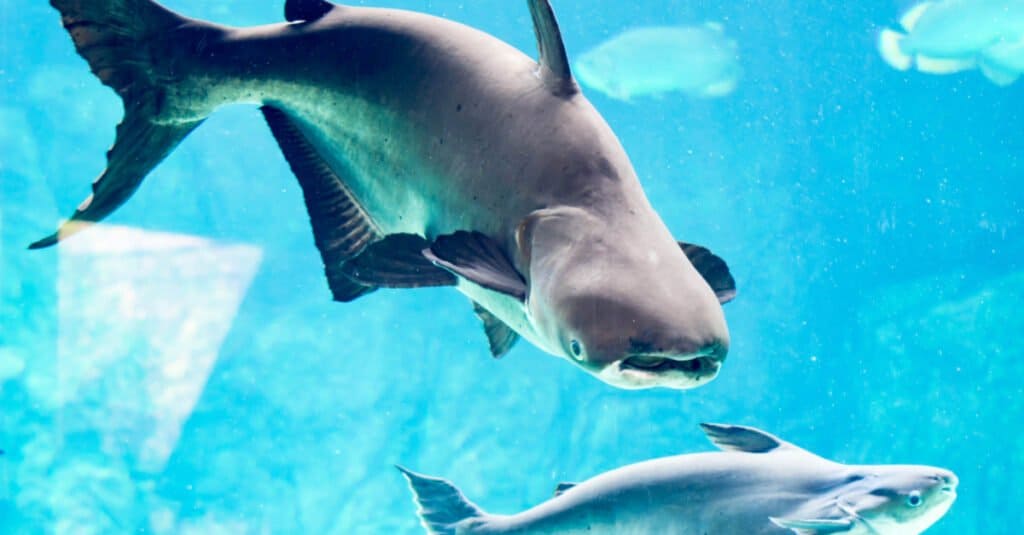
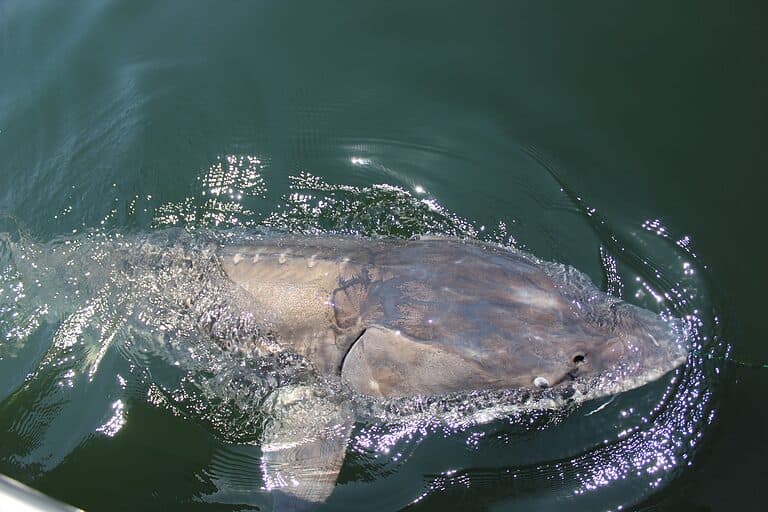
Mekong giant catfish can grow up to 15 feet long and weigh over 600 pounds.
©Bill Roque/Shutterstock.com
The size of a catfish also depends on its specific species. The skunk catfish (Corydoras arcuatus), for example, typically grows to about two inches long, making it a popular choice for home aquariums. At the other end of the spectrum, the Mekong giant catfish (Pangasianodon gigas) can grow as long as 15 feet and weigh over 600 pounds.
The average size of North American catfish varies greatly depending on the species, as the continent’s waters are home to both small scavengers and large apex predators. The most widespread and frequently targeted species, the channel catfish (Ictalurus punctatus), typically weighs two to four pounds and measures 12 to 20 inches.
Carp vs. Catfish: Appearance
Although physical traits vary among species, the average carp has a deep, heavy-bodied torso with a noticeably arched back and a slightly flattened belly.
Their bodies are typically armored with large, heavy scales that glint with metallic hues of olive-drab, bronze, or silver. However, some species, such as the leather carp (Cyprinus carpio carpio), are entirely scaleless.
A defining characteristic of the classic carp is its soft-rayed dorsal fin, which extends across much of its back. Most species have a downturned, highly adaptable mouth located at the bottom of the face, often flanked by distinct sensory whiskers called barbels.
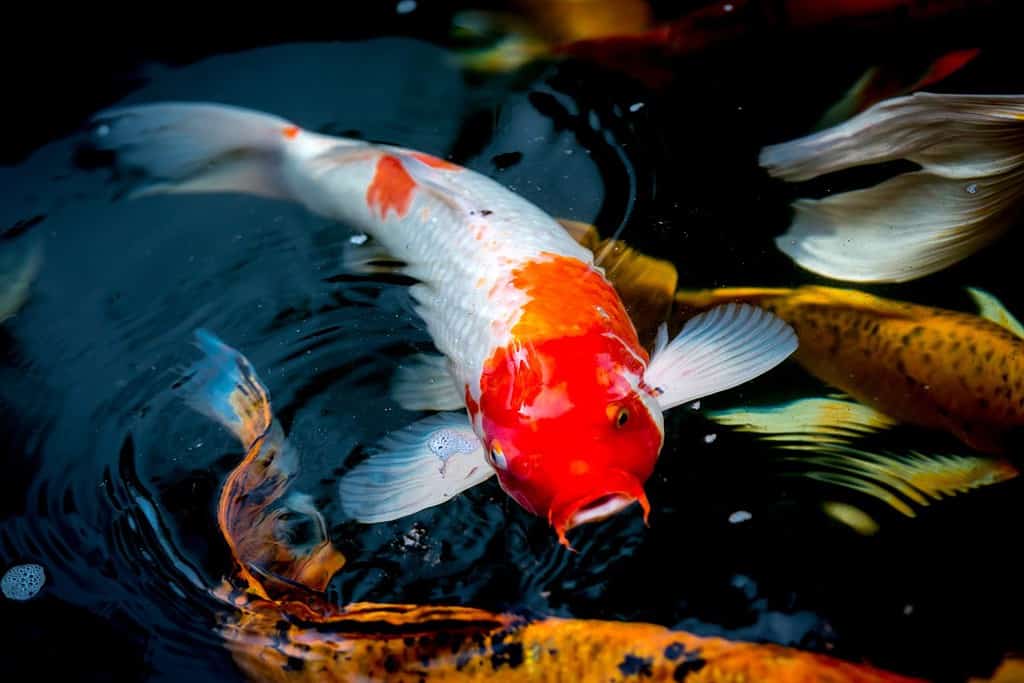
Koi are a variety of carp.
©Jerawat Supajirakit/Shutterstock.com
The average catfish is instantly recognizable by its distinctively flat, broad head and the barbels surrounding its mouth. Their cylindrical bodies lack true scales and are instead covered in either smooth, mucus-coated skin or armor-like bony plates.
Catfish have a wide, down-turned mouth adapted for bottom-feeding and relatively small eyes, as they rely more on touch and chemical cues than vision.
The pectoral fins on the sides and the dorsal fin on the back are equipped with sharp, rigid, and sometimes venomous spines that can lock into place to deter predators, a defense mechanism not found in carp.
Carp vs. Catfish: Diet
Most carp are omnivores, eating a diet of aquatic plants and small aquatic animals, including insects, crustaceans, underwater worms, and mollusks. They are commonly found in the lower reaches of rivers, reservoirs, lakes, and ponds.
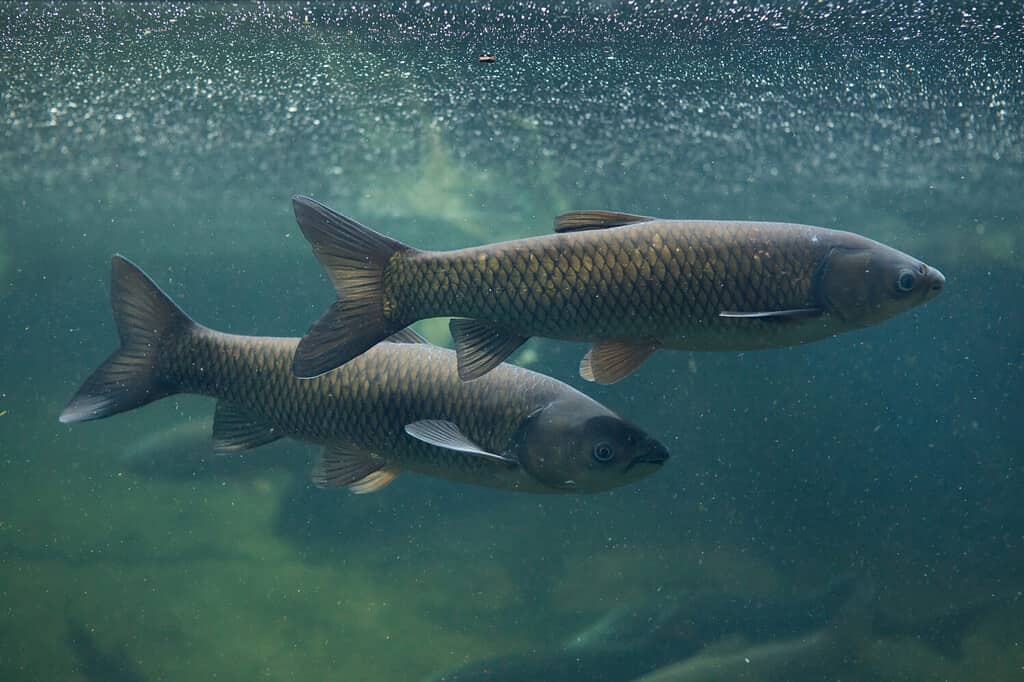
As true herbivores, grass carp are an exception to the rule that carp are omnivorous.
©Vladimir Wrangel/Shutterstock.com
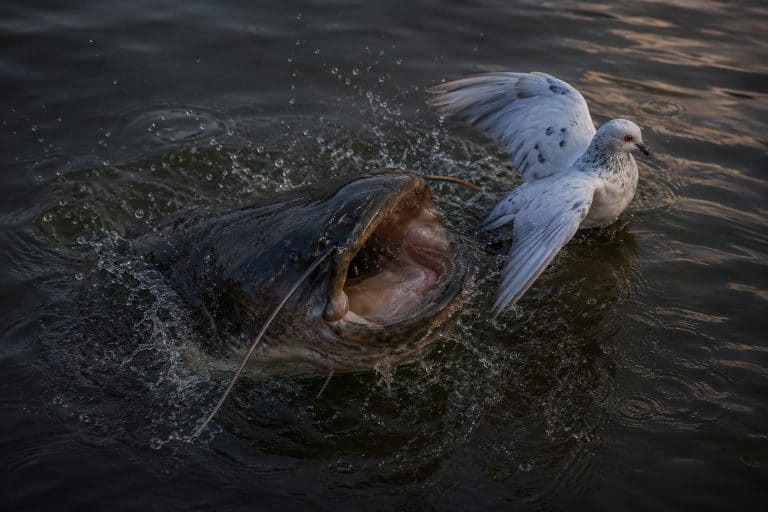
Catfish are opportunistic omnivores and highly adaptable bottom-feeders that will consume almost any available food source rather than specializing in a specific diet.
They use their whisker-like barbels to locate live prey such as small fish, insects, and crustaceans, but will also feed on aquatic plants, seeds, algae, and detritus when live food is scarce.
This dietary flexibility allows them to thrive in a variety of water conditions and survive seasonal changes in food availability.
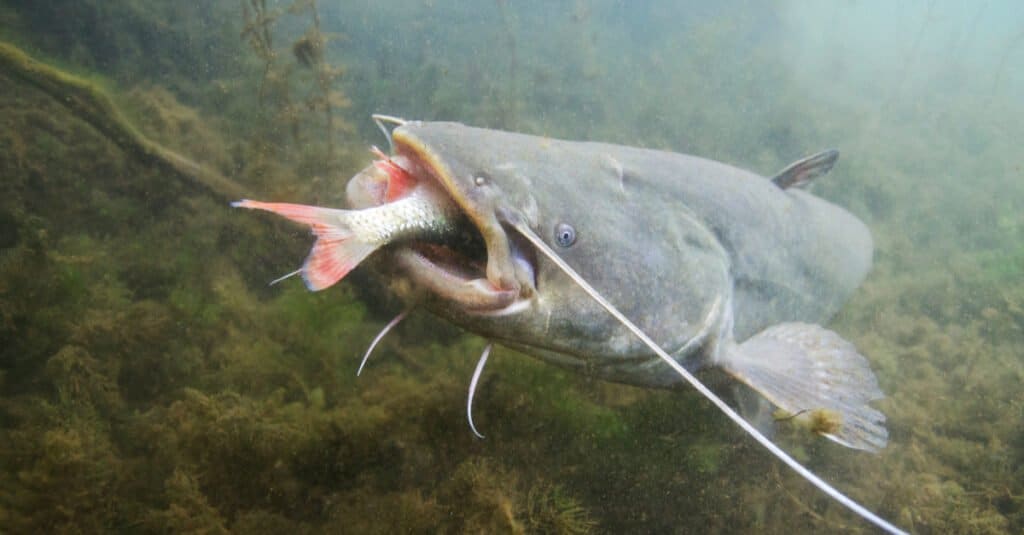
A catfish can swallow another fish whole.
©Rostislav Stefanek/Shutterstock.com
Carp vs. Catfish: Reproductive Cycle
When it’s time to breed, carp gather in shallow water with plenty of plants for protection. Female carp scatter eggs among aquatic vegetation, which are then fertilized by the males. A female carp can release anywhere from 100,000 to over a million eggs at a time, depending on the species and size of the individual. Carp are known to eat their fry.
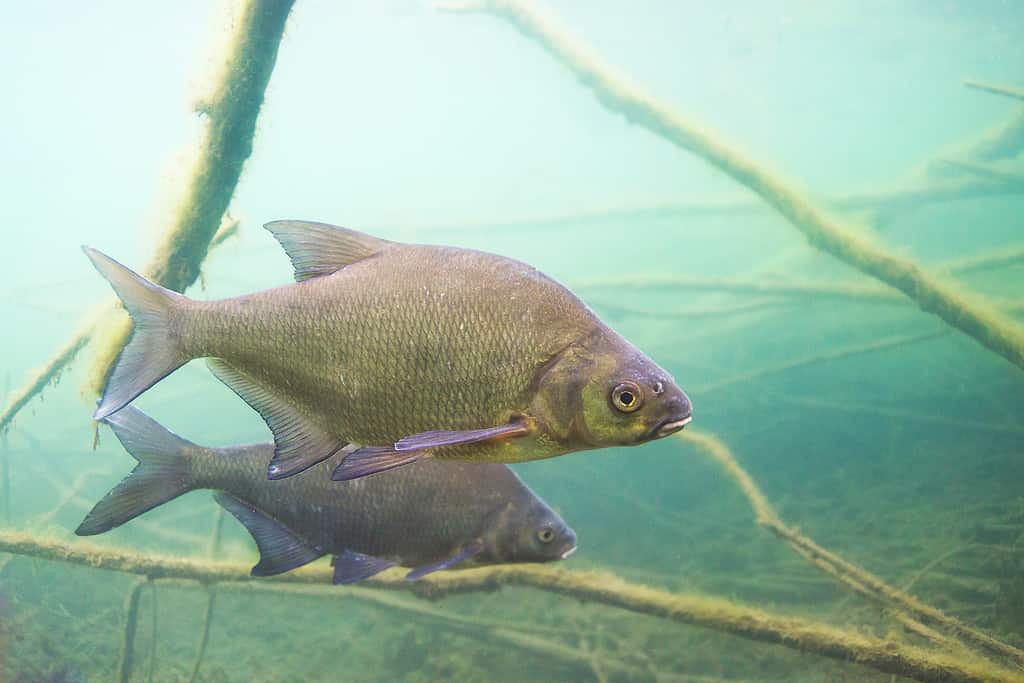
Carp can breed all year long in tropical locations.
©Rostislav Stefanek/Shutterstock.com
During the springtime, catfish prepare their nests by scraping out hollows in the sand or mud. They use these shallow areas to lay between 2,000 and 6,000 fertilized eggs. The male catfish guards the eggs until they hatch.
‘In many catfish species, the male guards the eggs and fry until they are large enough to fend for themselves, after which the young may form schools for protection from predators. However, these large schools can make catfish an easy catch for anglers.