
Quick Take
- According to International Shark Attack File (ISAF) data since 1700, New South Wales has had 271 unprovoked attacks, the most in Australia.
- Male great whites typically reach 11-13 feet, while females measure 15-16 feet.
- Recent findings indicate 37-foot historical measurements are inaccurate, with most researchers suggesting great whites can only reach a maximum of around 20 feet.
- 15-foot great whites have been spotted in the waters around New South Wales, sometimes with fatal results.
The oceans are the world’s last great expanse of untamed wilderness. While they comprise 70% of our planet’s surface, 80% of their watery depths remain unexplored. What lurks within the ocean’s murky interior can be as terrifying as it is fascinating. Perhaps no other species that calls the ocean home invokes more nightmares than the great white shark. Any shark capable of taking a bite out of a human is too big, but part of its sinister reputation has to do with its massive size. Just how big are the largest great white sharks ever found in New South Wales waters? Let’s take a look at the research.
New South Wales, Australia
Situated on the southeastern coast of Australia, New South Wales (NSW) is the country’s most populous state. It is treasured for its endless golden beaches, wild bushland, and capital city of Sydney. Sydney is also the country’s most populous city. The state of NSW borders Queensland to the north, Victoria to the south, and South Australia to the west.
With its wealth of famous beaches like Byron Bay and Bondi Beach, the waters off NSW beaches attract crowds of locals and tourists alike. Most enter the water aware of the host of marine life that calls those waters home. While few of the local aquatic residents pose any threat to humans, the water off the NSW coast does support populations of sharks capable of doing serious damage to human visitors.
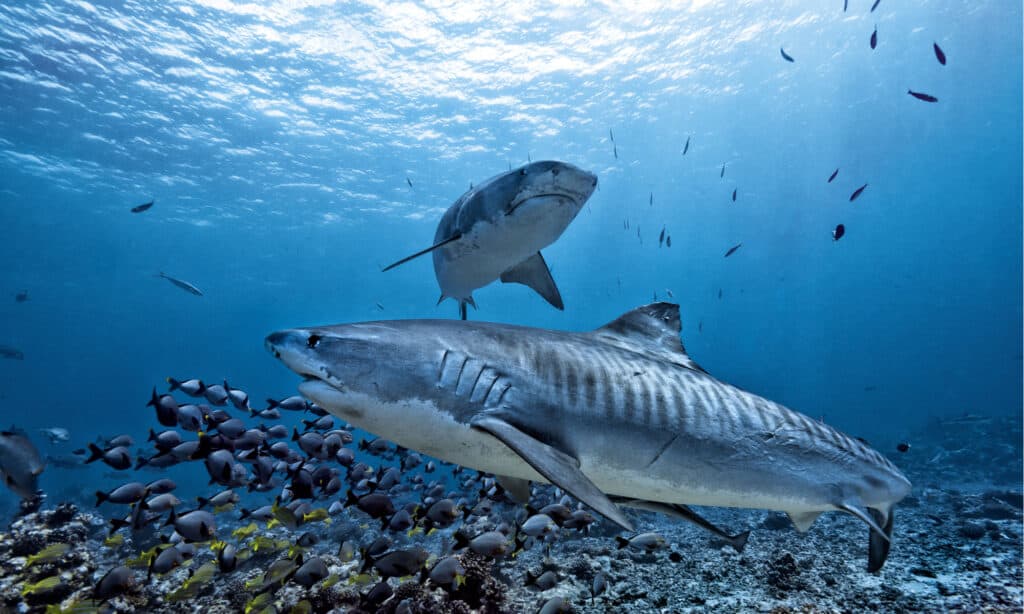
Tiger sharks are one of the three sharks responsible for the majority of shark bites in New South Wales.
©le bouil baptiste/Shutterstock.com
Dangerous Sharks in NSW
Sharks play an integral part in a healthy ocean ecosystem. People need to understand that when they enter the water, they are guests in the sharks’ home. According to Shark Smart NSW, only three species are involved in nearly all shark-human interactions in the area’s waters. Those are tiger sharks, bull sharks, and great white sharks. These three, known as target sharks, are the focus of the NSW government’s tagging, tracking, and shark mitigation program. Thanks to this program, which is the largest in the world, we have a better understanding of shark behavior all around Australia’s coast.
According to the International Shark Attack File (ISAF), Australia has the second highest number of unprovoked attacks, with 143 encounters — 20 of which were fatal — between 2012 and 2021. For that same time period, Florida, which has the highest number of unprovoked attacks in the world, reported 259 encounters with 0 fatalities. ISAF’s data from 1700 to the present shows that in Australia, NSW has the highest incidence of unprovoked attacks at 271 followed by Queensland with 199.
Visit the NSW Government’s Shark Smart video showing the activity of sharks tagged in NSW from 2015-2020.
Great White Sharks
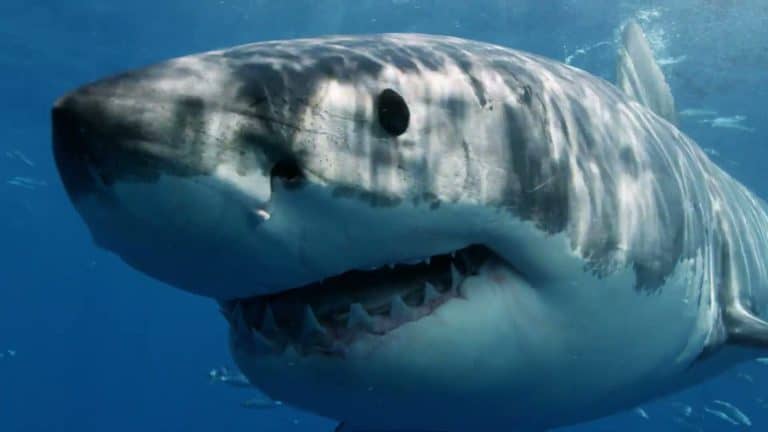
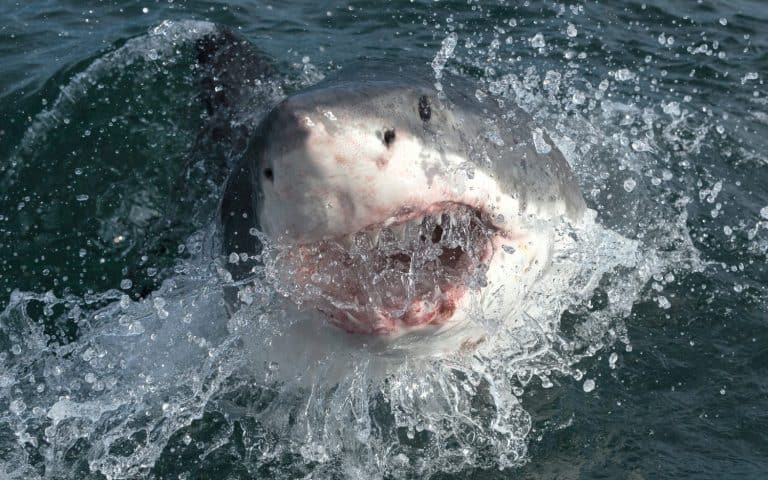
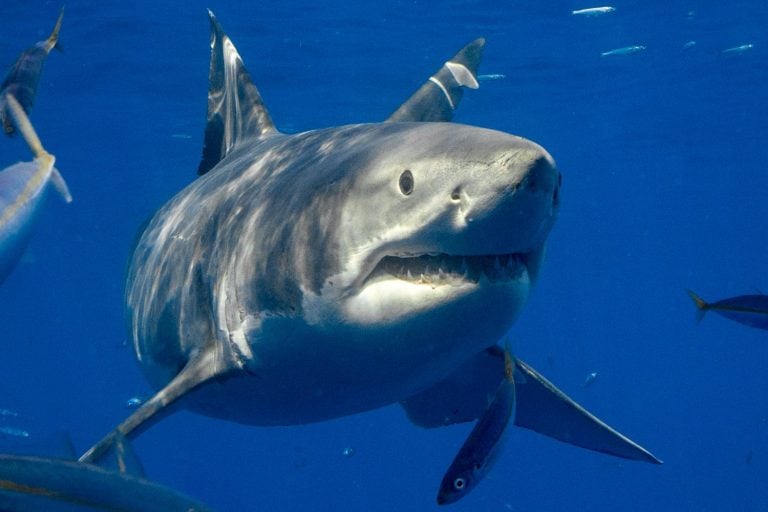
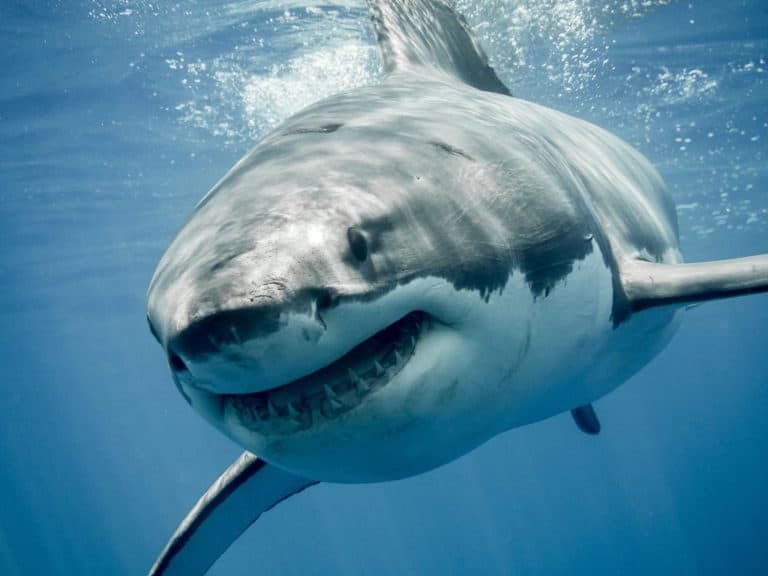
Great white sharks are the largest predatory fish in the ocean, and attacks by this large fish are extremely rare, but they do happen. While they certainly don’t deserve the notoriety gained from the movie Jaws as insatiable murderers, great white sharks (Carcharodon carcharias) have had more encounters with people resulting in death than any other shark species. Worldwide, great whites are responsible for 351 encounters, 59 of them fatal, since 1958, according to the ISAF.
No shark, including the great white, attacks humans for food. Scientists theorize that great whites may occasionally mistake a human for its natural prey and only realize their mistake after taking a bite. Unfortunately, sometimes, that bite is enough to cause a victim to bleed to death.
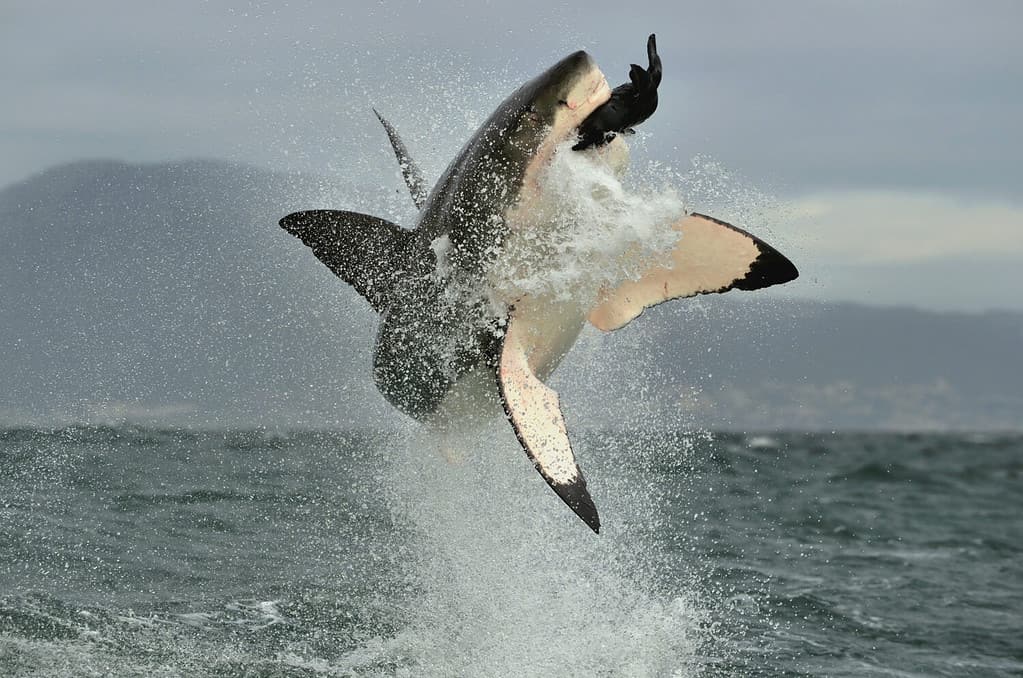
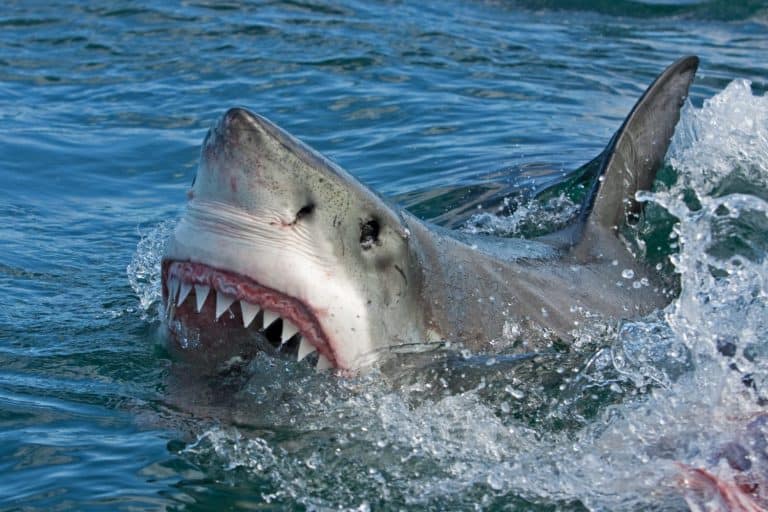
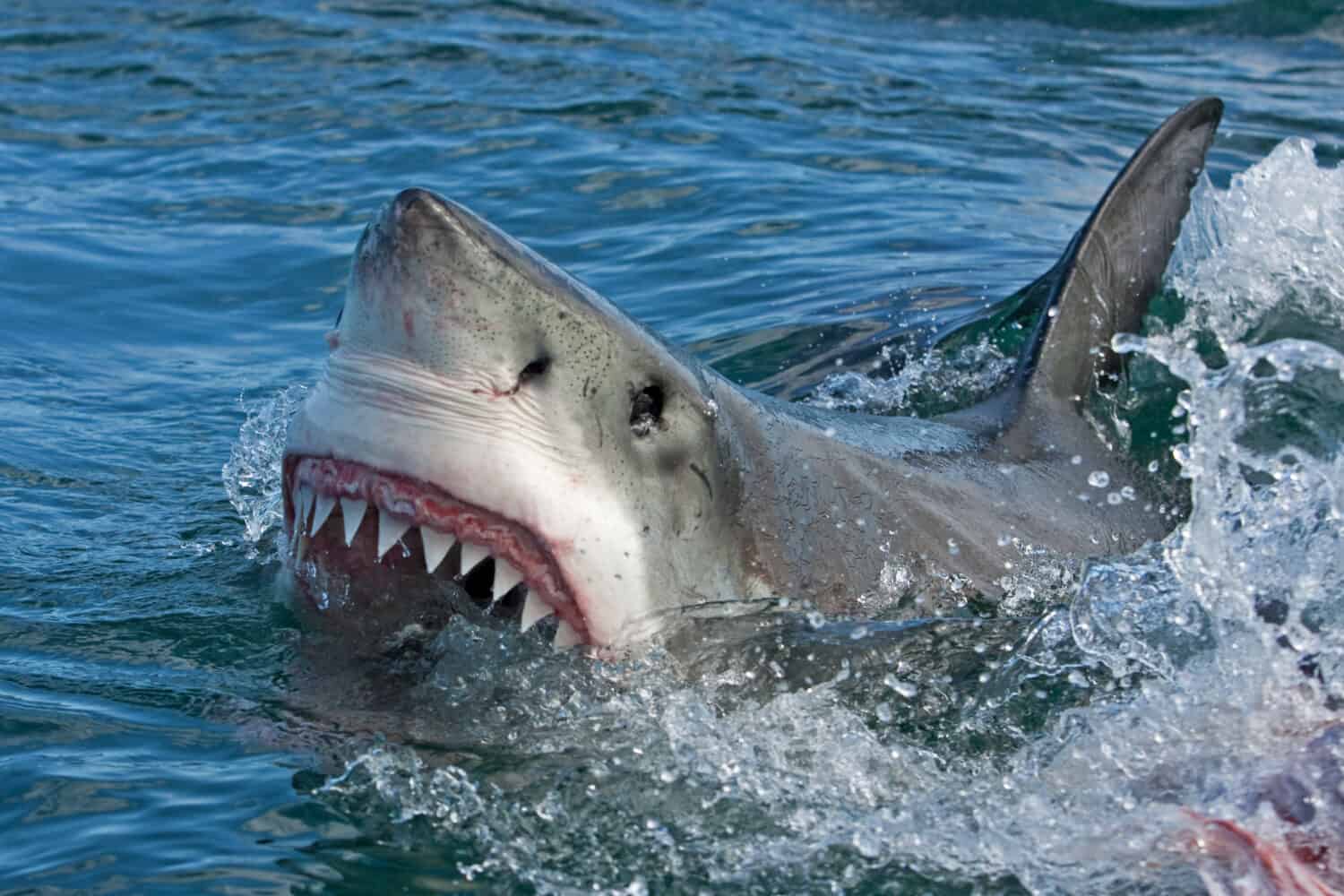
Once great white sharks reach maturity, they prey on marine mammals such as seals and sea lions.
©Sergey Uryadnikov/Shutterstock.com
According to the Commonwealth Scientific and Industrial Research Organisation (CSIRO), the eastern Australasian population is estimated at 5,460 total sharks, with a potential range between 2,909 and 12,802. For the southwestern population, the estimate is 1,460 adult sharks with a range of 760 to 2,250. The total population has not yet been estimated.
Biggest Great White Sharks Spotted in NSW
With so much mystery surrounding these often misunderstood creatures, it has traditionally been difficult to pin down an exact size for sharks when they are spotted swimming in the ocean. This has not stopped people from reporting what they believe to be some pretty big sharks.
How Big Can a Great White Get?
The truth is, scientists don’t know for certain. Reliably measuring great white sharks is a tricky endeavor. For one, it’s obviously very dangerous to be near them in the water, and taking measurements while they are swimming is not reliable. Measuring a dead shark out of the water might be the best way, but the fish shrink out of the water, and it still doesn’t tell us how big they are capable of getting.
We do, however, have both verified and unverified reports to give us a general idea of the biggest great whites. The Guinness Book of World Records once reported that the two largest great whites ever measured were 36 and 37 feet long. The smaller one was captured in the 1870s in South Australia, and the larger one in New Brunswick, Canada in the 1930s. Nothing in modern times has come even close to these sizes, so experts have doubted the reliability of both the measurements and the species identification. In fact, both claims have since been debunked.
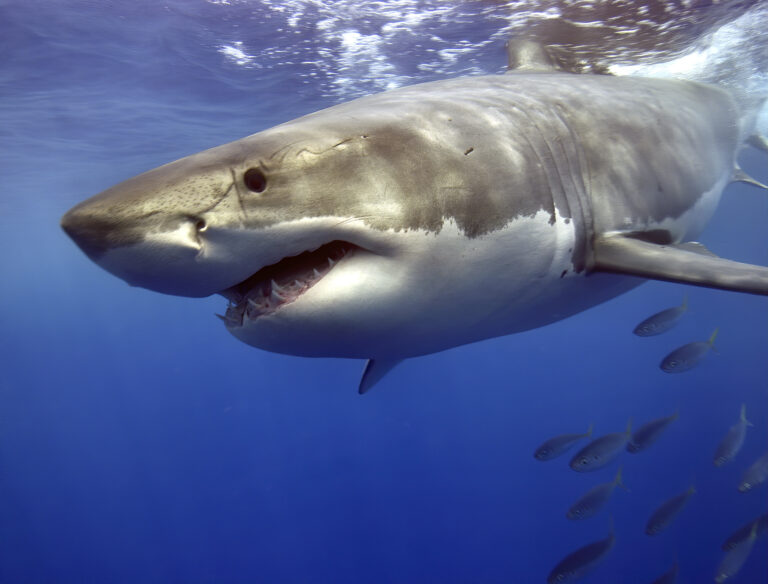
Some sources suggest that a 19.7-foot great white caught in Ledge Point, Western Australia in 1987 is the largest reliably measured specimen. A female shark named Deep Blue is believed to be the largest living great white, at around 20 feet long and 5,500 pounds. She is estimated to be about 50 years old. Based on the data we have, however, a typical male great white grows to between 11 and 13 feet, and a female measures between 15 and 16 feet.
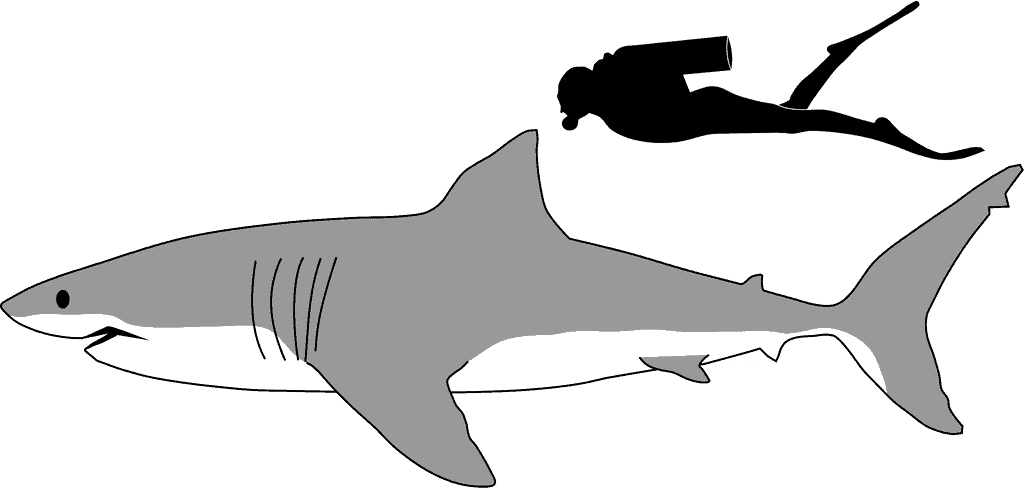
Great whites are roughly triple the size of an adult human.
15-Foot Great White Caught in Net Protecting Popular Beach
In 2018, the NSW government confirmed a massive 15-foot great white shark was found dead at Maroubra Beach in Sydney after getting tangled in shark nets set up to protect beachgoers from shark attacks.
“The tail alone was 2m [6.5 feet] tall, with pectoral fins over 1m [3.3 feet]. Shark is pushing over a ton in weight,” NSW-based fisherman Trapman Bermagui wrote on Facebook, as reported by Inertia.
Surfer Fights 13-Foot-Long Great White for 30 Seconds
In August 2023, a 44-year-old father of two was surfing at Lighthouse Beach in northern NSW when a 13-foot great white shark attacked him. The Guardian reports that Toby Begg fought off the shark for 30 seconds before swimming himself to shore.
Begg suffered “serious injuries from his hip to his calf and lower legs,” according to The Guardian. Although his injuries were life-threatening, an off-duty emergency room doctor was on the beach at the time of the attack and was able to apply a tourniquet to Begg’s leg, saving his life.
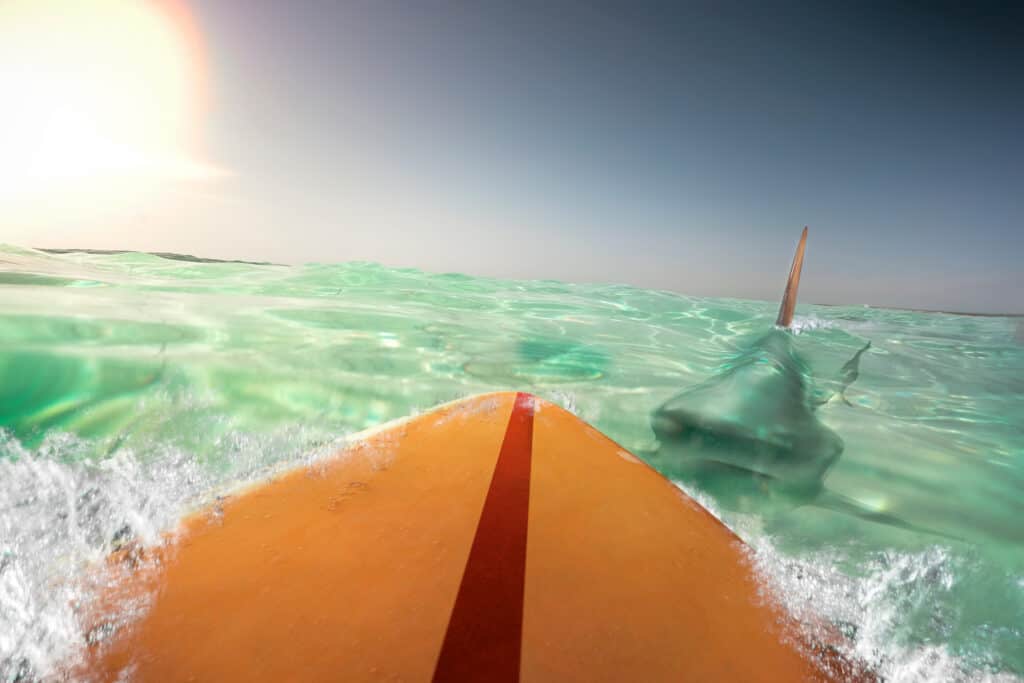
Surfers have been among the most at-risk groups for shark attacks in the last 40 years.
©serpeblu/Shutterstock.com
15-Foot Great White Kills Swimmer on Camera
In 2022, a great white shark almost 15 feet long attacked and killed a swimmer off Little Bay in Sydney. The nightmarish incident was caught on camera and witnessed by horrified beachgoers.
“In the terrifying scene captured by a beachgoer, the shark could be seen thrashing around as the waves turned bright red from the victim’s blood,” the New York Post reports.
Police recovered human remains from the scene after a lengthy search. The attack was the first fatality from a great white shark in Sydney since 1963.