
Quick Take
- One shark in this ancient order starts life with bold stripes but completely loses them as it matures. See the fading stripes →
- Scientists described a brand-new member of this ancient shark order as recently as 2023, a discovery that came from hiding in plain sight off a well-explored coastline. Meet the 2023 discovery →
- These sharks share a family resemblance with a barnyard animal, though not the one you would expect from an ocean predator. Explore the bullhead name →
With summer in full swing, many people are planning beach trips or coastal vacations to get a taste of the ocean before autumn arrives. Like clockwork during this time of year, we tend to hear more about shark sightings and (rare) attacks. Humans often paint sharks as dangerous predators, but they’re unlikely to bite or even approach you in the ocean. Usually, they’re just passing by in their own territories. Humans are the ones invading their homes.
“Sharks are some of the most fascinating creatures in the ocean,” says Maggie Winchester-Weiler, shark biologist and senior manager of Ocean Conservancy’s Florida conservation program. “They’ve evolved over millions of years and have crazy adaptations that make them perfectly equipped to survive in all kinds of environments, from the deepest parts of the ocean to tropical coral reefs, and even in freshwater. Despite their long history, we estimate that over one-third of species currently face extinction because of humans. Yet their survival is fundamental to the health of the ocean and all the animals that call it home.”
Rather than fearing these intriguing animals, we should try to learn more about them. For example, many people are unaware of the different shark orders and species, such as the order Heterodontiformes. Keep reading to learn more about this shark order and its species.
What Is the Heterodontiformes Order of Sharks?
The Heterodontiformes order of sharks includes a variety of small, bottom-dwelling sharks that lurk in shallow, rocky waters.
“Order Heterodontiformes is referred to as ‘the bullhead sharks’ because many species have a blunt, rounded snout reminiscent of a cow’s muzzle,” says Winchester-Weiler.
These sharks are sluggish by nature. They live in tropical and subtropical regions of the Pacific and Indian oceans, but they’re completely absent from the Atlantic Ocean.
Types of Heterodontiformes Sharks
The Heterodontiformes order is one of the smaller shark orders. It used to consist of just nine species, but a recently discovered species was added in 2023. Here’s a full list of the species.
Port Jackson Shark
According to Winchester-Weiler, the Port Jackson shark is one of the most well-known species in this order. This small, bottom-dwelling shark lives off the coast of Southern Australia. It mostly eats mollusks, crustaceans, and small fish.
Horn Shark
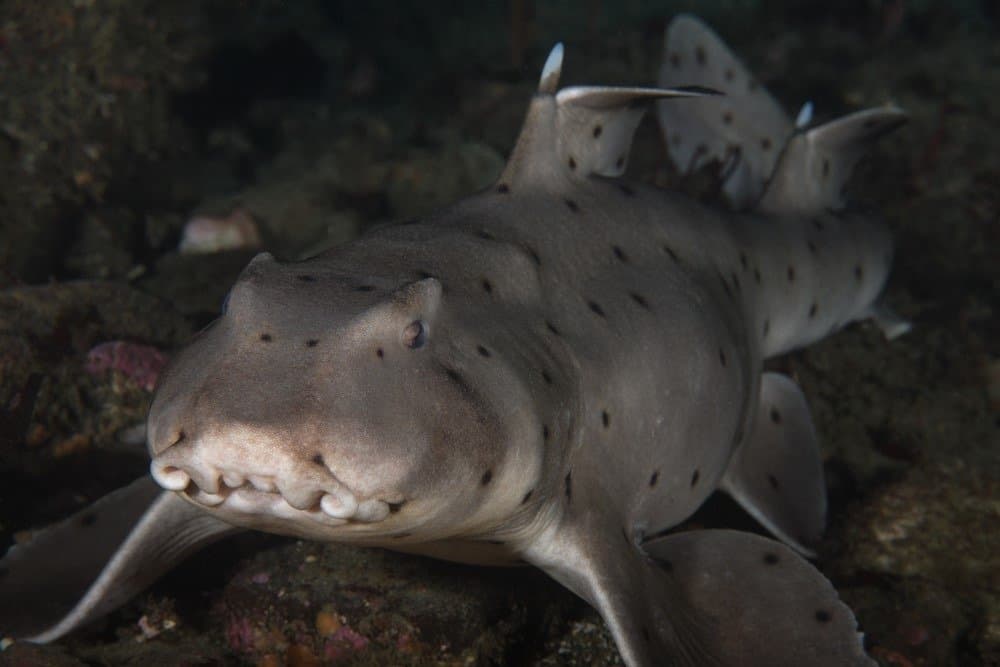
Horn sharks have unique, short, blunt snouts, making them easy to identify.
©Philip Garner/Shutterstock.com
Along with the Port Jackson shark, the horn shark is another well-known species in this order. It lives in the Pacific Ocean off the coasts of California and Mexico.
“Both [the Port Jackson and horn shark] species are known for their relatively small bodies (usually less than four feet in length) and small spines at the front of their two dorsal fins, which they use for defense against larger predators,” says Winchester-Weiler. Horn sharks, like Port Jackson sharks, typically consume mollusks, crustaceans, and small fish. They pose little threat to humans.
Zebra Bullhead Shark
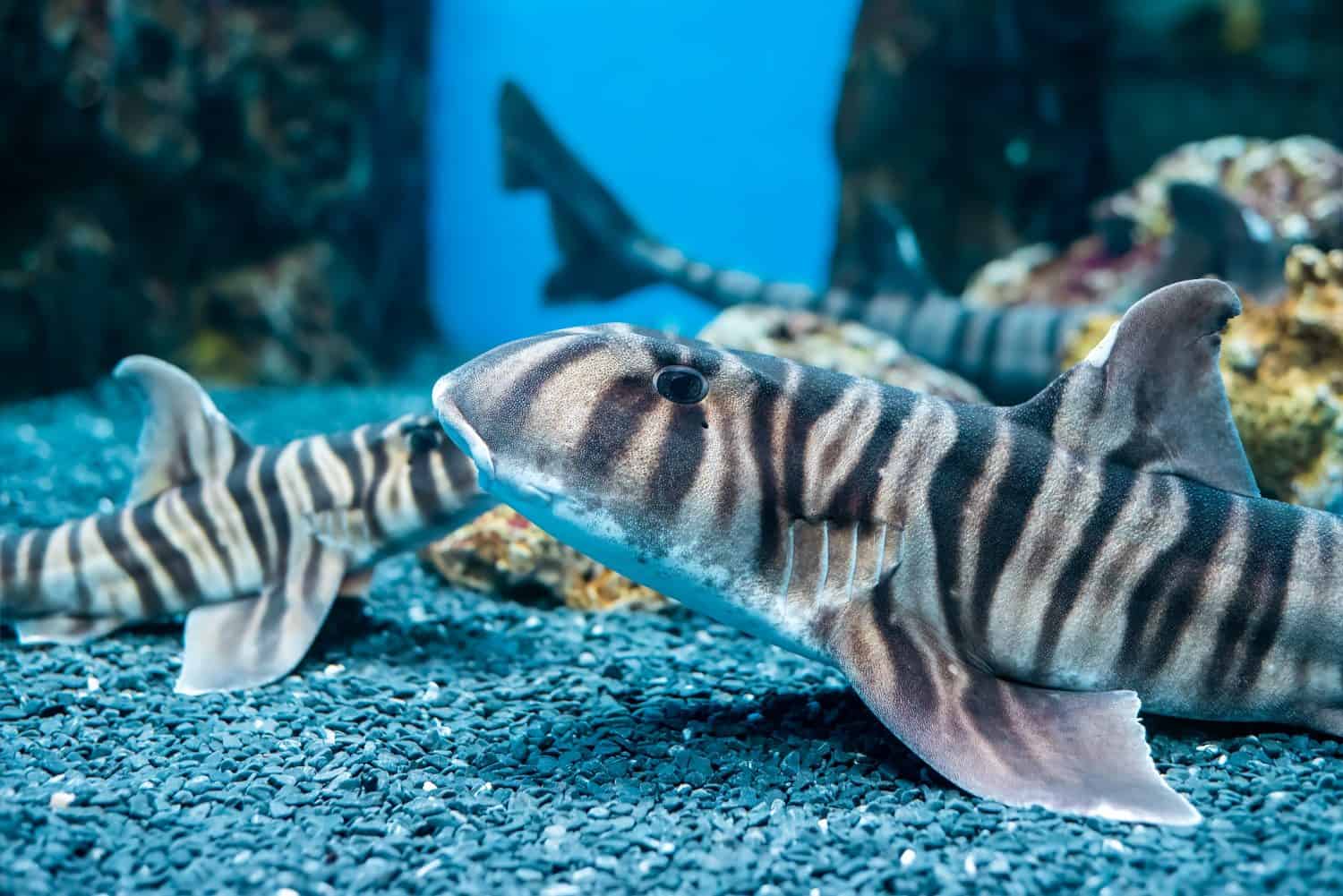
The zebra bullhead shark is another type of Heterodontiformes shark in the Indo-Pacific near Japan and Australia. This species has zebra-like markings as juveniles, which fade as they mature. Like most bullhead sharks, they typically live in shallow waters and feed on hard-shelled sea animals, crustaceans, and small fish.
Sharks have evolved over millions of years and have crazy adaptations that make them perfectly equipped to survive in all kinds of environments.
Maggie Winchester-Weiler, shark biologist and senior manager of Ocean Conservancy’s Florida conservation program
Painted Hornshark
The painted hornshark is a recently added Heterodontiformes species, described in 2023. This bullhead shark lives in the waters off northwestern Australia, from North West Cape to Bathurst Island. It, too, has a patterned body similar to the zebra bullhead shark and shares a similar diet.
Japanese Bullhead Shark
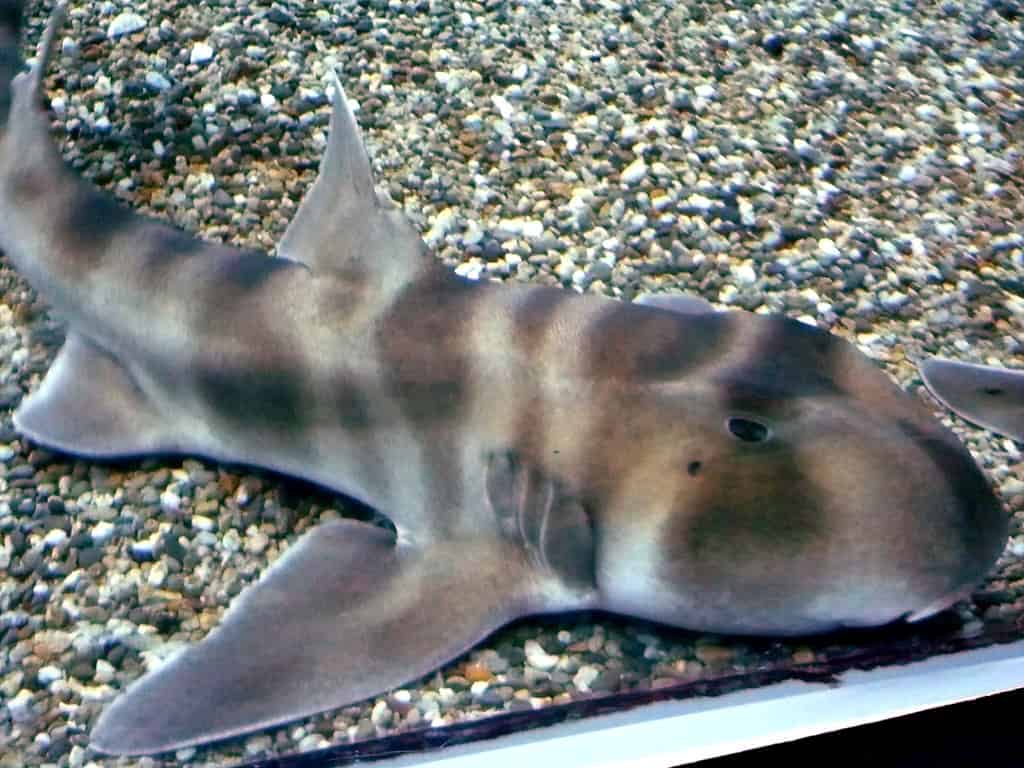
The Japanese bullhead shark has a blunt, pig-like snout.
©Jennifer Feuchter from Surrey, Canada / CC BY 2.0 – Original / License
The Japanese bullhead shark is another type of Heterodontiformes that lurks in shallow waters in the northwestern Pacific Ocean near Japan, Korea, and China. This docile species consumes small bony fishes, crustaceans, mollusks, and sea urchins.
Crested Bullhead Shark
The crested bullhead shark is considered uncommon, mainly found along the coast of eastern Australia. It’s known for its high eye ridges and short, blunt snout, giving it a unique appearance. Like others on this list, the bullhead shark mainly eats small fish and sea urchins.
Galapagos Bullhead Shark
As its name suggests, the Galapagos bullhead shark lurks in the shallow and rocky waters of the tropical eastern Pacific Ocean, off the Galapagos Islands and Peru. This bottom-dwelling fish doesn’t grow much larger than three feet and typically doesn’t pose much of a risk to humans. They feed on crabs, sea urchins, small fish, bottom-dwelling fish, and snails.
Mexican Hornshark
The Mexican hornshark can be found in the tropical Eastern Pacific Ocean, often near the Gulf of California off the coast of Mexico and down toward Central and South America. This shark is gray or brown with a round, wide snout and black spots along its body. It prefers shallow waters and preys on hard-shelled sea animals.
Omani Bullhead Shark
True to its name, the Omani bullhead shark lives in the western Indian Ocean, inhabiting the waters off central Oman and Pakistan. This small shark shares a similar diet with other bullhead sharks, mainly eating hard-shelled bottom sea animals.
Whitespotted Bullhead Shark
The whitespotted bullhead shark is a small species that lives in the western and northern Indian Ocean. Like other bullhead sharks, it seems to prefer shallow, rocky waters. This fish is brown with small white spots and mainly feeds on crabs.