
Quick Take
- Shark trackers help scientists study sharks, but public access to the data can sometimes have the opposite effect See how trackers backfire →
- Tagging a great white shark to protect it can also kill it, and scientists have not fully solved that problem. Explore the tagging risks →
- A shark's tag only transmits data under one very specific condition, so scientists are working with far less information than most people assume. See how tags transmit data →
- The real predator in the sharks-versus-humans story isn't the one most people track online.
Thanks to Shark Week and summers spent at the beach frolicking in the water, people have developed a fascination with tracking tagged great white sharks online. Tens of thousands of active users take to tracking platforms to follow both those nearby and those who have become internet sensations. Why has this become such a popular trend in recent years?
Why Great White Shark Trackers Are So Compelling to Follow
By using platforms such as OCEARCH, the Shark Research Foundation, and the Atlantic White Shark Conservancy, people can track great white sharks as well as other shark species. Tracking sharks is both educational and entertaining, as people learn about their migration and where they tend to congregate. Their movement is not linear, however, providing an element of surprise about where the shark may show up next.

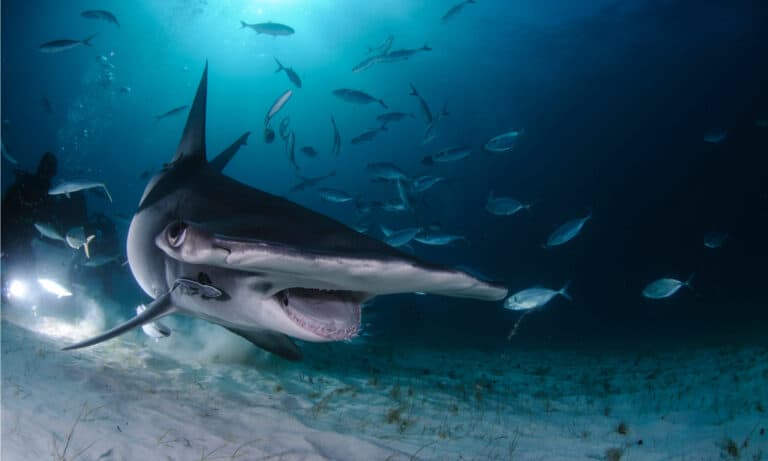
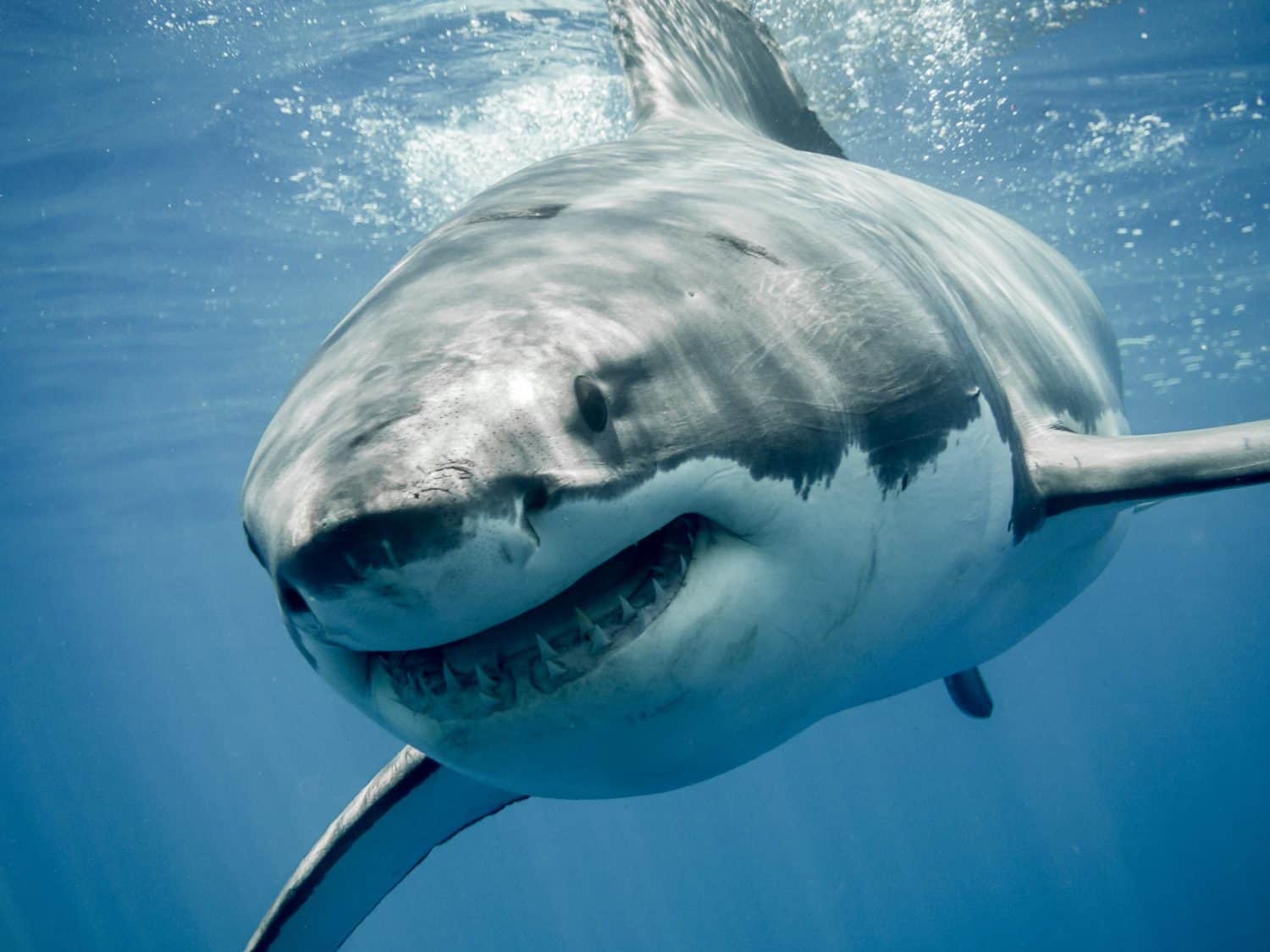
Great white sharks are such a fascination to people that tens of thousands track them online.
©Aquabluedreams/Shutterstock.com
With many of the sharks being named, people following their movements often form an attachment to them. One such shark is Contender, a 13’9″ male great white shark that weighs an estimated 1,600 pounds.
People also use shark trackers for safety reasons. Those who spend time in the ocean want to know if any great white sharks have been spotted near their favorite beaches. While the trackers are not continuously updated—since location data is only transmitted when a shark’s tag surfaces and pings a satellite—having information that one or more sharks were recently nearby may make people more aware when splashing in the water.
Information Great White Shark Trackers Provide
While most people have seen videos of great white sharks, truth be told, not as much is known about the apex predators as other species of marine animals. This is why the information received from the trackers is so important to understanding the sharks’ behavior.
Great white shark tags work by sending signals to a satellite, which then relays the information to tracking technology in near real time. However, the signal is only transmitted when the shark’s dorsal fin breaks the surface of the water.
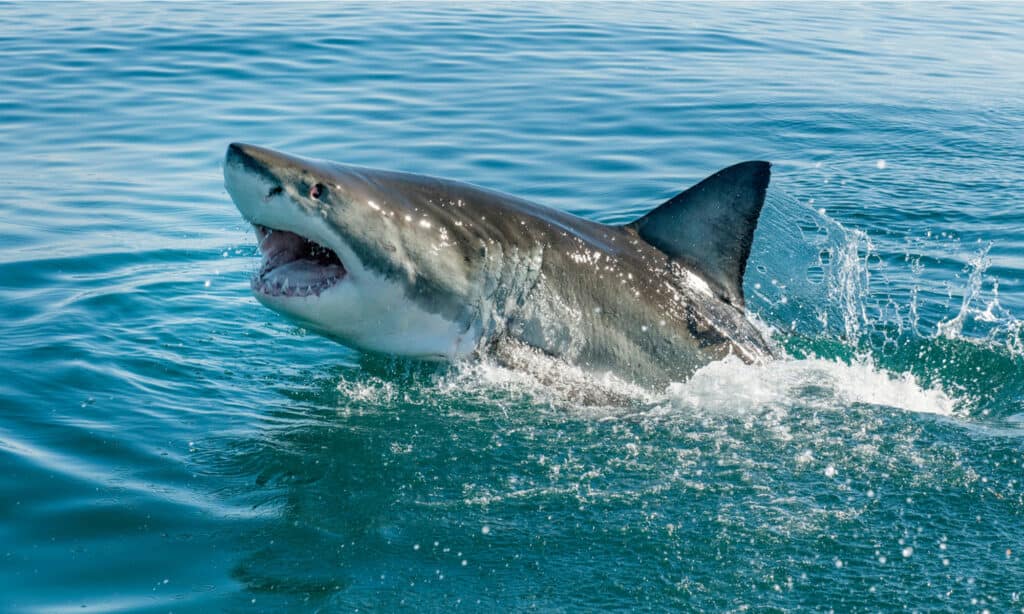
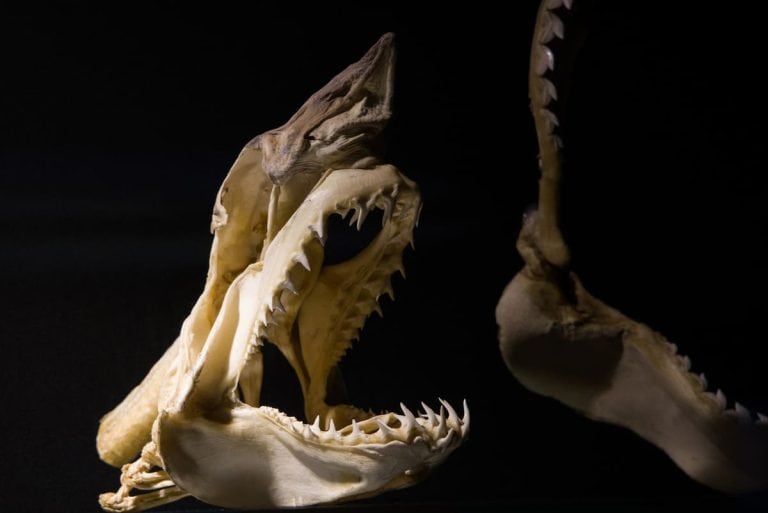
Great white sharks are tagged to learn about their locations, migration patterns, and individual behaviors.
©Jayaprasanna T.L/Shutterstock.com
The information that scientists glean after tagging a great white shark includes:
- Location of the shark
- Migration patterns of the shark
- Behavior of the shark
By collecting this data, scientists are better able to identify breeding grounds, locations where sharks migrate to feed, and how these regions change over time. This helps to create conservation plans specifically tailored for the white sharks to keep them from becoming another animal classified as an endangered species.
How Do Scientists Tag Great White Sharks?
There are two main methods for placing a tracker on a great white shark. However, before tagging can occur, a great white shark must first be located.
Great white sharks are located using sonar, drones, or the location of previous sightings. Once one is positively identified, scientists can use the capture-and-tag approach or non-invasive tagging. The type of tag used depends on what information scientists are looking to discover.
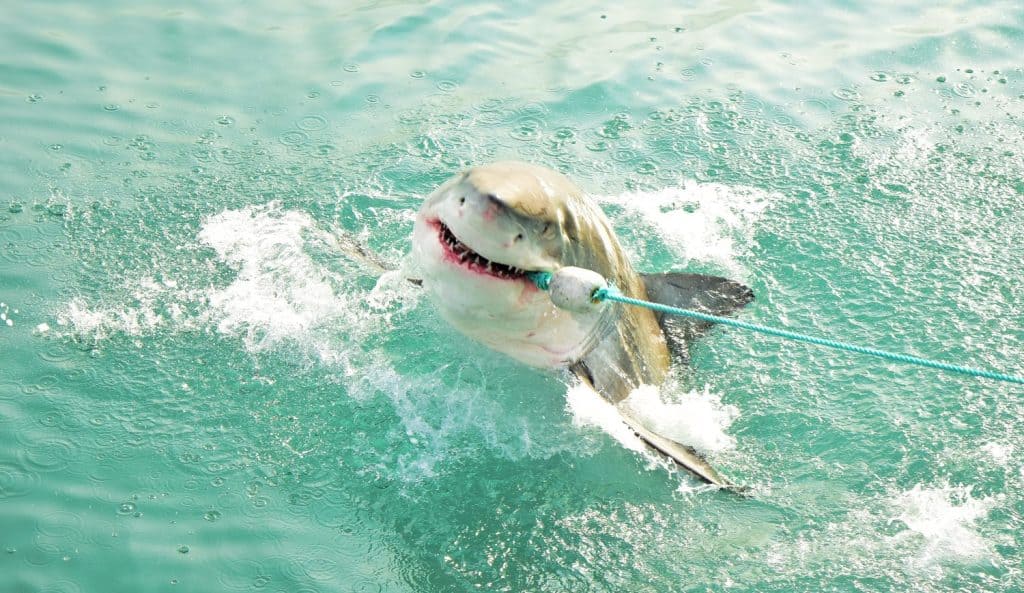
Great white sharks are tagged either by catching the sharks and attaching a tag or by using an applicator rifle.
©Wirestock Creators/Shutterstock.com
- Capture-and-Tag: Sharks are caught with a net or longline. Scientists then either attach a satellite tag to the shark’s dorsal fin or perform a minor surgery to implant an acoustic tag.
- Non-Invasive tagging: An applicator rifle is used to attach a satellite tag to the dorsal fin without ever having to capture the shark.
The capture-and-tag approach has been the standard for years to ensure tags are properly affixed to great white sharks. However, it can also cause stress to the shark. In some instances, tagging has led to the death of great white sharks.
While the non-invasive approach helps keep stress levels low and allows scientists to tag sharks in remote areas, there is a possibility that the tags may not affix properly. This can lead to infection, impaired swimming, or the tag falling off shortly after being attached.
Why Shark Trackers Can Cause More Fear Than Good
Shark trackers are a great tool when used for conservation purposes. However, in some instances, they can cause more fear of sharks than is warranted. Reports of sharks near popular beaches can lead people to believe that sharks are becoming more aggressive toward people. This simply is not true.
Additionally, the data can be interpreted to show that sharks are only predatory. In reality, many sharks travel great distances as they migrate toward breeding and feeding grounds. These destinations may cause sharks to pass through areas frequented by visitors, sometimes in greater numbers. Sharks are not seeking to attack humans; they are simply migrating from one location to another, as they have done for generations.
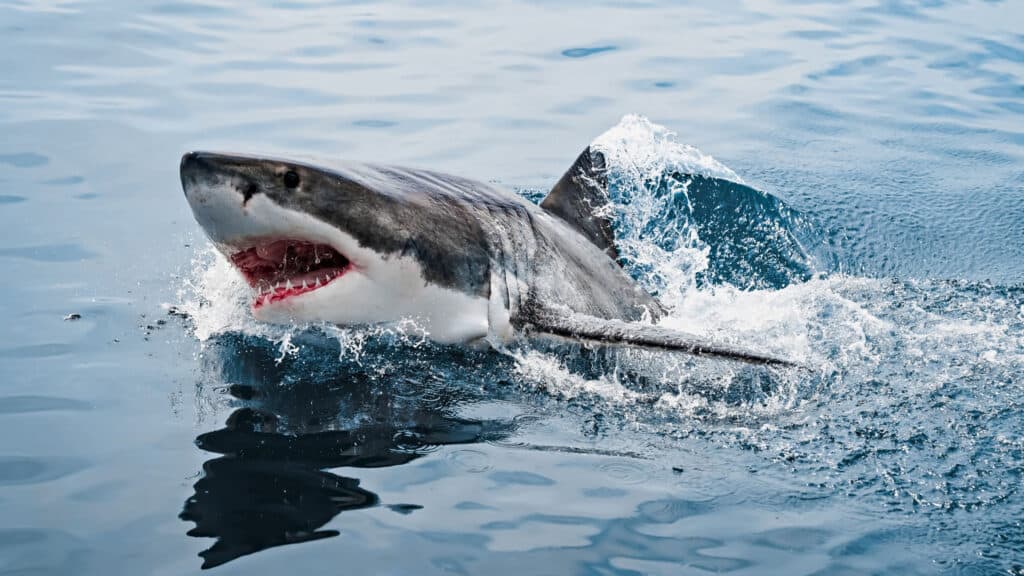
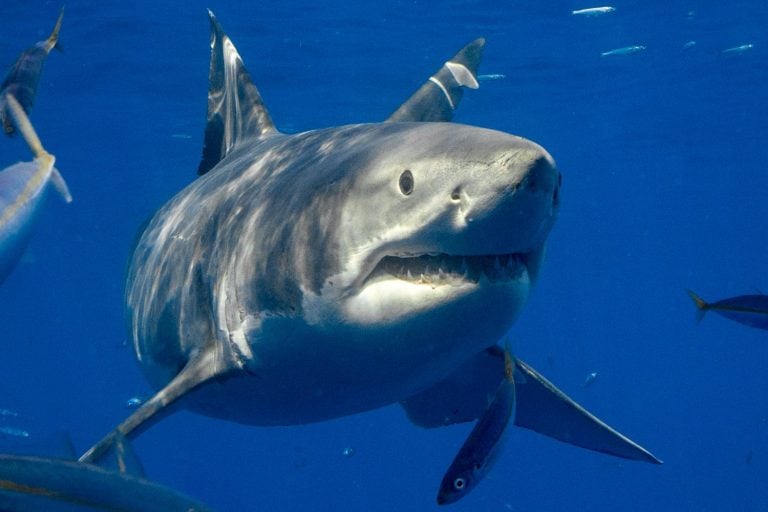
Tracking sharks can lead people to believe that sharks are becoming more aggressive when they make their way to the shoreline.
©NNER/Shutterstock.com
Watching shark trackers can lead to anticipatory beach closures. While it is always good to be aware of your surroundings, closing beaches can increase fear of sharks, most of which keep their distance from humans.
Trackers help scientists better understand the movements and habits of sharks. This is important because, with 80 to 100 million sharks killed each year, a quarter of which are threatened species, there is a good chance that multiple shark species will go extinct. Therefore, it is not sharks that threaten humans; rather, it is humans who threaten sharks. The sooner this is understood, the easier it will be to live in harmony with these creatures, who have inhabited the seas far longer than humans have been alive.