Quick Take
- Skinny pigs weren't bred to be pets, and that origin story has a direct, unsettling impact on how long yours might live. See how origins affect lifespan →
- Where you get your skinny pig matters more than almost any care decision you'll make afterward. Understand breeding risks →
- A missed feeding window that seems harmless to most pet owners can turn fatal for a skinny pig, and it can happen fast. See feeding requirements →
- Skinny pigs have a metabolic quirk that sets them apart from regular guinea pigs in ways most new owners aren't prepared for. Explore their unique health risks →
Skinny pigs are guinea pigs that are born mostly hairless. They generally have only a little bit of fuzz on their noses, legs, and feet. They are called skinny pigs not because they are thin, but because of their lack of fur coat. In fact, skinny pigs are often called mini hippos because they resemble a tiny hippopotamus. In this article, we’ll discuss how long skinny pigs live, what to expect as they grow up, and the factors that impact a skinny pig’s lifespan.
How Long Do Skinny Pigs Live?
The average guinea pig lives 5-7 years, but some may live longer with exceptional care. Skinny pigs generally fall within this spectrum, although some can have shorter lifespans due to genetics and breeding. Skinny pigs were initially discovered due to crossing a haired guinea pig and a hairless lab strain in Canada. They were specifically bred to test skin products, and their popularity soared when pet stores began selling them.
However, there are reputable breeders who are focused on the health and longevity of their skinny pigs and Baldwin pigs. Baldwin pigs are also hairless guinea pigs, but they are born with hair that falls out by around 2 months of age. If you do not adopt from a breeder, you can sometimes find skinny pigs in rescues and shelters.
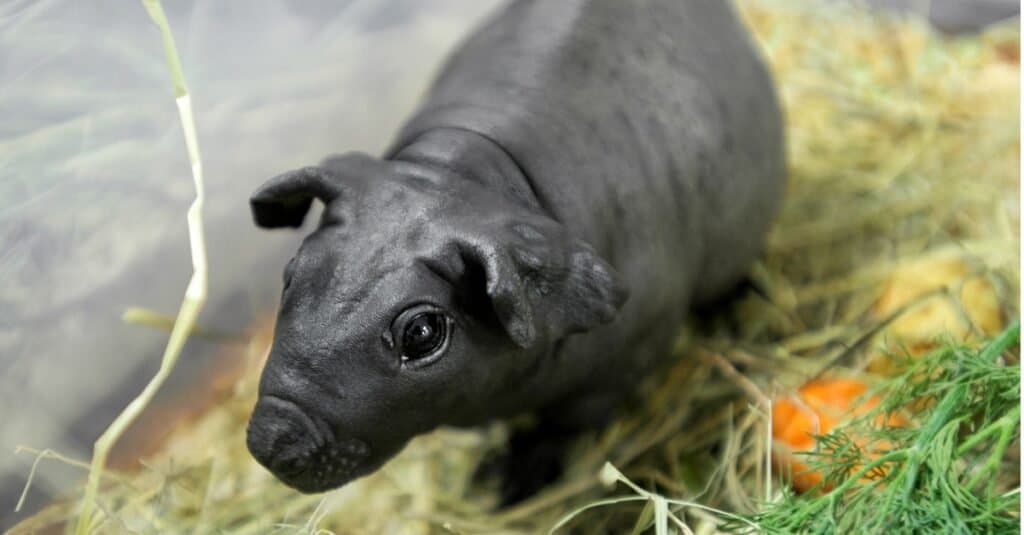
Hairless guinea pigs are said to look like mini hippos.
©iStock.com/nickpo
The Average Skinny Pig Life Cycle
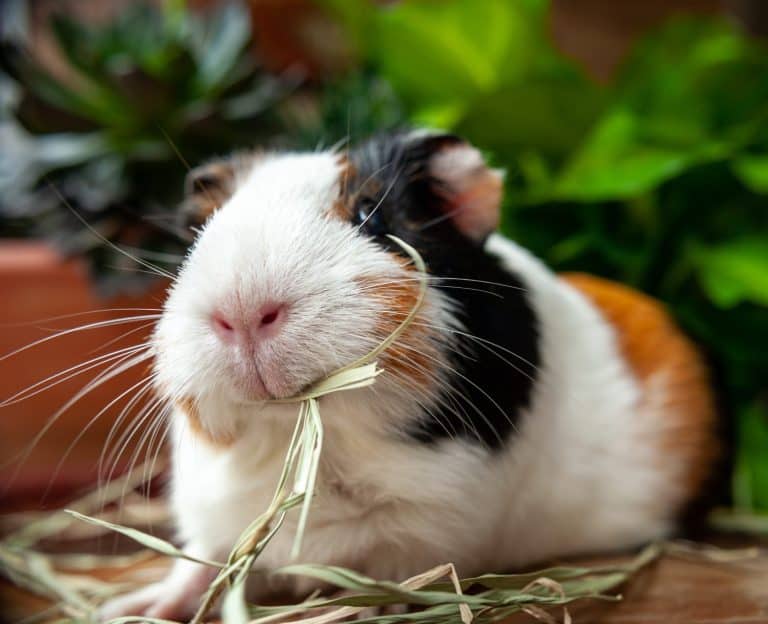
Baby skinny pigs are born more developed than a kitten or puppy. Newborns can see, hear, and run around. Guinea pigs can eat solids from the day they’re born, though they also drink milk from their mothers. Your skinny pig will be ready for their forever home at around eight weeks old. At this age, they don’t require a lot of special care. Baby guinea pigs can be given alfalfa hay until they’re around three to four months old and then switched to grass hay such as timothy hay or orchard grass.
Adult skinny pigs are much like hairy guinea pigs in temperament and care, though they do require regular moisturizing for their sensitive skin. They also eat more than furry guinea pigs due to their faster metabolisms, as they require additional energy to maintain their body temperature.
Their daily care will consist of cage cleaning, keeping their hay pile well-stocked, and feeding a variety of dark, leafy greens. You should weigh your skinny pig regularly to ensure they maintain a good weight and take them to the veterinarian at least once a year for a check-up. As skinny pigs get older, they’re likely to develop health complications. Senior skinny pigs should see the vet once every six months.
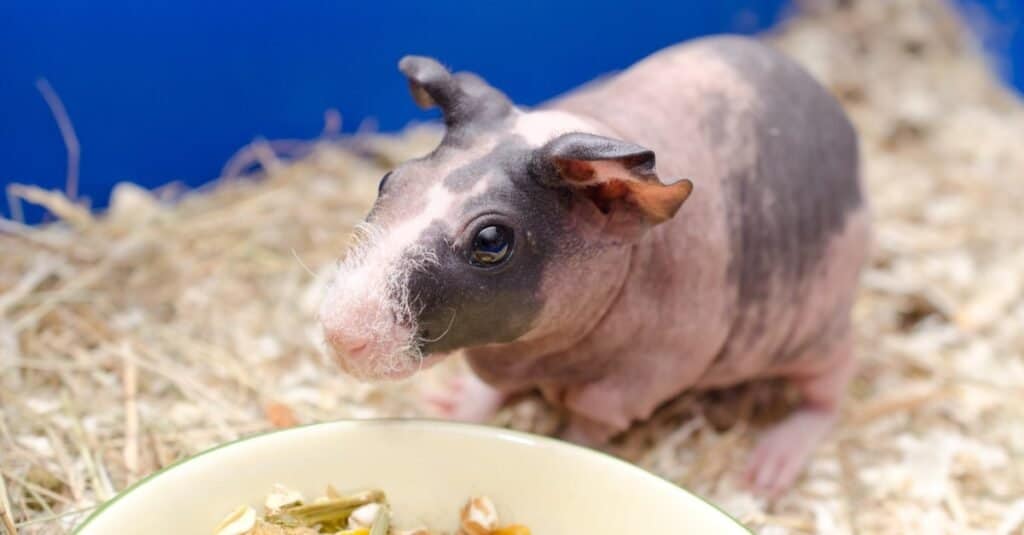
Skinny pigs eat more than regular guinea pigs because they have higher metabolisms.
©Olena Kurashova/Shutterstock.com
Factors That Can Shorten a Skinny Pig’s Lifespan
Poor genetics, underlying health problems, and a lack of routine care can impact your skinny pig’s life expectancy. Read on to understand each factor and how to provide the best care.
Genetics
As we touched on above, skinny pigs are often victims of poor breeding practices. This is because they were initially bred for animal testing, and then breeding mills bred them en masse to sell in pet stores. They also tend to be bred for appearance over health. They tend to be more delicate, and may develop more health problems, such as allergies and skin conditions. Weekly or monthly at-home health checks can help catch health problems early. You should be weighing your skinny pig regularly and checking for signs of common health problems, listed in the Health Problems section below.
Health Problems
Skinny pigs are prone to many of the same genetic health problems as regular guinea pigs, but there are a few issues that are specific to hairless guinea pigs.
Some issues to watch for in your skinny pig include:
- Upper respiratory infection
- Pneumonia
- Allergies
- Parasites such as lice and mites
- Fungal infections such as ringworm
- Scurvy
- Gastrointestinal (GI) stasis
- Skin conditions and risk of skin abrasions
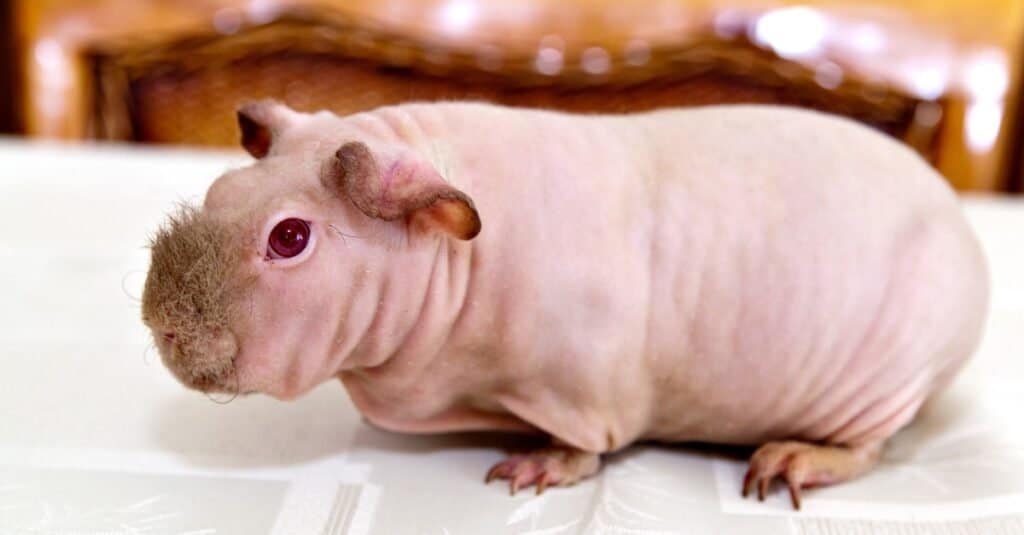
Skinny pigs are prone to skin conditions and abrasions in addition to the normal guinea pig health issues.
©Anna Tronova/Shutterstock.com
Care
Unfortunately, small animals like skinny pigs are still misunderstood and often do not receive proper care. Poor care can cause a skinny pig, or any animal, to develop health problems that can shorten their lifespans.
Here are some things to know before adopting your skinny pig:
- Skinny pigs need a cage that’s at least 7.5 square feet, but ideally 10.5 square feet or greater. This allows them to get the exercise they need each day. Larger cages also stay cleaner longer, and this added hygiene can help to keep your pet healthy.
- Their cage must have ventilation. Going back to their sensitive respiratory systems, skinny pigs shouldn’t be kept in tanks or other cages without adequate ventilation. (C&C cages are great for providing lots of airflow).
- Guinea pigs are always eating, and skinny pigs eat even more. They should have constant access to grass hay without exception, as even 6-8 hours without food can be deadly. They also need a mix of daily vegetables, high-quality guinea pig pellets, and they should never be without fresh water.
- Hairless guinea pigs are more sensitive to heat, humidity, cold, and drafts. Keep your skinny pigs in a temperature-controlled area of the house that remains 70°-75°F.
- Trim their nails regularly. As mentioned above, skinny pigs are at risk for skin abrasions, so keep their nails trimmed to prevent self-injury.