
Quick Take
- The 'teacup pig' is not a breed at all. It is a deception built on a hidden practice that harms animals before they ever reach a buyer's hands. Uncover the teacup pig myth →
- Unneutered male pigs can turn a single pet purchase into an out-of-control situation faster than any new owner anticipates. See the breeding consequences →
- The micro-pig trend peaked two decades ago, yet the abandonment crisis is somehow worse now, and the reason is not what most people assume. Explore the abandonment crisis →
Anyone who visits Ironwood Pig Sanctuary just outside Tucson, Arizona, notices something right away—there are a lot of pigs. Sanctuary co-founder Mary Schanz says there are more than 680 pigs under her team’s care.
It wasn’t always that way. When Mary and her co-founder/husband, Ben Watkins, opened the doors of their sanctuary in 2001, they had just two pigs, taken in from someone who could no longer care for them. But when you make it your mission to provide a safe haven for a breed that has a very high rate of abandonment, neglect, and abuse, the resident population quickly swells. Neither Mary nor Ben was surprised.
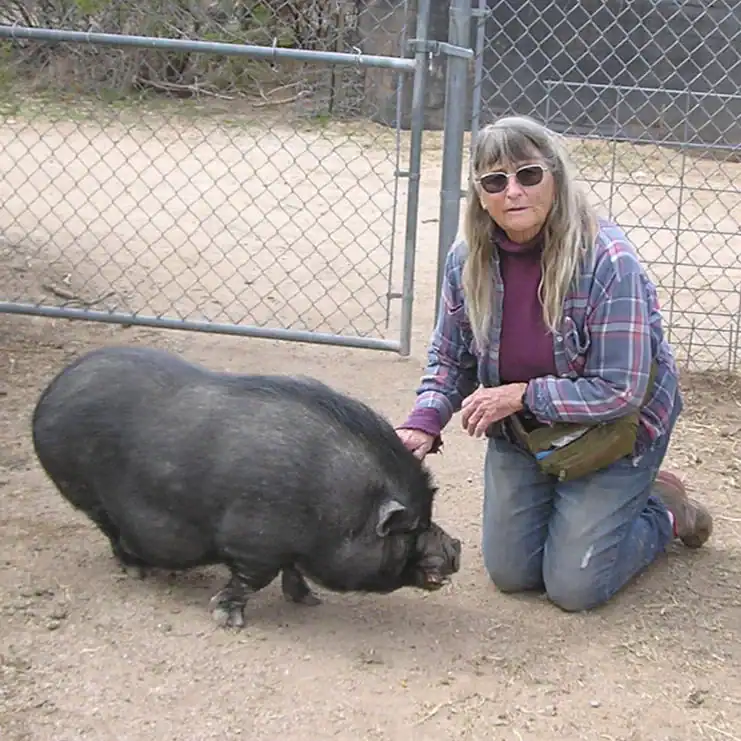
Mary Schanz, co-founder of Ironwood Pig Sanctuary in Arizona.
“We knew there would be a big need for our sanctuary. Even before we opened our doors, we were getting calls every single day to take in unwanted potbellied pigs,” Schanz says.
From Sailing the Seas to Sanctuary Life
Caring for nearly 700 potbellied pigs wasn’t originally in Schanz’s plans. She and her husband spent many years sailing their boat along the coast of their home state of California. A temporary work contract for Ben took the couple to Tucson. To fill her free time, Schanz got very involved as a volunteer with animal rights causes in the area.
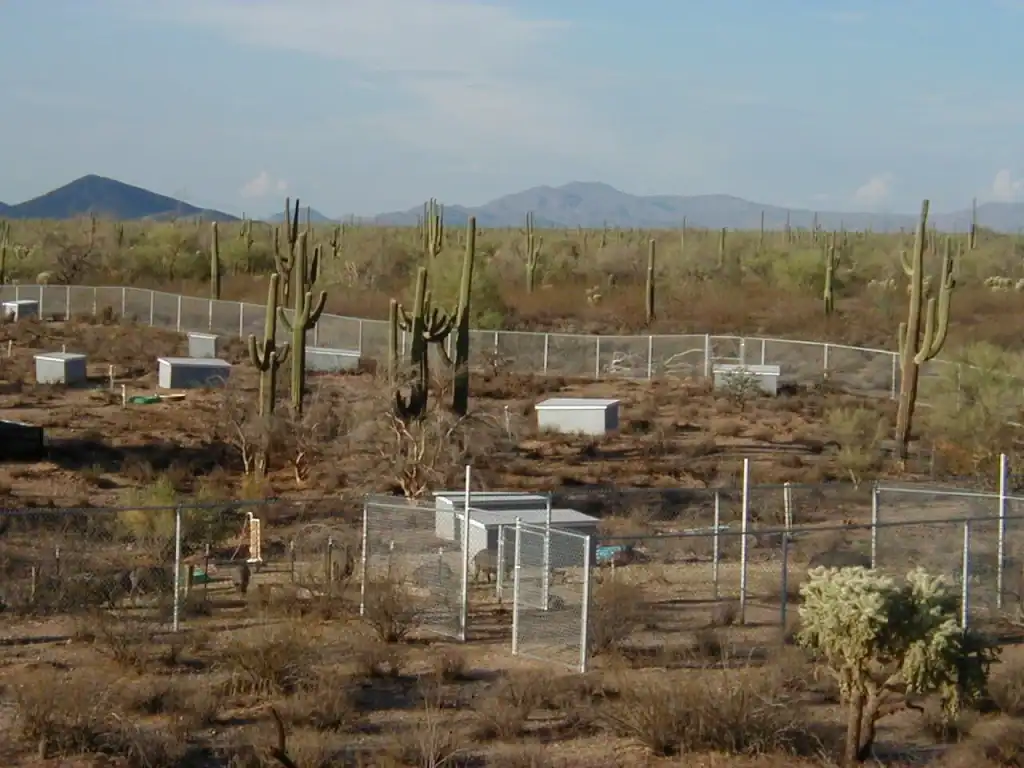
Ironwood Pig Sanctuary during its first year in 2001. Since then, the sanctuary has grown and welcomed more than 1,900 pigs.
She quickly learned about the large numbers of potbellied pigs abandoned and neglected throughout the state. What began as a trend of owning tiny potbellied pigs in the early 2000s has, nearly three decades later, resulted in a large population of neglected and abandoned adult pigs.
The original cause was false advertising.
“Irresponsible breeders market potbellied pigs as ‘micro’ or ‘teacup’ pigs, but that is a lie,” Mary says. “These pigs, when properly fed and cared for, quickly grow to an average of 150 pounds. The way breeders get around that in order to sell them as tiny pigs is by underfeeding the piglets to keep them extremely small.” She says this creates long-term health concerns for the pigs.
Another reason for the rapidly increasing pig population is that owners often fail to neuter male piglets. This is especially problematic because males become fertile within 60 days of birth, and females at three to four months. Many owners acquire several piglets at once. “When the males aren’t sterilized, they quickly breed, and the owners suddenly have many more piglets than they expected,” Schanz says. “Also, when male pigs aren’t neutered, they are extremely naughty and destructive.”
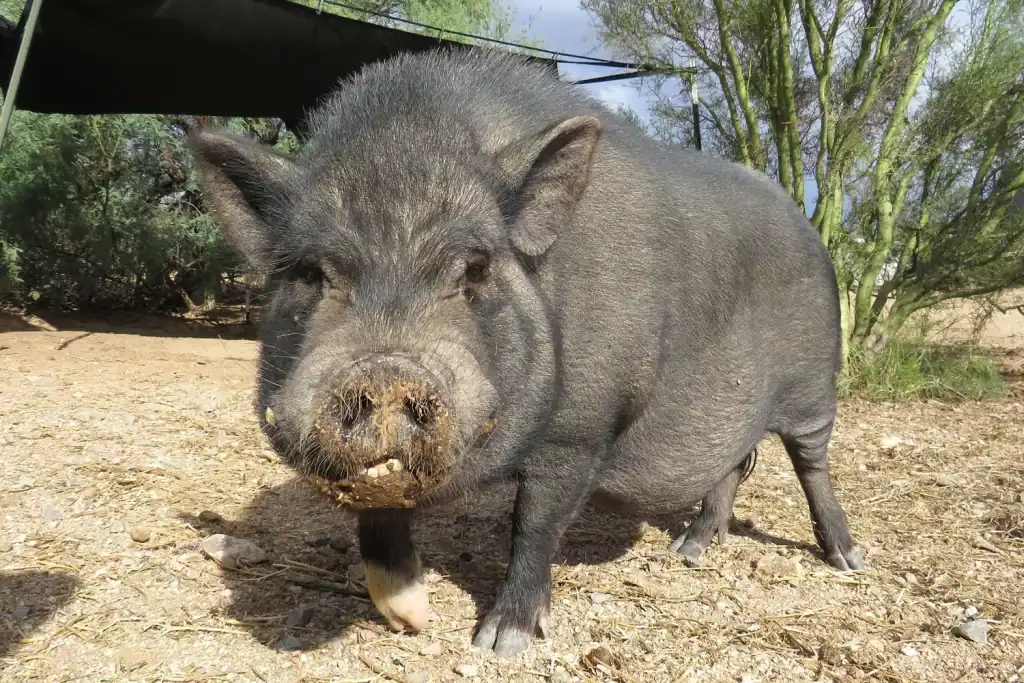
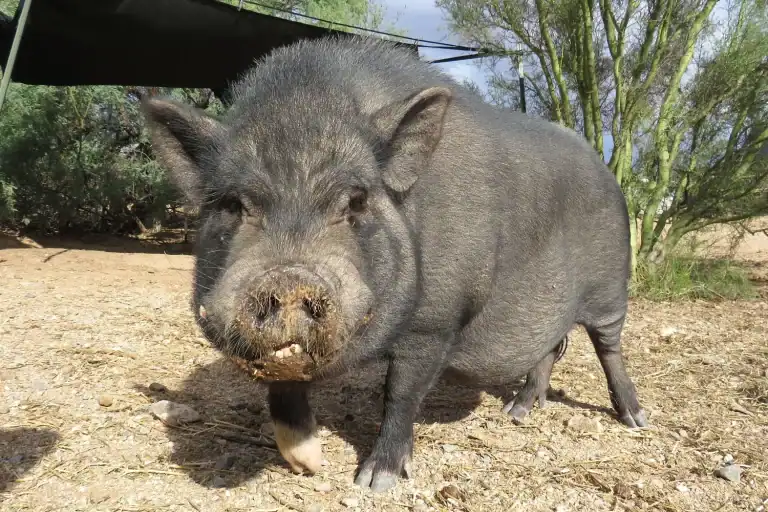
“OG” is one of the potbellied pigs cared for by Ironwood Pig Sanctuary.
When Ben’s work contract ended, the couple decided to stay and open the area’s first potbellied pig sanctuary. They purchased 130 acres of undeveloped land in Marana, a small community on the outskirts of Tucson. Much of it is left in its original wild state, with the pigs spread out over 22 acres that include separate fields to accommodate the diverse herds.
Ironwood Pig Sanctuary is preparing to celebrate its 25th anniversary this year. It is the largest potbellied pig sanctuary in Arizona and one of the largest in the country.
We knew there would be a big need for our sanctuary. Even before we opened our doors, we were getting calls every single day to take in unwanted potbellied pigs.
Mary Schanz, co-founder of Ironwood Pig Sanctuary
What Does It Take to Care for Nearly 700 Pigs?
It takes a big team and an annual budget of $4 million to care for Ironwood’s pig population. It is exclusively funded by donations.
“We have a team of 50 employees, including both full- and part-time workers,” Schanz explains. “We need eight to ten feeders and five to seven waterers each day to care for the pigs. It takes each crew five hours to feed and water the entire population.” There are also staff members to prepare needed pig medications, perform maintenance around the property, and help transport pigs to the vet for regular and emergency care. When the Arizona heat returns each spring and summer, an extra team of three is needed to keep the pigs cool. The team applies cold towels to each pig continuously between 10:00 a.m. and 6:00 p.m., the hottest part of the day.
Schanz says they go through four to five tons of pellet feed each month, which is the pigs’ primary nutrition source. The pigs’ diet is supplemented with hay to provide grazing and activity enrichment throughout the day. The sanctuary recently switched from alfalfa to grass hay because grass has fewer calories. The pigs also sometimes get treats like pumpkins and fruit that is donated from local farms.
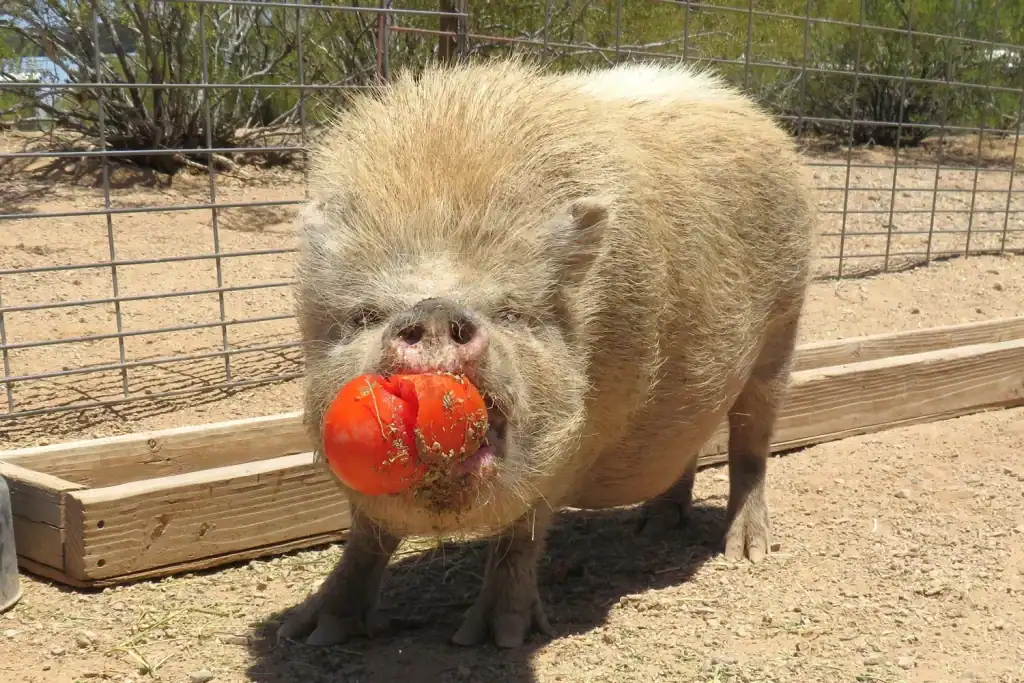
Local farms occasionally donate fruit and vegetables to the sanctuary. “Bailey” is enjoying a big tomato.
In addition to the pigs that permanently live at Ironwood, the sanctuary also provides financial support for about 450 additional pigs that are in foster care throughout the state. The sanctuary covers veterinary expenses for each animal, including sterilization, dental care, and preventive medical care.
Schanz says she gets calls every day to take in stray or abandoned pigs, which are often found by homeowners when the pigs wander into backyards. She cannot accept them all, so foster care is one way to provide care and assistance for these pigs.
Looking to the Future
Although the trend for micro pigs may no longer be capturing the nation’s attention as it did in the early 2000s, Schanz says the problem is now worse than ever due to lack of sterilization and buyer ignorance.
“Buyers are told these pigs will be just like the family dog, and that’s far from the truth. They are natural rooters and dig up and destroy backyards. It’s just their nature, no matter how cute they are,” she says. Schanz believes up to 90 percent of potbellied pigs purchased end up rehomed or abandoned.
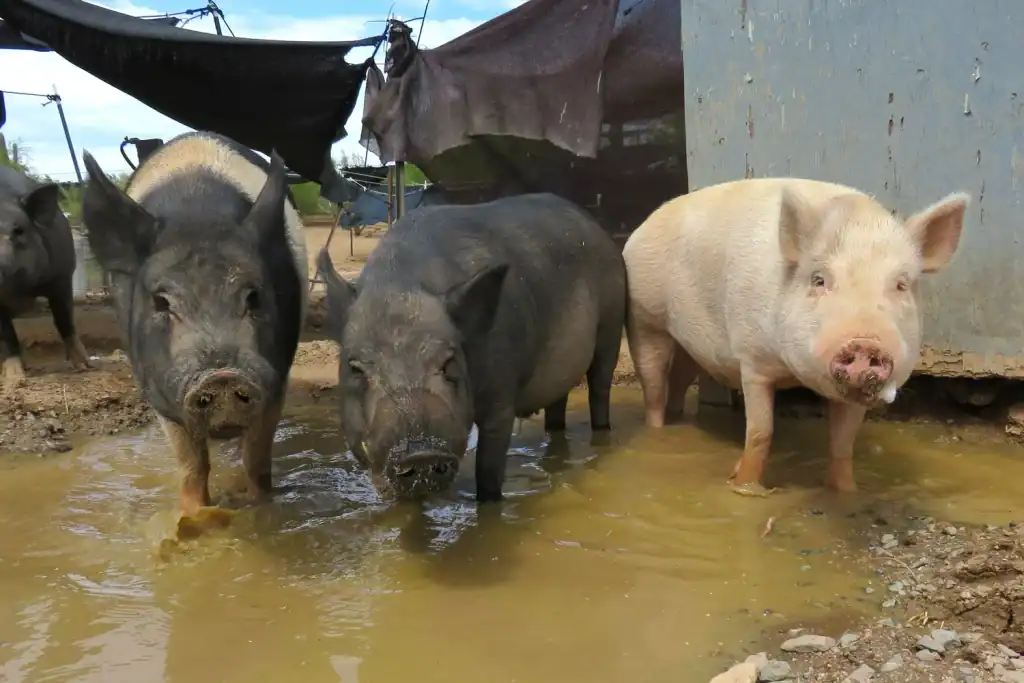
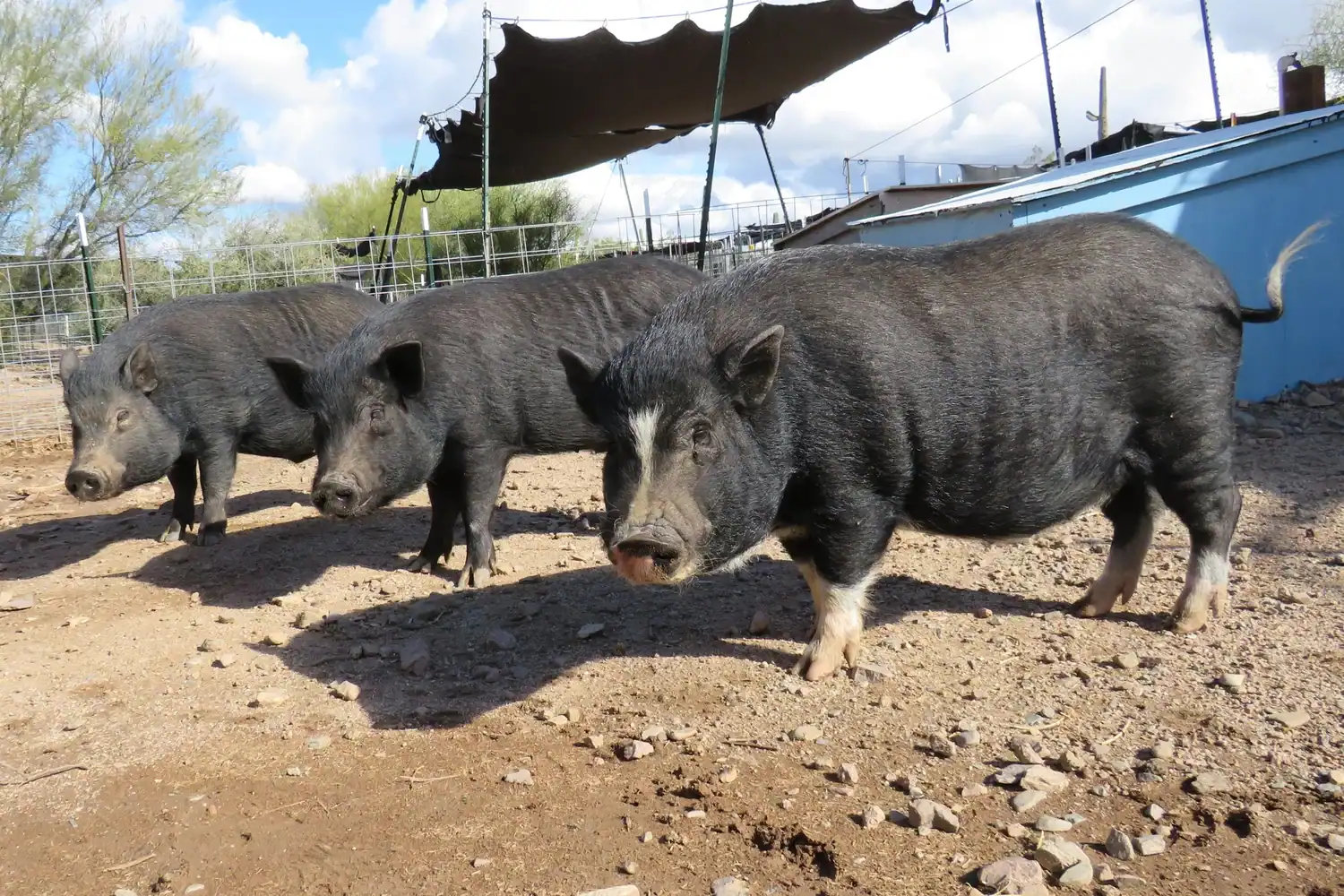
Robin, Mac, and Bisquick enjoy a post-rainstorm puddle at the sanctuary.
As the original founders of Ironwood 25 years ago, Schanz and her husband are now hoping to find new owners for the sanctuary so they can eventually retire. Until then, Schanz says her goal is to keep helping as many pigs as possible. She also has some advice for anyone considering the purchase of a potbellied pig.
“Pigs are wonderful animals and quite sensitive. They bond deeply with their owners. They’re also a lifetime commitment, not a toy or a passing fad. Do your homework and understand what you’re getting into before bringing a potbellied pig into your life,” she advises.