
Quick Take
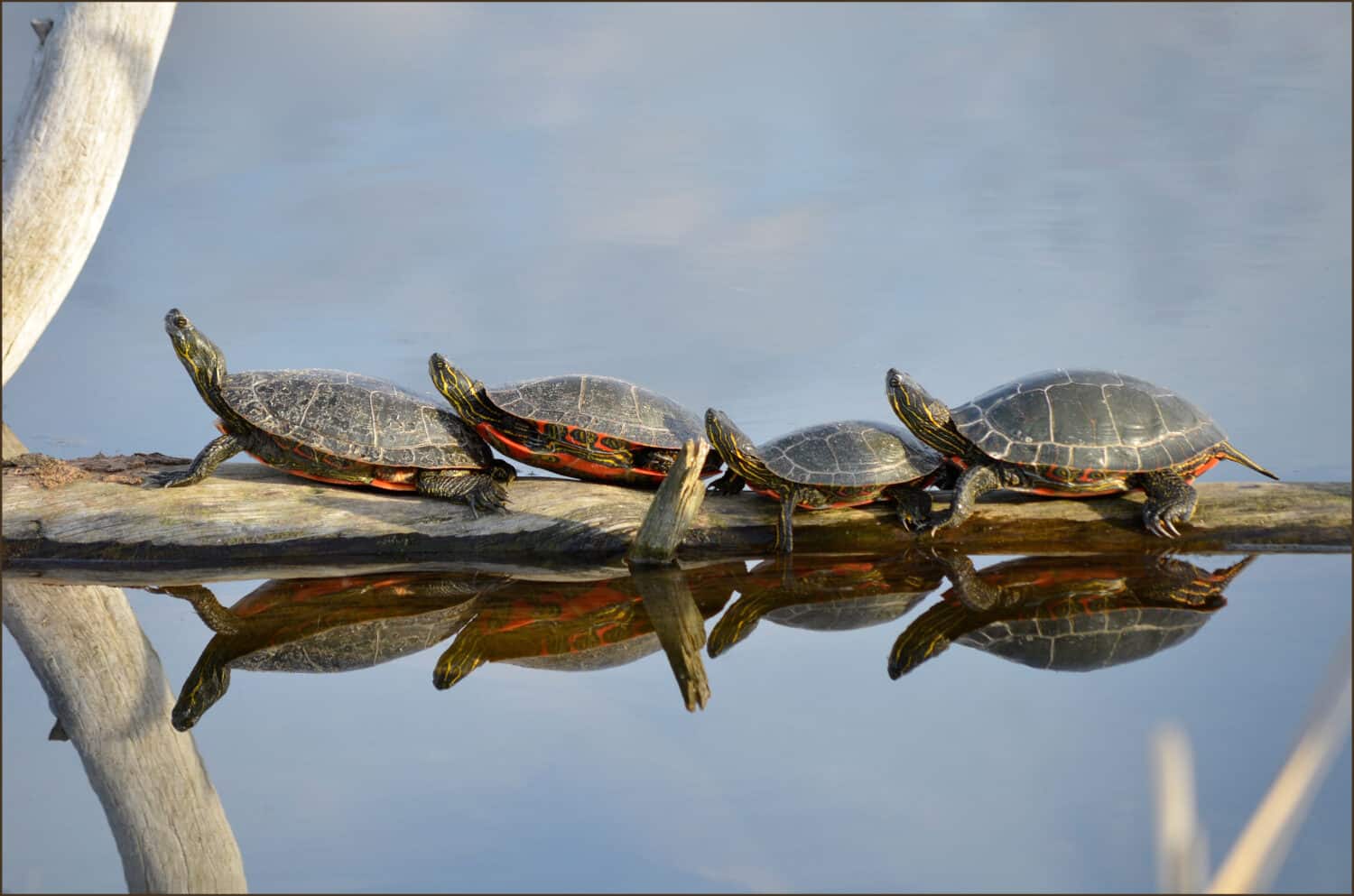
- Turtles bask in April to raise their body temperature, boost metabolism, and resume their seasonal activity after winter.
- Species such as painted turtles, sliders, and map turtles rely on sun exposure for health and reproduction.
- Basking helps control parasites, support immune function, and aid vitamin D production for shell strength.
- Humans should be careful about disturbing them as it can disrupt their essential basking behavior and long-term survival prospects.
On a warm April afternoon, turtles gather on logs and rocks to absorb sunlight. Basking in the sun plays a critical role in their survival. As so-called “cold-blooded” animals, turtles rely on external heat to regulate their body temperature. After winter, their bodies need warmth to resume normal function. Spring conditions create an ideal balance where air warms faster than water, allowing turtles to heat up efficiently.
Basking also supports digestion and movement. Warmer body temperatures help turtles process food and respond more quickly to threats. Many species return to the same basking locations each year, choosing spots that offer sunlight and quick access to water. These sites allow turtles to warm up while staying alert to predators. In temperate zones of North America, April marks the start of this visible seasonal pattern.
Meet Our Expert
Our consultant for this article is Dr. Callie Klatt Golba, Curator of Turtle Conservation Research at the Peggy Notebaert Nature Museum of the Chicago Academy of Sciences. She specializes in research on freshwater turtle conservation and restoration of habitat for Midwestern species.

Dr. Callie Klatt Golba, herpetologist from the Peggy Notebaert Nature Museum in Chicago.
The Main Thing: Temperature Regulation
Dr. Golba explains, “all animals have an ideal body temperature that they need to be at to have energy to move around, digest food, and stay healthy. Unlike ‘warm-blooded’ animals like us, who can shiver or adjust internal metabolic rates to reach that perfect temperature, ‘cold-blooded’ animals like turtles rely on their surroundings to regulate their body temperature. Basking is when reptiles lay out in a sunny spot to absorb the warmth of the sun for energy to live their lives. For many aquatic turtles, basking also helps them shed old scutes [AZ: the hard plate-like scales that cover a turtle’s shell] as they grow and dry out any parasites.”
Turtles adjust their behavior throughout the day to maintain a stable temperature. They may move between sun and water to avoid overheating. This balance helps them stay within a preferred temperature range.
Sunlight and Vitamin D Production
Sunlight provides more than heat. It supports the production of vitamin D, which is essential for calcium regulation. Strong bones and shells depend on proper calcium levels. Without adequate sunlight, turtles can develop health problems.
Wild turtles benefit from natural sunlight during basking. In captivity, artificial UV lighting is often needed to replace this exposure. Spring offers increasing daylight, giving turtles more opportunity to absorb ultraviolet rays. This helps support healthy growth and shell strength.
Spring Brings Out the Sunbathers
In early spring, water temperatures remain low, so basking provides a critical energy boost. Spring basking supports key biological processes. Warmer body temperatures increase metabolic rate, allowing turtles to digest food and store energy. This is important after winter, when activity levels are low. As turtles begin feeding again, basking helps them process nutrients more effectively.
According to Dr. Golba, “as temperatures start warming up in April, it is finally warm enough for turtles to restart their yearly cycle. As they are emerging from brumation, a reptile version of hibernation, turtles must bask in the sun to warm up. Depending on their life stage, they require the sun’s energy to find food to grow, find mates, or to develop eggs.
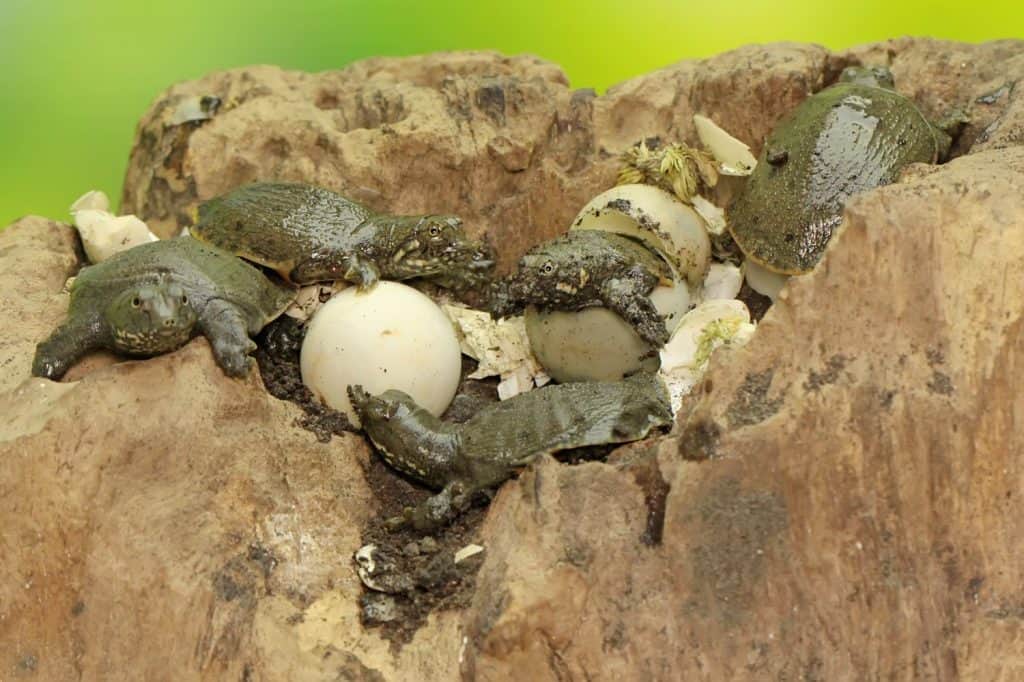
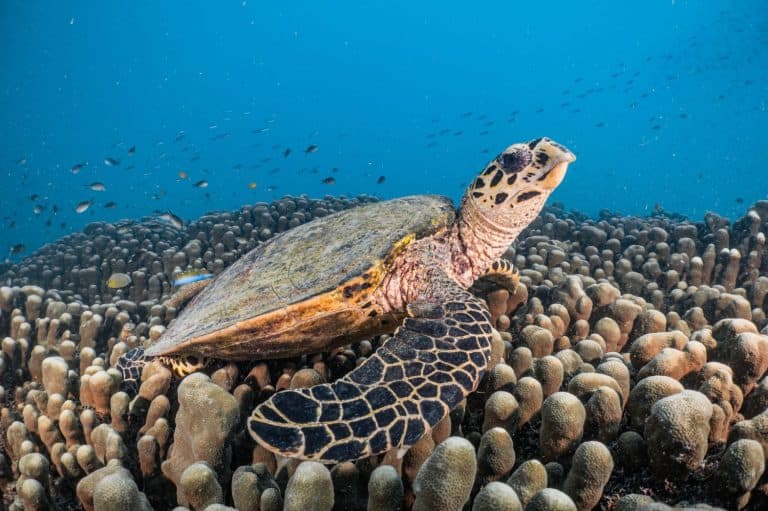
Basking helps mother turtles regulate their body temperature, important for egg development.
©I Wayan Sumatika/Shutterstock.com
Reproduction depends on proper temperature regulation. Females need stable conditions to develop eggs, while males require warmth for reproductive activity. Turtles that bask regularly in early spring are better prepared for the breeding season. This link between temperature and reproduction highlights the importance of basking behavior.
Daily Patterns and Site Selection
Basking follows a daily rhythm. Turtles often emerge in late morning when sunlight becomes strong enough to warm the air. They may bask in short periods, returning to water to cool down. Weather conditions influence these patterns, with clouds and wind affecting behavior.
Turtles choose sites that offer safety and efficiency. Logs, rocks, and platforms near water allow quick escape from predators. They adjust their position to follow the sun and maintain optimal warmth. Changes in water level or human activity can shift these patterns over time.
What About Predators?
Turtles are already such slow-moving animals. How is it that they don’t get completely decimated by predators as they lay out in the sun, seemingly defenseless?
“Turtles need the warmth from basking to survive, so they have evolved strategies to do so to minimize their exposure to predators,” explains Dr. Golba. “The patterns on their shells can match the habitats where they bask, so they are hiding even when they are out in the open. Some of the faster aquatic turtles, like painted turtles or softshell turtles, pick basking spots where they can quickly jump in the water and swim away. The slower moving box turtles can completely close up their shells when threatened.”
Here are some of the species Dr. Golba mentioned, and others, that you might see taking in the sun near your local pond on a bright day:
Painted Turtles
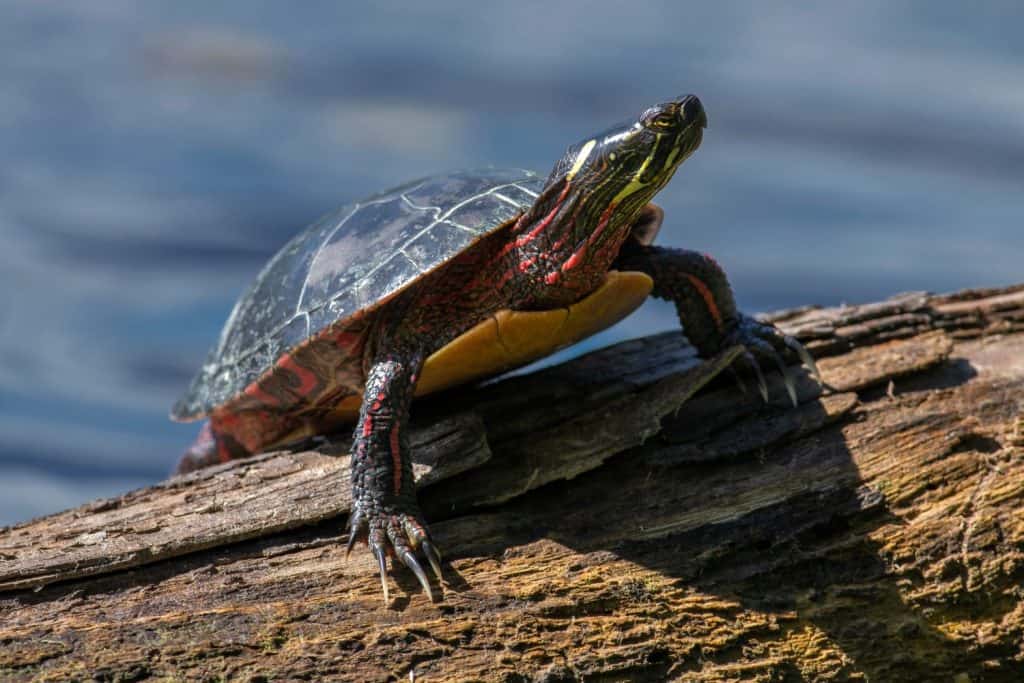
This painted turtle is a common species in North America.
©William Levesque/Shutterstock.com
Painted turtles are among the most common basking species in North America. Their smooth shells and striped markings make them easy to recognize. These turtles often gather in groups, stacking together on logs and rocks. Painted turtles depend on shallow wetlands, so roads and habitat changes can affect their movement.
Softshell Turtles
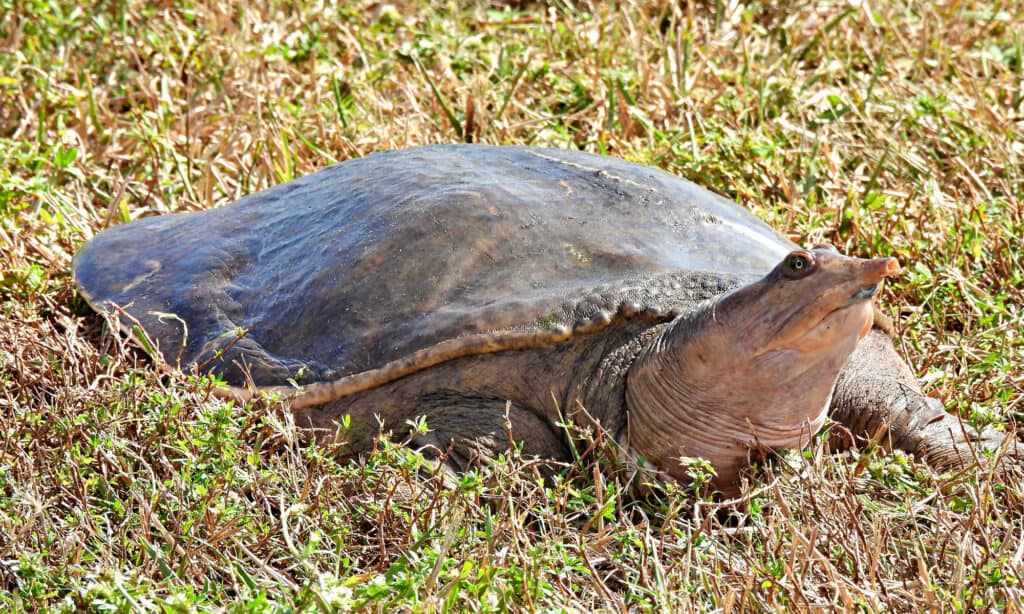
This is a Florida softshell turtle, with a characteristic flatter shell.
©iStock.com/passion4nature
Softshell turtles are known for their flat, flexible shells and streamlined bodies. Instead of hard scutes, their shells are covered in leathery skin, which allows them to move quickly in water and even bury themselves in sand. They are highly aquatic and spend much of their time submerged, often with only their long snouts exposed like snorkels. In spring, they may bask along shorelines but tend to be more cautious than other turtles. Their speed and camouflage make them effective predators, feeding on fish, insects, and small aquatic animals.
Turtles need the warmth from basking to survive, so they have evolved strategies to do so to minimize their exposure to predators.
Dr. Callie Klatt Golba, Curator of Turtle Conservation Research at the Peggy Notebaert Nature Museum of the Chicago Academy of Sciences
Box Turtles
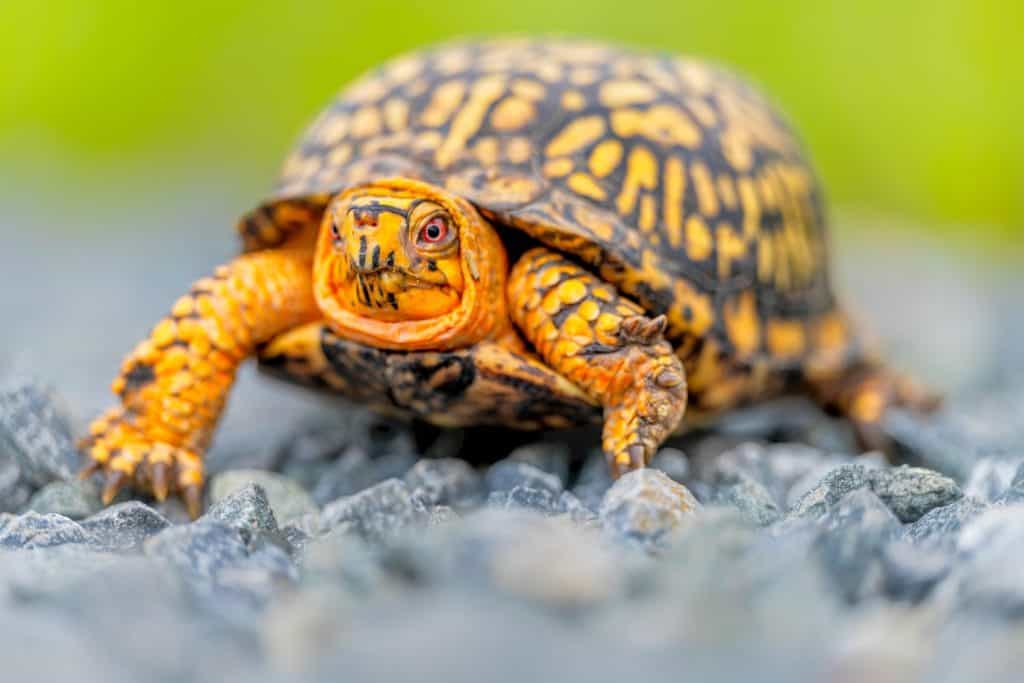
An eastern box turtle crossing a road.
©Buvana Bala/Shutterstock.com
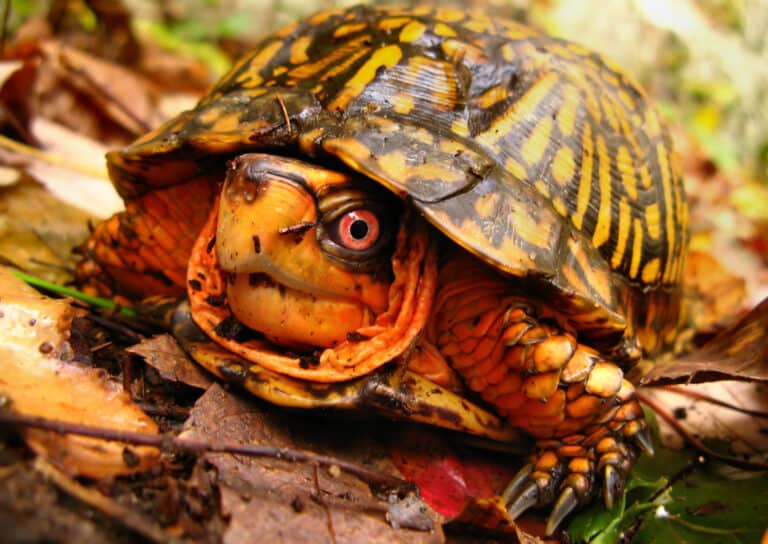
Box turtles are recognized for their domed shells and the hinged plastron that allows them to close themselves completely inside. Unlike many turtles, they are primarily land-dwellers, often found in forests, fields, and suburban yards. In spring, they become more active as temperatures rise, searching for food such as insects, berries, and mushrooms. Their slow, deliberate movements and strong site fidelity mean they often stay within the same small home range for years. This makes them especially vulnerable to habitat disruption but also easy to observe in familiar locations.
Red-Eared Sliders
Red-eared sliders are widely known for their adaptability. They are common in many ponds, especially where released pets have established populations. In spring, they compete with other turtles for basking space. Their strong presence can push native species away from preferred sites. Their visibility has made them a focus of research on basking patterns.
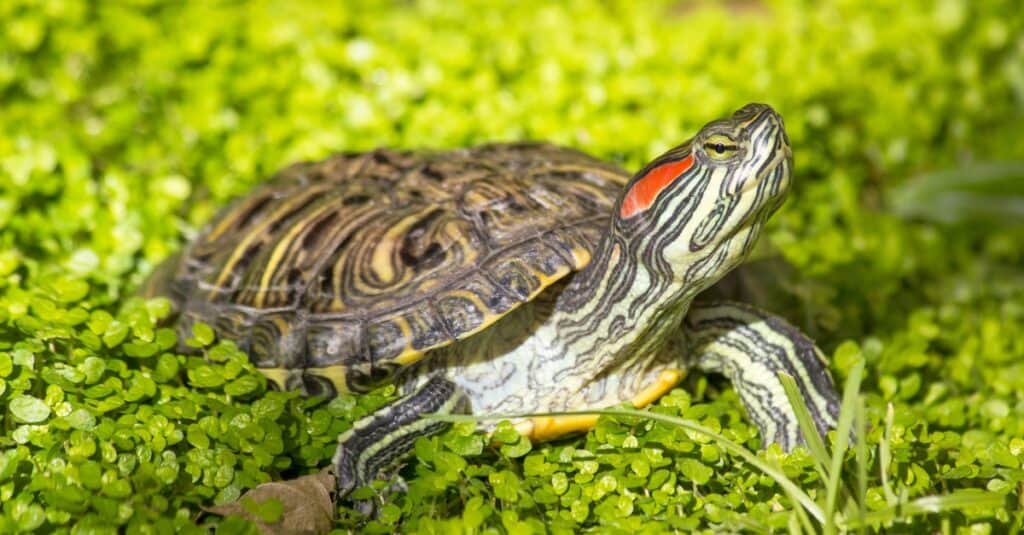
Red-eared sliders are often released pets that compete with indigenous species.
©xbrchx/Shutterstock.com
Snapping Turtles
Snapping turtles behave differently from other basking species. Adults rarely climb onto logs, but they still rely on sunlight. They often rest in shallow water where sunlight can warm their bodies gradually. Younger individuals may bask more openly on land. This subtle approach helps them avoid predators while still gaining the benefits of warmth.

Common snapping turtles are widely distributed across the eastern U.S.
©Chuck Homler / FocusOnWildlife.Me / CC BY-SA 4.0 – Original / License
Map Turtles and River Habitats
Map turtles prefer rivers and large streams with steady currents. In April, they gather on rocks and logs where sunlight reaches the water. These basking spots allow them to warm up while conserving energy. Because they rely on specific habitats, changes to river systems can affect their behavior.
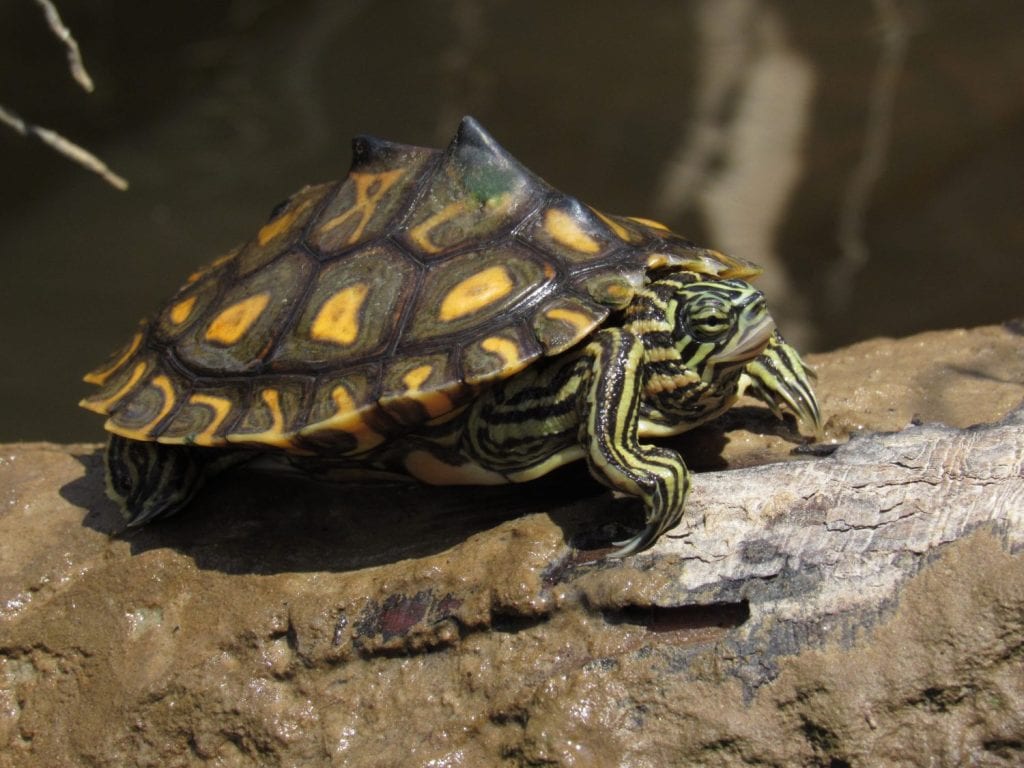
Human activities on the water can disturb the behavior patterns of map turtles.
©Gabbie Berry/Shutterstock.com
Human Impact
Human activity can disrupt basking behavior. Approaching too closely often causes turtles to retreat into the water. This interrupts their ability to regulate temperature and conserve energy. Observers should keep distance and avoid sudden movement. Protecting basking sites supports turtle populations. Leaving natural structures in place and limiting shoreline disturbance can help maintain suitable habitats.
Dr. Golba adds, “Turtles not only use aquatic areas during their long lifetimes, they also use the surrounding habitats to bask, travel to new wetlands, and lay their eggs. Minimizing pollution (such as trash, chemicals on lawns, salts on roads) can keep these habitats healthy. Driving slowly on roads close to wetlands can make sure that travelling turtles stay safe. And as for all wildlife, observing from a distance, will ensure we aren’t interfering in their natural behavior.”
How Can You Make Your Property “Turtle-Friendly?”
Turtles need a good source of food and water, so they will be most attracted to back yards that have a creek, pond, or undisturbed wetland. If that’s your case, here are some suggestions from Dr. Golba to make your place even more attractive to these charming little reptiles:
“Keeping a ‘turtle-friendly’ yard starts with cultivating healthy wetlands. Bodies of water without pollutants or invasive plant species can support turtles, as well as countless other biodiversity. When mowing nearby areas, checking for turtles beforehand can prevent injuries. Bonus upgrades are adding a variety of basking locations (like logs) and various water depths to support all turtle life stages.”
Even if you are not fortunate enough to be able to maintain turtles on your property, there are likely still places nearby where you can see them in the wild. Local conservation groups and park programs often provide information about turtle habitats. Guided walks and educational events can help people learn more about these animals. Participating in these activities supports awareness and conservation efforts.
What Do You Do If a Turtle is Crossing the Road?
As you’re out driving in rural areas, it’s not uncommon to see a turtle crossing the road, maybe headed to or from its regular basking site. Of course, you don’t want the oblivious reptile to get hit—and you also don’t want to get hit—so if traffic conditions allow, you might pull over to help. That’s what my wife and I once did near my grandparents’ house. Well, actually, we did it six times. Apparently, it was their migration season, as we kept finding turtles trying to cross the road. So, we placed them in the trunk and moved them to a pond miles away on my relatives’ property where we thought they would be safer.
While our instinct to help was right, relocating healthy wild turtles long distances is not recommended. Many turtles rely on a small, familiar home range and will try to return if moved, often putting them back in danger. They may also struggle to survive in a new environment that looks suitable but has different conditions or established populations. The better approach, when it’s safe, is to move the turtle only across the road in the direction it was already heading and then let it continue on its way.
Carefully Balanced Behavior
Taken together, these patterns reveal how essential basking is to nearly every aspect of a turtle’s life, from basic survival to reproduction and long-term health. What may look like a quiet moment on a log is actually a carefully balanced behavior shaped by temperature, safety, and seasonal change. By understanding why turtles bask, recognizing the species we encounter, and responding thoughtfully when our paths cross theirs, we can better coexist with these long-lived reptiles. Even small human choices, like giving them space or helping them safely cross a road, support the steady rhythms that have sustained turtle populations for generations.