
Quick Take
- Male and female hummingbirds don't leave Virginia at the same time, and the reason females linger has nothing to do with the weather. See departure timing →
- Some Virginia hummingbirds travel over 3,000 miles south, and the way they physically prepare for that journey is stranger than you would expect. Explore the migration journey →
- Not every hummingbird flees Virginia for the winter, and the biological trick that lets a few survive the cold pushes the limits of what a warm-blooded animal can do. Discover winter survivors →
- Hummingbirds migrate alone rather than in flocks, and there is a specific survival reason that makes solo travel the smarter strategy. Understand solo travel →
While there isn’t a specific date each year for hummingbirds to leave Virginia, they do migrate around the same time every year. These birds rely on their instincts, which tell them when it’s time to head south. Adult male hummingbirds are generally the first to arrive in Virginia in mid-April, as the weather is heating up. Juveniles and females usually arrive several weeks later, early in May. Ruby-throated hummingbirds are the most common species in Virginia and the only species that breed in the state. Females nest on a slender branch of deciduous trees in the woods, like hornbeams, poplars, and oaks. But when exactly do hummingbirds flee Virginia, and where do they go?
When Do Hummingbirds Flee Virginia?
As summer draws to a close, hummingbirds will start to flee Virginia, migrating south. These birds know when to migrate due to an internal clock. The clock is triggered by temperature, changes in weather, decreasing amount of sunlight, and the decline of food supply. There are no species of hummingbirds that live in the state year-round.
Males leave first, beginning in late August. Females and juveniles follow at a later date, with most leaving by mid-October. The reason for this extended migration period is to ensure that late migrants have enough resources available to complete the taxing migration before winter arrives. However, female ruby-throated hummingbirds have another reason to stay in Virginia a bit longer. They must remain with their hatchlings until they are strong enough to migrate. Some Virginia residents might see a few hummingbirds during the winter, but sightings are rare because only the old or injured stay behind, as they are not strong enough to migrate.
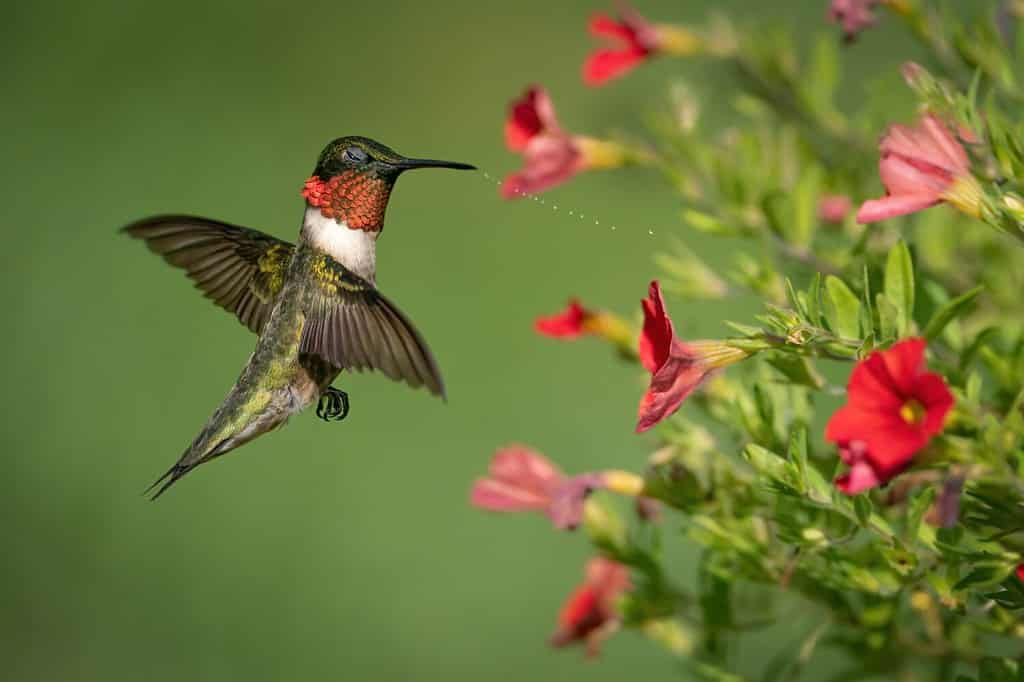
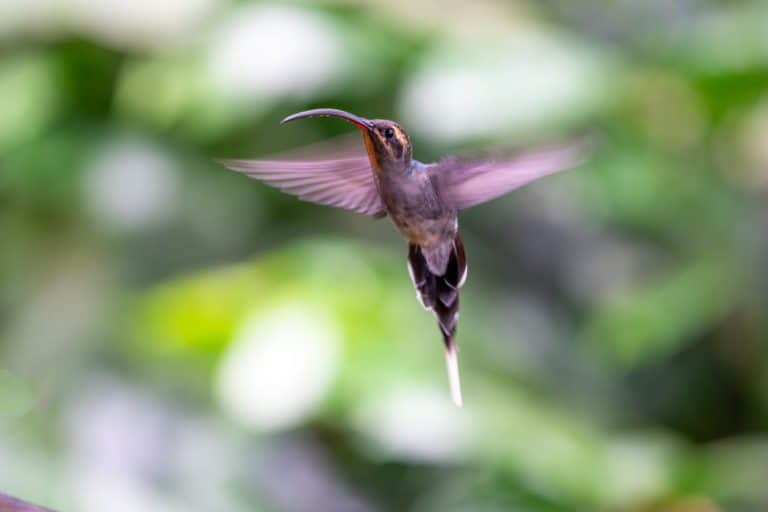
No hummingbird species lives in Virginia year-round, but ruby-throated hummingbirds are the most common.
©Cavan-Images/Shutterstock.com
Where Do Hummingbirds Go When They Flee Virginia and How Long Does It Take?
Hummingbirds fleeing Virginia at the end of summer migrate to Mexico and Central America as far south as Panama. Just to reach the Mexican border approximately 1,700 miles away, a hummingbird has to fly 56 hours at an average speed of 30 mph. However, Panama is over 107 hours away, covering 3,200 miles. They may also fly from Virginia across the Gulf of Mexico to Panama, which takes approximately 67 hours, covering 2,000 miles. Not all hummingbirds fly continuously for hours, but some can fly up to 20 hours daily, covering around 500 miles non-stop.
These amazing birds do not migrate in flocks like other bird species. They migrate on their own when several factors trigger their internal clock. This type of migration is essential in ensuring there is enough food and water for all individuals during the migration so all of the resources are not depleted simultaneously. To prepare for migration, hummingbirds in Virginia can nearly double their body fat by eating larger quantities of nectar from flowering plants and feeders.
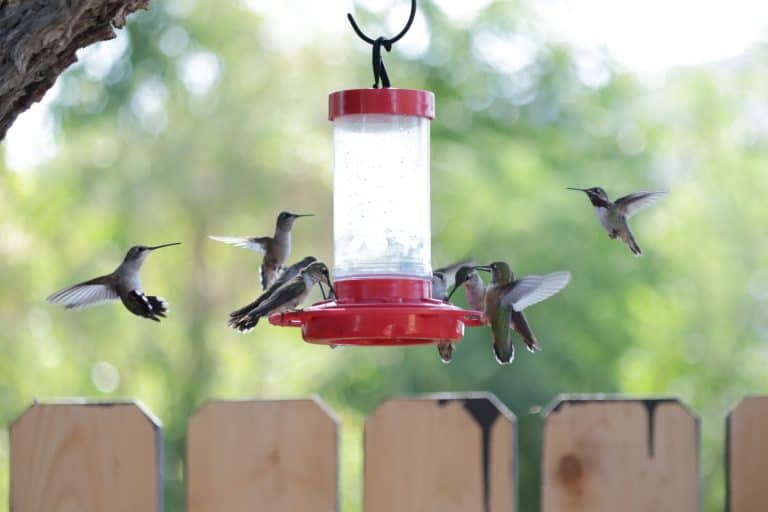
Hummingbirds also catch more insects in mid-air for protein. They need to increase their body fat to help fuel them for their taxing migration. Virginia residents see an increased number of southward-migrating hummingbirds enjoying their feeders during the fall from September to October. Interestingly, these hummingbirds remember the feeders they visited in the spring and will return to the exact spot in fall on their way south.
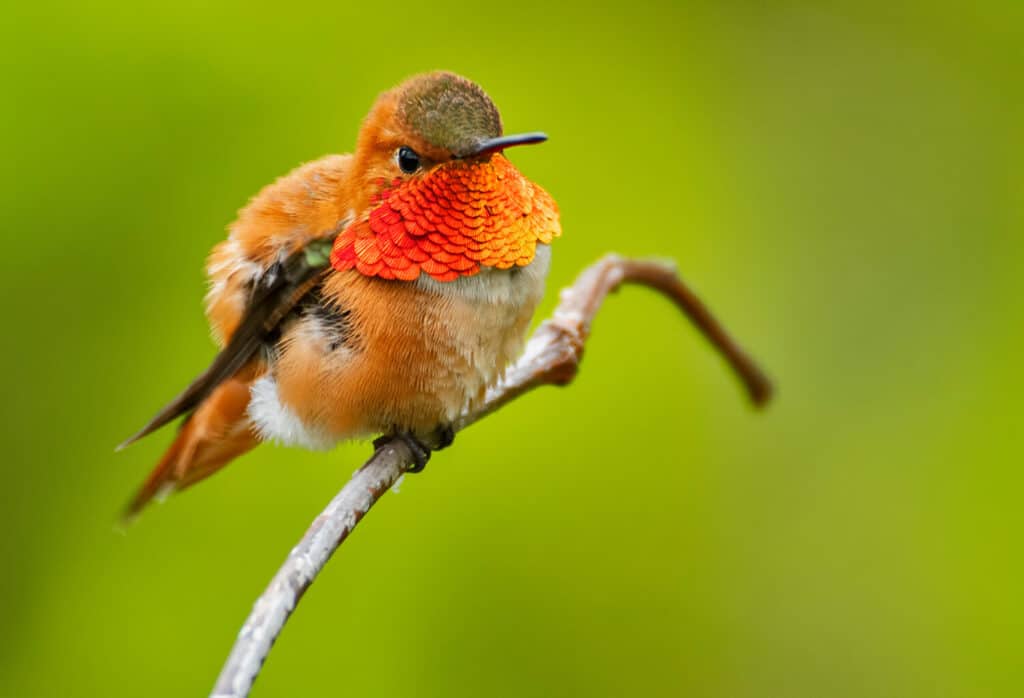
The rufous hummingbird is also occasionally seen in Virginia.
©punkbirdr/Shutterstock.com
Not All Hummingbirds Migrate for the Winter
The majority of Virginia’s hummingbirds migrate thousands of miles south for the winter. However, increasing numbers of ruby-throated hummingbirds and western species such as Rufous hummingbirds are not participating in long-distance migration. Instead, they remain around coastal Virginia during the colder months.
To endure the cold weather, overwintering birds enter a state called torpor, which is similar to brumation in reptiles or hibernation in mammals. However, hummingbirds lower their metabolic rates overnight to conserve energy. Their heart rates can drop from 1,000 to 1,200 beats per minute during flight to just 50 beats per minute. Their body temperatures also plummet. During shallow torpor, their body temperatures can drop by around 20°F. When the birds are in deep torpor, their body temperature can drop up to 50°F lower than their normal daytime temperature, which is over 100°F.
What Hummingbird Species Occur in Virginia?
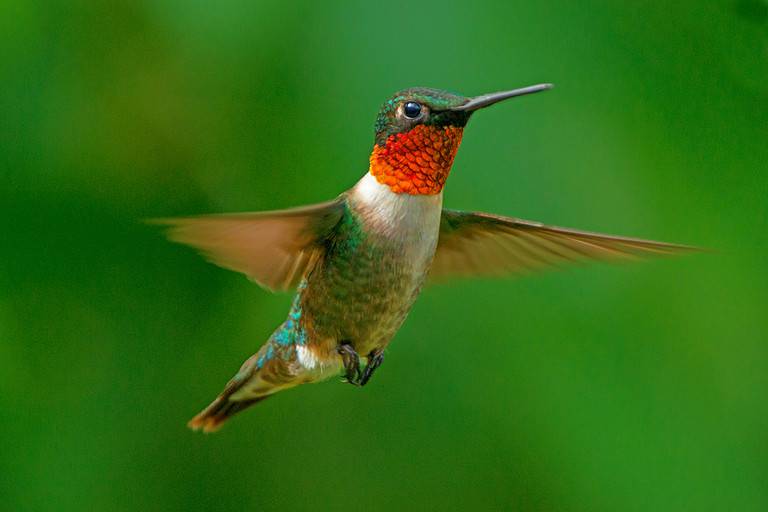
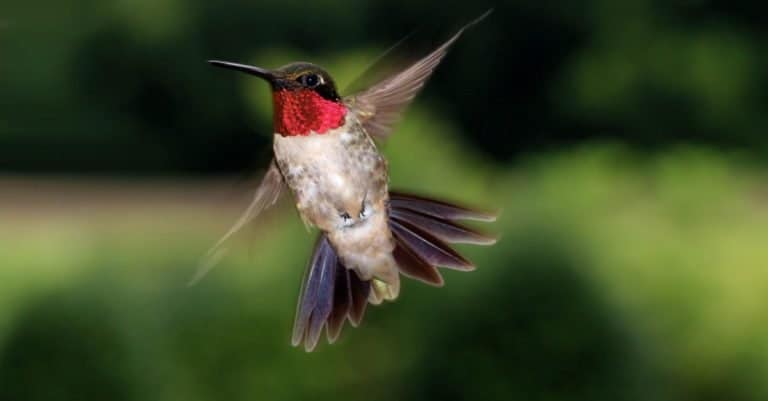
Ruby-throated hummingbirds are the only hummingbird species that regularly occurs in Virginia. These hummingbirds return to Virginia for their breeding season from mid-April through September or October. These tiny birds favor forest edges, meadows, orchards, deciduous woodlands, old fields, and near streams. They can also be seen in gardens, parks, and backyards. They measure 2.8 to 3.5 inches in length with a wingspan of 3.1 to 4.3 inches. Ruby-throated hummingbirds are a metallic, greenish-bronze on their napes, crowns, backs, and their two middle tail feathers. Females generally have brownish sides, while males have green sides. They have dark wings and outer tail feathers with a hint of purple.
The rufous hummingbird is believed to be the most common vagrant hummingbird in Virginia. These birds are occasionally seen during the winter months. These birds take shelter and enter torpor in thick evergreen shrubs, thickets, or man-made structures such as garages and the eaves of houses. These hummingbirds measure 2.8 to 3.5 inches in length with a wingspan of up to 4.3 inches. Adult males are a coppery reddish-brown on their upperparts and flanks, with an iridescent red-orange throat. Females have green backs, spotted throats, and rusty colored flanks.