
Quick Take
- Hummingbird wings have a 180-degree mobility with a wingbeat speed of up to 80 beats per second.
- A 15-second clip reveals a slow-motion video of a hummingbird doing aerial rolls as it flies toward an insect.
- The way hummingbirds expertly manage adverse aerial conditions has been studied to influence drone production.
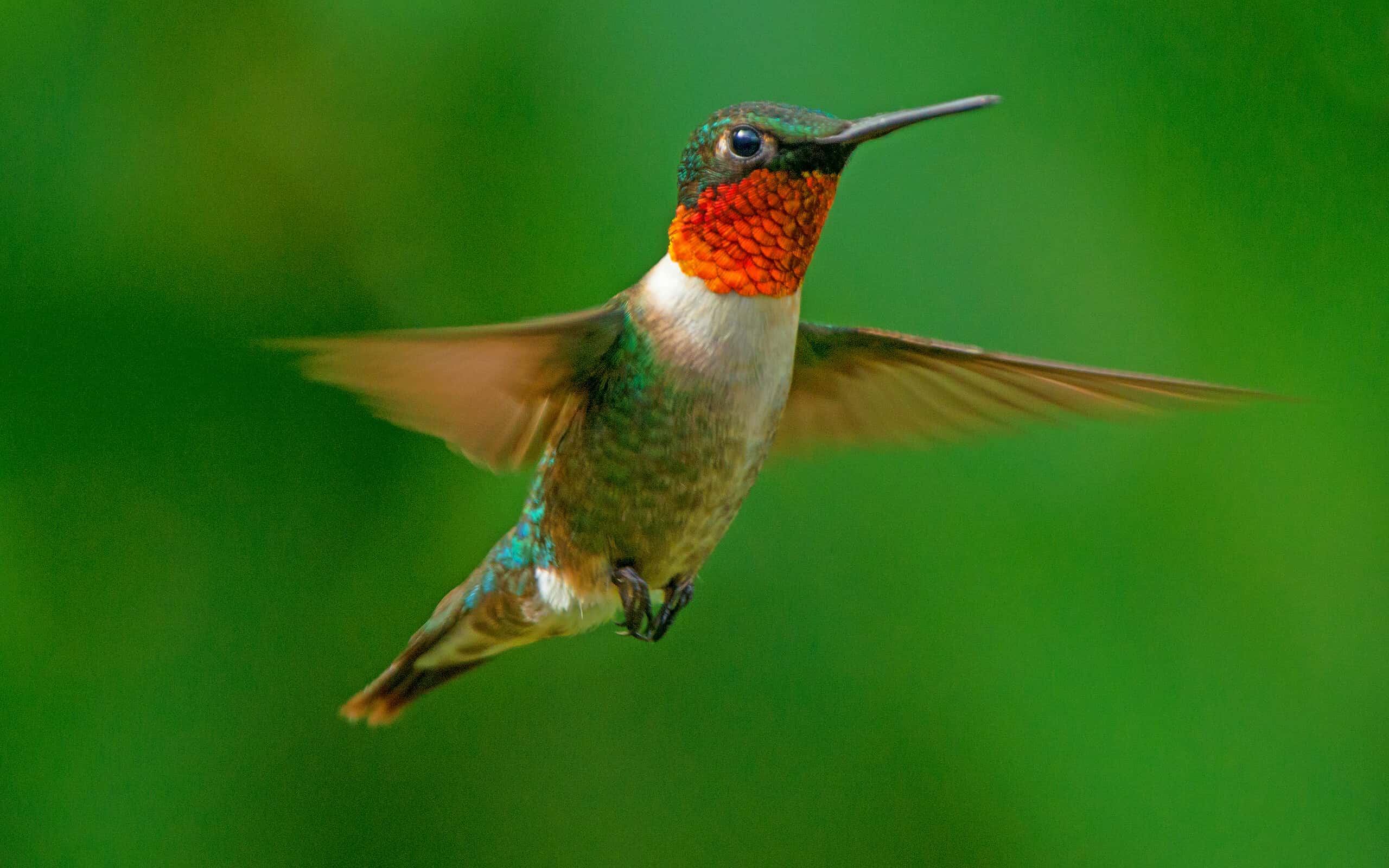
Hummingbirds are some of the most interesting and unique birds in the Americas. And while you may consider yourself lucky if you spot one at your backyard bird feeder, imagine how special it would be to see a hummingbird performing an acrobatic spin while flying! That’s exactly what one hummingbird did in a video shared to YouTube by Courtney Ava.
In the 15-second clip, a hummingbird approaches a flower, and then a small fly crosses its path. The hummingbird twirls mid-air several times as it follows the insect, while still moving in a straight path forward. It’s incredible and just goes to show how skilled these birds are!
How Do Hummingbirds Perform Aerial Rolls?
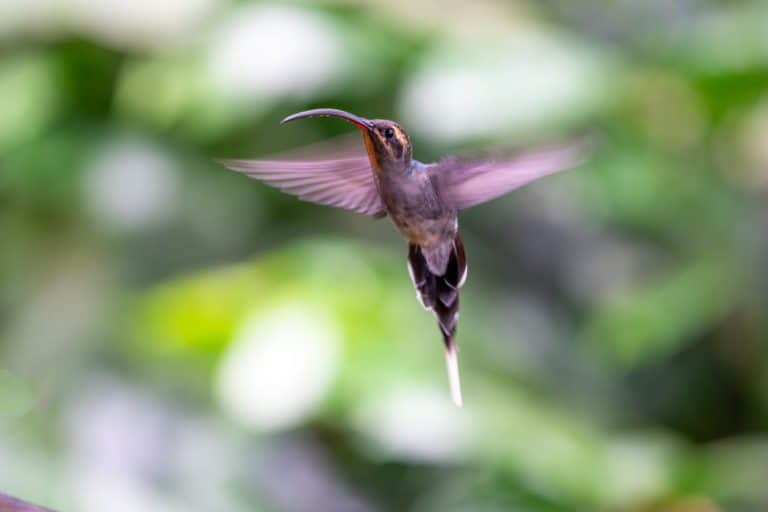
Hummingbirds (Trochilidae) are known for their fast wingbeats — up to 70-80+ times per second! — and the ability to hover and even fly backwards, which no other birds can do in a sustained and controlled manner. This is due to their extremely mobile shoulder joints, which give their wings 180-degree mobility, as well as their strong chest muscles. Their rapid wingbeats move in a figure-eight pattern, allowing them to generate lift on both the downstroke and the upstroke. Because of their unique body composition, hummingbirds can quickly change directions and fly upside down, making it easy for them to chase prey like flies while doing aerial rolls.
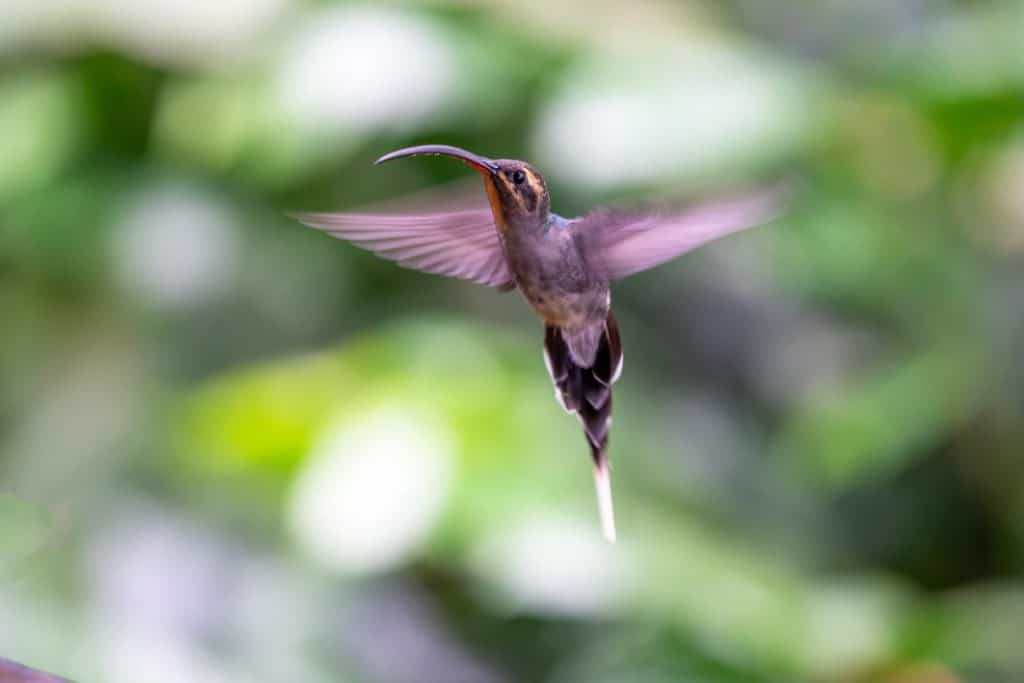
Hummingbirds’ unique bodies and rapid wingbeats allow them to fly backward and change directions easily.
©Vaclav Sebek/Shutterstock.com
Hummingbirds can even fly in the rain, with their feathers helping them to repel water. If they get too waterlogged, they shake off water like a dog, except they can move their heads up to 132 times per second while flying. We’d love to see a dog try that!
A 2020 study in Current Biology analyzed the way hummingbirds remain stable when flying in challenging wind conditions or when forced to roll or twist. They make subtle adjustments to their wing rotation and body posture to continue flying their path rather than making huge changes to the way their wings move. The way these creatures naturally handle adverse aerial conditions can impact how drones and other robotic fliers are designed. Pretty cool, right?
Why Does a Hummingbird Twist Mid-Air?
According to the U.S Fish & Wildlife Service, male hummingbirds show off their incredible acrobatic moves as a way to defend their territory. Despite their tiny bodies, hummingbirds are fiercely protective of their spaces, nests, and food, and may perform dramatic maneuvers in the air to fight off rivals.
Hummingbirds might also show off their flying skills as a way to attract mates. A 2018 study in Nature Communications looked at how male broad-tailed hummingbirds will dive in a dramatic U-shape to show off their colorful throat feathers (called a gorget), combining noises, color, and speed to impress females.
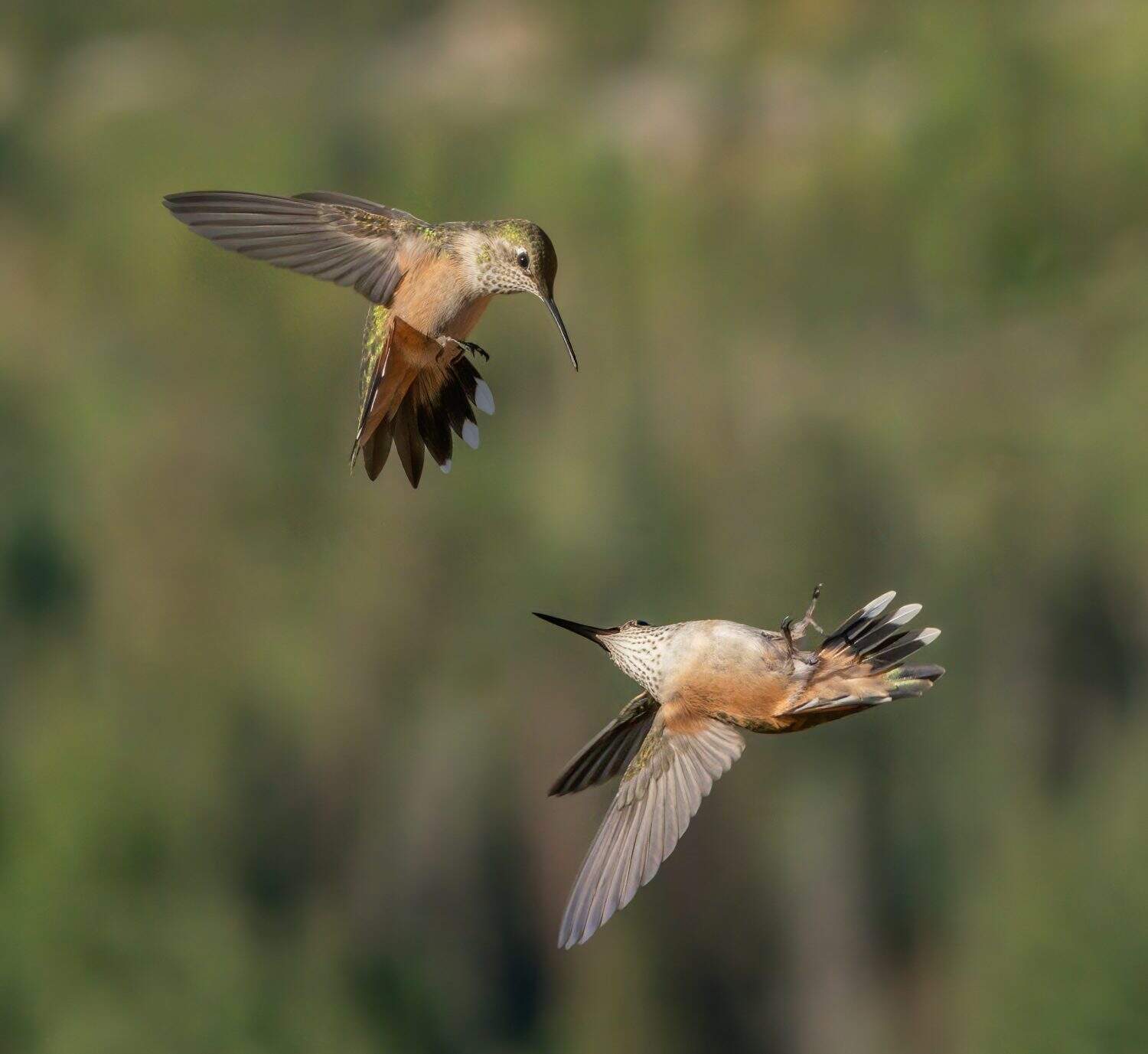
Hummingbirds might twist or show off their acrobatic skills when defending territory or attracting a mate.
©Richard Seeley/Shutterstock.com
Benedict Hogan, a postdoctoral research associate in ecology and evolutionary biology and the study’s lead author, said in a statement, “The dives are truly amazing feats for such small birds. We know from previous work that the males can reach really high speeds. They combine that speed with intriguing noises generated by their wing and tail feathers, and of course with their brightly iridescent plumage.”
More Fascinating Hummingbird Facts
A hummingbird’s wings aren’t the only interesting things about them; their beaks are impressive as well! Hummingbirds have a long bill and tongue that’s split at the tip, allowing them to extract nectar from flowers. This is especially helpful because their fast metabolism means they have to eat often. Because of this high metabolism, sometimes hummingbirds enter a state of torpor, where their body temperature is lowered, and they slow down physical activity.
How to Attract Hummingbirds to Your Backyard
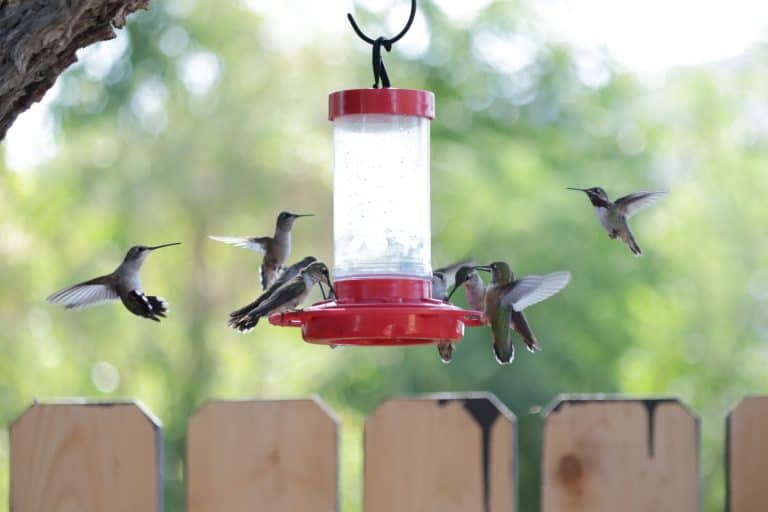
Hummingbirds are beautiful, interesting, and talented creatures, so it’s only natural that you might want to see one in your own backyard. Hummingbirds usually migrate north in the spring, with arrivals in the southern U.S. as early as March and in the Northeast and northern states from early April through May, so now is the time to get your yard ready, depending on your region. Some tips for doing this include hanging brightly colored feeders, planting a butterfly garden with pollinator-attracting plants such as honeysuckles and trumpet vines, and adding perches where hummingbirds can rest.