Quick Take
- Squashing them might be the worst thing you can do. Here's why leaving them alone is the smarter move. See why crushing backfires →
- One of these insects is actually doing your garden a favor, even when it feels like a full-blown invasion. Discover their garden benefit →
- Keeping them out doesn't require pesticides, and yet most homeowners overlook the one spot that lets them in every time. Find the overlooked entry point →
From the corner of your eye, you see something on the wall. Just above the doorframe, a small, red, winged insect crawls. As it makes its way casually past the open screen door, you mistake it for a ladybug. Thinking nothing negative of the traditional symbol of good luck, you dismiss it. But the seasonal insect invasion doesn’t end there.
Outside, the temperature has dipped into the 50s. Rounding the corner, you see it: a mass of undulating red-and-black beetles against the siding. As these beetles huddle together, the misidentified ladybugs from before begin swarming. Those living in New England are all too familiar with these bugs. If you’re seeing red, you’re not alone: Boxelder bugs and Asian lady beetles have arrived.
What Causes the Flurry of Fall Activity?
Like most pests, boxelder bugs (Boisea trivittata) and Asian lady beetles (Harmonia axyridis) seek shelter from cold temperatures. Greg Baumann, Founding Partner of Pest Control Warrior, says this is common throughout the Northeast.
“They are seeking winter harborage, sensing that nights are colder and the warm summer weather is no longer with us,” Baumann explains. “They seek a warm side of the home siding outdoors, such as a southern exposure. When they find cracks in foundations, uncaulked window trim, open areas around doors and under doors, they will take the opportunity to enter warmer spaces.”

Asian lady beetles enter through small holes in screens, open doors, and windows.
©muroPhotographer/Shutterstock.com
He adds that these insects typically don’t become “pests” until they get inside. “While one or two Asian lady beetles enter at one time, boxelder bugs are less solitary. You might find twenty or more beetles on a sunny side of the house in the fall, all looking for a warm harborage or place to stay, and a few may find a way into the house.”
While unsightly and potentially alarming, neither insect poses a threat to you or your home.
What Attracts Boxelder Bugs?
Boxelder bugs are harmless true bugs, meaning they belong to the family Rhopalidae, also known as scentless plant bugs. Their mouthparts are designed to pierce and suck. They won’t bite, sting, or do much other than walk around on your hand if you let them. In fact, most people don’t even realize they exist until the summer ends.

Boxelder beetles are harmless, but may stain fabric if crushed.
©iStock.com/fusaromike
“Boxelder bugs go unnoticed most of the summer in trees and shrubs, on fences, and along foundations of homes, but they can be intimidating when you find dozens of them crawling on the outside walls of your home and seeking a good place for winter protection,” Baumann says. “They do not spread disease or bite.”
He adds that because they’re roughly 1/2 inch long, they’re more noticeable indoors. Thankfully, they’re equally as harmless in your home. Boxelder bugs don’t cause structural damage and usually don’t congregate inside. They’re also wingless, so they move slowly and are fairly easy to catch and release. The only threat they pose is when you squash them. Boxelder bugs may release a foul-smelling odor similar to that of a stink bug and can stain linens and walls red.
While one or two Asian lady beetles enter at one time, boxelder bugs are less solitary. You might find twenty or more beetles on a sunny side of the house in the fall, all looking for a warm harborage or place to stay.
Greg Baumann, Founding Partner of Pest Control Warrior
Why Do Asian Lady Beetles End Up Indoors?
Unlike boxelder bugs, which stay on house siding and shingles, Asian lady beetles do find their way indoors. Their wings give them an advantage, allowing them to enter through open doors, windows, and small cracks and crevices.
They can be red or orange, have up to 19 spots, and have several distinguishing features. The most notable is a dark M-shaped marking on their white or cream-colored pronotum, the shield-like area just behind the head. They often enter spaces in pairs, which can be alarming to find inside your home. But even so, they pose no threat and are actually beneficial.
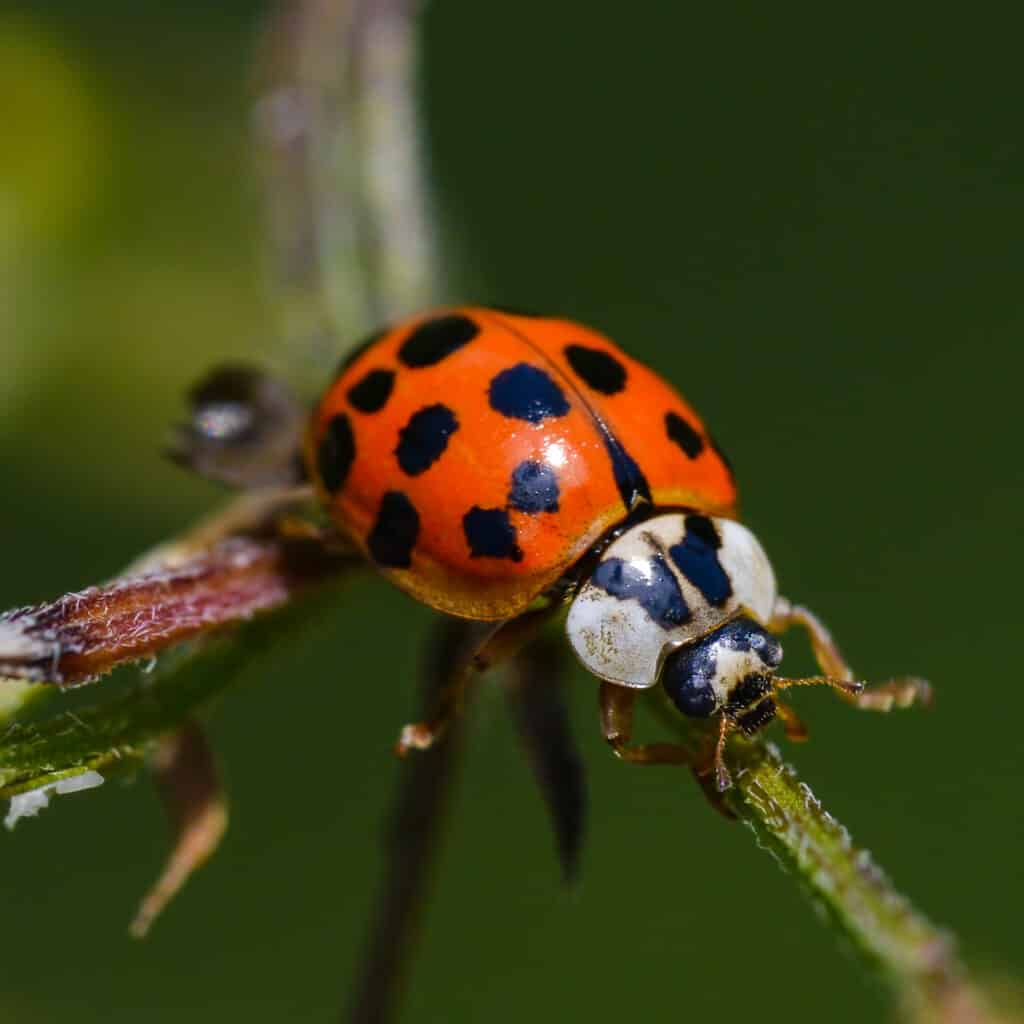
Asian lady beetles may bite or pinch if roughly handled, but this is extremely rare.
©iStock.com/Bob Grif
“Asian lady beetles are not dangerous. There are various species, and they are beneficial insects as they feed on pest insects,” explains Baumann. “When they get inside in the fall, they become a pest. They do not spread disease or bite, and the biggest danger is that if they are crushed, they can leave stains on drapes and carpets.”
In the summer, Asian lady beetles consume common garden pests like aphids and scale insects. The predators are more beneficial alive, and seeing their presence in the fall is a good thing. As they swarm, they seek the same thing as boxelder bugs: warmth. After they find a safe spot to overwinter, they emerge again in the spring, when they are rarely seen outside of gardens.
How to Keep Boxelder Bugs and Asian Lady Beetles Out
Baumann says that, thankfully, keeping boxelder bugs and Asian lady beetles out of your home is not complicated. “There are so many pests that can enter very small spaces around doors and windows, including these two, rodents, outdoor roaches in certain areas, and, where found, stink bugs,” he says.
“Make sure that gaps are caulked or weather-stripped. Inspect all windows and doors, look for plumbing and electrical penetrations for gaps, make sure windows are in good repair, including basements and crawlspaces, and repair any damaged siding.”

Boxelder bugs won’t harm siding or foundations, but gather in masses to generate heat.
©Megan Kobe/Shutterstock.com
Baumann adds that some areas, such as brick, need “weeping areas” to allow condensation to escape. Though they should not be filled, homeowners can monitor the area and check for pests. If the insects get inside, the best removal method is often the least invasive.
“If you do get these insects indoors, you can physically remove them using a smooth cardboard piece as a scoop. You can also vacuum any invaders but empty the bag or container and discard the contents outdoors afterward,” Baumann encourages. “There is generally no reason to use pesticides indoors. If you have a large population on your siding, you can treat the siding to control the insects outdoors. But that generally is not needed if you seal openings.”