
Quick Take
- The common silverfish is a cosmopolitan species with worldwide distribution.
- Silverfish are omnivores that consume a wide array of starchy matter.
- Baby silverfish, called nymphs, are miniature versions of their parents.
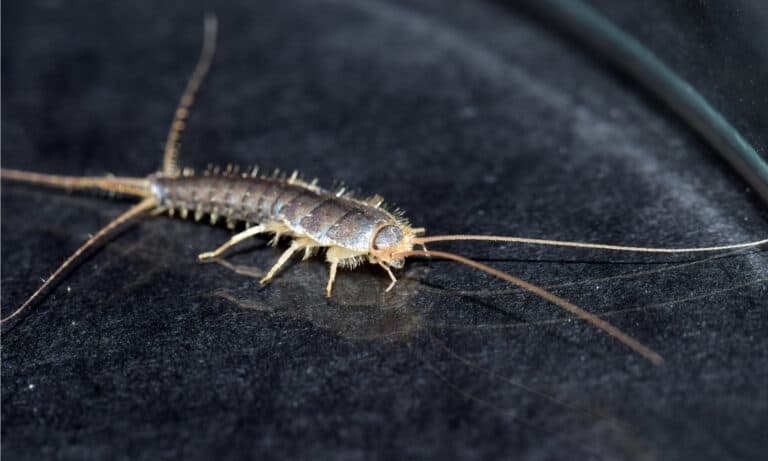
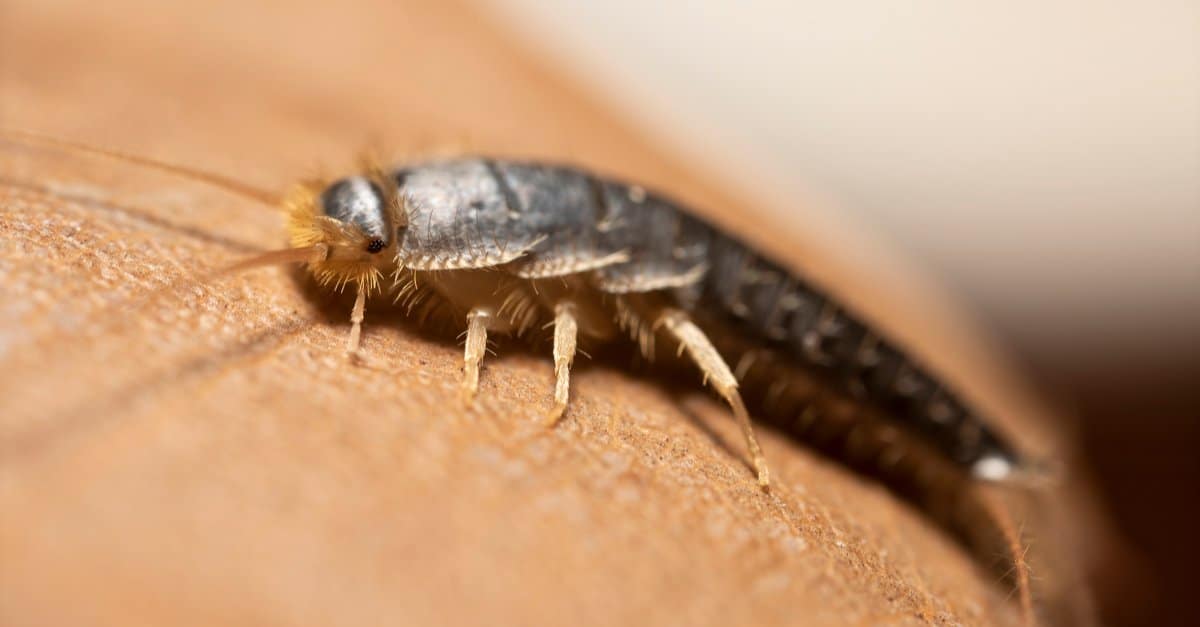
The common silverfish (Lepisma saccharina) is a widely recognized cosmopolitan species. They have a worldwide distribution, occurring in Africa, the Americas, Australia, Eurasia, and across the Pacific. Common silverfish are silvery-gray with a metallic sheen to their scaled, teardrop-shaped bodies. They feature two long antennae, six legs, and three long, bristle-like appendages on their tail, giving them their fish-like appearance. These insects are highly adapted to human environments (synanthropic), thriving in warm, humid, dark areas such as bathrooms, basements, attics, laundry rooms, and kitchen cupboards, particularly where they can find starchy materials like books, wallpaper, and cardboard storage boxes, which provide them with ample access to the cellulose, starch, and sugary matter that silverfish love to eat.
What Foods Do Silverfish Eat?
Silverfish eat paper, adhesives, sugar, and dead insects. These omnivores consume products that are rich in starches and dextrin for their cellulose, a polysaccharide that silverfish can digest easily.
Polysaccharides are complex carbohydrates found abundantly in nature, serving as energy storage and structural components in plants, animals, and microorganisms. Primary sources include plant-based foods (starch in potatoes, rice, grains), plant cell walls (cellulose), fungi/shellfish (chitin), and bacteria.
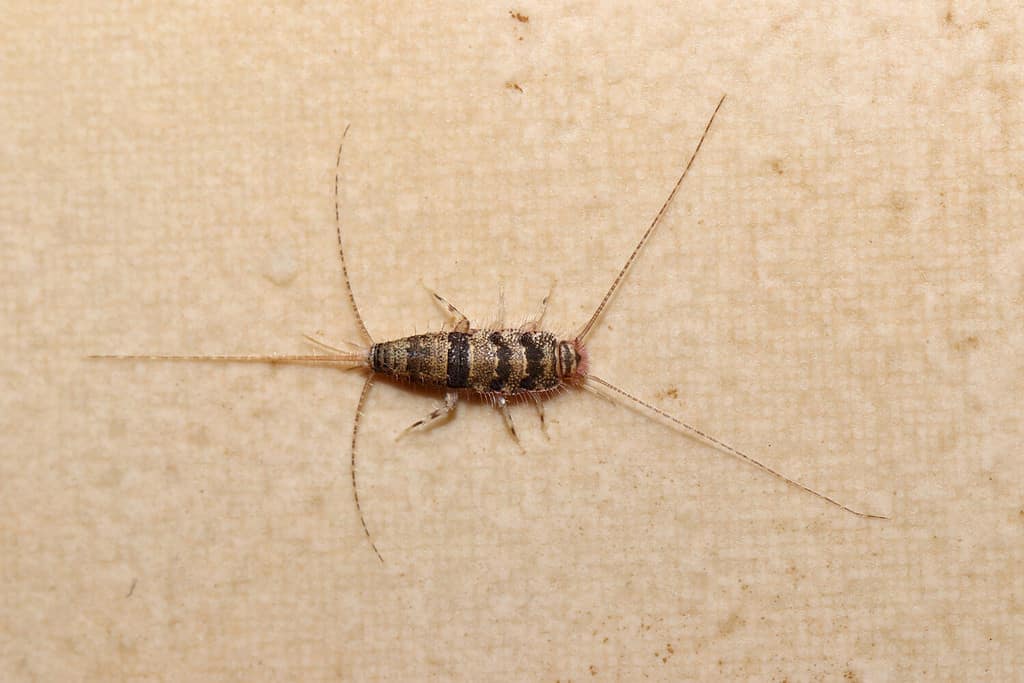
Silverfish are omnivores that scavenge for carbohydrates, proteins, and sugar-based materials, often destroying household items containing starch and cellulose.
©IamTK/Shutterstock.com
These are the most common polysaccharide-laden foods that silverfish will consume:
- Paper
- Wallpaper
- Bookbinding
- Dead insects
- Shampoos
- Carpet
- Hair
- Glue
- Cotton
- Silk
- Grains
- Vegetables
- Sugar
- Flour
- Pet foods
- Coffee
- Lace
Silverfish are scavengers that will eat a host of different foods as long as they contain the right types of polysaccharides.
In some cases, they eat detritus from humans, like hair or even dandruff. The silverfish’s unique diet allows them to eat a variety of different foods, and with very little competition.
How Do Silverfish Find Their Food?
Silverfish are nocturnal, stealthy scavengers that rely on their fast, fish-like movement to forage in dark, humid areas. They use their long antennae to locate food sources rich in carbohydrates, starch, and protein by navigating through cracks and crevices.
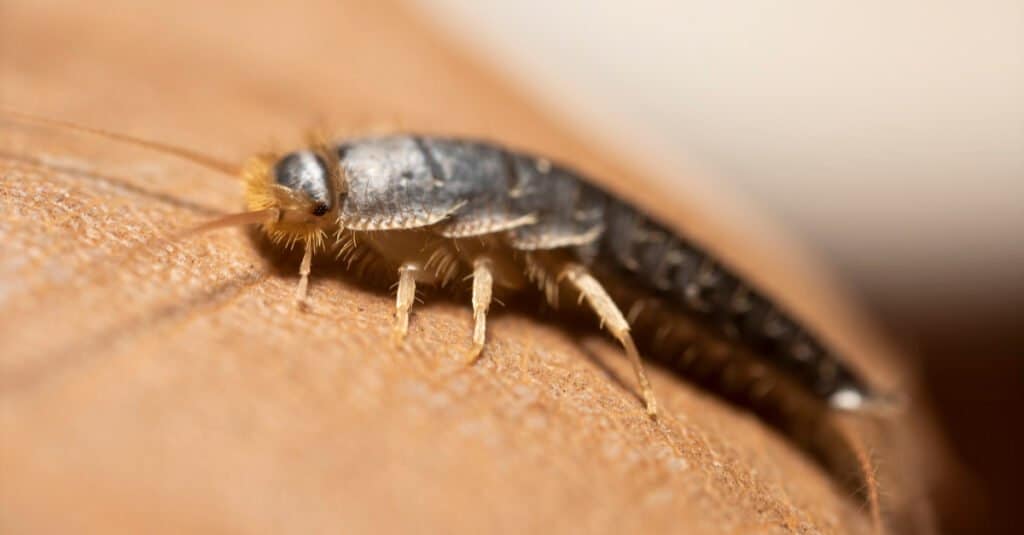
Silverfish do have a sense of smell, and they actively avoid places that have scents like cinnamon or lavender.
©Panto.unno/Shutterstock.com
Their sense of smell leads silverfish to their preferred foods, and they operate under the cover of darkness to get their meals. A benefit of the silverfish’s biology is their ability to go for prolonged periods without eating as long as they have access to water.
What Do Baby Silverfish Eat?
Nymph silverfish are ametabolous, meaning that they do not metamorphose. Upon hatching, they are essentially miniature, active versions of adults, and immediately begin searching for food and roaming on their own without parental care.
Are Silverfish Dangerous to Humans?
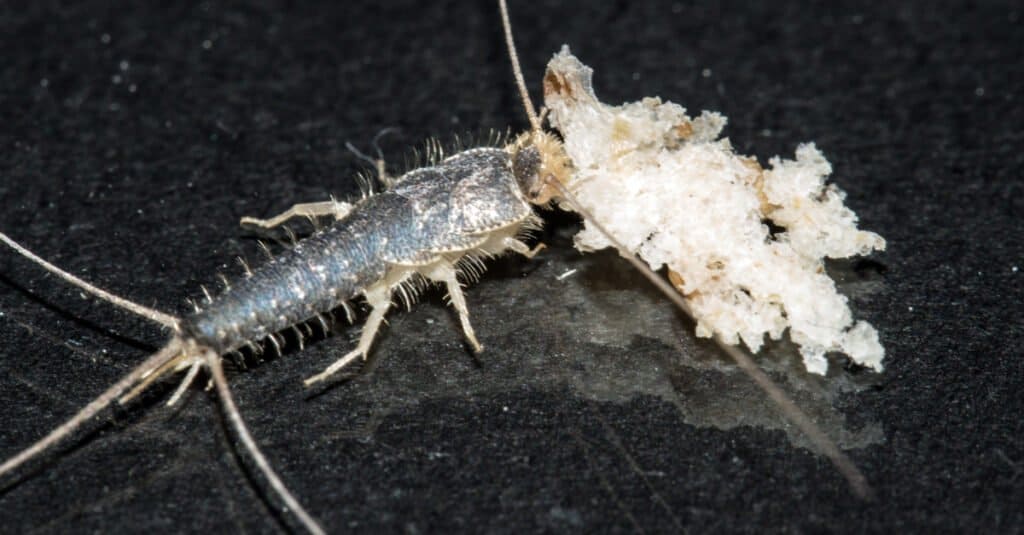
Silverfish will eat food, paper, and home furnishings.
©2Dvisualize/Shutterstock.com
Silverfish are nuisance pests that pose no threat to humans or pets, as they do not bite, sting, or spread diseases. Although their rapid, wiggly movement and silvery, fish-like appearance can be startling, they mainly damage stored goods rather than harm inhabitants.
What Predators Eat Silverfish?
Silverfish are small, swift insects that can hide in crevices and are most active at night. Besides their speed and ability to fit into small places, they have no other defenses against predators, which include:
- Spiders
- Earwigs
- Birds
- Centipedes
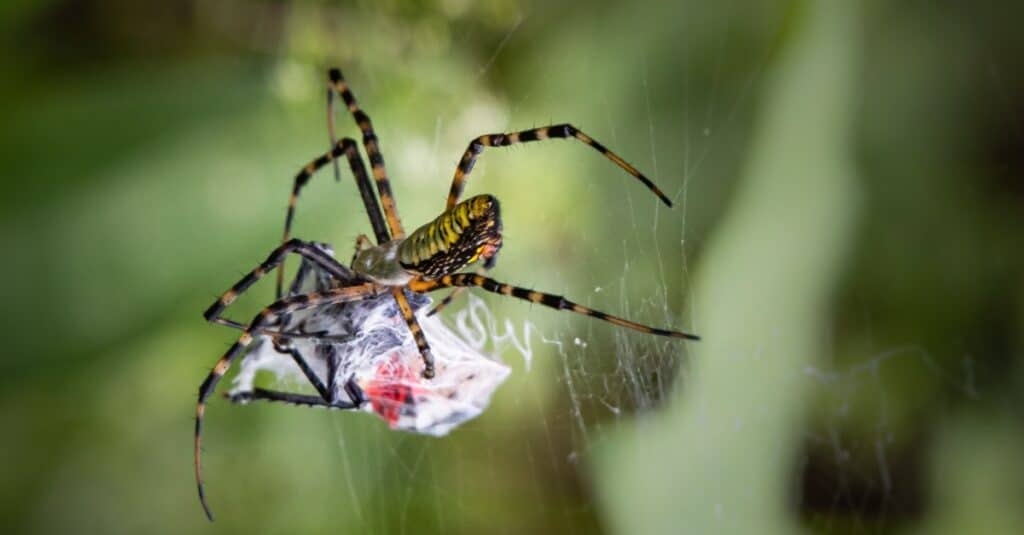
Spiders can capture and eat silverfish.
©cwieders/Shutterstock.com
The lack of predators that consume silverfish is almost startling, given their lack of defenses. Yet, they live in dark indoor locations, places that are not known for having a lot of predators lurking. Also, they are much faster than many of their would-be predators, like most spiders.