
Quick Take
- Fruit flies are attracted to overripe fruit and vegetables, but can also inhabit garbage cans, drains, and dirty mops or sponges where food residue is found.
- They reproduce very quickly, usually within just a few days of birth.
- The fruit fly can transmit bacteria like E. coli, Salmonella, and Listeria from contaminated sources to clean surfaces and other food.
Anyone who’s put a bowl piled high with fresh fruit on the kitchen counter knows what often comes next. As the fruit ripens, an army of tiny flying insects soon shows up and declares war on your bananas, plums, and apples. It’s an invasion of fruit flies, and no fruit seems safe.
But do fruit flies only go after your favorite fruits, or are they opportunistic? Would they move beyond your fruit bowl and target other items in your kitchen if given the chance? The answers might surprise you. Discover more about these tiny flying invaders, what they love to eat, and why your kitchen is their preferred battlefield.
Get to Know the Fruit Fly
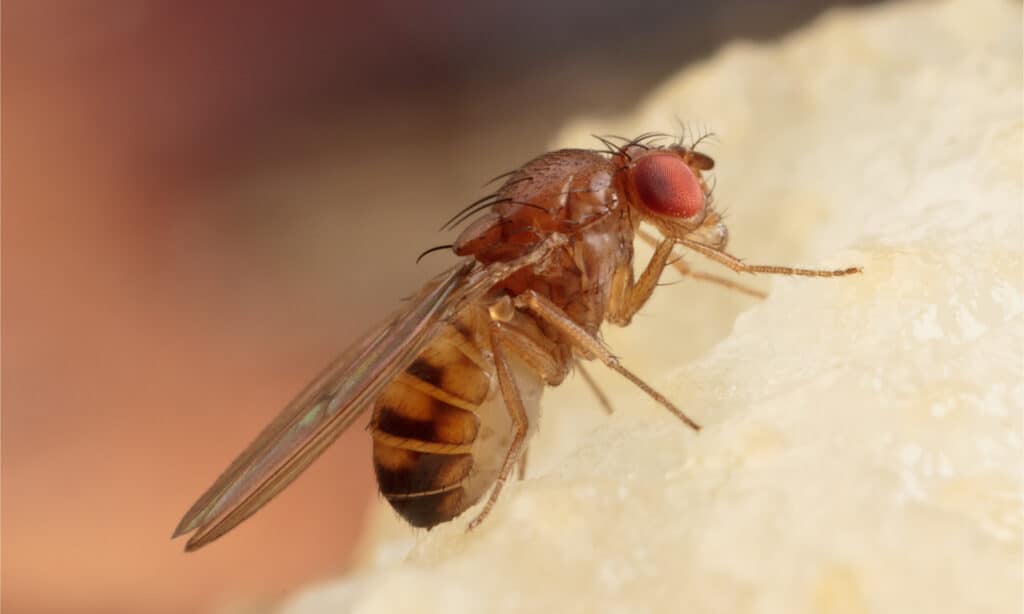
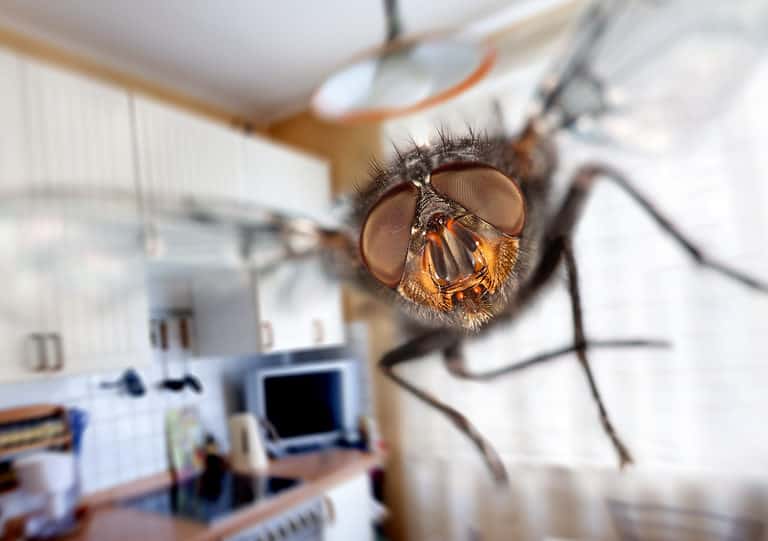
Fruit flies may be tiny, but they can be quite a nuisance.
©Ant Cooper/Shutterstock.com
In the book The Art of War, author Sun Tzu advises to “know your enemy.” He goes on to explain that knowledge is the foundation for battle success. And while fruit flies might not be your enemy in the traditional sense, having them buzzing around your kitchen can feel like a war. So, let’s get to know the humble fruit fly.
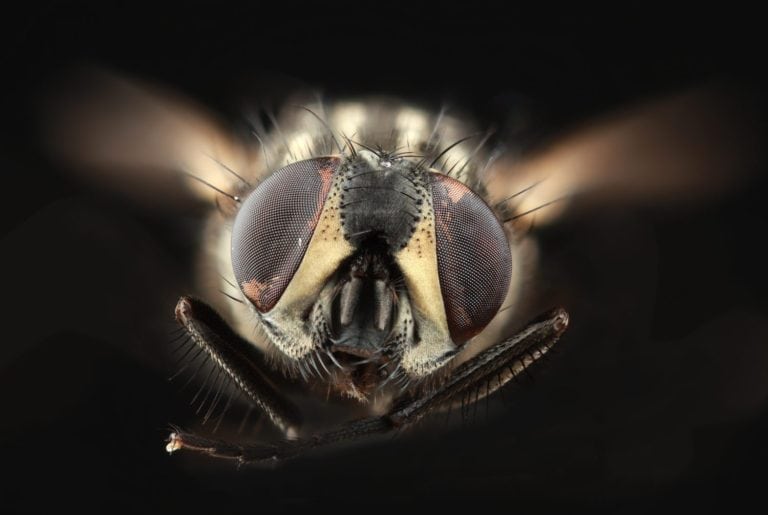
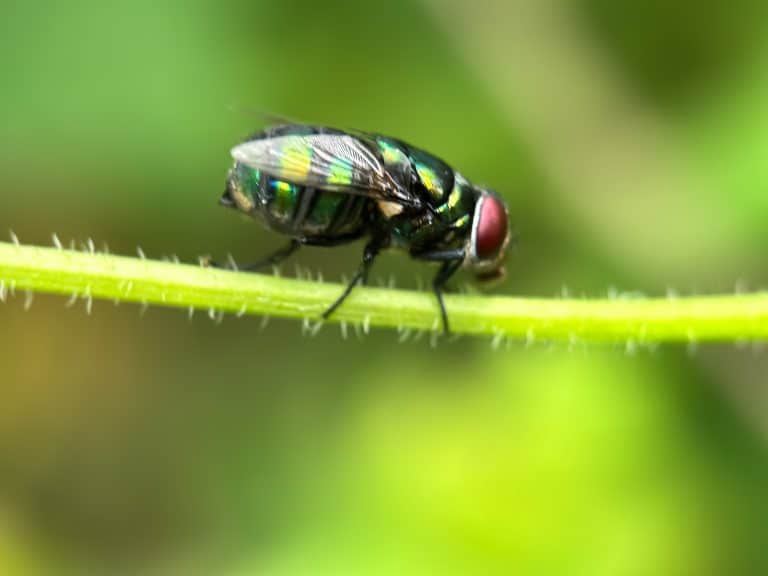
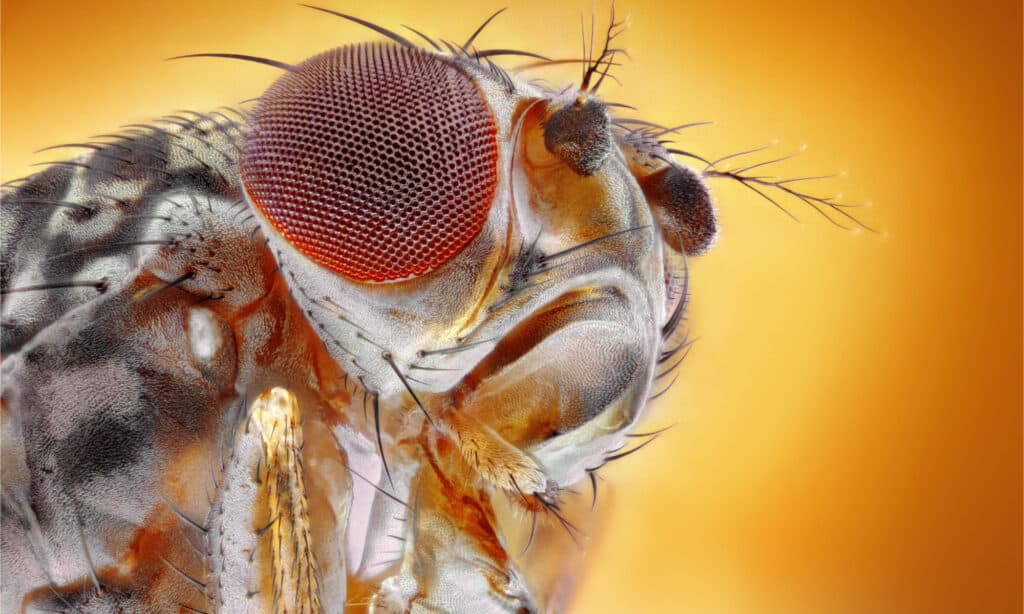
Fruit flies are small insects that are about 1/8 inch long. The front part of their body is tan, and the rear portion is black. Their most distinctive characteristic is their red eyes. However, since they are so tiny, you won’t likely notice any of these particular features.
Fruit flies don’t live very long. Typically, their entire lifespan is between 40 to 50 days. But while they’re alive, female fruit flies are impressive reproducers. Female fruit flies can reproduce within a few days of being born. They can lay up to 100 eggs at a time and up to 500 eggs during their lifetime. The full lifecycle from egg to adult is less than one week. You can see why it is easy to quickly develop a fruit fly infestation in your kitchen!
What Do Fruit Flies Actually Eat?
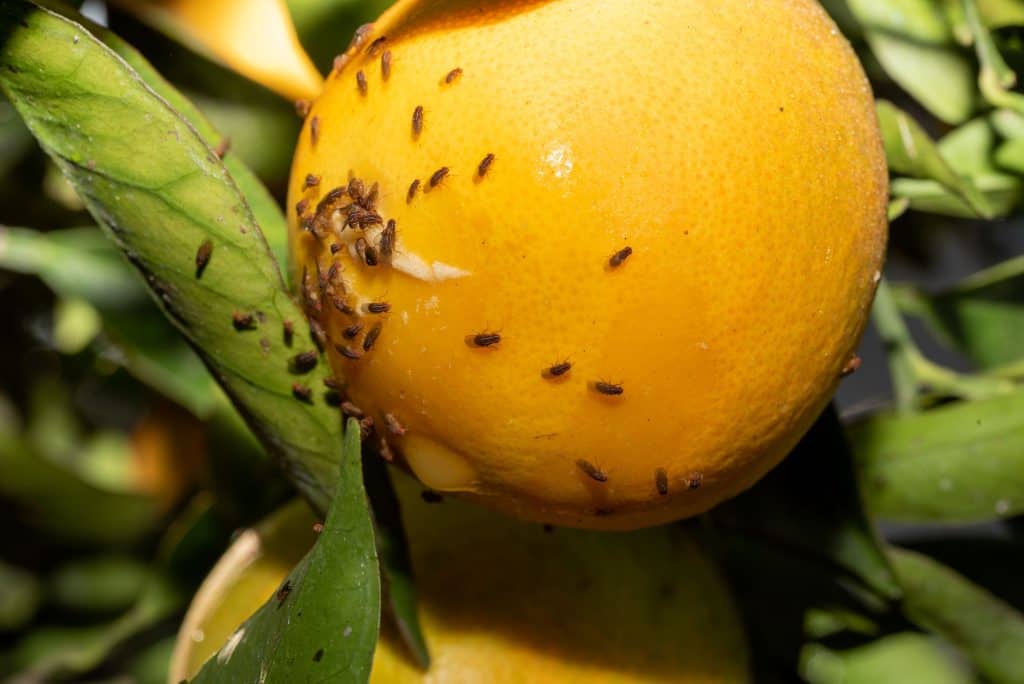
Fruit flies eat a variety of fruits, vegetables, and even fermenting liquids.
©Fabrizio Schiavon/Shutterstock.com
As their name suggests, fruit flies love fruit—the more overripe, the better. If it’s already rotting or fermenting, that’s a bonus. This explains why the browning bananas in your fruit bowl are an irresistible attraction for fruit flies. Melons, tomatoes, apples, and grapes are other favorites, but fruit flies will happily dig into any fruit they can find.
Fruit flies aren’t picky, nor do they dine exclusively on fruit. They’re happy devouring almost any organic material available. This means they’ll also eat rotten vegetables like onions and potatoes, and fermenting liquids like beer, wine, and liquor residue. Fruit flies are even known to feed on discarded food bits found in garbage cans, disposals, and sink drains. They’ll even hone in on food bits left in moist items like dirty sponges and mops.
This is why fruit flies are so common in your kitchen: it provides a nearly endless source of food for them. You don’t just see one or two fruit flies buzzing around because they lay their eggs in the food they find. Their larvae hatch quickly and immediately begin eating the food around them. This is why you see so many swarms of fruit flies hovering over a single piece of produce on your counter.
Why You Don’t Want Fruit Flies Around
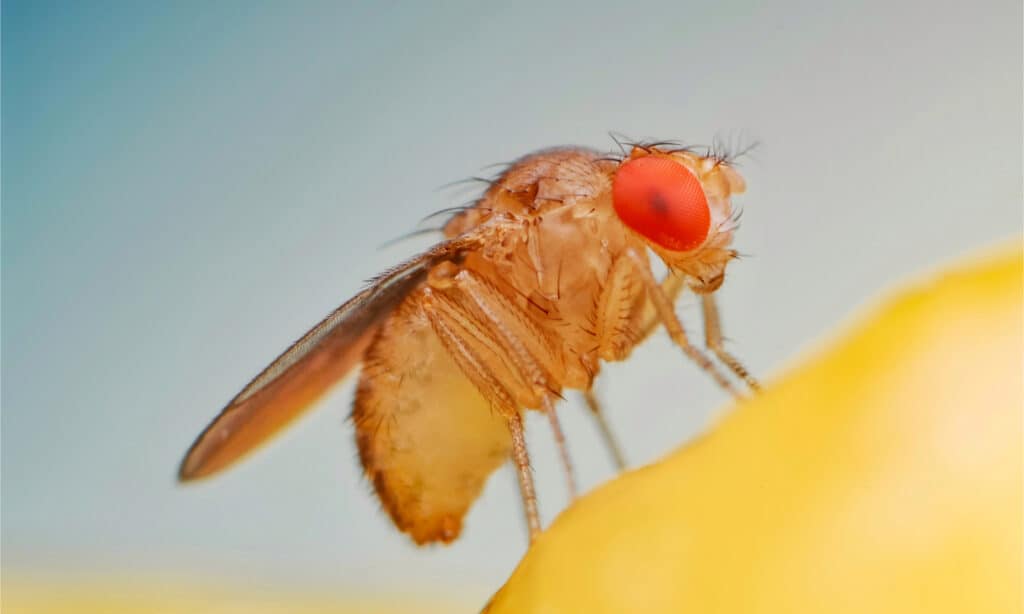
Fruit flies have short lifespans, but they can transmit bacteria during that time.
©Arif_Vector/Shutterstock.com
Besides being an annoyance, there are other reasons you want to rid your kitchen of fruit flies. They can transfer bacteria such as E. coli, Listeria, and Salmonella from contaminated sources to food or surfaces. This may increase the risk of foodborne illness through cross-contamination.
There’s also a risk that bacteria and mold can enter a piece of fruit or other produce. When the female lays her eggs, she punctures the fruit or vegetable’s protective surface to make a safe home for her eggs. These small openings can be another source for bacteria and mold to enter the food and contaminate it.
How to Get Rid of Fruit Flies and Prevent Their Return
One of the reasons that fruit flies are so difficult to get rid of is that they reproduce very quickly.
©Tomatito/Shutterstock.com
Eliminating fruit flies in your home starts by finding the source where they’re breeding. The most likely culprit is overripe or rotting produce. Sources can also be garbage cans, mops, or sponges. Even your sink drains can be a breeding source.
Once you find the source, eliminate it. Throw away overripe produce, then thoroughly clean fruit bowls, storage bins, and drawers with hot, soapy water. Clean and disinfect garbage cans and mops. Toss dirty sponges, then thoroughly clean the area where the sponges were stored. You can even make a fruit fly trap to help keep infestations under control.
After eliminating fruit flies, take steps to prevent future infestations. Don’t let produce go bad; buy only what you plan to eat while it’s fresh. If produce becomes too ripe, store it in your fridge until you’re ready to eat it.
Clean your garbage cans, mops, and sponges regularly. The key to avoiding future infestations is to eliminate the moist, dirty conditions that fruit flies love.
Understanding what attracts fruit flies—and then taking steps to eliminate these sources—is how you can win the battle against these pesky invaders.