
Quick Take
- Raccoons douse food in water not to wash it but to learn its texture, size, and edibility using highly sensitive paws.
- Paw receptors fire in water, helping raccoons gather information and decide whether to eat or discard.
- In captivity, raccoons douse even clean food, suggesting dousing is instinctive rather than a cleanliness habit.
Raccoons eat a variety of foods. Because they are omnivores, these masked bandits have thrived in both their natural habitats and in increasingly urbanized areas. Unlike other animals, whether wild or domestic, raccoons will dunk their food in water. While it appears on the surface that raccoons are very clean animals, looking to erase traces of dirt and debris from their meals, in reality, this is not why raccoons “wash” their food. So, what are raccoons really doing? The answer lies in their paws, which are not only used to grasp food but also to better understand it.
Watch raccoons with food, and they will do something incredible. These omnivores will take their food and seemingly wash it before every meal. But raccoons are not washing their food. While they do submerge their meals in water, it is not to wash away dirt and grime. Instead, it is to learn information about what they are about to eat.
Raccoons were once believed to wash food before eating. However, on closer observation, the water source used was not always clean. In some instances, the water was dirtier than the food being doused with water. This led scientists to look beyond what was seen as fact and revise their hypotheses.
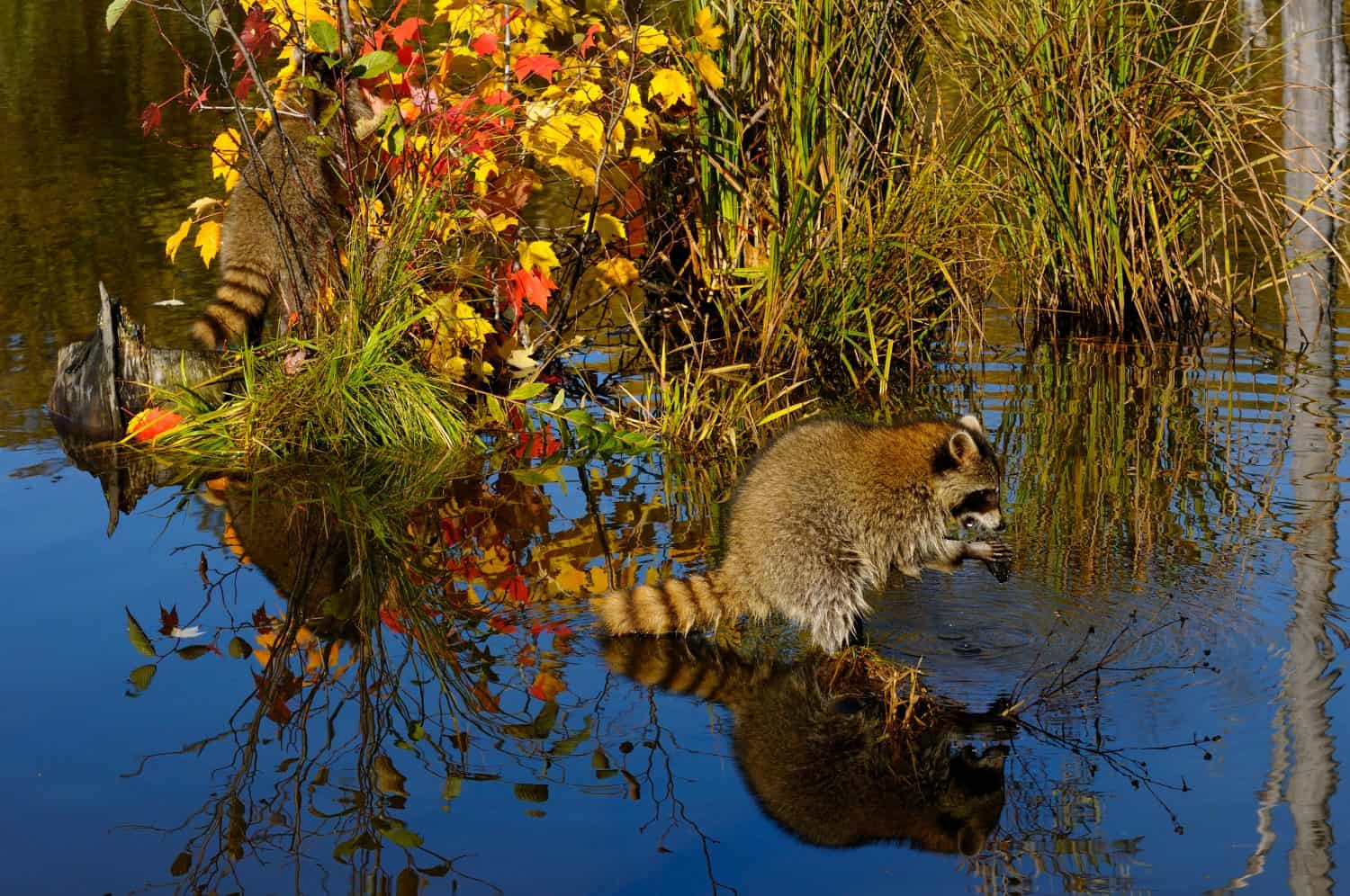
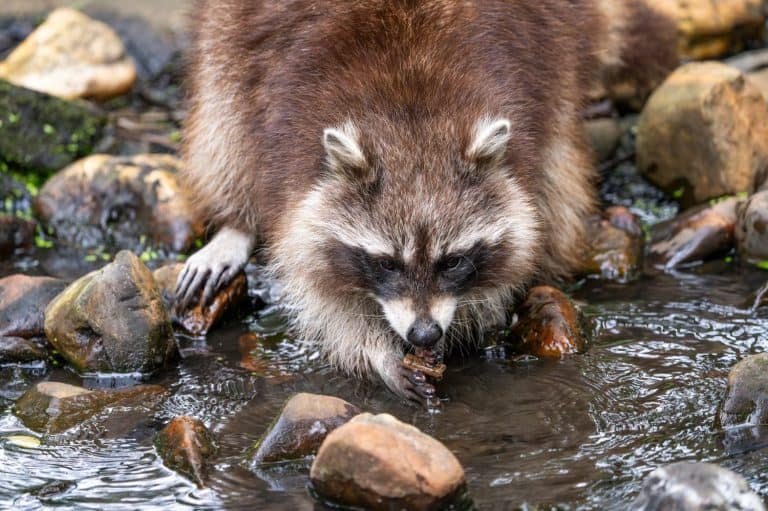
Raccoons will douse their food to gather information about it.
©Reimar/Shutterstock.com
It turns out raccoons do not wash their food but dunk it to learn more about it. This is done via the receptors in raccoons’ paws. Therefore, it is very common to see raccoons move their dampened food around in their paws before eating it. The information gathered about texture, size, weight, and more is sent to the raccoon’s brain. Once processed, the raccoon can decide whether the food is safe to eat or if it should look for something else.
As raccoons douse their food, they gain important information about the item they may consume. This is because raccoons’ paws are sensitive. So sensitive, in fact, that a raccoon’s paws are four to five times more sensitive than a human’s hands.
Raccoons can learn so much about their food because of the number of receptors in their hands. When these receptors are in water, they become even more responsive. Consequently, properties such as texture, size, temperature, and more can be learned simply by immersing an object in water.
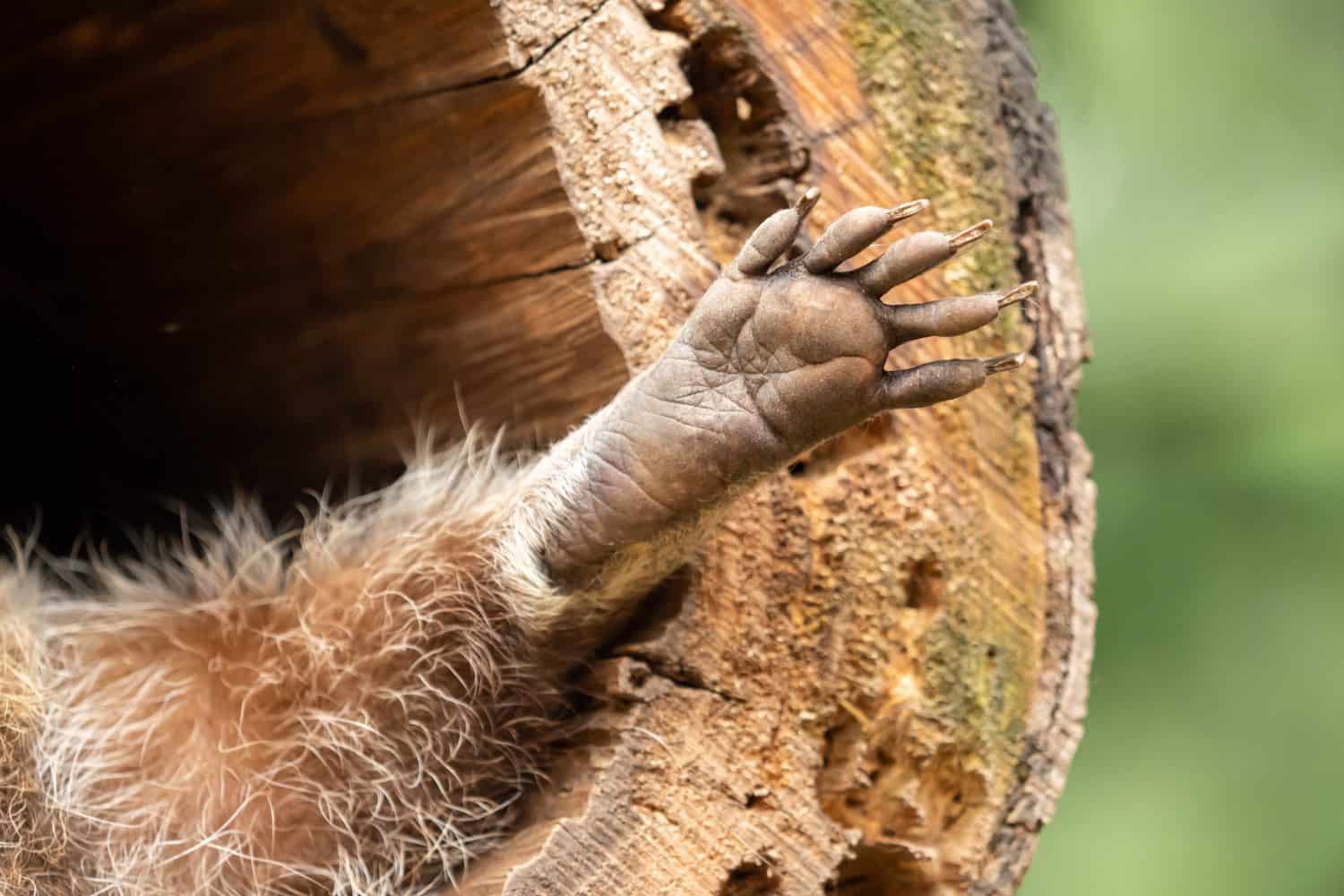
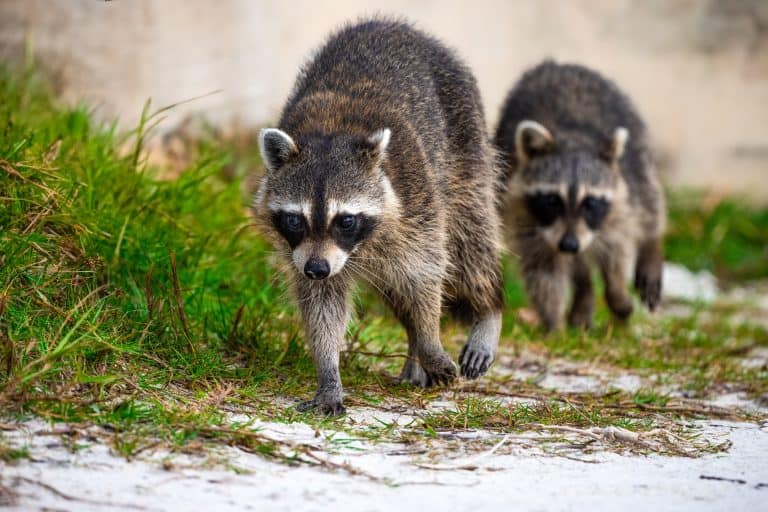
Raccoons’ paws are four to five times more sensitive than humans’ hands are.
©Sandra-Dombrovsky/Shutterstock.com
Paw sensitivity is crucial for a raccoon’s survival because their eyesight is poor both in daylight and at night, even though they are nocturnal. By dousing potential food sources, the receptors tell the raccoon’s brain what they are holding.
This means, however, that raccoons are not actually washing their food. Instead, any water source, regardless of its cleanliness, is something raccoons use to identify better what they hold in their hands. There is a very real distinction between washing food and dousing food. This is important to note because, for a long time, it was believed that raccoons were incredibly fastidious creatures that would wash their food before eating it to remove any dust, debris, or even bugs and worms.
People believed raccoons washed their food after captive raccoons were seen “washing” their food in 1962. However, the food was clean, leaving those observing the raccoons scratching their heads as to why the food was being washed.
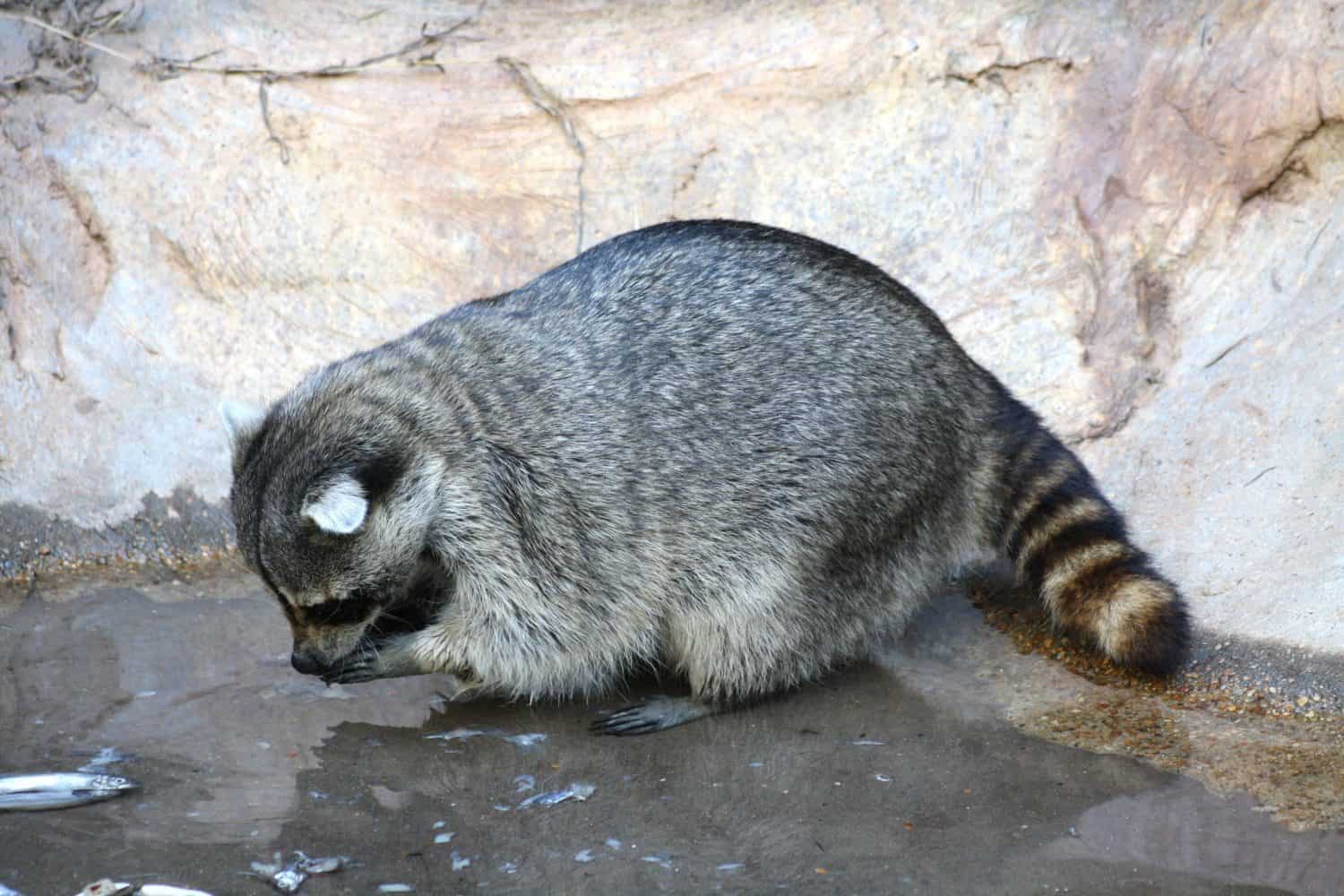
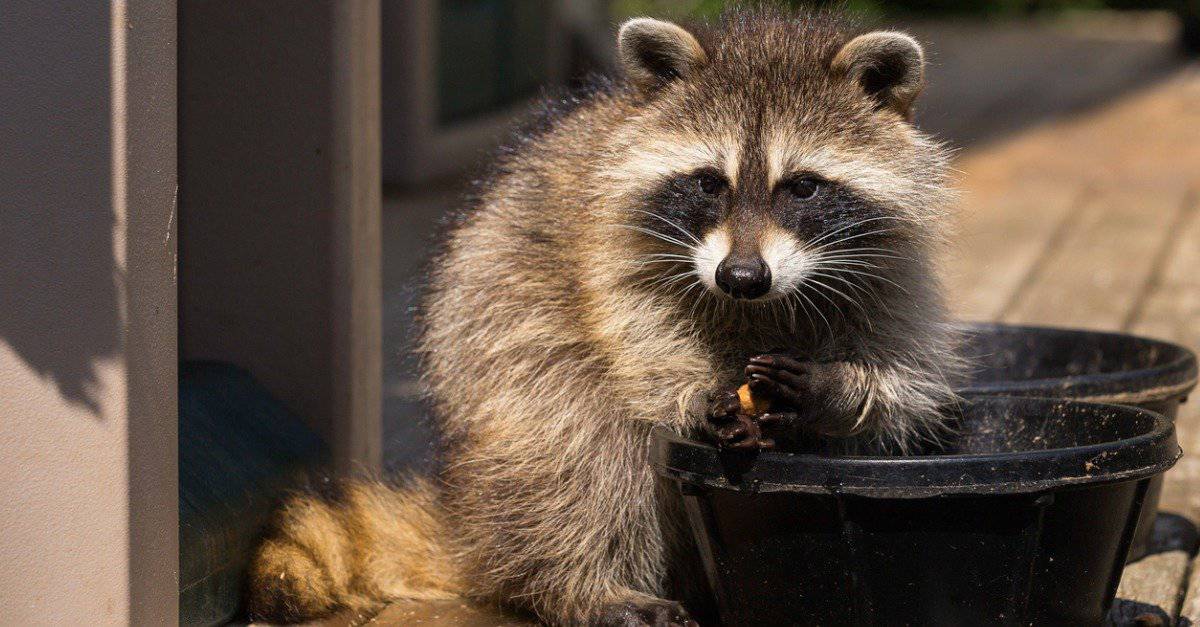
Raccoons douse their food to gain information about it rather than wash it to make it clean to eat.
©Brandy McKnight/Shutterstock.com
Additionally, when the raccoons were given food that came in contact with or even had earthworms on it, the worms were not “washed” off the food. Raccoons did not even look at the food they were putting into the water; instead, they stared off into space.
This is what eventually led scientists to determine that raccoons were “dousing” their food, rather than “washing” it. The dousing removed some debris from the food, but the water was not meant to clean it. The water helped raccoons better understand what the food was, thanks to the identifiable characteristics of what they held in their hands.
When raccoons put their food in the water, they submerge the entire item. Once the food and the raccoon’s paws are wet, the raccoon begins identifying what it is holding.
As the receptors in the raccoon’s paws begin to fire on all cylinders, the object is manipulated. It could be moved around, taken apart, or squeezed. Often, the raccoon will not look at the object, since its poor eyesight does not help it determine whether the food is safe to eat.
The process of manipulating food once it is doused includes:
- Holding food – A food item is held in both paws so as not to lose it
- Food is dunked into water – Food becomes completely wet.
- Food is moved between paws – As food is manipulated, it can be taken apart and even rubbed between raccoons’ paws.
- Understanding information – The more the food is manipulated, the raccoons better understand what it is they are holding and whether it is edible.
- Accepting or denying food – If it is a safe food source, it will be consumed. If not, it will be left alone.
It is not uncommon for a raccoon to dunk the object it holds more than once. Raccoons will continue to handle the food item in the water until they have all the information they need about it. Unfortunately, all this dousing can cause the food to be dropped or fall apart in the water, forcing raccoons to search for another food source.
As the 1962 study noted, raccoons will wash (or douse) perfectly clean food in captivity. While the exact reason is not known, there have been many hypotheses over the years to explain raccoon behavior.
Some of the most widely agreed upon reasons captive raccoons douse their food include:
- Moistening food
- Dousing is instinctual and ingrained
- Boredom
Even more interesting, captive raccoons will go through the motions of dousing food, even when no water is present. This further strengthens the school of thought that dousing is instinctive and ingrained. However, because raccoons can remember familiar foods, dousing happens more often in the wild than in captivity. If raccoons are fed the same food daily, there is no need to inspect it, as they already know what it is and that it is safe to eat.
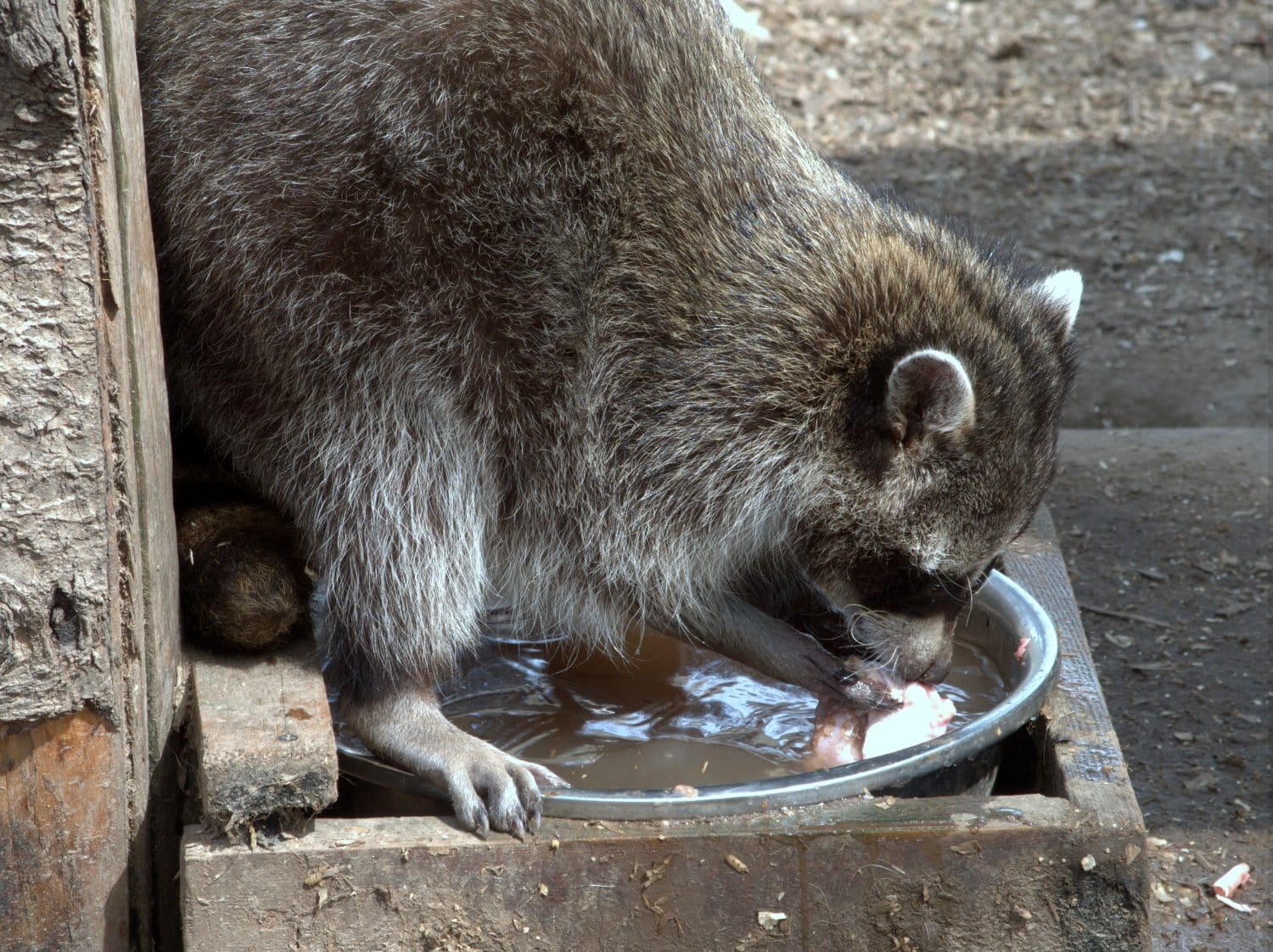
Raccoons in captivity may douse their food if they are unsure what it is.
©tasim/Shutterstock.com
Raccoons are brilliant animals, good at problem-solving. Their intelligence is said to be comparable to that of monkeys and young children, which is why it is not uncommon for them to outsmart people when it comes to accessing food sources. Their smarts are further put in the spotlight because they will not just eat anything that smells good. The food source first needs to be inspected and analyzed by the sensors in their paws, which tell their brain whether it is safe to consume. It is thanks to dousing food that the sensors and brain can process the information and create a database of safe versus dangerous foods. This has allowed raccoons to survive in both their natural habitats and in more urban areas, proving just how adaptable these smart creatures truly are.