
Quick Take
- There are over 1,500 species of skinks found on every continent except Antarctica.
- Skinks do not generate their own internal body heat and must rely on external heat sources to stay warm.
- Baby skinks, called hatchlings, eat the same diet as mature skinks.
Skinks (Scincidae) are a highly diverse family of lizards, comprising over 1,500 known species. They are cosmopolitan, found globally in varied habitats, including deserts, forests, and mountains, except within the polar regions. Skinks are ectothermic reptiles, meaning they do not generate their own internal body heat and must rely on external heat sources, such as basking in the sun on rocks or logs, to maintain warmth. Ranging from 3 inches to over two feet long, skinks are mostly diurnal, secretive foragers with smooth scales. Continue reading to discover the feeding habits of skinks both in the wild and as pets.
What Foods Do Skinks Eat?
Skinks eat insects, mollusks, small mammals, and fruits. Omnivorous skinks primarily focus on eating insects, but some species also make fruit a significant portion of their diet. With so many different types of food available to them, skinks have a highly varied potential diet.
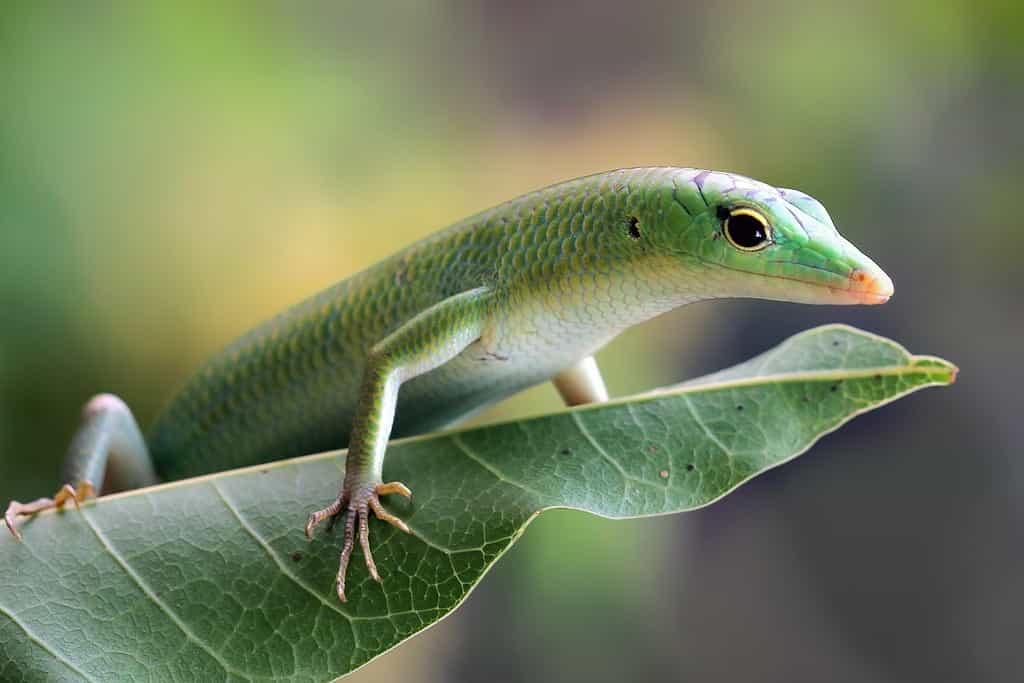
Emerald tree skinks are omnivores that consume both plant and animal matter.
©Kurit afshen/Shutterstock.com
Some of the foods skinks eat include:
- Flies
- Grasshoppers
- Beetles
- Spiders
- Crickets
- Moths
- Earthworms
- Roaches
- Locusts
- Dandelion greens
- Squash
- Slaters
- Ladybeetles
- Spiders
- Caterpillars and grubs
- Earwigs
- Cockroaches
- Termites
- Mango
- Raspberries
- Figs
- Papaya
- Small lizards
- Millipedes
- Mice
- Slugs
- Skink eggs (rarely)
The differences between types of skinks can be vast in terms of location and physiology. Some skinks are more lizard-like and capable of chasing down prey, while others are more snake-like, with limited movement.
Baby skinks, called hatchlings, are precocial; they are born, or hatch, fully developed and are capable of finding food, running, and hiding without any parental care.
How Do Skinks Hunt?
Some skinks are strictly carnivorous and spend a significant amount of time hunting for food. They are opportunistic hunters that target prey within their environment, such as insects, spiders, beetles, and snails, and sometimes consume small vertebrates.
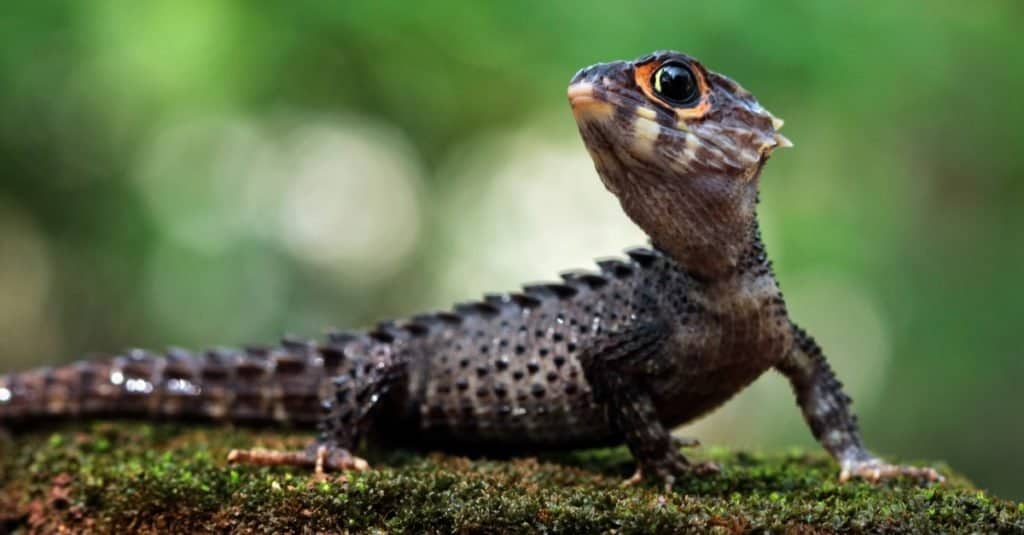
Using their tongues to smell the air or their sense of hearing, skinks can find prey.
©Kurit afshen/Shutterstock.com
Skinks have a Jacobson’s organ located in the roof of their mouths. Skinks use their tongues to collect scent particles from the air or surfaces and transport them to this organ to smell their environment, detect prey, and find mates.
Another way skinks find food is by detecting vibrations in the ground. They sense ground-borne vibrations of nearby creatures to determine whether they are potential prey or predators from which they need to hide.
Even with these adaptations, skinks are not always fast or clever enough to catch a meal.
What Do Pet Skinks Eat?
Skinks are popular pets. One issue pet owners encounter with skinks is that it can be hard to replicate their wild diet in captivity. Fortunately, skink owners have found that some common food sources available worldwide can work for these pets.
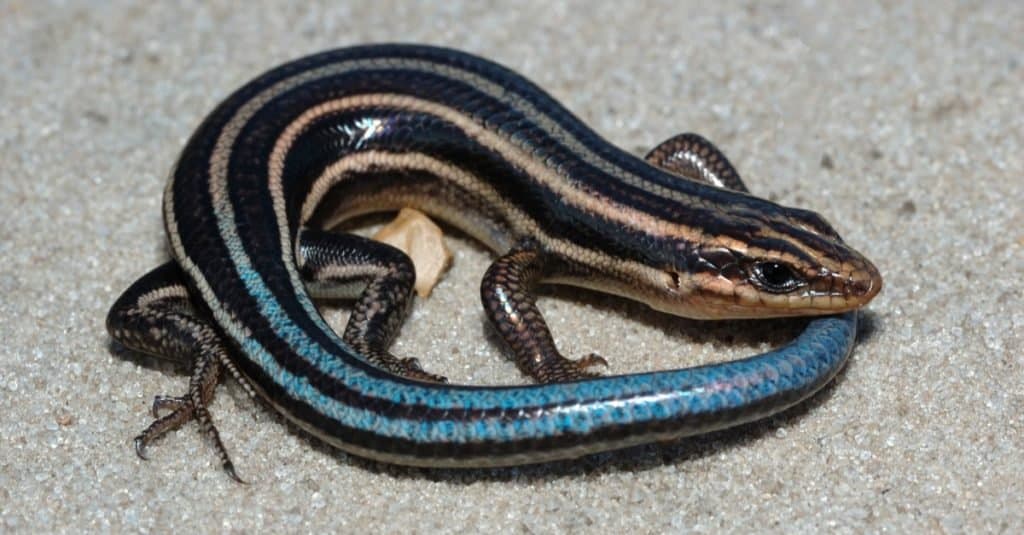
Pet skinks typically eat a mix of insects, fruits, and commercial foods.
©James DeBoer/Shutterstock.com
Pet skinks eat the following foods:
- Crickets
- Leafy greens
- Strawberries
- Pinkie mice
- Cockroaches
- Grasshoppers
- Carrots
- Mealworms
- Peas
- Brussels sprouts
- Raspberries
- Mangos
- Cantaloupes
- Some types of canned dog food
- Commercial skink food.
What Predators Eat Skinks?
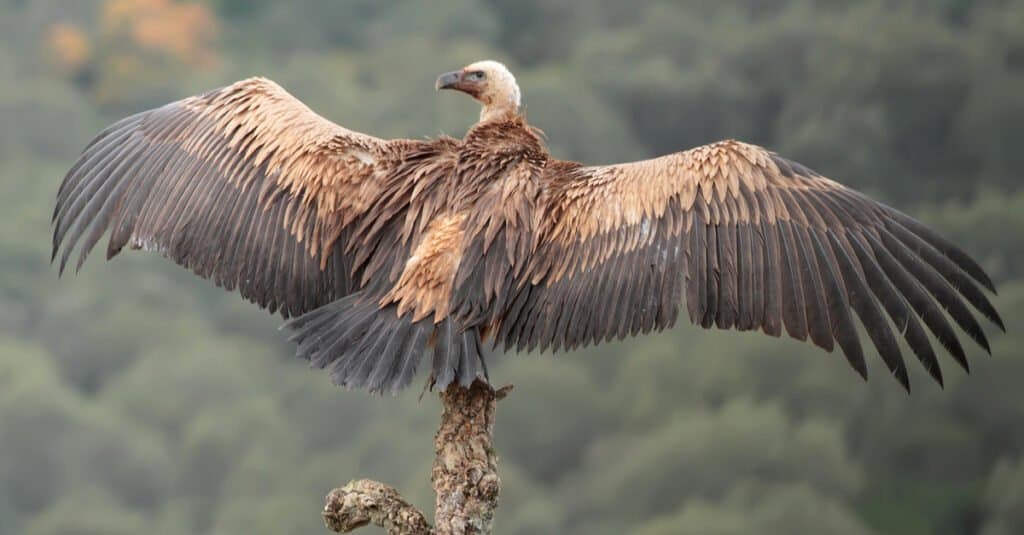
Vultures can swoop in and eat a skink before the latter knows what happened.
©Raul Baena/Shutterstock.com
Skinks may resemble snakes, but they lack venom and the ability to constrict would-be predators. Unfortunately, their lack of effective defenses, besides the ability to shed their tail, means skinks are very vulnerable to attacks from other creatures, including:
- Owls
- Foxes
- Snakes
- Raccoons
- Hawks
- Domestic cats
- Domestic dogs
- Robins
- Other skinks
- Vultures
Birds of prey are significant predators of skinks, but snakes, mammals, and other animals also prey on them, depending on the environment.