










Quick Take
- The King Shepherd was bred specifically to fix the German Shepherd's problems, yet in doing so it traded one set of challenges for another you might not expect. Compare the two breeds →
- Their size makes most people worry about the wrong thing when it comes to keeping a King Shepherd happy. See their real needs →
- King Shepherds can be gentle enough for small children and cats, yet there's a specific scenario where that temperament completely breaks down. Learn about their temperament →
- One health condition unique to this breed could turn a minor injury into a serious emergency, yet most new owners have never heard of it. Discover the health risks →
The King Shepherd was first introduced in the 1990s as an attempt to combine the strong personality traits of the German Shepherd with the size, strength, and mellow nature of breeds like the Alaskan Malamute and Great Pyrenees. Their enormous size may be intimidating to some, but these are gentle dogs that can adapt well to families and other pets.
These dogs are hard-working and smart enough to have utility in several ways — and they’re protective while still being friendly to people outside of their family. Let’s explore everything you need to know about this breed — from their history and appearance to temperament, health, and care.

Breed Origins and History
King Shepherds are a relatively new breed and are still considered to be in development. Started in the 90s by two Americans, David Turkheimer and Shelly Watts-Cross, who wanted a dog that was larger and similar to a German Shepherd but didn’t have the same health and behavioral issues. They were able to do this by combining the German Shepherd with the Alaskan Malamute, the Great Pyrenees, and, at times, the Akita.
While not officially recognized by the American Kennel Club (AKC), King Shepherds are acknowledged by the American Rare Breed Association and have a dedicated breed standard.
Size and Appearance
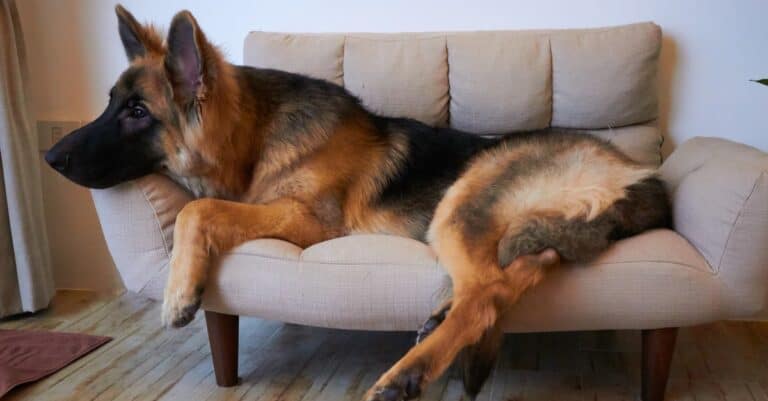
The King Shepherd is larger than the German Shepherd and ranks as the largest breed in their group. Males can reach a height of 27 to 32 inches, and they fill out that frame with a weight of 110–150 pounds. Females tend to be a little smaller at 25 to 29 inches tall, with a weight of 90 to 120 pounds, but are still intimidating large when compared to the average breed.
These dogs have a strong, muscular build, a broad head, and a thick double coat. The coat can be straight or slightly wavy. Black and tan, sable, red, and even bi-color patterns are common coat colors. Like their German Shepherd ancestors, they shed year-round, with heavier seasonal shedding.
Temperament and Personality

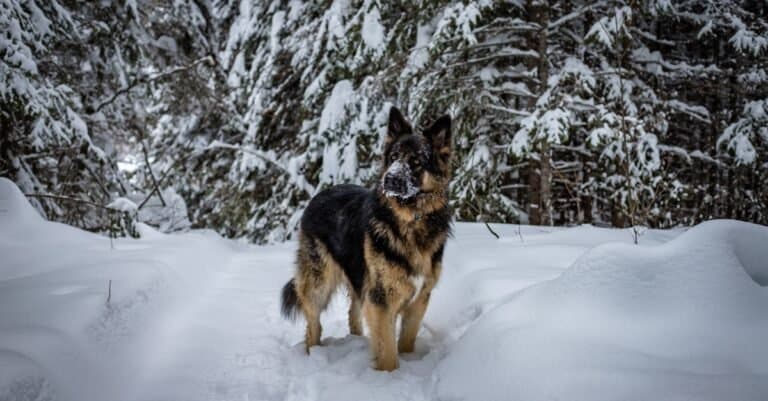
King Shepherds crave a sense of purpose and have high activity levels.
©Northern Exposure by JR/Shutterstock.com
The King Shepherd is renowned for its temperament, which takes some of the best qualities of a German Shepherd and tempers them to make them more appropriate for families. They are quite aptly described as “gentle giants”. They combine the confidence and protectiveness of the German Shepherd with the calm, even-tempered nature of the Great Pyrenees.
King Shepherds bond closely with their caregivers and show an exceptional capacity to control their massive bodies. They can be gentle with both small animals and children — and while they’re highly protective of their families, they’re also friendly with strangers as long as they don’t pose a credible threat.
That said, these are big dogs with big energy. The facts are that King Shepherds were bred to be shepherds, and they crave a sense of purpose. Their high activity levels combine with their high intelligence to produce a dog that expects a lot from their caregivers and can act out when they don’t get what they want. Regular exercise can help expend that energy, but this dog is at its happiest when it has a job to do. Fortunately, they’re smart and adaptable enough to serve as everything from a guard dog to a seeing-eye dog to a police canine.
Pros And Cons Of Owning A King Shepherd
The King Shepherd is a great dog, but that doesn’t mean it will be a right fit for every family. Here are the pros and cons.
| Pros | Cons |
|---|---|
| They get along well with other pets and intentionally exhibit a light touch when dealing with cats, smaller dogs, and children. | They shed prolifically and have relatively high grooming demands when compared to other breeds. |
| They’re smart and hard-working and can fulfill several different roles around the house. | As a highly active breed, they require a caregiver who’s willing to put in the effort to make sure they get to play and exercise. |
| They’re protective of families but smart and conscientious enough to evaluate the facts and recognize when a person or animal is not a threat. | They’re prone to anxiety issues and can resort to barking and chewing when they’re left alone or ignored for extended periods of time. |
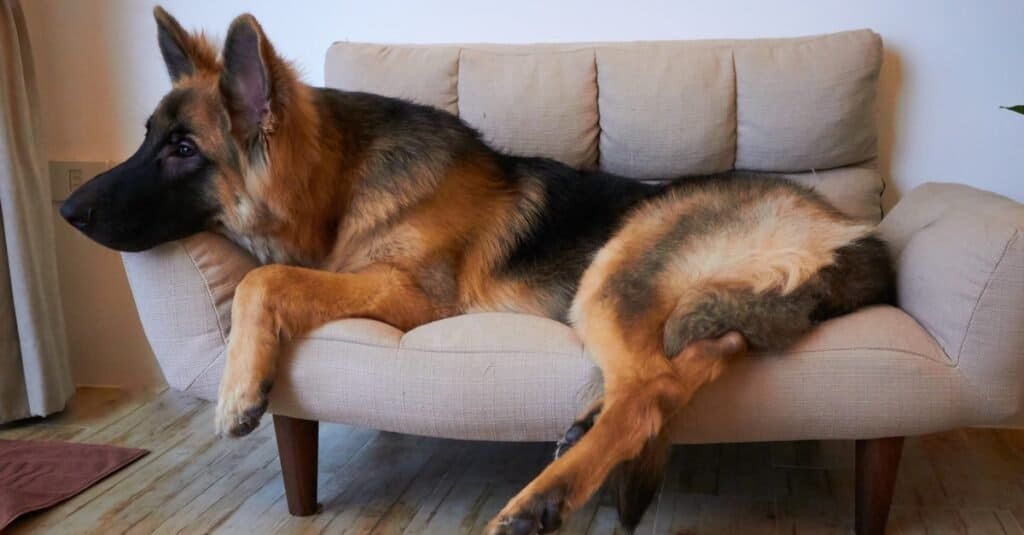
King shepherds are highly protective.
©Vach cameraman/Shutterstock.com
Training and Exercise Needs
The high intelligence of these dogs can be both an asset and a liability when training them, but patience and consistency will always prevail. These dogs are prone to learning lessons quickly and retaining them in the long term — but despite the fact that they actively seek approval, they’re also prone to distraction. Figuring out rewards that work for your specific dog will help with advanced training.
These dogs need regular hikes or walks every day — and while they can learn to adapt to living in an apartment, they really thrive when they’re in a larger home with a yard. That’s in large part because these dogs benefit from play as well as simple exercises. Games like tug of war and hide and seek can keep them both physically and mentally engaged, and keeping a variety of toys around can prevent them from growing bored or anxious.
Grooming and Maintenance
One thing that King Shepherds inherited from the German Shepherd parents is a propensity for shedding. Whether their hair is curly or straight, grooming will help get rid of dead hair and improve circulation to their skin. Expect to brush your pet roughly every other day, and expect to need to vacuum up fur at least as often.
Fortunately, these dogs don’t need regular baths. You can opt to only bathe this breed when their coat has gotten notably messy beyond the ability to be fixed with a brush.
It will also be necessary to trim their nails at least monthly and to brush their teeth 2 to 3 times per week.
Common Health Issues
One of the primary reasons for breeding the King Shepherd was to reduce the risk of health issues that come with the German Shepherd lineage. For the most part, it’s a tactic that seems to have worked. That’s not to say that King Shepherds have a perfect bill of health, but most of their issues are relatively minor and typical across a variety of breeds. The most concerning is Von Willebrand’s disease — a condition similar to anemia that affects the blood’s ability to clot after an injury.
King Shepherds are also prone to issues that other large breeds share. Hypothyroidism can throw off the metabolism of a King Shepherd, but it’s most worrying as a harbinger of potentially worse issues like heart disease and diabetes. They’re also prone to an issue called joint dysplasia, which can lead to joint pain and poor balance. This is an important issue to keep an eye out for, as severe dysplasia can lead to inactivity and obesity, potentially compounding existing issues.
As long as you pursue regular checkups with the vet and keep an eye on the most common issues, the average King Shepherd will be perfectly healthy. King Shepherds typically live 10 to 11 years — a solid lifespan for a dog of their size.
Feeding and Nutrition
King Shepherds are imposing dogs, so it should come as no surprise that they eat a lot. Unfortunately, they’re also prone to obesity and hypothyroidism. That means that you should work with a veterinarian to come up with a feeding plan if you’re noticing that your pet is too thin or too overweight.
King Shepherds don’t have any particular dietary requirements, but you should make sure that you’re providing them with food that’s appropriate for their age and nutritionally valuable. It’s recommended that you split feeding time between two to three meals. The average member of the breed will eat between three and four cups of food a day.
You can add the following supplements to their diet: Omega-3s for coat health, glucosamine for joints (ask your vet).
King Shepherd Puppies
King Shepherds are a hybrid breed that isn’t formally recognized by every major kennel club, so you should know what to expect with the breed when seeking out a breeder for puppies. These puppies don’t require any particular care, though you may want to work with a veterinarian to come up with a dietary plan that suits their size.
Keep in mind that this breed is prone to separation anxiety, so properly socializing and training is critical early on. Since these puppies require a lot of attention, they’re a particularly good choice for families who can provide them with varied and consistent attention.
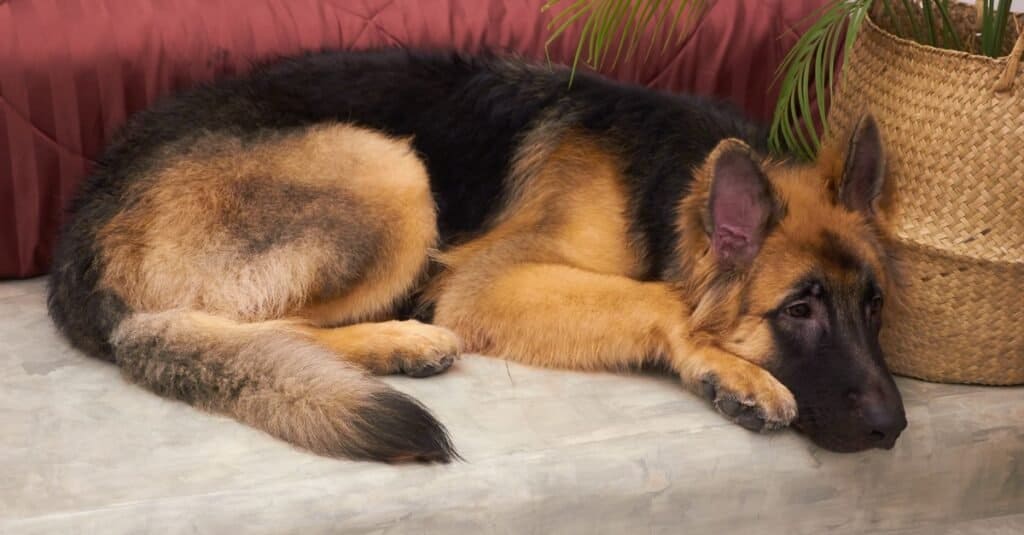
King Shepherd puppies require a lot of attention and are prone to separation anxiety.
©Vach cameraman/Shutterstock.com
King Shepherds And Children
It’s understandable to look at the size of these dogs and be worried about how they’ll do around children, but these dogs do exceptionally well even with younger children. They’re very conscientious about being gentle around smaller children and don’t tend to be easily spooked. Any kids who have been properly trained in how to behave around dogs should do well with a properly socialized King Shepherd.
Dogs Similar To King Shepherd
King Shepherds have the most characteristics in common with the breeds that they’re derived from. If you want a dog like the King Shepherd, the Great Pyrenees, the Alaskan Malamute, or the German Shepherd are very similar.
- The German Shepherd is the most obvious ancestor of the King Shepherd, and they tend to possess very similar sensibilities. German Shepherds tend to be a bit more aggressive as well as territorial of their families.
- The Alaskan Malamute is also a working dog, but they pull sleds rather than herding large animals. These big dogs also possess a gentle streak that they share with King Shepherds.
- The Great Pyrenees is also a great watchdog that used to work in the fields. They’re every bit as friendly, but they tend to be a bit more mellow.
King Shepherd vs. German Shepherd
King Shepherds were bred from German Shepherds with the intent of breeding out some of their less desirable qualities. And while these dogs may look quite similar, they have a few distinct differences as well. King Shepherds tend to be larger — usually both a few inches taller and a few dozen pounds heavier. Kings are generally more muscular as well, but they have a sweeter disposition on average. Both breeds are protective of their families, but Kings don’t have the same aggressive streak or standoffish nature when dealing with strangers. Both breeds have the same general colors and looks, although the King Shepherd has a slightly shorter lifespan. German Shepherds are AKC-recognized; King Shepherds are not (yet).
King Shepherd Pictures
View all of our King Shepherd pictures in the gallery.

Northern Exposure by JR/Shutterstock.com
Sources
- Dogtime / Accessed October 8, 2021
- The Spruce Pets / Accessed October 8, 2021
- Animalso / Accessed October 8, 2021
- World Of Dogz / Accessed October 8, 2021
- Pet ID Register / Accessed October 8, 2021