







L
Species Profile

Lagotto Romagnolo

Canis lupus familiaris

Romagna's curly-coated truffle pro
iStock.com/StefanSorean

Lagotto Romagnolo Distribution

Click a location to explore more animals from that region

Origin Location

This map shows the native origin of the Lagotto Romagnolo. As a domesticated species, they are now found worldwide.

Loading map...

Found in 1 country

Size Comparison

Human 5'8"
Lagotto Romagnolo 1 ft 5 in

Lagotto Romagnolo stands at 25% of average human height.

At a Glance

Domesticated
Also Known As Lagotto, Truffle dog, Italian truffle dog, Truffle hunter
Diet Omnivore
Activity Diurnal+
Lifespan 5 years
Weight 17 lbs
Status Not Evaluated
Did You Know?

Name meaning: "Lagotto" is linked to the idea of "lake" in Italian; "Romagnolo" refers to the Romagna area of Emilia-Romagna.

Scientific Classification

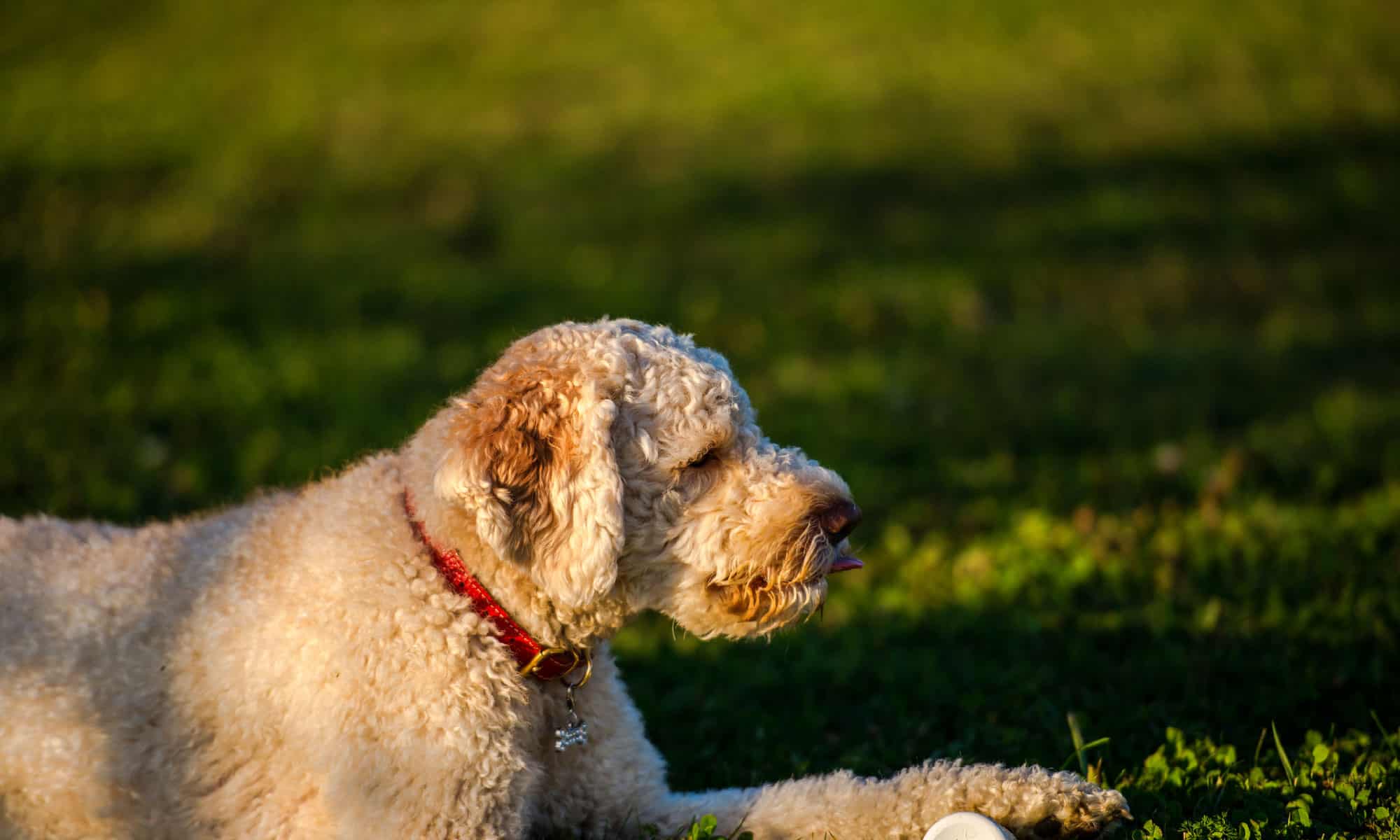
The Lagotto Romagnolo is a distinct Italian dog breed originating in the Romagna region, historically used as a water retriever and today especially known as a truffle-hunting dog.

Kingdom
Animalia
Phylum
Chordata
Class
Mammalia
Order
Carnivora
Family
Canidae
Genus
Canis
Species
Canis lupus

Distinguishing Features

  • Small-to-medium, sturdy build
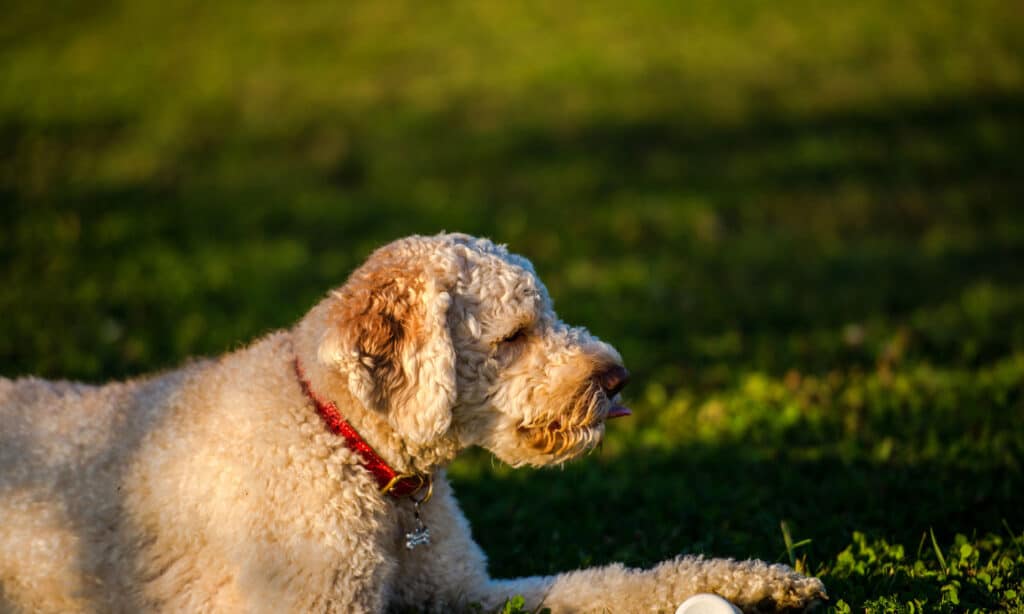
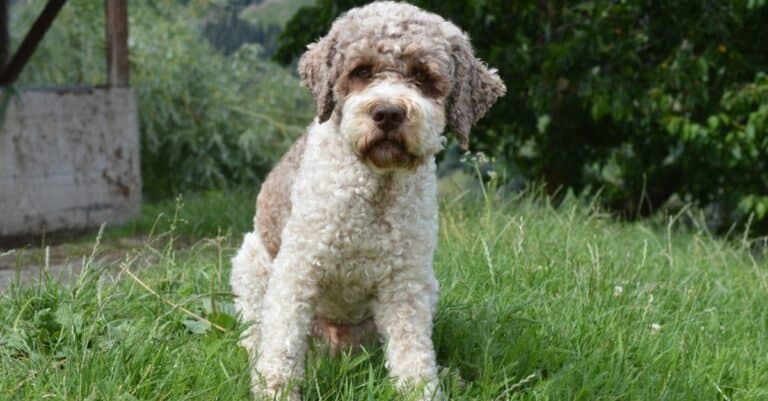
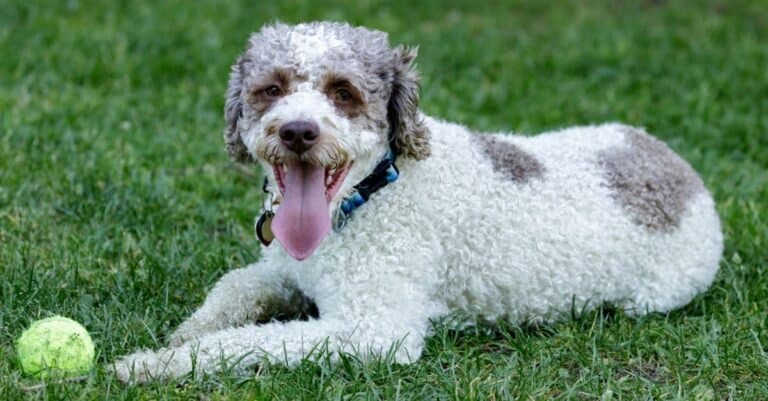
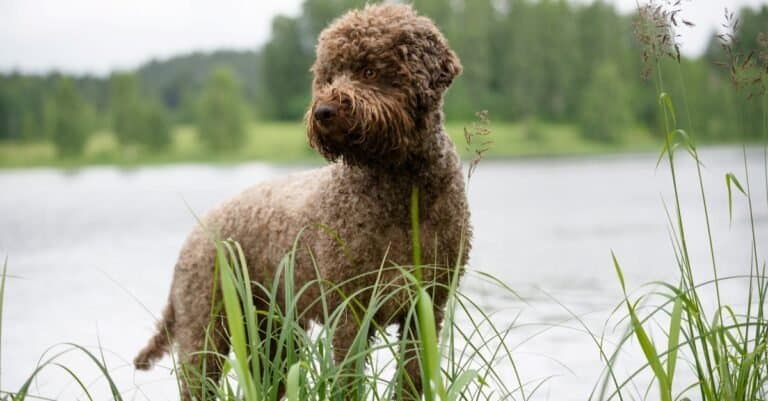
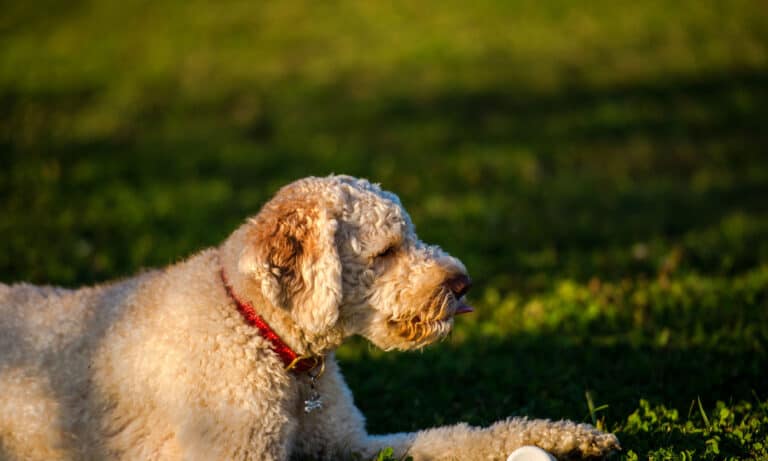
  • Dense, woolly, tightly curled coat that is typically water-resistant
  • Rounded head with pronounced facial furnishings (beard/eyebrows) common in the breed
  • Traditionally associated with scent work (notably truffle hunting)

Physical Measurements

Males and females differ in size

Height
♂ 1 ft 6 in (1 ft 5 in – 1 ft 7 in)
♀ 1 ft 5 in (1 ft 4 in – 1 ft 6 in)
Length
♂ 2 ft 6 in (2 ft 2 in – 2 ft 9 in)
Weight
♂ 32 lbs (29 lbs – 35 lbs)
♀ 28 lbs (24 lbs – 31 lbs)
Tail Length
♂ 10 in (9 in – 12 in)
♀ 10 in (9 in – 12 in)
Top Speed
25 mph
running

Appearance

Primary Colors
Secondary Colors
Skin Type Domestic dog skin with good pigmentation; protected by a dense, woolly, water-resistant curly coat.
Distinctive Features
  • Domestic dog (Canis lupus familiaris) breed specialized by humans; not a wild canid phenotype.
  • Italian origin (Romagna); historically a water retriever, now a dedicated truffle-hunting scent dog.
  • Dense, curly/woolly, non-shedding coat that insulates in cold water and needs regular clipping.
  • Rounded head with pronounced eyebrows and beard; expressive, alert facial furnishings.
  • Compact, medium build with strong forequarters and endurance for field work.
  • Often has hair in ear canals; prone to ear debris if not routinely maintained.
  • Breed-typical health concerns: hip dysplasia, benign familial juvenile epilepsy, lysosomal storage disease, and some eye disorders (e.g., cataracts).
  • Care needs: frequent brushing to prevent matting, scheduled grooming/clipping, ear cleaning, and daily exercise plus scentwork/tracking games to meet working-drive needs.

Sexual Dimorphism

Males are typically slightly larger and more robust, with broader skulls and deeper chests. Females are usually lighter-framed and a bit finer in head and neck while keeping the same curly coat and working structure.

♂
  • Slightly taller and heavier overall build
  • Broader head and stronger jaw appearance
  • Deeper chest and more pronounced musculature
♀
  • Slightly smaller, more refined frame
  • Narrower head with lighter bone
  • Often a more tucked waistline appearance

Did You Know?

Name meaning: "Lagotto" is linked to the idea of "lake" in Italian; "Romagnolo" refers to the Romagna area of Emilia-Romagna.

Originally a water retriever for marshes and lagoons, later repurposed when wetlands were drained and truffle hunting expanded.

Among the best-known truffle dogs worldwide; prized for methodical searching and trainability.

The coat is dense and curly, more like wool than typical fur, and is valued for working in cold, wet conditions.

Generally small-to-medium and sturdy-built for stamina rather than sprinting.

Often described as having a very expressive, "bearded" face due to facial furnishings and curls.

Recognized internationally as a distinct Italian breed; breed clubs worked to preserve it as truffle work replaced water retrieving.

Unique Adaptations

  • Woolly, curly double coat that insulates and helps repel water-an advantage for historic marsh work in northern/central Italy.
  • Robust scenting ability and persistence suited to subterranean odors (truffles), favoring sustained search over speed.
  • Compact, muscular build with good endurance for long days in fields and woods.
  • Often strong tolerance for cool, damp environments compared with many companion breeds, reflecting water-dog heritage.

Interesting Behaviors

  • Nose-driven "grid searching": many Lagotti naturally work an area in systematic passes when trained for scent work.
  • Focused digging behavior at odor sources-common in truffle work; needs guidance to avoid over-digging in gardens.
  • Strong retrieval instinct from water-dog ancestry; many enjoy carrying objects and playing fetch.
  • "Shadowing" their handler: often check back frequently during off-leash searching, supporting close teamwork.
  • Alert but typically not overly aggressive-may vocalize to announce visitors while remaining people-oriented.
  • High problem-solving drive; will invent games or mischief if under-exercised mentally.

Cultural Significance

The Lagotto Romagnolo, from Romagna, once fetched game in wetlands and later became key to Italy's truffle trade. Skilled truffle dogs are part of local identity and food traditions.

Myths & Legends

Romagna origin stories often describe the Lagotto as the "water dog" of the marshes-dogs kept by fishermen and waterfowlers that adapted with their people as wetlands disappeared, becoming the woods-and-fields truffle dog.

Italian truffle-hunting tradition includes the belief that a good dog should be worked quietly and rewarded discreetly so the secret locations of prized truffle grounds stay protected-an old practice that shaped the handler-dog partnership.

Regional anecdotes from truffle country tell of exceptional dogs that could "read the earth," pausing at subtle changes in scent and soil, and becoming as celebrated as the truffle hunters themselves in local communities.

Conservation Status

NE Not Evaluated

Has not yet been evaluated against the criteria.

Population Stable

Life Cycle

Birth 5 pups
Lifespan 5 years

Lifespan

In the Wild
3–8 years
In Captivity
12–17 years

Reproduction

Mating System Polygynandry
Social Structure Managed Domestic
Breeding Pattern Serial
Fertilization Managed Selective
Birth Type Managed_selective

Lagotto Romagnolo reproduction is typically human-managed: selected pairs mate via internal fertilization during the bitch's estrus, with temporary pair bonds that end after breeding. Responsible programs screen for breed issues (e.g., hip dysplasia, epilepsy, storage disease) before mating.

Behavior & Ecology

Social Pack Group: 4
Activity Diurnal, Crepuscular, Cathemeral
Diet Omnivore Highly palatable meat-based foods/treats (e.g., poultry, fish) used as rewards; truffle scent is especially motivating due to the breed's strong odor-drive (truffles are typically found/indicated rather than eaten).

Temperament

Species context (Canis lupus familiaris): highly social, human-directed, flexible grouping versus wild wolf packs.
Breed distinction: exceptionally strong scenting/foraging drive; persistent, methodical search style for truffles.
Breed distinction: historically water retriever; many enjoy water play, damp terrain, and retrieving games.
HUBS: most are affectionate family dogs; variation exists from outgoing to reserved with strangers.
HUBS: generally good with other dogs when socialized; some show same-sex selectivity if under-socialized.
Biddable and eager to work; responds best to positive reinforcement and clear routines.
Alert watchdog tendency; can develop nuisance barking without training and enrichment.
Sensitive temperament; harsh handling increases avoidance, stress vocalizing, and reactivity risk.
Moderate energy with high mental needs; thrives on scent games, tracking, and puzzle feeding.
Can be prone to separation-related distress; benefits from gradual alone-time training.
Common health concerns: hip dysplasia and patellar luxation; maintain lean body condition and controlled exercise.
Common health concerns: benign familial juvenile epilepsy reported; discuss screening/line history with breeders.
Common health concerns: Lagotto storage disease (LSD) risk in some lines; genetic testing recommended.
Common health concerns: eye issues (e.g., cataracts/PRA in some lines); routine ophthalmic exams advised.
Care requirements: dense curly coat mats easily; frequent brushing, regular clipping, ear care to prevent otitis.
Care requirements: high odor retention when wet; rinse/dry coat after water work, monitor skin irritation.

Communication

bark
whine
growl
howl-like baying in excitement
grumble/"talking" during play
intense nose-to-ground searching and air-scenting; communicates interest by freezing or rapid sniffing
human-directed gaze and check-ins during work; uses proximity to request guidance
body language: curled tail carriage, bouncy approach, play bows; stress shown via lip-licking/avoidance
scent marking and over-marking during walks; information-rich sniffing at hotspots
pawing/nudging to solicit play or indicate desired direction; retrieving objects to initiate interaction

Habitat

Biomes:
Temperate Forest Wetland Freshwater Mediterranean Temperate Grassland Boreal Forest (Taiga) Tundra Alpine Desert Hot Desert Cold Savanna Tropical Rainforest Tropical Dry Forest Temperate Rainforest Marine +9
Terrain:
Plains Riverine Coastal Hilly Valley
Elevation: Up to 16404 ft 3 in

Ecological Role

Domestic commensal omnivore and human-managed predator/scavenger; in Lagotto Romagnolo specifically, a specialized scent-detection forager used to locate subterranean fungi (truffles).

truffle detection and harvest support (economic/ecological monitoring of fungal resources) pest deterrence (discouraging small mammals around human settlements) companionship and working-dog roles (e.g., detection/nose-work, retrieving) nutrient cycling via waste deposition in human-dominated landscapes (managed impact)

Diet Details

Main Prey:
Small mammals Birds and bird eggs Fish Invertebrates
Other Foods:
Fungi Berries and other fruits Vegetables and roots Grains and starches Grass and other plant matter

Human Interaction

Domestication Status

Domesticated

Canis lupus familiaris (domestic dog) was shaped by humans for hunting, guarding, work, and companionship. The Lagotto Romagnolo is an Italian water dog from Romagna, bred for scent work and truffle hunting. It is medium, very trainable, friendly with people, needs mental work and daily activity, and has a curly, low-shedding coat.

Danger Level

Low
  • Bite/scratch risk typical of domestic dogs, usually linked to fear, pain, poor socialization, or mishandling
  • Allergy/asthma triggers from dander/saliva (coat may shed less but is not truly hypoallergenic)
  • Zoonotic risks common to pet dogs if hygiene/vaccination/parasite control is poor (e.g., intestinal parasites, rabies risk where unvaccinated)
  • Accidental injury (knocking over small children/elderly, tripping on leash) especially with energetic individuals

As a Pet

Suitable as Pet

Legality: Lagotto Romagnolo (Canis lupus familiaris) are usually legal as pets where dogs are allowed. They follow normal licenses, leash rules, and shots; breed bans are rare, but check local, import, or quarantine rules.

Care Level: Moderate

Purchase Cost: $1,500 - $3,500
Lifetime Cost: $18,000 - $35,000

Economic Value

Uses:
Companion animal Working dog (scent detection/truffle hunting) Sport/performance dog (nosework, agility, obedience) Breeding and pedigree sales Professional services (training, grooming, boarding, veterinary care)
Products:
  • truffle-hunting services and truffle yield support
  • puppies from registered breeders
  • training services (scentwork/nosework programs)
  • grooming services for curly coats
  • standard pet-market goods (food, crates, collars, enrichment toys)

Relationships

Ecological Equivalents 6

Animals that fill a similar ecological role in their ecosystem

Portuguese Water Dog Canis lupus familiaris Similar historical niche as a water-working retriever with a curly coat. Like the Lagotto, typically requires regular coat management to prevent matting and can be prone to ear issues due to hair and moisture in the ear canal.
Spanish Water Dog
Spanish Water Dog Canis lupus familiaris Curly-coated working dog used for retrieval and herding; shares the Lagotto's rustic coat and high trainability for field tasks and scent-based work.
Standard Poodle Canis lupus familiaris Another curly-coated, water-retriever type—an ecological analogue in athletic retrieval and biddable temperament. Compared with many retrievers, Lagotti are especially specialized today for truffle scentwork rather than game-focused retrieving.
English Springer Spaniel
English Springer Spaniel Canis lupus familiaris Comparable sporting and scenting role in flushing and retrieving; overlaps with the Lagotto's stamina and handler-focused work style, although the Lagotto has been specifically selected for precise ground-scent indication of truffles.
Truffle hunter
Truffle hunter Sus scrofa domesticus Shares the truffle-finding niche via strong olfaction and ground-foraging behavior. Lagotti are preferred in many regions because they are easier to manage in the field and are typically less likely to eat the truffles they locate.
Scent hound
Scent hound Canis lupus familiaris Lagotto Romagnolo (Canis lupus familiaris) is a scent-searching dog with a calm nature and a curly, waterproof coat. Requires frequent grooming, regular ear care, and mental exercise. Be alert for hip and knee problems, eye disorders, epilepsy, and inherited metabolic disorders; use health testing.

The Lagotto Romagnolo is an older breed, developed in Italy to hunt waterfowl in the 1600s (possibly dating back to Etruscan civilization before the 2nd century BC). The breed was later trained to hunt truffles and is the most well-known purebred specialized for truffle hunting. The Lagotto even showed up in Renaissance paintings of daily Italian life.

A lively, energetic breed, the Lagotto still searches for truffles. Its truffle-hunting nose is also useful for scent work, search-and-rescue operations, and detecting medical conditions.

Woolly, curly, and double-coated, the Lagotto makes an affectionate, playful, and loving family dog.

3 Pros and Cons of Owning a Lagotto Romagnolo 

ProsCons
Their coat is hypoallergenic. It sheds very little and has little dander.This dog suffers from noise-induced anxiety, so loud noises are an issue. Provide an open crate with a blanket to dampen sounds or provide background noise with a television or stereo.
The breed was developed to hunt truffles, which could be a very lucrative or tasty hobby. The Lagotto is one of the few purebred breeds recognized to have this ability.They may develop territorial or possessive tendencies if they are not adequately trained and socialized early.
It has a long lifespan of 15 to 17 years.They are diggers with a lot of energy. If they are not mentally stimulated and occupied, they can become destructive.

The Best Dog Food for Lagotto Romagnolo

As a sporting dog, the Lagotto needs more than quick bursts of activity. They benefit from training, walking, and playing for more than 30 minutes a day. This activity requires sustained energy and muscle development based on a diet high in protein and fat.
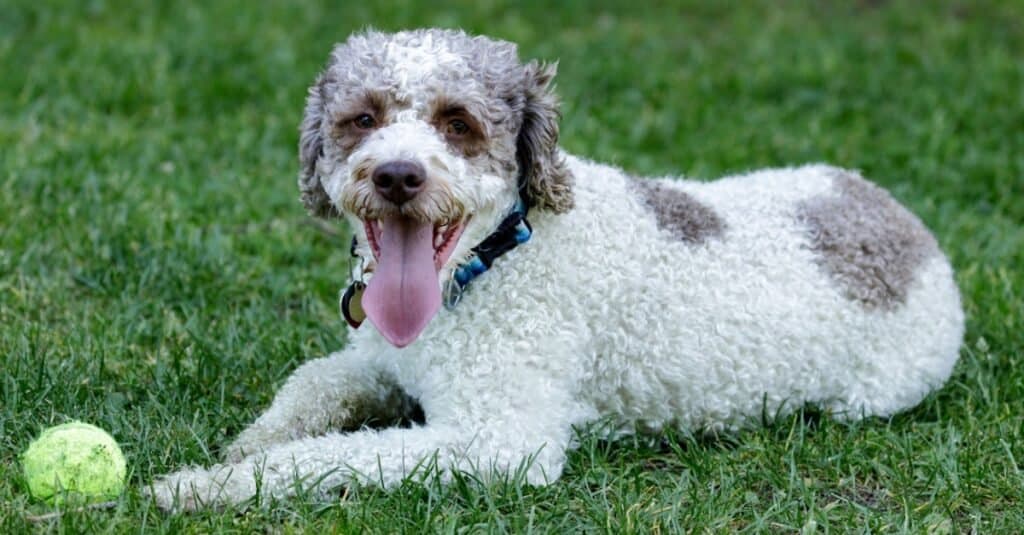
Rare breeds of dogs - Lagotto Romagnolo

The Lagotto Romagnolo is an ancient breed that’s now a rare breed of dog, though it has a prominent place in history.

Lagotto Romagnolo Size and Weight

The Lagotto Romagnolo is a medium-sized dog that stands 16 to 19 inches at the shoulder and weighs 24 to 35 pounds, though their fluffy coats make them appear slightly larger. Males are larger than females.

Height (Male):17-19 inches
Height (Female):16-18 inches
Weight (Male):28.5-35 pounds
Weight (Female):24-31 pounds

Lagotto Romagnolo Common Health Issues

This breed is sturdy with a potentially ancient history, dating back to the 1600s, if not back to the Etruscan civilization in the 8th through 2nd centuries BC. As such, they are generally healthy dogs. There are, however, a few issues to check for. This is easier with a reputable breeder.

One such issue is juvenile epilepsy. This genetic condition can begin to show up at around five to nine weeks, but generally resolves itself by about the 13th week. A responsible breeder will ensure that they only breed one canine parent carrying this gene.

Another genetic condition, limited to the Lagotto, is Lagotto Storage Disease (LSD). This is a progressive neurodegenerative disease that can ultimately result in the death of a dog. A reputable breeder will not breed carriers of this gene.

Apart from these two particular conditions, these dogs are susceptible to hip dysplasia and patellar luxation. These traits are genetically inherited, and breeders should not breed dogs that carry them.

Lagotto Romagnolo Temperament

They are affectionate, family-loving dogs with intelligent and playful personalities. They love puzzles and challenges and are always up for a romp. Though Lagotti are not prone to severe separation anxiety, they are afraid of loud or unexpected noises. On the other hand, they are good with other dogs and with children as long as they are correctly socialized not to exhibit possessive or territorial behavior from a young age.

How To Take Care of a Lagotto Romagnolo  

Maintenance and Grooming 

Trim their waterproof double coat regularly. Only bathe the dog every one or two months. Brush the coat every week or two. All of this will keep the coat from matting.

Clip the nails every other week to prevent problems. Also, brush the dog’s teeth twice a week at least. Finally, check the dog’s ears frequently and clear them of wax and debris to avoid infection.

Training

This breed is very intelligent and trainable; it thrives on pleasing its owner. The first stage of training should, of course, involve house training and socialization. Redirect the Lagotti away from territorial and possessive tendencies early to make for the best experience with this dog.

The Lagotto is a working dog that loves the mental stimulation of training. The dog’s love of water makes it ideal for dock diving competitions. Their excellent noses make them fit for scent work and search and rescue.

Try to make training sessions short and entertaining. Reward the pup with treats and plenty of praise.

Exercise

Playful and energetic dogs that love work and other activities, Lagotti are intelligent and adept at learning new games. They need at least 30 minutes of exercise, like walking, playing, or training each day. They also love to spend time playing in the water.

Puppies

Puppies are capable of learning from an early age. Begin socialization as soon as they get home and enroll them in doggy kindergarten as soon as their vaccination statuses allow. Lagotti are very trainable but can be territorial, so it’s essential to socialize them early on.
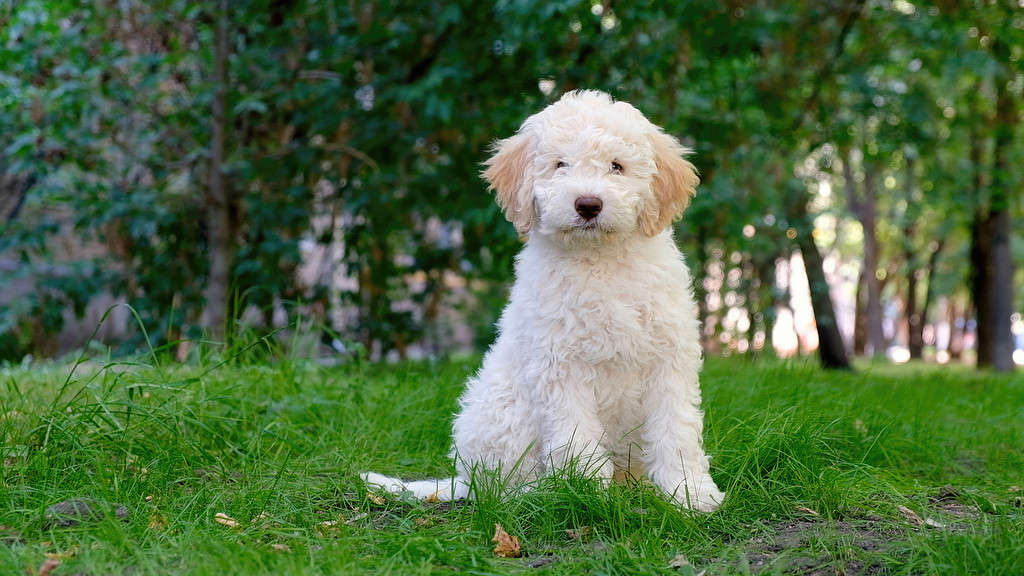
Cute white puppy lagotto romagnolo sitting on the grass and lookicng at camera in summer. Space for text

Lagotto Romagnolo puppies need to be socialized early to avoid issues later on in life.

Lagotto Romagnolo And Children

Well-adjusted Lagotti are gentle with children. Socialize the dog early to avoid possessiveness and other issues. Teach children how to behave around dogs, as well as how to read the dog’s behavioral cues. Of course, a roughhousing dog can knock a small child over, even if it’s well-behaved. Never leave small children alone with a dog, trained or otherwise, and children of any size should not be left alone with an untrained dog.

Dogs Similar to Lagotto Romagnolo

  • Portuguese Water Dog: This medium-sized, curly-haired companion works and almost lives in the water. The Portuguese water dog was bred to do all kinds of water work, including herding fish into nets.
  • Spanish Water Dog: The Spanish Water Dog also has a tight coat of dense curls. Like the Lagotto, this dog was bred to hunt waterfowl.

Famous Lagotto Romagnolo

Lagotti has been included in numerous works of Renaissance art. The ubiquity of the dog in Renaissance Italy meant that the dog was included in scenes of family life and daily public life in the Italian countryside and towns.

View all 130 animals that start with L

Sources

  1. Breeding Business / Accessed November 3, 2022
  2. Wag Walking / Accessed November 3, 2022
  3. American Kennel Club / Accessed November 3, 2022
  4. Lagotto US / Accessed November 3, 2022
  5. Wikipedia / Accessed November 3, 2022
  6. Hypoallergenic Dog / Accessed November 3, 2022
  7. Dog pregnancy calendar / Accessed November 3, 2022
  8. medical news today / Accessed November 3, 2022
  9. Eukanuba Sporting Dog / Accessed November 3, 2022
  10. Pet Calculator / Accessed November 3, 2022
Rob Amend

About the Author

Rob Amend

Rob Amend is a writer at A-Z Animals, primarily covering meteorology, geology, geography, and animal oddities. He attained a Master's Degree in Library Science in 2000 and served as reference librarian in an urban public library for 22 years. Rob lives in Cincinnati, Ohio, and enjoys spending time with his family, hiking, photography, woodworking, listening to classic rock, and watching classic films—his favorite animal is a six-foot-tall rabbit named Harvey.

Thank you for reading! Have some feedback for us?


Lagotto Romagnolo FAQs (Frequently Asked Questions)

The Lagotto Romagnolo is a lovable, obedient companion that bonds well with families. There are minor indications of aggression that should be socialized out of the dog beginning at a young age, but otherwise, they do well in a family environment.