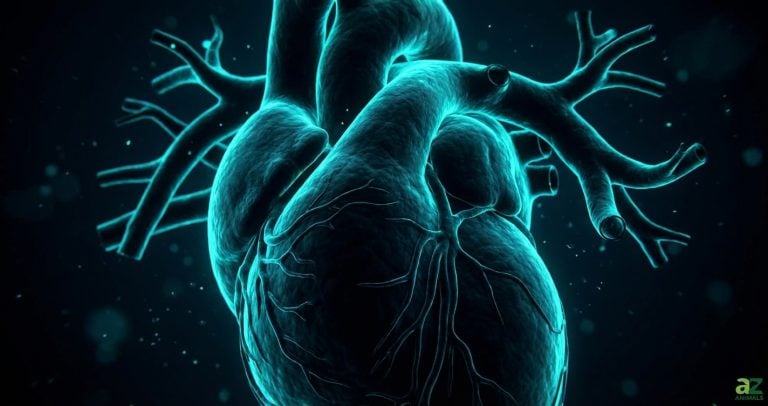

Like most vertebrates, humans only have one heart, which is usually located near the front and middle of the chest, slightly to the left of the breastbone. The heart’s primary function is to pump blood and circulate oxygen throughout the body. The heart is an essential organ and part of the cardiovascular system. Cells require oxygen to function, so without a heart, the cells in our bodies would lose access to oxygen and slowly die. Unfortunately for human beings, we only get one heart, and without it, our lives would quickly come to an end. However, did you know there are some animals that have multiple hearts?
This post was updated on September 22, 2025 to clarify the heart is part of the cardiovascular system, the nature of horse frogs, categorization of hagfish, and cockroach and cuttlefish heart anatomy.
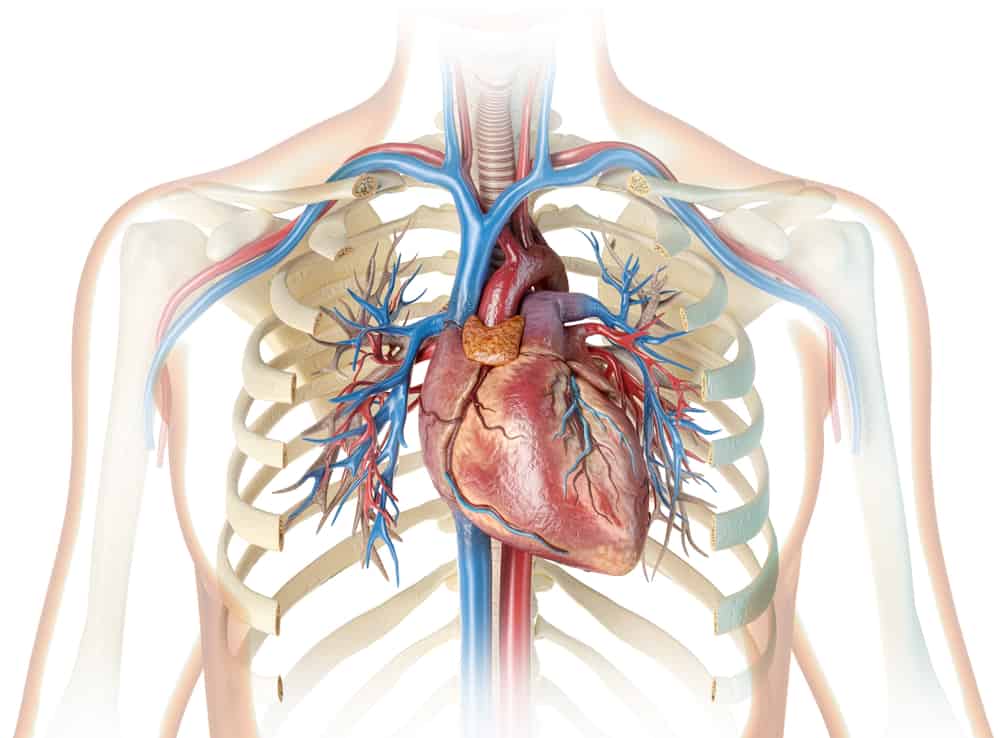
Humans typically only require one heart, but certain medical conditions call for additional cardiovascular assistance.
©Matis75/Shutterstock.com
Animals that have multiple hearts typically evolved separate hearts to perform different functions. Rather than evolving one heart to fulfill all of the circulatory system’s essential duties, these animals developed specialized hearts to take on individual assignments. In this article, we’ll explore five of these incredible creatures with multiple hearts. As an added bonus, we’ll discuss some animals who almost qualify as having several hearts but don’t for one reason or another. With that said, here are five stunning animals that have multiple hearts.
Bonus: Animals With “Almost” More Than One Heart

A horse’s hoof contains a blood pump called a frog in order to regulate circulation throughout their massive bodies.
©iStock.com/K Neville
Several animals evolved unique physiologies that almost qualify them as having multiple hearts. For example, horses possess extra blood pumps in their circulatory system known as frogs. The frog is part of a horse’s hoof and looks roughly like a triangle. In addition to acting as a shock absorber and reducing stress on a horse’s bones and joints, it also aids circulation mechanically by compressing veins. Essentially, the frogs’ wedge-shaped, elastic structure operates thanks to the horse’s weight and kinetic energy.
In most vertebrates, the heart contains two, three, or four chambers. The roles of heart chambers include either receiving or pumping blood throughout the body. However, some animals possess more intricate chambers. Case in point, cockroaches have a dorsal vessel with roughly 13 contractile chambers that act like pumping nodes. Oxygenated blood flows into each of the tubular chambers through tiny openings called Ostia. Although these compartments don’t technically qualify as hearts, they are still a marvelous evolutionary adaptation.
Another animal that technically can have multiple hearts is humans. Despite the fact that most people only get one heart at birth, there exist people alive today with multiple hearts. Typically, this happens when a person lives with severe heart disease such as cardiomyopathy. To treat this life-threatening condition, surgeons may perform a heterotopic or “piggyback” heart transplant. During this procedure, a second heart is grafted on the patient’s existing heart to help compensate for the reduced performance of the person’s original heart. However, this medical state is rare and temporary.
5 Animals with Multiple Hearts
Without those bonus animals covered, let’s now dive into our list of five animals that have multiple hearts.
#5: Octopus
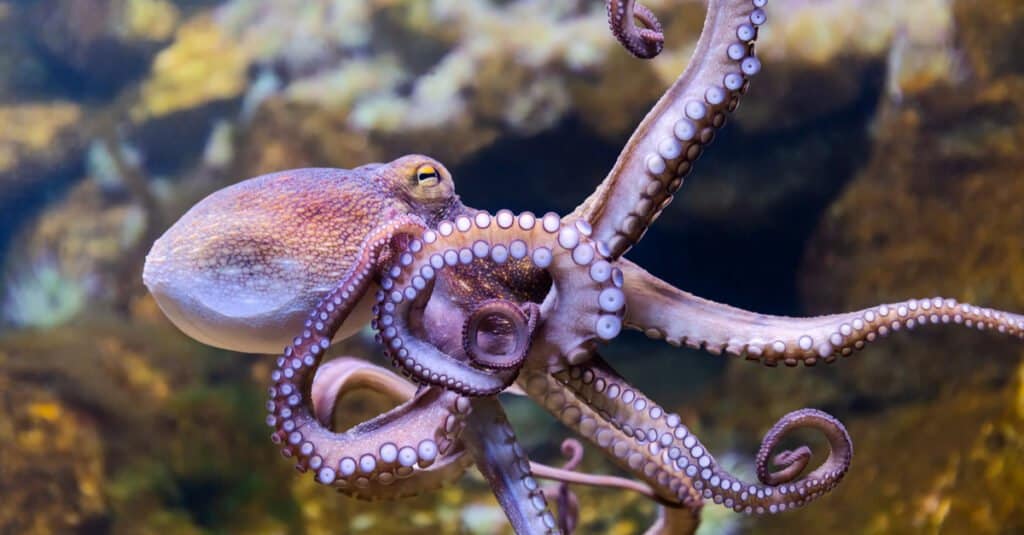
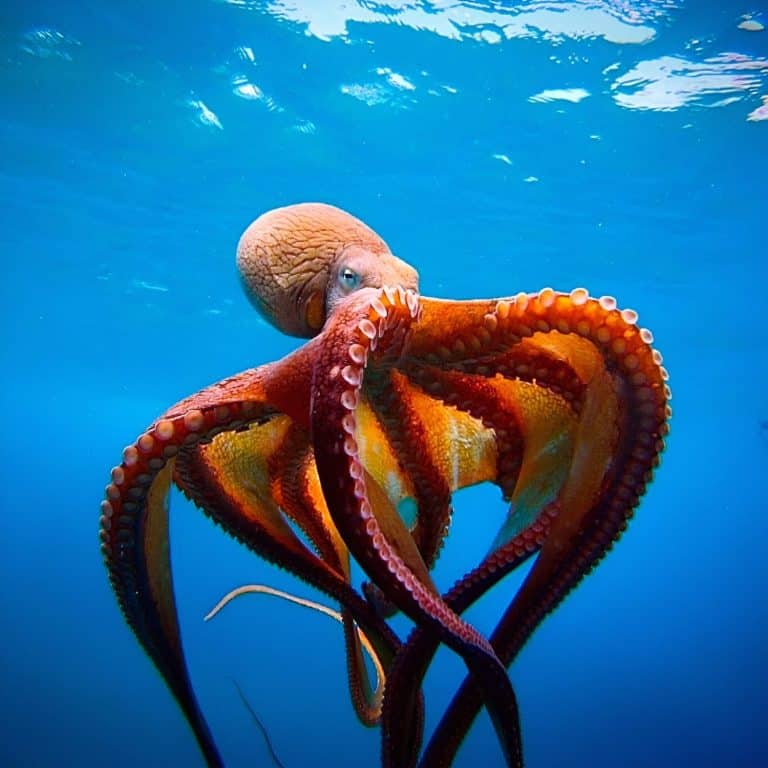
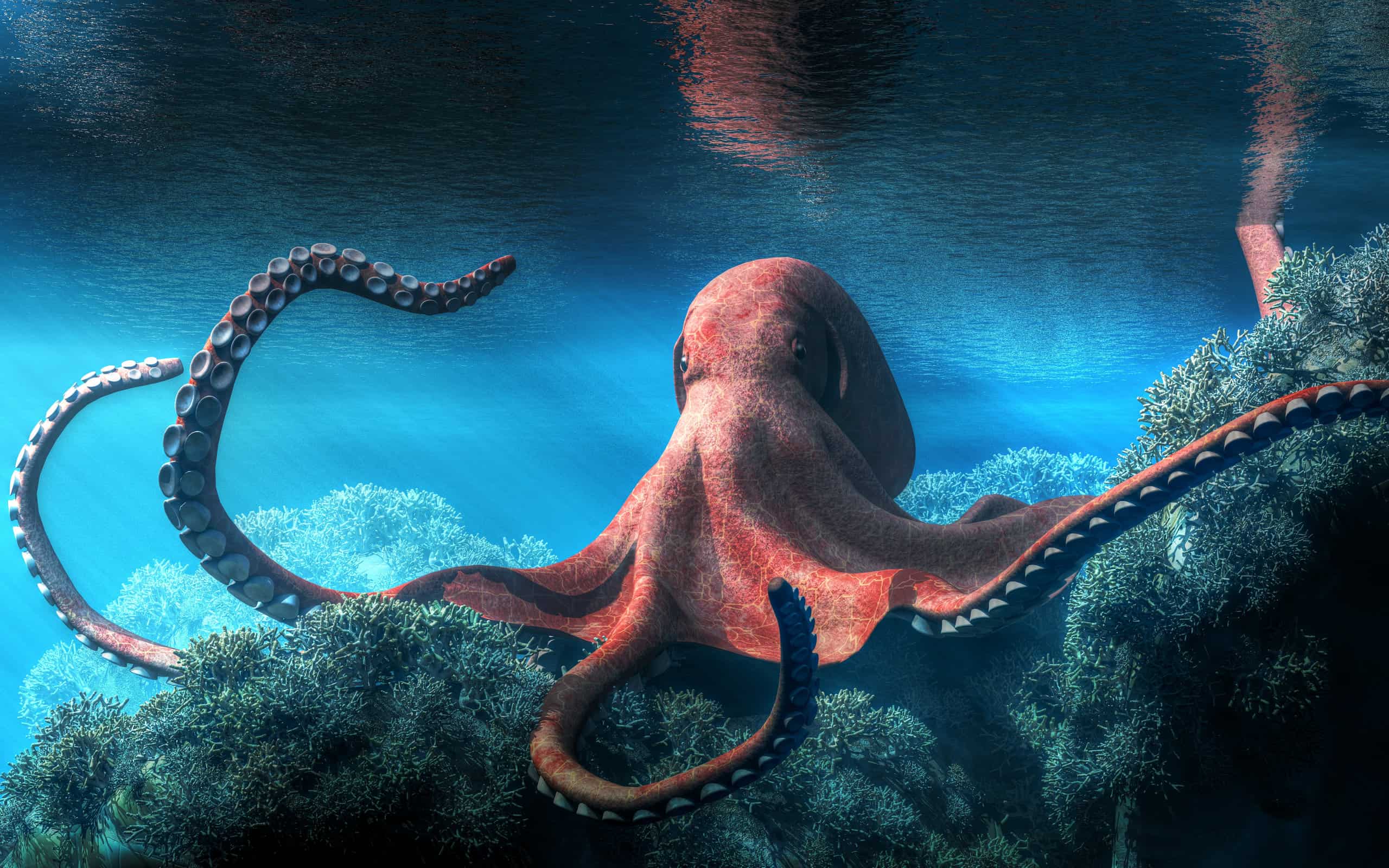
Octopuses contain three hearts, one systemic heart, and two branchial hearts.
©Henner Damke/Shutterstock.com
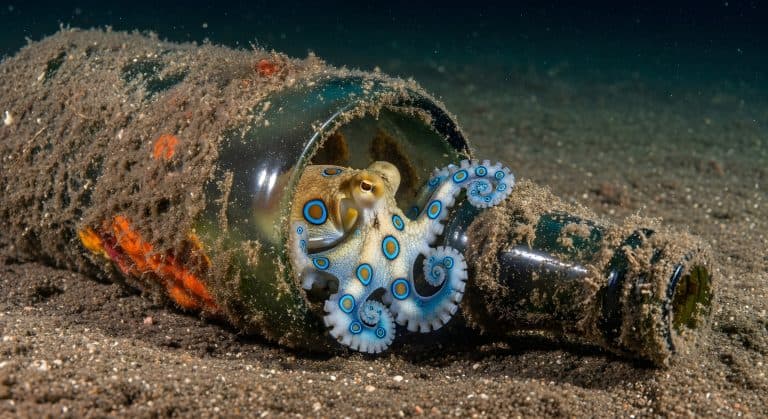
Instead of one or two hearts, octopuses have three hearts. Two of the hearts perform the same function, while the third evolved for a different reason. The systemic heart pumps blood around an octopus’s body, while its two branchial hearts pump blood through its two gills. Octopus blood is copper-rich, making it exceptionally viscous. As a result, it requires a significant amount of pressure to pump blood through its body. To compensate, the octopus evolved three separate hearts to take stress off of its systemic heart and ensure it gets enough oxygen into its gills. In addition, research indicates that the hemocyanin in octopus blood transports oxygen more efficiently when exposed to cold temperatures. This may help to explain why large octopus species tend to live in deeper, more frigid waters, where they can get more oxygen given that oxygen transport efficiency decreases in warm, low-oxygen waters.
The systemic heart contains a single ventricle and two atria, with one atrium designated per side of its body. Blood vessels include arteries, capillaries, and veins, which deliver blood throughout the body. At first, blood moves through the aorta and capillary system, then into the vena cavae, before finally pumping through the gills and back into the systemic heart. Due to the amount of energy required, the systemic heart stops beating when an octopus is swimming, leaving only the branchial hearts operating to move oxygen through the gills. This causes octopuses to quickly exhaust themselves while swimming and helps to explain why they spend most of their time crawling or floating.
#4: Squid
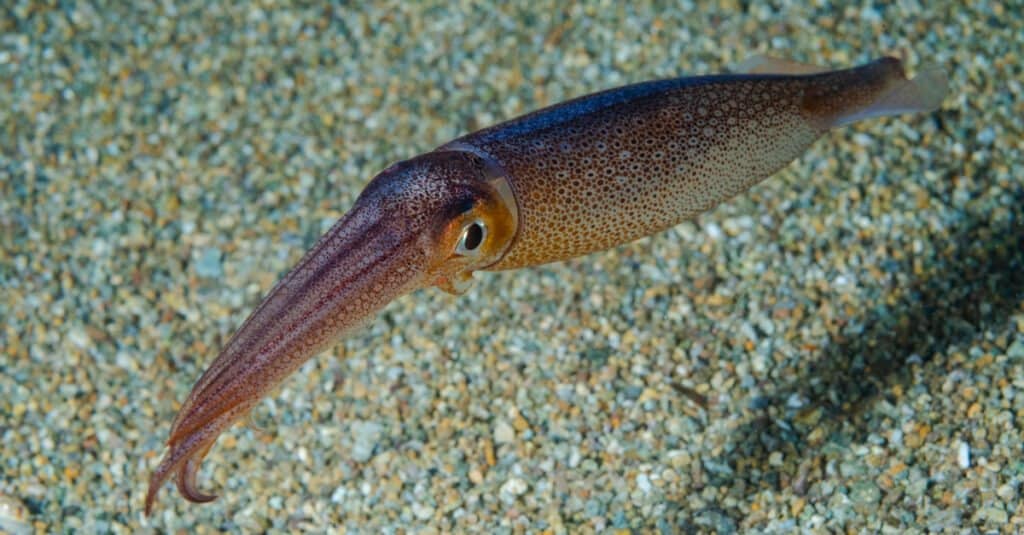
Like octopuses, squids also possess three hearts.
©Shpatak/Shutterstock.com
Like octopuses, squids also evolved three hearts. Its systemic heart pumps blood around its body, while two separate pumps (branchial hearts) move oxygen through its gills. All three hearts rest inside a squid’s mantle cavity, a seawater-filled sac containing the organs that carry out respiration and excretion. Same as an octopus, squid hearts include branchial hearts, a lower ventricle, and two atria. Squid blood also contains the copper-rich compound hemocyanin, which appears deep blue when the host is in colder, low oxygen environments. Once blood from the systemic heart returns to the branchial hearts, the squid excretes urine, carbon dioxide, and other waste products through openings called nephridial appendages. These openings allow squid to exchange gas and expel waste through their mantle cavity. In effect, the mantle operates as a closed circuit that takes care of each part of a squid’s primary organ functions, from breathing to waste management.
#3: Hagfish
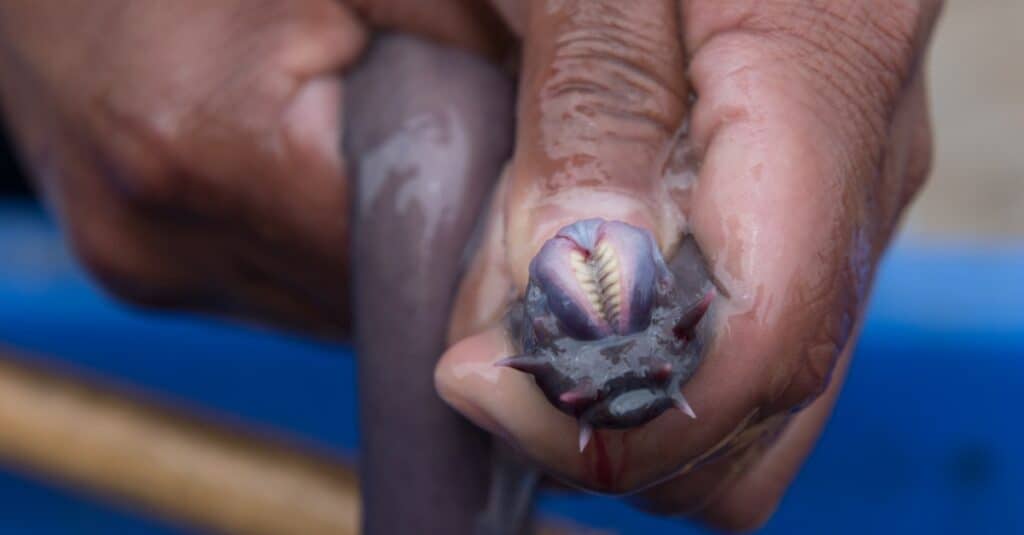
Hagfish are jawless craniates, not strictly vertebrates.
©Frank Fennema/Shutterstock.com
The hagfish ranks highly among the animals that have multiple hearts in terms of its sheer bizarre nature. An eel-shaped, slimy fish, the hagfish is the only known extant animal to possess a skull but no vertebral column. However, they do have rudimentary cartilaginous structures. Additionally, whether they count as “vertebrae” is debated. They are jawless craniates, not strictly vertebrates. Its strange, alienlike appearance likely contributed to its less-than-flattering name. In addition, it also contains four hearts, one more than the octopus or squid. These include one true systemic heart + 3 accessory pumps (portal, cardinal, caudal). The “true” heart is responsible for pumping blood throughout the body. The other three operate as auxiliary hearts, which aid the circulatory system in pumping blood. According to a 2019 report, under specific conditions in labs, hagfish hearts can beat for 36 hours in environments devoid of oxygen. This fantastic quality likely explains why hagfish possess the lowest blood pressure among any known vertebrates. In addition, they also record a high relative blood volume (up to 18% of body mass), which means hagfish are practically bursting with blood.
#2: Cuttlefish
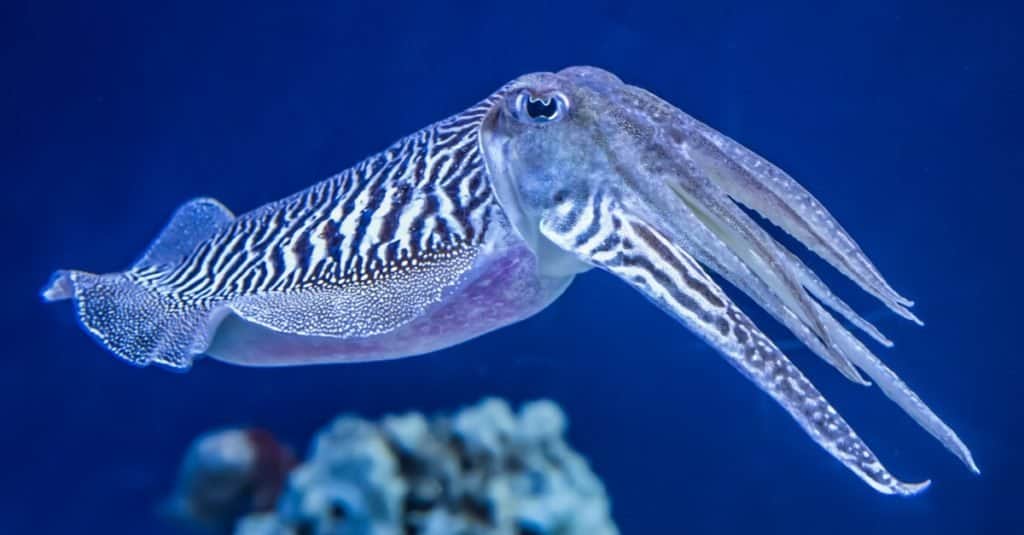
The blood of cuttlefish appears more blue-green than red due to high levels of hemocyanin.
©David A Litman/Shutterstock.com
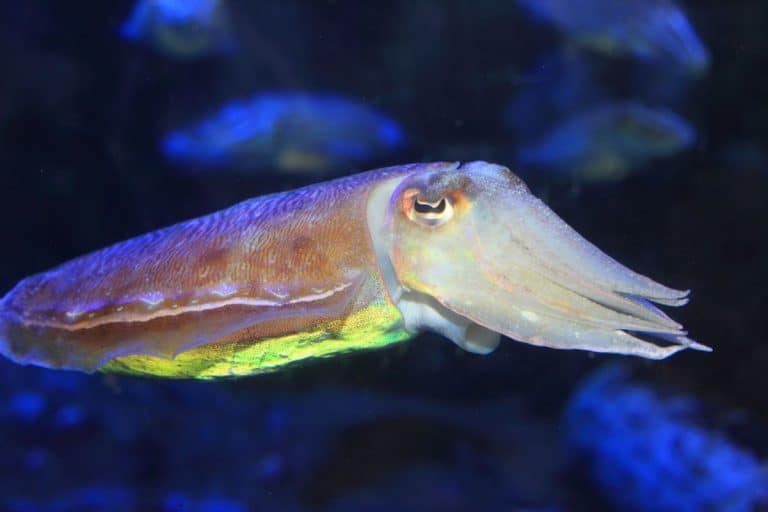
Unlike most mollusks, cuttlefish possess a closed circulatory system. Like squids and octopuses, cuttlefish have three hearts. In addition, their hearts operate similarly to their fellow cephalopods. As you already know, the systemic heart pumps blood throughout the body, while the two branchial hearts’ sole role involves moving blood through the cuttlefish’s gills. Due to their high level of hemocyanin, their blood appears more green-blue than red. Furthermore, their blood must pick up the pace slightly to ensure they remain properly oxygenated. This is because hemocyanin carries much less oxygen than hemoglobin, so cuttlefish compensate for this deprivation by moving their blood more rapidly than what is required in most other animals.
#1: Earthworm
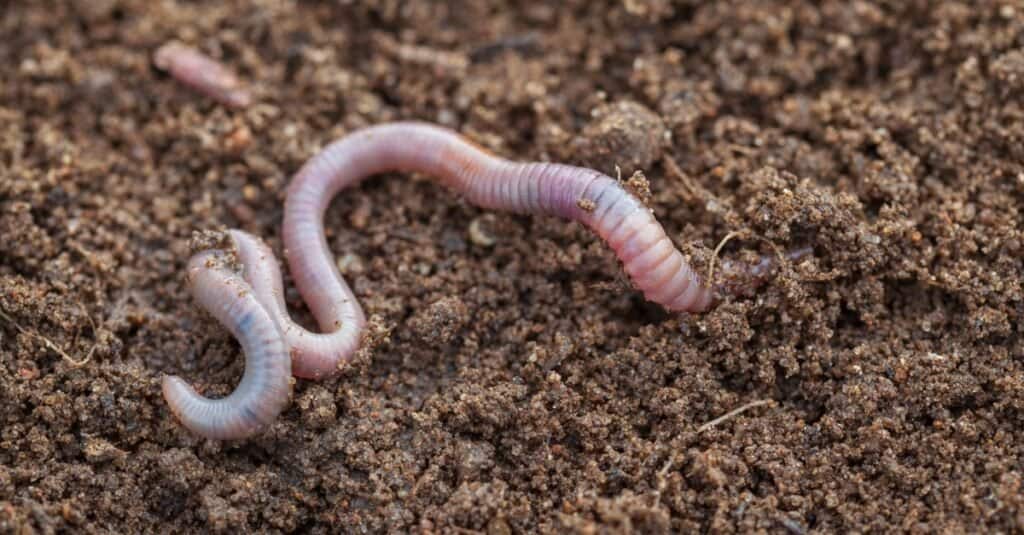
The earthworm does not have a heart, but rather possesses 5 aortic arches.
©Maryna Pleshkun/Shutterstock.com
Earthworms don’t actually have a heart. Instead, they have a heart-like system called an aortic arch. This closed circulatory system carries food, waste, and respiratory gases throughout the earthworm’s body. In total, five blood vessels make up the aortic arch. The five arches are simply paired muscular vessels around the esophagus.
Is It Normal for Animals to Have Multiple Hearts?
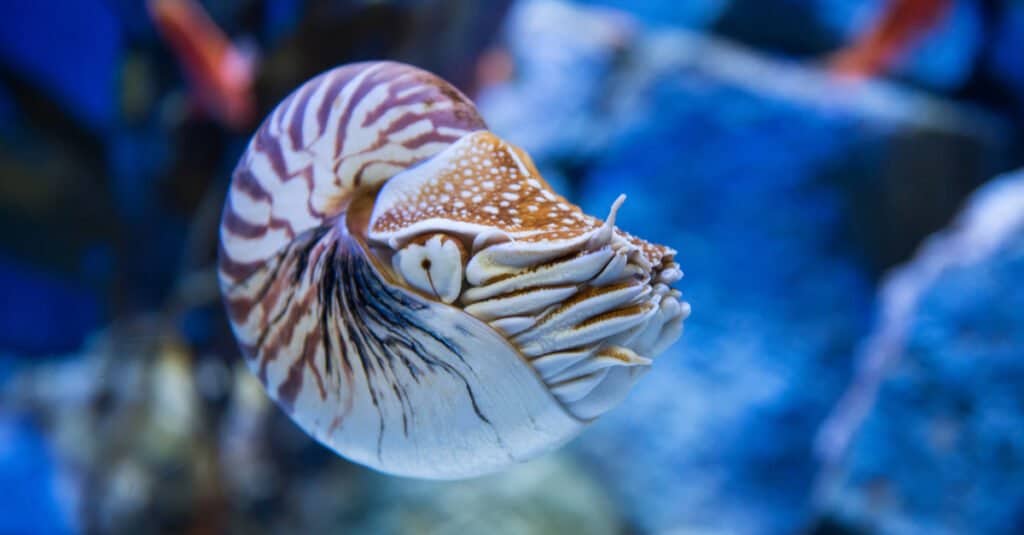
The Nautilus is the only cephalapod to have one heart.
©kikujungboy CC/Shutterstock.com
For most animals, it is not common for the circulatory system to need multiple hearts in order to function. Cephalapods are one notable exception to this rule, with every known species of cephalopod besides the Nautilus having a multi-heart vascular system.
For a long time, scientists theorized that dinosaurs may have relied on multiple hearts in order to circulate blood throughout their gargantuan frames, but recent archaeological and genetic evidence has since mostly disproved this hypothesis.
Summary of 5 Animals with More Than One Heart
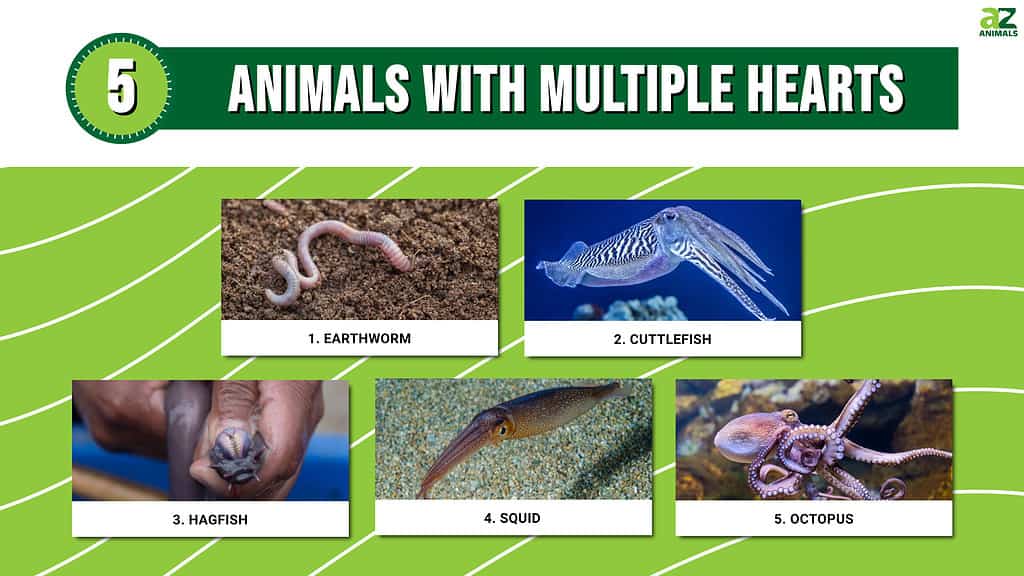
Here’s a quick recap of the various animals with more than one heart.
| Name | Number of Hearts | Animal Type | |
|---|---|---|---|
| 1. | Earthworm | 5 | Roundworm (invertebrate) |
| 2. | Cuddlefish | 3 | Mollusk |
| 3. | Hagfish | 4 | Fish |
| 4. | Squid | 2 | Mollusk |
| 5. | Octopus | 3 | Mollusk |