Quick Take
- Penguins are specialized marine birds adapted for swimming, diving, and cold environments.
- Different species show distinct strengths, from speed to deep diving ability.
- Many populations face threats from climate change, overfishing, and habitat loss.
- Conservation efforts and responsible tourism help support their long-term survival.
Penguins may look awkward on land, but they are highly specialized marine hunters shaped by life in cold oceans. Their bodies are streamlined; their wings function as flippers, and their dense feathers trap warmth in icy water. World Penguin Day, marked on April 25, highlights how these birds have adapted to survive in demanding environments. Across 18 recognized species, penguins show a wide range of abilities that allow them to hunt, travel, and raise young in places where few animals can thrive.
A closer look at penguins reveals that their survival depends on ocean conditions such as temperature, sea ice, and food supply. When these factors change, penguin populations often respond rapidly. Scientists study these changes to understand the health of marine ecosystems. Protecting penguins also protects the larger ocean systems they rely on, making them important indicators of environmental change.
Speed Beneath the Surface
Few birds move through water as efficiently as the gentoo penguin. This species can reach speeds of about 36 kilometers per hour, making it the fastest swimming bird. Its streamlined shape reduces drag, while strong flippers provide steady propulsion. A long tail helps with steering, allowing quick turns while chasing prey.
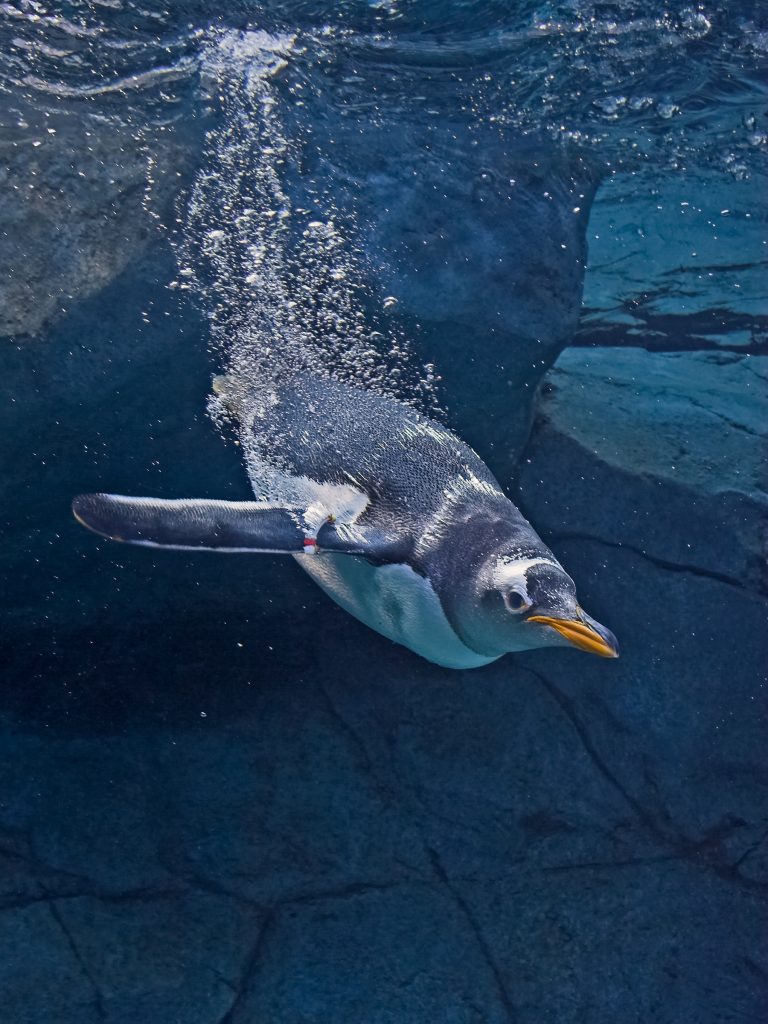
Gentoo penguins are the fastest swimming birds.
©Tennessee Aquarium
Gentoo penguins often use a movement called porpoising, where they leap in and out of the water while swimming. This technique allows them to breathe without slowing down. They rely on this speed to hunt fish and krill, often working through dense schools. On land, they gather in colonies on rocky shores, where they build nests from stones and take turns protecting eggs and chicks from predators.
Deep Diving Specialists
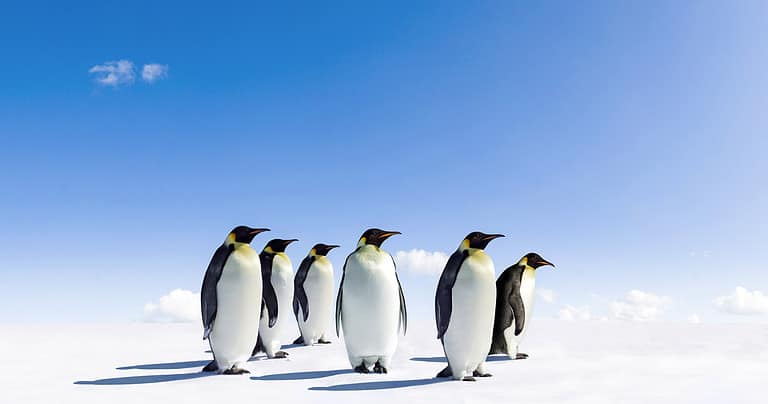
Among birds, the emperor penguin stands out for its ability to dive to great depths. These large penguins can reach depths of 100 to 200 meters during routine hunts, with recorded dives exceeding 500 meters. They can remain underwater for more than 20 minutes while searching for fish and squid.
This performance depends on specialized adaptations. Emperors store oxygen in their muscles and blood, and they slow their heart rate during dives to conserve energy. Blood flow is directed toward vital organs, while less critical systems temporarily receive less oxygen. These changes allow them to function under conditions that would challenge most animals. Living on Antarctic sea ice, they depend on these dives to survive in a harsh environment.
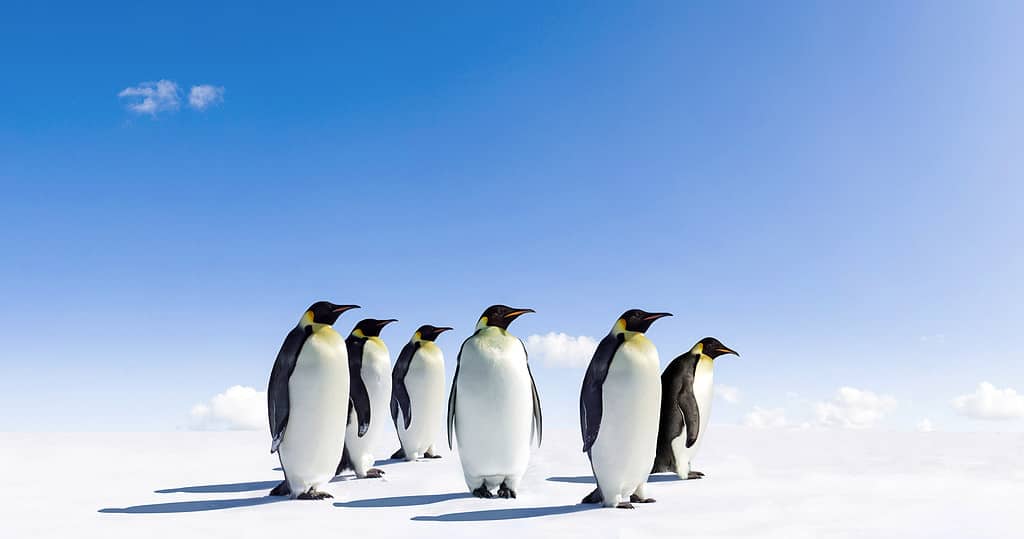
Emperor Penguins return to Cape Crozier Colony, Antarctica.
©iStock.com/Coldimages
Seasonal Patterns and Migration
Adélie penguins are closely tied to seasonal cycles in Antarctica. Researchers observed that many begin moving north around April 25, which led to the recognition of World Penguin Day. These penguins spend winter at sea and return to coastal breeding sites when conditions improve.
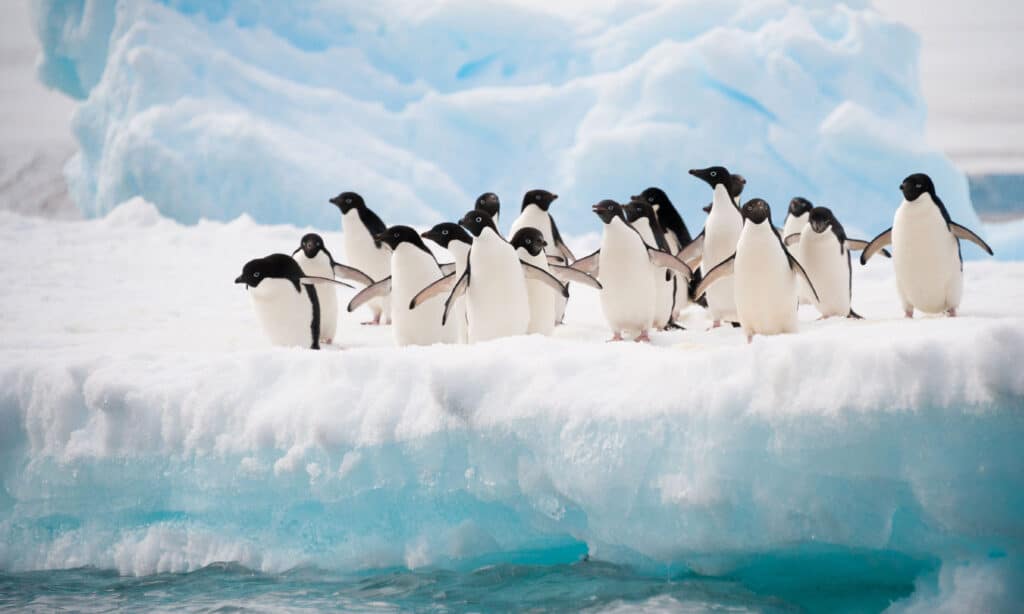
Adélie penguins depend on a precise level of sea ice for survival.
©iStock.com/axily
Their life cycle depends heavily on sea ice. Too much ice can block access to feeding areas, while too little reduces habitat for krill. Because of this sensitivity, Adélie penguins serve as indicators of environmental change. During breeding season, colonies become active, with adults building nests, calling to partners, and feeding chicks. The timing of their breeding reflects a balance between food availability and environmental conditions.
A Coastal Species Under Pressure
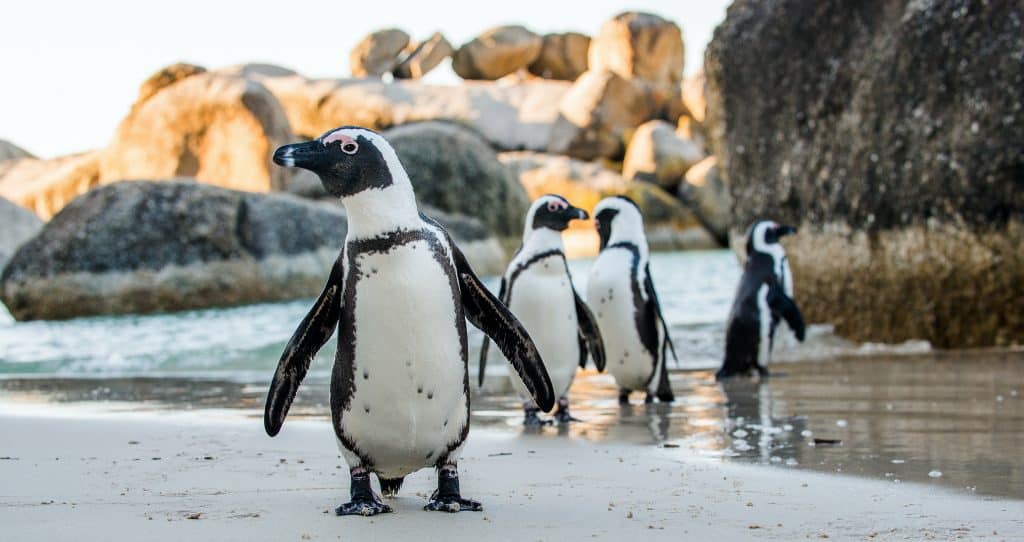
African penguins are critically endangered.
©Sergey Uryadnikov/Shutterstock.com
The African penguin has experienced a sharp population decline over the past century. Found along the coasts of South Africa and Namibia, this species has lost a large portion of its numbers. Overfishing of sardines and anchovies has reduced food supply, while oil spills and habitat disruption have added further strain.
In recent years, the species has been classified as Critically Endangered. Conservation efforts now focus on restoring nesting areas, protecting feeding zones, and managing fisheries. Unlike Antarctic species, African penguins live in warmer climates and nest on beaches or rocky islands. Their braying call has led to the nickname “jackass penguin,” which reflects their loud and recognizable vocalizations.
Small Size, Big Challenges
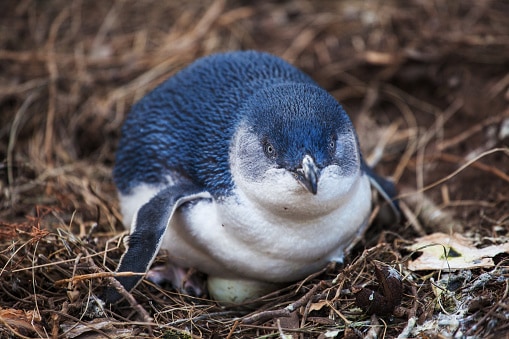
A little penguin incubates an egg.
©StanislavBeloglazov/iStock via Getty Images
The little penguin is the smallest species, standing about 30 to 33 centimeters tall. It lives along the coasts of southern Australia and New Zealand. These penguins hunt during daylight hours and return to land after sunset, often in large groups.
Their nightly return is known as a penguin parade and attracts visitors to protected viewing areas. These birds nest in burrows and depend on safe shoreline conditions. Although small in size, they are capable swimmers and can handle strong currents. Human activity, including artificial lighting and introduced predators, can affect their behavior, making careful management important in areas where they are observed.
Long Breeding Cycles
King penguins have one of the longest breeding cycles of any bird. Raising a single chick can take more than a year, which limits how often they reproduce. Parents take turns incubating the egg on their feet, where it is protected by a fold of skin that keeps it warm.
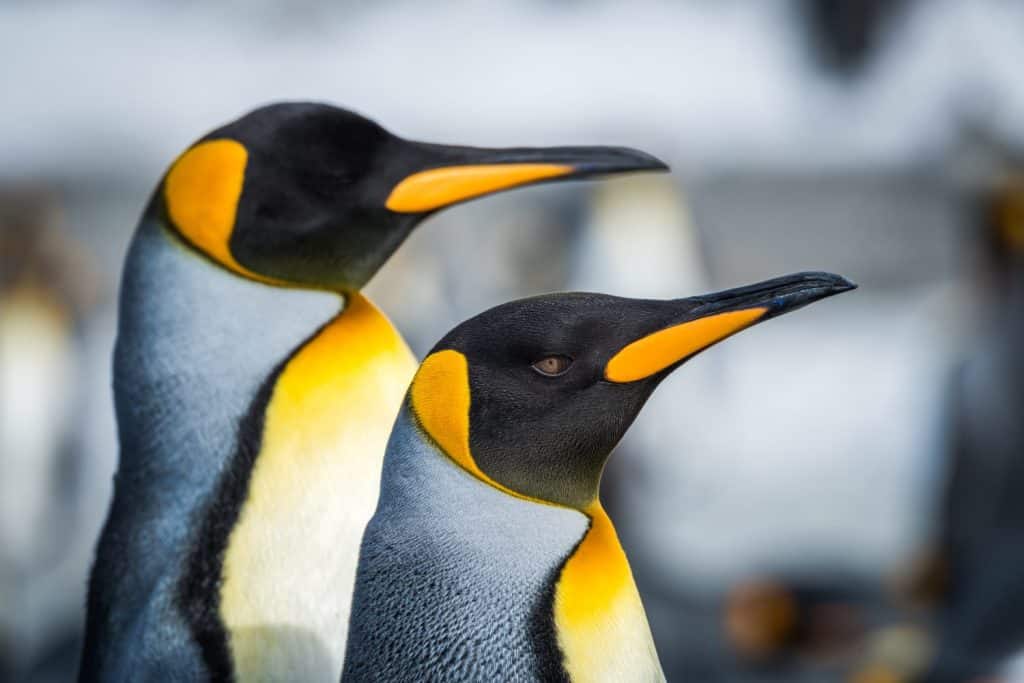
King penguins have distinctive yellow markings.
©Nick Dale Photo/Shutterstock.com
During this time, one adult may travel long distances to find food while the other remains with the egg or chick. Colonies can grow very large, sometimes numbering in the tens of thousands. Chicks develop thick brown down feathers before molting into adult plumage. While their extended development period could make them sensitive to environmental changes, recent research suggests king penguins are currently adapting well to shifting conditions due to their flexible diet and breeding strategies.
Life on Rocky Shores
Rockhopper penguins are known for navigating steep and rocky terrain. They use strong legs and claws to hop between rocks and climb slopes. Their yellow crests make them easy to identify. They often nest in exposed areas where weather conditions can be harsh. Several populations have declined due to changes in ocean conditions and reduced prey availability. Accidental capture in fishing gear also poses a risk. Although rockhopper penguins are well adapted to rugged environments, they still face significant threats from changing ocean conditions and reduced prey availability.

Rockhopper penguins have yellow crests.
©Darcy Jardine/Shutterstock.com
Living at the Equator
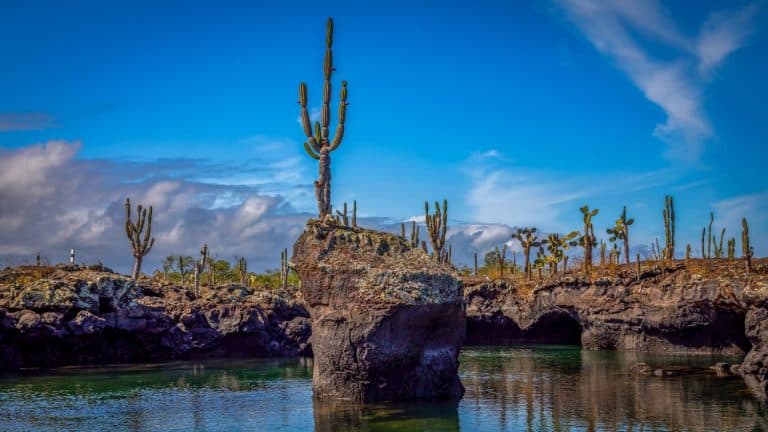
The Galápagos penguin is the only species found near the equator. It survives because of cold ocean currents that bring nutrient-rich water to the islands. These currents support the fish populations the penguins depend on.
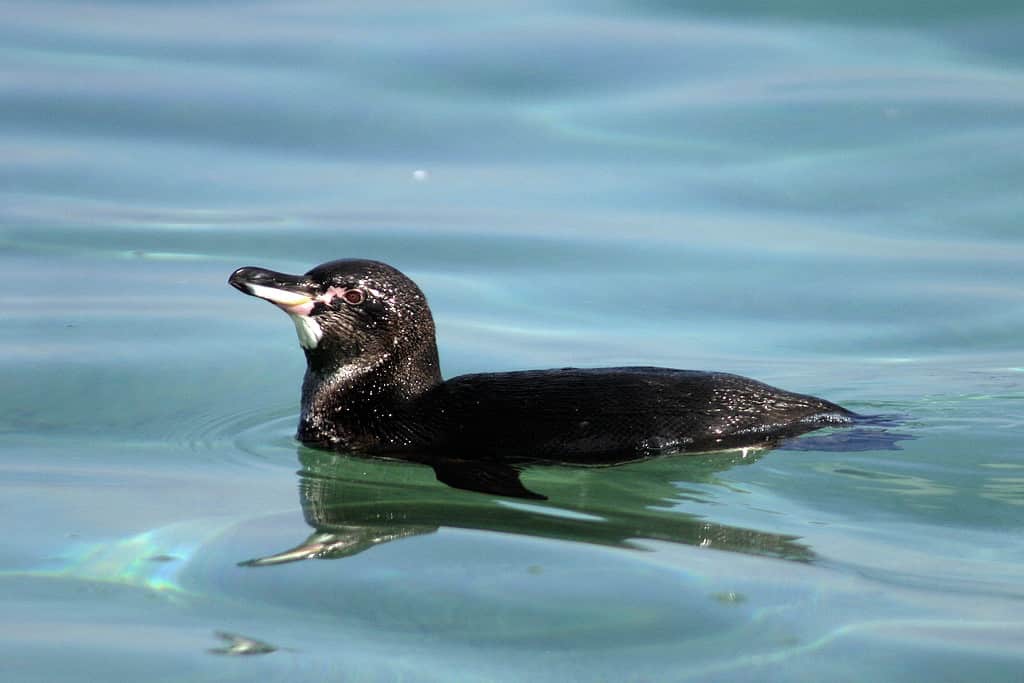
Galápagos penguins have to use adaptive strategies to live in a hot climate.
To cope with heat, these penguins use behavioral strategies, such as shading their feet with their flippers and resting in shaded areas. Their population is small, with only about 1,500 to 2,000 individuals. This limited range makes them vulnerable to climate events such as El Niño, which can reduce food availability and affect breeding success.
Changing Oceans and Survival
Penguins across the Southern Hemisphere face growing challenges linked to climate change. Rising ocean temperatures can shift the distribution of fish and krill, forcing penguins to travel farther to find food. This increases the effort required to feed themselves and their chicks.
Melting sea ice affects species that rely on it for breeding or feeding. At the same time, stronger storms and rising sea levels can damage nesting sites. Conservation efforts aim to reduce these pressures through protected marine areas, improved fishery management, and habitat restoration. Monitoring penguin populations provides insight into the health of marine ecosystems.
Responsible Wildlife Viewing
Observing penguins in the wild can deepen understanding of their behavior and challenges. Locations range from Antarctic expeditions to coastal sites in Africa and Australia. Responsible tourism plays an important role in protecting these animals.
Visitors should maintain a safe distance, avoid loud noises, and follow local guidelines. In many areas, boardwalks and viewing platforms help protect nesting sites while allowing observation. Tourism can support conservation when managed carefully and when it contributes to local efforts to protect wildlife.
Marking World Penguin Day
World Penguin Day encourages people to learn about penguins and consider how human activity affects their survival. Supporting conservation groups, reducing plastic use, and choosing sustainable seafood can help protect marine ecosystems.
Each penguin species demonstrates unique adaptations to life in the ocean, yet all depend on stable environmental conditions. Protecting them requires cooperation across regions and industries. Understanding their role in marine ecosystems helps explain why their survival matters.