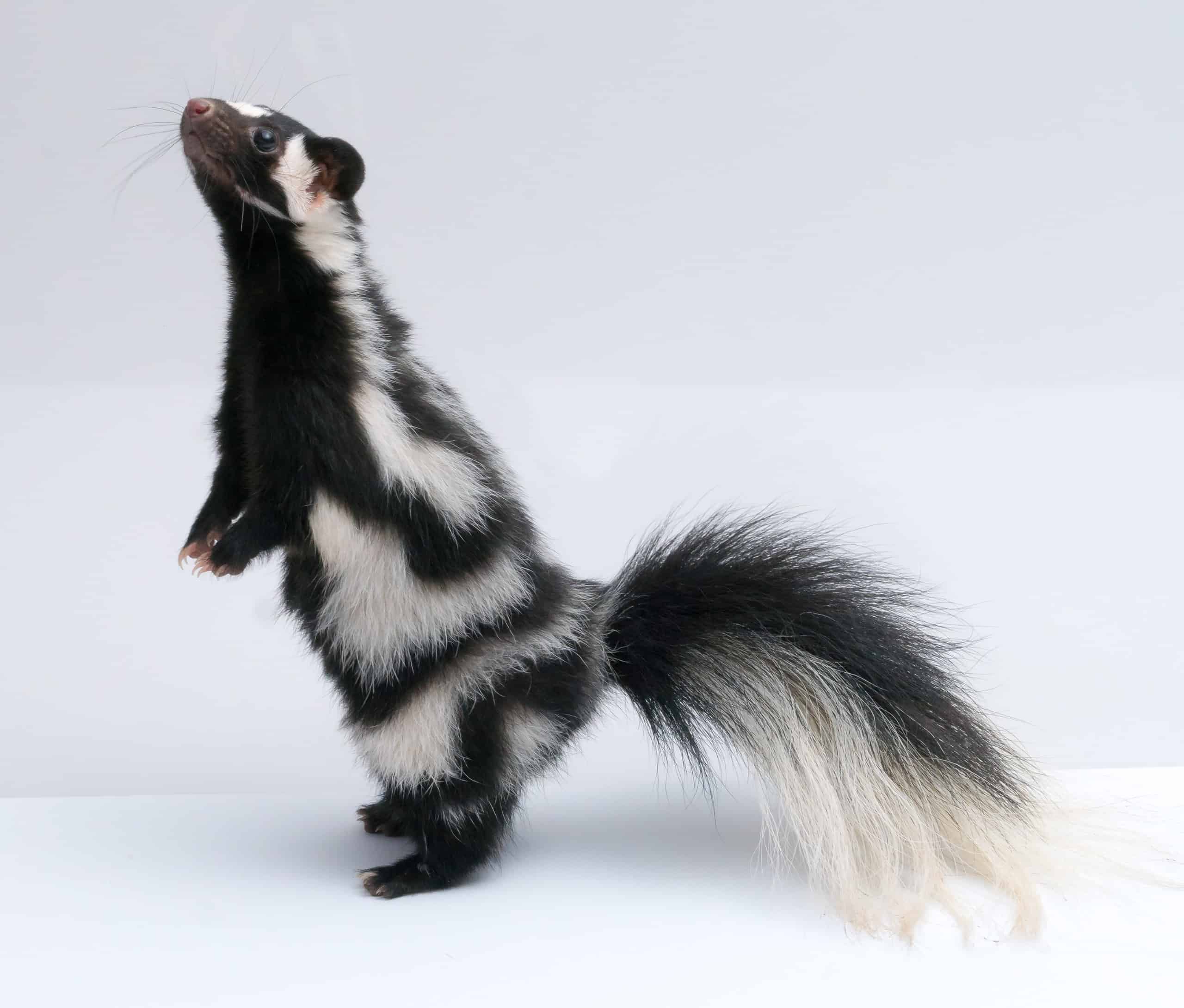

Skunks are mammals in the family Mephitidae, notorious for the extreme potency, accuracy, and lasting nature of their spray, and the splendor of their black and white coats. While dozens of animals look similar to skunks, including weasels, raccoons, and badgers, many belong to entirely different families or live on different continents. Being able to differentiate between skunks and their doppelgangers might help you avoid an unnecessarily pungent encounter. Several animals share the skunk’s distinctive black-and-white coloration and have their own, less potent, defensive secretions, leading to potential confusion. Continue reading to discover four animals that look like skunks and how to tell the difference.
About Skunks
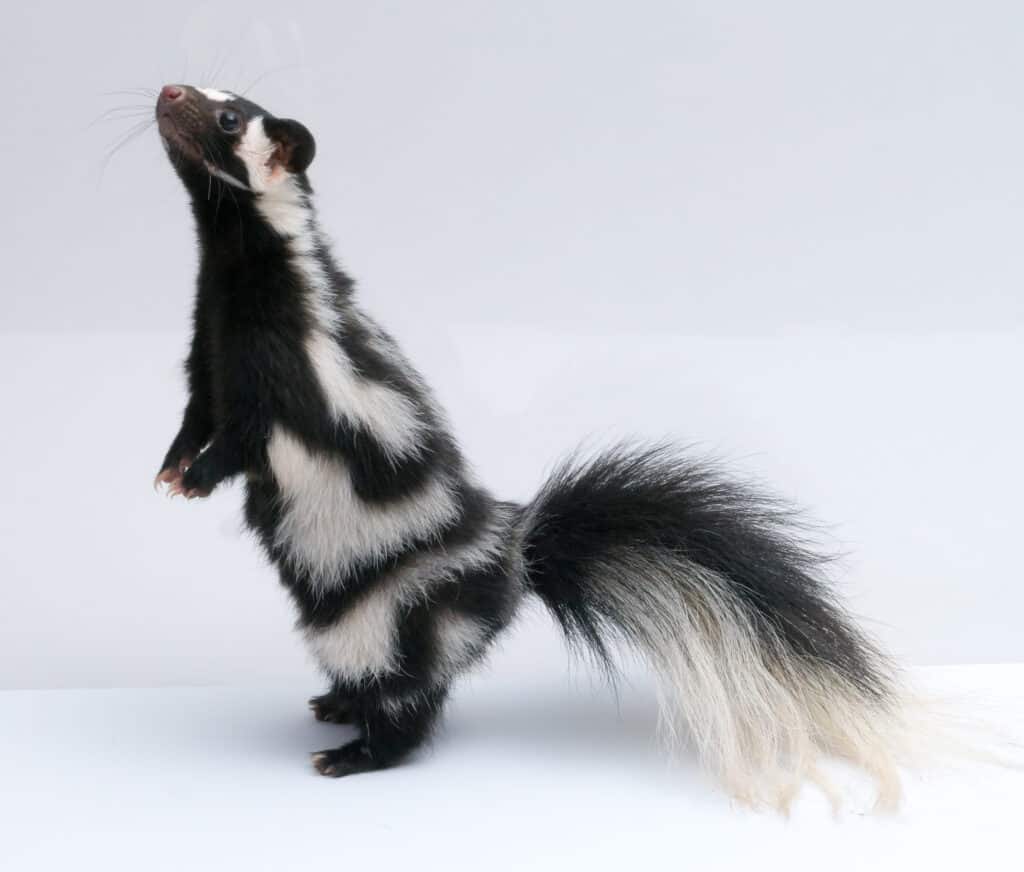
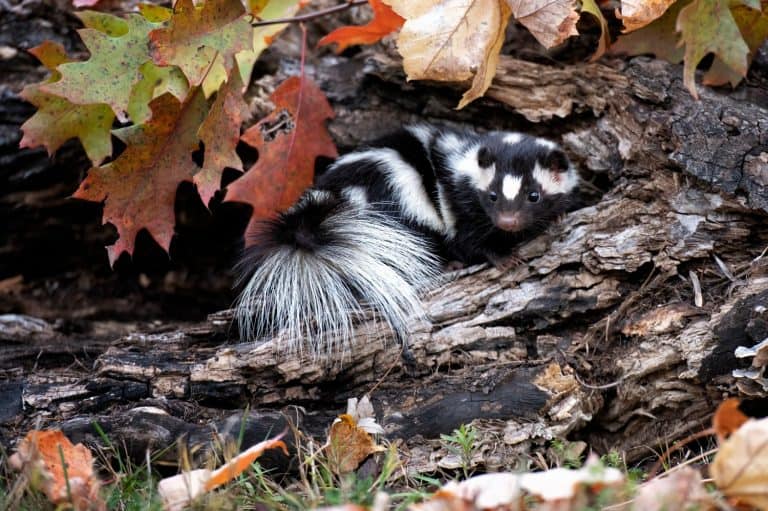
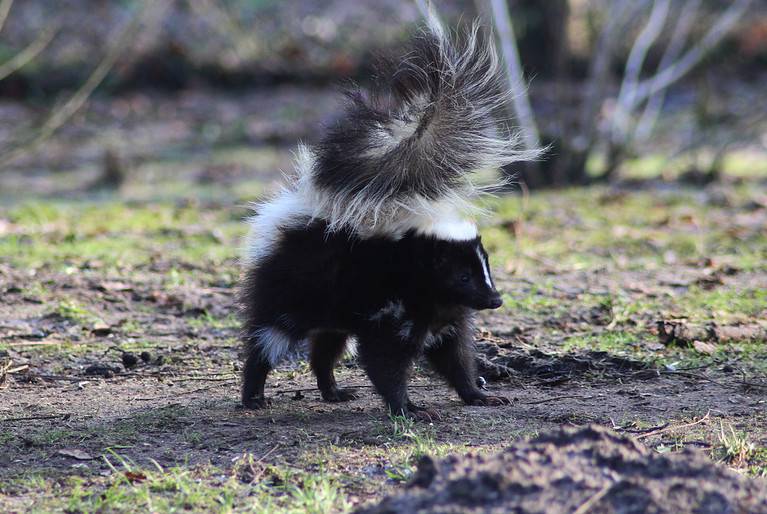
Skunks, like this spotted skunk, are solitary animals.
©JayPierstorff/Shutterstock.com
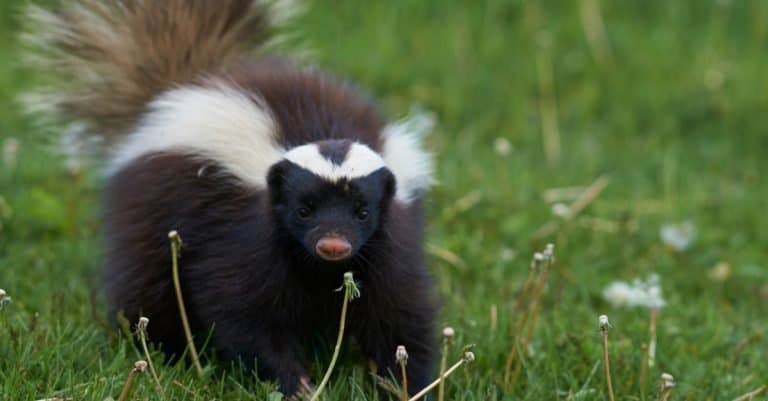
Several skunk species are found in North America, including the striped skunk (Mephitis mephitis), multiple species of spotted skunks (Spilogale), the hog-nosed skunk (Conepatus leuconotus), and the hooded skunk (M. macroura). North American skunks are about the size of domestic cats, weighing 6–10 pounds and reaching 20–30 inches in length, including the tail. Physical characteristics include a stout body, short legs with long claws for digging, a small head with a pointed nose, and a long, bushy tail, all of which are covered in black and white fur. When threatened, a skunk will send warning signs like hissing and stomping. If the threat persists, it will spray a foul-smelling, oily liquid from two scent glands near its anus, which can cause temporary blindness and be smelled from miles away.
Striped Polecat
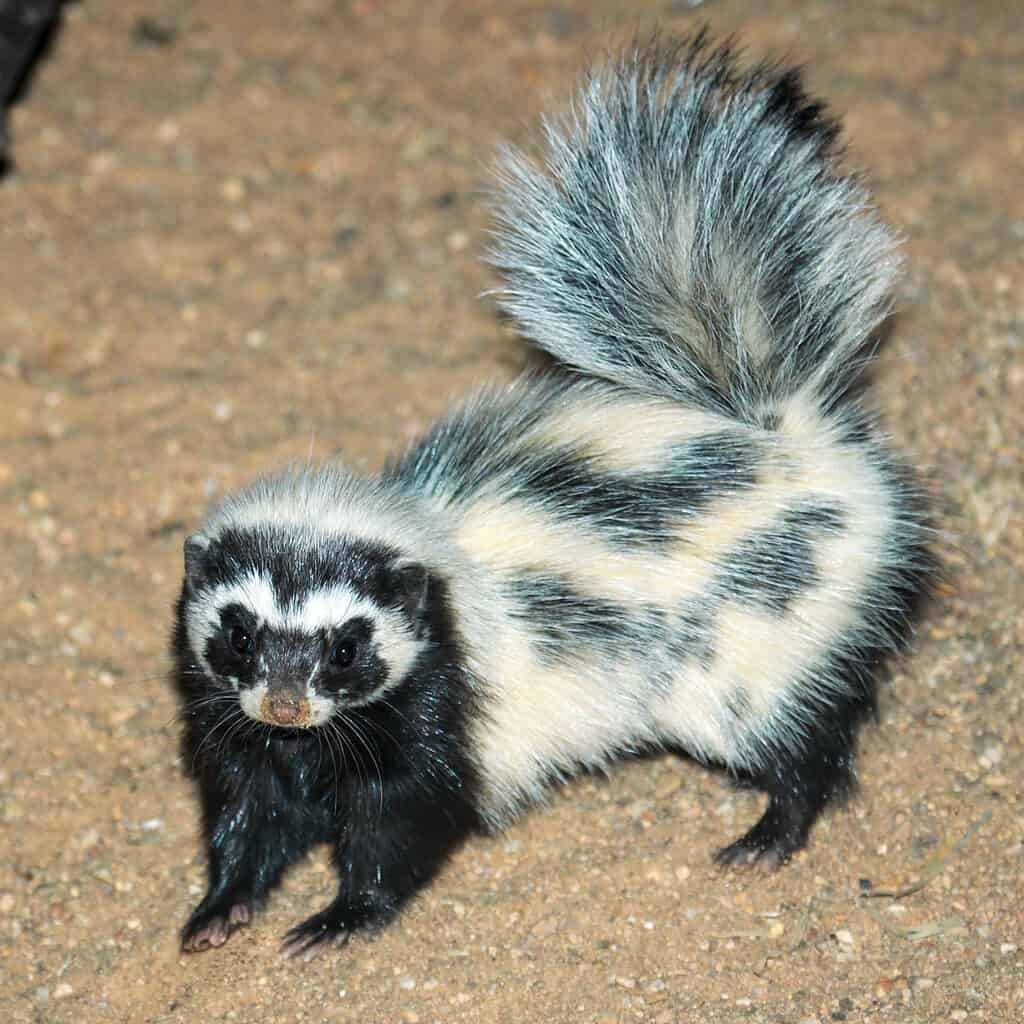
Striped polecats are known for their foul anal spray.
©Michal Sloviak/Shutterstock.com
Native to sub-Saharan Africa, the striped polecat (Ictonyx striatus) is the closest you’ll come to a skunk based on appearance and behavior. Like the skunk, the striped polecat has stripes running from its head down its back and on its cheeks. They are also mostly black on the underside and white on the tail, and they have white ears and white spots on their head. Additionally, the polecat is known for its foul anal spray, which serves as its primary defense against predators. The spray released by their anal glands is powerful enough to irritate mucous membranes or temporarily blind their predators. Striped polecats have small bodies, with males larger than females. They can grow to 24 to 28 inches in length and weigh up to 2.9 lbs.
How to Tell The Difference
Skunks are omnivores and are generally solitary, except during the breeding season or when a mother is raising her young. In contrast, the striped polecat is a solitary carnivore. The foul odor produced by polecats is not as strong as that of skunks. Skunks are not typically aggressive and prefer to use their spray as a defense rather than attack, while polecats also rely on their scent glands and tend to avoid confrontations.
Honey Badger
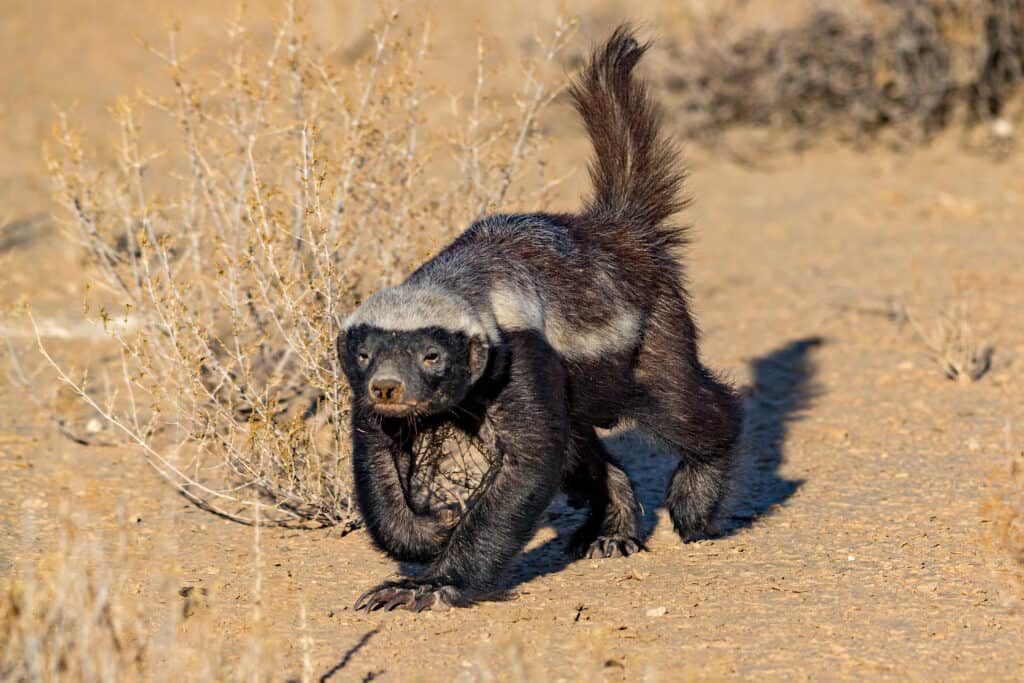
Some honey badgers have black and white fur similar to skunks.
©Braam Collins/Shutterstock.com
Widely distributed across Africa, Southwest Asia, and the Indian subcontinent, the honey badger (Mellivora capensis) is another animal that is often confused with the skunk. Although the two animals are not closely related, they share the ability to use scent as a defense against threats and predators. Like skunks, honey badgers have a gland at the base of their tail for dropping stink bombs on enemies. Some honey badgers have black and white fur similar to that of skunks. ‘Honey badgers are known for their resistance to snake venom and will eat venomous snakes and scorpions, while skunks may occasionally eat such prey, but do not have the same level of venom resistance.
How to Tell The Difference
The primary difference between a honey badger and a skunk is size. They also differ in their defense mechanisms and geographic distribution. Honey badgers are larger than skunks, typically weighing between 20 and 35 pounds, and have a more rounded body. They have a small, flat head with a short muzzle and remarkably thick skin. They are also more ferocious and devour all parts of their prey, including feathers, skin, flesh, and bones. Unlike skunks, honey badgers do not spray foul odors. Instead, they release scent from their glands in a different manner, often described as dropping stink bombs. As a result, the effect is not as powerful as a skunk’s spray. Honey badgers have short tails, whereas a skunk’s tail is fluffy and long.
Wolverine
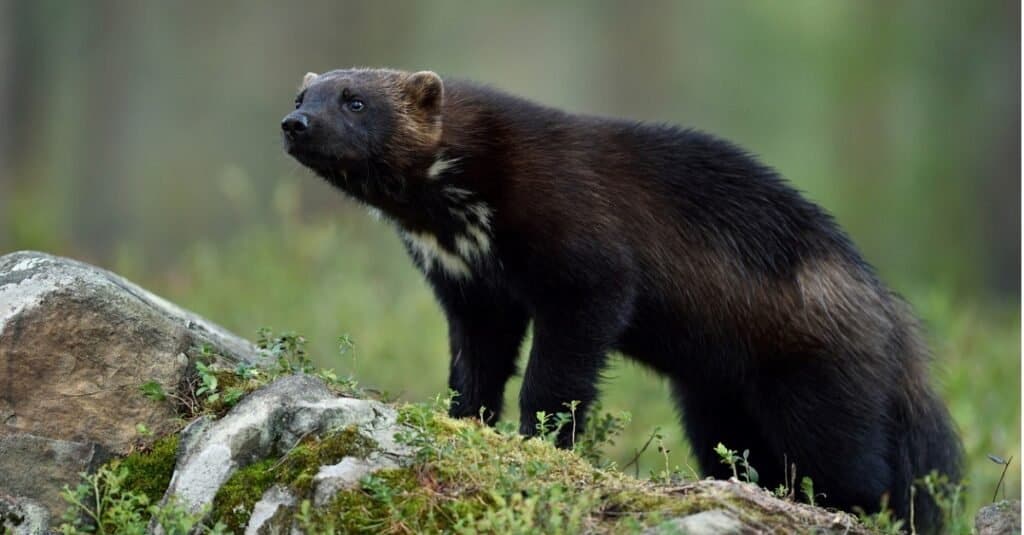
Wolverines are very quick and can run at speeds of up to 30 miles per hour when chasing prey.
©iStock.com/ErikMandre
The wolverine (Gulo gulo) is the largest land-dwelling species of the Mustelidae family. The wolverine is a ferocious animal, renowned for killing prey larger than themselves. Wolverines are distributed throughout northern parts of North America, Europe, and Asia, primarily inhabiting boreal and tundra ecosystems. In North America, populations are concentrated in Alaska, Canada, and the mountainous regions of the Western U.S.Like skunks, wolverines have scent glands that produce a pungent spray used for marking territory and signaling to mates. Because of this, they are often called skunk bears. Both animals have black and white markings along their backs, though the stripes are more pronounced in skunks.
How to Tell The Difference
Although they look similar, the stripes on a wolverine are blotchy, and their bodies are shaped differently. Wolverines have highly hydrophobic and frost-resistant oily fur. They also have a light-silver mask and a pale buff stripe that runs from the shoulders along the side. They are larger than skunks, typically weighing between 20 and 55 pounds (with rare individuals up to 66 pounds), and have a body length of 22 to 44 inches. Wolverines are more scavengers than hunters, and the primary purpose of their anal scent glands is for marking territory rather than defense.
Stink Badgers
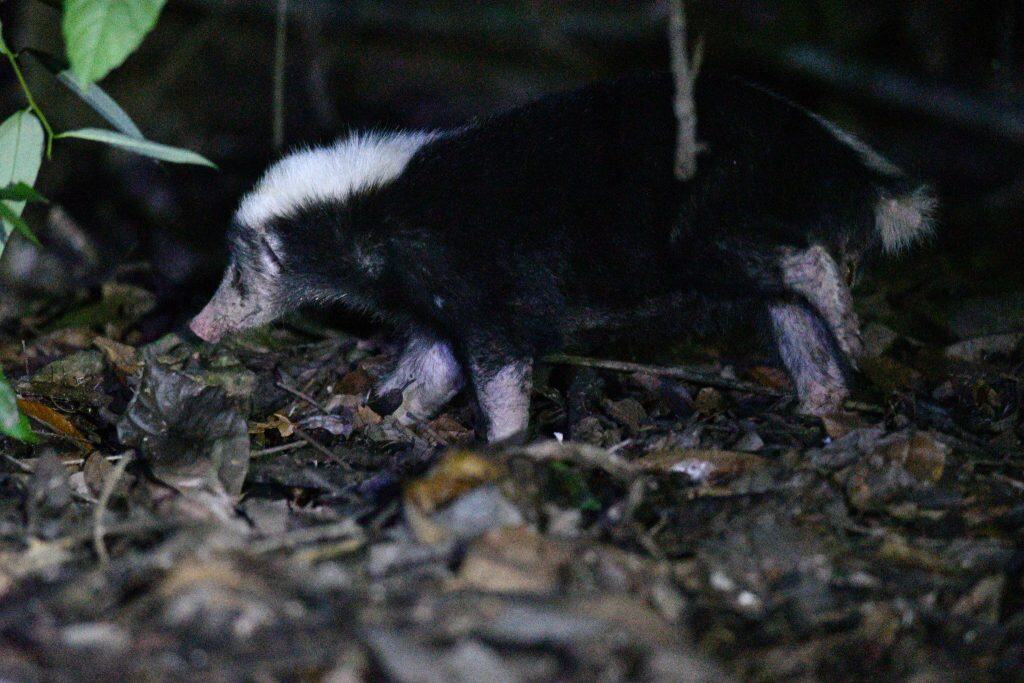
Found on the Western islands of the Greater Sunda Islands, stink badgers are closely related to skunks.
©Thompson Hyggen, CC0, via Wikimedia Commons – Original / License
Stink badgers (Mydaus) and skunks both belong to the Mephitidae family. DNA analysis also shows that stink badgers share a common ancestor with skunks. ‘Stink badgers are found on several islands in Southeast Asia, including the Greater Sunda Islands (Sumatra, Java, Borneo) and the Philippines (Palawan and nearby islands). As the name implies, they are known for their foul-smelling secretions. Like skunks, stink badgers expel liquid from their anal glands as a means of self-defense.
How to Tell The Difference
Despite their similarities, stink badgers are quite different from skunks. There are only two species of stink badgers — the Palawan stink badger (Mydaus marchei) and the Malayan stink badger (Mydaus javanensis). Little is known about the Palawan stink badger except that it is found on Palawan and neighboring Philippine islands. The Malayan stink badger inhabits mountainous areas of Southeast Asia. These shy and nocturnal badgers are not excellent diggers like skunks and prefer to eat worms and insects.