
Quick Take
- This skunk performs an astonishing handstand before spraying, making it one of North America's most unusual defensive behaviors. See the defensive behavior →
- The federal agency that passed on protecting this skunk in 2023 is back, and the outcome could split federal protections by region. Explore the ESA review →
- Scientists couldn't track this species for years, but an oddly specific bait eventually changed everything. Discover the sardine breakthrough →
Back in 2023, the U.S. Fish and Wildlife Service decided that the plains spotted skunk did not warrant listing for federal protection under the Endangered Species Act. At the time, the plains spotted skunk’s situation did not seem that dire. New data, however, suggest that the species has experienced a heavily reduced distribution. As a result, the U.S. Fish and Wildlife Service announced in July 2026 that it will conduct a formal 12-month review of the plains spotted skunk to determine whether the species should be listed under the Endangered Species Act.
The elusive nature of this skunk made it difficult to track. In Oklahoma alone, biologists struggled to estimate its population size, even as other experts believed habitat loss contributed to the species’ decline, which began at least 100 years ago. Thanks to the tireless efforts of conservation groups and state wildlife commissions, this stunning skunk might get the protection it deserves before it’s too late.
About the Plains Spotted Skunk
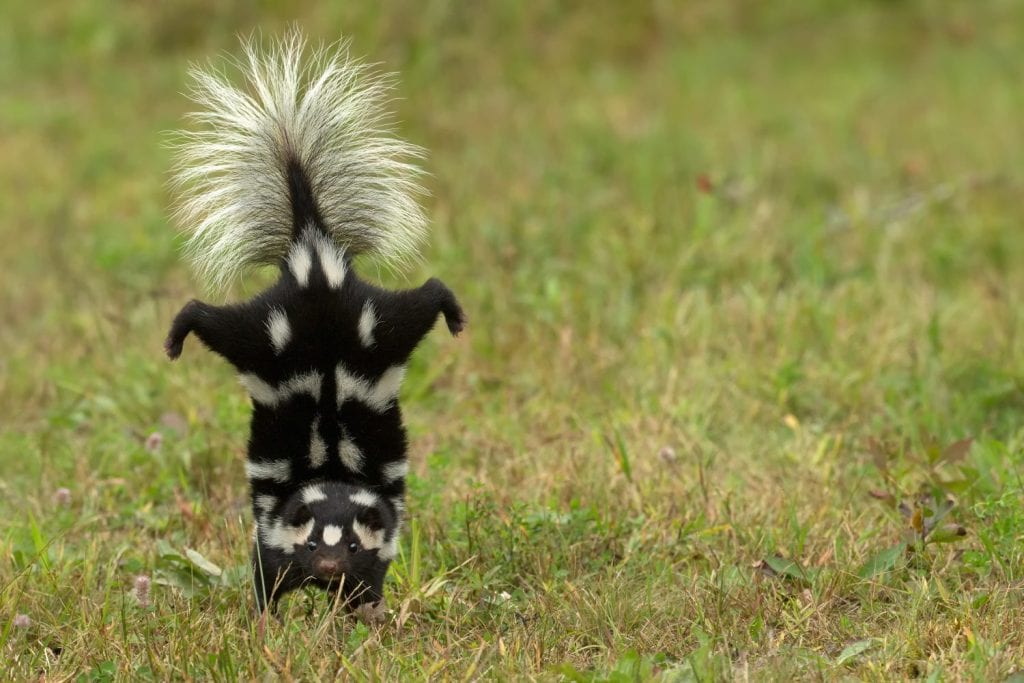
Plains spotted skunks will do handstands to look larger than they are and to warn predators about being hit with a blast of skunk oil.
©Agnieszka Bacal/Shutterstock.com
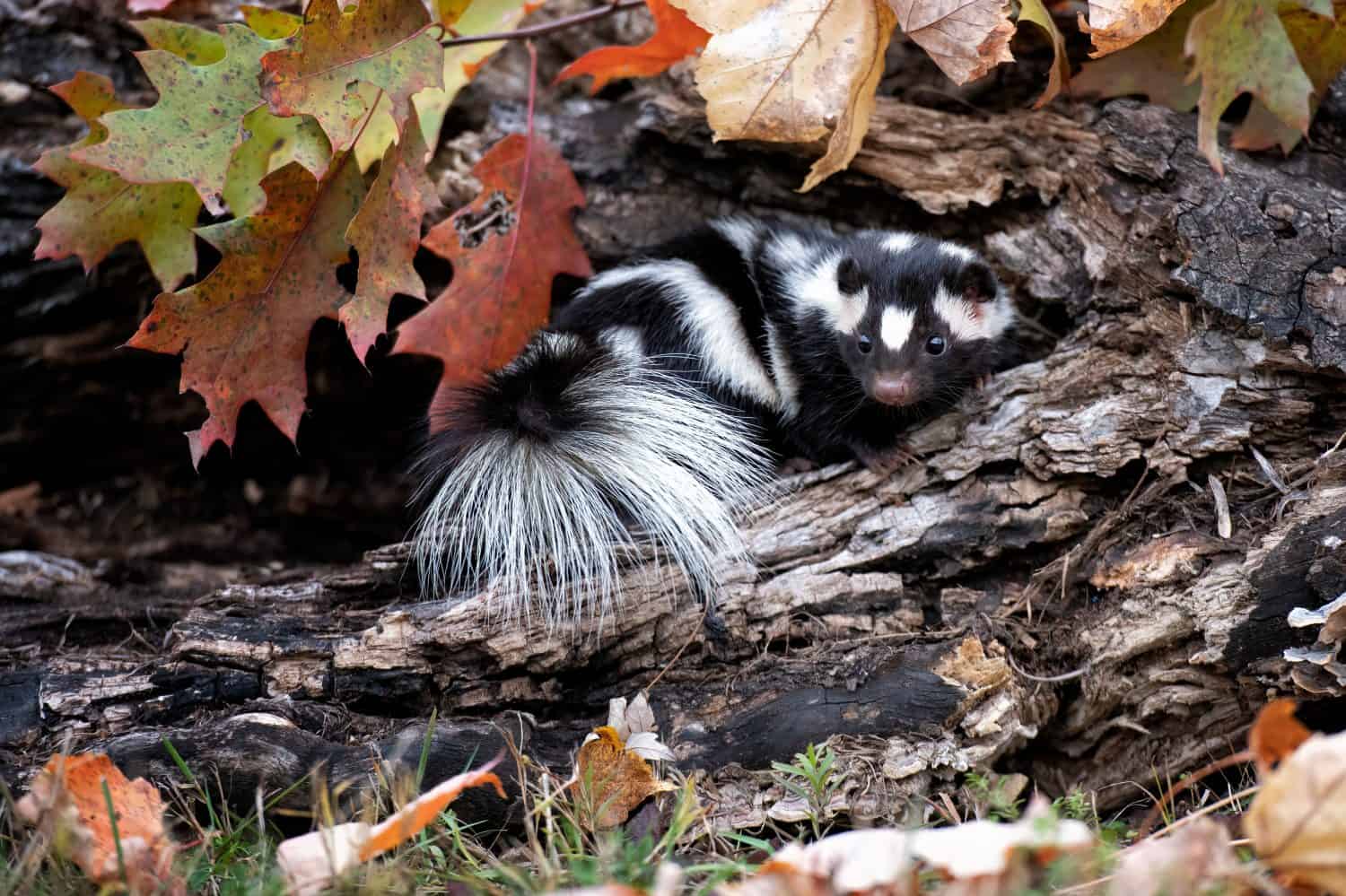
Plains spotted skunks are unlike most skunks you may have seen. Plains spotted skunks are small, about the size of a squirrel, and come equipped with a coat that dazzles as much as it bewilders. Their coats are boldly patterned, with white stripes and blotches crisscrossing stark black fur. Unlike the young of most other species, which look distinctly different from adults, newborn plains spotted skunks are born with their unique coats.
The plains spotted skunk (Spilogale interrupta) belongs to the same family as other skunks and stink badgers (Mephitidae). Primarily nocturnal, they spend most of their time along the edges of forests and upland prairie grasslands. Despite having very able claws for digging, plains spotted skunks often reuse dens made by other creatures, including wood rats, armadillos, and gophers. Although they are elusive to scientists because of their nocturnal habits, small size, and preference for pitch-black dens, these creatures are social with one another. At times, they may share dens with as many as seven other skunks.
These skunks have several defensive techniques that make them unique among the small woodland creatures in North America. Like other skunks, they defend themselves by spraying a noxious scent. When threatened, two glands on their hindquarters release the oil through nipple-like openings. The muscles around these nipples allow plains spotted skunks to hit targets accurately between 10 and 15 feet away. To warn of potential threats before spraying, spotted skunks perform handstands.
Hand Stands
As Kurt Kuklinski, the wildlife diversity and research supervisor for the Oklahoma Department of Wildlife Conservation, explained, “They stand on their front legs and put their backside and their tail up in the air and start wobbling around and doing this little dance to look larger than they appear.”
Plains spotted skunks are found throughout most of the Great Plains and midwestern states. Their range includes Arkansas, Kansas, Minnesota, Missouri, Oklahoma, both Dakotas, Texas, and Wyoming. Their presence in Nebraska prompted further review of the species under the Endangered Species Act after Nebraska-based organization Grasslands Unlimited filed a petition in July 2025 to list the plains spotted skunk as threatened or endangered.
Their population status in other states remains largely unknown or, at the very least, contested. Their activity and distribution in Oklahoma, for example, show both the possibility of decline and stability. As Kurt Kuklinski explained to KGOU, the review requires a full scope. He said, “We feel fairly comfortable that they are stable here in Oklahoma. But again, that’s one state out of eight to 10 states where they exist, and the Fish and Wildlife Service has to weigh information coming from all of us conservation partners.”
New Findings
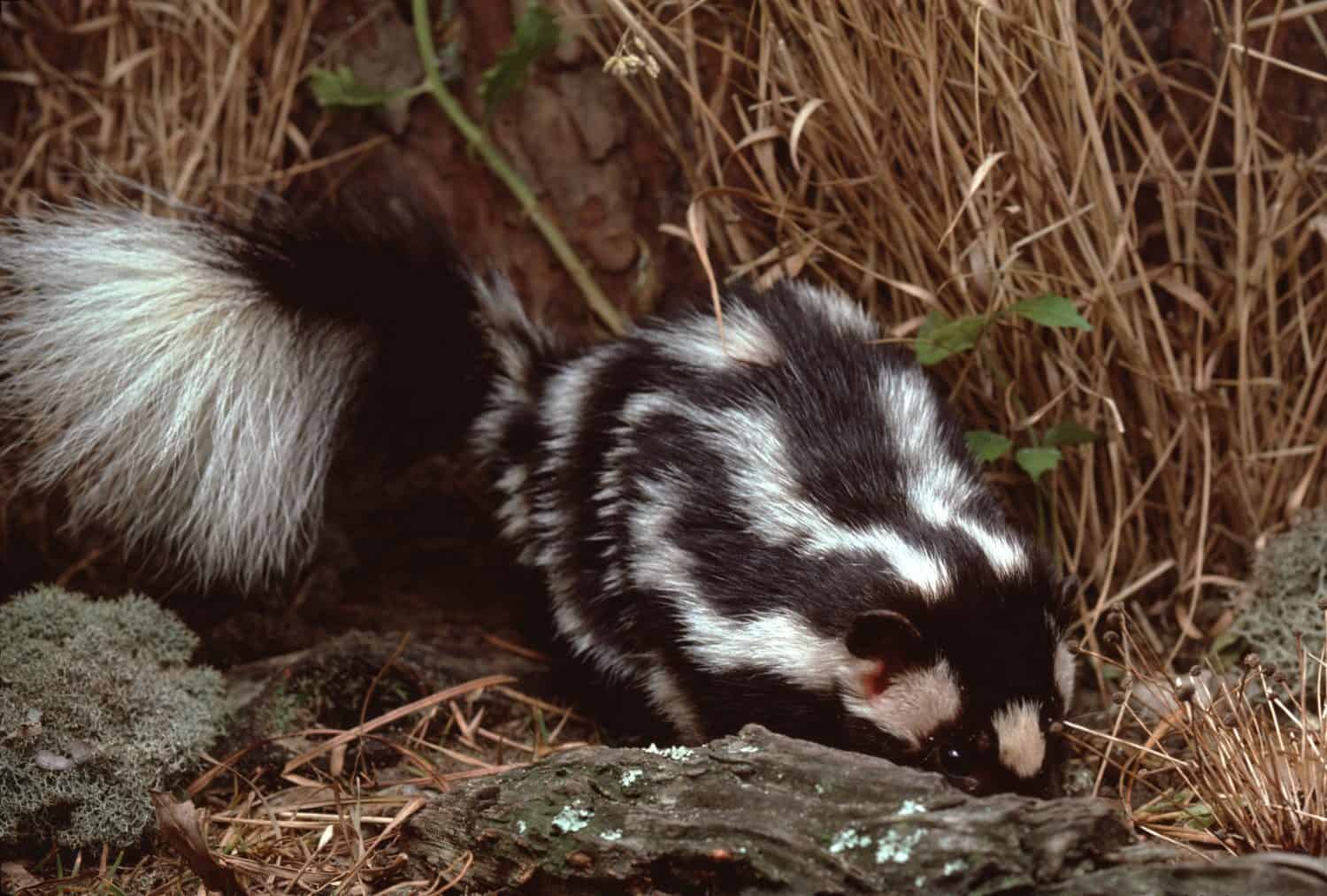
Oklahoma State University researchers found that fire may positively influence where plains spotted skunks settle.
©Liz Weber/Shutterstock.com
The elusive nature of plains spotted skunks has made it difficult for biologists to understand their distribution. Researchers at Oklahoma State University, however, were able to find dozens of nesting spots using sardine lures and motion-sensing cameras. They found that spotted skunks were most likely to inhabit recently burned areas, suggesting that fire may positively influence their choice of habitat.
As Danielle Brosend, Oklahoma State University natural resource ecology and management master’s student, , “When considering whether a species should be listed as threatened or endangered, the goal is always to keep populations healthy enough that a listing isn’t necessary. At the same time, if a species is truly at risk, listing is the right step to protect it.”
While the U.S. Fish and Wildlife Service will take another 12 months to conduct its review, several outcomes are possible. The agency may separate the species along geographic lines, granting different federal protections depending on the region, as has been done in other cases. There is also the possibility that the agency determines listing is not warranted, as it did when it delisted the lesser prairie chicken in February 2026.